September 12, 2026 6:00 am
CRIT Nation, Parker, AZ
September 12, 2026 6:00 am
CRIT Nation, Parker, AZ

On a Proposed Ordinance to Amend
the Government Code
to Add an Article 6. Standard of Conduct and Ethics


Dates:
Thursday, November 14, 2024 at 5:30 P.M.
Saturday, November 16, 2024 at 1:00 P.M.
Monday, November 18, 2024 at 9:00 A.M.

Location:  Colorado River Indian Tribes Tribal Council Chambers

The proposed Ordinance will amend the Government Code by adding an Article 6. Standard of Conduct and Ethics, which will govern the actions and activities of Tribal Council members to ensure they are carried out in the highest ethical standards, and to set forth consequences for violating these standards.

Written comments from the public will be accepted at the address below up until 5:00 p.m., Wednesday, November 20, 2024. Any comments submitted will be made a part of the legislative record and will be considered for incorporation into the final Code.

Submit comments to:  Colorado River Indian Tribes
Office of the Attorney General
26600 Mohave Road Parker, Arizona  85344

The proposed Code can be viewed online and printed just follow this link C_Standards of Conduct Ethics _08062024 Edits


Copies will also available at the Tribal Administrative Bldg. and the CRIT Library, located at 26600 Mohave Road, Parker, Arizona.

Per BIA Electric, Mochem Housing in the Valley will not lose power


Según BIA Electric, Mochem Housing en el valle no se quedará sin electricidad.

Click the links below to download a form

Direct Deposit Authorization Form

General Welfare Application_09242024

General Welfare Application Minors_09242024

PLEASE READ CAREFULLY


Dear Tribal Member:

Tribal Council has approved a 2024 General Welfare Assistance payment of $2,000.00 for each CRIT Tribal Member. CRIT Tribal members, both minors and adults, who are enrolled with CRIT as of November 1, 2024 are eligible to receive assistance. Tribal Members MUST submit an application to receive a General Assistance Payment for 2024.

Click the links below to download a form

Direct Deposit Authorization Form

General Welfare Application_09242024

General Welfare Application Minors_09242024

This 2024 General Welfare Assistance payment replaces the annual Tribal Distribution Payment.  The benefits to the membership are that the General Welfare Assistance payment is NOT income subject to federal taxes and should not impact eligibility for benefits such as SSI and food stamps.  You will not be issued a 1099 for this payment.  Please review the General Welfare Plan for more information.

Tribal Members will receive their General Welfare Assistance payment by mail or by direct deposit into a bank account after submitting their application.  Parents or legal guardians may request direct deposit for their eligible minor tribal member children into an account owned by the parent or the child.  YOU DO NOT HAVE TO SUBMIT A NEW DIRECT DEPOSIT FORM WITH YOUR APPLICATION IF YOU INTEND TO RECEIVE YOUR GENERAL WELFARE ASSISTANCE PAYMENT IN SAME BANK ACCOUNT AS YOU RECEIVED YOUR 2023 GENERAL WELFARE ASSISTANCE PAYMENT.

The General Welfare Assistance payment will be mailed or direct deposited as follows:

Application and Forms Due Date                   Payment Issued

Must be received by Accounting:

October 18, 2024                                            November 21, 2024

November 22, 2024                                        December 19, 2024

December 20, 2024                                         January 16, 2025

After December 20, 2024                              Payments issued monthly on a rolling basis

and before December 31, 2025

If you want to receive your General Welfare Assistance payment by direct deposit, you must submit the attached Direct Deposit Authorization Form along with a voided check to CRIT Accounting.  If you do not have a direct deposit authorization form on file from last year, or do not submit one for 2024 with your application, your payment will be mailed to the address on your application.  The mailing address you provide on the application will be used to update your address with both enrollment and accounting.   You may have already  received written notification  along with  an application and a self-addressed stamped envelope for your use to return the forms or the forms can be dropped off in person at Tribal Administration.  Additionally, the application and forms can be emailed to GWA@crit-nsn.gov.

Please note that the checks for eligible minor tribal members will be issued in the name of the child and not the parents. Parents or guardians must submit proof of their right to receive the distribution on behalf of their child by submitting an application with a copy of the birth certificate listing the parent(s), and if applicable, a court order establishing legal custody and placement before checks will be mailed or the payment directly deposited.

Checks will not be issued to the parent(s) if they do not have the care and custody of their children.  Guardians and custodians of minors who are not the child’s legal parent shall be required to provide a court order indicating their status.  Payments for children in the physical care and custody of CRIT Social Services or other state or tribal agencies shall be held in an account established by CRIT Accounting.

Tribal Members must apply for the 2024 General Welfare Assistance Payments no later than December 31, 2025 after which a 2024 payment will not be available.

Please be advised that if you are in default on a debt you owe to the Colorado River Indian Tribes or its enterprises, you may voluntarily agree to apply your General Welfare Assistance to the loan or other outstanding debt in default.  If you have any questions about outstanding debts in default please contact Tracey Quillen at (928) 669-1239.

If you have any questions regarding General Welfare Assistance or you have an agency incorrectly treating this payment as income please contact the Office of the Attorney General at (928) 669-1271.

Click the links below to download a form

Direct Deposit Authorization Form

General Welfare Application_09242024

General Welfare Application Minors_09242024

Drought and water uncertainty continue to build across the Colorado River Basin as Arizona, Colorado, Utah, and the broader Southwest face growing pressure over how water is managed, stored, protected, and shared. Recent reports show the crisis is not limited to one city, one river, or one reservoir. It is being felt through court decisions over groundwater, city water planning, farming operations, statewide drought warnings, and the ongoing lack of agreement over the future of Colorado River management.

In Arizona, the question of groundwater oversight remains a major concern. KJZZ reported that the Arizona Court of Appeals will not force the state to review whether greater water-use oversight is needed near the upper San Pedro River. The case centered on whether the Arizona Department of Water Resources should be required to review the area for possible designation as an Active Management Area, which could lead to new limits on groundwater pumping. The court acknowledged that the San Pedro River is unique as one of the last undammed, free-flowing rivers in the desert Southwest, but ruled that state law does not clearly define how often the department must conduct such reviews. Because of that, the court said the decision remains within the department’s discretion.

That ruling reflects a larger issue across Arizona: when surface water becomes less reliable, groundwater often becomes the backup. But groundwater is not unlimited. As Colorado River supplies become more uncertain, decisions about groundwater management will become even more important for cities, rural communities, agriculture, development, and river ecosystems.

Phoenix is already preparing for a future with less certainty. KTAR reported that the City of Phoenix says it is not running out of water, but it may need to use backup water supplies to meet demand over the next 10 years. The report said Phoenix recently reviewed its water supply and demand while also evaluating how potential Colorado River cuts could affect the city’s water management.

Phoenix’s planning shows how major cities are trying to prepare before conditions become more severe. For large urban areas, backup supplies, conservation, water storage, and long-term planning are becoming part of regular water management. Still, the need to plan for backup supplies shows how serious the Colorado River situation has become. The river has long supported cities, farms, tribes, and ecosystems across the West, but continued drought and unresolved negotiations are making the future less predictable.

That uncertainty is also tied to the lack of a long-term Colorado River agreement. KPNX 12News reported that drought concerns are growing as the fight over Colorado River water continues without a deal. The report included discussion of the economic impact of the water fight, showing that the issue reaches beyond conservation and into the future of business, growth, agriculture, and community stability.

In Colorado, CBS News Colorado reported that drought is forcing farmers to adapt as water becomes more scarce. Farmers are moving away from traditional flood irrigation and toward sprinkler systems that use water more precisely. Some producers may also need to plant fewer acres, switch crops, or find new ways to stretch limited water supplies. Agriculture remains one of the most important water uses in the Colorado River Basin, and changes in farming practices in headwater states can affect the entire system downstream.

Utah is also facing worsening drought conditions. KUER reported that Gov. Spencer Cox said an emergency drought declaration is “coming fairly soon.” The report said Utah’s water outlook does not look good, and Cox stated that the drought is forcing difficult water issues to come to a head. Utah is part of the Upper Basin, where snowpack and runoff play an important role in feeding the Colorado River system. When drought deepens in Upper Basin states, the impacts do not stay there. They move downstream through reduced flows, stressed reservoirs, and more difficult negotiations between states.

The Sierra Club placed these concerns into a larger Colorado River warning, reporting that water levels in the river are approaching dangerous lows that could affect millions of people. The article focused on whether the Colorado River can survive 2026 as drought, low flows, and continued demand place the system under extreme stress.

Together, these reports show a river system under pressure from many directions at once. Arizona is facing legal and policy questions over groundwater. Phoenix is preparing to rely on backup supplies. Colorado farmers are changing how they use water. Utah is preparing for emergency drought action. Basin states still do not have a long-term agreement for how to share the river in the future. At the same time, the Colorado River itself continues to show the physical signs of stress through low flows, drought, and declining reliability.

What does this mean for CRIT?

For the Colorado River Indian Tribes, these developments reinforce why CRIT’s senior Colorado River rights and stewardship responsibilities remain so important. As states, cities, farmers, and federal agencies prepare for a future with less water, CRIT must continue to have a strong seat at the table in decisions that affect the river. The Tribe’s Water Code, the Personhood Resolution for the Colorado River, and the Water Resiliency Act all support CRIT’s efforts to protect the river, strengthen sovereignty, and assert its role as one of the river’s oldest stewards. As drought conditions grow more serious and negotiations continue, CRIT’s voice is essential.

Sources

KJZZ
https://www.kjzz.org/politics/2026-04-30/appeals-court-wont-force-arizona-to-review-water-use-near-upper-san-pedro-river

KTAR News
https://play.cdnstream1.com/s/bonneville/ktar-news-water-watch/city-of-phoenix-to-tap-b-cbc7d3

NBC 12News Phoenix
https://www.12news.com/video/news/local/water-wars/drought-concerns-growing-without-deal-about-colorado-river-water/75-78394a7b-d39b-45b8-9b6f-ac82cb5861be

CBS News Colorado
https://www.cbsnews.com/colorado/news/farmers-colorado-drought-adapt-water-scarce/

KUER Utah Public Radio
https://www.kuer.org/politics-government/2026-04-30/a-utah-emergency-drought-declaration-is-coming-fairly-soon-says-gov-cox

Sierra Club
https://www.sierraclub.org/sierra/can-colorado-river-survive-2026?

According to KJZZ, federal water managers are considering a short-term fix to protect Lake Powell while Colorado River negotiations continue. The Bureau of Reclamation is looking at releases from Flaming Gorge Reservoir in Utah and Wyoming to help keep Lake Powell from dropping too low. If Lake Powell falls much further, Glen Canyon Dam could struggle to generate hydropower and eventually face problems moving water downstream. This matters to CRIT because Lake Powell and Lake Mead operations are tied directly to Lower Basin water planning, future shortage decisions and the ongoing post-2026 Colorado River negotiations.

Source: https://www.kjzz.org/science/2026-04-15/a-short-term-fix-for-lake-powell-could-be-coming-while-colorado-river-negotiations-drag-on

According to the Colorado Sun, Lake Powell’s outlook has grown more serious after one of the driest snow years on record. The Bureau of Reclamation reported Lake Powell’s lower probable inflow is forecast at 2.78 million acre-feet, about 29% of the historical average and one of the lowest on record. Federal officials are weighing reduced releases from Lake Powell to Lake Mead, along with releases from Flaming Gorge, to protect Glen Canyon Dam. This matters to CRIT because emergency reservoir decisions upstream can affect Lake Mead, Hoover Dam, Lower Basin water supplies and the larger negotiations over how the river will be managed after 2026.

Source: https://coloradosun.com/2026/04/20/feds-water-releases-lake-powell-colorado-river-drought/

According to Courthouse News Service, Arizona’s record-breaking March heat has worsened the state’s drought outlook. Experts said Arizona experienced temperatures in March that were more typical of late spring or early summer, undoing some of the progress from a wetter fall. The heat, combined with dry soil and low snowpack, adds pressure to already strained water supplies. This matters to CRIT because hotter and drier conditions across Arizona directly affect Colorado River planning, drought response and the long-term value of senior Tribal water rights.

Source: https://www.courthousenews.com/record-breaking-march-heat-worsens-arizona-drought-outlook/

According to KJZZ, Arizona Republican lawmakers met with members of the Trump administration to discuss the Colorado River crisis. The meeting focused on low water levels at Lake Mead and Lake Powell, short-term conservation ideas and longer-term infrastructure needs. These political discussions show that Colorado River negotiations are moving beyond state-level talks and into direct conversations with federal officials. This matters to CRIT because any federal approach to the river must include Tribal water rights, Lower Basin impacts and the future of communities that depend on the Colorado River.

Source: https://www.kjzz.org/politics/2026-04-19/colorado-river-crisis-arizona-republican-lawmakers-meet-with-trump-administration

According to KSL News, Kearny, Arizona is facing severe water restrictions as the town works to avoid running out of water this summer. The town’s mayor warned residents that Kearny could run out of water around July 15, 2026, if conditions do not improve. The crisis is tied to drought, reduced supply and pressure on the Gila River system. This matters to CRIT because Kearny’s situation shows how quickly water shortages can become a public emergency for Arizona communities.

Source: https://www.ksl.com/article/51483968/arizona-town-facing-water-issues-as-city-implements-severe-restrictions

According to AZ Big Media, Arizona communities are looking at advanced water purification as traditional drinking water sources shrink. The article explains that drought has reduced Colorado River supplies and affected other Arizona basins, even as the state uses less water today than it did decades ago. Advanced water purification would allow treated wastewater to be cleaned further and reused as drinking water. This matters to CRIT because cities are searching for new water sources while the Colorado River remains under pressure from drought, growth and long-term overuse.

Source: https://azbigmedia.com/real-estate/as-drinking-water-sources-shrink-how-is-arizona-creating-more-drinking-water/

According to Smart Water Magazine, the Metropolitan Water District of Southern California approved $150 million for continued planning of the Pure Water Southern California recycling project. The project would purify and reuse treated wastewater that currently flows to the ocean, eventually producing up to 150 million gallons of purified water per day. Metropolitan says the project could serve about 1.5 million people when fully developed. This matters to CRIT because Southern California’s push for local recycled water shows how major cities are trying to reduce reliance on imported supplies, including water connected to the Colorado River.

Source: https://smartwatermagazine.com/news/smart-water-magazine/metropolitan-water-district-allocates-150-million-wastewater-recycling

According to GV Wire, California’s groundwater reporting portal experienced problems as a major deadline approached for farmers in parts of Kings and Tulare counties. The issue comes as groundwater users in the Tule Subbasin face a May 1, 2026 deadline to submit their first groundwater extraction reports. The reporting requirement is part of California’s effort to manage groundwater overdraft under the Sustainable Groundwater Management Act. This matters to CRIT because groundwater regulation is becoming a bigger issue across the West as surface water supplies become less reliable.

Source: https://gvwire.com/2026/04/14/california-groundwater-portal-grinds-to-a-halt-as-deadline-for-farmers-approaches/

According to the Los Banos Enterprise, $540 million in federal funding has been announced for California water projects, including the Delta-Mendota Canal. The Department of the Interior announced $889 million for western water infrastructure, with $540 million going to California projects that support water conveyance, storage and modernization. These projects serve farms, communities and businesses throughout the Central Valley. This matters to CRIT because federal water infrastructure spending shows how western states are investing in delivery systems as drought and aging infrastructure put more pressure on limited water supplies.

Source: https://losbanosenterprise.com/the-valley/water/2026/540-million-in-federal-funding-announced-for-california-water-projects-including-delta-mendota-canal/

According to West Valley View (Cronkite News), a proposed federal plan to divide Colorado River water is facing strong pushback from Arizona leaders and water officials. Critics argue the plan could unfairly shift more water cuts onto Lower Basin states, including Arizona, while not requiring equal reductions from Upper Basin states.

The disagreement highlights ongoing tensions as the federal government moves forward with post-2026 operating guidelines without full state consensus.

For CRIT, these negotiations are critical because federal decisions will directly affect how Colorado River water is allocated and how shortages are shared.

Source: https://www.westvalleyview.com/news/federal-plan-to-divide-colorado-river-water-brings-pushback/article_bf246b72-6d86-46ba-85cd-e1895e867585.html

According to CBS News, California’s Sierra snowpack remains near historic lows despite recent storms, raising concerns about summer water supplies. Snowpack plays a key role in replenishing rivers and reservoirs, and current levels are not enough to recover from long-term drought conditions.

Officials warn that even with some winter precipitation, water shortages are still likely as temperatures rise and demand increases.

For CRIT, reduced snowpack in California contributes to lower overall flows in the Colorado River system, impacting long-term water availability.

Source: https://www.cbsnews.com/sacramento/news/california-sierra-snowpack-near-historic-lows-summer-concerns/

According to KRCR ABC 7 News, a proposal to raise Shasta Dam in California is raising concerns from Tribal communities who say it could flood sacred sites. Tribal leaders are warning that the project threatens cultural resources and highlights ongoing conflicts between water infrastructure development and Indigenous rights.

The proposal is part of broader efforts to increase water storage, but it has sparked debate about how those projects impact Tribal lands and sovereignty.

For CRIT, this underscores the importance of protecting Tribal interests and ensuring that water projects do not come at the expense of cultural resources or rights.

Source: https://krcrtv.com/news/local/proposal-to-raise-shasta-dam-levels-could-submerge-tribal-sacred-sites-tribe-warns

(more…)

According to CBS 5 Arizona’s Family, growing interest in building data centers in Yuma is raising concerns about water use and extreme heat. Data centers require large amounts of energy and, in many cases, water for cooling, which has led to questions about whether the region can support that kind of growth during ongoing drought conditions. Local leaders and residents are weighing the economic benefits against long-term sustainability, especially as Colorado River supplies remain uncertain.

For CRIT, increased industrial demand near the lower Colorado River highlights the importance of protecting water resources and ensuring future development does not strain limited supplies.

Source: https://www.azfamily.com/2026/04/07/data-center-interest-yuma-raises-questions-about-water-heat/

According to DataCentre Magazine, new data center designs in Arizona are beginning to use waterless cooling technology to reduce strain on local water supplies. These systems rely on alternative cooling methods that significantly lower or eliminate water use compared to traditional facilities. The shift reflects growing awareness of water limitations in arid regions like Arizona.

For CRIT, innovations like waterless cooling could help reduce future water demand from industry, which is important as competition for Colorado River water continues to grow.

Source: https://datacentremagazine.com/news/how-edged-us-new-data-centre-uses-waterless-cooling

According to Daylight San Diego, the ongoing decline of the Colorado River is creating serious concerns for the future of the Imperial Valley, one of the most productive agricultural regions in the country. Reduced river flows threaten farming operations that rely heavily on Colorado River water, raising questions about long-term sustainability.

For CRIT, impacts to downstream agricultural areas reflect the broader strain on the Colorado River system, reinforcing the need to protect Tribal water rights and plan for reduced supplies.

Source: https://www.daylightsandiego.org/a-drying-colorado-river-threatens-imperial-valleys-future/

According to the Public Policy Institute of California, the rapid growth of data centers could significantly impact water demand across the West, though the extent varies depending on cooling technology. Some facilities rely heavily on water, while others are shifting toward more water-efficient or waterless systems. The report emphasizes that policy decisions and technology choices will play a key role in determining how much strain data centers place on already limited water resources.

For CRIT, understanding emerging water demands like data centers is important as new industries compete for water within the Colorado River Basin.

Source: https://www.ppic.org/blog/will-data-centers-threaten-californias-water-its-complicated/

According to KOLO ABC 8 News Now, Nevada’s snowpack has dropped to record lows, though recent rain has helped stabilize water outlooks in some areas like the Tahoe/Truckee region. Despite this short-term relief, long-term concerns remain due to persistent drought and warming temperatures. Water managers continue to prepare for reduced runoff and potential shortages in the months ahead.

For CRIT, ongoing snowpack deficits across the basin contribute to reduced Colorado River flows, impacting water availability for downstream users.

Source: https://www.kolotv.com/2026/04/06/nevada-snowpack-hits-record-lows-rain-keeps-tahoetruckee-water-outlook-near-normal/

According to NBC 9 News Denver, the city of Aurora has approved new water restrictions in response to ongoing drought conditions and low water supplies. The measures aim to reduce outdoor water use and preserve available resources as snowpack and reservoir levels remain below average. Officials say conservation efforts are necessary to prepare for continued dry conditions. (more…)

According to the Colorado Sun, advocates working to protect the Colorado River are exploring multiple strategies, including the concept of granting the river legal “personhood.” This approach would give the river legal rights, similar to a person, allowing it to be represented in court and better protected from overuse. Supporters believe this could strengthen environmental protections, while critics question how it would work within existing water law frameworks.  For CRIT, the idea of personhood is especially relevant as it connects to broader discussions about sovereignty, stewardship, and long-term protection of the Colorado River.
Source: https://coloradosun.com/2026/04/06/colorado-river-advocacy-threats-tools-personhood/

According to KJZZ, a new report suggests the United States and Mexico may need to renegotiate how they share Colorado River water as drought conditions worsen. The current agreement, rooted in the 1944 treaty, may no longer reflect the reality of reduced river flows, prompting calls for more flexible and updated water-sharing strategies. Experts argue that future agreements must account for climate change and declining water supplies to avoid further strain on the system.
Source: https://www.kjzz.org/business/2026-04-06/u-s-mexico-water-sharing-should-change-under-a-dry-colorado-river-new-report-argues

According to KTAR News, Interior Secretary Doug Burgum emphasized that all Colorado River Basin states will need to make sacrifices as negotiations continue over future water management. He noted that reaching a fair agreement will require shared responsibility, especially as water supplies continue to decline. The statement comes as federal officials move closer to making decisions if states cannot reach consensus on their own. For CRIT, federal involvement and shared sacrifice discussions are critical because they will shape how water cuts are distributed and how Tribal water rights are respected moving forward.
Source: https://ktar.com/arizona-water-news/colorado-river-water-burgum/5844418/

According to Arizona PBS Horizon, Arizona has hired a law firm to prepare for potential legal battles over Colorado River water usage. State officials are anticipating possible litigation as negotiations between basin states continue to stall and tensions rise over how water cuts should be handled. This move signals that states are preparing for court involvement if agreements cannot be reached through negotiation.
Source: https://azpbs.org/horizon/2026/04/arizona-hires-law-firm-amid-colorado-river-water-usage-battle/

(more…)

According to KJZZ, Colorado River stakeholders have submitted thousands of public comments on the federal government’s proposed post-2026 water management plan. The feedback reflects widespread concern and competing priorities from states, water agencies, and Tribal Nations about how future shortages should be handled.

The volume of responses shows how high the stakes are as federal officials work to finalize new operating guidelines. Many groups are pushing for fair allocation, long-term sustainability, and stronger consideration of Tribal water rights.

For CRIT, this process is critical because these federal guidelines will directly shape how Colorado River water is managed and distributed, impacting Tribal access and long-term water security.

According to KTAR News, Arizona’s first wastewater-to-drinking-water facility has reached the halfway point in construction, marking a major step toward expanding alternative water supplies. The project is designed to recycle wastewater into potable water to help address long-term shortages.

Officials say advanced treatment technology will allow communities to reuse water safely, reducing reliance on the Colorado River. As water scarcity increases, more cities are turning to reuse systems as part of their strategy.

For CRIT, investments in water reuse highlight how states are adapting to reduced Colorado River supplies, which could influence how water is allocated and managed across the basin.

According to KJZZ, Phoenix leaders are preparing to introduce recycled wastewater into the city’s drinking water system as drought conditions worsen. Officials say the move is necessary to ensure long-term water reliability as traditional sources become less dependable.

The plan reflects a growing shift toward water recycling across the Southwest, where communities are being forced to diversify supplies. Public acceptance and infrastructure development will play key roles in its success.

For CRIT, this signals how urban areas are preparing for long-term shortages, which can influence demand and decision-making around Colorado River water use.

According to NBC Bay Area, California’s snowpack has dropped to near-historic lows following a dry winter, reducing the amount of water expected to flow into rivers and reservoirs. Snowpack is a critical source of water for the Colorado River system and the broader West.

Low snowpack means less runoff during the spring and summer, which can worsen reservoir levels and increase the likelihood of shortages. Experts warn that these conditions are becoming more common. (more…)

Deputy Commissioner David Palumbo and Representatives from the Bureau of Reclamation (referred to as Reclamation) met with the Colorado River Indian Tribes (CRIT) Tribal Council on June 1st, 2026. This meeting was called a Government-to-Government consultation for on-going dialogue specifically regarding the development of the finalized Environmental Impact Statement (EIS). The EIS is a federal review of the different options being considered for operating major Colorado River dams and reservoirs after 2026, and the potential impacts of those options. In this meeting, representatives from Reclamation laid out developing plans they are calling Post 2026 Operational Guidelines and Strategies for Lake Powell and Lake Mead. In these guidelines, it will determine how the major Colorado River reservoirs, specifically Lake Powell and Lake Mead, are operated after the current rules expire. At the heart of Reclamation’s visit was the opportunity not only to explain its plans for the Colorado River and the Final EIS, but also to address CRIT’s major concerns with the Draft EIS. Most notably, the Draft EIS discusses the possibility of allocating shortages among all water users without regard to priority date. Priority date is the legal order that determines which water rights are senior and must be lawfully protected before junior users, to which CRIT has senior priority. This approach is known as pro rata allocation of shortages, and if applied, it will directly violate the Tribe’s senior water rights.

Reclamation’s presentation did not come with good news. According to its report, continued drought, climate variability, and historically low reservoir levels have created serious challenges for Colorado River operations. Representatives also explained that the Upper and Lower Basin states had not reached consensus on a Basin-wide proposal at the time of the meeting, making the federal decision-making process especially important. They discussed what they are calling a Preliminary Preferred Alternative: a 10-year framework that would establish broad operational principles and sideboards while allowing specific operational guidelines to be updated every two years. This method would provide flexibility rather than locking the Basin into a single fixed set of rules for the entire decade.

This means that Reclamation will decide operations for 2027–2028 first, then revisit operations for 2029–2030, and continue in two-year cycles. They said this might help tackle things in a real-time manner and adjust if required.

In response, CRIT Tribal Council members emphasized that the present crisis cannot be separated from the federal government’s long-standing obligations to the Tribe, including the need to address aging irrigation infrastructure and support CRIT’s ability to fully use and store its water. Council members expressed that, had those commitments been fulfilled earlier, CRIT and the Basin may be facing a very different situation today. Additionally, the conversation was centered mostly around pro rata, with all of Tribal Council members doubling down on making Reclamation commit to removing pro rata language in the final EIS. (more…)

Andrea Travnicek, Assistant Secretary of the Interior for Water and Science, recently toured the Colorado River Indian Reservation with Chairwoman Amelia Flores, ‘Amat Kuhwely Farms Manager Joshua Moore, Deputy Attorney General Travis Nez, Lead Water Attorney John Bezdek, Water Resources Director Dillon Esquerra, and Fish & Game Wildlife Manager Alexander Kalinowski. The goal of the visit was for Travnicek to understand in real time about the Tribe’s water, agricultural capabilities, and infrastructure inefficiencies.

Travnicek was accompanied by members of her staff and representatives from the Bureau of Reclamation, an agency within her oversight portfolio. During the visit, Tribal representatives took her to several locations across the reservation to provide a firsthand look at CRIT enterprises, agricultural operations, and the deteriorating irrigation infrastructure affecting the vast farmland throughout the valley.

The tour began at Aha Quin Resort, a Tribally owned and operated recreational destination located on CRIT lands along the California side of the Colorado River.

Travnicek then visited a portion of the valley’s irrigation system, a critical stop because it is where excess water flows through the canals before draining back into the Colorado River. The deteriorating infrastructure limits CRIT’s ability to retain and reuse that water within the irrigation system. Once the water returns to the river, it becomes available to downstream junior users, some of whom have derived substantial economic benefit from water over which CRIT holds a far more senior legal claim, with an earliest priority date of March 3, 1865. The location has long been used to demonstrate the serious condition of the aging irrigation system. By visiting the site, Travnicek was able to observe the problems firsthand and hear Dillon Esquerra and Joshua Moore. explain how the failing infrastructure affects the Tribe’s ability to conserve and efficiently use its water.

The tour continued at ‘Amat Kuhwely Farms, where Travnicek met with Farm Manager Joshua Moore and local farmers John Nelson and tribal member Ciesto Leivas, Jr.. The farmers discussed the challenges of maintaining agricultural operations while relying on aging and unreliable infrastructure throughout the valley. They also discussed the Bureau of Indian Affairs (BIA) inoperable ability to maintain its own infrastructure and how often (if not daily) these farmers need to do the work of the BIA in order to maintain their crops and yield successful results.

Travnicek listened to their concerns and expressed her willingness to elevate these issues with BIA leaders in DC. She relayed how frustrating it must be for them, and for CRIT overall to not see any updates. (more…)

The CRIT Department of Health and Social Services hosted its Health Fair on Wednesday, June 24, at Irataba Hall. The event brought together departments and programs from across the community to share helpful resources and important health information.

There was food, games, raffles, and free shaved ice provided by Uncle Phil’s Awesome Snow Shaved Ice. Guests also left with bags filled with informational flyers, recipes, and useful household items. It was great to see so many departments working together to support and connect with the community.

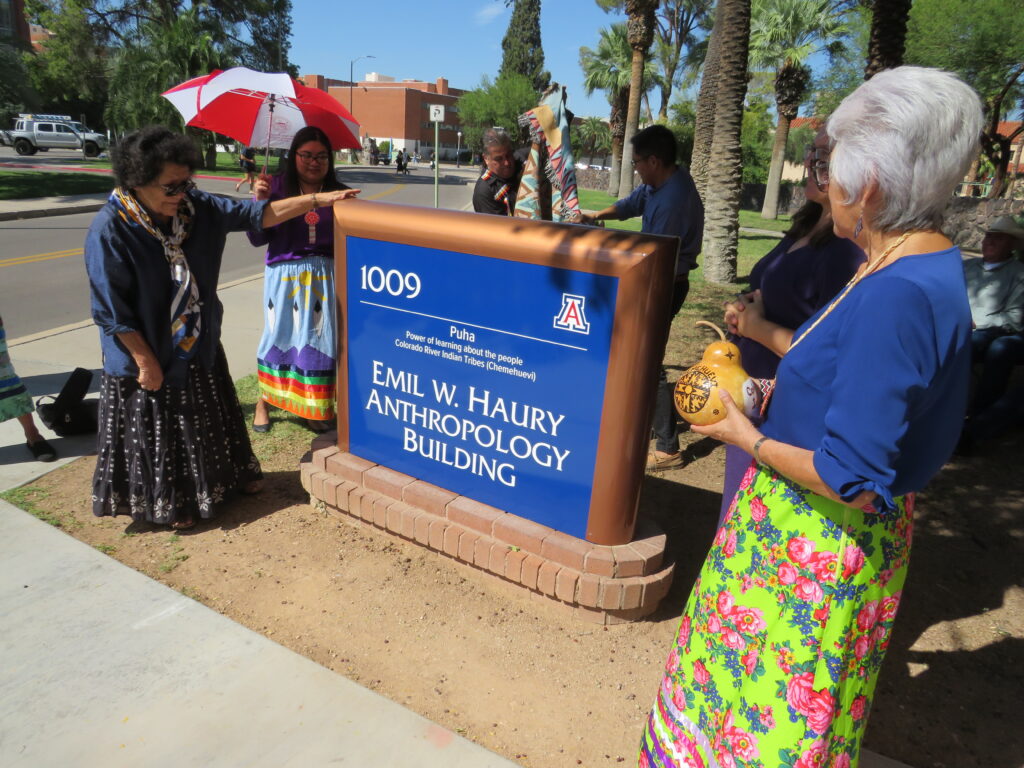
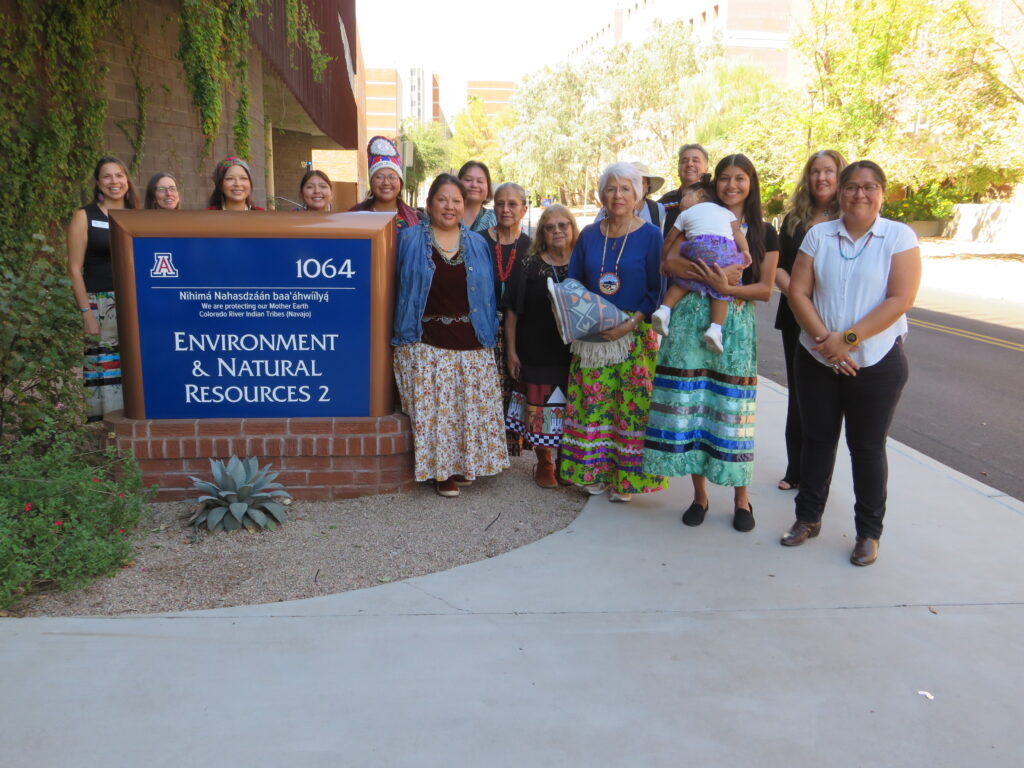
TUCSON, Ariz. — The University of Arizona will host a special series of sign unveiling ceremonies on Friday, September 4, 2026, honoring the four languages of the Colorado River Indian Tribes (CRIT): Mohave, Chemehuevi, Hopi, & Navajo. These ceremonies represent an important milestone in an ongoing campus-wide initiative to elevate the visibility, recognition, and continued presence of Indigenous languages and cultural heritage within the campus community.

The events are organized by the University of Arizona’s Office of Native American Advancement & Tribal Engagement (NAATE) in collaboration with individual academic colleges. Students, faculty, staff, tribal community members, and the general public are invited to attend the progression of ceremonies throughout the day.

The schedule for the Friday ceremonies includes:

  • 9:00 AM – Emil W. Haury Anthropology Building (1009 E South Campus Dr): Honoring the CRIT Chemehuevi language. The ceremony features a welcome and land acknowledgment from Levi Esquerra (Special Advisor, NAATE), a prayer by Eloy DeLeon, remarks from Clarissa Robles Parra on behalf of the Office of the Provost, and an address by CRIT Chairwoman Amelia Flores. Cultural sharing will feature the Salt Song(s) and Red Foot, followed by refreshments.
  • 10:30 AM – Environment and Natural Resources 2 (ENR2) Building (1064 E Lowell St): Honoring the CRIT Navajo language. Hosted by Liz Petterson, Associate Director, Arizona Institute for Resilience, alongside CRIT Chairwoman Amelia Flores, and a Navajo language representative featuring a traditional blessing and cultural demonstration.
  • 1:00 PM – Forbes Building (1140 E South Campus Dr): Honoring the CRIT Hopi language with remarks from Dr. Edward Martin (Associate Dean, CALES Cooperative Extension), Professor Sheilah Nicholas, and Dean George W. Smith.
  • 2:30 PM – College of Education Building (1430 E 2nd St): Honoring the CRIT Mohave language. The concluding sign unveiling of the day will include introductions by students, remarks from CRIT Chairwoman Amelia Flores, and a final cultural demonstration.

The celebration of Indigenous culture continues into the weekend with the Native American Heritage Game on Saturday, September 5, 2026. The Arizona Wildcats will face Northern Arizona at Casino Del Sol Stadium, with kick-off scheduled for 6:30 PM MST. Pre-game festivities at Bear Down Field will begin at 3:15 PM with the Bear Down Bash, featuring 18-minute cultural performances from each tribe. A traditional gift presentation will follow during the Wildcat Walk at 4:15 PM, leading up to an on-field tribal recognition ceremony during the second quarter of the football game.

For more operational schedules or to register for the unveiling events, please visit the official University of Arizona Event Page.