
Written by CRIT Media Reporter Ariana Romero
“This river is everything to so many people. And yet so many of us treat it as if it’s nothing.”
Those words from ultradistance runner and water advocate Mina Guli carry added weight as the Colorado River faces more than two decades of drought, declining reservoir levels, and growing uncertainty over how the river will be managed in the years ahead.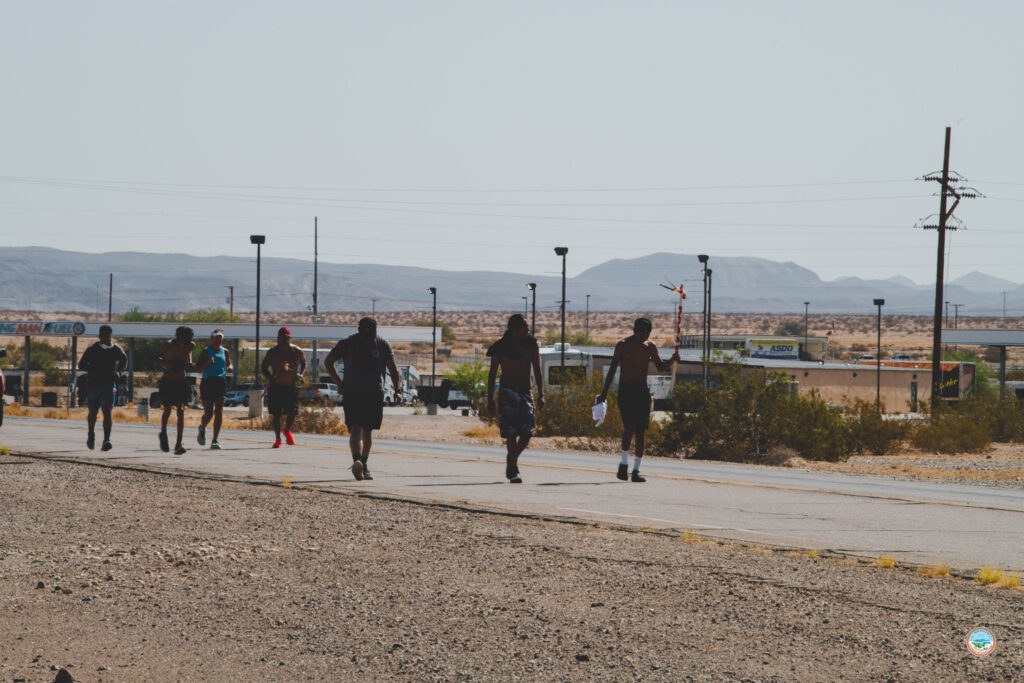
For the Colorado River Indian Tribes, the future of the river is not a distant issue. CRIT lives along its banks, holds senior Colorado River water rights, and continues to play an active role in conversations surrounding conservation, management, and the river’s future.
Those conditions gave added significance to Guli’s 2,000-mile “Keep the River Running” journey as it reached the Colorado River Indian Reservation.
Guli is running approximately 2,000 miles in 100 days along the Colorado River as part of her “Keep the River Running” campaign. Her journey follows the river through communities that depend on it, with a focus on raising awareness, listening to local voices, and encouraging cooperation around the river’s future.
Her CRIT visit began on the California side of the Reservation, where Councilman Tommy Drennan, Councilwoman Raeanne Patch, and Councilwoman Tracey Quillen greeted and welcomed her before the run.
From there, members of the Mohave Runners, Adrian Pulido, Nolan Taliman, Irving Sharp, Elan Drennan-Webb, Joseph “Joe” Deleon, Aniah “AB” Booth, Mickey Anderson Jr., Joshua Mike, Oslette Johnson, and Chance Fisher joined Guli and ran alongside her through scorching desert heat. Together, they crossed the Colorado River from the California side into Arizona and continued through the community to the Tribal Council Chambers on Mohave Road.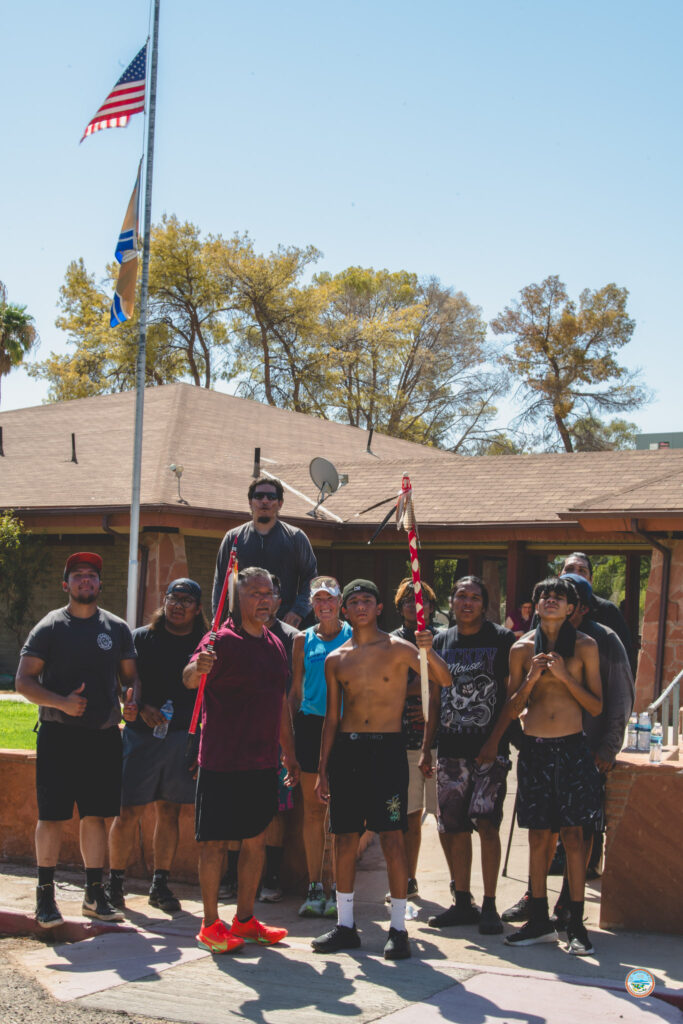
The Mohave Runners brought a strong local presence to the event. Their participation reflected more than physical endurance. They were running beside a river that has sustained their community for generations, showing strength and determination while taking part in a larger effort focused on the future of the Colorado.
Guli said running alongside local people gave her a deeper understanding of the communities tied to the river.
“These are people who have spent their lives here and have so much to share and so much knowledge,” she said.
After the run, Guli, Tribal Council, and community members gathered inside the Tribal Council Chambers. Vice Chairman Dwight Lomayesva, Secretary Josephine Tahbo, Treasurer Anisa Patch, Councilwomen Tracey Quillen, Vanessa Welch, and Raeanne Patch, and Councilman Tommy Drennan were among those in attendance.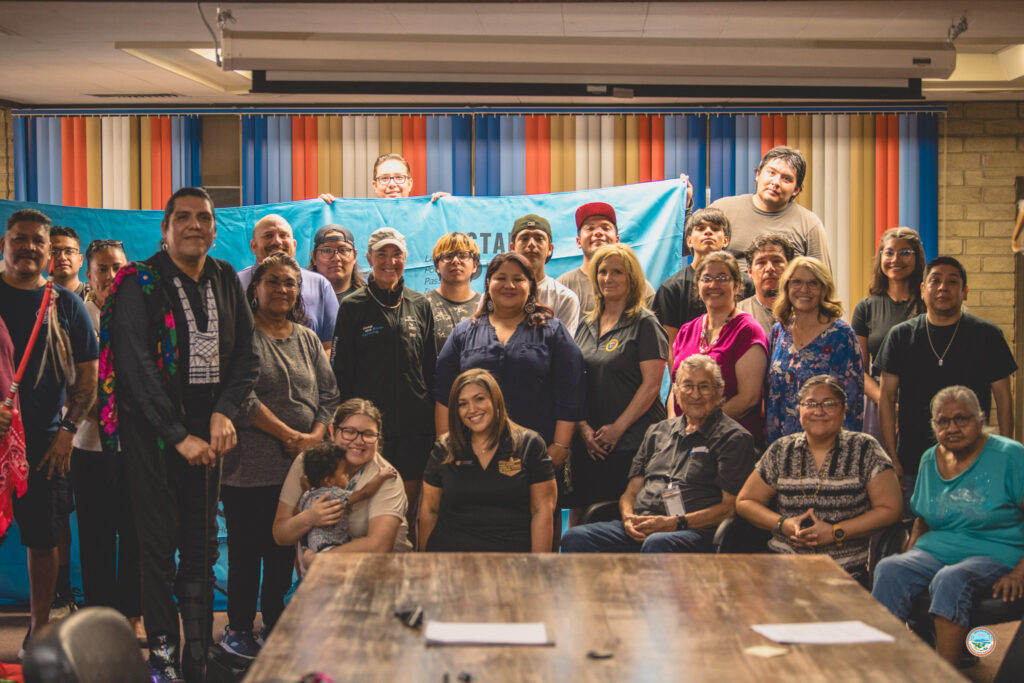
The Tribal Council welcomed Guli, presented her with a gift, and thanked her for bringing attention to the Colorado River and the people whose lives are connected to it.
During the gathering and her interview with CRIT Media, one message continued to surface: the importance of working together.
Guli spoke about the many challenges facing the river, including fragmentation among governments, communities, industries, and organizations. She said long-term solutions will require people to look beyond individual interests and focus on a shared future.
“Together doesn’t mean that the river is yours or mine,” Guli said. “It means that it’s ours.”
She also described what she called the “power of together,” saying the future of the river will depend on people being willing to listen to one another, include different perspectives, and work across boundaries.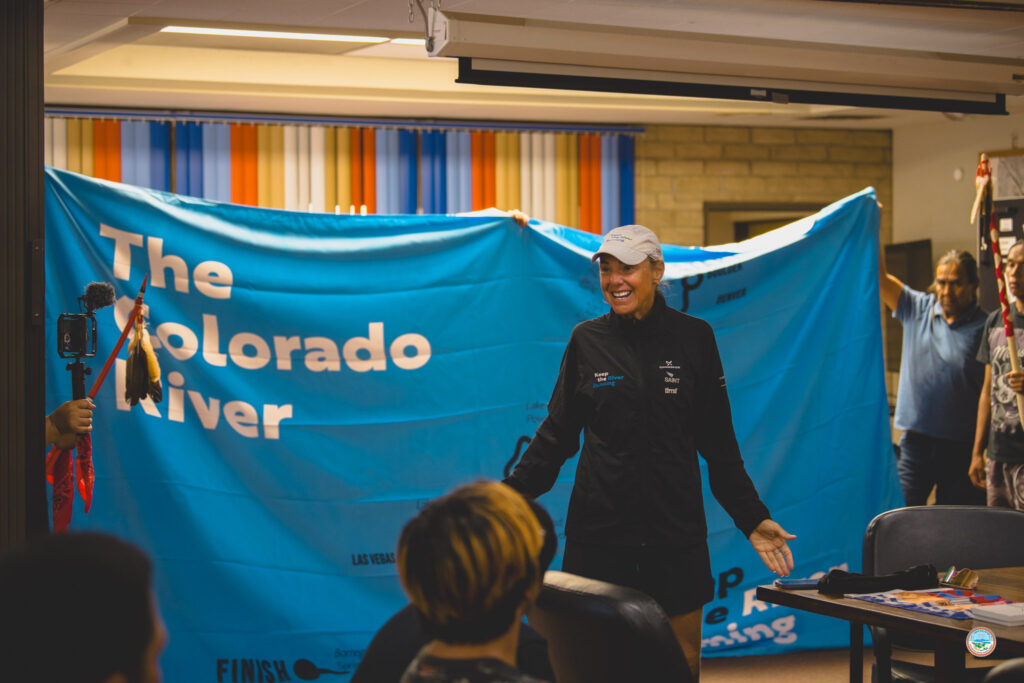
For Guli, that includes Tribal communities whose relationship with the river goes back generations.
She said being at CRIT gave her the opportunity to listen directly to people who have lived with and understood the Colorado River “since time immemorial.” She also pointed to CRIT’s work involving legal personhood as an example of thinking about the river as more than simply a resource.
“The way to hear them is to be here,” she said.
Throughout her journey, Guli has also seen firsthand how conditions along the river are affecting people and communities. She described beginning near the headwaters, where the river was small enough that she and her team had to search through the meadows to find it. As she traveled downstream, she met guides, workers, business owners, and residents who shared how changing river conditions were affecting their lives.
Her message at CRIT, however, was not only about the challenges.
Guli encouraged people, especially young people, to recognize that change does not always begin with one major action. She compared the river’s problems to her own 2,000-mile journey, saying that focusing only on the full distance could make the challenge feel impossible. Progress, she said, comes by continuing to take the next step.
“Never think, ‘I’m just one person, what change can I make?’” Guli said. “Always think, ‘I am one person, how am I going to make that change?’”
That idea tied back to the message she repeated throughout the day. No one community, government, tribe, city, business, or individual can determine the future of the Colorado River alone.
Guli said her visit to CRIT left her encouraged by what she saw in the community.