September 12, 2026 7:11 am
CRIT Nation, Parker, AZ
September 12, 2026 7:11 am
CRIT Nation, Parker, AZ

According to 12News (KPNX), Arizona leaders say the state is approaching a critical moment as Colorado River negotiations continue and water cutbacks remain likely. Officials described the situation as a crossroads, warning that the next few years will require difficult decisions about conservation, water use, and long-term planning.

The looming reductions stem from ongoing negotiations over post-2026 operating rules for the Colorado River, which will determine how water shortages are shared among the seven basin states. Arizona has already taken significant reductions under earlier shortage agreements, and additional cuts could affect cities, agriculture, and water providers across the state.

For CRIT and other Tribal Nations along the river, these discussions are important because future operating guidelines will shape how the Colorado River is managed for decades. Tribal water rights, infrastructure investments, and long-term planning will all be influenced by how states and the federal government resolve these negotiations.

Source: https://www.12news.com/video/news/politics/sunday-square-off/were-at-a-crossroads-water-cutbacks-looming-for-az/75-f1cfe83a-b724-42e9-9b6c-e7ae04a9a4a8

According to the Arizona Republic, scientists say the western United States may not simply be experiencing a drought but a long-term shift toward a drier climate known as “aridification.” Researchers say the region has effectively been in a 32-year drought, but climate patterns suggest the West could remain permanently drier than historical averages.

This shift is affecting the Colorado River Basin, where reservoirs like Lake Mead and Lake Powell remain far below historic levels despite occasional wet years. Scientists say warmer temperatures cause more water to evaporate and reduce snowpack that normally feeds the river.

For CRIT, this concept of aridification is important because it changes how water planning is approached. Instead of preparing for drought cycles followed by recovery, water managers may need to plan for a permanently smaller Colorado River supply.

Source: https://www.azcentral.com/story/news/local/arizona-environment/2026/03/02/arizona-32-year-drought-may-now-be-aridification/87954422007/

According to KJZZ, lawmakers introduced around 30 groundwater-related bills during the current Arizona legislative session, but most proposals do not directly focus on conservation. Instead, many of the bills address water development, transportation, or regulatory changes.

Arizona groundwater policy has become a growing concern as communities increasingly turn to underground aquifers to supplement shrinking Colorado River supplies. Some lawmakers and water experts argue stronger conservation policies are needed to protect these aquifers for future generations.

For CRIT and other Tribal communities, groundwater policy is significant because it influences regional water demand and long-term water sustainability across Arizona. As Colorado River supplies tighten, groundwater management decisions could shape how the state balances growth with water availability.

Source: https://www.kjzz.org/politics/2026-03-02/30-arizona-groundwater-bills-were-introduced-this-year-most-arent-aimed-at-conservation

(more…)

According to KJZZ News, environmental groups are warning of serious long-term impacts to the Colorado River system after negotiators missed another deadline to finalize future water management rules. Advocates say declining reservoir levels, ongoing drought, and delayed agreements could increase pressure on ecosystems, agriculture, and water supplies across the Southwest. The warnings highlight growing urgency for coordinated conservation and policy action. For CRIT, these discussions are important because federal decisions about river operations directly influence how tribal water rights are protected and how long-term water stability is maintained.

Source: KJZZ News — https://www.kjzz.org/politics/2026-02-19/environmental-groups-warn-of-dire-impacts-after-colorado-river-negotiators-miss-another-deadline

According to Nevada Public Radio, Colorado River negotiations continue to face challenges as states balance drought impacts, water demand, and competing priorities. Officials involved in the talks say progress has been uneven and that future agreements may require difficult compromises across the basin. Continued uncertainty highlights the complexity of managing the river under changing climate conditions. For CRIT, ongoing interstate negotiations remain important because federal and regional policy decisions directly affect how tribal water rights are recognized and protected.

Source: Nevada Public Radio — https://knpr.org/show/knprs-state-of-nevada/2026-02-20/nevadas-main-water-negotiator-talks-about-the-bumpy-road-ahead-in-the-colorado-river-discussions

According to Newsweek, recent data shows some improvement in Lake Mead water levels following storms and conservation efforts, offering cautious optimism for the Colorado River system. However, experts note that long-term drought conditions still pose significant challenges and continued conservation will remain essential. Reservoir levels remain a key factor in determining water deliveries across the basin. For CRIT, reservoir conditions remain important because federal operational decisions tied to storage levels directly affect how tribal water allocations are managed and protected.

Source: Newsweek — https://www.newsweek.com/lake-mead-water-levels-get-good-news-11557968


According to Arizona Water News, Arizona and its Lower Basin partners say they remain committed to finding common ground on new Colorado River operating rules despite stalled negotiations among the seven basin states. Officials emphasized continued collaboration with federal agencies and neighboring states to stabilize water supplies beyond 2026 as drought conditions persist. The effort reflects ongoing attempts to balance conservation, water demand, and long-term river sustainability. For CRIT, these negotiations remain important because federal and interstate agreements directly influence how tribal water rights are recognized and protected in future Colorado River management decisions.

Source: Arizona Water News — https://www.azwater.gov/news/articles/2026-02-19

According to the Navajo Times, federal officials are moving forward with developing new Colorado River operating guidelines even as state negotiations remain stalled. The Department of the Interior is continuing its environmental review process to prepare for post-2026 river management, highlighting the federal government’s role when states cannot reach consensus. Tribal consultation remains part of that process. For CRIT, federal involvement is significant because Colorado River policies shaped at the federal level directly affect tribal water rights, long-term planning, and regional water security.

Source: Navajo Times — https://navajotimes.com/reznews/federal-officials-move-forward-on-colorado-river-operating-rules-as-state-negotiations-stall/

According to ABC 15 Arizona, tribal nations along the Colorado River are among those with the most at stake as negotiations over future water allocations continue. Tribal leaders emphasize the importance of protecting established water rights while ensuring sustainable solutions to ongoing drought conditions. The article highlights how tribal participation is increasingly central in discussions about the river’s future. For CRIT, these conversations are especially important because tribal sovereignty and water rights remain critical factors in how Colorado River resources are managed across the basin. (more…)

According to CBS 5 Arizona’s Family, Arizona could face deeper Colorado River water cuts following missed negotiation deadlines, raising concerns about future water supply stability across the state. Officials say ongoing drought and reduced reservoir levels continue to challenge long-term planning efforts. These developments may lead to increased federal involvement in river management decisions. For CRIT, potential cutbacks are important because federal allocation decisions directly influence how tribal water rights are maintained and protected.

Source: CBS 5 Arizona’s Family — https://www.azfamily.com/2026/02/17/arizona-faces-major-colorado-river-water-cuts-deadline-passes/

According to the Colorado Sun, new forecasts suggest Lake Powell could reach critically low levels that threaten hydropower production and water deliveries if drought conditions persist. Reservoir storage plays a central role in determining how water is distributed across the Colorado River Basin. Experts say ongoing climate pressures and declining inflows continue to complicate long-term planning. For CRIT, reservoir conditions remain important because federal operational decisions tied to storage levels directly affect how tribal water allocations are managed and protected.

Source: Colorado Sun — https://coloradosun.com/2026/02/18/lake-powell-forecast-critical-lows-federal-study/

According to AZPM News, Colorado River basin states missed another federal deadline to reach agreement on future water reductions, increasing the likelihood of additional cutbacks across the Southwest. Officials warn that continued drought and declining reservoir levels could force tougher decisions about water allocation in the coming years. The missed deadline highlights growing uncertainty about long-term river management. For CRIT, potential water reductions and federal policy decisions directly influence how tribal water rights are protected and incorporated into basin planning.

Source: AZPM News — https://news.azpm.org/s/102728-arizona-and-western-states-miss-colorado-river-water-deadline-as-cuts-loom/

According to Newsweek, Lake Powell water levels could drop to critical levels sooner than expected, raising concerns about hydropower production and water deliveries across the Colorado River Basin. Experts say continued drought, reduced snowpack, and high demand are contributing to declining reservoir storage. These conditions add urgency to ongoing negotiations about future river operations. For CRIT, reservoir levels are important because federal decisions tied to storage conditions directly affect how tribal water allocations are managed and sustained.

Source: Newsweek — https://www.newsweek.com/lake-powell-water-could-drop-to-critical-levels-sooner-than-expected-11531274

According to Pinal Central, the Gila River Indian Community expressed concern over the lack of agreement among Colorado River basin states, noting the importance of tribal voices in ongoing water negotiations. Tribal leaders emphasized the need for sustainable solutions that recognize existing water rights while addressing long-term drought conditions. The statement highlights growing awareness of tribal participation in basin discussions. For CRIT, tribal engagement in Colorado River negotiations is significant because it reinforces the importance of protecting tribal sovereignty and water rights across the region.

Source: Pinal Central — https://www.pinalcentral.com/sacaton_central/gric-laments-lack-of-deal-over-colorado-river-water/article_cb91f461-07de-4f88-8d70-c3dec3b96c67.html

A recent statement from Colorado River Commissioner JB Hamby says California and other Lower Basin states have been working with federal officials and neighboring states to develop new long-term operating rules for the Colorado River after 2026. He noted that the original 1922 Colorado River Compact was based on water supply estimates that no longer match today’s reality, as river flows have declined over the past 25 years while demand continues to grow. 

According to the statement, California, Arizona, and Nevada committed to major conservation efforts in recent years and have already exceeded planned water savings meant to stabilize Lake Mead and Lake Powell. However, disagreements remain between Upper Basin and Lower Basin states about how future reductions should be shared, and negotiators have not yet reached a final agreement. 

For CRIT, these ongoing negotiations are important because federal Colorado River policies, interstate agreements, and conservation requirements directly influence how tribal water rights are protected, managed, and incorporated into long-term river planning that affects the entire region.

Source: https://crb.ca.gov/2026/02/statement-from-jb-hamby-colorado-river-commissioner-for-california/


Deputy Commissioner David Palumbo and Representatives from the Bureau of Reclamation (referred to as Reclamation) met with the Colorado River Indian Tribes (CRIT) Tribal Council on June 1st, 2026. This meeting was called a Government-to-Government consultation for on-going dialogue specifically regarding the development of the finalized Environmental Impact Statement (EIS). The EIS is a federal review of the different options being considered for operating major Colorado River dams and reservoirs after 2026, and the potential impacts of those options. In this meeting, representatives from Reclamation laid out developing plans they are calling Post 2026 Operational Guidelines and Strategies for Lake Powell and Lake Mead. In these guidelines, it will determine how the major Colorado River reservoirs, specifically Lake Powell and Lake Mead, are operated after the current rules expire. At the heart of Reclamation’s visit was the opportunity not only to explain its plans for the Colorado River and the Final EIS, but also to address CRIT’s major concerns with the Draft EIS. Most notably, the Draft EIS discusses the possibility of allocating shortages among all water users without regard to priority date. Priority date is the legal order that determines which water rights are senior and must be lawfully protected before junior users, to which CRIT has senior priority. This approach is known as pro rata allocation of shortages, and if applied, it will directly violate the Tribe’s senior water rights.

Reclamation’s presentation did not come with good news. According to its report, continued drought, climate variability, and historically low reservoir levels have created serious challenges for Colorado River operations. Representatives also explained that the Upper and Lower Basin states had not reached consensus on a Basin-wide proposal at the time of the meeting, making the federal decision-making process especially important. They discussed what they are calling a Preliminary Preferred Alternative: a 10-year framework that would establish broad operational principles and sideboards while allowing specific operational guidelines to be updated every two years. This method would provide flexibility rather than locking the Basin into a single fixed set of rules for the entire decade.

This means that Reclamation will decide operations for 2027–2028 first, then revisit operations for 2029–2030, and continue in two-year cycles. They said this might help tackle things in a real-time manner and adjust if required.

In response, CRIT Tribal Council members emphasized that the present crisis cannot be separated from the federal government’s long-standing obligations to the Tribe, including the need to address aging irrigation infrastructure and support CRIT’s ability to fully use and store its water. Council members expressed that, had those commitments been fulfilled earlier, CRIT and the Basin may be facing a very different situation today. Additionally, the conversation was centered mostly around pro rata, with all of Tribal Council members doubling down on making Reclamation commit to removing pro rata language in the final EIS. (more…)

Andrea Travnicek, Assistant Secretary of the Interior for Water and Science, recently toured the Colorado River Indian Reservation with Chairwoman Amelia Flores, ‘Amat Kuhwely Farms Manager Joshua Moore, Deputy Attorney General Travis Nez, Lead Water Attorney John Bezdek, Water Resources Director Dillon Esquerra, and Fish & Game Wildlife Manager Alexander Kalinowski. The goal of the visit was for Travnicek to understand in real time about the Tribe’s water, agricultural capabilities, and infrastructure inefficiencies.

Travnicek was accompanied by members of her staff and representatives from the Bureau of Reclamation, an agency within her oversight portfolio. During the visit, Tribal representatives took her to several locations across the reservation to provide a firsthand look at CRIT enterprises, agricultural operations, and the deteriorating irrigation infrastructure affecting the vast farmland throughout the valley.

The tour began at Aha Quin Resort, a Tribally owned and operated recreational destination located on CRIT lands along the California side of the Colorado River.

Travnicek then visited a portion of the valley’s irrigation system, a critical stop because it is where excess water flows through the canals before draining back into the Colorado River. The deteriorating infrastructure limits CRIT’s ability to retain and reuse that water within the irrigation system. Once the water returns to the river, it becomes available to downstream junior users, some of whom have derived substantial economic benefit from water over which CRIT holds a far more senior legal claim, with an earliest priority date of March 3, 1865. The location has long been used to demonstrate the serious condition of the aging irrigation system. By visiting the site, Travnicek was able to observe the problems firsthand and hear Dillon Esquerra and Joshua Moore. explain how the failing infrastructure affects the Tribe’s ability to conserve and efficiently use its water.

The tour continued at ‘Amat Kuhwely Farms, where Travnicek met with Farm Manager Joshua Moore and local farmers John Nelson and tribal member Ciesto Leivas, Jr.. The farmers discussed the challenges of maintaining agricultural operations while relying on aging and unreliable infrastructure throughout the valley. They also discussed the Bureau of Indian Affairs (BIA) inoperable ability to maintain its own infrastructure and how often (if not daily) these farmers need to do the work of the BIA in order to maintain their crops and yield successful results.

Travnicek listened to their concerns and expressed her willingness to elevate these issues with BIA leaders in DC. She relayed how frustrating it must be for them, and for CRIT overall to not see any updates. (more…)

The CRIT Department of Health and Social Services hosted its Health Fair on Wednesday, June 24, at Irataba Hall. The event brought together departments and programs from across the community to share helpful resources and important health information.

There was food, games, raffles, and free shaved ice provided by Uncle Phil’s Awesome Snow Shaved Ice. Guests also left with bags filled with informational flyers, recipes, and useful household items. It was great to see so many departments working together to support and connect with the community.

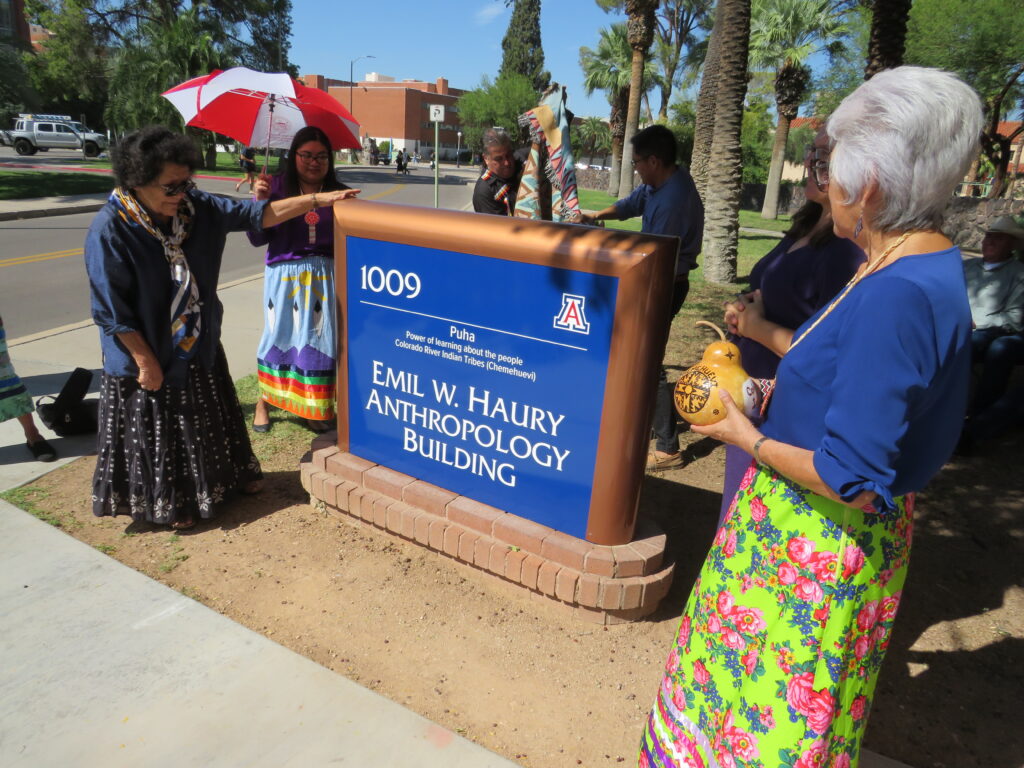
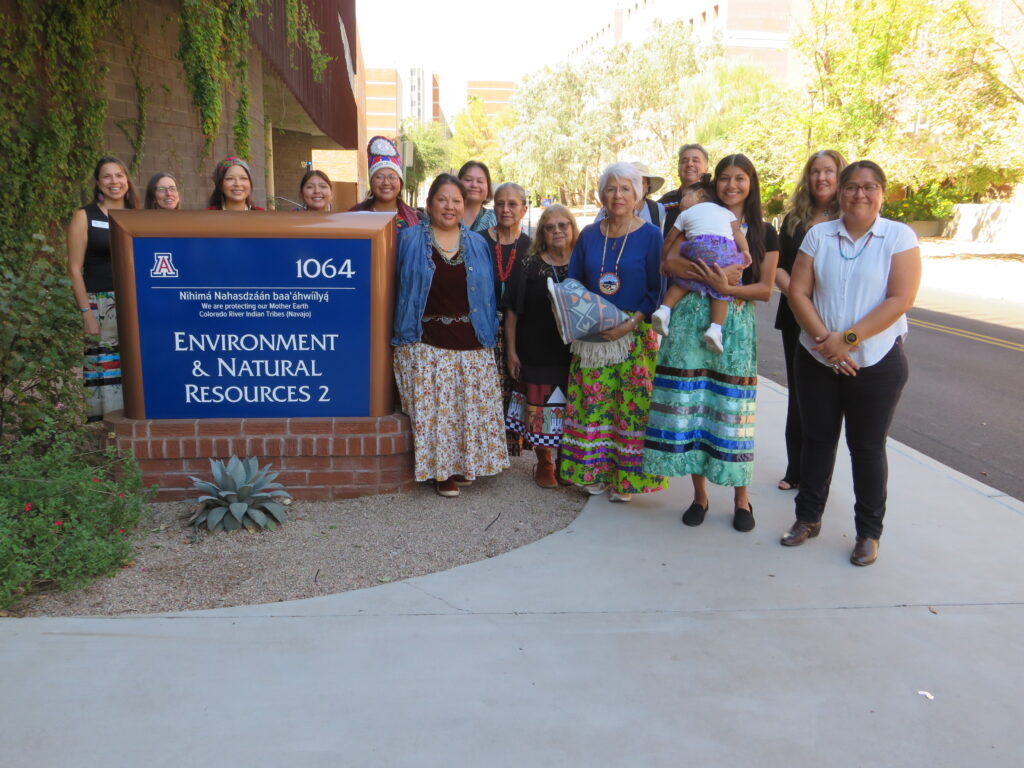
TUCSON, Ariz. — The University of Arizona will host a special series of sign unveiling ceremonies on Friday, September 4, 2026, honoring the four languages of the Colorado River Indian Tribes (CRIT): Mohave, Chemehuevi, Hopi, & Navajo. These ceremonies represent an important milestone in an ongoing campus-wide initiative to elevate the visibility, recognition, and continued presence of Indigenous languages and cultural heritage within the campus community.

The events are organized by the University of Arizona’s Office of Native American Advancement & Tribal Engagement (NAATE) in collaboration with individual academic colleges. Students, faculty, staff, tribal community members, and the general public are invited to attend the progression of ceremonies throughout the day.

The schedule for the Friday ceremonies includes:

  • 9:00 AM – Emil W. Haury Anthropology Building (1009 E South Campus Dr): Honoring the CRIT Chemehuevi language. The ceremony features a welcome and land acknowledgment from Levi Esquerra (Special Advisor, NAATE), a prayer by Eloy DeLeon, remarks from Clarissa Robles Parra on behalf of the Office of the Provost, and an address by CRIT Chairwoman Amelia Flores. Cultural sharing will feature the Salt Song(s) and Red Foot, followed by refreshments.
  • 10:30 AM – Environment and Natural Resources 2 (ENR2) Building (1064 E Lowell St): Honoring the CRIT Navajo language. Hosted by Liz Petterson, Associate Director, Arizona Institute for Resilience, alongside CRIT Chairwoman Amelia Flores, and a Navajo language representative featuring a traditional blessing and cultural demonstration.
  • 1:00 PM – Forbes Building (1140 E South Campus Dr): Honoring the CRIT Hopi language with remarks from Dr. Edward Martin (Associate Dean, CALES Cooperative Extension), Professor Sheilah Nicholas, and Dean George W. Smith.
  • 2:30 PM – College of Education Building (1430 E 2nd St): Honoring the CRIT Mohave language. The concluding sign unveiling of the day will include introductions by students, remarks from CRIT Chairwoman Amelia Flores, and a final cultural demonstration.

The celebration of Indigenous culture continues into the weekend with the Native American Heritage Game on Saturday, September 5, 2026. The Arizona Wildcats will face Northern Arizona at Casino Del Sol Stadium, with kick-off scheduled for 6:30 PM MST. Pre-game festivities at Bear Down Field will begin at 3:15 PM with the Bear Down Bash, featuring 18-minute cultural performances from each tribe. A traditional gift presentation will follow during the Wildcat Walk at 4:15 PM, leading up to an on-field tribal recognition ceremony during the second quarter of the football game.

For more operational schedules or to register for the unveiling events, please visit the official University of Arizona Event Page.