Click the links below to download a form
Direct Deposit Authorization Form
General Welfare Application_09242024
General Welfare Application Minors_09242024
PLEASE READ CAREFULLY
Dear Tribal Member:
Tribal Council has approved a 2024 General Welfare Assistance payment of $2,000.00 for each CRIT Tribal Member. CRIT Tribal members, both minors and adults, who are enrolled with CRIT as of November 1, 2024 are eligible to receive assistance. Tribal Members MUST submit an application to receive a General Assistance Payment for 2024.
Click the links below to download a form
Direct Deposit Authorization Form
General Welfare Application_09242024
General Welfare Application Minors_09242024
This 2024 General Welfare Assistance payment replaces the annual Tribal Distribution Payment. The benefits to the membership are that the General Welfare Assistance payment is NOT income subject to federal taxes and should not impact eligibility for benefits such as SSI and food stamps. You will not be issued a 1099 for this payment. Please review the General Welfare Plan for more information.
Tribal Members will receive their General Welfare Assistance payment by mail or by direct deposit into a bank account after submitting their application. Parents or legal guardians may request direct deposit for their eligible minor tribal member children into an account owned by the parent or the child. YOU DO NOT HAVE TO SUBMIT A NEW DIRECT DEPOSIT FORM WITH YOUR APPLICATION IF YOU INTEND TO RECEIVE YOUR GENERAL WELFARE ASSISTANCE PAYMENT IN SAME BANK ACCOUNT AS YOU RECEIVED YOUR 2023 GENERAL WELFARE ASSISTANCE PAYMENT.
The General Welfare Assistance payment will be mailed or direct deposited as follows:
Application and Forms Due Date Payment Issued
Must be received by Accounting:
October 18, 2024 November 21, 2024
November 22, 2024 December 19, 2024
December 20, 2024 January 16, 2025
After December 20, 2024 Payments issued monthly on a rolling basis
and before December 31, 2025
If you want to receive your General Welfare Assistance payment by direct deposit, you must submit the attached Direct Deposit Authorization Form along with a voided check to CRIT Accounting. If you do not have a direct deposit authorization form on file from last year, or do not submit one for 2024 with your application, your payment will be mailed to the address on your application. The mailing address you provide on the application will be used to update your address with both enrollment and accounting. You may have already received written notification along with an application and a self-addressed stamped envelope for your use to return the forms or the forms can be dropped off in person at Tribal Administration. Additionally, the application and forms can be emailed to GWA@crit-nsn.gov.
Please note that the checks for eligible minor tribal members will be issued in the name of the child and not the parents. Parents or guardians must submit proof of their right to receive the distribution on behalf of their child by submitting an application with a copy of the birth certificate listing the parent(s), and if applicable, a court order establishing legal custody and placement before checks will be mailed or the payment directly deposited.
Checks will not be issued to the parent(s) if they do not have the care and custody of their children. Guardians and custodians of minors who are not the child’s legal parent shall be required to provide a court order indicating their status. Payments for children in the physical care and custody of CRIT Social Services or other state or tribal agencies shall be held in an account established by CRIT Accounting.
Tribal Members must apply for the 2024 General Welfare Assistance Payments no later than December 31, 2025 after which a 2024 payment will not be available.
Please be advised that if you are in default on a debt you owe to the Colorado River Indian Tribes or its enterprises, you may voluntarily agree to apply your General Welfare Assistance to the loan or other outstanding debt in default. If you have any questions about outstanding debts in default please contact Tracey Quillen at (928) 669-1239.
If you have any questions regarding General Welfare Assistance or you have an agency incorrectly treating this payment as income please contact the Office of the Attorney General at (928) 669-1271.
Click the links below to download a form
Direct Deposit Authorization Form
Follow this link for more information including how to apply.
This position is located with the Bureau of Indian Affairs, Superintendent, Colorado River Agency in Poston, Arizona.
The Colorado River Indian Tribes Tribal Council has made a historic decision to protect the lifeblood of their Reservation. On November 6, 2025, the Council unanimously approved Resolution No. R-375-25, which proclaims the personhood status of the Colorado River under tribal law.
This resolution acknowledges the Colorado River as a living entity whose health and well-being are intrinsically linked to the well-being of the Colorado River Indian Tribes (CRIT) members. The Tribes’ deep-rooted connection to the river spans centuries, providing cultural identity, spiritual strength, food systems, and economic stability that continue to shape their community life today.
The resolution emphasizes the central role the river has played in defining the identity of the CRIT. It highlights that CRIT’s ancestors have preserved and protected these lands since before the establishment of the Colorado River Indian Reservation in 1865.
The Council underscores the crucial role the river plays in sustaining traditional practices, wildlife, and agriculture, including the federal irrigation systems authorized as early as 1867. Today, the Colorado River Indian Irrigation Project stands as a cornerstone of the tribal economy.
The resolution underscores significant legal milestones that acknowledged CRIT’s water rights. In the landmark 1964 and 2006 Arizona v. California U.S. Supreme Court decisions, the Tribes secured 719,248 acre-feet of water annually, ensuring their access to the river for generations to come.
By granting personhood to the River, the Tribal Council reaffirmed its sovereign duty to honor and protect it. This status mandates that the River’s well-being must be a priority in governance and decision-making moving forward.
As part of the resolution, the Attorney General and their staff will develop legal safeguards and propose updates to the CRIT Water Code and other relevant regulations. These updates may include the potential designation of the river as a protected cultural landscape.
Council members recognized that protecting the river is not merely a legal obligation but a continuation of cultural beliefs passed down through generations.
Through this declaration, CRIT demonstrates its unwavering commitment to stewardship. The resolution concludes with a resolute message: the Colorado River is, and will always remain, a vital entity deserving of respect, care, and protection for all future generations.
Article Written by CRIT Media Reporter Ariana Romero
News Update November 12, 2025
Negotiations over the future of the Colorado River have reached a standstill after all seven basin states failed to meet a key federal deadline. Reports from 12News and 8NewsNow confirm that the states were unable to agree on a new water-sharing plan, leaving the situation unresolved as the river continues to decline.
High Country News explains that the biggest disagreements involve how much each state should give up in the future. The upper Basin states want fewer mandatory reductions, while the Lower Basin states, including Arizona, say they have already taken the deepest cuts and cannot continue to absorb the majority of the impacts.
With no agreement in place, Arizona Governor Katie Hobbs has asked the Trump administration to intervene. She stated that Arizona has made significant sacrifices and cannot carry the weight of the reductions while other states refuse to commit to measurable cuts. If the states cannot reach a plan soon, the federal government may create one for them.
For the Colorado River Indian Tribes, the outcome of these negotiations has major importance. CRIT holds valuable senior water rights and relies on a stable and fair management plan to ensure long-term security for the community and the region.
For more information, you can read the news articles with the links below.
High Country News
https://www.hcn.org/articles/why-colorado-river-negotiations-are-so-difficult/
12 News
/wednesday-is-deadline-for-7-state-including-arizona-to-negotiate-the-colorado-river
The Colorado River Indian Tribes Employment Development and Training Department (ED&T) continues to be a vital resource for tribal members seeking support, skills, and employment. Through partnerships with the Department of Labor, Arizona Tribal Workforce, and the Department of Economic Security, ED&T provides job readiness services, education support, and hands-on work experience to those enrolled in a federally recognized tribe. Their mission focuses on promoting general welfare, encouraging educational progress, protecting tribal interests, and helping community members build stable, independent futures.
The department offers a wide range of services designed to meet people where they are. Community members can receive help studying for a driver’s permit or license, creating resumes and cover letters, preparing job applications, and building job readiness skills. ED&T also assists with obtaining needed documents such as a GED or ID. For those looking to gain work experience, the Adult Work Experience program offers a 90-day on-the-job training period with the goal of permanent employment once training is complete. High school and college students can participate in the Summer Youth Experience Program, which provides hands-on workplace exposure during summer break. When needed, ED&T also provides supportive services such as work clothing, tuition assistance, certifications, testing fees, and education supplies if those items cannot be obtained through another program.
Click the links below to upload needed forms
UPDATED SUPPORTIVE SERVICE FORM 2025

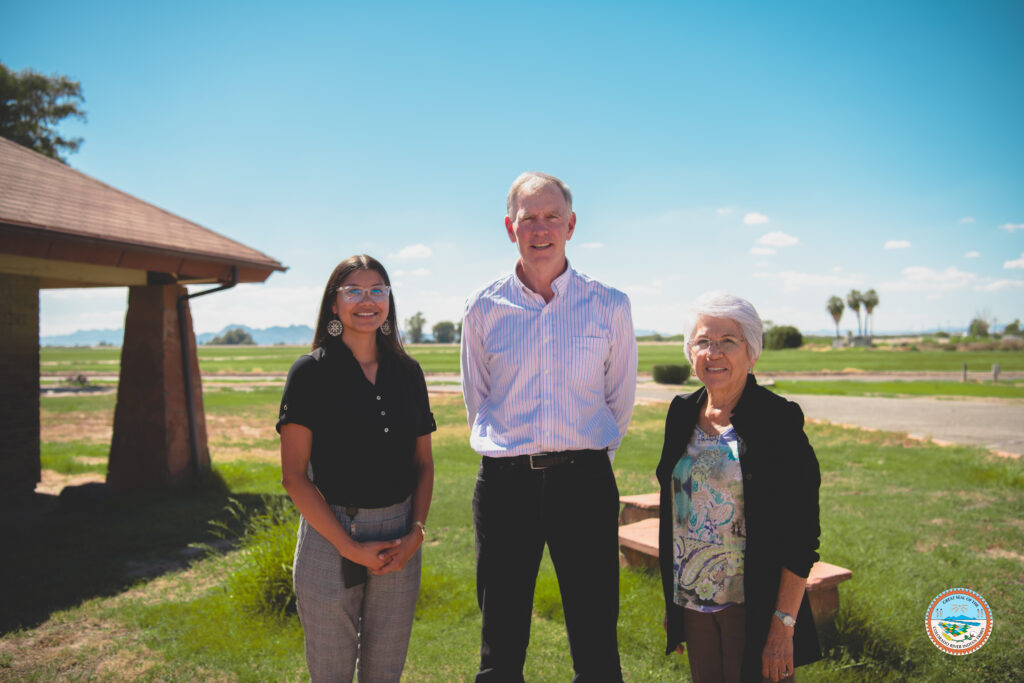
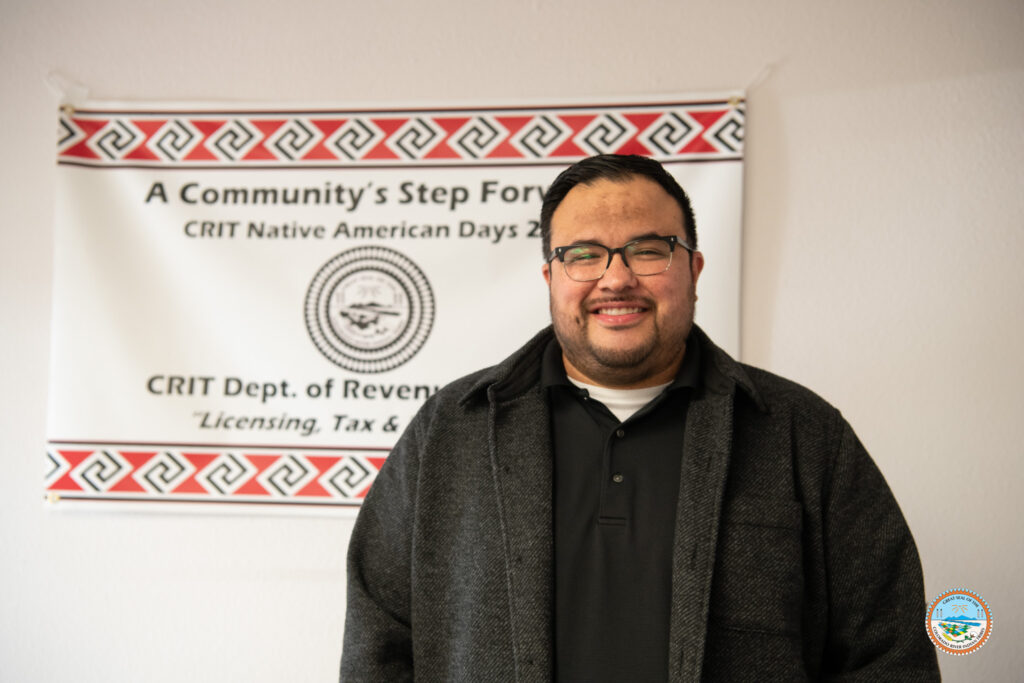
The department is guided by a committed team dedicated to helping the community move forward. Acting Director and Case Worker Kaye Antone works closely with participants to understand their goals, explore their interests, and determine what support they may need. Office Administrator Madolyn Brenner reviews applications, assists staff, and helps maintain a welcoming and organized department. Office Assistant Deaun Johnson and ED&T participant supports daily operations, helps participants with questions, and ensures they receive assistance quickly and respectfully. Together, the team works one-on-one with community members and emphasizes the importance of offering help confidentially and with care, recognizing that every situation is different. (more…)

(Parker, Ariz.) CRIT’s Tribal Council has voted to acknowledge personhood status for the Colorado River under Tribal Law. The Tribal Council approved the resolution on November 6th.
Click the link below to see the entire resolution.
personhood resolution
The council’s decision came after soliciting substantial input from Tribal Members in person and in writing through numerous outreaches.
Other Tribes have approved similar measures to safeguard natural resources. CRIT would be the first community to do so for the Colorado River. The status comes as overuse and drought are threatening the life of the River which CRIT considers to be a living entity in addition to being a life-giving resource.
Personhood status means the Colorado River has the right to be protected under Tribal Law. The status directs current and future Tribal Councils to account for the needs of the River in decision-making as well as giving CRIT legal means to address the damage climate change is causing to the Colorado River.
The resolution states in part:
“There is no greater expression of sovereignty than protecting, stewarding, and securing for future generations what our Ancestors handed down to us, and that personhood status is a reflection of our values as a people and our spiritual, cultural, and religious connection to the Colorado River from the beginning of time through the end of time;”

CRIT’s Attorney General and staff will be developing provisions for Tribal Council review and possible approval for inclusion in the tribal code, including the Water Code, to reflect the personhood status of the Colorado River as well as all the protections to which the Colorado River will be entitled under tribal law.
CRIT Chairwoman Amelia Flores said, “This resolution authorizes CRIT to take specific and concrete actions for the river and its ecosystem at a time when, more than ever, it is needed. Within Arizona, CRIT will be inevitably asked to help shoulder the burden of maintaining Arizona’s economy and way of life. This must be a two-way street, however. At CRIT we are prepared to engage and be part of the solution for Arizona, but part of the solution is the long-term protection of our river. The river is a part of who we are and who we will always be: The Colorado River Indian Tribes.”
In the quiet valley of the Colorado River Indian Tribes (CRIT), once stood one of the largest Japanese American incarceration camps of World War II, the Poston War Relocation Center. Between 1942 and 1945, nearly 18,000 men, women, and children of Japanese ancestry were forced to live there.
This past weekend, the annual Poston Pilgrimage returned to the CRIT Reservation, drawing in the largest gathering to date. More than 100 visitors met at the CRIT Museum to honor those who have lost their lives while imprisoned at Poston. Starting the weekend off at Blue Water Casino was an introduction of the event with descendants of former incarceratees, Chairwoman Amelia Flores, Debbie Pettigrew, and Karen Harjo. Many of the adults who once lived in the camps have since passed on, leaving their children to share stories of life inside, memories that continue to move and teach new generations.
This year’s pilgrimage carries special meaning with the arrival of the Ireichō, also known as The Book of Names.
The Ireichō is part of the Irei: National Monument for the WWII Japanese American Incarceration, a national project dedicated to honoring more than 125,000 people of the Japanese ancestry who were unjustly imprisoned during the war.
For the first time, every individual’s name has been compiled into one permanent record. The Ireichō follows the Japanese Buddhist tradition of kakochō, “The Book of the Past,” in which the names of those who have passed are written to be remembered and respected.
Unveiled at the Japanese American National Museum, the Ireichō invites visitors to place a red hank (stamp) beneath each name as an act of remembrance. The book has since traveled to historic incarceration sites across the country, allowing families, descendants, and visitors to honor those who lived through that time in history.
The day began with a blessing from Duncan Ryūken Williams, the Ireichō’s co-founder and Soto Zen Buddhist priest.
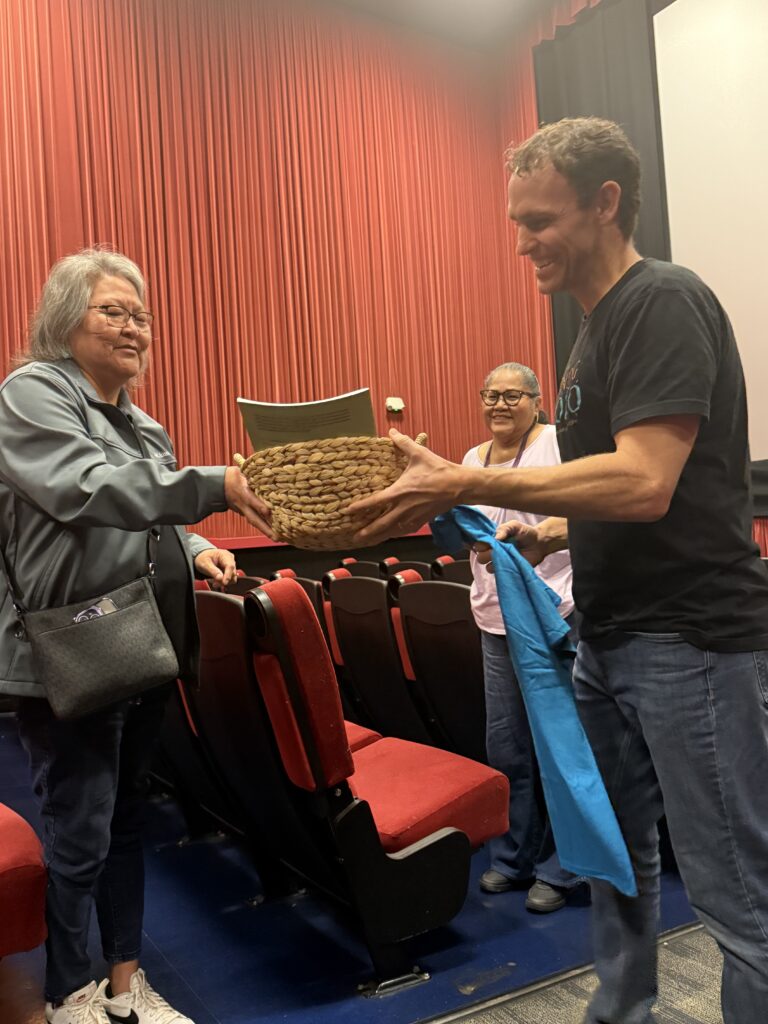
The Ase S’maav Parker Boys and the River Tribes United Dance Group shared songs and danced for the descendants of Poston’s former residents. The ceremony closed with a memorable moment as children and families were invited to stamp the Book of Names.
Each year, the Poston Pilgrimage brings together descendants, historians, and community members returning to the monument to honor those who lived behind the barbed wire and ensures their stories continue to be told. What makes Poston unique is its shared history between the Japanese American community and the tribal nations whose land was used for the camp. Built on CRIT lands under federal direction, the camp became a symbol of resilience and reflection, a reminder of the injustices endured and strength that followed. (more…)