January 21, 2026 6:38 pm
CRIT Nation, Parker, AZ
January 21, 2026 6:38 pm
CRIT Nation, Parker, AZ

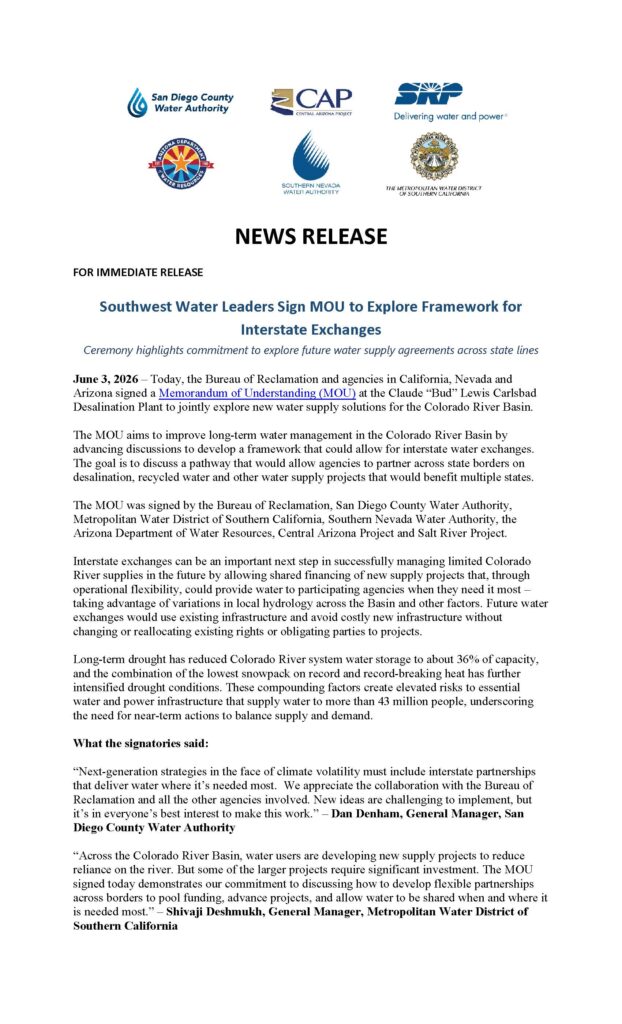
As 2025 came to a close and 2026 began, water issues across Arizona and the Colorado River Basin remained front and center. New reporting highlighted continued uncertainty around Colorado River negotiations, growing concern over snowpack levels, and major developments in local groundwater and community water planning.

Local Groundwater and Community Water Planning

In western Arizona, the Parker Pioneer reports that an Active Management Area is being proposed for the Ranegras Plain. The proposal reflects growing concern over groundwater depletion and signals a shift toward stronger oversight in areas increasingly relied upon as Colorado River supplies tighten.

Meanwhile, years of uncertainty came to an end for residents of Rio Verde Foothills. Multiple Arizona outlets report that permanent water infrastructure is now coming online, including new pipelines and water filling stations. The long-awaited solution brings relief to residents, local businesses, and even animal sanctuaries, while also serving as a cautionary example of what can happen when development moves forward without secure water planning.

Snowpack and Weather Conditions Raise Red Flags

Snowpack remained a major concern across the Basin. Reports from KJZZ, KTAR News, CBS News, AP News, and several California outlets show that while recent storms boosted snowpack in parts of California, overall levels remain below average for this point in the season.

Officials with the Central Arizona Project acknowledged concern about snowpack levels, though they noted it is still early in the water year. Upstream, conditions appear more troubling. Colorado news outlets report historically low snowpack in some regions, while Utah coverage shows Lake Powell has dropped significantly over the past year, underscoring the fragile state of the system.

Late December also brought renewed uncertainty around water infrastructure projects. Coverage from KJZZ, Colorado outlets, and national public media reports on a presidential veto of a major Colorado water pipeline project. The decision disrupted financing for a project already underway and prompted calls from lawmakers to reconsider or override the veto. (more…)

By Ariana Romero
Reporter, CRIT Media

As 2025 comes to a close, new reporting shows Colorado River negotiations narrowing toward what many leaders describe as a final window for agreement, while local water solutions and long-term risks continue to take shape across the Southwest.

ABC15 Arizona reports that Colorado River states may only have one last realistic chance to reach a deal before federal intervention becomes unavoidable. With existing guidelines set to expire and reservoir conditions still fragile, officials warn that failure to compromise soon could lead to decisions being imposed rather than negotiated.

CBS 5 Arizona’s Family highlights what is at stake specifically for Arizona as talks drag on. The report notes that unresolved negotiations could affect everything from water deliveries to long-term planning for cities, tribes, agriculture, and industry, reinforcing why Arizona leaders are under pressure to help move talks forward.

Several opinion pieces stress the need for compromise in the Upper Basin. Phys.org and the Imperial Valley Press argue that without meaningful concessions, negotiations risk collapse, deepening divisions among states and prolonging uncertainty across the Basin.

At the local level, attention turned to Rio Verde Foothills, a community that famously ran out of water. The Arizona Republic, CBS 5, and AZ Big Media report that a permanent water solution has now been secured, ending years of uncertainty. However, the Arizona Republic notes that questions remain about the long-term cost of that solution, underscoring the financial realities of securing water in unregulated areas.

Water policy and development pressures remain closely linked. The Daily Independent reports that Valley water officials are urging legislators to invest more heavily in water resources, while opinion pieces from Nevada question whether the continued expansion of data centers is compatible with long-term water sustainability.

Conditions on the river itself remain mixed. Newsweek reports on how Lake Mead’s water levels changed throughout 2025, showing modest gains at times but continued overall vulnerability. Meanwhile, CBS News warns that Colorado is facing its worst snowpack on record for this point in the season, a troubling signal for future Colorado River flows, though experts say late-season storms could still offer some relief.

Despite tensions, collaboration remains a recurring theme. An opinion from the University of Colorado Boulder notes that Colorado River discussions continue to bring together unlikely partners through forums like the Colorado River Water Users Association, even as disagreements persist. Another Colorado Sun opinion stresses that public access to rivers and responsible stewardship must remain part of broader water policy discussions.

Together, these reports show a Basin approaching a crossroads. With negotiations nearing a critical moment, local water fixes highlighting real costs, and climate signals raising alarm, decisions made in the months ahead will play a major role in shaping the future of the Colorado River.

Sources

As the year comes to a close, new reporting underscores how unresolved negotiations, worsening climate impacts, and continued growth are colliding across the Colorado River Basin.

The Lake Havasu News-Herald reports that federal officials are demanding compromise from Basin states as water shortages deepen. Despite repeated warnings, states remain divided, prompting stronger signals that the federal government may intervene if agreements are not reached soon.

Several opinion pieces question long-held assumptions about water security. The Sun City Independent argues that Arizona’s promise of “assured” water is increasingly disconnected from reality, while national commentary emphasizes that decades of overuse and delayed action have left little room for error.

Weather extremes continued to dominate headlines. The Los Angeles Times reports that Southern California experienced its wettest Christmas holiday on record, highlighting the growing drought-to-deluge cycle driven by climate change. Despite heavy rain in some areas, drought conditions persist elsewhere, according to California and national drought summaries. In Colorado, the Denver Gazette reports snowpack levels are at the lowest ever recorded for this point in the season, raising serious concerns for future Colorado River flows.

Local and regional responses remain mixed. The Payson Roundup reports progress on water system improvements in Star Valley and a brief return to normal rainfall in Payson, though officials caution that short-term relief does not change long-term conditions. In Nevada, the Las Vegas Review-Journal reports that rapid growth in Las Vegas is continuing despite the Colorado River crisis, intensifying concerns about sustainability.

Across the Basin, journalists and experts reflected on the year’s biggest water stories. Aspen Journalism and Aspen Public Radio highlight how climate change is worsening drought conditions and pushing leaders toward difficult decisions in 2026. National Parks Traveler reports that declining Colorado River flows are already affecting national park sites along the river, signaling broader environmental consequences.

Some coverage points toward potential paths forward. Fox 13 in Utah explores ideas aimed at easing water conflicts, while opinion pieces emphasize the need for compromise among Upper Basin states. The Sierra Club highlights how Indigenous knowledge and stewardship can play a key role in adapting to climate change and managing water more sustainably.

Sources

The Colorado River Indian Tribes Tribal Council has made a historic decision to protect the lifeblood of their Reservation. On November 6, 2025, the Council unanimously approved Resolution No. R-375-25, which proclaims the personhood status of the Colorado River under tribal law.

This resolution acknowledges the Colorado River as a living entity whose health and well-being are intrinsically linked to the well-being of the Colorado River Indian Tribes (CRIT) members. The Tribes’ deep-rooted connection to the river spans centuries, providing cultural identity, spiritual strength, food systems, and economic stability that continue to shape their community life today.

The resolution emphasizes the central role the river has played in defining the identity of the CRIT. It highlights that CRIT’s ancestors have preserved and protected these lands since before the establishment of the Colorado River Indian Reservation in 1865.

The Council underscores the crucial role the river plays in sustaining traditional practices, wildlife, and agriculture, including the federal irrigation systems authorized as early as 1867. Today, the Colorado River Indian Irrigation Project stands as a cornerstone of the tribal economy.

The resolution underscores significant legal milestones that acknowledged CRIT’s water rights. In the landmark 1964 and 2006 Arizona v. California U.S. Supreme Court decisions, the Tribes secured 719,248 acre-feet of water annually, ensuring their access to the river for generations to come.

By granting personhood to the River, the Tribal Council reaffirmed its sovereign duty to honor and protect it. This status mandates that the River’s well-being must be a priority in governance and decision-making moving forward.

As part of the resolution, the Attorney General and their staff will develop legal safeguards and propose updates to the CRIT Water Code and other relevant regulations. These updates may include the potential designation of the river as a protected cultural landscape.

Council members recognized that protecting the river is not merely a legal obligation but a continuation of cultural beliefs passed down through generations.

Through this declaration, CRIT demonstrates its unwavering commitment to stewardship. The resolution concludes with a resolute message: the Colorado River is, and will always remain, a vital entity deserving of respect, care, and protection for all future generations.

Article Written by CRIT Media Reporter Ariana Romero

News Update November 12, 2025

Negotiations over the future of the Colorado River have reached a standstill after all seven basin states failed to meet a key federal deadline. Reports from 12News and 8NewsNow confirm that the states were unable to agree on a new water-sharing plan, leaving the situation unresolved as the river continues to decline.

High Country News explains that the biggest disagreements involve how much each state should give up in the future. The upper Basin states want fewer mandatory reductions, while the Lower Basin states, including Arizona, say they have already taken the deepest cuts and cannot continue to absorb the majority of the impacts.

With no agreement in place, Arizona Governor Katie Hobbs has asked the Trump administration to intervene. She stated that Arizona has made significant sacrifices and cannot carry the weight of the reductions while other states refuse to commit to measurable cuts. If the states cannot reach a plan soon, the federal government may create one for them.

For the Colorado River Indian Tribes, the outcome of these negotiations has major importance. CRIT holds valuable senior water rights and relies on a stable and fair management plan to ensure long-term security for the community and the region.

For more information, you can read the news articles with the links below.

8NewsNow
https://www.8newsnow.com/news/local-news/colorado-river-negotiations-fail-to-meet-federal-deadline-for-7-state-agreement/

High Country News
https://www.hcn.org/articles/why-colorado-river-negotiations-are-so-difficult/


ABC 15 News
https://www.abc15.com/weather/impact-earth/why-gov-katie-hobbs-wants-trump-administration-to-broker-colorado-river-deal


12 News
/wednesday-is-deadline-for-7-state-including-arizona-to-negotiate-the-colorado-river

The Department of Revenue and Finance Welcomes Director

The Colorado River Indian Tribes is pleased to welcome Andrew Quillen as the new Director of the Revenue and Finance Department.

Mr. Quillen is a CRIT tribal member who was born and raised in the community. He brings both professional experience and a deep personal connection to the reservation into his new leadership role. He has worked for the Tribes for the past three years and has steadily grown within the department.

Mr. Quillen earned his Bachelor of Arts degree in Business Administration with a concentration in management from the University of La Verne. Upon returning to Parker, he began his career with the Tribes as a tax examiner and revenue agent. He quickly found that the work aligned with his long-standing interest in business, compliance, and economic development.

When the former Revenue and Finance Director was elected to Tribal Council, Mr. Quillen felt it was the right time to step forward and continue the work the department had already established. His background in sales, service, and compliance has helped shape his understanding of how the department supports businesses and the community as a whole.

As a lifelong community member, Mr. Quillen understands the economic landscape of the reservation and the opportunities for growth. One of his personal goals is to see more tribal members become business owners. Being part of the reservation’s continued development is something that holds special meaning for him. (more…)

The Colorado River Indian Tribes Utilities Department has welcomed a familiar face into its leadership, naming Alex Covarrubias Jr. as the new Utilities Director.

Covarrubias is a Parker and Poston local who grew up in the community he now serves. His career in the water industry began in 2013, giving him more than a decade of hands-on and leadership experience in the field.

He started his professional journey working in Big River for three years before joining CRIT Utilities, where he served as Water Department Supervisor. During his time with the Tribe, Covarrubias gained valuable experience learning the day-to-day operations of the department and the importance of understanding the work from the ground up.

“Learning the ins and outs of the job builds character,” Covarrubias said. “I’m glad I was able to learn from the bottom.”

In 2022, he stepped away from CRIT Utilities to continue building his experience, working with the Rural Water Association of Arizona. Along with his previous roles, Covarrubias has spent years in management and believes that with a good attitude and strong work ethic, he can be an effective leader.

Returning to CRIT Utilities as Director is a full-circle moment for Covarrubias, and one he says he is excited about.

CRIT Utilities oversees essential services including water, wastewater, and solid waste for the reservation. Having spent years doing hands-on work in the field, Covarrubias believes that experience helps him better support his team. (more…)

Navajo customs find a way to heal and reignite the strength of those in suffering and spiritual pain of what lingers in their heart, their mind, their body, their soul. But here, we have a film that questions and wrestles with the idea of how we feel out, process, and learn to forgive those who’ve done harm to us for no longer. FINDING HÓZHÓ, the newest film from writer/director/producer Travis Holt Hamilton, searches for that idea from within the protagonist Secody, a man whose silent dignity masks a history of childhood trauma left behind by the violence of his father, remembered as an angry and aggressive alcoholic. Now an older man, Secody is morally stuck on how to best care for his dying/bedridden elder father; he secretly wrestles with the emotional turmoil of not knowing how to confront his abuser and comfort his dying father. We jump back and forth between the present narrative and the 60s’ period flashbacks to show how Secody had to endure his father’s drunken rage(s), while also finding peace and serenity with his warm and loving grandfather, who teaches him the traditional Diné methods of beliefs and guidance. We see a different coin side of father figures within Secody’s life – one figure showing him what pain can bring by self-destruction, and another figure teaching what beauty and tranquility can be found with personal strength and faith rooted in traditional values. (A scene plays out in flashback with the grandfather and son looking after the depressed father, drowning in sorrow about his dead wife with a bottle; the grandfather tells his grandson, Your father is not a bad man, hes a broken man.” They carry him back home and spend the night traditional praying over him repeatedly, showing Secody what the bonds of family and holding hope in ones beauty does for our health & growth.)

What stood out on top of the story with the film itself, the reviewer found the production value to be a crowning achievement; in particular, the cinematography and direction seen on screen proves that the story has a backbone of visual style and gravitas of a filmmaker’s dedication to making a story based on the concept and company he keeps. Here, Hamilton finds the weight of the emotional journey in his character’s choices and reflections in facing the confrontation of familial bonds and those painful memories that we put to rest. The actors’ are all allowed to shine and breathe life into their on-screen personas’, with many of the cast having the strength to carry weight of dialogue while the main lead is left in silence of his own accord. By the end of the film (as per audience reactions at the screening), you’ll be needing the tissues to help handle the teary emotions we see in the finale of the film reinterpreting the themes of Hózhó being an internal spiritual awakening that anyone can ignite from within, from family, and from the values/beliefs we hold strong. Anyone of any generation can find something out of the story, as the reviewer recounts how much an audience engagement could be found in the Q/A section of the premiere – prompting discussions of elder’s recollections that touched on personal experiences they found identifiable through the film. It’s a beautiful film that stands as one of Hamilton’s most mature and enlightening features that showcases the humanity and culture of Diné customs and traditions. FINDING HÓZHÓ is a film that wants you to be emotionally and spiritually ready to find the light, beauty, and forgiveness to give ourselves from all the burdens of the world.

Holt Hamilton, in his steadfast devotion to furthering his filmmaking goals and working with the best talent/crews, finds solace in the audience he has acquired with his filmography. Speaking with him, you understand that the storytelling that he’s writing and formulating is based on the influences and ideas that surround him; and it’s no surprise seeing how much influence the honor and beauty of Navajo country has struck a cord with his sensibilities. We spoke with him after the screening –

CRIT MEDIA: How do you anticipate everything that you do with the challenges of filmmaking? What does the weight of this lifestyle feel like for you?

HAMILTON: I think the start of it was of just giving myself that goal: if I had one more chance to make a movie, what would I do? Not that the other films haven’t been a passion project or something, but there’s something about like, okay, what, there’s more thought, there’s a lot more prayer into it, there’s a lot more like, okay, what do I leave with? And so I think I set, that was one thing I think that really played into it.” (more…)

(LAS VEGAS) The Colorado River Indian Tribes (CRIT), the Gila River Indian Community (GRIC) and the Central Arizona Water Conservation District, which manages the Central Arizona Project, have signed an historic proclamation to work together to protect the Colorado River.

The three entities have had differing priorities and goals over the years regarding the River, but those differences do not prevent them from working together to safeguard the Colorado River which is suffering from drought and overuse.

The proclamation was signed during the Colorado River Water Users Association conference where multiple states, local and regional government entities, and the federal government have been trying to reach an accord on river water allocation and use.

CRIT, GRIC, and the CAP hope their proclamation can set an example and demonstrate the need for collaboration and conservation. The resolution states:

The Colorado River Indian Tribes, the Gila River Indian Community, and the Central Arizona Water Conservation District have been collaborative partners on various conservation projects to protect the Colorado River including the Pilot System Conservation Program, the Drought Contingency Plan and innovative water efficiency demonstration projects.

We commit to working on collaborative and creative partnerships that, consistent with our respective principles and values, utilize all the tools that are available to us through the Consolidated Decree in Arizona v. California, the Arizona Water Settlements Act, the 2007 Interim Guidelines, the Drought Contingency Plan, the System Use Agreement, the Colorado River Indian Tribes Water Resiliency Act of 2022, and the Arizona’s Groundwater Management Act, in addition to others.

Together, the Colorado River Indian Tribes, under its laws, including requiring preservation of the River as a living entity, the Gila River Indian Community and the Central Arizona Water Conservation District are committed to protecting the Colorado River and the needs of our respective tribal members while connecting much-needed resources to end users within the Central Arizona Water Conservation District service area.

CRIT Chairwoman Amelia Flores said, “All of us who live in Arizona, native and non-native alike, are connected by water for without water, there is no life.  And it is that common thread that binds us, which has us here today, pledging to work together for the greater good of all who live in Arizona.” CRIT recently took the pioneering step to acknowledge personhood status for the Colorado River under Tribal Law. According to Chairwoman Flores, “CRIT will always put the Colorado River first.” (more…)