
September 12, 2026 2:25 am
CRIT Nation, Parker, AZ
September 12, 2026 2:25 am
CRIT Nation, Parker, AZ

Arizona’s water future is coming down to more than how much Colorado River water the state receives. It is also about whether communities can store, treat, move, and protect the water they already have.

KTAR reported that residents in McMullen Valley are pushing for a special election to designate the rural western Arizona basin as an Active Management Area. An AMA would allow the area to regulate groundwater pumping where supplies are limited.

The effort is being led by the McMullen Valley Water Defenders PAC, which is collecting signatures to place the question before local voters. The group is concerned about groundwater pumping, outside investment, and the possibility of water being moved out of the basin for use elsewhere. KTAR reported that an Arizona Department of Water Resources report found the McMullen Valley aquifer is in deficit, with more water being taken out than replaced.

Groundwater protection is becoming more important as Colorado River supplies shrink. If less water comes through the Central Arizona Project canal, more communities may look to groundwater, stored water, and local wells. That makes rural groundwater basins a larger part of Arizona’s water conversation.

At the same time, Valley cities are preparing for less Colorado River water. KJZZ reported that most people in metro Phoenix may not notice immediate day-to-day changes when cuts begin because cities have spent years developing backup supplies. Those supplies include Salt and Verde River water, groundwater, and water stored underground for dry years.

But KJZZ also reported that residents may notice the cost. Cities are building expensive infrastructure to manage future shortages, including water purification facilities, wells, and other projects. Phoenix, for example, is investing more than $300 million in one advanced water purification facility that would clean wastewater to safe drinking water standards.

Gilbert is also preparing. ABC15 reported that about 41% of Gilbert’s water portfolio comes from the Colorado River, and the town expects to lose about 20% of that supply if the Lower Basin proposal is adopted for 2027 and 2028. Gilbert said the cuts could move the town into Stage 2 of its water shortage plan as early as Jan. 1, 2027.

ABC15 reported that Gilbert is investing in the North Water Treatment Plant expansion and eight new wells. The town said its conservation programs saved 459 million gallons in 2025, but future infrastructure needs could still lead to higher water rates.

Tucson is also investing in water security, but from a different angle. KGUN reported that Gov. Katie Hobbs and Tucson Mayor Regina Romero cut the ribbon on an expanded PFAS water treatment facility on Tucson’s west side. The Tucson Airport Remediation Project is designed to protect groundwater and strengthen the city’s locally controlled water supply as Colorado River cuts approach.

KGUN reported that the $25 million project was funded through the American Rescue Plan Act. The expanded facility treats water affected by PFAS and reduces those chemicals to non-detectable levels before the water is used for parks and golf courses.

The Arizona water discussion is also reaching planning and development. AZ Big Media reported that the new federal Colorado River plan will require Arizona to reduce water use by 760,000 acre-feet in 2027 and 2028, while California reduces by about 440,000 acre-feet and Nevada by 50,000 acre-feet. The article said the plan is less aggressive than earlier federal proposals, but it still puts Arizona’s long-term planning to the test. (more…)

Arizona is beginning September with a clearer picture of the next two years on the Colorado River, but the long-term future remains uncertain.

KAWC Yuma Public Radio reported that Arizona Department of Water Resources Director Tom Buschatzke called the new Colorado River plan a “very positive” outcome for the state. The plan requires Arizona to reduce its Colorado River use by 760,000 acre-feet in 2027 and 2028, with most of that reduction expected to come from Central Arizona Project supplies.

Buschatzke said the two-year plan gives Arizona and the Lower Basin a level of stability while negotiations continue for the years after 2028. Arizona had previously raised concerns that federal rules could require much deeper cuts. The final near-term plan avoids the most severe reductions that were being discussed, but it does not settle the larger question of how Lake Powell and Lake Mead will be managed through 2036.

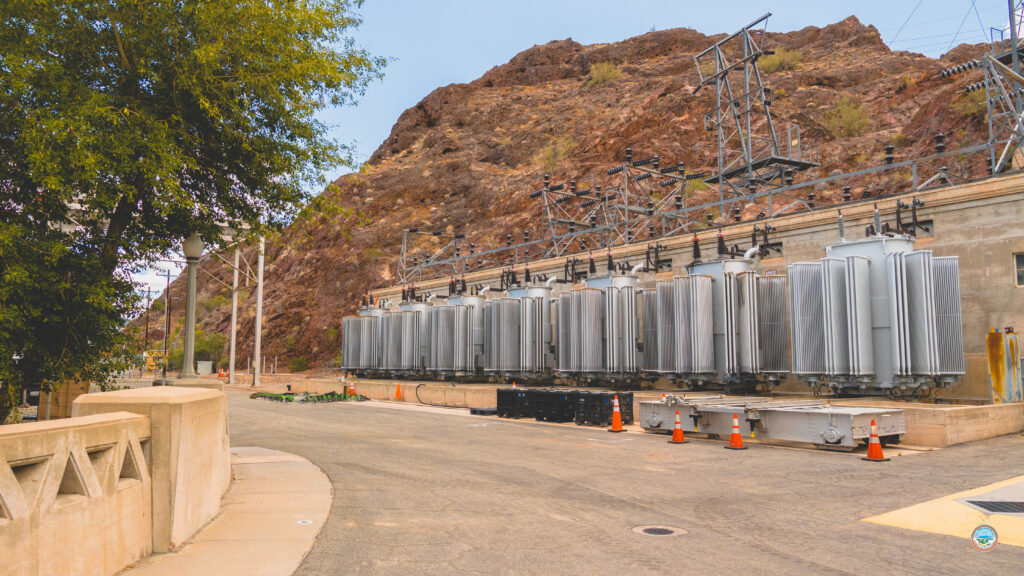
The pressure on the reservoirs remains serious. ABC15 reported that falling Lake Mead levels are threatening Hoover Dam’s power output. Hoover Dam depends on the elevation of Lake Mead to move water through its turbines. As the reservoir drops, the dam produces less power, adding another concern to the Colorado River shortage.

That matters because the river is not only a water supply. It also supports hydropower, irrigation, cities, Tribes, recreation, and the larger economy of the Southwest.

Arizona communities are also preparing for less Colorado River water by investing in conservation and local projects. SRP announced that homeowners and businesses can apply for grants through the River Friendly Living Grants Program, a partnership with Friends of the Verde River. SRP said the program has already helped save more than 81 million gallons of water over the past two years.

The grants are one example of how water planning is becoming more local. While federal rules decide how much Colorado River water is available, cities, businesses, and residents are being asked to conserve, improve efficiency, and reduce demand where they can.

The Grand Canyon also remained in focus after late-August flooding. KJZZ reported that flash floods are a natural part of the canyon, but the recent flood was different because of where it hit and how much damage it caused near Bright Angel Creek and Phantom Ranch. The flood damaged trails, bridges, and water infrastructure, showing how extreme weather can affect both people and river access.

Across the Basin, weather offered only limited relief. The Salt Lake Tribune reported that monsoon rain helped reduce outdoor water demand in Utah, but it did not do much to refill shrinking reservoirs. Water officials said reservoirs depend more heavily on winter snowpack and spring runoff than summer storms.

Agriculture is also part of the discussion. Farms.com reported on agricultural water leasing as one tool for reducing Colorado River use. In that type of program, farmers are paid to temporarily use less water, which can help keep more water in the system while giving producers money to make changes on their land.

Together, the Sept. 2 reports show that the Colorado River issue is moving into a new phase. Arizona has a short-term plan for 2027 and 2028, but the system is still under strain. Lake Mead is low enough to affect power production. Communities are investing in conservation. Flash floods are damaging important river infrastructure. Monsoon rain is not enough to rebuild reservoir storage. Agriculture remains central to any serious conservation discussion.

The next challenge is whether the Basin can use the next two years to reach a longer agreement that gives water users more certainty after 2028.

What does this mean for CRIT?

This Brief shows why the Colorado River must be viewed as a full system, not only as a water allocation.

CRIT holds senior Colorado River rights, which places the Tribe in a different position than many users relying on junior-priority Central Arizona Project water. Still, federal operations at Lake Mead and Lake Powell affect the broader river system where those rights are exercised.

The Hoover Dam power concerns matter because low reservoirs affect more than water deliveries. They can also affect hydropower, infrastructure, and the cost of moving and managing water across the Basin. (more…)

The Colorado River’s new operating rules are now in place for 2027 and 2028, but the final week of August showed that the fight over the river’s future is far from settled.

Arizona’s top water official told KJZZ that the state is preparing for a 760,000 acre-foot reduction in 2027 and 2028. Most of that reduction is expected to come from the Central Arizona Project, which delivers Colorado River water to central and southern Arizona. Tom Buschatzke, director of the Arizona Department of Water Resources, said Arizona is prepared to manage that level of reduction in the short term, partly because the Arizona Water Banking Authority has stored water underground for future shortages.

But the short-term plan does not answer the larger question. Reclamation’s framework extends through 2036, and future operations could still change every two years depending on hydrology, reservoir levels, and whether the Basin states reach new agreements.

The Central Arizona Project said the Record of Decision and operating guidelines show the need for Arizona, California, and Nevada to complete a three-state agreement. CAP said the 2027–2028 guidelines adopt a historic level of conservation proposed by the Lower Basin states, but the post-2028 framework remains a major concern because it could allow deeper cuts to Arizona and CAP users.

Nevada has already gone to court. Several Nevada outlets reported that the state sued the federal government over the new Colorado River operating plan. Navajo Times reported that Nevada’s lawsuit could also affect the Navajo Nation’s push to move its Arizona water rights settlement through Congress before the end of the year. The article reported that the lawsuit asks a federal judge to set aside the July Final Environmental Impact Statement, the Aug. 21 Record of Decision, and the 2027–2028 operating guidelines.

High Country News reported that the new Colorado River rules will affect Tribal Nations differently because not all Tribes hold the same type of rights or receive water through the same infrastructure. Some Tribes have senior rights directly on the river. Others rely on Central Arizona Project supplies, federal settlement water, or infrastructure that has not yet been built.

The article also discussed CRIT’s position. CRIT’s reservation stretches along the Colorado River in Arizona and California, and its rights are governed by the 1963 U.S. Supreme Court decree in Arizona v. California. CRIT Chairwoman Amelia Flores described CRIT’s rights as the most senior Tribal water rights in the Lower Basin, going back to 1865. High Country News reported that CRIT welcomed Reclamation’s statement that it would follow the court decree and would not impose reductions on CRIT’s allocation, but Tribal leaders said consultation must remain part of every Colorado River decision.

Arizona communities are also adjusting to the new water reality. KTAR, through AMWUA, reported that Arizona’s 2027 and 2028 cuts could mean up to a 20% reduction in municipal providers’ Central Arizona Project supplies. AMWUA said the larger concern is the 2029–2036 framework, which could allow deeper reductions if conditions worsen.

Water costs are also expected to rise. KOLD reported that Colorado River cuts could drive up water bills as cities invest in new wells, storage, conservation, and infrastructure. KGUN reported that state leaders at the Arizona Water Summit said residents should not expect their taps to run dry in the next few years, but long-term planning and investment will be needed.

That planning is already happening in some communities. CBS 5 Arizona’s Family reported that San Luis is preparing for a major wastewater plant upgrade as water scarcity grows. The project is part of a larger effort to improve local water infrastructure and prepare for future demand.

Groundwater remains another pressure point. KJZZ reported that a rural coalition is starting a campaign to establish a groundwater protection zone in McMullen Valley. The effort reflects a broader concern in rural Arizona: as surface water becomes less reliable, groundwater basins may face more pressure from growth, agriculture, and new development.

The final week of August showed that Colorado River planning is now moving on several fronts at once. Arizona is preparing for near-term reductions. Nevada is challenging the federal plan in court. CAP wants a three-state deal. Tribal Nations are watching how the rules affect senior rights, settlement water, and infrastructure. Cities are preparing for higher costs. Rural communities are looking for stronger groundwater protections. (more…)

Early reports showed the river’s challenges from several angles. The headwaters are drying out, and Arizona is pushing back against the federal government’s post-2026 river plan. Cities are using federal money to conserve and build local resilience. Farmers and rural communities are facing uncertainty. Tribal Nations are also raising concerns about groundwater projects and the long history of being left out of major water decisions.

KJZZ reported that warming temperatures are reducing base flow in streams that feed the Colorado River. Base flow is the water in streams that does not come directly from rainfall. Much of it comes from groundwater and snowmelt. A study published in Earth’s Future found that base flow in Western streams has been declining since 1950, and researchers projected that headwater streams could see 45% to 65% less base flow by the end of the century if warming continues.

That matters because the Colorado River depends on those smaller mountain streams before the water reaches Lake Powell, Lake Mead, or the Lower Basin. If streamflow comes earlier in the year or drops during dry months, water managers have less reliability when demand is highest.

At the same time, Arizona continued to challenge the federal government’s Final Environmental Impact Statement for future Colorado River operations. KJZZ reported that Arizona’s top water official, Tom Buschatzke, warned Reclamation that the federal plan could cause “catastrophic harm” to Arizona. The state argued that the plan does not provide enough certainty and could allow deep Lower Basin cuts without resolving the broader conflict between the Upper and Lower basins.

KTAR reported similar concerns from Sarah Porter, director of Arizona State University’s Kyl Center for Water Policy. Porter said the federal framework focuses on protecting infrastructure and hydropower but does not put the Basin on a path to stability. She said cities may be able to reduce some impacts through conservation and advanced water purification, but Tribal and rural communities could feel deeper disruption, especially where agriculture is involved.

Cities are already moving to conserve more water. KJZZ reported that several Phoenix-area cities are working on agreements with the Bureau of Reclamation to leave Colorado River water in Lake Mead in exchange for federal funding. Glendale, Mesa, and Gilbert were among the cities discussed. KJZZ reported that Glendale previously left about one-third of its Colorado River water in Lake Mead, and Gilbert has a 10-year agreement that will bring nearly $17 million to the town for water-saving projects.

Gilbert is also expanding its water infrastructure. ABC15 reported that the town is planning to expand the Greenfield Water Reclamation Plant from 12 million gallons a day to 16 million gallons a day. The treated wastewater can be reused for irrigation or recharged underground, helping the town prepare for future growth and Colorado River uncertainty.

Groundwater remained another major issue. The University of Arizona Water Resources Research Center highlighted a study on water banking and groundwater security, finding that managed aquifer recharge and water banking can improve drought resilience when policies encourage long-term storage. The Arizona Attorney General’s Office also reported early results from a groundwater settlement with Riverview Dairy in Cochise County. The agreement includes funding for well drilling, water hauling, and groundwater access, along with commitments to reduce groundwater use over time.

Tribal groundwater concerns also reached court. ICT reported that the Fort Mojave and Chemehuevi Indian Tribes sued the Interior Department over the Cadiz groundwater project in the Mojave Desert. The project would pump groundwater from beneath the Mojave Trails National Monument and move it through a converted pipeline. Tribal leaders said the project threatens cultural, ecological, and sacred resources tied to the desert and its water.

Conditions upstream also showed the river’s physical stress. Aspen Journalism reported that extremely low flows in Colorado’s 15-mile reach affected boaters, irrigators, and endangered fish. The report said the reach, located between Palisade and the Gunnison River, is a chronically depleted section of the Colorado River and critical habitat for endangered fish.

Together, the week’s reporting showed that water security is no longer only about legal allocations. It is about timing, infrastructure, storage, groundwater protection, conservation funding, and whether communities have the resources to adapt.

What does this mean for CRIT?

CRIT holds senior Colorado River rights, which remain central to the Tribe’s position in Basin planning. But the reporting shows that water security also depends on infrastructure, storage, delivery systems, and meaningful inclusion in federal decision-making.

The KTAR reporting on Tribal and rural impacts is important because CRIT is both a sovereign Tribal Nation and a major agricultural water user along the Colorado River. The ICT reporting also shows how groundwater projects can raise Tribal concerns when water, land, wildlife, and cultural resources are connected. (more…)

The Colorado River shortage conversation is starting to move from federal planning into city budgets, backup supplies, and long-term infrastructure decisions.

On Aug. 11, AMWUA reported that its member cities have been preparing for a smaller Colorado River for years. The Arizona Municipal Water Users Association represents 10 cities: Avondale, Chandler, Gilbert, Glendale, Goodyear, Mesa, Peoria, Phoenix, Scottsdale, and Tempe. Together, those cities serve about 3.7 million people, more than half of Arizona’s population.

AMWUA said the cities are entering a new era of less Colorado River water, especially as federal officials finalize operating rules for 2027 through 2036. The organization said Central Arizona Project water is at the center of that risk because many Valley cities rely on CAP deliveries.

AMWUA said city planning has focused on three main areas: efficiency, resilience, and technology. Those efforts include advanced water meters, leak detection, turf removal rebates, landscape conversion programs, reclaimed water, aquifer recharge, advanced purified water treatment, and updated development rules.

The goal is not only to use less water. It is also to reduce dependence on Colorado River supplies and build local water sources that are less tied to Lake Mead’s elevation.

Gilbert is one example of how cities are preparing. ABC15 reported that about 40% of Gilbert’s water comes from the Colorado River, and town staff expect reductions to Central Arizona Project water to begin in 2027. The town is considering a Firming Water Delivery Agreement that would give Gilbert more flexibility to access water it previously stored underground during shortages.

ABC15 also reported that Gilbert has drilled eight new wells to access backup supplies. The town’s approach reflects a broader trend in Arizona: communities are trying to make stored water and groundwater more usable before deeper Colorado River cuts arrive.

These local efforts do not remove all risk. AMWUA said no level of city preparation can completely eliminate Arizona’s vulnerability to a smaller Colorado River. More investment will be needed, especially in new water supplies, treatment technology, and infrastructure.

The cost of that uncertainty is becoming a bigger part of the discussion. The Bond Buyer reported that Arizona and Nevada officials criticized the federal Colorado River plan, while analysts said the Final Environmental Impact Statement raises the stakes for long-term water planning. The article said utilities with strong storage, conservation programs, and financial flexibility may be better positioned in the near term, but long-term credit quality will depend on how effectively water providers secure alternative supplies while keeping rates affordable.

That point matters because water planning is not only about engineering. It is also about financing. Wells, pipelines, treatment plants, recharge projects, conservation programs, and new supply agreements can take years to develop and cost millions of dollars. If Colorado River rules change every two years, cities and water agencies may have to make expensive decisions without knowing exactly how much water they will receive in the future.

California is watching the federal framework as well. Spectrum News reported that the new Colorado River proposal could mean future cuts for California. California has historically held stronger priority than Arizona in the Lower Basin, but the federal framework could still bring reductions depending on reservoir conditions and future agreements.

The uncertainty is also reaching water law. Courthouse News Service reported on a Ninth Circuit case involving companies that say California denied them due process in a water rights matter. While the case is separate from Arizona’s Colorado River negotiations, it shows how water disputes across the West are increasingly moving through courts and administrative processes.

Drought conditions are also affecting the Upper Basin. Denver7 reported that Denver Water has moved into an enforcement phase as drought conditions worsen. Customers are limited to watering lawns two days a week, and the utility has begun issuing warnings and fines for violations. Denver Water officials said the goal is to protect supplies heading into next year, when snowpack remains uncertain. (more…)

Water planning in the West is becoming less about one reservoir or one shortage rule and more about whether communities have the legal tools, infrastructure, and storage to manage a drier future.

Aug. 10 reporting continued to focus on Lake Mead after the reservoir reached its lowest level ever recorded. CBS 5 Arizona’s Family reported that Lake Mead dropped to 1,040.5 feet, below the previous record set in July 2022. The reservoir, created by Hoover Dam in the 1930s, remains one of the most important storage points on the Colorado River.

Lake Mead’s decline matters because it supports water deliveries to Arizona, California, Nevada, and Mexico. It also affects hydropower production and the broader operation of the river system. CBS 5 reported that if Lake Mead and Lake Powell fall below certain thresholds, hydropower production can stop, and water deliveries to downstream users can become harder to manage.

Popular Mechanics also reported on the power side of the Colorado River crisis, focusing on how lower water levels affect Hoover Dam and Glen Canyon Dam. The article explained that these dams depend on enough water elevation to push water through turbines. When reservoirs fall too low, the issue is not only reduced water supply. It is also whether the infrastructure can continue moving water and producing power the way it was designed to do.

At the same time, the federal Colorado River plan is leaving water agencies with short planning windows. KQED, through CalMatters, reported that Reclamation’s 10-year framework sets broad limits for managing Lake Powell and Lake Mead, but detailed operating plans may be issued every two years if the Basin states remain deadlocked. The article said that the level of uncertainty makes it harder for water agencies to plan major projects, conservation agreements, and long-term investments.

Groundwater was another major focus. Arizona Independent News Network, using reporting from the Arizona Center for Investigative Reporting, reported that a lawsuit over the Hualapai Valley groundwater basin could test Arizona’s authority to protect vulnerable rural water supplies. The lawsuit challenges the state’s ability to designate an Irrigation Non-Expansion Area, which limits new irrigated farmland while allowing existing farms to continue pumping.

According to the report, ADWR designated the Hualapai Valley basin as an Irrigation Non-Expansion Area in 2022 after a surge of out-of-state investment in land for new industrial-scale farms. Two investment firms sued, arguing that ADWR should have used Arizona’s standard rule-making process. A Maricopa County Superior Court judge agreed with the investors earlier this year, and ADWR has appealed.

The case matters beyond Hualapai Valley. If the ruling stands, it could take much longer for Arizona to create future Irrigation Non-Expansion Areas. That delay could give landowners more time to expand irrigation before restrictions take effect, increasing pressure on already stressed rural aquifers.

The University of Arizona Water Resources Research Center also highlighted a new study on water banking and groundwater security. The study looked at how managed aquifer recharge and water banking can help improve long-term water security in semi-arid regions. The research found that water banking can improve drought resilience, especially in aquifers that retain stored water well. It also emphasized the importance of policies that encourage long-term storage rather than quick recovery.

The Arizona Attorney General’s Office also announced early results from a groundwater agreement with Riverview Dairy in Cochise County. Attorney General Kris Mayes said the agreement has helped residents affected by declining groundwater levels in the Sulphur Springs Valley. The settlement includes $11 million for well drilling, water hauling, and groundwater access, along with commitments to fallow or transition 2,000 acres of irrigated farmland over 12 years to reduce groundwater use.

Those Arizona groundwater stories show how the water conversation is expanding beyond the Colorado River. As surface water becomes less reliable, more pressure can shift to groundwater. But groundwater rules are different across the state, and rural areas often have fewer protections than Arizona’s Active Management Areas.

Nevada is facing similar questions. Nevada Independent reported on a legal fight over water availability at the Tahoe-Reno Industrial Center, a major industrial and technology hub east of Reno. The dispute involves whether enough water is available to serve current and future development at the site, which includes major companies such as Tesla and Switch.

The Nevada case shows how water availability can affect economic development. Communities may want new industry, jobs, and tax revenue, but growth still depends on whether water supplies can support long-term demand.

California is also looking at long-term water security. NBC Palm Springs reported on a Sierra Nevada meadow restoration project designed to improve natural water storage. Crews are restoring nearly three miles of the West Walker River and surrounding floodplains at Pickel Meadow, north of Yosemite. The goal is to help the meadow absorb snowmelt and release water more slowly into rivers and streams.

Fox Weather reported that monsoon storms were bringing needed rain to parts of the Southwest and Rockies, including areas of Colorado facing extreme and exceptional drought. The rain may help some areas in the short term, but it does not solve the larger Colorado River problem. The system depends heavily on mountain snowpack, runoff, and long-term reservoir storage. (more…)

Last week was filled with proud moments, happy tears, and celebrations as students across the community marked important milestones in their educational journeys.

The celebrations began Thursday, May 21, with the Parker Alternative Graduation ceremony that morning. Later that evening, families gathered again as students from Wallace Jr. High and Le Pera Elementary School took part in their promotion ceremonies, marking their next step forward.

The excitement continued Friday, May 22, with Parker High School’s Graduation celebration. Before the ceremony, graduates took part in a parade through town, where family, friends, and community members lined the route to cheer them on as they passed by. It was a special moment of recognition, not only for the graduates, but for everyone who supported them along the way.

The week ended Saturday, May 23, with the Head Start Promotion, a celebration filled with excitement, smiles, and a few tears from both parents and students. Although Head Start was the final event of the week, for many students, it represents where their educational journey first began.

Each ceremony served as a reminder of growth, hard work, and the importance of community support. From the youngest students taking their first big step forward to high school graduates preparing for new opportunities, each milestone is worth celebrating.

Congratulations to all the students who walked across the stage, down the aisle, or through the crowd of cheering loved ones. May you continue to shine, reach your goals, and move forward with confidence.

As Eleanor Roosevelt once said, “The future belongs to those who believe in the beauty of their dreams.”

Written by CRIT Media Reporter Ariana Romero

The Bureau of Reclamation told all 30 Tribal Nations in the Colorado River Basin on May 8th  that they will no longer seek to allocate across-the-board shortages to all water users as previously proposed but instead will follow current law and respect senior tribal rights.  This is a major victory for CRIT, Tribal rights advocates, and holders of senior water rights.  As stated by CRIT Chairwoman Amelia Flores “We are pleased that Reclamation has finally decided to drop its illegal proposal to disregard CRIT’s senior water rights and allocate shortages without regard to priority.”  Chair Flores continued, “Tribal Council has never backed down on the issue of protecting our Tribal rights.  Throughout this process, Reclamation, and many others, have proposed for setting aside the priority system and for all water users to share equally in shortages.  We know this is wrong and we were prepared to defend our senior water rights all the way to the Supreme Court.  Fortunately, Reclamation has understood the seriousness of our position and dropped its proposal.”

Tribal Council has opposed these so called “pro-rata” shortages since they were first proposed by Reclamation over two years ago to manage reductions in Colorado River water due to overuse and climate change.  Over this time, Tribal Council has been in support to stop the implementation of pro-rata shortages through an intensive and coordinated advocacy effort with the Trump Administration.  This included many trips to Washington, DC, meetings with state-wide elected officials, and direct government-to-government consultation with senior Trump Administration officials.

While these efforts paid off in the statements made by Reclamation last week, the process regarding how the dams on the Colorado River will be operated is still ongoing. The CRIT Tribal Council understands that while the Reclamation’s reversal is a critical milestone, the fight to protect and preserve CRIT’s rights remain.  As stated by Councilman Tommy Drennan “we will never rest in protecting and preserving our rights, not just for today but for future generations. “

CRIT’s water rights date back to the creation of the reservation, March 3, 1865 and are the most senior tribal water rights in the Lower Colorado River basin.   We expect Reclamation to issue a final environmental document sometime in June.

During the mid-1800s, as the American Southwest was rapidly changing, Charles Debrille Poston emerged as one of the key figures helping shape the future of Arizona. A strong promoter of the region and its opportunities, Poston would later earn the nickname “Father of Arizona” for his efforts to establish Arizona as its own territory.

Poston was born on April 20, 1825, in Kentucky. Like many Americans of his time, he moved west in search of opportunity as new lands opened following the Gadsden Purchase of 1853. He soon became involved in mining ventures and settlement efforts in southern Arizona, particularly around the community of Tubac. His work promoting the region helped bring national attention to Arizona’s potential during a time when the area was still largely considered a frontier.

When the Arizona Territory was officially created in 1863, Poston was appointed Superintendent of Indian Affairs for the territory, a position that required him to travel throughout Arizona and meet with tribal leaders across the region. His duties frequently brought him to the lower Colorado River, an important transportation corridor that connected Arizona with California and Nevada.

During these travels, Poston visited areas along the river near present-day Parker, where Native communities had lived for generations. The Colorado River served as a lifeline for tribes of the region, supporting agriculture, trade, and daily life long before American settlers arrived. By the early 1860s, however, the arrival of miners, settlers, and military expeditions was beginning to reshape the Southwest and create new challenges for Native communities.

Among the tribal leaders working to navigate these changes was Mohave leader Chief Irataba, known for his diplomacy and efforts to work with federal officials while protecting his people and their homeland. Territorial leaders like Poston met with tribal representatives as the United States government considered how to organize the region and respond to increasing pressure on tribal lands. (more…)

In early May , there were press reports regarding the Lower Basin states of Arizona, California, and Nevada releasing a proposal on how to manage shortages on the Colorado River system through the end of 2028.  The proposal identifies how current and future shortages on the Colorado River system will be apportioned among the three states.  It establishes goals for the conservation of water and proposes studies to reoperate the reservoirs on the Colorado River to allow for water deliveries at lower elevations.

The Lower Basin Proposal also established a Tribal Pool in Lake Mead setting aside water to specifically address future shortages for those Tribes that receive their water through the Central Arizona Project (CAP) and may be shorted as CAP allocations are diminished.  We want to be clear with you that this Tribal Pool does not pertain to CRIT because our water comes directly from the Colorado River and NOT delivered through the CAP.  Our water rights are the senior Tribal rights in the Colorado River Basin and senior to the CAP.

Tribal Council has taken no formal position on this proposal, and we were not involved in its drafting or negotiation.  We do appreciate, however, that this proposal does not seek to set aside the priority system in allocating shortages, which some in the Lower Basin states have pushed for in the past.  Retaining the priority system for allocation of shortages has been the biggest concern of Tribal Council throughout the Post 2026 Process and we want to acknowledge the Basin States holding firm on this position.  We are concerned, however, about the significant federal investment it will take to implement this proposal and want to be assured that portions of these federal funds will be expended on all Tribal Nations in the Basin.

Tribal Council has been in contact with leadership from Arizona and will continue to monitor how this, and other proposals for the management of the Colorado River, will be viewed by Reclamation.  Tribal Council is also in continuing contact with Reclamation and will hold a government-to-government consultation with Senior Reclamation leaders on June 1st.  We will continue to update membership as these matters develop.