September 12, 2026 5:02 am
CRIT Nation, Parker, AZ
September 12, 2026 5:02 am
CRIT Nation, Parker, AZ

According to the Arizona Capitol Times, city officials across Arizona are warning that a proposed tax freeze could put future water infrastructure projects at risk. Local leaders say limiting revenue could reduce their ability to fund essential projects like water treatment, storage, and delivery systems.

As Arizona faces increasing pressure from Colorado River shortages, investment in infrastructure is becoming more critical. Officials argue that without reliable funding, communities may struggle to prepare for long-term water challenges.

For CRIT, water infrastructure funding is directly tied to how water is managed and delivered. Decisions that limit investment could impact the reliability and sustainability of water systems across the region.

According to AZPM News, ongoing Colorado River negotiations remain stalled, raising concerns about potential cuts to the Central Arizona Project (CAP). CAP supplies Colorado River water to central and southern Arizona, and reductions could affect cities, agriculture, and economic development.

With no agreement in place, federal intervention is becoming more likely as officials work to establish post-2026 operating rules. The uncertainty continues to create concern across Arizona as water users prepare for possible shortages.

For CRIT, CAP reductions reflect broader challenges in how Colorado River water is allocated, making these negotiations critical for understanding future impacts to Tribal water rights and regional water access.

According to the Arizona Republic, Tribal leaders are calling for greater input and influence in federal drought planning for the Colorado River. Tribes argue that as sovereign nations with significant water rights, they must have a stronger role in shaping decisions about how water shortages are managed.

The push comes as federal agencies work to develop new guidelines for the river, with Tribal Nations seeking a more active seat at the table. Leaders emphasize that their rights and interests must be fully considered in future plans.

For CRIT, this is especially important because it highlights the need for Tribal representation in decisions that directly affect water rights, allocation, and long-term management of the Colorado River.

According to the Lake Havasu News Herald, Arizona is approaching a critical moment in its water future as Colorado River supplies continue to decline and demand increases. Officials warn that the state must prepare for long-term shortages and make difficult decisions about water use.

The report highlights growing concern about how Arizona will balance population growth, agriculture, and limited water resources. Planning efforts are becoming more urgent as conditions worsen across the basin. (more…)

According to AZPM PBS, potential Colorado River cuts could significantly impact Tucson’s water supply, even though the city has built a more diversified system that includes groundwater and stored Colorado River water. Officials say Tucson is better prepared than some areas, but continued reductions would still require careful management and conservation efforts.

The report highlights how different regions across Arizona will experience the effects of Colorado River shortages in different ways, depending on their water sources and infrastructure. Even with preparation, long-term cuts could still place pressure on supplies.

For CRIT, this shows how deeply communities across Arizona rely on the Colorado River and how future reductions could reshape water use and planning throughout the state.

According to AZPM PBS, negotiations over the Colorado River have stalled, and significant cuts to the Central Arizona Project (CAP) are becoming more likely. CAP delivers Colorado River water to central and southern Arizona, and reductions could impact cities, agriculture, and industries.

With no agreement in place, federal officials may step in to determine how shortages are handled moving forward. The situation reflects ongoing disagreements between basin states over how to share limited water supplies.

For CRIT, CAP reductions are important because they are tied directly to how Colorado River water is allocated and managed, which can influence broader decisions affecting Tribal water rights.

According to the Office of the Arizona Governor, Governor Katie Hobbs has appointed new experts to the Water Infrastructure Finance Authority to help guide Arizona through ongoing water challenges. The authority plays a key role in funding water projects and supporting long-term supply strategies.

The appointments come at a critical time as Arizona faces increasing pressure from Colorado River shortages and the need for infrastructure investment. Officials say strengthening leadership will help improve planning and response efforts.

For CRIT, water infrastructure decisions are closely tied to how water is stored, delivered, and managed, making these leadership roles important for shaping future water policy across the state.

According to Fox 10 Phoenix, record spring heat is already impacting water conditions across the West, accelerating snowmelt and reducing the amount of water that reaches rivers like the Colorado River. Early melting can lead to less efficient water storage and increased evaporation.

Experts warn that these conditions could worsen water shortages as less runoff reaches key reservoirs. The changing climate is making water supply more unpredictable and harder to manage.

For CRIT, reduced runoff into the Colorado River system directly affects water availability and reinforces the need for careful management and protection of water resources.

According to CBS 5 Arizona’s Family, Governor Hobbs is seeking support from national business leaders in Washington, D.C. as Colorado River cuts become more likely. The effort aims to strengthen Arizona’s position in negotiations and highlight the economic risks tied to water shortages.

State leaders are working to build broader coalitions as water issues increasingly intersect with economic and political concerns. The approach reflects how water negotiations now involve multiple sectors beyond government.

For CRIT, expanding influence in water discussions can shape how decisions are made about Colorado River allocations, which ultimately affect Tribal communities and water rights.

According to KUNC Northern Colorado Public Radio, Colorado River negotiations are continuing with a focus on short-term or “stopgap” measures as conditions worsen. With long-term agreements still unresolved, officials are considering temporary solutions to manage shortages.

The report notes that declining snowpack and worsening hydrology are increasing urgency, making it more difficult for states to reach consensus. Short-term actions may be necessary while broader negotiations continue.

For CRIT, stopgap measures could directly influence how water is managed in the near term, affecting river operations and allocation decisions that impact Tribal water access.

According to The Conversation, Colorado River negotiations have stalled due to ongoing disagreements between Upper and Lower Basin states over how to share water shortages. Experts say future progress may depend on compromise and a clearer framework for dividing reductions.

The article explains that differences in water use, legal interpretations, and priorities have made it difficult to reach agreement. However, there is still potential for negotiations to resume and produce a workable solution.

For CRIT, understanding why negotiations stall is important because these discussions shape the policies and agreements that determine how water is shared across the basin, including Tribal water rights.

According to Newsweek, Lake Powell is facing worsening conditions as heat waves and low snowpack reduce expected water levels. Forecasts show that inflows into the reservoir may be lower than anticipated, adding pressure to an already strained system.

Lower water levels could impact hydropower production and reduce the system’s ability to store and release water efficiently. Officials are closely monitoring conditions as the situation develops.

For CRIT, Lake Powell is a key part of the Colorado River system, and declining levels can influence how water is managed downstream, affecting availability and long-term planning.


Sources

By Ariana Romero
CRIT Media Reporter

According to ASU News, recent snow surveys conducted by Arizona State University and the Salt River Project show that much of Arizona’s headwater snowpack has melted within just a few weeks. Warmer temperatures caused snow to melt earlier than expected, reducing the amount of water that can slowly feed rivers over time.

This rapid melt limits how much water reaches streams and reservoirs later in the season, making water supplies less reliable. Snowpack typically acts as a natural storage system, and when it disappears too quickly, more water is lost to evaporation or runoff that cannot be captured.

For CRIT, reduced and fast-melting snowpack directly impacts the Colorado River system, affecting how much water ultimately flows downstream and influencing long-term water availability.

According to Fox 10 Phoenix, Arizona is considering a potential agreement to purchase water from California as Colorado River tensions continue. State officials are exploring alternative ways to secure water supplies as negotiations over river allocations remain uncertain.

The idea reflects growing pressure on Arizona to find additional water sources as shortages become more likely. Any agreement would depend on legal, financial, and logistical factors, but it highlights how states are looking beyond traditional allocations.

For CRIT, interstate water deals could influence how Colorado River water is shared and managed, making it important to monitor how these agreements may affect overall allocation and Tribal water interests.

According to Courthouse News Service, a large agricultural company is seeking to pause a public nuisance lawsuit related to groundwater use in Arizona. The case centers on concerns that excessive groundwater pumping may be harming nearby communities and water supplies.

The lawsuit reflects ongoing tensions over groundwater regulation in Arizona, particularly in areas without strong oversight. Water use by large-scale agriculture continues to be a major issue as demand increases and supplies become more limited.

For CRIT, groundwater disputes are closely tied to the broader conversation about water management and protection, especially as pressure on Colorado River supplies pushes greater reliance on groundwater sources.

According to the Salt Lake Tribune, Lake Powell is heading toward potentially record-low levels as Colorado River states remain deadlocked in negotiations. Experts warn that declining inflows and ongoing drought conditions are pushing the reservoir closer to critical thresholds.

Low water levels at Lake Powell can impact hydropower generation and reduce the system’s ability to manage water deliveries across the basin. The lack of agreement between states is increasing uncertainty about how the situation will be addressed.

For CRIT, Lake Powell is a key part of the Colorado River system, and declining levels can affect how water is released downstream, influencing water availability and management decisions that impact Tribal communities.

According to CBS News, Denver Water has implemented mandatory restrictions limiting outdoor watering to just two days per week due to ongoing drought conditions. Officials say the restrictions are necessary to conserve water as supplies remain below normal.

Water providers across the West are taking similar steps as drought and low snowpack continue to strain resources. Conservation measures are becoming more common as utilities try to manage limited supplies.

For CRIT, increasing restrictions across the basin show how widespread water shortages have become, reinforcing the importance of careful management and protection of Colorado River water resources.

Sources

CBS News: https://www.cbsnews.com/colorado/news/denver-water-imposes-mandatory-water-restrictions-only-2-days-per-week/

Ariana Romero
CRIT Media  Reporter

According to the Arizona Capitol Times, cracks are beginning to show in Arizona’s previously unified position on Colorado River negotiations. Disagreements are emerging between state leaders and local communities over how water should be managed and protected as shortages worsen.

Some regions, particularly rural areas, are pushing back against policies they believe prioritize urban growth over local water security. These divisions highlight the increasing pressure Arizona faces as it works to defend its share of Colorado River water.

For CRIT, internal disagreements within Arizona matter because they can influence how the state approaches negotiations and allocation decisions, which ultimately affect Tribal water rights and the broader river system.

According to the Office of the Arizona Governor, Governor Katie Hobbs is expanding Arizona’s efforts to protect its Colorado River water by engaging national business leaders. The goal is to build broader support and strengthen Arizona’s position in ongoing negotiations over future river operations.

State officials are working to highlight the economic importance of Colorado River water and the potential impacts of shortages on industries and communities. This approach reflects how water issues are increasingly tied to economic and political strategy.

For CRIT, these efforts show how states are mobilizing additional influence in negotiations, which can shape how water is allocated and how Tribal interests are considered in future agreements.

According to the Las Vegas Review-Journal, a recent heat wave is accelerating snowmelt across the Colorado River Basin, raising concerns about reduced spring runoff. Experts warn that early melting can lead to less water reaching major reservoirs like Lake Powell and Lake Mead.

The situation is being described as a “blaring alarm” for the river, as warming temperatures continue to impact how water is stored and delivered. Reduced runoff could worsen already declining reservoir levels.

For CRIT, early snowmelt and reduced runoff directly affect how much water flows through the Colorado River system, influencing future water availability and management decisions. (more…)

According to CBS 5 Arizona’s Family, Yuma officials are preparing for possible Colorado River water cuts as negotiations over future river operations continue. Yuma, a major agricultural hub, depends heavily on Colorado River water, and local leaders say reductions could impact farming, jobs, and the regional economy.

As federal and state officials work toward new post-2026 guidelines, communities like Yuma are closely watching how water shortages will be distributed across the basin. The uncertainty reflects ongoing challenges in reaching agreement among the seven basin states.

For CRIT, impacts to Yuma highlight how reductions in Colorado River water can affect agriculture and economies across the region, reinforcing the importance of protecting water rights and ensuring fair allocation decisions.

According to KJZZ, water conservation efforts in Arizona are becoming increasingly expensive, and officials are exploring whether large corporations could help cover some of the costs. Programs aimed at reducing water use, such as paying farmers or industries to conserve water, require significant funding.

State leaders and water managers are looking at partnerships with businesses to support conservation efforts as Colorado River supplies continue to decline. The goal is to find sustainable ways to reduce water use without placing the entire financial burden on taxpayers.

For CRIT, this reflects a broader shift in how water conservation is being funded and managed. As water becomes more limited, decisions about who pays for conservation efforts will play a key role in shaping long-term water policy.

According to the U.S. Department of the Interior, nearly $889 million is being invested in water infrastructure projects across the western United States. The funding will support efforts to improve water storage, conservation, and system efficiency as drought conditions continue.

The investment is part of a larger federal effort to strengthen water systems and address long-term shortages in the Colorado River Basin and other regions. Projects may include upgrades to canals, reservoirs, and water delivery systems. (more…)

By Ariana Romero CRIT Media

According to CBS 5 Arizona’s Family, Yuma officials are preparing for possible Colorado River water cuts as negotiations over future river operations continue. Yuma, a major agricultural hub, depends heavily on Colorado River water, and local leaders say reductions could impact farming, jobs, and the regional economy.

As federal and state officials work toward new post-2026 guidelines, communities like Yuma are closely watching how water shortages will be distributed across the basin. The uncertainty reflects ongoing challenges in reaching agreement among the seven basin states.

For CRIT, impacts to Yuma highlight how reductions in Colorado River water can affect agriculture and economies across the region, reinforcing the importance of protecting water rights and ensuring fair allocation decisions.

According to KJZZ, water conservation efforts in Arizona are becoming increasingly expensive, and officials are exploring whether large corporations could help cover some of the costs. Programs aimed at reducing water use, such as paying farmers or industries to conserve water, require significant funding.

State leaders and water managers are looking at partnerships with businesses to support conservation efforts as Colorado River supplies continue to decline. The goal is to find sustainable ways to reduce water use without placing the entire financial burden on taxpayers.

For CRIT, this reflects a broader shift in how water conservation is being funded and managed. As water becomes more limited, decisions about who pays for conservation efforts will play a key role in shaping long-term water policy.

According to the Daily Independent, Governor Katie Hobbs is working to involve national business leaders in Arizona’s efforts to address Colorado River water challenges. The state is seeking support from major industries to help advocate for Arizona’s position in ongoing river negotiations.

The move comes as Arizona faces potential reductions in its Colorado River allocation and increasing pressure to secure long-term water supplies. State officials are expanding their approach by bringing in economic stakeholders to strengthen their position.

For CRIT, this shows how water negotiations are expanding beyond government agencies to include business interests. These broader coalitions could influence how water decisions are made and how resources are prioritized across the basin. (more…)

When people talk about climate change, it can sound political or exaggerated, but at its core, it’s about environmental changes we can measure over time. Scientists like Brad Udall, who studies long-term weather patterns, have found that the Earth’s average temperature has risen slightly over the past century, mostly because of how people consume energy. When coal, gas, or oil is burned, it releases gases that trap more heat in the atmosphere, like a blanket wrapped around the planet. Despite whether someone believes it is man-made or not, climate change forces us to pay attention, and develop methods to protect the land and water that sustain us.

On Monday, September 29th, Udall, an internationally recognized scientist on water and climate change from Colorado State University, visited the Colorado River Indian Reservation to share his latest findings on the Colorado River. He spoke with Tribal leaders about what the future may hold.

Udall is known for his research on the connection between climate change and river systems in the American West. He has spent decades studying how heat, drought, and rainfall affect water levels, especially in the Colorado River Basin. Additionally, Udall co-wrote parts of the U.S. National Climate Assessment, and has testified before the United States Congress about the effects of climate change on western water supplies. His work focuses on researching solutions that balance the needs of people, agriculture, and the environment.

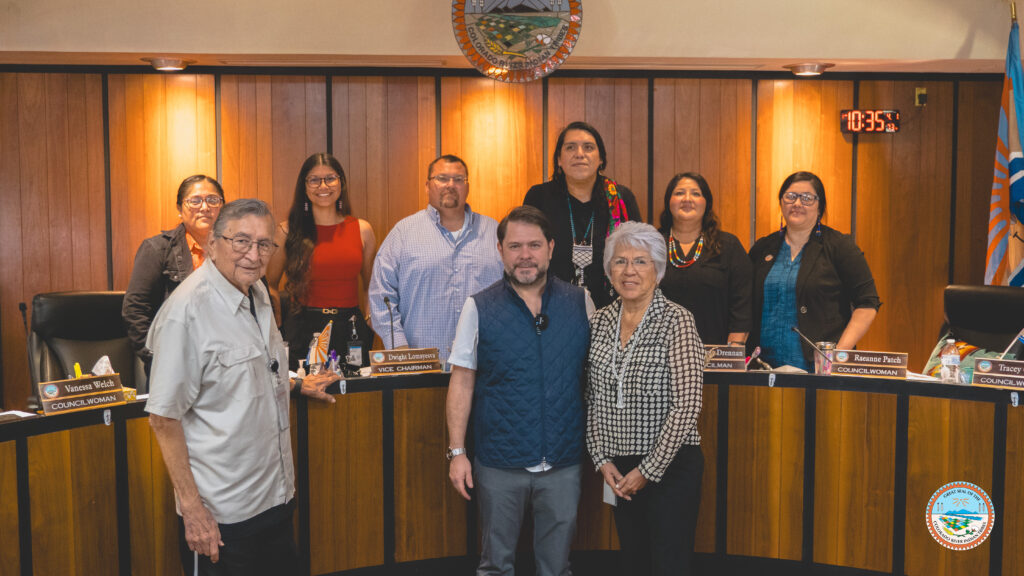
When Udall met with Tribal leadership at the Colorado River Indian Tribes (CRIT) Council Chambers, he was greeted by Chairwoman Amelia Flores, Councilwoman Vanessa Welch, CRIT Attorney General Rebecca Loudbear, CRIT Water Resources Director Dillion Esquerra, CRIT Realty Commercial Manager Herman “TJ” Lafoon Jr., and CRIT Lead Water Attorney John Bezdek.

During his presentation, Udall explained that flows in the Colorado River have dropped about 20% since the year 2000, and that precipitation – the rain and snow that feed the river – is also down about 20%. He said several studies have found that this isn’t just a temporary drought, but a long-term trend he believes is caused largely by human-driven climate change. Temperatures are rising across the Southwest, and according to Udall, “We are now on target for 3 degrees Celsius of warming by the year 2100.” Udall reiterated that his studies show this increase in temperatures is based on an average of estimates, and that temperatures in certain areas, including the desert southwest, could see higher increases.

Udall described the situation as serious and with little optimism. He shared that some scientists are exploring ideas like adding sulfur dioxide to the atmosphere to help cool the planet, though he said most researchers are cautious about such steps because they involve more human interference in nature. “It’s not a perfect solution,” he explained, “but it shows how far people are thinking about how to slow down the warming.” Councilwoman Vanessa Welsh was thankful for Udall’s frankness about the situation stating, “Many of us do know this, but we don’t hear it very often…We intend to protect the river as one of our own.” (more…)

The Department of Revenue and Finance Welcomes Director

The Colorado River Indian Tribes is pleased to welcome Andrew Quillen as the new Director of the Revenue and Finance Department.

Mr. Quillen is a CRIT tribal member who was born and raised in the community. He brings both professional experience and a deep personal connection to the reservation into his new leadership role. He has worked for the Tribes for the past three years and has steadily grown within the department.

Mr. Quillen earned his Bachelor of Arts degree in Business Administration with a concentration in management from the University of La Verne. Upon returning to Parker, he began his career with the Tribes as a tax examiner and revenue agent. He quickly found that the work aligned with his long-standing interest in business, compliance, and economic development.

When the former Revenue and Finance Director was elected to Tribal Council, Mr. Quillen felt it was the right time to step forward and continue the work the department had already established. His background in sales, service, and compliance has helped shape his understanding of how the department supports businesses and the community as a whole.

As a lifelong community member, Mr. Quillen understands the economic landscape of the reservation and the opportunities for growth. One of his personal goals is to see more tribal members become business owners. Being part of the reservation’s continued development is something that holds special meaning for him. (more…)

The Colorado River Indian Tribes Utilities Department has welcomed a familiar face into its leadership, naming Alex Covarrubias Jr. as the new Utilities Director.

Covarrubias is a Parker and Poston local who grew up in the community he now serves. His career in the water industry began in 2013, giving him more than a decade of hands-on and leadership experience in the field.

He started his professional journey working in Big River for three years before joining CRIT Utilities, where he served as Water Department Supervisor. During his time with the Tribe, Covarrubias gained valuable experience learning the day-to-day operations of the department and the importance of understanding the work from the ground up.

“Learning the ins and outs of the job builds character,” Covarrubias said. “I’m glad I was able to learn from the bottom.”

In 2022, he stepped away from CRIT Utilities to continue building his experience, working with the Rural Water Association of Arizona. Along with his previous roles, Covarrubias has spent years in management and believes that with a good attitude and strong work ethic, he can be an effective leader.

Returning to CRIT Utilities as Director is a full-circle moment for Covarrubias, and one he says he is excited about.

CRIT Utilities oversees essential services including water, wastewater, and solid waste for the reservation. Having spent years doing hands-on work in the field, Covarrubias believes that experience helps him better support his team. (more…)

Navajo customs find a way to heal and reignite the strength of those in suffering and spiritual pain of what lingers in their heart, their mind, their body, their soul. But here, we have a film that questions and wrestles with the idea of how we feel out, process, and learn to forgive those who’ve done harm to us for no longer. FINDING HÓZHÓ, the newest film from writer/director/producer Travis Holt Hamilton, searches for that idea from within the protagonist Secody, a man whose silent dignity masks a history of childhood trauma left behind by the violence of his father, remembered as an angry and aggressive alcoholic. Now an older man, Secody is morally stuck on how to best care for his dying/bedridden elder father; he secretly wrestles with the emotional turmoil of not knowing how to confront his abuser and comfort his dying father. We jump back and forth between the present narrative and the 60s’ period flashbacks to show how Secody had to endure his father’s drunken rage(s), while also finding peace and serenity with his warm and loving grandfather, who teaches him the traditional Diné methods of beliefs and guidance. We see a different coin side of father figures within Secody’s life – one figure showing him what pain can bring by self-destruction, and another figure teaching what beauty and tranquility can be found with personal strength and faith rooted in traditional values. (A scene plays out in flashback with the grandfather and son looking after the depressed father, drowning in sorrow about his dead wife with a bottle; the grandfather tells his grandson, Your father is not a bad man, hes a broken man.” They carry him back home and spend the night traditional praying over him repeatedly, showing Secody what the bonds of family and holding hope in ones beauty does for our health & growth.)

What stood out on top of the story with the film itself, the reviewer found the production value to be a crowning achievement; in particular, the cinematography and direction seen on screen proves that the story has a backbone of visual style and gravitas of a filmmaker’s dedication to making a story based on the concept and company he keeps. Here, Hamilton finds the weight of the emotional journey in his character’s choices and reflections in facing the confrontation of familial bonds and those painful memories that we put to rest. The actors’ are all allowed to shine and breathe life into their on-screen personas’, with many of the cast having the strength to carry weight of dialogue while the main lead is left in silence of his own accord. By the end of the film (as per audience reactions at the screening), you’ll be needing the tissues to help handle the teary emotions we see in the finale of the film reinterpreting the themes of Hózhó being an internal spiritual awakening that anyone can ignite from within, from family, and from the values/beliefs we hold strong. Anyone of any generation can find something out of the story, as the reviewer recounts how much an audience engagement could be found in the Q/A section of the premiere – prompting discussions of elder’s recollections that touched on personal experiences they found identifiable through the film. It’s a beautiful film that stands as one of Hamilton’s most mature and enlightening features that showcases the humanity and culture of Diné customs and traditions. FINDING HÓZHÓ is a film that wants you to be emotionally and spiritually ready to find the light, beauty, and forgiveness to give ourselves from all the burdens of the world.

Holt Hamilton, in his steadfast devotion to furthering his filmmaking goals and working with the best talent/crews, finds solace in the audience he has acquired with his filmography. Speaking with him, you understand that the storytelling that he’s writing and formulating is based on the influences and ideas that surround him; and it’s no surprise seeing how much influence the honor and beauty of Navajo country has struck a cord with his sensibilities. We spoke with him after the screening –

CRIT MEDIA: How do you anticipate everything that you do with the challenges of filmmaking? What does the weight of this lifestyle feel like for you?

HAMILTON: I think the start of it was of just giving myself that goal: if I had one more chance to make a movie, what would I do? Not that the other films haven’t been a passion project or something, but there’s something about like, okay, what, there’s more thought, there’s a lot more prayer into it, there’s a lot more like, okay, what do I leave with? And so I think I set, that was one thing I think that really played into it.” (more…)

TUCSON, Ariz. — The University of Arizona will host a special series of sign unveiling ceremonies on Friday, September 4, 2026, honoring the four languages of the Colorado River Indian Tribes (CRIT): Mohave, Chemehuevi, Hopi, & Navajo. These ceremonies represent an important milestone in an ongoing campus-wide initiative to elevate the visibility, recognition, and continued presence of Indigenous languages and cultural heritage within the campus community.

The events are organized by the University of Arizona’s Office of Native American Advancement & Tribal Engagement (NAATE) in collaboration with individual academic colleges. Students, faculty, staff, tribal community members, and the general public are invited to attend the progression of ceremonies throughout the day.

The schedule for the Friday ceremonies includes:

  • 9:00 AM – Emil W. Haury Anthropology Building (1009 E South Campus Dr): Honoring the CRIT Chemehuevi language. The ceremony features a welcome and land acknowledgment from Levi Esquerra (Special Advisor, NAATE), a prayer by Eloy DeLeon, remarks from Clarissa Robles Parra on behalf of the Office of the Provost, and an address by CRIT Chairwoman Amelia Flores. Cultural sharing will feature the Salt Song(s) and Red Foot, followed by refreshments.
  • 10:30 AM – Environment and Natural Resources 2 (ENR2) Building (1064 E Lowell St): Honoring the CRIT Navajo language. Hosted by Liz Petterson, Associate Director, Arizona Institute for Resilience, alongside CRIT Chairwoman Amelia Flores, and a Navajo language representative featuring a traditional blessing and cultural demonstration.
  • 1:00 PM – Forbes Building (1140 E South Campus Dr): Honoring the CRIT Hopi language with remarks from Dr. Edward Martin (Associate Dean, CALES Cooperative Extension), Professor Sheilah Nicholas, and Dean George W. Smith.
  • 2:30 PM – College of Education Building (1430 E 2nd St): Honoring the CRIT Mohave language. The concluding sign unveiling of the day will include introductions by students, remarks from CRIT Chairwoman Amelia Flores, and a final cultural demonstration.

The celebration of Indigenous culture continues into the weekend with the Native American Heritage Game on Saturday, September 5, 2026. The Arizona Wildcats will face Northern Arizona at Casino Del Sol Stadium, with kick-off scheduled for 6:30 PM MST. Pre-game festivities at Bear Down Field will begin at 3:15 PM with the Bear Down Bash, featuring 18-minute cultural performances from each tribe. A traditional gift presentation will follow during the Wildcat Walk at 4:15 PM, leading up to an on-field tribal recognition ceremony during the second quarter of the football game.

For more operational schedules or to register for the unveiling events, please visit the official University of Arizona Event Page.