Según BIA Electric, Mochem Housing en el valle no se quedará sin electricidad.


Según BIA Electric, Mochem Housing en el valle no se quedará sin electricidad.
Click the links below to download a form
Direct Deposit Authorization Form
General Welfare Application_09242024
General Welfare Application Minors_09242024
PLEASE READ CAREFULLY
Dear Tribal Member:
Tribal Council has approved a 2024 General Welfare Assistance payment of $2,000.00 for each CRIT Tribal Member. CRIT Tribal members, both minors and adults, who are enrolled with CRIT as of November 1, 2024 are eligible to receive assistance. Tribal Members MUST submit an application to receive a General Assistance Payment for 2024.
Click the links below to download a form
Direct Deposit Authorization Form
General Welfare Application_09242024
General Welfare Application Minors_09242024
This 2024 General Welfare Assistance payment replaces the annual Tribal Distribution Payment. The benefits to the membership are that the General Welfare Assistance payment is NOT income subject to federal taxes and should not impact eligibility for benefits such as SSI and food stamps. You will not be issued a 1099 for this payment. Please review the General Welfare Plan for more information.
Tribal Members will receive their General Welfare Assistance payment by mail or by direct deposit into a bank account after submitting their application. Parents or legal guardians may request direct deposit for their eligible minor tribal member children into an account owned by the parent or the child. YOU DO NOT HAVE TO SUBMIT A NEW DIRECT DEPOSIT FORM WITH YOUR APPLICATION IF YOU INTEND TO RECEIVE YOUR GENERAL WELFARE ASSISTANCE PAYMENT IN SAME BANK ACCOUNT AS YOU RECEIVED YOUR 2023 GENERAL WELFARE ASSISTANCE PAYMENT.
The General Welfare Assistance payment will be mailed or direct deposited as follows:
Application and Forms Due Date Payment Issued
Must be received by Accounting:
October 18, 2024 November 21, 2024
November 22, 2024 December 19, 2024
December 20, 2024 January 16, 2025
After December 20, 2024 Payments issued monthly on a rolling basis
and before December 31, 2025
If you want to receive your General Welfare Assistance payment by direct deposit, you must submit the attached Direct Deposit Authorization Form along with a voided check to CRIT Accounting. If you do not have a direct deposit authorization form on file from last year, or do not submit one for 2024 with your application, your payment will be mailed to the address on your application. The mailing address you provide on the application will be used to update your address with both enrollment and accounting. You may have already received written notification along with an application and a self-addressed stamped envelope for your use to return the forms or the forms can be dropped off in person at Tribal Administration. Additionally, the application and forms can be emailed to GWA@crit-nsn.gov.
Please note that the checks for eligible minor tribal members will be issued in the name of the child and not the parents. Parents or guardians must submit proof of their right to receive the distribution on behalf of their child by submitting an application with a copy of the birth certificate listing the parent(s), and if applicable, a court order establishing legal custody and placement before checks will be mailed or the payment directly deposited.
Checks will not be issued to the parent(s) if they do not have the care and custody of their children. Guardians and custodians of minors who are not the child’s legal parent shall be required to provide a court order indicating their status. Payments for children in the physical care and custody of CRIT Social Services or other state or tribal agencies shall be held in an account established by CRIT Accounting.
Tribal Members must apply for the 2024 General Welfare Assistance Payments no later than December 31, 2025 after which a 2024 payment will not be available.
Please be advised that if you are in default on a debt you owe to the Colorado River Indian Tribes or its enterprises, you may voluntarily agree to apply your General Welfare Assistance to the loan or other outstanding debt in default. If you have any questions about outstanding debts in default please contact Tracey Quillen at (928) 669-1239.
If you have any questions regarding General Welfare Assistance or you have an agency incorrectly treating this payment as income please contact the Office of the Attorney General at (928) 669-1271.
Click the links below to download a form
Direct Deposit Authorization Form
Follow this link for more information including how to apply.
This position is located with the Bureau of Indian Affairs, Superintendent, Colorado River Agency in Poston, Arizona.
As Colorado River negotiations remain stalled, water leaders across the West are looking beyond temporary reservoir protections and considering broader changes to how water is managed. Recent reports show growing interest in mediation, permanent groundwater conservation, less water-intensive agriculture, and stronger tribal participation in state water decisions.
Representatives from the seven Colorado River Basin states recently addressed criticism over their failure to reach an agreement for managing the river after the current operating rules expire. KJZZ reported that negotiators remain divided over how future reductions should be shared between the Upper and Lower basins, despite more than a year of talks and worsening conditions across the watershed.
The negotiators acknowledged the frustration surrounding the process but maintained that the disagreements involve difficult legal, economic, and hydrological questions. Some state representatives have suggested bringing in a mediator to help narrow the divide. Mediation could provide another path toward compromise, but it would not remove the central dispute over who should reduce water use and by how much.
While the states continue debating Colorado River operations, groundwater is becoming another area of concern. KJZZ examined whether Arizona could establish a program to voluntarily purchase and permanently retire groundwater rights, similar to a program being developed in Nevada. Nevada’s approach would pay willing water-right holders to stop pumping permanently in areas experiencing declining aquifers, threats to groundwater-dependent ecosystems, or conflicts between existing users. An assessment of more than 6,000 Nevada wells found that nearly 40% showed significant declines over several decades.
A similar program could offer Arizona another tool for addressing groundwater depletion, especially in rural basins where pumping can exceed natural recharge. However, the cost of purchasing water rights would vary by location, and a voluntary program would require stable funding and clear priorities. Buying back rights would not restore an aquifer immediately, but it could prevent additional pumping and reduce long-term pressure.
Agriculture is also being asked to adapt to shrinking supplies. The Colorado Sun reported that researchers and farmers are testing crops that require less water, including black-eyed peas and drought-tolerant grains. Black-eyed peas can reach strong production with considerably less water than some traditional crops and can withstand heat without showing the same level of stress.
The challenge is not only whether farmers can grow less-thirsty crops, but whether there is a reliable market for them. Farmers must consider processing, transportation, buyers, and prices before replacing established crops. Water conservation will be difficult to sustain if producers are asked to take on the financial risk alone. Researchers say successful transitions will require partnerships among farmers, universities, buyers, and public agencies.
New reporting also provides a clearer picture of agriculture on California tribal lands. The Public Policy Institute of California found that about 15,800 acres are irrigated annually on tribal reservations in the state, representing roughly 0.2% of California’s irrigated acreage and agricultural water use. Most irrigated tribal acreage is located within the Colorado River Basin.
The report found that tribal agriculture generally has a more balanced mix of crops than agriculture statewide, with fewer permanent orchards and vineyards and a greater share of annual crops, pasture, and vegetables. Because annual crops can be changed more easily from year to year, tribal agricultural operations may have more flexibility during drought. However, tribal producers still face challenges involving infrastructure, financing, water access, and unquantified rights.
California lawmakers are also considering a measure that would strengthen the role of tribes in water policymaking. Assembly Bill 2218 passed the State Assembly and would require certain state agencies to consult affected tribes when reviewing water rights and policies. The bill would also recognize historical inequities caused by state actions that excluded tribes from access to and control over water.
Supporters say existing tribal consultation policies are not always legally secure and can depend on executive decisions. The proposed law would provide a stronger requirement for agencies to consider tribal water uses, Indigenous knowledge, and ecosystem restoration when making water decisions. (more…)
While much of the latest Basin Brief coverage has been focused on the new interstate water-exchange agreement between Arizona, California, and Nevada, other reports show the growing consequences of the Basin’s worsening drought. Declining reservoirs are affecting wildlife, hydropower, recreation, and local economies, while new industrial development continues to raise questions about how limited water supplies should be used.
The environmental effects of the Colorado River crisis extend far beyond the millions of people who depend on the river for drinking water, agriculture, and power. ABC15 reported that at least 150 threatened species of mammals, reptiles, fish, and plants depend on the Colorado River. As federal officials work toward new rules for dividing the river, conservation experts say the future of the Basin must also account for the ecosystems that rely on healthy river flows.
The river’s decline can change water temperatures, damage habitat, and place additional pressure on native species. These environmental concerns show that decisions about shortages and reservoir operations are not only about how much water reaches cities and farms. They also determine whether the river can continue supporting the plants, animals, and landscapes that make up the Colorado River ecosystem.
The effects of emergency river operations are already being felt in the Upper Basin. WyoFile reported that additional releases from Flaming Gorge Reservoir are causing serious problems for recreation businesses and communities along the Wyoming-Utah border. Federal water managers plan to release about 1 million additional acre-feet from Flaming Gorge between April 2026 and April 2027 to support Lake Powell.
The releases are expected to lower Flaming Gorge by approximately 35 feet, bringing the reservoir to about 59% of capacity. Falling water levels have already damaged boat ramps and marina structures, caused cancellations, and raised concerns about access to drinking water, fishing, and the future of the local recreation economy.
Flaming Gorge serves as an emergency water bank for the broader Colorado River system, but drawing it down to protect Lake Powell shifts some of the consequences of drought upstream. Communities that depend on the reservoir for tourism and local business are being asked to absorb losses so the larger system can continue operating. Water managers have also warned that using Flaming Gorge now reduces its ability to provide the same emergency support during future dry years.
Colorado may also be moving toward a statewide drought emergency declaration as poor snowpack and dry conditions affect agriculture, waterways, and communities. The Upper Basin provides much of the Colorado River’s flow through mountain snowpack, meaning worsening drought in Colorado has consequences throughout the entire river system. When less water reaches the river’s headwaters, less water is available to refill Lake Powell and serve downstream users.
At the same time, growing industrial demand continues to raise concerns in the Lower Basin. Reports about proposed data centers near Lake Mead have led to questions about whether water-intensive development should continue in areas facing long-term shortages. Data centers require large amounts of electricity and, depending on their cooling systems, can also consume significant amounts of water.
Lake Mead remains at approximately 30% of capacity, yet Southern Nevada and other parts of the Southwest continue to attract new technology and industrial projects. The tension between economic development and water security is becoming harder to ignore. Communities must now consider whether new projects can be supported without placing additional pressure on residents, existing businesses, and the Colorado River. (more…)
Water leaders across the Southwest are looking at new ways to manage limited Colorado River supplies as the Basin continues to face drought, low reservoir levels, and uncertainty over future rules. Recent reports show that agencies are no longer only talking about emergency cuts. They are also exploring interstate exchanges, desalination, recycled water, local conservation, rate increases, and new federal leadership as the Colorado River system moves closer to a critical point.
Arizona Water News reported that the Bureau of Reclamation and water agencies from Arizona, California, and Nevada signed a Memorandum of Understanding at the Claude “Bud” Lewis Carlsbad Desalination Plant in California. The agreement is meant to explore a framework for future interstate water exchanges, allowing agencies to discuss partnerships around desalination, recycled water, and other supply projects that could benefit more than one state.
The MOU was signed by the Bureau of Reclamation, San Diego County Water Authority, Metropolitan Water District of Southern California, Southern Nevada Water Authority, Arizona Department of Water Resources, Central Arizona Project, and Salt River Project. According to the release, future exchanges would use existing infrastructure and would not change or reallocate existing water rights. Instead, the goal is to create more flexibility so agencies can share the benefits of new water supplies when and where they are needed most.
That kind of flexibility is becoming more important as long-term drought has reduced Colorado River system storage to about 36% of capacity. Arizona Water News reported that record-low snowpack and record-breaking heat have added more pressure to the river system, increasing risks to the water and power infrastructure that millions of people depend on.
NPR reported that San Diego, once one of the cities most dependent on the Colorado River, now has excess water it may be able to sell or exchange. The city has invested in water recycling, conservation, and the Carlsbad Desalination Plant, which produces about 50 million gallons of drinking water each day. The plant supplies about 7% to 10% of the region’s water.
The idea would not involve physically sending desalinated water to Arizona or Nevada. Instead, San Diego could use more desalinated water locally and leave some of its Colorado River supplies in Lake Mead for others to use. This kind of exchange could help the larger system by keeping more water in the reservoir while allowing participating agencies to benefit from new local supplies.
At the federal level, the Bureau of Reclamation may soon see new leadership. KJZZ reported that water leader Aubrey Bettencourt is likely to be nominated to run Reclamation, the top federal agency involved in Colorado River operations. Scott Cameron currently serves as the acting leader of Reclamation and oversees the agency at a time when decisions about Lake Mead, Lake Powell, and post-2026 river rules are especially important. Cameron has previously visited the CRIT Reservation, and hopefully CRIT will get the opportunity to meet and build a working relationship with the next Reclamation leader.
Local communities are also preparing for a future with less reliable Colorado River supplies. KJZZ reported that Scottsdale approved a 4.5% water rate increase, with part of the funding going toward additional water sources. Scottsdale receives about 70% of its water from the Colorado River, and Arizona is expected to face more reductions in its river allocation. The city is considering several options, including advanced water purification, groundwater from Harquahala Valley, and expanding Bartlett Dam on the Verde River.
Utah Public Radio reported that Lake Powell may be in worse condition than its surface elevation suggests. A new report from Colorado River experts warns that the Basin’s major reservoirs are sliding toward “devastating consequences” if water levels continue to drop. The report said another dry year could push Lake Powell and Lake Mead toward “run-of-the-river” conditions, meaning the reservoirs would lose much of their ability to store water for the future and would mainly pass water downstream.
The Colorado River’s future will depend on whether states, tribes, federal agencies, cities, and water users can agree on rules that reduce demand while protecting the river itself. New supply projects and flexible exchanges may help, but they cannot replace the need for serious conservation, fair long-term management, and meaningful tribal involvement.
What does this mean for CRIT? (more…)
The Colorado River Basin is facing another warning sign, as experts suggest that another dry winter could push the system closer to a serious storage crash. Recent reports indicate that the river’s future is being shaped by shrinking reservoir levels, uncertain runoff, growing demand, city-level water planning, and the need for better information about who depends on the river and how much water is actually available.
Inside Climate News reported that Colorado River experts are warning of “devastating consequences” if the Basin experiences another dry winter. The warning comes after record-low snowpack across parts of the Colorado River Basin and continued low water levels at Lake Powell. According to the report, if the 2027 water year looks similar to one of the driest years since 2000, the system could overuse the river’s natural flow by millions of acre-feet, putting Lake Mead and Lake Powell dangerously close to critical operating levels.
That matters because Lake Mead and Lake Powell are not just large reservoirs. They are the main storage system for the Colorado River. They help move water downstream, support hydropower generation, protect against dry years, and serve cities, farms, tribes, ecosystems, and industries throughout the West. If those reservoirs continue to fall, the river system becomes harder to manage, and federal agencies may have fewer options to protect both water deliveries and infrastructure.
Experts also warned that even a wet winter would not fully solve the problem. A strong snow year could temporarily refill part of the system, but without long-term reductions in water use, the reservoirs could return to today’s low levels within a short period of time. This shows that the Colorado River crisis is not only about one dry year or one bad snowpack. It is about a long-term imbalance between how much water the river produces and how much water the region has planned to use.
As Arizona cities get ready for less Colorado River water, a heads-up is in order. The Arizona Municipal Water Users Association mentioned that while the final call hasn’t been made, the federal government suggests that Arizona, California, and Nevada might need to use a lot less Colorado River water to keep the river’s infrastructure safe from getting worse. AMWUA pointed out that Arizona might be hit first because the Central Arizona Project, which brings Colorado River water to Phoenix and Tucson, gets priority lower than other users.
For Phoenix-area cities, this means we can’t just rely on the Colorado River to always have enough water. AMWUA said cities are already stepping up by investing in long-term water security, conservation, and infrastructure. The takeaway is clear: a river shortage doesn’t automatically mean a tap shortage, but to avoid that, we need to plan, invest, and get everyone involved.
Other Arizona communities are also figuring out what less water might mean for them. San Tan Sun News reported that Chandler is looking at how reduced water supplies could affect them. This kind of local planning is becoming more crucial as cities across Arizona get ready for a future where Colorado River deliveries might be smaller, cost more, or less dependable. Water cuts that used to seem far off are now being talked about in city budgets, plans for buildings, and conservation efforts.
Water managers and reporters are also starting to question some of the standard figures we hear about the Colorado River. KNAU mentioned that the common estimate of nearly 40 million people depending on the Colorado River might not be spot-on. Water policy experts pointed out that it’s tough to pin down the exact number because people use the term “Colorado River water” in different ways. Some only count the main river, while others include tributaries, groundwater, service areas, and growing communities in Mexico.
This uncertainty is important because how many people there are can affect who has the power, how much money gets allocated, and how everyone understands the situation. If decision-makers don’t have clear numbers on how many people use the river, how much water they’re using, and how much farmland depends on it, it becomes harder to make fair and accurate choices. KNAU also noted that tribal water rights add another layer of uncertainty because some tribal rights in the Basin aren’t recognized or measured.
Water quality is also a key part of Arizona’s water discussion. Arizona’s Family reported that Gov. Katie Hobbs signed a water quality bill as nitrates keep being a problem in the waterways. While this is separate from planning for the Colorado River shortage, it shows that Arizona’s water issues aren’t just about having enough water. Communities need to also take care of water quality, treatment, infrastructure, and public health as the pressure on water systems gets higher.
Weather is another thing to keep an eye on as Arizona gets ready for summer heat and the monsoon season. Triple-digit temperatures make us use more water, especially for homes, gardens, and outside activities. While summer storms can give us a little break, they don’t replace the need for winter snowpack in the Rocky Mountains, which is what feeds most of the Colorado River system. Short bursts of rain might help local conditions, but they can’t fully fill Lake Mead and Lake Powell or fix the long-term shortage problems. (more…)
The Colorado River Basin is entering another critical stretch as scientists, cities, water managers, and federal agencies warn that the system is still under serious pressure. Recent reports show that the crisis is not only about how much water is left in Lake Mead and Lake Powell, but also how accurately the river can be forecast, how fast states can reduce use, how hydropower will be affected, and how cities and industries continue to plan for growth in a shrinking water future.
A new Arizona State University study is looking to improve how water managers forecast Colorado River supplies. KJZZ reported that ASU researchers are using satellite data to build more accurate models of the river by tracking not only river flows, but also the water held in snow and soil across the Basin. The research is being developed with the Central Arizona Project, which delivers Colorado River water to the Phoenix and Tucson areas.
The new satellite work shows how water planning is becoming more technical as the river becomes less predictable. In the past, snowpack and streamflow measurements helped water managers estimate what the year might look like. But drought, hotter temperatures, and changing runoff patterns have made those forecasts harder. If agencies can better understand how much water is held in snow, soil, and river systems, they may be able to make better decisions before conditions become more severe.
The need for better planning is urgent because water storage across the Basin continues to decline. The University of Colorado Boulder’s Getches-Wilkinson Center reported that stored water reserves in the Colorado River system are still falling because overall water use remains out of balance with the river’s natural supply. The report warned that another dry year could bring the system dangerously close to a “crash,” meaning reservoirs could lose much of their ability to provide the reliable water supply they were built to support. Even a wet year, according to the report, would only provide temporary relief without major reductions in water use across the Basin.
This warning is important because Lake Mead and Lake Powell are more than storage reservoirs. They are the backbone of the Colorado River system. They help deliver water, generate hydropower, protect against dry years, and support cities, tribes, agriculture, and ecosystems across the West. When storage falls too low, the entire system becomes harder to manage, and emergency actions in one part of the Basin can create new problems in another.
The Upper Basin is also feeling the effects of a difficult water year. Denver7 reported that Colorado’s drought is not over despite recent rainfall. Colorado State Climatologist Russ Schumacher said the state’s mountain snowpack was the worst recorded since snowpack measurements began, and that poor snowpack and early melting will likely keep river flows low through the summer. The report noted that agriculture, recreation, wildfire risk, and municipal water supplies could all feel the effects, especially in July and August when irrigation demand is high.
This matters for the entire Colorado River system because much of the river begins as snow in the Rocky Mountains. Summer storms may help in some areas, but they cannot fully replace a weak winter snowpack. When less snow reaches the river, less water moves downstream into reservoirs, farms, cities, and tribal communities. That is why drought in Colorado is not just an Upper Basin concern. It is a Basin-wide issue.
Colorado is also trying to reduce water use, but progress has been slow. Water Education Colorado reported that the state’s efforts to cut water use are off to a slow start, even as Colorado River conditions worsen. The challenge shows how difficult conservation can be, especially when water rights, local economies, agriculture, and state responsibilities all come into play. Reducing water use is widely discussed as necessary, but carrying it out in a fair and effective way remains complicated.
At the same time, the river’s low reservoirs are creating new problems for hydropower and ecosystems. The Associated Press reported that federal officials are considering cool water releases from Glen Canyon Dam to protect the humpback chub, a threatened native fish in the Grand Canyon. The releases would send colder water downstream to help prevent non-native smallmouth bass from spawning in warmer waters below the dam. However, the cold water would bypass hydropower turbines, reducing power generation and creating additional costs for utilities that rely on federal hydropower.
The issue shows how low reservoir levels are changing the way dams operate. Glen Canyon Dam was built to store and release water while also producing electricity, but declining levels in Lake Powell are forcing managers to balance competing needs. Protecting native fish may require sacrificing hydropower. Protecting hydropower may increase risks to river ecosystems. As the system continues to shrink, those tradeoffs will become more common.
Similar concerns are growing at Hoover Dam. Circle of Blue reported that Lake Mead is approaching a critical elevation where Hoover Dam’s hydropower generating capacity could be cut by 70%. The report said Lake Mead is nearing the 1,035-foot elevation threshold, where many of Hoover Dam’s turbines are not designed to operate under low-water conditions. Reduced hydropower could increase costs for power customers and create broader challenges for the electric grid.
Growth and development are also becoming part of the water conversation. 12News reported that a large data center project in Arizona will scale down after public backlash. Data centers have become a growing concern in the West because they can require large amounts of water and electricity, depending on how they are cooled and operated. As more companies look to build in Arizona and Nevada, communities are asking whether new development can be supported without putting more pressure on already stressed water supplies.
That concern connects to a broader trend across the Southwest. Cities and industries are still planning for growth while the Colorado River system is producing less water than it once did. Water managers are now being asked to support housing, business development, technology projects, agriculture, and conservation at the same time. The challenge is not only finding new supplies, but deciding what kind of growth is realistic in a hotter and drier future.
These reports show that the Colorado River Basin is facing pressure from several directions at once. Scientists are working to improve forecasts because the river has become harder to predict. Colorado is dealing with weak snowpack and low flows. Basin-wide storage is still falling. Glen Canyon Dam and Hoover Dam are facing hydropower and ecosystem challenges. Cities and industries are being forced to rethink how growth fits into a limited water future.
The Colorado River crisis is no longer a single issue. It is a water supply issue, an energy issue, an economic issue, an environmental issue, and a community planning issue.
What does this mean for CRIT?
For the Colorado River Indian Tribes, these developments show why accurate information and long-term planning are essential. As the river becomes harder to predict, every forecast, reservoir decision, and conservation plan can influence how water is managed across the Basin.
Sources
KPNX NBC 12News Phoenix
https://www.12news.com/article/news/local/arizona/large-data-center-project-arizona-will-scale-down-after-backlash/75-717b0b73-1dff-4be6-a5c2-bb77bb9ba4ee
Water Education Colorado
https://watereducationcolorado.org/fresh-water-news/colorados-race-to-cut-water-use-off-to-a-slow-start
University of Colorado Boulder
https://www.colorado.edu/center/gwc/2026/06/01/update-colorado-river-basin-storage-continues-slide-toward-system-crash
Circle of Blue
https://www.circleofblue.org/2026/water-energy/hoover-dam-approaches-a-hydropower-cliff/
As the Colorado River talks keep going, it’s clear that the water situation is getting more serious than just state and federal meetings. Cities are getting ready for less water, local governments are tightening up on who can use the water, and there are more disagreements about groundwater. Plus, businesses are starting to see the financial impact of a river that’s being used too much and is under a lot of stress.
The Lower Basin states of Arizona, California, and Nevada are still pushing for a quick fix to help the Colorado River stay stable until 2028. The Calexico Chronicle reports that this plan would give the system over 3.2 million acre-feet of water each year until 2028. This is a response to the fact that the reservoirs are getting lower, Lake Powell is getting less water than usual, and there’s a growing chance that Lake Powell and Lake Mead will reach dangerous levels.
This plan is based on what the Lower Basin has already done, like agreeing to cut back on water each year and do more conservation. The new plan includes cuts from the Lower Basin, more conservation for the whole system, maybe some improvements to the infrastructure, and working together to manage the reservoirs. The leaders of the Lower Basin say this plan is a way to turn ideas into action and give the seven Basin states more time to figure out how to run the river in the long run after the current rules end.
Even though this plan might give us some breathing room, it doesn’t solve the bigger problem. The river is still giving us less water than we need, and now cities, rural areas, developers, businesses, farmers, and tribal groups are feeling the pressure. This is happening all over Arizona and in the Basin.
In Phoenix, city leaders are getting ready for the possibility of Colorado River cuts by checking out alternative water sources and long-term reserves. Phoenix relies on several water sources, including the Colorado River through the Central Arizona Project. As future reductions become more likely, the city’s planning mirrors a broader trend across the Southwest: big cities are no longer seeing Colorado River shortages as just a distant threat. They’re preparing for a future where less river water might be available, and backup supplies might be needed to keep up with demand.
In Tucson, water worries are already shaping development choices. KGUN 9 reported that the City of Tucson asked developers connected to Project Blue to stop using Tucson’s water supply after finding out water had been moved from the city’s system to the proposed data center site for dust control. Tucson Water took back a construction water meter linked to the project, and city officials mentioned that using Tucson water didn’t align with the mayor and council’s decision to turn down city involvement or support for the proposed development.
The city is also looking for compensation, asking the developers to pass 2 acre-feet of water credits to Tucson Water to replace the amount they used. This situation highlights how closely water use is being monitored as new developments, especially those that use a lot of water, move forward in a drought-affected area. It also brings up a growing question for Arizona communities: when water supplies are uncertain, who gets access, under what conditions, and who is responsible when water is used without public support?
Groundwater is becoming a more important topic. In western Arizona, Mohave County is still working to get more control over groundwater in the Hualapai Basin case. This disagreement is part of a bigger problem across Arizona, where groundwater is often seen as a backup when surface water supplies aren’t as reliable. But groundwater isn’t endless, and rural areas are now asking for stronger tools to manage pumping before shortages get worse.
These local groundwater battles are connected to the bigger Colorado River crisis. As Colorado River deliveries become less predictable, cities and developers might rely more on groundwater. This puts extra pressure on rural basins, local governments, and communities that depend on aquifers for their long-term survival. Now, the question isn’t just about how much water we can take from the Colorado River, but how much pressure will be put on groundwater systems when river supplies run low.
The effects are also being felt upstream. Salt Lake Magazine and Utah News Dispatch reported that federal officials are planning to release up to one-third of the water in Flaming Gorge Reservoir over the next year to help support Lake Powell and keep Glen Canyon Dam generating electricity. Flaming Gorge, located on the Green River in Utah and Wyoming, has already been used in past emergency actions to support the Colorado River system.
This new release plan is causing concerns in communities that depend on Flaming Gorge for recreation, tourism, and local business. Marina operators and local officials are worried that a big drawdown could shorten the summer season, put boat ramps out of commission, and hurt small communities economically. The reservoir might have been built to help support the larger Colorado River system, but the local impacts show that emergency actions in one part of the Basin can cause problems in another.
One of the biggest challenges for Colorado River managers is figuring out how to move water to protect Lake Powell and Lake Mead. While this might help the system in the short term, it could also put more pressure on communities upstream, local businesses, and ecosystems. As the drought continues, we might see more emergency operations, and every decision will have repercussions throughout the Basin. (more…)
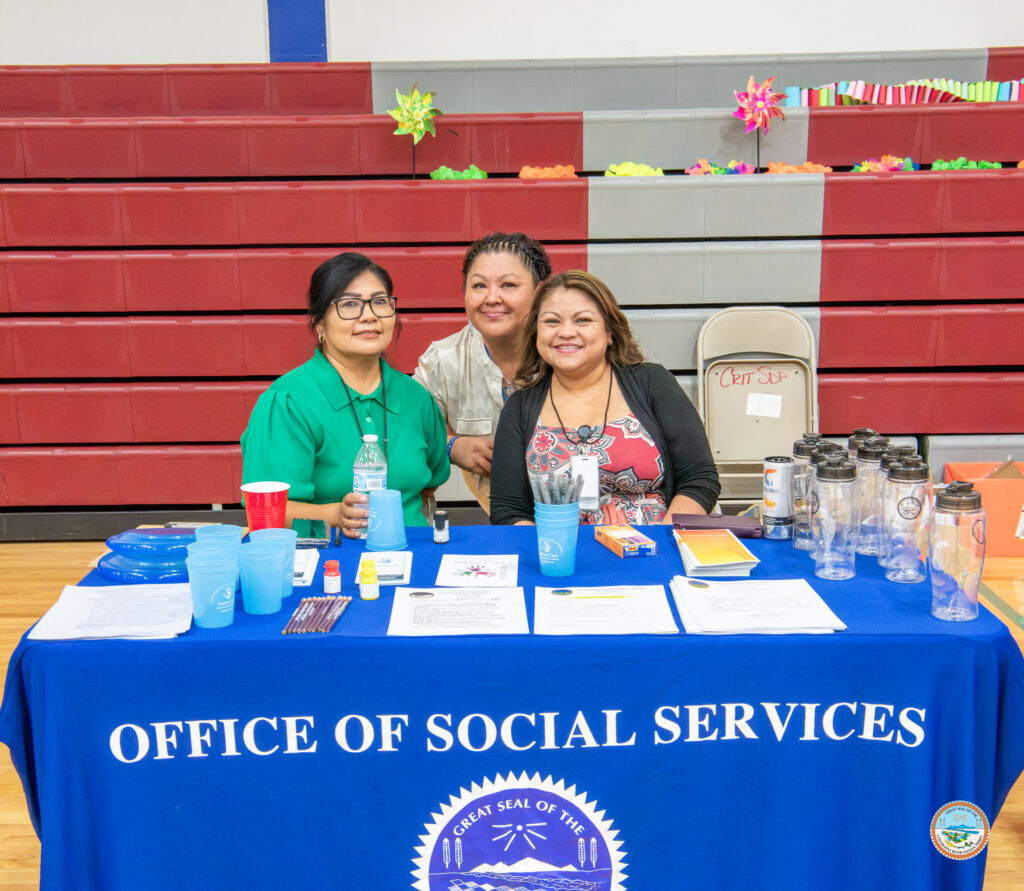
The CRIT Department of Health and Social Services hosted its Health Fair on Wednesday, June 24, at Irataba Hall. The event brought together departments and programs from across the community to share helpful resources and important health information.
There was food, games, raffles, and free shaved ice provided by Uncle Phil’s Awesome Snow Shaved Ice. Guests also left with bags filled with informational flyers, recipes, and useful household items. It was great to see so many departments working together to support and connect with the community.


Last week was filled with proud moments, happy tears, and celebrations as students across the community marked important milestones in their educational journeys.
The celebrations began Thursday, May 21, with the Parker Alternative Graduation ceremony that morning. Later that evening, families gathered again as students from Wallace Jr. High and Le Pera Elementary School took part in their promotion ceremonies, marking their next step forward.
The excitement continued Friday, May 22, with Parker High School’s Graduation celebration. Before the ceremony, graduates took part in a parade through town, where family, friends, and community members lined the route to cheer them on as they passed by. It was a special moment of recognition, not only for the graduates, but for everyone who supported them along the way.
The week ended Saturday, May 23, with the Head Start Promotion, a celebration filled with excitement, smiles, and a few tears from both parents and students. Although Head Start was the final event of the week, for many students, it represents where their educational journey first began.
Each ceremony served as a reminder of growth, hard work, and the importance of community support. From the youngest students taking their first big step forward to high school graduates preparing for new opportunities, each milestone is worth celebrating.
Congratulations to all the students who walked across the stage, down the aisle, or through the crowd of cheering loved ones. May you continue to shine, reach your goals, and move forward with confidence.
As Eleanor Roosevelt once said, “The future belongs to those who believe in the beauty of their dreams.”
Written by CRIT Media Reporter Ariana Romero


The Bureau of Reclamation told all 30 Tribal Nations in the Colorado River Basin on May 8th that they will no longer seek to allocate across-the-board shortages to all water users as previously proposed but instead will follow current law and respect senior tribal rights. This is a major victory for CRIT, Tribal rights advocates, and holders of senior water rights. As stated by CRIT Chairwoman Amelia Flores “We are pleased that Reclamation has finally decided to drop its illegal proposal to disregard CRIT’s senior water rights and allocate shortages without regard to priority.” Chair Flores continued, “Tribal Council has never backed down on the issue of protecting our Tribal rights. Throughout this process, Reclamation, and many others, have proposed for setting aside the priority system and for all water users to share equally in shortages. We know this is wrong and we were prepared to defend our senior water rights all the way to the Supreme Court. Fortunately, Reclamation has understood the seriousness of our position and dropped its proposal.”
Tribal Council has opposed these so called “pro-rata” shortages since they were first proposed by Reclamation over two years ago to manage reductions in Colorado River water due to overuse and climate change. Over this time, Tribal Council has been in support to stop the implementation of pro-rata shortages through an intensive and coordinated advocacy effort with the Trump Administration. This included many trips to Washington, DC, meetings with state-wide elected officials, and direct government-to-government consultation with senior Trump Administration officials.
While these efforts paid off in the statements made by Reclamation last week, the process regarding how the dams on the Colorado River will be operated is still ongoing. The CRIT Tribal Council understands that while the Reclamation’s reversal is a critical milestone, the fight to protect and preserve CRIT’s rights remain. As stated by Councilman Tommy Drennan “we will never rest in protecting and preserving our rights, not just for today but for future generations. “
CRIT’s water rights date back to the creation of the reservation, March 3, 1865 and are the most senior tribal water rights in the Lower Colorado River basin. We expect Reclamation to issue a final environmental document sometime in June.