
November 12, 2026 5:15 pm
CRIT Nation, Parker, AZ
November 12, 2026 5:15 pm
CRIT Nation, Parker, AZ

A recent statement from Colorado River Commissioner JB Hamby says California and other Lower Basin states have been working with federal officials and neighboring states to develop new long-term operating rules for the Colorado River after 2026. He noted that the original 1922 Colorado River Compact was based on water supply estimates that no longer match today’s reality, as river flows have declined over the past 25 years while demand continues to grow. 

According to the statement, California, Arizona, and Nevada committed to major conservation efforts in recent years and have already exceeded planned water savings meant to stabilize Lake Mead and Lake Powell. However, disagreements remain between Upper Basin and Lower Basin states about how future reductions should be shared, and negotiators have not yet reached a final agreement. 

For CRIT, these ongoing negotiations are important because federal Colorado River policies, interstate agreements, and conservation requirements directly influence how tribal water rights are protected, managed, and incorporated into long-term river planning that affects the entire region.

Source: https://crb.ca.gov/2026/02/statement-from-jb-hamby-colorado-river-commissioner-for-california/


February 14, 2026

According to the U.S. Department of the Interior, federal officials are moving forward with new operating guidelines for the Colorado River even though the seven basin states have not yet reached full agreement. The updated rules, expected by October 2026, are meant to provide stability for water deliveries, power generation, and long-term management as drought conditions and declining inflows continue to strain the river system. Interior Secretary Doug Burgum said discussions with states, Tribal Nations, and Mexico are ongoing, but federal action is needed to ensure future reliability of the river.

The Colorado River supplies water to about 40 million people, supports millions of acres of farmland, generates hydropower, and serves 30 Tribal Nations, making it one of the most important water sources in the West. Federal officials are currently accepting public comments on the draft environmental review that will guide future reservoir operations.

For CRIT, these federal guidelines are important because Colorado River management decisions directly affect how tribal water rights are protected, how water is allocated in the Lower Basin, and how long-term planning supports the Tribe’s water security, economy, and future generations.

Source: U.S. Department of the Interior / Bureau of Reclamation press release

According to Arizona Mirror, Colorado River negotiations hit a setback as Lower Basin states, including Arizona, criticized Upper Basin states for resisting deeper water conservation commitments. Officials say ongoing drought conditions and declining reservoir levels are increasing pressure to finalize new operating rules before current guidelines expire. The disagreement highlights continuing tension over how water reductions should be shared across the basin. For CRIT, these negotiations are important because interstate agreements and federal management decisions directly influence how tribal water rights are protected and incorporated into long-term river planning.

Source: Arizona Mirror — https://azmirror.com/2026/02/13/arizona-blasts-upper-basin-states-for-refusing-cuts-as-colorado-river-talks-fail/

According to the Arizona Department of Water Resources, state officials say they will continue protecting Arizona’s Colorado River resources even after basin states failed to reach a consensus ahead of the federal deadline. Leaders emphasized ongoing drought challenges and the need for continued negotiations to maintain stability for water users across the region. State agencies say collaboration with federal partners and neighboring states remains essential moving forward. For CRIT, continued state and federal coordination is significant because long-term Colorado River policies directly affect how tribal water rights are recognized and sustained.

Source: ADWR Statement — https://azwaternews.com/2026/02/13/021326_statement/

According to USA Today, Colorado River negotiations approached a critical deadline without a final agreement, reflecting ongoing disputes over how to manage shrinking water supplies across the Southwest. Experts say declining snowpack, persistent drought, and competing demands are making consensus more difficult as states prepare for new post-2026 operating guidelines. Federal involvement may increase if states cannot reach agreement. For CRIT, these developments matter because federal river management decisions play a key role in protecting tribal water rights and ensuring long-term water security.

Source: USA Today — https://www.usatoday.com/story/news/nation/2026/02/13/colorado-river-deal-deadline/88658491007/

According to Arizona Water News, Arizona water leaders recently received a briefing from the governor’s office, the Arizona Department of Water Resources, and the Central Arizona Project on ongoing Colorado River negotiations as a federal deadline approaches. Officials discussed current drought conditions, possible future cutbacks, and the importance of coordinated state and federal planning to stabilize river supplies. The briefing highlights continued uncertainty as states work toward new post-2026 operating guidelines for the river. For CRIT, these negotiations are important because federal and interstate decisions on Colorado River management directly influence how tribal water rights are protected and incorporated into long-term planning.

Source: Arizona Water News — https://www.azwater.gov/news/articles/2026-02-11

According to KJZZ News, Colorado River basin states are facing a federal deadline to reach an agreement on future water management rules, with uncertainty remaining about whether consensus can be reached in time. Experts say possible outcomes range from short-term agreements to federal intervention if negotiations stall, reflecting ongoing tension between Upper Basin and Lower Basin states. Continued drought and competing water demands have made long-term planning increasingly complex. For CRIT, these negotiations matter because federal decisions about river operations directly affect how tribal water rights are recognized and sustained within the broader basin framework.

Source: KJZZ News — https://www.kjzz.org/the-show/2026-02-12/colorado-river-states-are-staring-down-a-feb-14-deadline-heres-what-might-happen-next

According to the Lake Powell Chronicle, federal officials have outlined a post-2026 framework aimed at preventing further decline of the Colorado River system as drought pressures continue. The proposed blueprint focuses on conservation strategies, operational adjustments, and coordinated planning among basin states to stabilize reservoir levels and long-term water supplies. These discussions reflect ongoing efforts to balance environmental conditions, population growth, and water demand across the Southwest. For CRIT, long-term federal planning for the Colorado River is significant because these policies help shape how tribal water rights are protected and managed for future generations.

Source: Lake Powell Chronicle — https://lakepowellchronicle.com/stories/feds-unveil-post-2026-blueprint-to-avert-colorado-river-collapse,99303

According to ABC 15 Arizona, researchers at Arizona State University are developing technology that converts industrial wastewater into ultra-pure water, potentially expanding future water reuse options in the Southwest. Scientists say advanced treatment methods could help supplement limited freshwater supplies while supporting growing populations and industries. Water recycling and reuse are increasingly discussed as part of long-term drought resilience strategies. For CRIT, emerging water reuse technologies may play a role in future regional water planning as tribes, states, and federal agencies work to protect limited Colorado River resources.

Source: ABC 15 Arizona — https://www.abc15.com/news/local-news/asu-turns-industrial-wastewater-into-ultra-pure-water

(more…)

According to KJZZ News, potential Colorado River cutbacks could increase operating costs for Arizona water utilities and even affect their credit ratings, which utilities rely on to fund infrastructure projects. Analysts say uncertainty around long-term river supplies makes financial planning more difficult and could raise costs tied to water treatment, delivery, and conservation investments. These financial ripple effects show how water shortages extend beyond environmental concerns into economic stability across the region. For CRIT, shifts in regional water costs and infrastructure planning can influence broader river management decisions that ultimately affect how tribal water rights are maintained and utilized.

Source: KJZZ News — https://www.kjzz.org/the-show/2026-02-11/colorado-river-cuts-could-increase-arizona-utilities-costs-and-affect-their-credit-ratings

According to the Sierra Vista Herald Review, basin states are facing an approaching deadline to agree on new Colorado River management guidelines before current rules expire. Ongoing disagreements between Upper Basin and Lower Basin states, combined with continued drought pressures, have slowed negotiations and raised concerns about potential legal disputes if a consensus is not reached. Federal oversight remains a key factor in shaping how future allocations will be determined. For CRIT, these negotiations are important because federal river management decisions directly affect how tribal water rights are recognized, protected, and incorporated into long-term basin planning.

Source: Sierra Vista Herald Review — https://www.myheraldreview.com/news/state/deadline-approaches-for-colorado-river-negotiations/article_5dd6fa1d-eed1-4d98-82f2-4a754853da3c.html

According to KTNV Channel 13 News in Las Vegas, low snowpack levels across the Mountain West are raising concerns about water supplies for Southern Nevada and the broader Colorado River Basin. Snowpack acts as a natural reservoir that feeds rivers and storage lakes during spring runoff, so below-average levels can reduce future water availability and increase pressure on already stressed reservoirs. Experts say continued dry conditions could complicate long-term water planning across the Southwest. For CRIT, declining snowpack is significant because reduced river flows can influence future allocation decisions and federal management strategies affecting tribal water resources.

Source: KTNV News — https://www.ktnv.com/news/why-low-snowpack-levels-raising-alarms-for-southern-nevada-water-supply

According to Newsweek, new data showing concerning water levels at Lake Powell is adding to ongoing worries about the long-term stability of the Colorado River system. Reservoir levels play a critical role in determining water deliveries, hydropower production, and shortage declarations throughout the Southwest. Continued drought conditions combined with sustained demand have kept pressure on the basin’s major storage systems. For CRIT, reservoir conditions remain important because federal water management decisions tied to storage levels directly affect how tribal water allocations are managed and protected.

Source: Newsweek — https://www.newsweek.com/lake-powell-water-levels-as-concerning-data-revealed-11500468

According to the Center for Colorado River Studies at Utah State University, Lake Powell and Lake Mead have recently shown differing storage trends, reflecting the complexity of managing water across the Colorado River system. Researchers say reservoir operations, inflows, releases, and ongoing drought conditions all contribute to shifting water levels that can affect supply planning throughout the basin. Understanding how these reservoirs interact is key to long-term river management decisions. For CRIT, these reservoir dynamics matter because federal operational decisions tied to storage levels directly influence how Colorado River water is allocated and protected for tribal communities.

Source: Center for Colorado River Studies — https://qanr.usu.edu/coloradoriver/news/blog-2026-2-9

According to KJZZ News, the Colorado River Basin is experiencing one of its driest winters in decades, with snowpack levels far below average in key areas that supply water to Lake Powell and Lake Mead. Scientists warn that reduced snowpack could lead to lower river flows this year, increasing pressure on already strained reservoirs and complicating ongoing negotiations over long-term water management. Because snowpack acts as the primary natural storage system for the river, weaker winters often translate into tighter water supplies downstream. For CRIT, these conditions matter because reduced river flows can influence future allocation decisions, federal management strategies, and long-term planning for tribal water resources.

Source: KJZZ News — https://www.kjzz.org/science/2026-02-09/the-colorado-river-is-having-its-driest-winter-in-decades

According to ABC News, record-low snowpack across much of the western United States is raising concerns about potential water shortages, wildfire risks, and continued stress on major river systems including the Colorado River. Experts say warmer temperatures and shifting precipitation patterns are reducing snow accumulation that normally feeds reservoirs during spring runoff. These trends could influence future water allocation planning as states and federal agencies work toward updated river management strategies. For CRIT, changes in snowpack levels matter because they directly affect Colorado River flows that shape long-term water availability and policy decisions impacting tribal communities.

Source: ABC News — https://abcnews.com/US/wireStory/record-snow-drought-western-us-raises-concern-spring-130016613

According to the San Mateo Daily Journal, a key deadline is approaching for Colorado River basin states to reach an agreement on new water management rules before current guidelines expire. Ongoing disagreements between upper and lower basin states, combined with persistent drought conditions, have slowed progress and increased concerns about potential legal disputes if consensus is not reached. Federal oversight plays a major role in shaping these negotiations, particularly for the Lower Basin where water allocations are closely regulated. For CRIT, these negotiations are significant because future federal river management decisions directly affect how tribal water rights are recognized, protected, and incorporated into basin planning.

Source: San Mateo Daily Journal — https://www.djournal.com/news/national/deadline-approaches-for-colorado-river-negotiations/article_5a129b32-06cb-50c0-8945-5186943db1db.html

According to KJZZ News, a new groundwater monitoring tool developed in Nevada is helping scientists better understand how groundwater pumping affects habitats, water availability, and long-term sustainability across the Mountain West. Researchers say improved data can support more informed water management decisions as communities balance development, agriculture, and environmental needs. Groundwater use is increasingly important as surface water supplies face ongoing pressure from drought and climate variability. For CRIT, regional groundwater management discussions matter because they influence broader basin water planning and long-term strategies for protecting tribal water resources.

Source: KJZZ News — https://www.kjzz.org/science/2026-02-08/a-nevada-groundwater-tool-highlights-strained-habitats-with-lessons-for-the-mountain-west

According to Reuters, the Colorado River has been identified as the most endangered river in the United States due to ongoing drought, rising demand, and increasing pressure on its limited water supplies. Experts say declining reservoir levels, climate impacts, and competing state interests continue to challenge long-term sustainability across the basin. The designation highlights growing national attention on the need for cooperative water management and conservation efforts. For CRIT, this recognition underscores the importance of protecting tribal water rights as regional policies evolve to address long-term river stability.

Source: Reuters — https://www.reutersconnect.com/item/colorado-river-is-named-the-most-endangered-river-in-the-united-states-as-the-southwestern-states-face-water-shortages/dGFnOnJldXRlcnMuY29tLDIwMjI6bmV3c21sX1JDMjBRVDlVUEZKMg

Written by CRIT Media Reporter Ariana Romero

“This river is everything to so many people. And yet so many of us treat it as if it’s nothing.”

Those words from ultradistance runner and water advocate Mina Guli carry added weight as the Colorado River faces more than two decades of drought, declining reservoir levels, and growing uncertainty over how the river will be managed in the years ahead.
For the Colorado River Indian Tribes, the future of the river is not a distant issue. CRIT lives along its banks, holds senior Colorado River water rights, and continues to play an active role in conversations surrounding conservation, management, and the river’s future.

Those conditions gave added significance to Guli’s 2,000-mile “Keep the River Running” journey as it reached the Colorado River Indian Reservation.

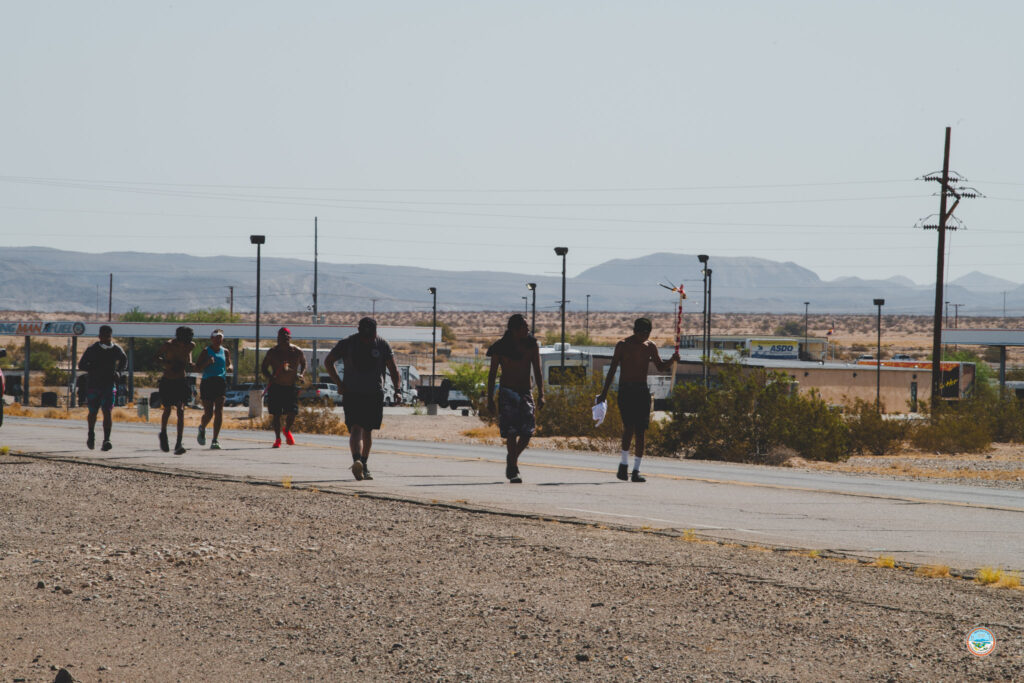
Guli is running approximately 2,000 miles in 100 days along the Colorado River as part of her “Keep the River Running” campaign. Her journey follows the river through communities that depend on it, with a focus on raising awareness, listening to local voices, and encouraging cooperation around the river’s future.

Her CRIT visit began on the California side of the Reservation, where Councilman Tommy Drennan, Councilwoman Raeanne Patch, and Councilwoman Tracey Quillen greeted and welcomed her before the run.

From there, members of the Mohave Runners, Adrian Pulido, Nolan Taliman, Irving Sharp, Elan Drennan-Webb, Joseph “Joe” Deleon, Aniah “AB” Booth, Mickey Anderson Jr., Joshua Mike, Oslette Johnson, and Chance Fisher joined Guli and ran alongside her through scorching desert heat. Together, they crossed the Colorado River from the California side into Arizona and continued through the community to the Tribal Council Chambers on Mohave Road.
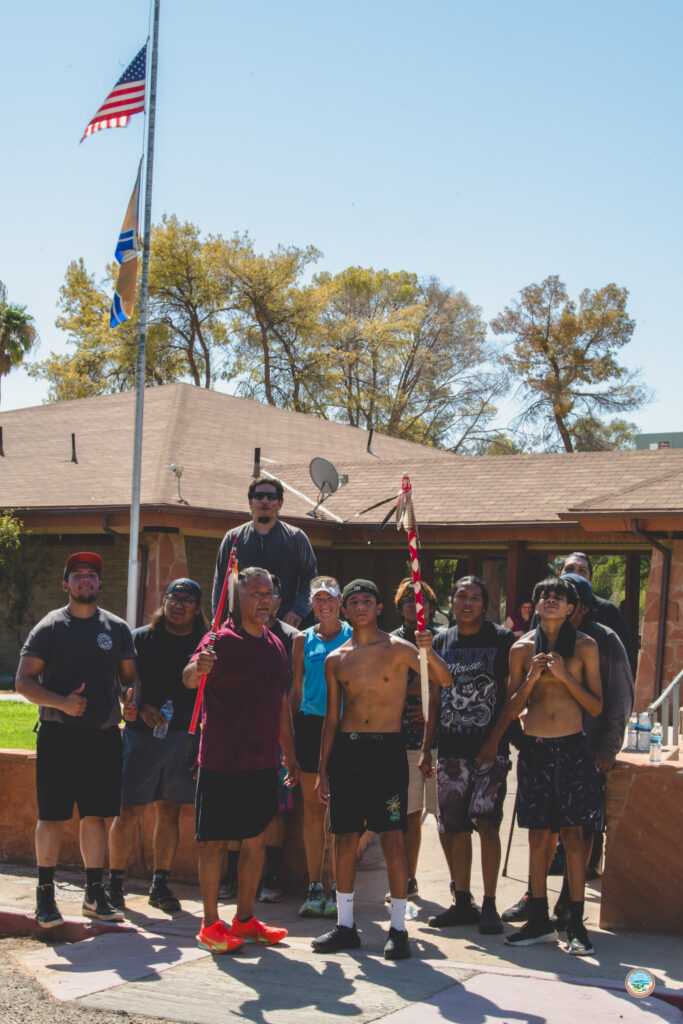
The Mohave Runners brought a strong local presence to the event. Their participation reflected more than physical endurance. They were running beside a river that has sustained their community for generations, showing strength and determination while taking part in a larger effort focused on the future of the Colorado.

Guli said running alongside local people gave her a deeper understanding of the communities tied to the river.

“These are people who have spent their lives here and have so much to share and so much knowledge,” she said.

After the run, Guli, Tribal Council, and community members gathered inside the Tribal Council Chambers. Vice Chairman Dwight Lomayesva, Secretary Josephine Tahbo, Treasurer Anisa Patch, Councilwomen Tracey Quillen, Vanessa Welch, and Raeanne Patch, and Councilman Tommy Drennan were among those in attendance.
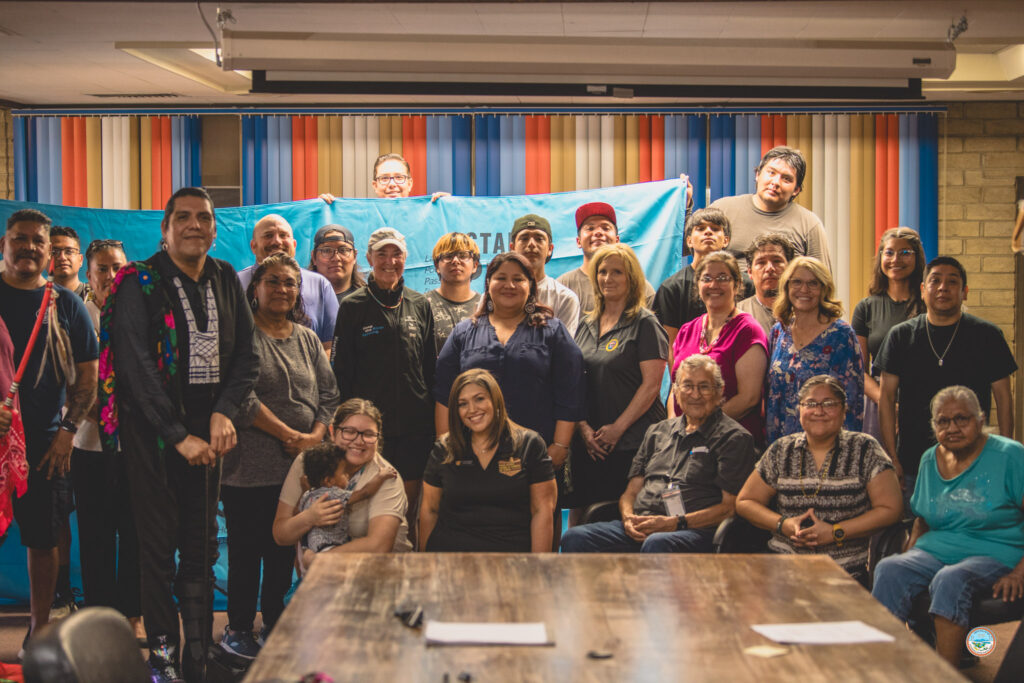
The Tribal Council welcomed Guli, presented her with a gift, and thanked her for bringing attention to the Colorado River and the people whose lives are connected to it.

During the gathering and her interview with CRIT Media, one message continued to surface: the importance of working together.

Guli spoke about the many challenges facing the river, including fragmentation among governments, communities, industries, and organizations. She said long-term solutions will require people to look beyond individual interests and focus on a shared future.

“Together doesn’t mean that the river is yours or mine,” Guli said. “It means that it’s ours.”

She also described what she called the “power of together,” saying the future of the river will depend on people being willing to listen to one another, include different perspectives, and work across boundaries.
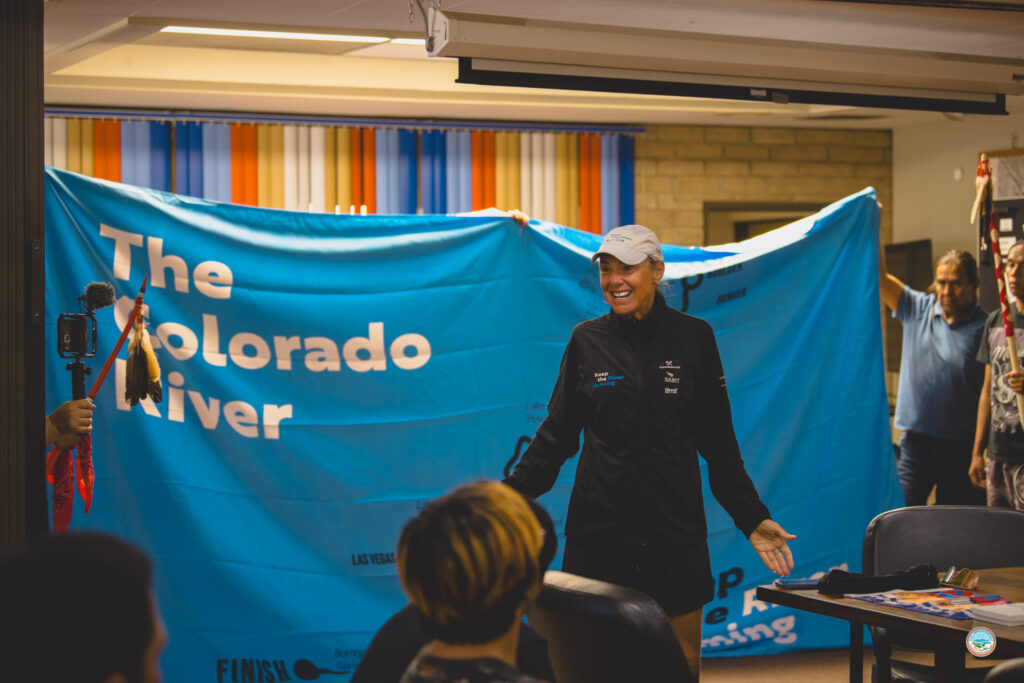
For Guli, that includes Tribal communities whose relationship with the river goes back generations.

She said being at CRIT gave her the opportunity to listen directly to people who have lived with and understood the Colorado River “since time immemorial.” She also pointed to CRIT’s work involving legal personhood as an example of thinking about the river as more than simply a resource.

“The way to hear them is to be here,” she said. (more…)

(PARKER, Ariz.) The Colorado River Indian Tribes (CRIT) remains vigilant and recognizes the efforts brought forward in the release of the Record of Decision (ROD) for operations of Lake Powell and Lake Mead (2027–2036). The Bureau of Reclamation (BOR) is not imposing illegal water cuts on CRIT that it initially proposed in the draft EIS issued earlier this year.

CRIT recognizes the current water crisis impacts the millions of people who depend on the River including wildlife and natural habitats. CRIT’s own membership residing in the various towns, cities, states will be impacted by water shortages. Indeed, the Tribes’ deep-rooted connection to the River spans since time immemorial.

The ROD cites to formally include Tribal nations including CRIT in the Basin-wide consultation structure. CRIT has been seeking this for years and hopes the BOR keeps to their promise.

On behalf of the CRIT Tribal Council, Chairwoman Amelia Flores states, “The efforts of CRIT have made a difference. The numerous meetings and discussions between CRIT’s Tribal Council and the Bureau of Reclamation have clearly had an impact. In the ROD, the Bureau of Reclamation acknowledged they would follow the decree established in AZ v. California. This is of critical importance to CRIT, which holds the most senior Tribal rights in the Lower Basin.”

Tribal Council Member Tommy Drennan states, “We turn another page in this water crisis. We go forward to defend the river, our allocation, and the voice of our CRIT nation. It is progress, knowing that the US recognizes the need to work towards further solutions until the river recovers.  It is progress to know there are no illegal reductions facing our allocation today. We will continue to do what we must to keep the river alive.”

Councilmember Raeanne Patch states, “Given the critical status of the river, tribal consultation is mandatory in every discussion and decision regarding the Colorado River.”

Councilmember Anisa Patch states, “As the river’s natural ability to replenish itself falls further behind, CRIT continues defending our water allocation and traditional lifelines, navigating colonial processes.  We fight to preserve our livelihoods, the livelihoods of all living things who depend on this river to the changed landscapes ahead.”

Councilmember Tracey Quillen states, “I am proud of the work CRIT has done to bring us to this point, but our work is not finished. We remain vigilant in protecting our water and will continue working together to ensure that our rights are respected and protected for generations to come.”

The ROD preserves the legal status of CRIT’s water rights. It also clarified Reclamation will not rely on misdealing assumptions about CRIT’s water use in the FEIS (Final Environmental Impact Statement) regarding CRIT’s inability to entirely use its water resources.

However, the ROD also introduces a series of two-year operating frameworks under which additional reductions in water supply for central Arizona could be adopted if reservoir conditions worsen. As a result, CRIT will continue to proactively engage with Reclamation and other stakeholders throughout these successive two-year processes to fully protect CRIT’s water rights.

In November, the CRIT Tribal Council voted unanimously to proclaim Personhood Status for the Colorado River, acknowledging the Colorado River as a living entity whose health and well-being are intrinsically linked to the well-being of the Colorado River Indian Tribes (CRIT) members.

While the Tribal Council will stay engaged regarding CRIT’s water allocation, It will also continue to actively address the limitations in water delivery infrastructure which must be addressed by the federal government.

Flores added, “As this water crisis persists, CRIT continues conservation measures to preserve the life of the Colorado River.”

New World Screwworm detected near the border.

Follow the link for details.
Veterinarian-Stakeholder Comms-WOLKER-SIGNED

The Colorado River has faced historic drought and declining reservoir levels for more than two decades. In 2019, the Department of the Interior, Bureau of Reclamation, and representatives of the seven Colorado River Basin states signed the Drought Contingency Plans (DCP). The plans established coordinated conservation measures to reduce the risk of Lake Mead and Lake Powell falling to critically low levels.

The Colorado River Indian Tribes (CRIT) were among the Colorado River water users that voluntarily agreed to conserve water as part of the DCP. Between 2020 and 2022, the Tribes conserved 150,000 acre-feet of Colorado River water, helping keep additional water in Lake Mead. An acre-foot is enough water to cover one acre of land one foot deep.

CRIT received compensation for the 150,000 acre-feet it conserved. The effort also left approximately 10,000 acre-feet of additional water in Lake Mead. CRIT was not compensated for that portion, which became the Tribes’ Intentionally Created Surplus (ICS).

ICS is conserved water stored in Lake Mead for later use. The Bureau of Reclamation continues to credit the water to CRIT, similar to money held in a savings account. The balance is separate from the Tribes’ regular annual Colorado River allocation, and using it would not reduce CRIT’s allocation in future years.

Two rules govern CRIT’s ICS water. The first involves evaporation. The Bureau of Reclamation accounts for ICS as water stored at the top of the reservoir, making it subject to evaporation losses. Similar to water sitting in an uncovered container, water at the surface is the first to evaporate.

Those losses have reduced CRIT’s original ICS balance from approximately 10,000 acre-feet to 9,009 acre-feet. Water lost through evaporation cannot be recovered, and CRIT does not receive compensation for it. The longer the water remains in Lake Mead, the less CRIT has available to use or receive compensation for.

The second rule limits who may use ICS. It may only be used by the federal government or another entity that also holds ICS. Under the current rules, the Central Arizona Project, commonly known as CAP, and the Gila River Indian Community are the only eligible users for CRIT’s stored water.

CAP has approached Tribal Council about using the water in exchange for compensation. A possible agreement would allow CRIT to receive value from the remaining balance before additional water is lost through evaporation.

CRIT’s ICS is a finite Tribal resource created through conservation. Tribal Council is now considering how to use the remaining 9,009 acre-feet before evaporation further reduces its potential value.