The Colorado River Indian Tribes (CRIT) has issued a Request for Proposals (RFP) for the CPUC Broadband Deployment Phase I Project, a major infrastructure initiative aimed at expanding reliable, high-capacity internet service for Tribal communities and surrounding areas. Through this public bid process, CRIT is seeking qualified contractors to furnish, install, splice, and test outside plant fiber-optic infrastructure that will form the foundation of an expanded broadband network. The project will support improved connectivity along key regional corridors near the Reservation, including areas within San Bernardino and Riverside Counties and surrounding communities such as Blythe, Earp, and Parker Dam. This investment represents an important step toward strengthening digital access, supporting economic development, enhancing education and telehealth opportunities, and ensuring long-term technological resilience for CRIT members and neighboring communities. Proposals will be evaluated based on cost, qualifications, construction schedule, and Indian Preference in accordance with Tribal procurement policy.
Follow the links below for bidding information and specs.
Appendix B_CRIT CPUC_Phase 1_Contractor Bid Sheet_02.23.2026
Appendix C_CRIT CPUC_Phase I_Project Specifications_Sealed_02.23.2026
Follow the link below for the propsed amended code
2026 Amended and Restated Gaming Code_Public Hearing

According to Arizona Water News, Arizona and its Lower Basin partners say they remain committed to finding common ground on new Colorado River operating rules despite stalled negotiations among the seven basin states. Officials emphasized continued collaboration with federal agencies and neighboring states to stabilize water supplies beyond 2026 as drought conditions persist. The effort reflects ongoing attempts to balance conservation, water demand, and long-term river sustainability. For CRIT, these negotiations remain important because federal and interstate agreements directly influence how tribal water rights are recognized and protected in future Colorado River management decisions.
Source: Arizona Water News — https://www.azwater.gov/news/articles/2026-02-19
According to the Navajo Times, federal officials are moving forward with developing new Colorado River operating guidelines even as state negotiations remain stalled. The Department of the Interior is continuing its environmental review process to prepare for post-2026 river management, highlighting the federal government’s role when states cannot reach consensus. Tribal consultation remains part of that process. For CRIT, federal involvement is significant because Colorado River policies shaped at the federal level directly affect tribal water rights, long-term planning, and regional water security.
Source: Navajo Times — https://navajotimes.com/reznews/federal-officials-move-forward-on-colorado-river-operating-rules-as-state-negotiations-stall/
According to ABC 15 Arizona, tribal nations along the Colorado River are among those with the most at stake as negotiations over future water allocations continue. Tribal leaders emphasize the importance of protecting established water rights while ensuring sustainable solutions to ongoing drought conditions. The article highlights how tribal participation is increasingly central in discussions about the river’s future. For CRIT, these conversations are especially important because tribal sovereignty and water rights remain critical factors in how Colorado River resources are managed across the basin. (more…)
According to CBS 5 Arizona’s Family, Arizona could face deeper Colorado River water cuts following missed negotiation deadlines, raising concerns about future water supply stability across the state. Officials say ongoing drought and reduced reservoir levels continue to challenge long-term planning efforts. These developments may lead to increased federal involvement in river management decisions. For CRIT, potential cutbacks are important because federal allocation decisions directly influence how tribal water rights are maintained and protected.
Source: CBS 5 Arizona’s Family — https://www.azfamily.com/2026/02/17/arizona-faces-major-colorado-river-water-cuts-deadline-passes/
According to the Colorado Sun, new forecasts suggest Lake Powell could reach critically low levels that threaten hydropower production and water deliveries if drought conditions persist. Reservoir storage plays a central role in determining how water is distributed across the Colorado River Basin. Experts say ongoing climate pressures and declining inflows continue to complicate long-term planning. For CRIT, reservoir conditions remain important because federal operational decisions tied to storage levels directly affect how tribal water allocations are managed and protected.
Source: Colorado Sun — https://coloradosun.com/2026/02/18/lake-powell-forecast-critical-lows-federal-study/
According to AZPM News, Colorado River basin states missed another federal deadline to reach agreement on future water reductions, increasing the likelihood of additional cutbacks across the Southwest. Officials warn that continued drought and declining reservoir levels could force tougher decisions about water allocation in the coming years. The missed deadline highlights growing uncertainty about long-term river management. For CRIT, potential water reductions and federal policy decisions directly influence how tribal water rights are protected and incorporated into basin planning.
Source: AZPM News — https://news.azpm.org/s/102728-arizona-and-western-states-miss-colorado-river-water-deadline-as-cuts-loom/
According to Newsweek, Lake Powell water levels could drop to critical levels sooner than expected, raising concerns about hydropower production and water deliveries across the Colorado River Basin. Experts say continued drought, reduced snowpack, and high demand are contributing to declining reservoir storage. These conditions add urgency to ongoing negotiations about future river operations. For CRIT, reservoir levels are important because federal decisions tied to storage conditions directly affect how tribal water allocations are managed and sustained.
Source: Newsweek — https://www.newsweek.com/lake-powell-water-could-drop-to-critical-levels-sooner-than-expected-11531274
According to Pinal Central, the Gila River Indian Community expressed concern over the lack of agreement among Colorado River basin states, noting the importance of tribal voices in ongoing water negotiations. Tribal leaders emphasized the need for sustainable solutions that recognize existing water rights while addressing long-term drought conditions. The statement highlights growing awareness of tribal participation in basin discussions. For CRIT, tribal engagement in Colorado River negotiations is significant because it reinforces the importance of protecting tribal sovereignty and water rights across the region.
Source: Pinal Central — https://www.pinalcentral.com/sacaton_central/gric-laments-lack-of-deal-over-colorado-river-water/article_cb91f461-07de-4f88-8d70-c3dec3b96c67.html
A recent statement from Colorado River Commissioner JB Hamby says California and other Lower Basin states have been working with federal officials and neighboring states to develop new long-term operating rules for the Colorado River after 2026. He noted that the original 1922 Colorado River Compact was based on water supply estimates that no longer match today’s reality, as river flows have declined over the past 25 years while demand continues to grow.
According to the statement, California, Arizona, and Nevada committed to major conservation efforts in recent years and have already exceeded planned water savings meant to stabilize Lake Mead and Lake Powell. However, disagreements remain between Upper Basin and Lower Basin states about how future reductions should be shared, and negotiators have not yet reached a final agreement.
For CRIT, these ongoing negotiations are important because federal Colorado River policies, interstate agreements, and conservation requirements directly influence how tribal water rights are protected, managed, and incorporated into long-term river planning that affects the entire region.
Source: https://crb.ca.gov/2026/02/statement-from-jb-hamby-colorado-river-commissioner-for-california/
February 14, 2026
According to the U.S. Department of the Interior, federal officials are moving forward with new operating guidelines for the Colorado River even though the seven basin states have not yet reached full agreement. The updated rules, expected by October 2026, are meant to provide stability for water deliveries, power generation, and long-term management as drought conditions and declining inflows continue to strain the river system. Interior Secretary Doug Burgum said discussions with states, Tribal Nations, and Mexico are ongoing, but federal action is needed to ensure future reliability of the river.
The Colorado River supplies water to about 40 million people, supports millions of acres of farmland, generates hydropower, and serves 30 Tribal Nations, making it one of the most important water sources in the West. Federal officials are currently accepting public comments on the draft environmental review that will guide future reservoir operations.
For CRIT, these federal guidelines are important because Colorado River management decisions directly affect how tribal water rights are protected, how water is allocated in the Lower Basin, and how long-term planning supports the Tribe’s water security, economy, and future generations.
Source: U.S. Department of the Interior / Bureau of Reclamation press release
According to Arizona Mirror, Colorado River negotiations hit a setback as Lower Basin states, including Arizona, criticized Upper Basin states for resisting deeper water conservation commitments. Officials say ongoing drought conditions and declining reservoir levels are increasing pressure to finalize new operating rules before current guidelines expire. The disagreement highlights continuing tension over how water reductions should be shared across the basin. For CRIT, these negotiations are important because interstate agreements and federal management decisions directly influence how tribal water rights are protected and incorporated into long-term river planning.
Source: Arizona Mirror — https://azmirror.com/2026/02/13/arizona-blasts-upper-basin-states-for-refusing-cuts-as-colorado-river-talks-fail/
According to the Arizona Department of Water Resources, state officials say they will continue protecting Arizona’s Colorado River resources even after basin states failed to reach a consensus ahead of the federal deadline. Leaders emphasized ongoing drought challenges and the need for continued negotiations to maintain stability for water users across the region. State agencies say collaboration with federal partners and neighboring states remains essential moving forward. For CRIT, continued state and federal coordination is significant because long-term Colorado River policies directly affect how tribal water rights are recognized and sustained.
Source: ADWR Statement — https://azwaternews.com/2026/02/13/021326_statement/
According to USA Today, Colorado River negotiations approached a critical deadline without a final agreement, reflecting ongoing disputes over how to manage shrinking water supplies across the Southwest. Experts say declining snowpack, persistent drought, and competing demands are making consensus more difficult as states prepare for new post-2026 operating guidelines. Federal involvement may increase if states cannot reach agreement. For CRIT, these developments matter because federal river management decisions play a key role in protecting tribal water rights and ensuring long-term water security.
Source: USA Today — https://www.usatoday.com/story/news/nation/2026/02/13/colorado-river-deal-deadline/88658491007/
The Tribal Council for the Colorado River Indian Tribes has approved a new water code that both affirms tribal sovereignty over its water while protecting the life of the Colorado River.
Before the Tribal Council vote, there was a series of meetings with Tribal Membership in both Parker and in Phoenix where Tribal members provided their thoughts regarding the language of the final code.
These meetings with Tribal Membership provide Tribal Council with valuable insight in creating the Water Code.
The Code is a comprehensive legal framework to govern the use, protection, and
management of all water resources on the Reservation. It affirms the Colorado River Indian Tribes’ sovereign authority over water, ensures sustainable development, and protects the cultural, spiritual, and economic interests of the Tribes and their members.
Passage of the Water Code paves the way for economic opportunities for CRIT while protecting cultural and environmental values.
The Water Code protects CRIT’s full ownership and control of its water. It creates a fair, transparent system for water use and the potential of off reservation leasing of CRIT’s water resources. It ensures that all decisions are made by CRIT. (more…)
The Colorado River is not just a water source for the Colorado River Indian Tribes (CRIT); it is the foundation of life, culture, and survival on the Reservation. It sustains farms and families, supports wildlife, and holds deep cultural and spiritual meaning for the Tribes who have lived along its banks for generations. For CRIT, decisions about the river are not abstract policy debates, they directly affect the Tribe’s ability to live, govern, and prosper for future generations.
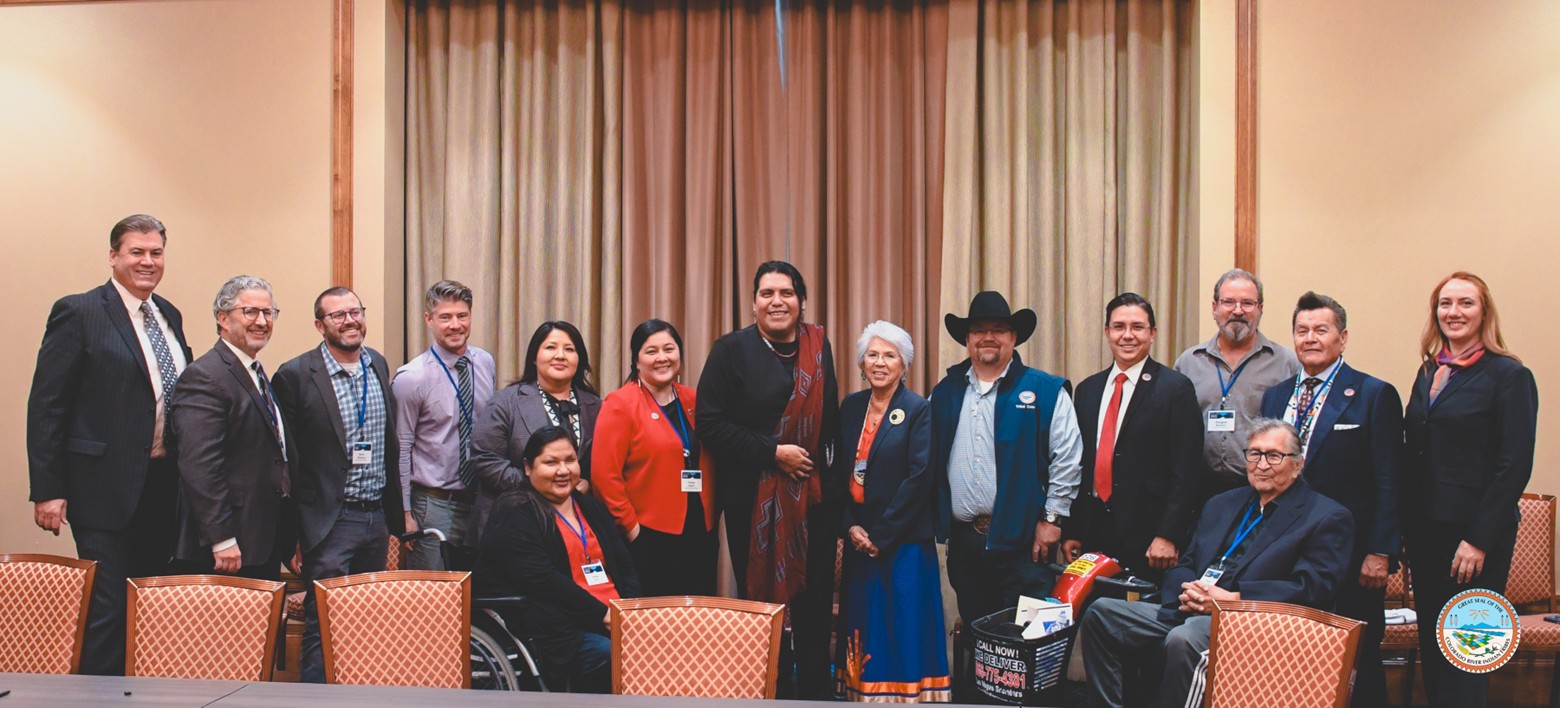
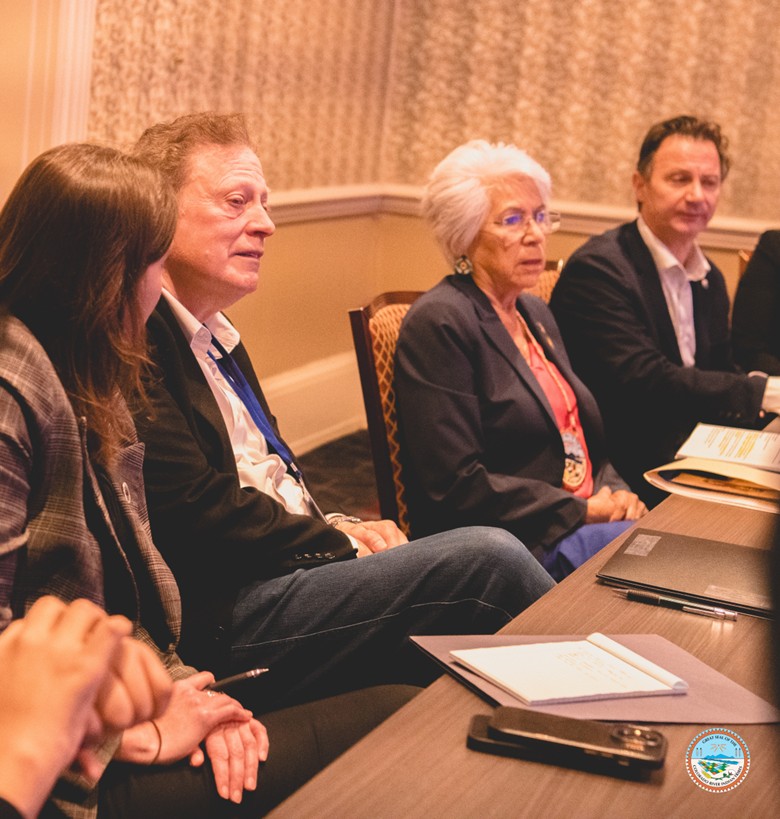
That reality framed a series of high-level meetings held alongside the Colorado River Water Users Association (CRWUA) Conference, where CRIT was represented by a unified and prepared delegation consisting of Tribal Council, legal counsel, the CRIT Attorney General’s Office, Public Affairs, and the Tribe’s Washington, D.C. and Phoenix lobbying teams, all actively engaged in advancing and defending CRIT’s water rights and sovereignty.
This delegation engaged in multiple meetings with neighboring tribes, federal agencies, state representatives, and regional water districts. As the Colorado River Basin approaches major changes after 2026, these discussions focused on the future of the river, tribal water rights, and CRIT’s role as a sovereign water authority.
At the center of these discussions was a clear and unwavering position from CRIT: the Tribe’s senior water rights, tribal sovereignty, and responsibility to protect the Colorado River are not negotiable. CRIT Deputy Attorney General Travis Nez explained that the Tribe is expanding its agricultural footprint by investing in and growing farming operations on the Reservation. This ensures that the Tribe’s water is put to use on tribal lands to generate the greatest possible economic benefit for the community. While many water users across the Basin are reducing agricultural use, CRIT is intentionally increasing on-reservation water use to reclaim water that has historically gone unused and to convert it into long-term economic benefits for the Tribe.
CRIT leadership and the Tribe is fully cognizant that neighboring and downstream entities have economically benefited for decades from CRIT’s unused Colorado River allocation. This includes large regional water agencies such as the Metropolitan Water District of Southern California. Their Colorado River Aqueduct diverts water at Lake Havasu upstream of the CRIT Reservation, supporting municipal growth and generating substantial economic value. Simultaneously, CRIT’s own ability to fully use its water has long been constrained by outdated irrigation infrastructure constructed and controlled by the Bureau of Indian Affairs (BIA). (more…)
When people talk about climate change, it can sound political or exaggerated, but at its core, it’s about environmental changes we can measure over time. Scientists like Brad Udall, who studies long-term weather patterns, have found that the Earth’s average temperature has risen slightly over the past century, mostly because of how people consume energy. When coal, gas, or oil is burned, it releases gases that trap more heat in the atmosphere, like a blanket wrapped around the planet. Despite whether someone believes it is man-made or not, climate change forces us to pay attention, and develop methods to protect the land and water that sustain us.
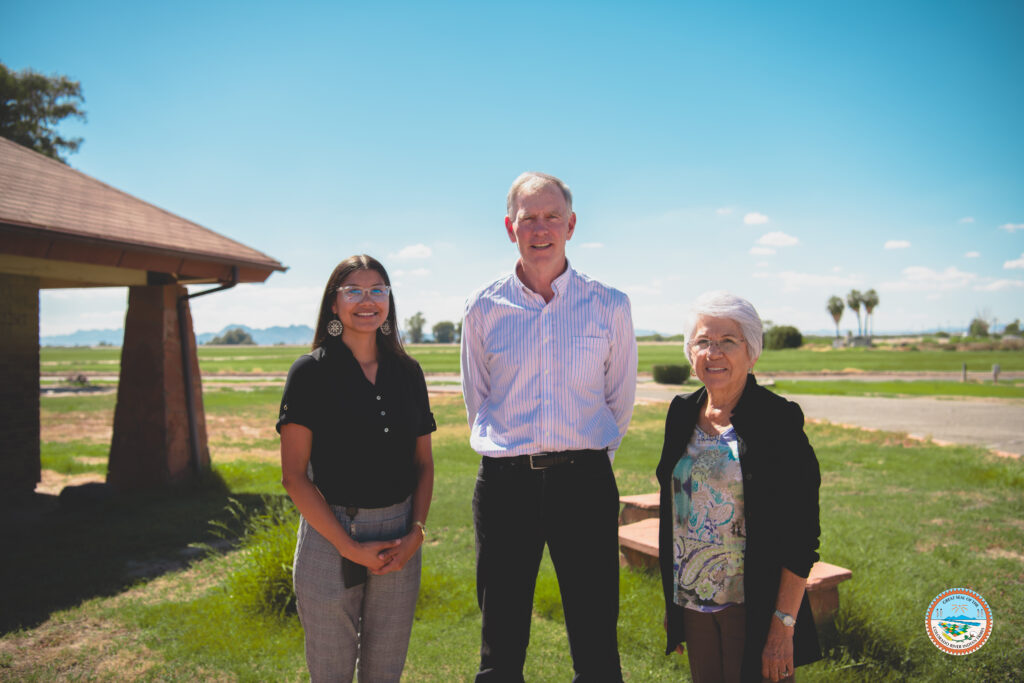
On Monday, September 29th, Udall, an internationally recognized scientist on water and climate change from Colorado State University, visited the Colorado River Indian Reservation to share his latest findings on the Colorado River. He spoke with Tribal leaders about what the future may hold.
Udall is known for his research on the connection between climate change and river systems in the American West. He has spent decades studying how heat, drought, and rainfall affect water levels, especially in the Colorado River Basin. Additionally, Udall co-wrote parts of the U.S. National Climate Assessment, and has testified before the United States Congress about the effects of climate change on western water supplies. His work focuses on researching solutions that balance the needs of people, agriculture, and the environment.
When Udall met with Tribal leadership at the Colorado River Indian Tribes (CRIT) Council Chambers, he was greeted by Chairwoman Amelia Flores, Councilwoman Vanessa Welch, CRIT Attorney General Rebecca Loudbear, CRIT Water Resources Director Dillion Esquerra, CRIT Realty Commercial Manager Herman “TJ” Lafoon Jr., and CRIT Lead Water Attorney John Bezdek.
During his presentation, Udall explained that flows in the Colorado River have dropped about 20% since the year 2000, and that precipitation – the rain and snow that feed the river – is also down about 20%. He said several studies have found that this isn’t just a temporary drought, but a long-term trend he believes is caused largely by human-driven climate change. Temperatures are rising across the Southwest, and according to Udall, “We are now on target for 3 degrees Celsius of warming by the year 2100.” Udall reiterated that his studies show this increase in temperatures is based on an average of estimates, and that temperatures in certain areas, including the desert southwest, could see higher increases.
Udall described the situation as serious and with little optimism. He shared that some scientists are exploring ideas like adding sulfur dioxide to the atmosphere to help cool the planet, though he said most researchers are cautious about such steps because they involve more human interference in nature. “It’s not a perfect solution,” he explained, “but it shows how far people are thinking about how to slow down the warming.” Councilwoman Vanessa Welsh was thankful for Udall’s frankness about the situation stating, “Many of us do know this, but we don’t hear it very often…We intend to protect the river as one of our own.” (more…)
The Department of Revenue and Finance Welcomes Director
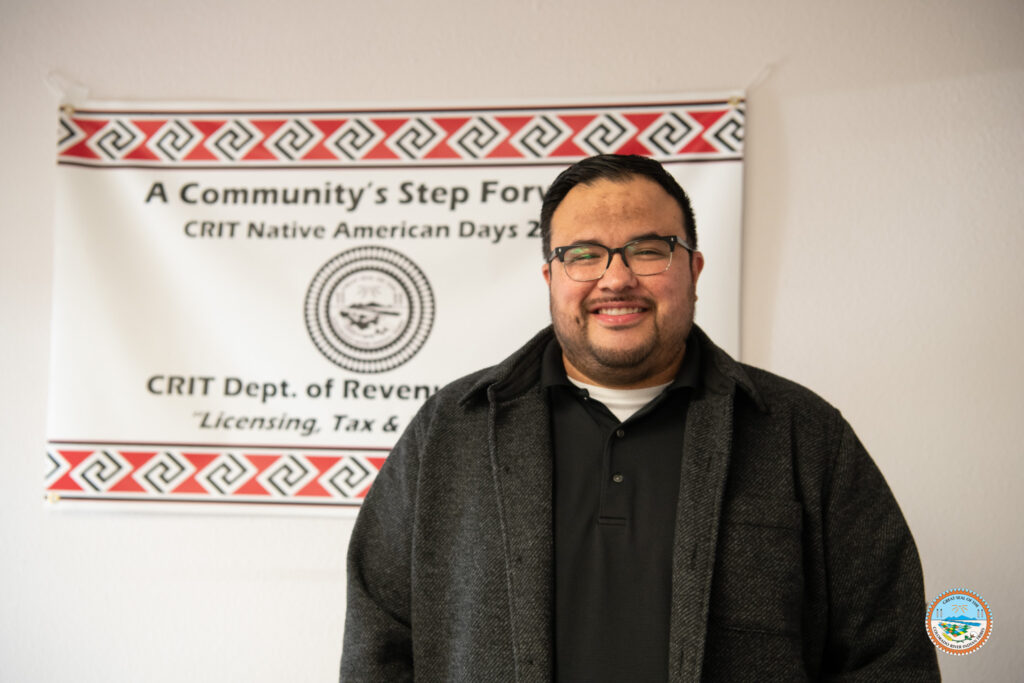
The Colorado River Indian Tribes is pleased to welcome Andrew Quillen as the new Director of the Revenue and Finance Department.
Mr. Quillen is a CRIT tribal member who was born and raised in the community. He brings both professional experience and a deep personal connection to the reservation into his new leadership role. He has worked for the Tribes for the past three years and has steadily grown within the department.
Mr. Quillen earned his Bachelor of Arts degree in Business Administration with a concentration in management from the University of La Verne. Upon returning to Parker, he began his career with the Tribes as a tax examiner and revenue agent. He quickly found that the work aligned with his long-standing interest in business, compliance, and economic development.
When the former Revenue and Finance Director was elected to Tribal Council, Mr. Quillen felt it was the right time to step forward and continue the work the department had already established. His background in sales, service, and compliance has helped shape his understanding of how the department supports businesses and the community as a whole.
As a lifelong community member, Mr. Quillen understands the economic landscape of the reservation and the opportunities for growth. One of his personal goals is to see more tribal members become business owners. Being part of the reservation’s continued development is something that holds special meaning for him. (more…)