July 29, 2026 8:04 pm
CRIT Nation, Parker, AZ
July 29, 2026 8:04 pm
CRIT Nation, Parker, AZ

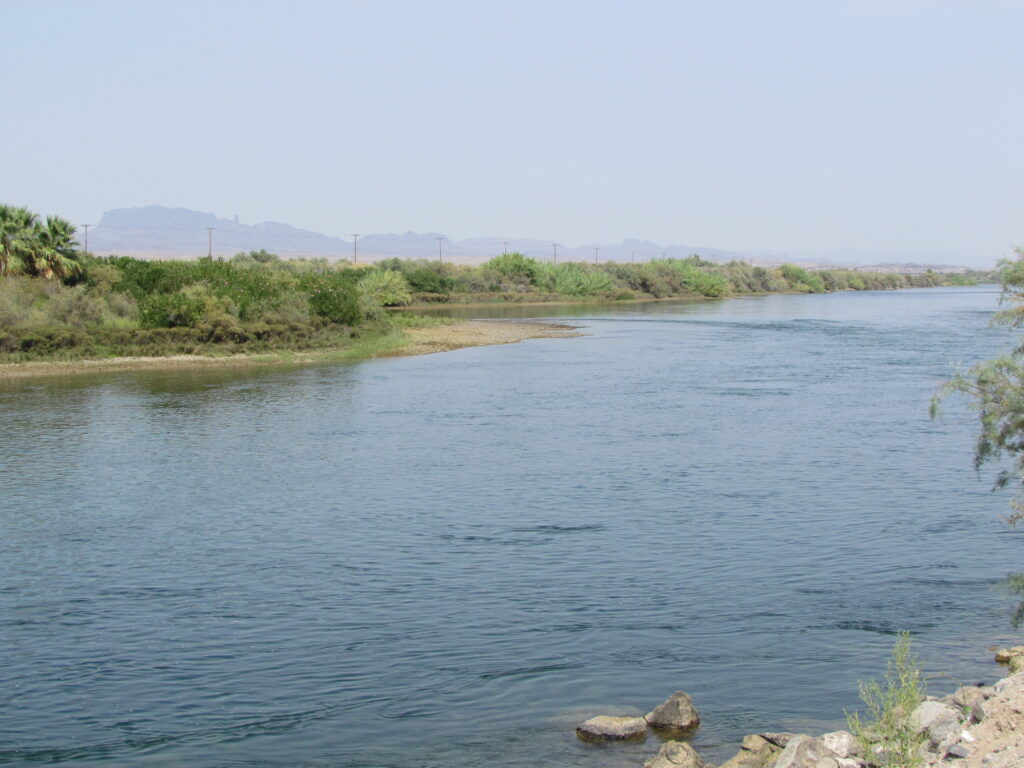
The Colorado River Indian Tribes Tribal Council has made a historic decision to protect the lifeblood of their Reservation. On November 6, 2025, the Council unanimously approved Resolution No. R-375-25, which proclaims the personhood status of the Colorado River under tribal law.

This resolution acknowledges the Colorado River as a living entity whose health and well-being are intrinsically linked to the well-being of the Colorado River Indian Tribes (CRIT) members. The Tribes’ deep-rooted connection to the river spans centuries, providing cultural identity, spiritual strength, food systems, and economic stability that continue to shape their community life today.

The resolution emphasizes the central role the river has played in defining the identity of the CRIT. It highlights that CRIT’s ancestors have preserved and protected these lands since before the establishment of the Colorado River Indian Reservation in 1865.

The Council underscores the crucial role the river plays in sustaining traditional practices, wildlife, and agriculture, including the federal irrigation systems authorized as early as 1867. Today, the Colorado River Indian Irrigation Project stands as a cornerstone of the tribal economy.

The resolution underscores significant legal milestones that acknowledged CRIT’s water rights. In the landmark 1964 and 2006 Arizona v. California U.S. Supreme Court decisions, the Tribes secured 719,248 acre-feet of water annually, ensuring their access to the river for generations to come.

By granting personhood to the River, the Tribal Council reaffirmed its sovereign duty to honor and protect it. This status mandates that the River’s well-being must be a priority in governance and decision-making moving forward.

As part of the resolution, the Attorney General and their staff will develop legal safeguards and propose updates to the CRIT Water Code and other relevant regulations. These updates may include the potential designation of the river as a protected cultural landscape.

Council members recognized that protecting the river is not merely a legal obligation but a continuation of cultural beliefs passed down through generations.

Through this declaration, CRIT demonstrates its unwavering commitment to stewardship. The resolution concludes with a resolute message: the Colorado River is, and will always remain, a vital entity deserving of respect, care, and protection for all future generations.

Article Written by CRIT Media Reporter Ariana Romero

News Update November 12, 2025

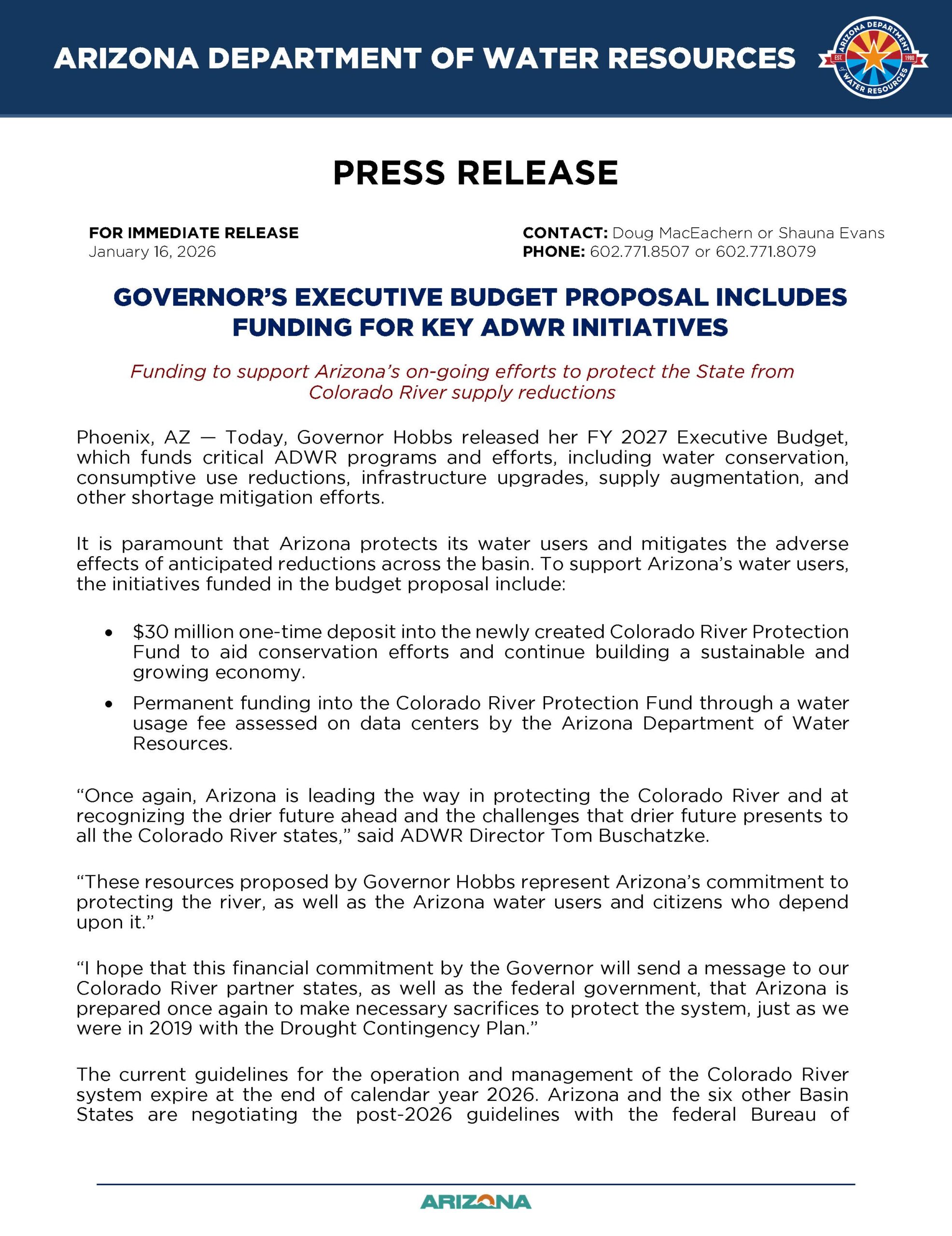
Negotiations over the future of the Colorado River have reached a standstill after all seven basin states failed to meet a key federal deadline. Reports from 12News and 8NewsNow confirm that the states were unable to agree on a new water-sharing plan, leaving the situation unresolved as the river continues to decline.

High Country News explains that the biggest disagreements involve how much each state should give up in the future. The upper Basin states want fewer mandatory reductions, while the Lower Basin states, including Arizona, say they have already taken the deepest cuts and cannot continue to absorb the majority of the impacts.

With no agreement in place, Arizona Governor Katie Hobbs has asked the Trump administration to intervene. She stated that Arizona has made significant sacrifices and cannot carry the weight of the reductions while other states refuse to commit to measurable cuts. If the states cannot reach a plan soon, the federal government may create one for them.

For the Colorado River Indian Tribes, the outcome of these negotiations has major importance. CRIT holds valuable senior water rights and relies on a stable and fair management plan to ensure long-term security for the community and the region.

For more information, you can read the news articles with the links below.

8NewsNow
https://www.8newsnow.com/news/local-news/colorado-river-negotiations-fail-to-meet-federal-deadline-for-7-state-agreement/

High Country News
https://www.hcn.org/articles/why-colorado-river-negotiations-are-so-difficult/


ABC 15 News
https://www.abc15.com/weather/impact-earth/why-gov-katie-hobbs-wants-trump-administration-to-broker-colorado-river-deal


12 News
/wednesday-is-deadline-for-7-state-including-arizona-to-negotiate-the-colorado-river

The Colorado River Indian Tribes (CRIT) was buzzing with energy as the CRIT Special Diabetes Project-Recreation Program partnered with the Phoenix Suns/Mercury Foundation and the Inter Tribal Council of Arizona to host the ORIGINATIV Youth Basketball Clinic. The event brought together tribal youth, culture, and community spirit for an unforgettable weekend of basketball, wellness, and celebration.

Festivities tipped off Friday evening at Irataba Hall with a special clinic for the younger CRIT youth. On Saturday, the action expanded to Parker High School, where more than 180 youth from surrounding river tribes—including CRIT, Fort Mojave, Hualapai, Quechan, Cocopah, and Havasupai—hit the courts to learn new skills, build teamwork, and connect through basketball.

This two-day event was a celebration of unity among tribes, culture, and healthy living—echoing the importance of staying active and supporting the next generation.

Saturday’s opening ceremony brought together tradition and excitement. Mr. Willy Tahbo opened with a blessing, setting the tone of gratitude and respect. The Ase’Smaav Bird Singers and the River Tribes United Dance Group then filled the gym with song and movement, reminding everyone of the importance of cultural roots alongside athletic achievement. Youth and community members cheered as dancers performed in traditional dress, blending the energy of the game with the beauty of heritage. (more…)

On August 25, 2025, Senior DOI officials including, Acting Assistant Secretary of the Interior for Water and Science, Scott Cameron, and Acting Commissioner of Reclamation David Palumbo, made a significant visit the Colorado River Indian Tribes (CRIT) Reservation. He was welcomed by Chairwoman Amelia Flores, Tribal Secretary Josephine Tahbo, Treasurer Anisa Patch, and Council members Bill Beeson, Tommy Drennan, Raeanne Patch, and Tracey Quillen.

Cameron and Palumbo were guided through the reservation by Realty Director Herman Laffoon and Water Resource Director Dillon Esquerra. The tour highlighted the importance of CRIT’s lands and waters, beginning at Headgate Rock Dam and extending across the valley’s farmlands and irrigation canals. Along the way, they were shown the green, thriving fields sustained by the Colorado River, offering a firsthand look at the deep connection between the river and the Tribe’s lifeways.

The visit reinforces the critical role CRIT plays in the stewardship of the Colorado River. By showcasing the Tribe’s sustainable use of the river, CRIT emphasized the importance of protecting this vital resource, building trust, and strengthening government-to-government relationships. The tour also provided a space to discuss CRIT’s rights, responsibilities, and ongoing efforts to conserve, restore, and manage the river system for future generations.

Councilman Tommy Drennan shared that CRIT’s presence in conversations about water is vital and that highlighting these efforts ensures the Tribe remains a central part of shaping the river’s future. “I hope the presence of CRIT is always a part of the solution,” said Drennan. (more…)

Since May 2024, Bryan Enas has been managing the CRIT Food Distribution Program. With nearly 20 years of experience working in warehouses and grocery stores, Bryan has learned the
ins and outs of produce and supervision. Those skills now help him run a program that makes a big difference for families in our community.
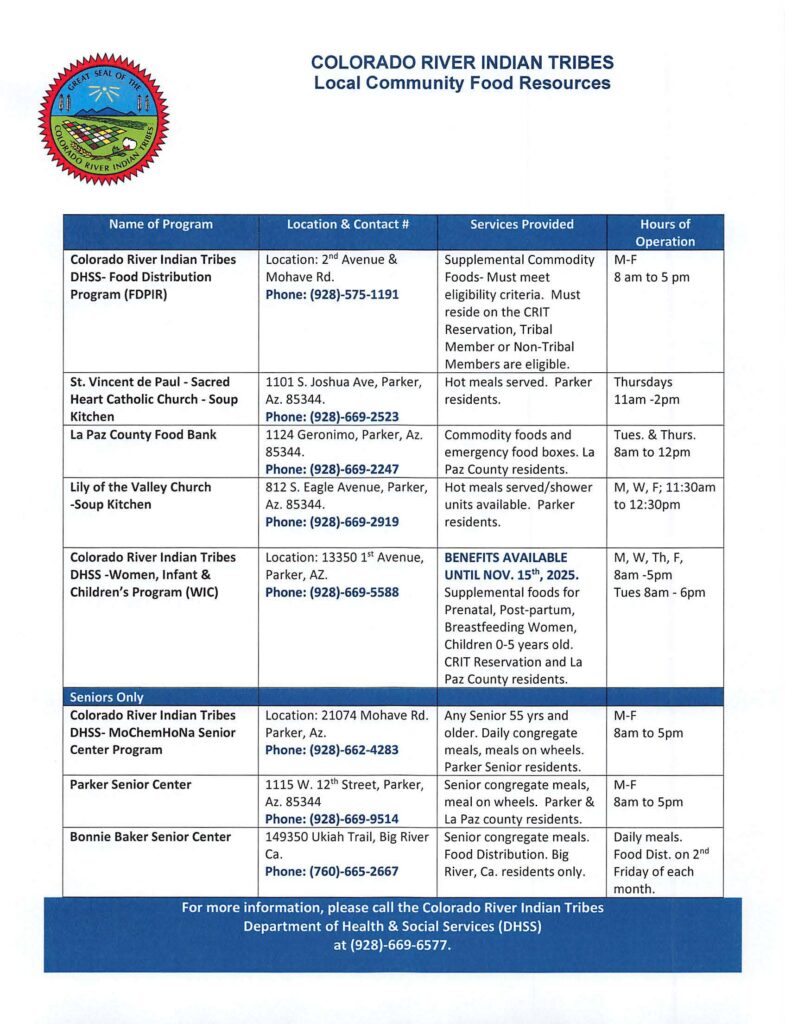
The Food Distribution Program is here to support individuals and families who may be lowincome, on social security, students, or just going through a tough time. This program is
available for both tribal and non-tribal members who live on the CRIT Reservation (this also extends to those who live off reservation within a 25 mile radius but you must have at least 1
person in your household who is a CRIT Tribal Member). Everything is confidential, and the goal is to make healthy food more accessible for everyone.

The program offers a variety of items each month such as, fresh fruits and vegetables, pantry staples, meats, dairy, grains, and more. Families can come by and pick up a pre-packed box, or
if transportation is an issue, deliveries can be arranged.  For Bryan, this work is personal. “My home is here, my family is here and it’s a blessing to come back and be able to help the community,” he said. Looking ahead, he hopes to add a greenhouse to keep fresh produce growing year-round. If you think you or someone you know might qualify, the program is worth checking out. Applications are simple, and staff are always happy to help walk you through the process.

The CRIT Food Distribution Program is more than just food—it’s about making sure our families are supported, cared for, and never left behind.  We highly encourage you to take advantage of this program – follow the link below to download the application to see if you qualify.

CRIT FDP APPLICATION & REQUIREMENTS PDF FY.24-25 (1)

CRIT Food Distribution Program is located at:
13951 2nd Avenue & Mohave Road, Parker, AZ
Phone: (928) 575-1191

Article written by CRIT Media Reporter Ariana Romero
Photography by CRIT Media Tech Naythen T. Lowe

CRIT recently welcomed KUNC News Reporter Alex Hager, who was interested in covering CRIT’s Personhood Status and why it is so important to the Colorado River Indian Tribes. Upon his visit, he interviewed Water Resource Director Dillon Esquerra, Councilwoman Anisa Patch, and Chairwoman Amelia Flores, each offering insight into why this initiative is vital for the tribe and future generations.

Dillon Esquerra

The day began with a visit to the Ahakhav Preserve, where Acting Director Marisol Chavira highlighted how the plants, trees, and natural environment are deeply connected to cultural traditions, from crafting gourds to the sacred use of wood in burials. Alex showed a great interest in learning about the cultural and historic roots of CRIT, and both Dillon and Marisol provided an in-depth explanation of the tribe’s connection to the land and river. Hager then toured Willow Beach, a scenic area of the Preserve, before continuing on to CRIT Chambers for interviews.

Marisol Chavira

Councilwoman Anisa Patch shared her perspective on the river’s personhood status, reflecting on her upbringing along the river and its role as a lifeline for tribal members. Chairwoman Amelia Flores further emphasized the importance, stating: “It is essential for us to take care of the river, to protect and defend it. We need to protect the river for future generations.”

Anisa Patch

The Personhood status is currently being considered as CRIT tribal law, a groundbreaking step that would formally recognize the Colorado River as a living entity under the tribe’s governance. For CRIT, this is not only a legal step but it builds on the foundation of our beliefs, reflecting the longstanding cultural and spiritual commitment to the river, which has sustained the people, land and traditions for countless generations. Establishing Personhood Status will ensure CRIT beliefs are always held by all future council members and chair persons. This will be the foundation CRIT stands by and relies on when future tough decisions will need to be made about the river. Raising awareness about the personhood initiative is key. It allows both tribal members and the broader public to understand the importance of protecting the Colorado River, not just as a resource, but as a relative, a lifeblood, and a sacred responsibility.

Amelia Flores

“We are the people along the river, Hamakhav. It’s within us, that’s who we are” says Chairwoman Flores.

Councilman Raeanne Patch provided additional details and context in a follow up interview with Alex detailing the importance of the Personhood Status.

To learn more, you can read Alex Hager’s full article or listen to his podcast at KUNC follow this link.