Help expand energy dominance and support Tribal energy futures with the Bureau of Indian Affairs (BIA)! We are pleased to announce 23 new hiring opportunities to help support energy development and permitting at BIA, with more opportunities coming soon.
All position announcements opened on 6/1/2026 and will close on Friday 6/12/2026, so act fast! We encourage all qualified applicants to submit application materials by applying online at USAJobs. Please help us spread the word and recruit high-qualitycandidates to help fulfill the BIA mission.
Positions include:
(1) Environmental Protection Specialist Series 28 (GS 11) at Southwest Regional Office
(Albuquerque, NM); DE-26-12973039-CAWY-SR;
(1) Environmental Protection Specialist Series 28 (GS 9/11) at Western Regional Office
(Phoenix, AZ); DE-26-12973039-CAWY-SR;
(2) Archeologist Series 193 (GS 7/11) at Southwest Regional Office (Albuquerque, NM);
DE-26-12973279-CAWV-MH;
(2) GIS Specialist Series 301 (GS 5/11) at Great Plains Regional Office (Aberdeen, SD);
DE-26-12973052-CAWV-JM;
(2) Geographic Information System Specialist Series 301 (GS 9/11) at Navajo Regional
Office (Gallup, NM); DE-26-12973052-CAWV-JM;
(1) Supervisory Engineer Technician (Petro) Series 802 (GS 11) at Osage Agency
(Pawhuska, OK); DE-26-12972843-CAWV-BSc;
(1) Realty Assistant Series 1101 (GS 7) at Farmington Indian Minerals Office (Farmington,
NM); DE-26-12972357-CAWV-TB;
(1) Realty Assistant (CM) Series 1101 (GS 5/7) at Anadarko Agency (Anadarko, OK); DE-
26-12972357-CAWV-TB; (more…)
Click the link below to download the application
26-27 SG Application Policy (Fillable)


CDO HIGHER EDUCATION PROGRAM
2026-2027 HE Application
CDO ADULT VOCATIONAL TRAINING PROGRAM
2026-2027 AVT Application
CDO Youth Services (YS) PROGRAM
CDO YOUTH SERVICES APPLICATION
Computer Assistance Program
COMPUTER PROGRAM APPLICATION
According to CBS 5 Arizona’s Family, Yuma officials are preparing for possible Colorado River water cuts as negotiations over future river operations continue. Yuma, a major agricultural hub, depends heavily on Colorado River water, and local leaders say reductions could impact farming, jobs, and the regional economy.
As federal and state officials work toward new post-2026 guidelines, communities like Yuma are closely watching how water shortages will be distributed across the basin. The uncertainty reflects ongoing challenges in reaching agreement among the seven basin states.
For CRIT, impacts to Yuma highlight how reductions in Colorado River water can affect agriculture and economies across the region, reinforcing the importance of protecting water rights and ensuring fair allocation decisions.
According to KJZZ, water conservation efforts in Arizona are becoming increasingly expensive, and officials are exploring whether large corporations could help cover some of the costs. Programs aimed at reducing water use, such as paying farmers or industries to conserve water, require significant funding.
State leaders and water managers are looking at partnerships with businesses to support conservation efforts as Colorado River supplies continue to decline. The goal is to find sustainable ways to reduce water use without placing the entire financial burden on taxpayers.
For CRIT, this reflects a broader shift in how water conservation is being funded and managed. As water becomes more limited, decisions about who pays for conservation efforts will play a key role in shaping long-term water policy.
According to the U.S. Department of the Interior, nearly $889 million is being invested in water infrastructure projects across the western United States. The funding will support efforts to improve water storage, conservation, and system efficiency as drought conditions continue.
The investment is part of a larger federal effort to strengthen water systems and address long-term shortages in the Colorado River Basin and other regions. Projects may include upgrades to canals, reservoirs, and water delivery systems. (more…)
By Ariana Romero CRIT Media
According to CBS 5 Arizona’s Family, Yuma officials are preparing for possible Colorado River water cuts as negotiations over future river operations continue. Yuma, a major agricultural hub, depends heavily on Colorado River water, and local leaders say reductions could impact farming, jobs, and the regional economy.
As federal and state officials work toward new post-2026 guidelines, communities like Yuma are closely watching how water shortages will be distributed across the basin. The uncertainty reflects ongoing challenges in reaching agreement among the seven basin states.
For CRIT, impacts to Yuma highlight how reductions in Colorado River water can affect agriculture and economies across the region, reinforcing the importance of protecting water rights and ensuring fair allocation decisions.
According to KJZZ, water conservation efforts in Arizona are becoming increasingly expensive, and officials are exploring whether large corporations could help cover some of the costs. Programs aimed at reducing water use, such as paying farmers or industries to conserve water, require significant funding.
State leaders and water managers are looking at partnerships with businesses to support conservation efforts as Colorado River supplies continue to decline. The goal is to find sustainable ways to reduce water use without placing the entire financial burden on taxpayers.
For CRIT, this reflects a broader shift in how water conservation is being funded and managed. As water becomes more limited, decisions about who pays for conservation efforts will play a key role in shaping long-term water policy.
According to the Daily Independent, Governor Katie Hobbs is working to involve national business leaders in Arizona’s efforts to address Colorado River water challenges. The state is seeking support from major industries to help advocate for Arizona’s position in ongoing river negotiations.
The move comes as Arizona faces potential reductions in its Colorado River allocation and increasing pressure to secure long-term water supplies. State officials are expanding their approach by bringing in economic stakeholders to strengthen their position.
For CRIT, this shows how water negotiations are expanding beyond government agencies to include business interests. These broader coalitions could influence how water decisions are made and how resources are prioritized across the basin. (more…)
By Ariana Romero CRIT Media
According to the Arizona Mirror, rural Arizona residents are pushing back against a proposed bill that would allow a hedge fund to transport and sell groundwater from rural areas to cities like Phoenix. Opponents argue the measure could drain local water supplies and remove control from the communities that depend on those resources.
The proposal highlights growing tensions between rural and urban water needs as Arizona faces increasing pressure from Colorado River shortages. As cities look for new water sources, rural communities are raising concerns about long-term sustainability and fairness.
For CRIT, this issue reflects a larger pattern across the Southwest, where water is becoming a highly valuable and contested resource. Decisions about who controls and benefits from water supplies are directly tied to protecting Tribal water rights and ensuring long-term access.
According to Signals AZ, decisions being made about the Colorado River’s future could have significant impacts on Yuma, one of Arizona’s most important agricultural regions. Yuma relies heavily on Colorado River water to support farming and local economies.
As negotiations continue over how to manage the river after 2026, potential reductions in water allocations could affect crop production and economic stability in the region. Officials are closely monitoring how federal plans may shape future water deliveries.
For CRIT, impacts to regions like Yuma highlight how interconnected the Colorado River system is. Changes in water distribution anywhere along the river can affect the overall balance of the system and influence decisions that impact Tribal communities downstream.
According to KJZZ, there is renewed discussion about restarting the dormant desalination plant in Yuma as a way to supplement Colorado River supplies. The plant, which treats water from Mexico, has long been considered a potential tool to help offset water shortages in the region.
Supporters say reviving the plant could help increase available water as Colorado River supplies continue to decline. However, questions remain about cost, environmental impacts, and long-term feasibility.
For CRIT, desalination represents one of several strategies being explored to reduce pressure on the Colorado River. These types of projects could play a role in shaping future water availability across the basin.
According to CBS 5 Arizona’s Family, treated seawater is being considered as a potential solution to help Arizona address deeper Colorado River water cuts. The idea involves desalinating ocean water and transporting it inland to supplement existing supplies. (more…)
By Ariana Romero CRIT Media
According to the Arizona Department of Water Resources (ADWR), the February 2026 drought status report shows ongoing drought conditions across much of Arizona, with long-term dryness continuing to impact water supplies. While some areas have seen minor improvements, snowpack and precipitation levels remain below average in key regions that help feed rivers and groundwater systems.
These conditions are part of a broader trend across the Colorado River Basin, where reduced snowpack and warmer temperatures continue to limit water availability. Drought conditions not only affect surface water but also place increased pressure on groundwater resources as communities rely more heavily on alternative supplies.
For CRIT, ongoing drought conditions are critical because they directly impact the Colorado River system. Reduced water availability upstream can influence river flows, reservoir levels, and long-term water management decisions that affect Tribal water rights and future planning.
According to CBS 5 Arizona’s Family, two proposed Arizona bills would allow rural groundwater to be sold and transported to larger cities. Supporters say the legislation could help address water shortages in growing urban areas, while opponents argue it could drain rural water supplies and negatively impact local communities.
Residents in rural areas have raised concerns about losing control over their groundwater, especially as demand increases from cities facing Colorado River cutbacks. The issue highlights growing tension between rural and urban water needs in Arizona.
For CRIT, groundwater policy is closely tied to the broader conversation about water use and resource protection. As pressure on the Colorado River increases, decisions about groundwater transfers could reshape how water is distributed across the state and impact long-term water security.
According to the Payson Roundup, Arizona’s congressional delegation is متحد in opposing a federal plan that could reduce the state’s Colorado River water supply. Lawmakers argue the proposal would unfairly impact Arizona and are calling for a more balanced approach to managing shortages across the basin.
The opposition reflects ongoing disagreements between states and federal officials as new rules for managing the Colorado River after 2026 are developed. Arizona leaders say they are working to protect the state’s share of river water amid growing scarcity.
For CRIT, federal decisions about Colorado River allocations are especially important because they influence how water shortages are shared and how Tribal water rights are recognized within the system.
According to NOAA Drought.gov, snow drought conditions continue across much of the western United States, meaning there is less snowpack available to supply rivers like the Colorado River. Even when storms occur, warmer temperatures can cause snow to melt too early or fall as rain instead.
Snowpack acts as a natural storage system for water, slowly releasing runoff into rivers during the spring and summer. When snowpack is low, less water flows into reservoirs like Lake Powell and Lake Mead, which are critical to the Colorado River system.
For CRIT, snow drought conditions are a key concern because they directly affect how much water enters the Colorado River each year, influencing water availability for Tribal communities and long-term resource planning.
According to the Navajo Nation Office of the President and Vice President, President Buu Nygren is urging swift passage of a water rights settlement aimed at addressing long-standing water access challenges for the Navajo Nation. The settlement is intended to help secure water infrastructure and provide reliable access to water for communities that have faced shortages for generations.
Tribal leaders emphasize that water rights settlements are essential for ensuring that allocated water can actually be delivered and used, especially in areas lacking infrastructure.
For CRIT, this highlights the broader importance of Tribal water rights across the Colorado River Basin. Securing and developing water rights remains a key issue for Tribal Nations working to protect their resources and support their communities.
According to Tribal Business News, federal officials are warning of a funding gap as tribes support a proposed $5 billion Arizona water settlement. The settlement aims to resolve water rights issues and fund infrastructure projects, but concerns remain about whether sufficient federal funding will be available.
Tribal leaders continue to advocate for investment in water systems to ensure that water rights can be fully realized. Without funding, even legally secured water rights may remain difficult to access or use.
For CRIT, this reinforces the importance of both water rights and the infrastructure needed to support them. Funding decisions at the federal level can directly impact how Tribal Nations develop and protect their water resources.
By Ariana Romero CRIT Media
According to 12News (KPNX), the Central Arizona Project (CAP) is warning that Arizona could face up to $2.7 trillion in economic losses under a worst-case Colorado River management scenario.
CAP officials say severe water reductions could impact agriculture, housing development, and overall economic growth across the state. The Colorado River is a primary water source for Arizona, and any major cutbacks would ripple through multiple sectors.
For CRIT, this highlights how closely water is tied to economic stability. Decisions about Colorado River water are not just environmental, they directly affect jobs, infrastructure, and the long-term well-being of Tribal communities that depend on the river.
According to Newsweek, Lake Powell could see some of its lowest water levels in 25 years due to continued drought and low snowpack across the Colorado River Basin.
Forecasts show that inflows into the reservoir this year could be among the lowest on record, with only about 36% of average runoff expected. If water levels drop too low, it could threaten hydropower production at Glen Canyon Dam and reduce the system’s ability to store and deliver water.
For CRIT, Lake Powell plays a major role in managing the Colorado River system. Declining reservoir levels can affect how water is released downstream, which impacts water availability for communities, agriculture, and Tribal Nations along the river.
According to Indianz.com, the Senate Committee on Indian Affairs is preparing to hold a hearing focused on Tribal water rights.
The hearing will address ongoing efforts to secure and protect water rights for Tribal Nations, many of which are still working to finalize settlements and access infrastructure needed to fully use their water allocations.
For CRIT, this is especially important because Tribal Nations hold some of the most senior water rights on the Colorado River. Federal discussions and decisions around these rights can influence how water is allocated, protected, and developed for Tribal communities now and in the future.
Sources
Indianz.com: https://indianz.com/News/2026/03/10/senate-committee-on-indian-affairs-sets-hearing-on-water-rights/
According to KOLD News 13, ongoing debates over how Colorado River water should be allocated could have major consequences for Arizona farmers. Agriculture relies heavily on Colorado River water, particularly through deliveries from the Central Arizona Project.
If deeper cuts are implemented under new federal operating guidelines, many agricultural operations could face significant reductions in available water. Farmers and water managers are closely watching negotiations as federal officials work to finalize new management rules for the river after 2026.
For CRIT, these discussions are important because agriculture remains one of the largest users of Colorado River water. Decisions about water allocations across the basin could influence farming operations, economic stability, and long-term water planning throughout the region.
According to the Los Angeles Times, officials from Arizona, California, and Nevada are urging the federal government to reconsider parts of its draft plan for managing Colorado River water shortages.
Leaders from the Lower Basin states say the proposal could shift too much responsibility for water reductions onto their states, even though they have already implemented conservation measures in recent years. The request highlights ongoing tensions between the Upper Basin and Lower Basin states as the federal government works toward new operating rules.
For CRIT and other Tribal Nations along the river, the outcome of these negotiations will shape how water shortages are shared across the basin and how the Colorado River is managed in the future.
According to KJZZ, a new agreement involving Arizona and Mexico could move forward plans to produce desalinated ocean water that could eventually supplement Colorado River supplies.
The concept would involve building desalination facilities along the Gulf of California and transporting treated water inland. While the project would require major infrastructure and investment, supporters say it could help reduce reliance on the Colorado River during prolonged drought conditions.
For CRIT, proposals like this reflect how states are exploring alternative water sources as pressure on the Colorado River increases and long-term supply challenges continue.
by CRIT Media Reporter Ariana Romero
The annual CRIT Royalty Pageants returned to Manataba Park on Oct. 2 and 3 for two evenings of competition and celebration. Contestants shared their talents, modeled modern and traditional dress, and introduced themselves to the audience as they competed to represent the Colorado River Indian Tribes for the coming year.
Hosted by the CRIT Royalty Board, this year’s pageants carried the theme “First in Time, First in Right.” The pageant pamphlet connected the theme to the Colorado River through a story of Mastamho, bringing the river and its people into the celebration.
In the story, Mastamho placed a staff into the ground and drew it out to bring forth water. He directed the water north, east, and west, stopping it each time. When he placed the staff into the ground once more and drew it out, he stepped aside and watched the water flow south, making the river. With the people standing behind him, he stretched out his arms to hold them back. The passage closed with the words “First in Time, First in Right.”
Both evenings opened with a welcome from CRIT Royalty Board President Valerie Welsh-Tahbo, followed by the Pledge of Allegiance led by Eva Charles and Brandy Eddy. Co-emcee JaMahke Welsh kept the audience entertained as the program moved through introductions, interviews, and performances. Entertainment by the Lil Macavs and Quechan Xuumar Akuuts added to the celebration.
Friday’s Little Miss pageant featured six contestants: Kathleen Viola Stone, Amelia Jean Gonzales, Alura Rose Walrod, Zyarah Devika Sharp, Calliope Sage Ara Scott, and Allison Rene Gonzales. Modern dress modeling and interviews gave the audience an opportunity to get to know the contestants, while the talent showcase and traditional dress modeling gave each girl another moment in the spotlight.
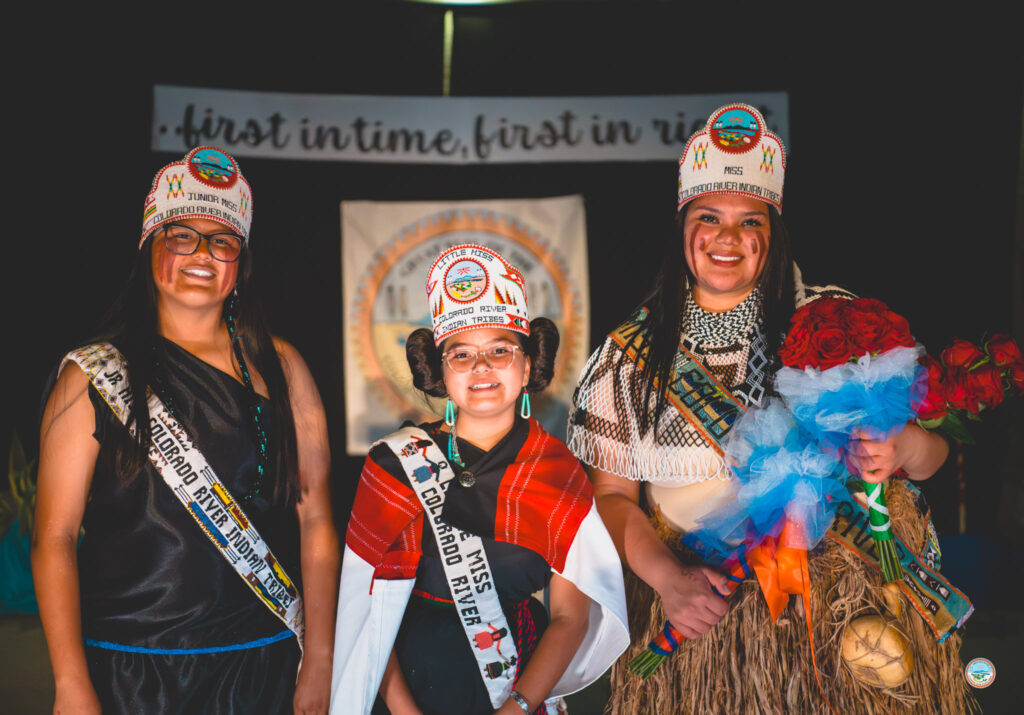
Outgoing Little Miss CRIT Loraina Stone gave her farewell presentation before the evening concluded with the coronation. Alura Rose Walrod, 10, was crowned Little Miss CRIT for 2026–2027. She is the daughter of Amanda and Mario Walrod and is Hopi and Mayan. Joining Alura were first attendant Calliope Sage Ara Scott and second attendant Zyarah Devika Sharp.
The celebration continued Saturday with the Jr. Miss and Miss CRIT pageants. Arianna Kaye Carmona, Jessica Lynn Scott, and Leina Rene Carmona competed for Jr. Miss, while Zoey Moon Sharp and Veronica Webb competed for Miss. Each contestant participated in modern dress modeling and interviews, a talent showcase, and traditional dress modeling.
Saturday also provided an opportunity to recognize outgoing Jr. Miss CRIT Winter Harper and Miss CRIT Brenda Duckey. Their farewell presentations marked the close of their time as royalty as the evening moved toward the crowning of the next representatives. (more…)
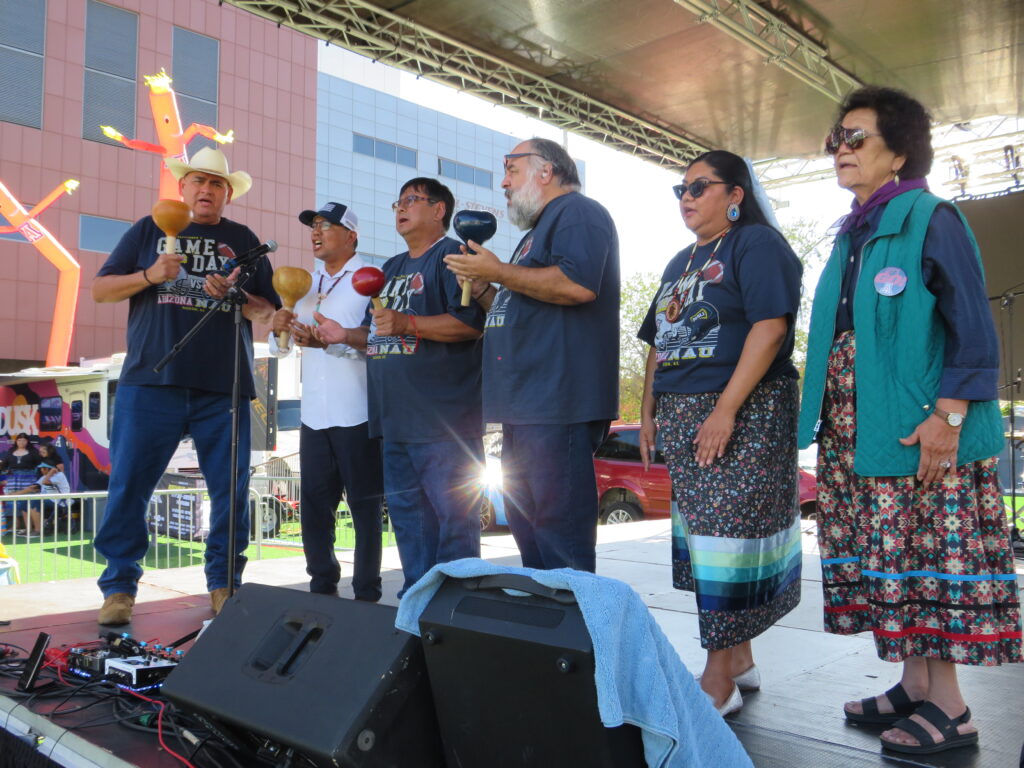
The University of Arizona put the Colorado River Indian Tribes and their culture in the spotlight Sept. 5, honoring CRIT during the Wildcats’ Native American Heritage football game against Northern Arizona University.
The recognition went well beyond the game, with members of CRIT’s Mohave, Chemehuevi, Hopi and Navajo communities participating in cultural activities throughout the day.
Festivities began at Bear Down Field, where representatives of CRIT’s tribes shared cultural performances with Wildcat fans and visitors during the Bear Down Bash.
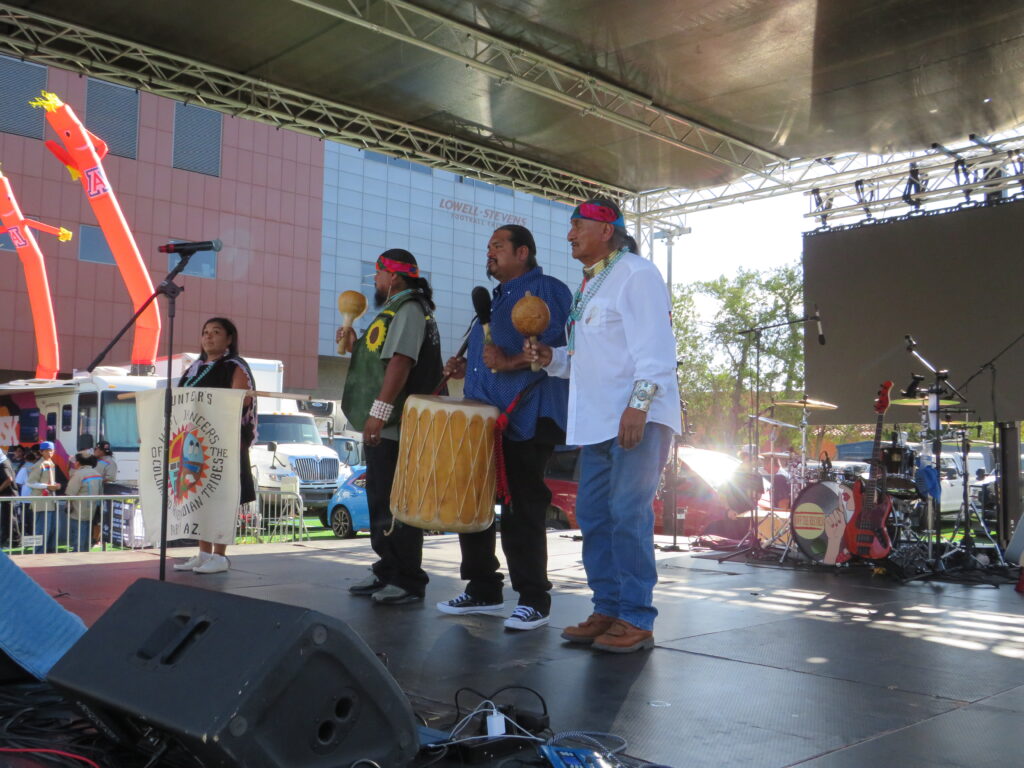
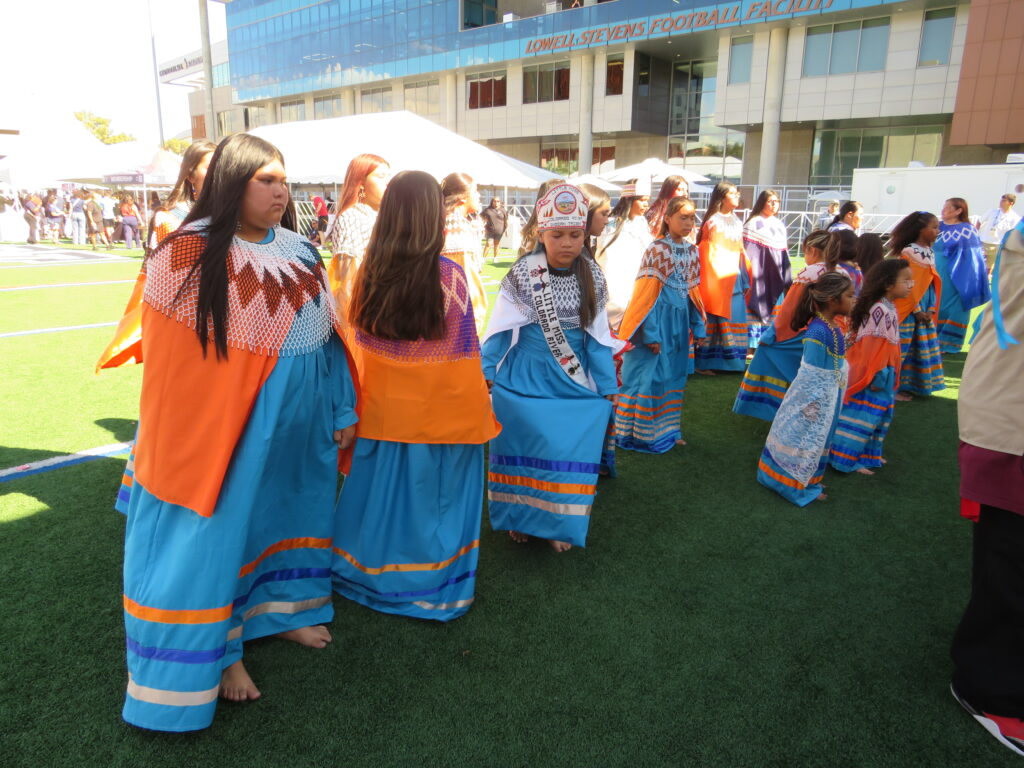
CRIT representatives also participated in the Wildcat Walk, Arizona Football’s traditional pregame arrival. CRIT royalty and tribal leadership were invited to greet the Wildcats’ head coach as part of a gift exchange before the team entered the stadium. (more…)