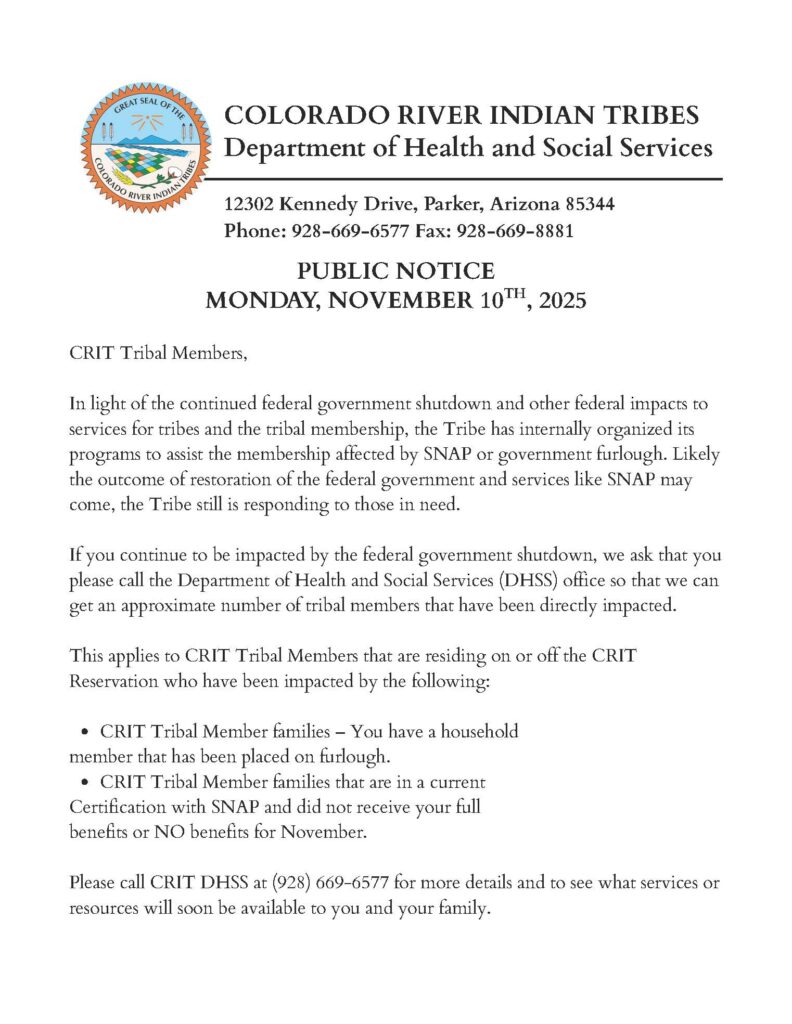
To download more information and an application please follow this link

According to West Valley View (Cronkite News), a proposed federal plan to divide Colorado River water is facing strong pushback from Arizona leaders and water officials. Critics argue the plan could unfairly shift more water cuts onto Lower Basin states, including Arizona, while not requiring equal reductions from Upper Basin states.
The disagreement highlights ongoing tensions as the federal government moves forward with post-2026 operating guidelines without full state consensus.
For CRIT, these negotiations are critical because federal decisions will directly affect how Colorado River water is allocated and how shortages are shared.
According to CBS News, California’s Sierra snowpack remains near historic lows despite recent storms, raising concerns about summer water supplies. Snowpack plays a key role in replenishing rivers and reservoirs, and current levels are not enough to recover from long-term drought conditions.
Officials warn that even with some winter precipitation, water shortages are still likely as temperatures rise and demand increases.
For CRIT, reduced snowpack in California contributes to lower overall flows in the Colorado River system, impacting long-term water availability.
According to KRCR ABC 7 News, a proposal to raise Shasta Dam in California is raising concerns from Tribal communities who say it could flood sacred sites. Tribal leaders are warning that the project threatens cultural resources and highlights ongoing conflicts between water infrastructure development and Indigenous rights.
The proposal is part of broader efforts to increase water storage, but it has sparked debate about how those projects impact Tribal lands and sovereignty.
For CRIT, this underscores the importance of protecting Tribal interests and ensuring that water projects do not come at the expense of cultural resources or rights.
According to CBS 5 Arizona’s Family, growing interest in building data centers in Yuma is raising concerns about water use and extreme heat. Data centers require large amounts of energy and, in many cases, water for cooling, which has led to questions about whether the region can support that kind of growth during ongoing drought conditions. Local leaders and residents are weighing the economic benefits against long-term sustainability, especially as Colorado River supplies remain uncertain.
For CRIT, increased industrial demand near the lower Colorado River highlights the importance of protecting water resources and ensuring future development does not strain limited supplies.
Source: https://www.azfamily.com/2026/04/07/data-center-interest-yuma-raises-questions-about-water-heat/
According to DataCentre Magazine, new data center designs in Arizona are beginning to use waterless cooling technology to reduce strain on local water supplies. These systems rely on alternative cooling methods that significantly lower or eliminate water use compared to traditional facilities. The shift reflects growing awareness of water limitations in arid regions like Arizona.
For CRIT, innovations like waterless cooling could help reduce future water demand from industry, which is important as competition for Colorado River water continues to grow.
Source: https://datacentremagazine.com/news/how-edged-us-new-data-centre-uses-waterless-cooling
According to Daylight San Diego, the ongoing decline of the Colorado River is creating serious concerns for the future of the Imperial Valley, one of the most productive agricultural regions in the country. Reduced river flows threaten farming operations that rely heavily on Colorado River water, raising questions about long-term sustainability.
For CRIT, impacts to downstream agricultural areas reflect the broader strain on the Colorado River system, reinforcing the need to protect Tribal water rights and plan for reduced supplies.
Source: https://www.daylightsandiego.org/a-drying-colorado-river-threatens-imperial-valleys-future/
According to the Public Policy Institute of California, the rapid growth of data centers could significantly impact water demand across the West, though the extent varies depending on cooling technology. Some facilities rely heavily on water, while others are shifting toward more water-efficient or waterless systems. The report emphasizes that policy decisions and technology choices will play a key role in determining how much strain data centers place on already limited water resources.
For CRIT, understanding emerging water demands like data centers is important as new industries compete for water within the Colorado River Basin.
Source: https://www.ppic.org/blog/will-data-centers-threaten-californias-water-its-complicated/
According to KOLO ABC 8 News Now, Nevada’s snowpack has dropped to record lows, though recent rain has helped stabilize water outlooks in some areas like the Tahoe/Truckee region. Despite this short-term relief, long-term concerns remain due to persistent drought and warming temperatures. Water managers continue to prepare for reduced runoff and potential shortages in the months ahead.
For CRIT, ongoing snowpack deficits across the basin contribute to reduced Colorado River flows, impacting water availability for downstream users.
According to NBC 9 News Denver, the city of Aurora has approved new water restrictions in response to ongoing drought conditions and low water supplies. The measures aim to reduce outdoor water use and preserve available resources as snowpack and reservoir levels remain below average. Officials say conservation efforts are necessary to prepare for continued dry conditions. (more…)
According to the Colorado Sun, advocates working to protect the Colorado River are exploring multiple strategies, including the concept of granting the river legal “personhood.” This approach would give the river legal rights, similar to a person, allowing it to be represented in court and better protected from overuse. Supporters believe this could strengthen environmental protections, while critics question how it would work within existing water law frameworks. For CRIT, the idea of personhood is especially relevant as it connects to broader discussions about sovereignty, stewardship, and long-term protection of the Colorado River.
Source: https://coloradosun.com/2026/04/06/colorado-river-advocacy-threats-tools-personhood/
According to KJZZ, a new report suggests the United States and Mexico may need to renegotiate how they share Colorado River water as drought conditions worsen. The current agreement, rooted in the 1944 treaty, may no longer reflect the reality of reduced river flows, prompting calls for more flexible and updated water-sharing strategies. Experts argue that future agreements must account for climate change and declining water supplies to avoid further strain on the system.
Source: https://www.kjzz.org/business/2026-04-06/u-s-mexico-water-sharing-should-change-under-a-dry-colorado-river-new-report-argues
According to KTAR News, Interior Secretary Doug Burgum emphasized that all Colorado River Basin states will need to make sacrifices as negotiations continue over future water management. He noted that reaching a fair agreement will require shared responsibility, especially as water supplies continue to decline. The statement comes as federal officials move closer to making decisions if states cannot reach consensus on their own. For CRIT, federal involvement and shared sacrifice discussions are critical because they will shape how water cuts are distributed and how Tribal water rights are respected moving forward.
Source: https://ktar.com/arizona-water-news/colorado-river-water-burgum/5844418/
According to Arizona PBS Horizon, Arizona has hired a law firm to prepare for potential legal battles over Colorado River water usage. State officials are anticipating possible litigation as negotiations between basin states continue to stall and tensions rise over how water cuts should be handled. This move signals that states are preparing for court involvement if agreements cannot be reached through negotiation.
Source: https://azpbs.org/horizon/2026/04/arizona-hires-law-firm-amid-colorado-river-water-usage-battle/
According to KJZZ, Colorado River stakeholders have submitted thousands of public comments on the federal government’s proposed post-2026 water management plan. The feedback reflects widespread concern and competing priorities from states, water agencies, and Tribal Nations about how future shortages should be handled.
The volume of responses shows how high the stakes are as federal officials work to finalize new operating guidelines. Many groups are pushing for fair allocation, long-term sustainability, and stronger consideration of Tribal water rights.
For CRIT, this process is critical because these federal guidelines will directly shape how Colorado River water is managed and distributed, impacting Tribal access and long-term water security.
According to KTAR News, Arizona’s first wastewater-to-drinking-water facility has reached the halfway point in construction, marking a major step toward expanding alternative water supplies. The project is designed to recycle wastewater into potable water to help address long-term shortages.
Officials say advanced treatment technology will allow communities to reuse water safely, reducing reliance on the Colorado River. As water scarcity increases, more cities are turning to reuse systems as part of their strategy.
For CRIT, investments in water reuse highlight how states are adapting to reduced Colorado River supplies, which could influence how water is allocated and managed across the basin.
According to KJZZ, Phoenix leaders are preparing to introduce recycled wastewater into the city’s drinking water system as drought conditions worsen. Officials say the move is necessary to ensure long-term water reliability as traditional sources become less dependable.
The plan reflects a growing shift toward water recycling across the Southwest, where communities are being forced to diversify supplies. Public acceptance and infrastructure development will play key roles in its success.
For CRIT, this signals how urban areas are preparing for long-term shortages, which can influence demand and decision-making around Colorado River water use.
According to NBC Bay Area, California’s snowpack has dropped to near-historic lows following a dry winter, reducing the amount of water expected to flow into rivers and reservoirs. Snowpack is a critical source of water for the Colorado River system and the broader West.
Low snowpack means less runoff during the spring and summer, which can worsen reservoir levels and increase the likelihood of shortages. Experts warn that these conditions are becoming more common. (more…)
According to the Arizona Capitol Times, city officials across Arizona are warning that a proposed tax freeze could put future water infrastructure projects at risk. Local leaders say limiting revenue could reduce their ability to fund essential projects like water treatment, storage, and delivery systems.
As Arizona faces increasing pressure from Colorado River shortages, investment in infrastructure is becoming more critical. Officials argue that without reliable funding, communities may struggle to prepare for long-term water challenges.
For CRIT, water infrastructure funding is directly tied to how water is managed and delivered. Decisions that limit investment could impact the reliability and sustainability of water systems across the region.
According to AZPM News, ongoing Colorado River negotiations remain stalled, raising concerns about potential cuts to the Central Arizona Project (CAP). CAP supplies Colorado River water to central and southern Arizona, and reductions could affect cities, agriculture, and economic development.
With no agreement in place, federal intervention is becoming more likely as officials work to establish post-2026 operating rules. The uncertainty continues to create concern across Arizona as water users prepare for possible shortages.
For CRIT, CAP reductions reflect broader challenges in how Colorado River water is allocated, making these negotiations critical for understanding future impacts to Tribal water rights and regional water access.
According to the Arizona Republic, Tribal leaders are calling for greater input and influence in federal drought planning for the Colorado River. Tribes argue that as sovereign nations with significant water rights, they must have a stronger role in shaping decisions about how water shortages are managed.
The push comes as federal agencies work to develop new guidelines for the river, with Tribal Nations seeking a more active seat at the table. Leaders emphasize that their rights and interests must be fully considered in future plans.
For CRIT, this is especially important because it highlights the need for Tribal representation in decisions that directly affect water rights, allocation, and long-term management of the Colorado River.
According to the Lake Havasu News Herald, Arizona is approaching a critical moment in its water future as Colorado River supplies continue to decline and demand increases. Officials warn that the state must prepare for long-term shortages and make difficult decisions about water use.
The report highlights growing concern about how Arizona will balance population growth, agriculture, and limited water resources. Planning efforts are becoming more urgent as conditions worsen across the basin. (more…)
According to AZPM PBS, potential Colorado River cuts could significantly impact Tucson’s water supply, even though the city has built a more diversified system that includes groundwater and stored Colorado River water. Officials say Tucson is better prepared than some areas, but continued reductions would still require careful management and conservation efforts.
The report highlights how different regions across Arizona will experience the effects of Colorado River shortages in different ways, depending on their water sources and infrastructure. Even with preparation, long-term cuts could still place pressure on supplies.
For CRIT, this shows how deeply communities across Arizona rely on the Colorado River and how future reductions could reshape water use and planning throughout the state.
According to AZPM PBS, negotiations over the Colorado River have stalled, and significant cuts to the Central Arizona Project (CAP) are becoming more likely. CAP delivers Colorado River water to central and southern Arizona, and reductions could impact cities, agriculture, and industries.
With no agreement in place, federal officials may step in to determine how shortages are handled moving forward. The situation reflects ongoing disagreements between basin states over how to share limited water supplies.
For CRIT, CAP reductions are important because they are tied directly to how Colorado River water is allocated and managed, which can influence broader decisions affecting Tribal water rights.
According to the Office of the Arizona Governor, Governor Katie Hobbs has appointed new experts to the Water Infrastructure Finance Authority to help guide Arizona through ongoing water challenges. The authority plays a key role in funding water projects and supporting long-term supply strategies.
The appointments come at a critical time as Arizona faces increasing pressure from Colorado River shortages and the need for infrastructure investment. Officials say strengthening leadership will help improve planning and response efforts.
For CRIT, water infrastructure decisions are closely tied to how water is stored, delivered, and managed, making these leadership roles important for shaping future water policy across the state.
According to Fox 10 Phoenix, record spring heat is already impacting water conditions across the West, accelerating snowmelt and reducing the amount of water that reaches rivers like the Colorado River. Early melting can lead to less efficient water storage and increased evaporation.
Experts warn that these conditions could worsen water shortages as less runoff reaches key reservoirs. The changing climate is making water supply more unpredictable and harder to manage.
For CRIT, reduced runoff into the Colorado River system directly affects water availability and reinforces the need for careful management and protection of water resources.
According to CBS 5 Arizona’s Family, Governor Hobbs is seeking support from national business leaders in Washington, D.C. as Colorado River cuts become more likely. The effort aims to strengthen Arizona’s position in negotiations and highlight the economic risks tied to water shortages.
State leaders are working to build broader coalitions as water issues increasingly intersect with economic and political concerns. The approach reflects how water negotiations now involve multiple sectors beyond government.
For CRIT, expanding influence in water discussions can shape how decisions are made about Colorado River allocations, which ultimately affect Tribal communities and water rights.
According to KUNC Northern Colorado Public Radio, Colorado River negotiations are continuing with a focus on short-term or “stopgap” measures as conditions worsen. With long-term agreements still unresolved, officials are considering temporary solutions to manage shortages.
The report notes that declining snowpack and worsening hydrology are increasing urgency, making it more difficult for states to reach consensus. Short-term actions may be necessary while broader negotiations continue.
For CRIT, stopgap measures could directly influence how water is managed in the near term, affecting river operations and allocation decisions that impact Tribal water access.
According to The Conversation, Colorado River negotiations have stalled due to ongoing disagreements between Upper and Lower Basin states over how to share water shortages. Experts say future progress may depend on compromise and a clearer framework for dividing reductions.
The article explains that differences in water use, legal interpretations, and priorities have made it difficult to reach agreement. However, there is still potential for negotiations to resume and produce a workable solution.
For CRIT, understanding why negotiations stall is important because these discussions shape the policies and agreements that determine how water is shared across the basin, including Tribal water rights.
According to Newsweek, Lake Powell is facing worsening conditions as heat waves and low snowpack reduce expected water levels. Forecasts show that inflows into the reservoir may be lower than anticipated, adding pressure to an already strained system.
Lower water levels could impact hydropower production and reduce the system’s ability to store and release water efficiently. Officials are closely monitoring conditions as the situation develops.
For CRIT, Lake Powell is a key part of the Colorado River system, and declining levels can influence how water is managed downstream, affecting availability and long-term planning.
Sources
By Ariana Romero
CRIT Media Reporter
The Ahakhav Tribal Preserve is a treasured outdoor space for the Colorado River Indian Tribes community. Located along the beautiful Colorado River in Parker, the Preserve offers a peaceful and educational environment where families can explore nature, relax, and learn about the land we call home.
Newly hired Project Administrator, Marisol Chavira, has been dedicated to the Preserve for more than 20 years. Born and raised in Parker, she’s passionate about caring for the land and helping future generations enjoy it. After serving as the Administrative Assistant for many years, she began acting as the Project Administrator in 2021 and officially stepped into the role in November 2025.
Marisol shared that her favorite part about working at the Preserve is the quiet and comfort it brings. “It’s green, beautiful, and peaceful,” she said. “There’s so much for people to enjoy here.” From walking trails and bird watching to designated playground areas for families, the Preserve is an inviting space for all ages.
A typical day for the Preserve team includes maintaining the park, trimming trees, caring for the natural habitat, and working on grants to continue improving the area. One of Marisol’s favorite spots is Willow Beach, a scenic area where families can enjoy the water, shade, and open spaces.
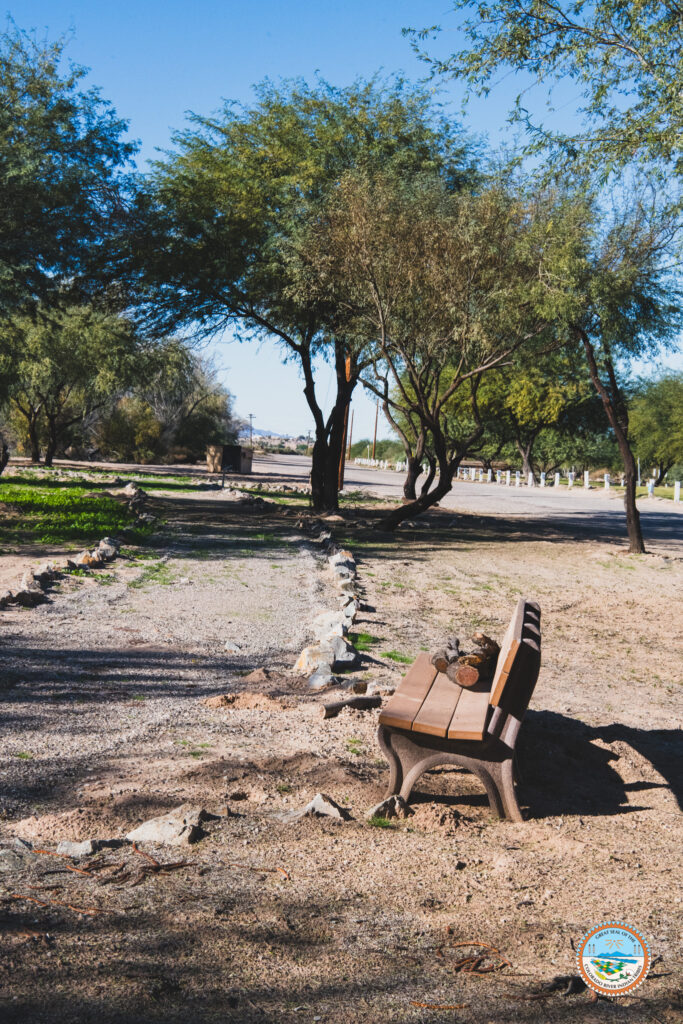
Fall is her favorite season at the Preserve because the changing leaves bring the area to life with color. She even recalled one memorable morning early in her career when a doe fell into a ditch. Without hesitation, she rushed in to help and ended up drenched but proud of what she did. It’s moments like these that show how much she cares for the wildlife and environment.
The Preserve is also home to important cultural resources. Marisol was surprised to learn just how many of the trees and plants hold cultural value and are monitored and preserved with great respect. Restoration continues to be a major focus. A recent grant supports the revegetation of native trees, including cottonwood, willows, and mesquite, helping to restore the natural habitat and strengthen the ecosystem for future generations. (more…)
The Colorado River Indian Tribes Employment Development and Training Department (ED&T) continues to be a vital resource for tribal members seeking support, skills, and employment. Through partnerships with the Department of Labor, Arizona Tribal Workforce, and the Department of Economic Security, ED&T provides job readiness services, education support, and hands-on work experience to those enrolled in a federally recognized tribe. Their mission focuses on promoting general welfare, encouraging educational progress, protecting tribal interests, and helping community members build stable, independent futures.
The department offers a wide range of services designed to meet people where they are. Community members can receive help studying for a driver’s permit or license, creating resumes and cover letters, preparing job applications, and building job readiness skills. ED&T also assists with obtaining needed documents such as a GED or ID. For those looking to gain work experience, the Adult Work Experience program offers a 90-day on-the-job training period with the goal of permanent employment once training is complete. High school and college students can participate in the Summer Youth Experience Program, which provides hands-on workplace exposure during summer break. When needed, ED&T also provides supportive services such as work clothing, tuition assistance, certifications, testing fees, and education supplies if those items cannot be obtained through another program.
Click the links below to upload needed forms
UPDATED SUPPORTIVE SERVICE FORM 2025
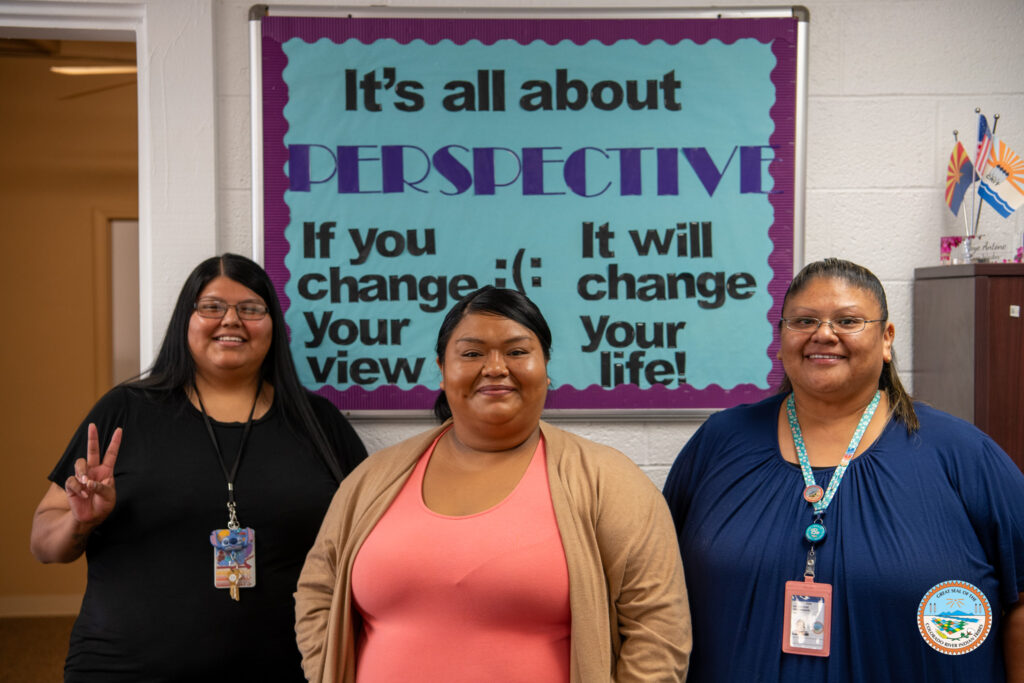
The department is guided by a committed team dedicated to helping the community move forward. Acting Director and Case Worker Kaye Antone works closely with participants to understand their goals, explore their interests, and determine what support they may need. Office Administrator Madolyn Brenner reviews applications, assists staff, and helps maintain a welcoming and organized department. Office Assistant Deaun Johnson and ED&T participant supports daily operations, helps participants with questions, and ensures they receive assistance quickly and respectfully. Together, the team works one-on-one with community members and emphasizes the importance of offering help confidentially and with care, recognizing that every situation is different. (more…)

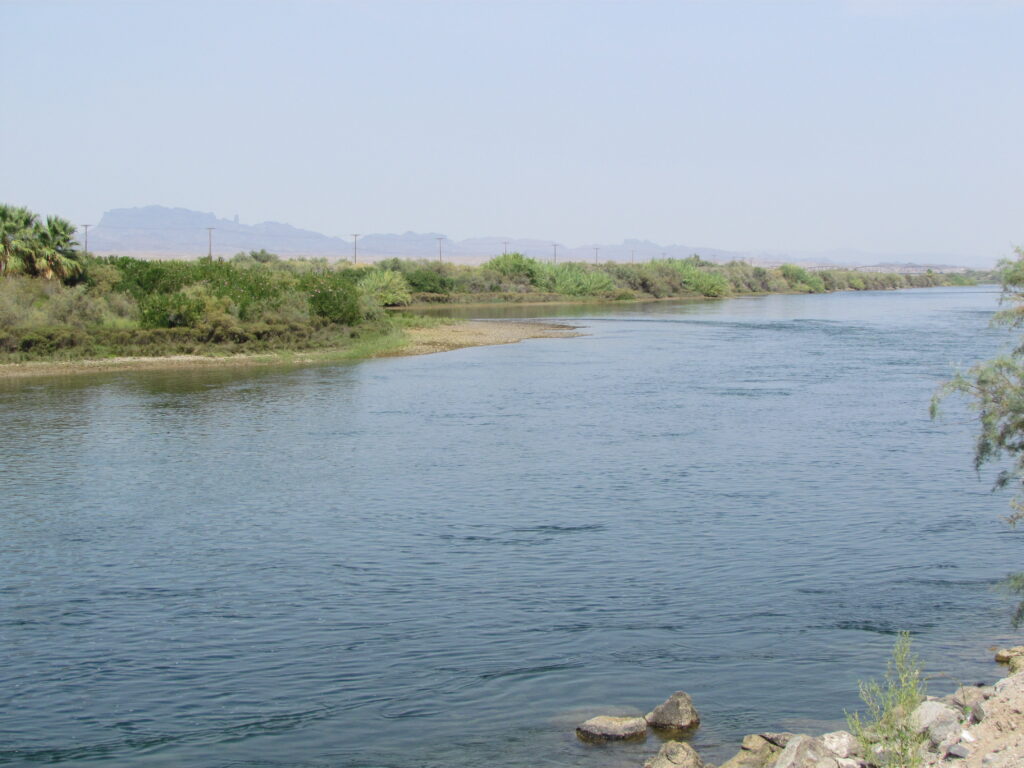
(Parker, Ariz.) CRIT’s Tribal Council has voted to acknowledge personhood status for the Colorado River under Tribal Law. The Tribal Council approved the resolution on November 6th.
Click the link below to see the entire resolution.
personhood resolution
The council’s decision came after soliciting substantial input from Tribal Members in person and in writing through numerous outreaches.
Other Tribes have approved similar measures to safeguard natural resources. CRIT would be the first community to do so for the Colorado River. The status comes as overuse and drought are threatening the life of the River which CRIT considers to be a living entity in addition to being a life-giving resource.
Personhood status means the Colorado River has the right to be protected under Tribal Law. The status directs current and future Tribal Councils to account for the needs of the River in decision-making as well as giving CRIT legal means to address the damage climate change is causing to the Colorado River.
The resolution states in part:
“There is no greater expression of sovereignty than protecting, stewarding, and securing for future generations what our Ancestors handed down to us, and that personhood status is a reflection of our values as a people and our spiritual, cultural, and religious connection to the Colorado River from the beginning of time through the end of time;”
CRIT’s Attorney General and staff will be developing provisions for Tribal Council review and possible approval for inclusion in the tribal code, including the Water Code, to reflect the personhood status of the Colorado River as well as all the protections to which the Colorado River will be entitled under tribal law.
CRIT Chairwoman Amelia Flores said, “This resolution authorizes CRIT to take specific and concrete actions for the river and its ecosystem at a time when, more than ever, it is needed. Within Arizona, CRIT will be inevitably asked to help shoulder the burden of maintaining Arizona’s economy and way of life. This must be a two-way street, however. At CRIT we are prepared to engage and be part of the solution for Arizona, but part of the solution is the long-term protection of our river. The river is a part of who we are and who we will always be: The Colorado River Indian Tribes.”