July 28, 2026 9:36 pm
CRIT Nation, Parker, AZ
July 28, 2026 9:36 pm
CRIT Nation, Parker, AZ

Click the links below to download a form

Direct Deposit Authorization Form

General Welfare Application_09242024

General Welfare Application Minors_09242024

PLEASE READ CAREFULLY


Dear Tribal Member:

Tribal Council has approved a 2024 General Welfare Assistance payment of $2,000.00 for each CRIT Tribal Member. CRIT Tribal members, both minors and adults, who are enrolled with CRIT as of November 1, 2024 are eligible to receive assistance. Tribal Members MUST submit an application to receive a General Assistance Payment for 2024.

Click the links below to download a form

Direct Deposit Authorization Form

General Welfare Application_09242024

General Welfare Application Minors_09242024

This 2024 General Welfare Assistance payment replaces the annual Tribal Distribution Payment.  The benefits to the membership are that the General Welfare Assistance payment is NOT income subject to federal taxes and should not impact eligibility for benefits such as SSI and food stamps.  You will not be issued a 1099 for this payment.  Please review the General Welfare Plan for more information.

Tribal Members will receive their General Welfare Assistance payment by mail or by direct deposit into a bank account after submitting their application.  Parents or legal guardians may request direct deposit for their eligible minor tribal member children into an account owned by the parent or the child.  YOU DO NOT HAVE TO SUBMIT A NEW DIRECT DEPOSIT FORM WITH YOUR APPLICATION IF YOU INTEND TO RECEIVE YOUR GENERAL WELFARE ASSISTANCE PAYMENT IN SAME BANK ACCOUNT AS YOU RECEIVED YOUR 2023 GENERAL WELFARE ASSISTANCE PAYMENT.

The General Welfare Assistance payment will be mailed or direct deposited as follows:

Application and Forms Due Date                   Payment Issued

Must be received by Accounting:

October 18, 2024                                            November 21, 2024

November 22, 2024                                        December 19, 2024

December 20, 2024                                         January 16, 2025

After December 20, 2024                              Payments issued monthly on a rolling basis

and before December 31, 2025

If you want to receive your General Welfare Assistance payment by direct deposit, you must submit the attached Direct Deposit Authorization Form along with a voided check to CRIT Accounting.  If you do not have a direct deposit authorization form on file from last year, or do not submit one for 2024 with your application, your payment will be mailed to the address on your application.  The mailing address you provide on the application will be used to update your address with both enrollment and accounting.   You may have already  received written notification  along with  an application and a self-addressed stamped envelope for your use to return the forms or the forms can be dropped off in person at Tribal Administration.  Additionally, the application and forms can be emailed to GWA@crit-nsn.gov.

Please note that the checks for eligible minor tribal members will be issued in the name of the child and not the parents. Parents or guardians must submit proof of their right to receive the distribution on behalf of their child by submitting an application with a copy of the birth certificate listing the parent(s), and if applicable, a court order establishing legal custody and placement before checks will be mailed or the payment directly deposited.

Checks will not be issued to the parent(s) if they do not have the care and custody of their children.  Guardians and custodians of minors who are not the child’s legal parent shall be required to provide a court order indicating their status.  Payments for children in the physical care and custody of CRIT Social Services or other state or tribal agencies shall be held in an account established by CRIT Accounting.

Tribal Members must apply for the 2024 General Welfare Assistance Payments no later than December 31, 2025 after which a 2024 payment will not be available.

Please be advised that if you are in default on a debt you owe to the Colorado River Indian Tribes or its enterprises, you may voluntarily agree to apply your General Welfare Assistance to the loan or other outstanding debt in default.  If you have any questions about outstanding debts in default please contact Tracey Quillen at (928) 669-1239.

If you have any questions regarding General Welfare Assistance or you have an agency incorrectly treating this payment as income please contact the Office of the Attorney General at (928) 669-1271.

Click the links below to download a form

Direct Deposit Authorization Form

General Welfare Application_09242024

General Welfare Application Minors_09242024

Follow this link for more information including how to apply.

This position is located with the Bureau of Indian Affairs, Superintendent, Colorado River Agency in Poston, Arizona.

Duties

  • Responsible for supervising Lead Irrigation System Operators and Irrigation System Operators.
  • Receives water orders; takes daily measurements; maintains record of water delivery, reservoir inflow and outflow, and instream flows, calculates requirements for area served.
  • Operates project distribution facilities to regulate and deliver water in accordance with Bureau water project policies and procedures.
  • Responsible for constant surveillance and condition or irrigation related faculties. Recommends needed maintenance and schedules required repairs.
  • Plan work for subordinates, establish priorities and prepares schedules for its completion.


According to CBS 5 Arizona’s Family, Arizona could face deeper Colorado River water cuts following missed negotiation deadlines, raising concerns about future water supply stability across the state. Officials say ongoing drought and reduced reservoir levels continue to challenge long-term planning efforts. These developments may lead to increased federal involvement in river management decisions. For CRIT, potential cutbacks are important because federal allocation decisions directly influence how tribal water rights are maintained and protected.

Source: CBS 5 Arizona’s Family — https://www.azfamily.com/2026/02/17/arizona-faces-major-colorado-river-water-cuts-deadline-passes/

According to the Colorado Sun, new forecasts suggest Lake Powell could reach critically low levels that threaten hydropower production and water deliveries if drought conditions persist. Reservoir storage plays a central role in determining how water is distributed across the Colorado River Basin. Experts say ongoing climate pressures and declining inflows continue to complicate long-term planning. For CRIT, reservoir conditions remain important because federal operational decisions tied to storage levels directly affect how tribal water allocations are managed and protected.

Source: Colorado Sun — https://coloradosun.com/2026/02/18/lake-powell-forecast-critical-lows-federal-study/

According to AZPM News, Colorado River basin states missed another federal deadline to reach agreement on future water reductions, increasing the likelihood of additional cutbacks across the Southwest. Officials warn that continued drought and declining reservoir levels could force tougher decisions about water allocation in the coming years. The missed deadline highlights growing uncertainty about long-term river management. For CRIT, potential water reductions and federal policy decisions directly influence how tribal water rights are protected and incorporated into basin planning.

Source: AZPM News — https://news.azpm.org/s/102728-arizona-and-western-states-miss-colorado-river-water-deadline-as-cuts-loom/

According to Newsweek, Lake Powell water levels could drop to critical levels sooner than expected, raising concerns about hydropower production and water deliveries across the Colorado River Basin. Experts say continued drought, reduced snowpack, and high demand are contributing to declining reservoir storage. These conditions add urgency to ongoing negotiations about future river operations. For CRIT, reservoir levels are important because federal decisions tied to storage conditions directly affect how tribal water allocations are managed and sustained.

Source: Newsweek — https://www.newsweek.com/lake-powell-water-could-drop-to-critical-levels-sooner-than-expected-11531274

According to Pinal Central, the Gila River Indian Community expressed concern over the lack of agreement among Colorado River basin states, noting the importance of tribal voices in ongoing water negotiations. Tribal leaders emphasized the need for sustainable solutions that recognize existing water rights while addressing long-term drought conditions. The statement highlights growing awareness of tribal participation in basin discussions. For CRIT, tribal engagement in Colorado River negotiations is significant because it reinforces the importance of protecting tribal sovereignty and water rights across the region.

Source: Pinal Central — https://www.pinalcentral.com/sacaton_central/gric-laments-lack-of-deal-over-colorado-river-water/article_cb91f461-07de-4f88-8d70-c3dec3b96c67.html

A recent statement from Colorado River Commissioner JB Hamby says California and other Lower Basin states have been working with federal officials and neighboring states to develop new long-term operating rules for the Colorado River after 2026. He noted that the original 1922 Colorado River Compact was based on water supply estimates that no longer match today’s reality, as river flows have declined over the past 25 years while demand continues to grow. 

According to the statement, California, Arizona, and Nevada committed to major conservation efforts in recent years and have already exceeded planned water savings meant to stabilize Lake Mead and Lake Powell. However, disagreements remain between Upper Basin and Lower Basin states about how future reductions should be shared, and negotiators have not yet reached a final agreement. 

For CRIT, these ongoing negotiations are important because federal Colorado River policies, interstate agreements, and conservation requirements directly influence how tribal water rights are protected, managed, and incorporated into long-term river planning that affects the entire region.

Source: https://crb.ca.gov/2026/02/statement-from-jb-hamby-colorado-river-commissioner-for-california/


February 14, 2026

According to the U.S. Department of the Interior, federal officials are moving forward with new operating guidelines for the Colorado River even though the seven basin states have not yet reached full agreement. The updated rules, expected by October 2026, are meant to provide stability for water deliveries, power generation, and long-term management as drought conditions and declining inflows continue to strain the river system. Interior Secretary Doug Burgum said discussions with states, Tribal Nations, and Mexico are ongoing, but federal action is needed to ensure future reliability of the river.

The Colorado River supplies water to about 40 million people, supports millions of acres of farmland, generates hydropower, and serves 30 Tribal Nations, making it one of the most important water sources in the West. Federal officials are currently accepting public comments on the draft environmental review that will guide future reservoir operations.

For CRIT, these federal guidelines are important because Colorado River management decisions directly affect how tribal water rights are protected, how water is allocated in the Lower Basin, and how long-term planning supports the Tribe’s water security, economy, and future generations.

Source: U.S. Department of the Interior / Bureau of Reclamation press release

According to Arizona Mirror, Colorado River negotiations hit a setback as Lower Basin states, including Arizona, criticized Upper Basin states for resisting deeper water conservation commitments. Officials say ongoing drought conditions and declining reservoir levels are increasing pressure to finalize new operating rules before current guidelines expire. The disagreement highlights continuing tension over how water reductions should be shared across the basin. For CRIT, these negotiations are important because interstate agreements and federal management decisions directly influence how tribal water rights are protected and incorporated into long-term river planning.

Source: Arizona Mirror — https://azmirror.com/2026/02/13/arizona-blasts-upper-basin-states-for-refusing-cuts-as-colorado-river-talks-fail/

According to the Arizona Department of Water Resources, state officials say they will continue protecting Arizona’s Colorado River resources even after basin states failed to reach a consensus ahead of the federal deadline. Leaders emphasized ongoing drought challenges and the need for continued negotiations to maintain stability for water users across the region. State agencies say collaboration with federal partners and neighboring states remains essential moving forward. For CRIT, continued state and federal coordination is significant because long-term Colorado River policies directly affect how tribal water rights are recognized and sustained.

Source: ADWR Statement — https://azwaternews.com/2026/02/13/021326_statement/

According to USA Today, Colorado River negotiations approached a critical deadline without a final agreement, reflecting ongoing disputes over how to manage shrinking water supplies across the Southwest. Experts say declining snowpack, persistent drought, and competing demands are making consensus more difficult as states prepare for new post-2026 operating guidelines. Federal involvement may increase if states cannot reach agreement. For CRIT, these developments matter because federal river management decisions play a key role in protecting tribal water rights and ensuring long-term water security.

Source: USA Today — https://www.usatoday.com/story/news/nation/2026/02/13/colorado-river-deal-deadline/88658491007/

According to Arizona Water News, Arizona water leaders recently received a briefing from the governor’s office, the Arizona Department of Water Resources, and the Central Arizona Project on ongoing Colorado River negotiations as a federal deadline approaches. Officials discussed current drought conditions, possible future cutbacks, and the importance of coordinated state and federal planning to stabilize river supplies. The briefing highlights continued uncertainty as states work toward new post-2026 operating guidelines for the river. For CRIT, these negotiations are important because federal and interstate decisions on Colorado River management directly influence how tribal water rights are protected and incorporated into long-term planning.

Source: Arizona Water News — https://www.azwater.gov/news/articles/2026-02-11

According to KJZZ News, Colorado River basin states are facing a federal deadline to reach an agreement on future water management rules, with uncertainty remaining about whether consensus can be reached in time. Experts say possible outcomes range from short-term agreements to federal intervention if negotiations stall, reflecting ongoing tension between Upper Basin and Lower Basin states. Continued drought and competing water demands have made long-term planning increasingly complex. For CRIT, these negotiations matter because federal decisions about river operations directly affect how tribal water rights are recognized and sustained within the broader basin framework.

Source: KJZZ News — https://www.kjzz.org/the-show/2026-02-12/colorado-river-states-are-staring-down-a-feb-14-deadline-heres-what-might-happen-next

According to the Lake Powell Chronicle, federal officials have outlined a post-2026 framework aimed at preventing further decline of the Colorado River system as drought pressures continue. The proposed blueprint focuses on conservation strategies, operational adjustments, and coordinated planning among basin states to stabilize reservoir levels and long-term water supplies. These discussions reflect ongoing efforts to balance environmental conditions, population growth, and water demand across the Southwest. For CRIT, long-term federal planning for the Colorado River is significant because these policies help shape how tribal water rights are protected and managed for future generations.

Source: Lake Powell Chronicle — https://lakepowellchronicle.com/stories/feds-unveil-post-2026-blueprint-to-avert-colorado-river-collapse,99303

According to ABC 15 Arizona, researchers at Arizona State University are developing technology that converts industrial wastewater into ultra-pure water, potentially expanding future water reuse options in the Southwest. Scientists say advanced treatment methods could help supplement limited freshwater supplies while supporting growing populations and industries. Water recycling and reuse are increasingly discussed as part of long-term drought resilience strategies. For CRIT, emerging water reuse technologies may play a role in future regional water planning as tribes, states, and federal agencies work to protect limited Colorado River resources.

Source: ABC 15 Arizona — https://www.abc15.com/news/local-news/asu-turns-industrial-wastewater-into-ultra-pure-water

(more…)

Navajo customs find a way to heal and reignite the strength of those in suffering and spiritual pain of what lingers in their heart, their mind, their body, their soul. But here, we have a film that questions and wrestles with the idea of how we feel out, process, and learn to forgive those who’ve done harm to us for no longer. FINDING HÓZHÓ, the newest film from writer/director/producer Travis Holt Hamilton, searches for that idea from within the protagonist Secody, a man whose silent dignity masks a history of childhood trauma left behind by the violence of his father, remembered as an angry and aggressive alcoholic. Now an older man, Secody is morally stuck on how to best care for his dying/bedridden elder father; he secretly wrestles with the emotional turmoil of not knowing how to confront his abuser and comfort his dying father. We jump back and forth between the present narrative and the 60s’ period flashbacks to show how Secody had to endure his father’s drunken rage(s), while also finding peace and serenity with his warm and loving grandfather, who teaches him the traditional Diné methods of beliefs and guidance. We see a different coin side of father figures within Secody’s life – one figure showing him what pain can bring by self-destruction, and another figure teaching what beauty and tranquility can be found with personal strength and faith rooted in traditional values. (A scene plays out in flashback with the grandfather and son looking after the depressed father, drowning in sorrow about his dead wife with a bottle; the grandfather tells his grandson, Your father is not a bad man, hes a broken man.” They carry him back home and spend the night traditional praying over him repeatedly, showing Secody what the bonds of family and holding hope in ones beauty does for our health & growth.)

What stood out on top of the story with the film itself, the reviewer found the production value to be a crowning achievement; in particular, the cinematography and direction seen on screen proves that the story has a backbone of visual style and gravitas of a filmmaker’s dedication to making a story based on the concept and company he keeps. Here, Hamilton finds the weight of the emotional journey in his character’s choices and reflections in facing the confrontation of familial bonds and those painful memories that we put to rest. The actors’ are all allowed to shine and breathe life into their on-screen personas’, with many of the cast having the strength to carry weight of dialogue while the main lead is left in silence of his own accord. By the end of the film (as per audience reactions at the screening), you’ll be needing the tissues to help handle the teary emotions we see in the finale of the film reinterpreting the themes of Hózhó being an internal spiritual awakening that anyone can ignite from within, from family, and from the values/beliefs we hold strong. Anyone of any generation can find something out of the story, as the reviewer recounts how much an audience engagement could be found in the Q/A section of the premiere – prompting discussions of elder’s recollections that touched on personal experiences they found identifiable through the film. It’s a beautiful film that stands as one of Hamilton’s most mature and enlightening features that showcases the humanity and culture of Diné customs and traditions. FINDING HÓZHÓ is a film that wants you to be emotionally and spiritually ready to find the light, beauty, and forgiveness to give ourselves from all the burdens of the world.

Holt Hamilton, in his steadfast devotion to furthering his filmmaking goals and working with the best talent/crews, finds solace in the audience he has acquired with his filmography. Speaking with him, you understand that the storytelling that he’s writing and formulating is based on the influences and ideas that surround him; and it’s no surprise seeing how much influence the honor and beauty of Navajo country has struck a cord with his sensibilities. We spoke with him after the screening –

CRIT MEDIA: How do you anticipate everything that you do with the challenges of filmmaking? What does the weight of this lifestyle feel like for you?

HAMILTON: I think the start of it was of just giving myself that goal: if I had one more chance to make a movie, what would I do? Not that the other films haven’t been a passion project or something, but there’s something about like, okay, what, there’s more thought, there’s a lot more prayer into it, there’s a lot more like, okay, what do I leave with? And so I think I set, that was one thing I think that really played into it.” (more…)

(LAS VEGAS) The Colorado River Indian Tribes (CRIT), the Gila River Indian Community (GRIC) and the Central Arizona Water Conservation District, which manages the Central Arizona Project, have signed an historic proclamation to work together to protect the Colorado River.

The three entities have had differing priorities and goals over the years regarding the River, but those differences do not prevent them from working together to safeguard the Colorado River which is suffering from drought and overuse.

The proclamation was signed during the Colorado River Water Users Association conference where multiple states, local and regional government entities, and the federal government have been trying to reach an accord on river water allocation and use.

CRIT, GRIC, and the CAP hope their proclamation can set an example and demonstrate the need for collaboration and conservation. The resolution states:

The Colorado River Indian Tribes, the Gila River Indian Community, and the Central Arizona Water Conservation District have been collaborative partners on various conservation projects to protect the Colorado River including the Pilot System Conservation Program, the Drought Contingency Plan and innovative water efficiency demonstration projects.

We commit to working on collaborative and creative partnerships that, consistent with our respective principles and values, utilize all the tools that are available to us through the Consolidated Decree in Arizona v. California, the Arizona Water Settlements Act, the 2007 Interim Guidelines, the Drought Contingency Plan, the System Use Agreement, the Colorado River Indian Tribes Water Resiliency Act of 2022, and the Arizona’s Groundwater Management Act, in addition to others.

Together, the Colorado River Indian Tribes, under its laws, including requiring preservation of the River as a living entity, the Gila River Indian Community and the Central Arizona Water Conservation District are committed to protecting the Colorado River and the needs of our respective tribal members while connecting much-needed resources to end users within the Central Arizona Water Conservation District service area.

CRIT Chairwoman Amelia Flores said, “All of us who live in Arizona, native and non-native alike, are connected by water for without water, there is no life.  And it is that common thread that binds us, which has us here today, pledging to work together for the greater good of all who live in Arizona.” CRIT recently took the pioneering step to acknowledge personhood status for the Colorado River under Tribal Law. According to Chairwoman Flores, “CRIT will always put the Colorado River first.” (more…)

by Abigail Wilt
Cronkite News

PHOENIX – Natasha Bowman is a Navajo doula and student midwife. Her work centers around revitalizing traditional birthing through practices that have been overshadowed by Western medicine.

In traditional spaces, families are often there, supporting the mother through labor and birth. One of Bowman’s clients was the first woman in her family to have a home birth since her great-great-grandmother. The client was in the company of other women in her family and for the first time — her father.

Before the woman’s home birth, her father wasn’t allowed to be present for the births of his own children. His wife would labor at the hospital while he was at home and then return with their babies.

It was very different while his daughter was in labor. He was invited into the space and able to console her, rubbing her head and speaking to her as she moaned through contractions.

He sat in the living room during the active birth and told Bowman — through tears — that he wished he would have been there for the births of his children. He had no idea what his wife was going through until he saw his daughter go through it.

“Within the community, bringing in the aunts, the grandmas, the sisters, the cousins, bringing them all within that space, working as a community together. It’s beautiful to see everyone come together at a birth with the women around,” Bowman said.

Bowman explained that traditional births can often involve ceremonies, songs, holistic herbs, tinctures and the use of Native language alongside including family members.

Indigenous medicinal practices, alongside cultural and religious ceremonies, were considerably restricted under the 1883 Code of Indian Offenses, allowing authorities to withhold food, impose extra labor or jail people for up to 10 days for seeking or providing medicine or traditional healing.

Until the Congress passed the American Indian Religious Freedom Act in 1978, Native communities were largely forced to seek care within Western health systems.

“We see that we had our traditional birthing practices long ago. It was taken from us when hospitals came into our communities, and then our traditional birth ways were taken from us. They started telling us it was unsafe,” Bowman said.

Last year, the Centers for Medicare & Medicaid Services approved a Section 1115 waiver, allowing Medicaid to cover traditional healing. On Oct. 1, Arizona Health Care Cost Containment System,  AHCCCS, Arizona’s Medicaid agency, began reimbursing them, making Arizona one of the first states to do so. The initiative “aims to offer culturally appropriate options for eligible members.”

For tribal communities, this progress has been decades in the making.

“I’m really happy that, after over a decade, or to this point, that the advocates in our state didn’t give up and that we just kept moving it forward because we really understood the value of it,” said Kim Russell, the policy advisor at Sage Memorial Hospital on the Navajo Nation.

Hanley Manygoats is a traditional medicine practitioner (Hatalii) on the Navajo Nation. He grew up around traditional healing before becoming a practitioner himself. Lately, Manygoats went from seeing one person a month to three or four a week.

“It’s all part about healing, spiritual healing. It’s all about this being the one with nature, mother earth, father sky,” Manygoats said. “So we have all these stories that go with our traditional healing, our songs, our prayers. So it all starts with the origin stories.”

For many, he said, it’s the first time in decades they’ve been able to experience these healing ceremonies.

“When I do prayers for the elders, they get emotional because they haven’t heard prayers like this in a long time. The last time they had a prayer done was when their grandparents or their fathers and mothers were around. Now they’re gone,” he said.

Though AHCCCS coverage has allowed more people to seek traditional health care, Manygoats said the coverage is limited. (more…)

The Ahakhav Tribal Preserve is a treasured outdoor space for the Colorado River Indian Tribes community. Located along the beautiful Colorado River in Parker, the Preserve offers a peaceful and educational environment where families can explore nature, relax, and learn about the land we call home.

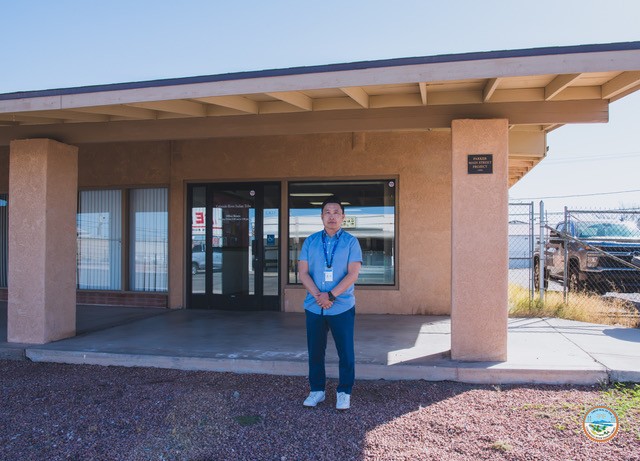
Newly hired Project Administrator, Marisol Chavira, has been dedicated to the Preserve for more than 20 years. Born and raised in Parker, she’s passionate about caring for the land and helping future generations enjoy it. After serving as the Administrative Assistant for many years, she began acting as the Project Administrator in 2021 and officially stepped into the role in November 2025.

Marisol shared that her favorite part about working at the Preserve is the quiet and comfort it brings. “It’s green, beautiful, and peaceful,” she said. “There’s so much for people to enjoy here.” From walking trails and bird watching to designated playground areas for families, the Preserve is an inviting space for all ages.

A typical day for the Preserve team includes maintaining the park, trimming trees, caring for the natural habitat, and working on grants to continue improving the area. One of Marisol’s favorite spots is Willow Beach, a scenic area where families can enjoy the water, shade, and open spaces.

Fall is her favorite season at the Preserve because the changing leaves bring the area to life with color. She even recalled one memorable morning early in her career when a doe fell into a ditch. Without hesitation, she rushed in to help and ended up drenched but proud of what she did. It’s moments like these that show how much she cares for the wildlife and environment.

The Preserve is also home to important cultural resources. Marisol was surprised to learn just how many of the trees and plants hold cultural value and are monitored and preserved with great respect. Restoration continues to be a major focus. A recent grant supports the revegetation of native trees, including cottonwood, willows, and mesquite, helping to restore the natural habitat and strengthen the ecosystem for future generations. (more…)