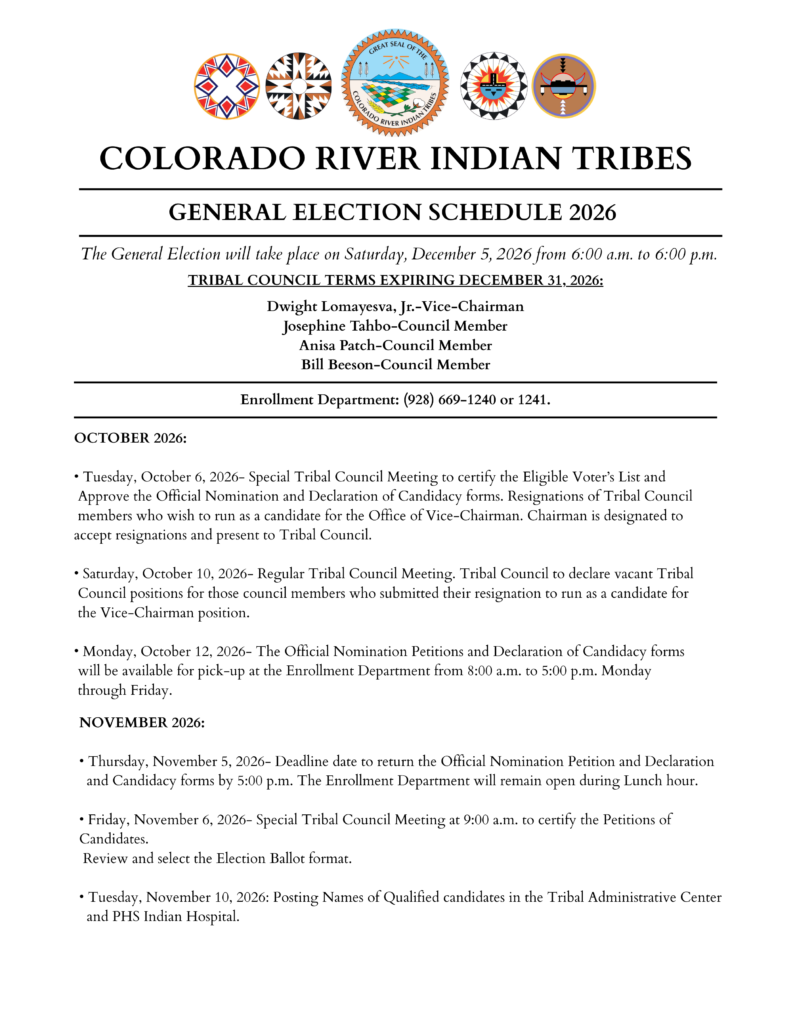
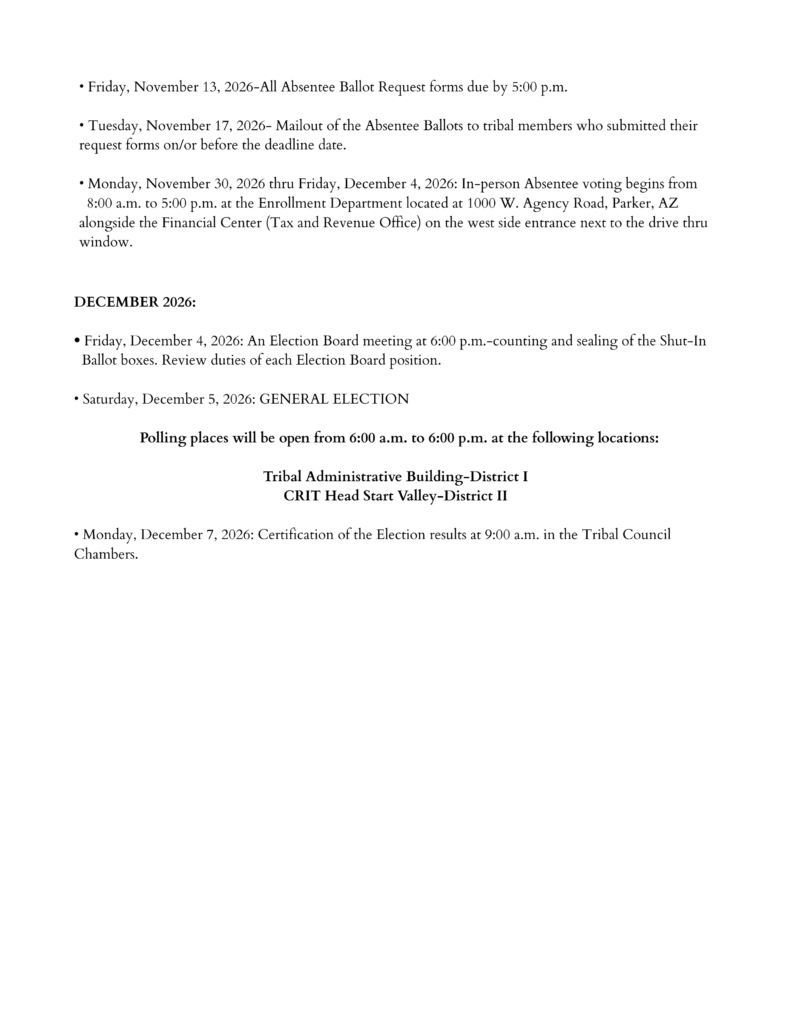
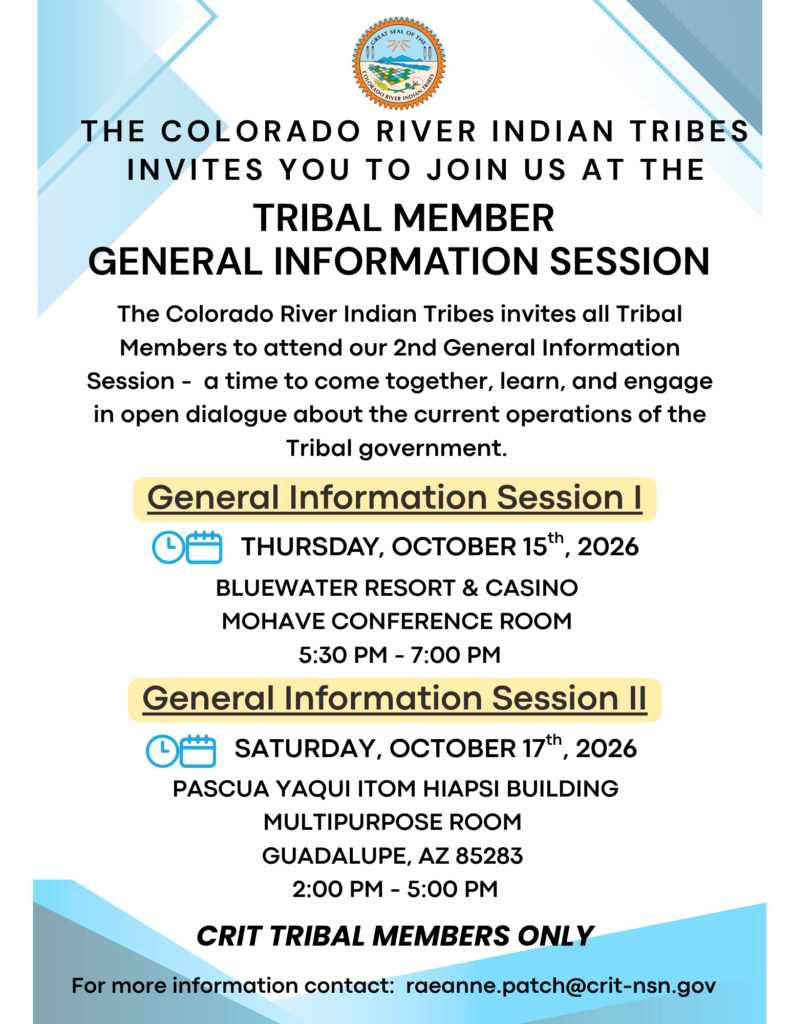
Follow the link below to download an application.
CRIT Tribal Board Vacancies Application 2026
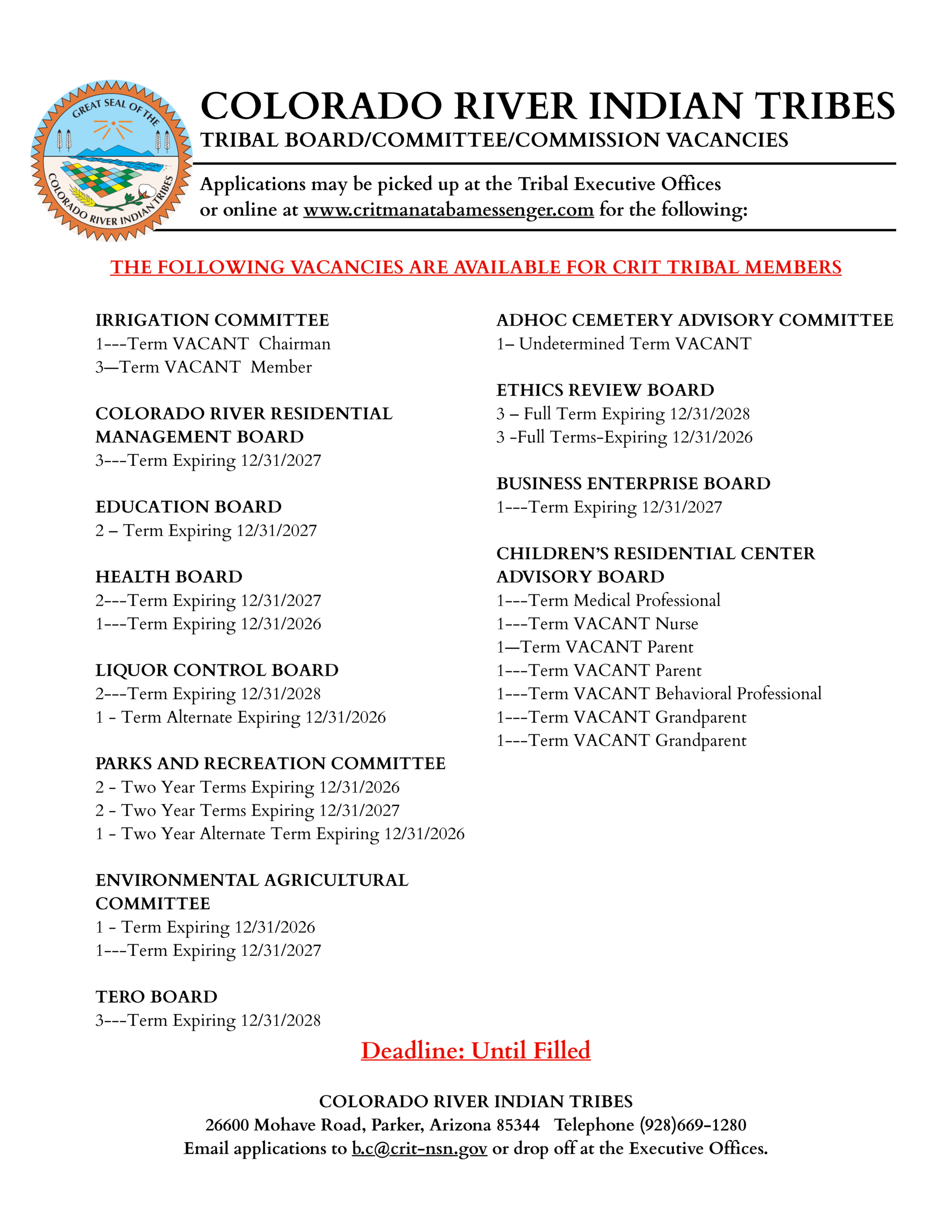

Follow the link below to download an application.
CRIT Tribal Board Vacancies Application 2026
The Colorado River Indian Tribes (CRIT) Water Resources Department is now accepting proposals for Drain Cleaning and Mechanical Vegetation Management services for the Colorado River Irrigation Project (CRIP) near Parker and Poston, Arizona.
This project supports the continued care and functionality of CRIT’s irrigation system, which is vital to agricultural operations and stewardship of the Colorado River. Qualified contractors are encouraged to review the full Request for Proposals and submit by the stated deadline.
For full details, submission guidelines, and requirements, click the link below.
Early reports showed the river’s challenges from several angles. The headwaters are drying out, and Arizona is pushing back against the federal government’s post-2026 river plan. Cities are using federal money to conserve and build local resilience. Farmers and rural communities are facing uncertainty. Tribal Nations are also raising concerns about groundwater projects and the long history of being left out of major water decisions.
KJZZ reported that warming temperatures are reducing base flow in streams that feed the Colorado River. Base flow is the water in streams that does not come directly from rainfall. Much of it comes from groundwater and snowmelt. A study published in Earth’s Future found that base flow in Western streams has been declining since 1950, and researchers projected that headwater streams could see 45% to 65% less base flow by the end of the century if warming continues.
That matters because the Colorado River depends on those smaller mountain streams before the water reaches Lake Powell, Lake Mead, or the Lower Basin. If streamflow comes earlier in the year or drops during dry months, water managers have less reliability when demand is highest.
At the same time, Arizona continued to challenge the federal government’s Final Environmental Impact Statement for future Colorado River operations. KJZZ reported that Arizona’s top water official, Tom Buschatzke, warned Reclamation that the federal plan could cause “catastrophic harm” to Arizona. The state argued that the plan does not provide enough certainty and could allow deep Lower Basin cuts without resolving the broader conflict between the Upper and Lower basins.
KTAR reported similar concerns from Sarah Porter, director of Arizona State University’s Kyl Center for Water Policy. Porter said the federal framework focuses on protecting infrastructure and hydropower but does not put the Basin on a path to stability. She said cities may be able to reduce some impacts through conservation and advanced water purification, but Tribal and rural communities could feel deeper disruption, especially where agriculture is involved.
Cities are already moving to conserve more water. KJZZ reported that several Phoenix-area cities are working on agreements with the Bureau of Reclamation to leave Colorado River water in Lake Mead in exchange for federal funding. Glendale, Mesa, and Gilbert were among the cities discussed. KJZZ reported that Glendale previously left about one-third of its Colorado River water in Lake Mead, and Gilbert has a 10-year agreement that will bring nearly $17 million to the town for water-saving projects.
Gilbert is also expanding its water infrastructure. ABC15 reported that the town is planning to expand the Greenfield Water Reclamation Plant from 12 million gallons a day to 16 million gallons a day. The treated wastewater can be reused for irrigation or recharged underground, helping the town prepare for future growth and Colorado River uncertainty.
Groundwater remained another major issue. The University of Arizona Water Resources Research Center highlighted a study on water banking and groundwater security, finding that managed aquifer recharge and water banking can improve drought resilience when policies encourage long-term storage. The Arizona Attorney General’s Office also reported early results from a groundwater settlement with Riverview Dairy in Cochise County. The agreement includes funding for well drilling, water hauling, and groundwater access, along with commitments to reduce groundwater use over time.
Tribal groundwater concerns also reached court. ICT reported that the Fort Mojave and Chemehuevi Indian Tribes sued the Interior Department over the Cadiz groundwater project in the Mojave Desert. The project would pump groundwater from beneath the Mojave Trails National Monument and move it through a converted pipeline. Tribal leaders said the project threatens cultural, ecological, and sacred resources tied to the desert and its water.
Conditions upstream also showed the river’s physical stress. Aspen Journalism reported that extremely low flows in Colorado’s 15-mile reach affected boaters, irrigators, and endangered fish. The report said the reach, located between Palisade and the Gunnison River, is a chronically depleted section of the Colorado River and critical habitat for endangered fish.
Together, the week’s reporting showed that water security is no longer only about legal allocations. It is about timing, infrastructure, storage, groundwater protection, conservation funding, and whether communities have the resources to adapt.
What does this mean for CRIT?
CRIT holds senior Colorado River rights, which remain central to the Tribe’s position in Basin planning. But the reporting shows that water security also depends on infrastructure, storage, delivery systems, and meaningful inclusion in federal decision-making.
The KTAR reporting on Tribal and rural impacts is important because CRIT is both a sovereign Tribal Nation and a major agricultural water user along the Colorado River. The ICT reporting also shows how groundwater projects can raise Tribal concerns when water, land, wildlife, and cultural resources are connected. (more…)
The Colorado River shortage conversation is starting to move from federal planning into city budgets, backup supplies, and long-term infrastructure decisions.
On Aug. 11, AMWUA reported that its member cities have been preparing for a smaller Colorado River for years. The Arizona Municipal Water Users Association represents 10 cities: Avondale, Chandler, Gilbert, Glendale, Goodyear, Mesa, Peoria, Phoenix, Scottsdale, and Tempe. Together, those cities serve about 3.7 million people, more than half of Arizona’s population.
AMWUA said the cities are entering a new era of less Colorado River water, especially as federal officials finalize operating rules for 2027 through 2036. The organization said Central Arizona Project water is at the center of that risk because many Valley cities rely on CAP deliveries.
AMWUA said city planning has focused on three main areas: efficiency, resilience, and technology. Those efforts include advanced water meters, leak detection, turf removal rebates, landscape conversion programs, reclaimed water, aquifer recharge, advanced purified water treatment, and updated development rules.
The goal is not only to use less water. It is also to reduce dependence on Colorado River supplies and build local water sources that are less tied to Lake Mead’s elevation.
Gilbert is one example of how cities are preparing. ABC15 reported that about 40% of Gilbert’s water comes from the Colorado River, and town staff expect reductions to Central Arizona Project water to begin in 2027. The town is considering a Firming Water Delivery Agreement that would give Gilbert more flexibility to access water it previously stored underground during shortages.
ABC15 also reported that Gilbert has drilled eight new wells to access backup supplies. The town’s approach reflects a broader trend in Arizona: communities are trying to make stored water and groundwater more usable before deeper Colorado River cuts arrive.
These local efforts do not remove all risk. AMWUA said no level of city preparation can completely eliminate Arizona’s vulnerability to a smaller Colorado River. More investment will be needed, especially in new water supplies, treatment technology, and infrastructure.
The cost of that uncertainty is becoming a bigger part of the discussion. The Bond Buyer reported that Arizona and Nevada officials criticized the federal Colorado River plan, while analysts said the Final Environmental Impact Statement raises the stakes for long-term water planning. The article said utilities with strong storage, conservation programs, and financial flexibility may be better positioned in the near term, but long-term credit quality will depend on how effectively water providers secure alternative supplies while keeping rates affordable.
That point matters because water planning is not only about engineering. It is also about financing. Wells, pipelines, treatment plants, recharge projects, conservation programs, and new supply agreements can take years to develop and cost millions of dollars. If Colorado River rules change every two years, cities and water agencies may have to make expensive decisions without knowing exactly how much water they will receive in the future.
California is watching the federal framework as well. Spectrum News reported that the new Colorado River proposal could mean future cuts for California. California has historically held stronger priority than Arizona in the Lower Basin, but the federal framework could still bring reductions depending on reservoir conditions and future agreements.
The uncertainty is also reaching water law. Courthouse News Service reported on a Ninth Circuit case involving companies that say California denied them due process in a water rights matter. While the case is separate from Arizona’s Colorado River negotiations, it shows how water disputes across the West are increasingly moving through courts and administrative processes.
Drought conditions are also affecting the Upper Basin. Denver7 reported that Denver Water has moved into an enforcement phase as drought conditions worsen. Customers are limited to watering lawns two days a week, and the utility has begun issuing warnings and fines for violations. Denver Water officials said the goal is to protect supplies heading into next year, when snowpack remains uncertain. (more…)
Water planning in the West is becoming less about one reservoir or one shortage rule and more about whether communities have the legal tools, infrastructure, and storage to manage a drier future.
Aug. 10 reporting continued to focus on Lake Mead after the reservoir reached its lowest level ever recorded. CBS 5 Arizona’s Family reported that Lake Mead dropped to 1,040.5 feet, below the previous record set in July 2022. The reservoir, created by Hoover Dam in the 1930s, remains one of the most important storage points on the Colorado River.
Lake Mead’s decline matters because it supports water deliveries to Arizona, California, Nevada, and Mexico. It also affects hydropower production and the broader operation of the river system. CBS 5 reported that if Lake Mead and Lake Powell fall below certain thresholds, hydropower production can stop, and water deliveries to downstream users can become harder to manage.
Popular Mechanics also reported on the power side of the Colorado River crisis, focusing on how lower water levels affect Hoover Dam and Glen Canyon Dam. The article explained that these dams depend on enough water elevation to push water through turbines. When reservoirs fall too low, the issue is not only reduced water supply. It is also whether the infrastructure can continue moving water and producing power the way it was designed to do.
At the same time, the federal Colorado River plan is leaving water agencies with short planning windows. KQED, through CalMatters, reported that Reclamation’s 10-year framework sets broad limits for managing Lake Powell and Lake Mead, but detailed operating plans may be issued every two years if the Basin states remain deadlocked. The article said that the level of uncertainty makes it harder for water agencies to plan major projects, conservation agreements, and long-term investments.
Groundwater was another major focus. Arizona Independent News Network, using reporting from the Arizona Center for Investigative Reporting, reported that a lawsuit over the Hualapai Valley groundwater basin could test Arizona’s authority to protect vulnerable rural water supplies. The lawsuit challenges the state’s ability to designate an Irrigation Non-Expansion Area, which limits new irrigated farmland while allowing existing farms to continue pumping.
According to the report, ADWR designated the Hualapai Valley basin as an Irrigation Non-Expansion Area in 2022 after a surge of out-of-state investment in land for new industrial-scale farms. Two investment firms sued, arguing that ADWR should have used Arizona’s standard rule-making process. A Maricopa County Superior Court judge agreed with the investors earlier this year, and ADWR has appealed.
The case matters beyond Hualapai Valley. If the ruling stands, it could take much longer for Arizona to create future Irrigation Non-Expansion Areas. That delay could give landowners more time to expand irrigation before restrictions take effect, increasing pressure on already stressed rural aquifers.
The University of Arizona Water Resources Research Center also highlighted a new study on water banking and groundwater security. The study looked at how managed aquifer recharge and water banking can help improve long-term water security in semi-arid regions. The research found that water banking can improve drought resilience, especially in aquifers that retain stored water well. It also emphasized the importance of policies that encourage long-term storage rather than quick recovery.
The Arizona Attorney General’s Office also announced early results from a groundwater agreement with Riverview Dairy in Cochise County. Attorney General Kris Mayes said the agreement has helped residents affected by declining groundwater levels in the Sulphur Springs Valley. The settlement includes $11 million for well drilling, water hauling, and groundwater access, along with commitments to fallow or transition 2,000 acres of irrigated farmland over 12 years to reduce groundwater use.
Those Arizona groundwater stories show how the water conversation is expanding beyond the Colorado River. As surface water becomes less reliable, more pressure can shift to groundwater. But groundwater rules are different across the state, and rural areas often have fewer protections than Arizona’s Active Management Areas.
Nevada is facing similar questions. Nevada Independent reported on a legal fight over water availability at the Tahoe-Reno Industrial Center, a major industrial and technology hub east of Reno. The dispute involves whether enough water is available to serve current and future development at the site, which includes major companies such as Tesla and Switch.
The Nevada case shows how water availability can affect economic development. Communities may want new industry, jobs, and tax revenue, but growth still depends on whether water supplies can support long-term demand.
California is also looking at long-term water security. NBC Palm Springs reported on a Sierra Nevada meadow restoration project designed to improve natural water storage. Crews are restoring nearly three miles of the West Walker River and surrounding floodplains at Pickel Meadow, north of Yosemite. The goal is to help the meadow absorb snowmelt and release water more slowly into rivers and streams.
Fox Weather reported that monsoon storms were bringing needed rain to parts of the Southwest and Rockies, including areas of Colorado facing extreme and exceptional drought. The rain may help some areas in the short term, but it does not solve the larger Colorado River problem. The system depends heavily on mountain snowpack, runoff, and long-term reservoir storage. (more…)
On August 7th, reports along the basin were mostly about Lake Mead’s record-low level becoming the clearest sign yet that the Colorado River negotiations are no longer just about future planning.
CNN reported that Lake Mead, the nation’s largest reservoir, reached a new record low. The reservoir is a key part of the Colorado River system, supplying water to Arizona, California, Nevada, and Mexico while also supporting hydropower and downstream deliveries from Hoover Dam.
The new low came as Lower Basin states continue responding to Reclamation’s Final Environmental Impact Statement for future operations at Lake Powell and Lake Mead. Arizona Capitol Times reported that Arizona, California, and Nevada are bracing for possible reductions under the federal framework. The Lower Basin states have urged Reclamation to adopt their May proposal, which calls for 3.2 million acre-feet of water savings over two years, including 1.25 million acre-feet of binding reductions in both 2027 and 2028 and at least 700,000 acre-feet of additional conservation.
The federal plan has left Arizona leaders concerned that the state could face deeper reductions than it believes are fair. The Upper Basin states — Colorado, Utah, Wyoming, and New Mexico — would not face the same mandatory cuts for now, which has added to the disagreement between the two basins.
Phoenix is also preparing for the possibility of a legal fight. ABC15 reported that the City of Phoenix has retained lawyers to help protect its Colorado River interests after the release of the federal plan. The Phoenix City Council met in executive session to discuss legal advice and possible options tied to post-2026 Colorado River operations.
The dispute is also reaching smaller parts of water management. KJZZ reported that Central Arizona Project leaders are questioning whether Arizona should keep helping pay for cloud seeding in the Rocky Mountains. CAP has helped fund upstream cloud seeding work since 2007 as part of a broader effort to add snow in key Colorado River watersheds.
The question now is political as much as technical. KJZZ reported that some CAP board members questioned why Arizona should keep funding work that may benefit Upper Basin states if those states are not required to take mandatory cuts. CAP staff said the program benefits the overall river system, even if it is difficult to track exactly how much of that water eventually reaches Arizona.
Environmental concerns also grew. CBS 5 Arizona’s Family reported that federal officials will not release cool water from Lake Powell this year to protect threatened native fish downstream in the Grand Canyon. The decision is meant to avoid putting additional pressure on already strained hydropower production at Glen Canyon Dam.
The issue involves the humpback chub, a threatened native fish in the Grand Canyon. Cool water releases in 2024 and 2025 helped prevent smallmouth bass from spawning below Glen Canyon Dam. Smallmouth bass are an invasive predator that can threaten native fish when warmer water allows them to survive and reproduce downstream.
The decision shows how low reservoir levels can force tradeoffs between power generation, river ecology, and species protection. As Lake Powell declines, federal officials are trying to protect hydropower and dam operations while also managing risks to native fish and downstream habitat.
Conditions in the Upper Basin are also strained. The Colorado Sun reported that Blue Mesa Reservoir, the largest reservoir in Colorado, is about one-quarter full. Federal officials are watching reservoirs like Blue Mesa because they may be used to help protect Lake Powell from dropping to critical levels under the new federal framework.
KUNR reported that summer monsoon storms may ease drought in some parts of the West, but they will not solve the Colorado River’s larger supply problem. The river depends heavily on mountain snowpack and runoff, and one season of rain does not erase years of declining reservoir storage. (more…)
August 6th reports showed the Colorado River debate moving on several fronts at once: Arizona is pushing back against deeper federal cuts, rural groundwater protections are being tested, Tribal water infrastructure remains unsettled, and Upper Basin communities are seeing worsening drought conditions.
Arizona officials are still responding to the federal government’s Final Environmental Impact Statement (ICS) for future Colorado River operations. The Arizona Republic reported that Congressman Greg Stanton called the federal plan a “failure of leadership” and said Arizona is pushing for smaller reductions than the framework allows. The federal plan could require Arizona, California, and Nevada to share major cuts after 2026, while Upper Basin states would rely mostly on voluntary conservation for now.
KAWC Yuma Public Radio reported that Yuma water attorney Wade Noble is closely following the negotiations. Yuma agriculture depends heavily on Colorado River water, and future rules affecting Lower Basin supplies could have consequences for growers, irrigation districts, and the local economy.
Some Arizona communities are telling residents they do not expect immediate changes. The Arizona Daily Star reported that Tucson Water customers are not expected to see immediate impacts under the river cutback plan. Tucson has spent years storing Colorado River water underground and developing a mix of supplies, including reclaimed water and groundwater management.
Groundwater policy also remained a major issue. Arizona Center for Investigative Reporting reported that a lawsuit over the Hualapai Valley groundwater basin could test Arizona’s authority to protect vulnerable rural groundwater supplies. The lawsuit challenges the state’s ability to designate the basin as an Irrigation Non-Expansion Area, one of Arizona’s few tools for limiting new agricultural groundwater pumping in rural areas.
Tribal water rights also stayed in focus. Navajo Times reported that the Navajo water settlement has advanced in the Basin but is facing a funding wall in Congress. The settlement is tied to water infrastructure and long-term access for Navajo communities. It also reflects a larger issue across the Colorado River Basin: legal rights still require funding, infrastructure, and federal action before water can reliably reach homes and communities.
Conditions in the Upper Basin continued to worsen. Colorado Public Radio reported that Colorado River communities are looking for new ways to respond as reservoir levels fall. The Colorado Sun reported that the river hit a “bleak” new low near Palisade, straining supplies for fish and farms. NBC 9 News Denver reported that Denver Water’s largest reservoir is down 20 feet and expected to keep dropping.
Southern Utah News reported that the federal Colorado River plan is putting renewed focus on Lake Powell’s future. Lake Powell remains central to power generation, releases through Glen Canyon Dam, and the larger operation of the river system.
The reports show how much is still unresolved. Arizona is pushing for smaller cuts. Yuma agriculture is watching the negotiations closely. Tucson is pointing to stored water and long-term planning. Rural groundwater protections are being tested in court. Tribal water settlements still need funding. Upper Basin rivers and reservoirs are showing the strain of drought.
The next federal step remains the Record of Decision and operating guidelines. Those documents will determine how the framework is applied for 2027 and 2028, including how much water Arizona, California, and Nevada may be required to conserve.
What does this mean for CRIT?
The reports show why federal shortage rules, agriculture, groundwater, and Tribal water infrastructure all belong in the same conversation.
CRIT holds senior Colorado River rights and is not in the same position as junior-priority Central Arizona Project users. Still, Arizona’s push for smaller cuts, Yuma’s concern over Lower Basin negotiations, and the focus on agricultural impacts are relevant because CRIT is also a major agricultural water user along the Colorado River. (more…)
Aug. 5 reporting showed how the federal Colorado River framework could reach beyond city water supplies and into Tribal Nations, agriculture, recreation, and the Grand Canyon itself.
KTAR reported that lower flows through the Grand Canyon are creating problems for wildlife and commercial boating. The report said commercial boating on the Colorado River through the Grand Canyon is a nearly $50 million-a-year industry. Lower releases from Glen Canyon Dam, combined with dry conditions, have reduced flows through one of the river’s most visible stretches.
The concern is not only economic. KTAR reported that warmer, lower water has also created conditions that can affect river ecology, including invasive smallmouth bass and algae growth. The Grand Canyon is part of the same river system that supplies cities, farms, Tribal Nations, and ecosystems throughout the Basin.
Tribal Nations are also watching the federal framework closely. KNAU reported that the new Colorado River plan is creating concern and uncertainty for some Tribal Nations in Arizona. The report noted that some Tribes hold senior rights to Colorado River water, but the effect of future federal rules may vary depending on each Tribe’s legal settlement, infrastructure, and connection to the Central Arizona Project.
KNAU reported that some Tribal water rights in Arizona remain unquantified, including parts of the Navajo Nation’s claims. The report also discussed the White Mountain Apache Tribe, whose settlement includes Central Arizona Project water. Tribal leaders and legal experts told KNAU that future CAP reductions could raise questions for Tribes that rely on CAP deliveries or lease CAP water.
For Arizona cities, the picture is different. KJZZ reported that many cities will likely receive less Colorado River water, but they do not expect taps to run dry. Cities have spent years building backup supplies through groundwater storage, Salt River supplies, reclaimed water, infrastructure projects, and water-transfer agreements.
KJZZ reported that Gilbert is drilling new wells to access groundwater. Tucson has also pointed to decades of planning. KGUN reported that Tucson has used reclaimed water, protected groundwater, imported Colorado River water, and stored water underground to prepare for future reductions. Tucson Water officials said the city is not expected to run out of water, but water will likely become more expensive to provide.
Other communities are also reviewing their options. CBS 5 Arizona’s Family reported that towns and cities are looking at how they will get water if Colorado River cuts move forward. Surprise has said its water future remains secure despite uncertainty, while Scottsdale has said it can maintain water service because of its mix of supplies, stored water, and long-term planning.
Agriculture remains one of the clearest pressure points. Fox 10 reported that Arizona farmers warned Colorado River cuts could raise prices on food and everyday goods. The report focused on Caywood Farms near Casa Grande, which has already lost Central Arizona Project water from earlier shortages and is also dealing with limited local canal supplies.
Arizona Department of Agriculture Director Paul Brierley told Fox 10 that Yuma produces a large share of the leafy greens sold in the United States and Canada during winter. He warned that deeper cuts could affect rural counties that depend on agriculture.
The broader federal framework remains unsettled. Aspen Public Radio reported that Reclamation’s plan is meant to keep Lake Powell and Lake Mead infrastructure operating while the states continue trying to reach a long-term agreement. High Country News reported that the framework could be updated every two years and could require steep Lower Basin cuts, while Upper Basin states rely on voluntary conservation for now. (more…)
by CRIT Media Reporter Ariana Romero
The annual CRIT Royalty Pageants returned to Manataba Park on Oct. 2 and 3 for two evenings of competition and celebration. Contestants shared their talents, modeled modern and traditional dress, and introduced themselves to the audience as they competed to represent the Colorado River Indian Tribes for the coming year.
Hosted by the CRIT Royalty Board, this year’s pageants carried the theme “First in Time, First in Right.” The pageant pamphlet connected the theme to the Colorado River through a story of Mastamho, bringing the river and its people into the celebration.
In the story, Mastamho placed a staff into the ground and drew it out to bring forth water. He directed the water north, east, and west, stopping it each time. When he placed the staff into the ground once more and drew it out, he stepped aside and watched the water flow south, making the river. With the people standing behind him, he stretched out his arms to hold them back. The passage closed with the words “First in Time, First in Right.”
Both evenings opened with a welcome from CRIT Royalty Board President Valerie Welsh-Tahbo, followed by the Pledge of Allegiance led by Eva Charles and Brandy Eddy. Co-emcee JaMahke Welsh kept the audience entertained as the program moved through introductions, interviews, and performances. Entertainment by the Lil Macavs and Quechan Xuumar Akuuts added to the celebration.
Friday’s Little Miss pageant featured six contestants: Kathleen Viola Stone, Amelia Jean Gonzales, Alura Rose Walrod, Zyarah Devika Sharp, Calliope Sage Ara Scott, and Allison Rene Gonzales. Modern dress modeling and interviews gave the audience an opportunity to get to know the contestants, while the talent showcase and traditional dress modeling gave each girl another moment in the spotlight.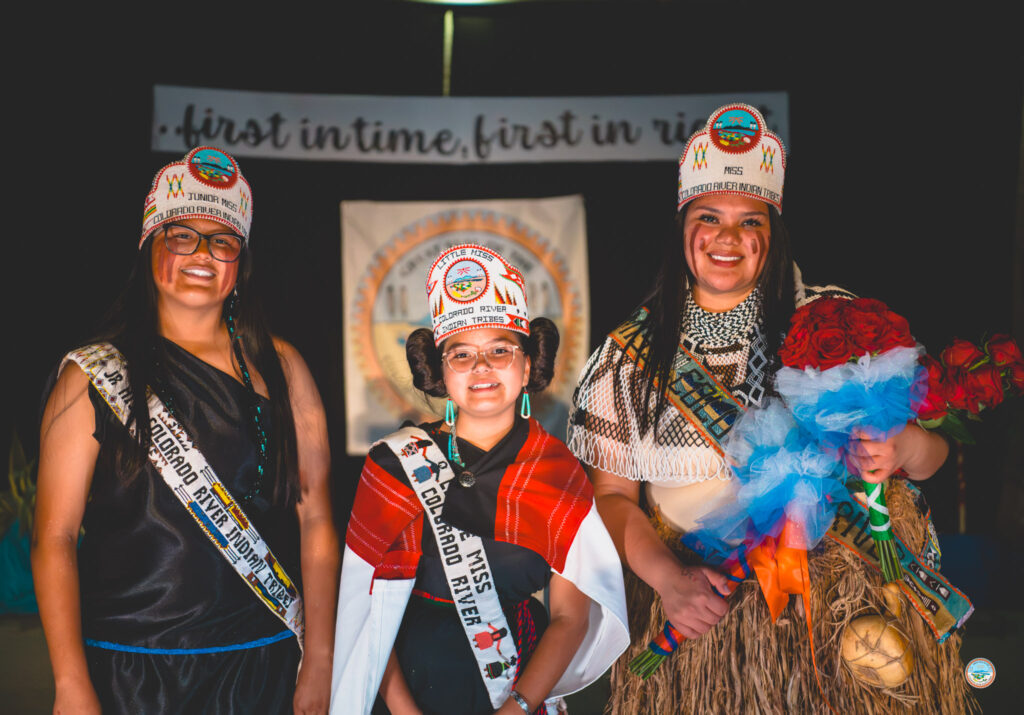
Outgoing Little Miss CRIT Loraina Stone gave her farewell presentation before the evening concluded with the coronation. Alura Rose Walrod, 10, was crowned Little Miss CRIT for 2026–2027. She is the daughter of Amanda and Mario Walrod and is Hopi and Mayan. Joining Alura were first attendant Calliope Sage Ara Scott and second attendant Zyarah Devika Sharp.
The celebration continued Saturday with the Jr. Miss and Miss CRIT pageants. Arianna Kaye Carmona, Jessica Lynn Scott, and Leina Rene Carmona competed for Jr. Miss, while Zoey Moon Sharp and Veronica Webb competed for Miss. Each contestant participated in modern dress modeling and interviews, a talent showcase, and traditional dress modeling.
Saturday also provided an opportunity to recognize outgoing Jr. Miss CRIT Winter Harper and Miss CRIT Brenda Duckey. Their farewell presentations marked the close of their time as royalty as the evening moved toward the crowning of the next representatives. (more…)
The University of Arizona put the Colorado River Indian Tribes and their culture in the spotlight Sept. 5, honoring CRIT during the Wildcats’ Native American Heritage football game against Northern Arizona University.
The recognition went well beyond the game, with members of CRIT’s Mohave, Chemehuevi, Hopi and Navajo communities participating in cultural activities throughout the day.
Festivities began at Bear Down Field, where representatives of CRIT’s tribes shared cultural performances with Wildcat fans and visitors during the Bear Down Bash.
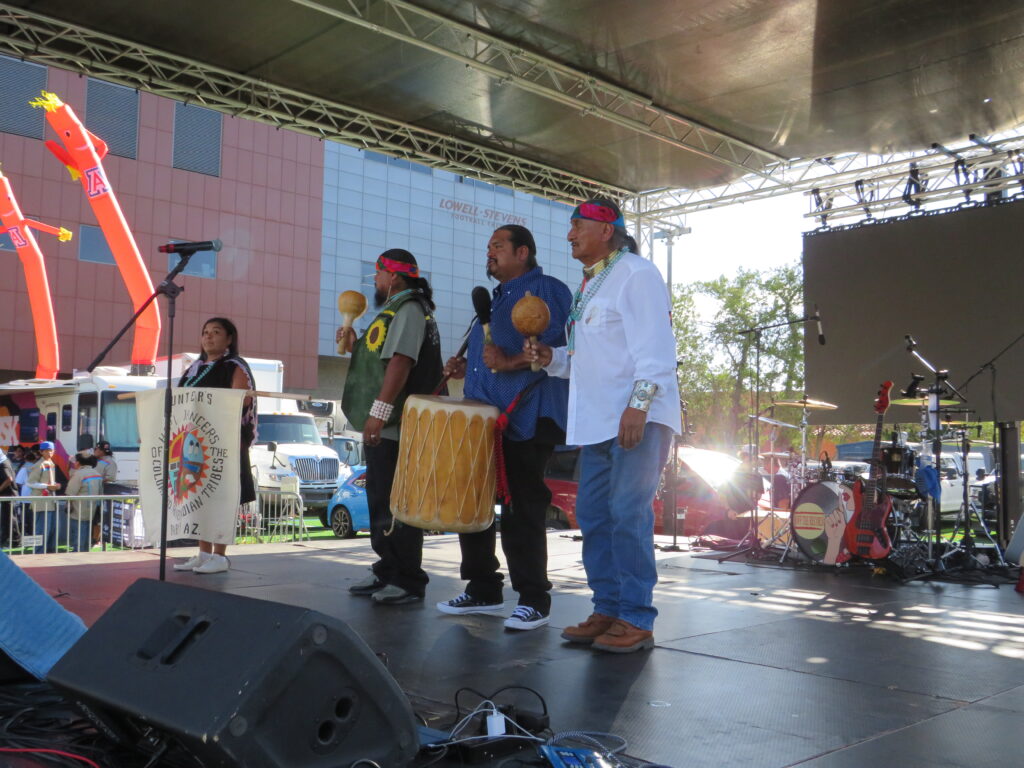

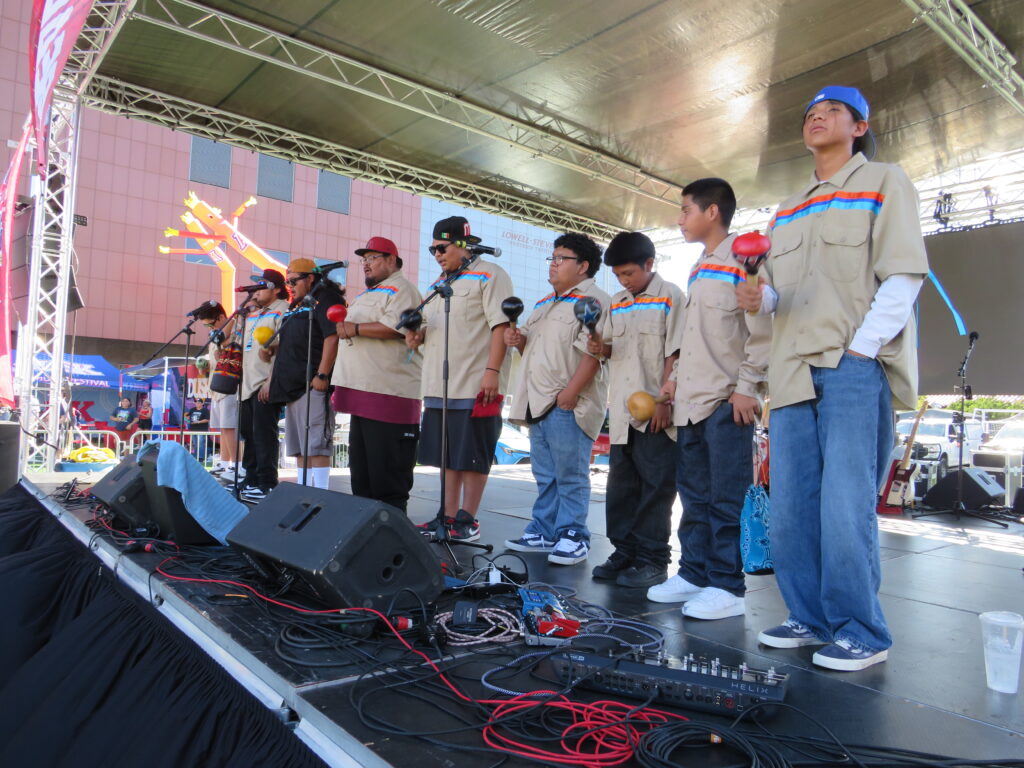
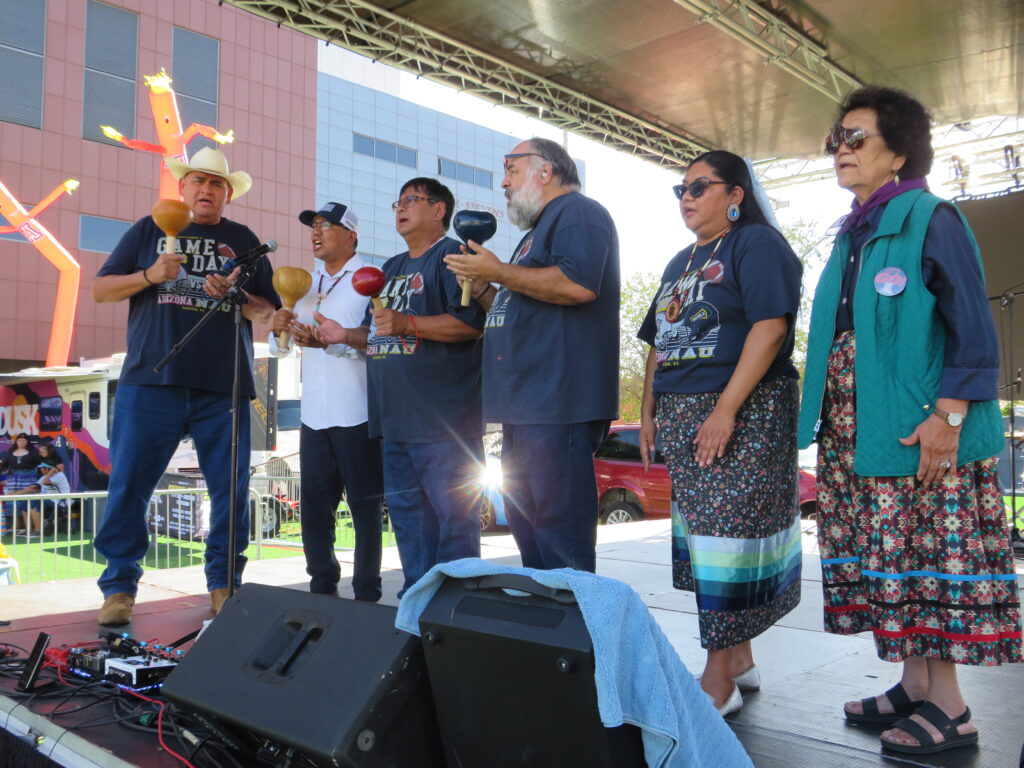

CRIT representatives also participated in the Wildcat Walk, Arizona Football’s traditional pregame arrival. CRIT royalty and tribal leadership were invited to greet the Wildcats’ head coach as part of a gift exchange before the team entered the stadium. (more…)