Colorado River shortages are raising questions about more than how much water each state receives. For Tribal Nations along the river, decisions about reservoir operations can affect their ability to use water they already have legal rights to.
Nevada Public Radio, in a report carried by Utah Public Radio, highlighted the Fort Mojave Indian Tribe’s concerns as the federal government moves forward with new Colorado River operating guidelines. The Tribe holds approximately 133,000 acre-feet of water rights annually, with much of that water supporting agricultural operations that help fund housing, healthcare, education, and other Tribal services.
Fort Mojave Chairman Timothy Williams told the news outlet that changing river levels are already affecting the Tribe’s ability to deliver water to its farms. Last winter, water levels dropped so low that one of the Tribe’s pumping stations could not draw water for four months. Farm manager Andrew Harter said continued low-water conditions could limit what the Tribe can grow.
The report also addressed a longstanding concern among Tribal Nations: despite holding substantial water rights, Tribes do not have the same formal role as the seven Basin states in negotiating the river’s operating rules.
Jay Weiner, a water attorney for the Quechan Indian Tribe and a member of the Water and Tribes Initiative leadership team, said Tribal governments have historically been excluded from important water management decisions. With 30 federally recognized Tribes in the Colorado River Basin, the issue extends beyond any one reservation.
The impact of future shortages is also becoming a concern for Arizona agriculture.
Cronkite News reported that the federal reductions planned for 2027 and 2028 are not expected to immediately affect Yuma-area farmers, who hold senior Colorado River water rights. Much of the reduction will instead affect the Central Arizona Project, which delivers water to central and southern Arizona.
However, Arizona Farm Bureau President John Boelts said farmers remain concerned about what happens after the two-year operating period. Yuma-area farms supply approximately 90% of the leafy greens consumed in the United States and Canada between October and April.
Central Arizona farmers have already experienced significant reductions. Cronkite News reported that many farmers who previously relied on CAP agricultural water lost access around 2023, forcing some to leave fields fallow or turn to groundwater.
Meanwhile, Arizona’s growing technology industry is adding another dimension to the water discussion.
A separate Cronkite News report examined concerns about data centers, which require water for cooling and indirectly through electricity generation. Water experts interviewed by the outlet said data centers are not responsible for the current Colorado River shortage, although their continued growth could increase pressure on Arizona’s limited supplies.
Arizona State University water law professor Rhett Larson said data centers are growing rapidly, but determining their total water use remains difficult because facilities use different cooling systems and many are not required to publicly disclose their consumption.
Together, the Sept. 11 reports highlight several connected issues facing the Colorado River Basin: protecting access to Tribal water rights, preparing agriculture for future reductions, and understanding how new development adds to water demand.
What does this mean for CRIT?
The Fort Mojave reporting is particularly relevant to CRIT because both Tribes hold senior Colorado River rights and depend on the river for agriculture, economic activity, and cultural traditions.
Fort Mojave’s experience also illustrates the difference between possessing water rights and being able to physically use that water. Changes in river elevation can affect pumping infrastructure even when a Tribe’s legal allocation remains unchanged.
For CRIT, the reporting reinforces the significance of Tribal participation in Colorado River negotiations. Decisions about reservoir operations, conservation, and future shortages can have practical consequences for Tribal governments that rely directly on the river.
The agricultural reporting also connects to CRIT’s farming operations. Although senior rights place CRIT in a different position than many junior-priority users, the wider discussion about agricultural water use, conservation, and future shortages remains relevant to the Tribe’s economic interests.
Sources
Utah Public Radio / Nevada Public Radio: “Tribes depend on the Colorado River, but don’t have a formal say in managing it”
https://www.upr.org/politics/2026-09-11/native-tribes-colorado-river-negotiations-mojave
Cronkite News: “Colorado River cuts haven’t hit Arizona farmers yet, but that might be coming”
https://cronkitenews.azpbs.org/2026/09/10/water-cuts-arizona-farms/
Cronkite News: “Don’t blame data centers for Arizona’s Colorado River cuts, water experts say”
https://cronkitenews.azpbs.org/2026/09/11/data-centers-water-colorado-river/
Colorado River negotiations are moving on several fronts, and this week one of those developments directly involved the Colorado River Indian Tribes.
The Central Arizona Water Conservation District Board approved an agreement with CRIT involving 9,009 acre-feet of Intentionally Created Surplus (ICS) water, while also authorizing the district to protect its rights through legal action if necessary as disputes over future Colorado River operations continue.
Central Arizona Project reported that the agreement involves Extraordinary Conservation Intentionally Created Surplus, or EC-ICS, created through fallowing activities at the CRIT farm in 2019 and 2020. Under the agreement, the Central Arizona Groundwater Replenishment District will acquire the right to take delivery of the 9,009 acre-feet currently held in CRIT’s ICS account.
If transferring the ICS is not feasible, CAP reported that CAWCD and CRIT would instead execute a lease for an equivalent amount of water under the same terms. The agreement also states that the two parties will look for additional opportunities to work together on water governance and management.
The same CAWCD meeting addressed the growing legal uncertainty surrounding Colorado River operations. The board authorized CAWCD to protect and defend its rights if legal action becomes necessary. CAP did not announce a new lawsuit at the meeting, but the authorization gives the district the ability to respond as disputes over the federal operating framework develop.
While Arizona water agencies consider their next steps, another agreement is taking shape farther downstream.
The United States and Mexico reached a Colorado River agreement covering 2027 and 2028. WaterWorld reported that Mexico’s annual deliveries will be reduced by 250,000 acre-feet during each of those years. Those reductions accompany the 1.25 million acre-feet in annual reductions planned for Lower Basin water users in Arizona, California and Nevada.
The agreement also continues cooperation between the two countries on salinity management, environmental programs and studies of potential new water supplies and desalination. If conditions worsen, the United States and Mexico agreed to discuss possible additional reductions in 2028. If Lake Mead improves significantly, the countries would discuss increasing Mexico’s deliveries.
The international agreement provides another piece of the short-term operating picture, but the seven Basin states still have not reached their own long-term agreement.
Arizona Water News reported that Arizona Department of Water Resources Director Tom Buschatzke continues to identify Upper Basin conservation as a major unresolved issue. During a PBS NewsHour Colorado River discussion, Buschatzke said Arizona wants the Upper Basin states to provide conservation that can be measured and delivered into Lake Powell with greater certainty. (more…)
The Colorado River’s new operating framework may provide short-term direction, but the larger fight over how the river should be divided is still unresolved.
University of Arizona News reported that the Bureau of Reclamation’s Aug. 21 decision sets operations for 2027 and 2028, with new guidelines to be reconsidered every two years after that as negotiations continue.
Under the framework, Arizona’s Colorado River deliveries will be reduced by 760,000 acre-feet. Sharon Megdal, director of the University of Arizona Water Resources Research Center, said the reductions are significant but not as deep as some earlier possibilities. She also noted that Tucson has spent years storing Central Arizona Project water underground, giving the city an additional supply to draw from during shortages.
The framework gives Arizona and other Lower Basin users some near-term certainty, but it does not settle the disagreement between the Upper and Lower basins.
Colorado Public Radio reported that the river’s 10-year flow at Lee’s Ferry may soon fall below a level that has become an important point in the debate over the 1922 Colorado River Compact.
The Compact states that the Upper Basin cannot cause flows at Lee’s Ferry to fall below 75 million acre-feet over any 10-year period. The question becomes more complicated when Mexico’s share of Colorado River water is included. Water experts interviewed by CPR said the Upper Basin disputes how much additional water it may be obligated to provide.
Officials estimate that the 10-year flow could fall below 82.5 million acre-feet by October. Some Lower Basin officials have pointed to that level as a possible legal trigger in the ongoing dispute over Compact obligations.
If the states cannot resolve those disagreements through negotiation, the issue could eventually reach the U.S. Supreme Court. CPR reported that both Upper and Lower Basin states are already preparing for possible litigation.
That would not be a quick process. The last major interstate Colorado River case, Arizona v. California, took more than a decade to reach a ruling, with additional decrees continuing for decades afterward.
Tribal water rights are also part of the legal landscape. CPR reported that 30 federally recognized Tribal Nations in the Colorado River Basin collectively hold rights to more than one-quarter of the river’s water. Some of those rights remain unresolved, while other Tribes still lack the infrastructure needed to fully use their water.
The KJZZ “Troubled Waters” project also highlights another concern: much of the negotiation over the river’s future has taken place behind closed doors. The reporting notes that Tribal leaders and transparency advocates have raised questions about who is included in negotiations and how decisions affecting the entire Basin are being made.
Together, the Sept. 9 reports show that the Basin is moving through two different processes at the same time. Arizona and other Lower Basin users are preparing for immediate reductions beginning in 2027, while the seven Basin states continue arguing over the much larger question of how the Colorado River should be managed over the long term.
What does this mean for CRIT?
The short-term framework provides more clarity about what will happen in 2027 and 2028, but the larger negotiations remain important.
CRIT’s senior Colorado River rights put the Tribe in a different legal position than many Central Arizona Project users. Still, disputes between the Upper and Lower basins could shape reservoir operations, federal decision-making, and the broader legal framework surrounding the river. (more…)
Arizona may have to use less Colorado River water than it has at any point in modern history, while water agencies are also preparing for possible legal fights and emergency reservoir operations.
KJZZ reported on a new analysis from independent Colorado River experts that described the reductions facing Arizona, California, and Nevada as “unprecedented.” The researchers said recent water use in the Lower Basin is already relatively low, leaving fewer easy conservation options if deeper cuts are required.
Arizona is expected to take the largest share of the 2027 and 2028 Lower Basin reductions. The Central Arizona Project would absorb much of that impact because of its junior priority within Arizona’s Colorado River allocation.
CAP leaders are also preparing for the possibility that the dispute could move into court. KJZZ reported that the Central Arizona Water Conservation District board took a procedural step that could allow future legal action over the federal Colorado River plan. The agency has not filed a lawsuit, but the move keeps that option open as Arizona evaluates the federal framework.
While legal and policy questions continue, federal officials are also trying to protect Lake Powell. KSL reported that the Bureau of Reclamation is releasing between 660,000 and 1 million acre-feet of additional water from Flaming Gorge Reservoir through April 2027. The releases are intended to help keep Lake Powell above critical elevations needed for dam operations and hydropower. Utah officials said Flaming Gorge cannot serve as a permanent solution to Lake Powell’s decline.
The additional release shows how connected the Upper and Lower basins are. Water stored hundreds of miles upstream can be moved to protect Lake Powell, which in turn affects releases into the Lower Basin and the larger operation of the Colorado River.
Boise State Public Radio and the Mountain West News Bureau analyzed Bureau of Reclamation data and found that irrigated agriculture accounted for about 65% of overall Colorado River consumptive use from 2000 through 2024. When evaporation is excluded and only human uses are considered, agriculture accounted for roughly 74%. Reservoir evaporation itself represented at least 12% of total use in the analysis.
The report also found differences in how water use is measured across the Basin. Lower Basin deliveries are generally measured directly from reservoirs and canals, while Upper Basin use is often estimated by calculating stream depletion and return flows. Those different systems can make exact comparisons difficult.
Groundwater pressures are developing alongside the Colorado River shortage. The Arizona Farm Bureau reported that the Willcox Basin is losing about 150,000 acre-feet more groundwater each year than is naturally replaced. Arizona’s proposed management approach would seek to cut that overdraft roughly in half over time, which could require significant reductions from agriculture.
Together, the Sept. 8 reports show that the next phase of Colorado River management will involve more than setting a shortage number. Arizona and other Basin states are dealing with legal questions, reservoir operations, agricultural demand, groundwater decline, and even disagreements over how water use should be measured.
What does this mean for CRIT?
These reports are especially relevant because the Tribe holds senior Colorado River rights and is a major agricultural water user directly along the river.
The CAP legal discussion mainly concerns users with different priorities than CRIT, but the larger dispute still matters. Decisions about Lake Powell, Lake Mead, and the division of shortages shape the river system where CRIT’s rights are exercised.
The Flaming Gorge releases also show how federal managers are using water throughout the Basin to protect critical reservoir elevations. Even though that water originates far upstream, the condition of Lake Powell affects the entire Colorado River system.
The water-use reporting is particularly relevant to agriculture. With agriculture representing the largest share of consumptive use Basin-wide, future conservation discussions are likely to continue focusing heavily on farms. For CRIT, that makes it important to distinguish the Tribe’s senior rights, agricultural economy, and existing water management from other categories of water use.
Sources
KJZZ, “Colorado River cuts could force ‘unprecedented’ low water use for Arizona, new study finds.”
https://www.kjzz.org/science/2026-09-08/colorado-river-cuts-could-force-unprecedented-low-water-use-for-arizona-new-study-finds
KJZZ, “CAP leaders take a step toward legal action over Arizona’s Colorado River water share.”
https://www.kjzz.org/politics/2026-09-05/cap-leaders-take-a-step-toward-legal-action-over-arizonas-colorado-river-water-share
KSL, “More water being released from Flaming Gorge to help Lake Powell.”
https://www.ksl.com/article/news/utah/environment/more-water-being-released-from-flaming-gorge-to-help-lake-powell/51621145
Boise State Public Radio, “Measuring the use of Colorado River water is harder than it looks.”
https://www.boisestatepublicradio.org/news/2026-09-08/measuring-the-use-of-colorado-river-water-is-harder-than-it-looks
Arizona Farm Bureau, “Willcox Plan Shakes Up Arizona Groundwater Policy.”
https://www.azfb.org/Article/arizona-groundwater-willcox-management-plan
Arizona’s water future is coming down to more than how much Colorado River water the state receives. It is also about whether communities can store, treat, move, and protect the water they already have.
KTAR reported that residents in McMullen Valley are pushing for a special election to designate the rural western Arizona basin as an Active Management Area. An AMA would allow the area to regulate groundwater pumping where supplies are limited.
The effort is being led by the McMullen Valley Water Defenders PAC, which is collecting signatures to place the question before local voters. The group is concerned about groundwater pumping, outside investment, and the possibility of water being moved out of the basin for use elsewhere. KTAR reported that an Arizona Department of Water Resources report found the McMullen Valley aquifer is in deficit, with more water being taken out than replaced.
Groundwater protection is becoming more important as Colorado River supplies shrink. If less water comes through the Central Arizona Project canal, more communities may look to groundwater, stored water, and local wells. That makes rural groundwater basins a larger part of Arizona’s water conversation.
At the same time, Valley cities are preparing for less Colorado River water. KJZZ reported that most people in metro Phoenix may not notice immediate day-to-day changes when cuts begin because cities have spent years developing backup supplies. Those supplies include Salt and Verde River water, groundwater, and water stored underground for dry years.
But KJZZ also reported that residents may notice the cost. Cities are building expensive infrastructure to manage future shortages, including water purification facilities, wells, and other projects. Phoenix, for example, is investing more than $300 million in one advanced water purification facility that would clean wastewater to safe drinking water standards.
Gilbert is also preparing. ABC15 reported that about 41% of Gilbert’s water portfolio comes from the Colorado River, and the town expects to lose about 20% of that supply if the Lower Basin proposal is adopted for 2027 and 2028. Gilbert said the cuts could move the town into Stage 2 of its water shortage plan as early as Jan. 1, 2027.
ABC15 reported that Gilbert is investing in the North Water Treatment Plant expansion and eight new wells. The town said its conservation programs saved 459 million gallons in 2025, but future infrastructure needs could still lead to higher water rates.
Tucson is also investing in water security, but from a different angle. KGUN reported that Gov. Katie Hobbs and Tucson Mayor Regina Romero cut the ribbon on an expanded PFAS water treatment facility on Tucson’s west side. The Tucson Airport Remediation Project is designed to protect groundwater and strengthen the city’s locally controlled water supply as Colorado River cuts approach.
KGUN reported that the $25 million project was funded through the American Rescue Plan Act. The expanded facility treats water affected by PFAS and reduces those chemicals to non-detectable levels before the water is used for parks and golf courses.
The Arizona water discussion is also reaching planning and development. AZ Big Media reported that the new federal Colorado River plan will require Arizona to reduce water use by 760,000 acre-feet in 2027 and 2028, while California reduces by about 440,000 acre-feet and Nevada by 50,000 acre-feet. The article said the plan is less aggressive than earlier federal proposals, but it still puts Arizona’s long-term planning to the test. (more…)
The Colorado River’s next operating plan is now official, but the larger fight over the river’s future is still unsettled.
On Aug. 21, the Department of the Interior finalized the 2027–2028 Operating Guidelines and Record of Decision for future Colorado River operations. The decision sets the near-term rules for Lake Powell and Lake Mead after the current operating agreements expire in 2026.
Under the plan, Arizona, California, and Nevada will reduce their use of Colorado River water by 1.25 million acre-feet each year in 2027 and 2028. If the Lower Basin states use their proposed sharing agreement, Arizona would take the largest reduction at 760,000 acre-feet per year. California would reduce use by 440,000 acre-feet, and Nevada would reduce use by 50,000 acre-feet.
The plan also calls for at least 700,000 acre-feet of additional voluntary conservation over the two-year period to help protect the system.
Arizona officials said the final decision gives the state some short-term certainty, but it does not resolve the longer-term issue. ADWR said the federal decision avoids the most severe near-term reductions that had been discussed earlier, but the larger framework for years three through 10 remains a concern.
KJZZ reported that Arizona will still take the biggest cuts under the new plan. The reductions are expected to affect Central Arizona Project supplies, which serve cities, farms, and some Tribal communities in central and southern Arizona. Central Arizona Project users are more exposed because CAP holds junior-priority Colorado River rights.
CRIT and other Tribal leaders also raised concerns about the federal process. ICT reported that the Colorado River Indian Tribes and the Gila River Indian Community pushed back on the federal plan, saying Tribal governments were not sufficiently included in the decision-making process. ICT reported that CRIT holds water rights to more than 23% of Arizona’s Colorado River allocation, making the Tribe one of the largest Colorado River water rights holders in the state.
Arizona Digital Free Press also reported that CRIT asked Reclamation to delay the Record of Decision to allow more time for review and government-to-government consultation. CRIT said decisions about Lake Powell and Lake Mead must respect senior water rights, federal trust responsibilities, and meaningful Tribal consultation.
The federal decision came as the river’s two largest reservoirs remained at historic lows. AP reported that Lake Powell hit a record low, threatening water and electricity supplies for millions of people. The low levels at Lake Powell and Lake Mead continue to raise concerns about hydropower, reservoir operations, and future water deliveries.
Those power concerns are tied directly to agriculture. The Arizona Farm Bureau reported that farmers are asking where they will turn if the hydropower they rely on becomes less available. Irrigation districts and farms depend on power to move water, and higher energy costs can increase the cost of producing crops.
Arizona cities are also preparing for more expensive water. Fox 10 reported that Colorado River cuts could drive up water prices as cities invest in infrastructure, wells, conservation programs, and alternative supplies. Gilbert has been one example. ABC15 reported that the town is preparing for less Colorado River water before expected 2027 cuts, including work to secure backup supplies and expand water infrastructure.
Arizona is also looking beyond conservation. KJZZ reported that a state agency advanced partnership projects with California and Mexico that could increase Arizona’s water supply. Those ideas include projects that would generate or conserve water elsewhere in exchange for benefits to Arizona’s Colorado River supply.
At the same time, KJZZ reported that Arizona’s water systems received a “C” grade from the American Society of Civil Engineers. The report said larger cities tend to be better prepared, while smaller and rural communities often face greater infrastructure challenges. That difference matters as shortage planning becomes more dependent on storage, treatment, wells, and delivery systems. (more…)
CRIT Media was formally invited to tour the Metropolitan Water District (MWD) facility in Parker, Arizona, alongside local business owners from Lake Havasu, Parker Area Chamber of Commerce, representatives, and local law enforcement agencies. The tour provided an inside look at the facility’s operations, including how water is stored and managed along the Colorado River system. Guests were also able to explore historic buildings constructed in the early 1930s, many of which still feature the nostalgic architecture and craftsmanship of that era.
Throughout the visit, MWD staff shared their passion for the work they do and the long history the district has in the Parker area. It is no secret that Colorado River Indian Tribes and MWD have maintained a longstanding relationship due to their close proximity and shared connection to the Colorado River. Employees like Gina Chavez, who was born and raised in Parker and grew up on MWD property, spoke about the importance of community outreach, local involvement, and helping create employment opportunities for residents in the area.
The tour highlighted not only the scale and complexity of water operations in the region, but also the deep local ties and history that continue to connect Parker, the Colorado River, and the people who work to manage one of the Southwest’s most important resources.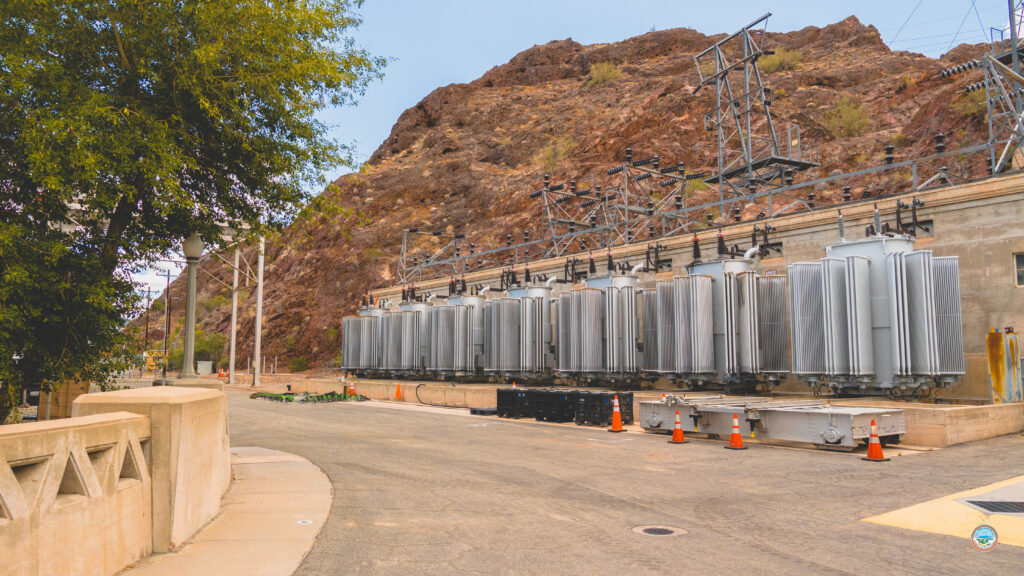
The Missing and Murdered Indigenous Women and People (MMIWP) movement brings awareness to the ongoing crisis of Indigenous people who have gone missing or been murdered across Tribal communities throughout North America. For decades, Indigenous families and advocates have called attention to the lack of media coverage, jurisdictional challenges, and limited resources that have contributed to many of these cases going unsolved or overlooked.
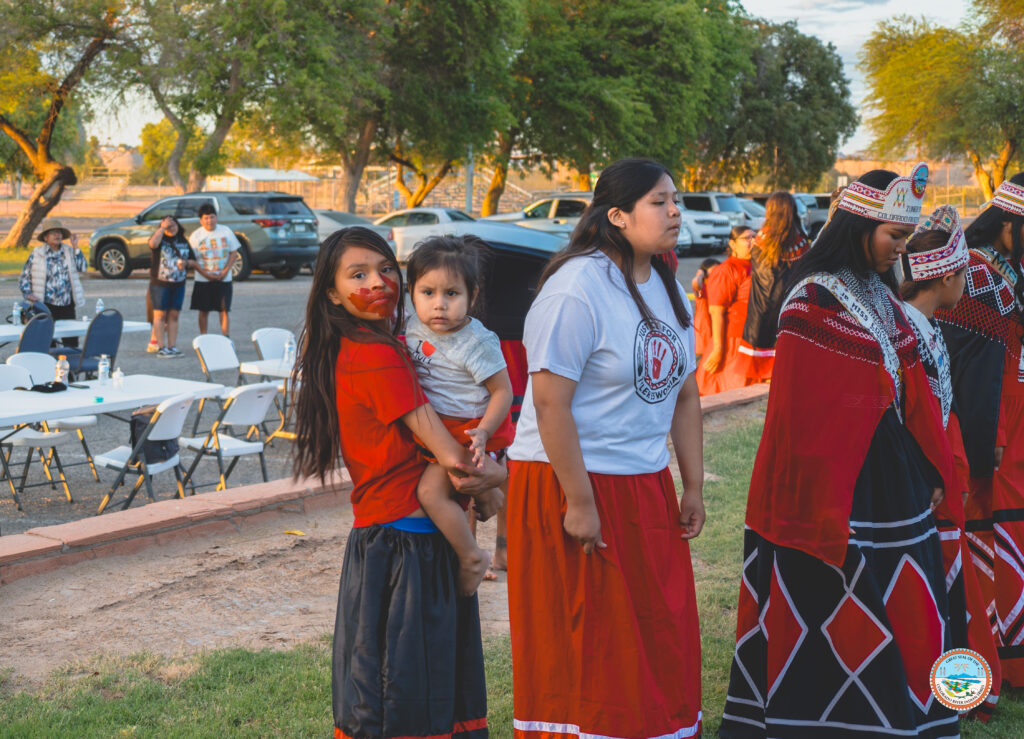
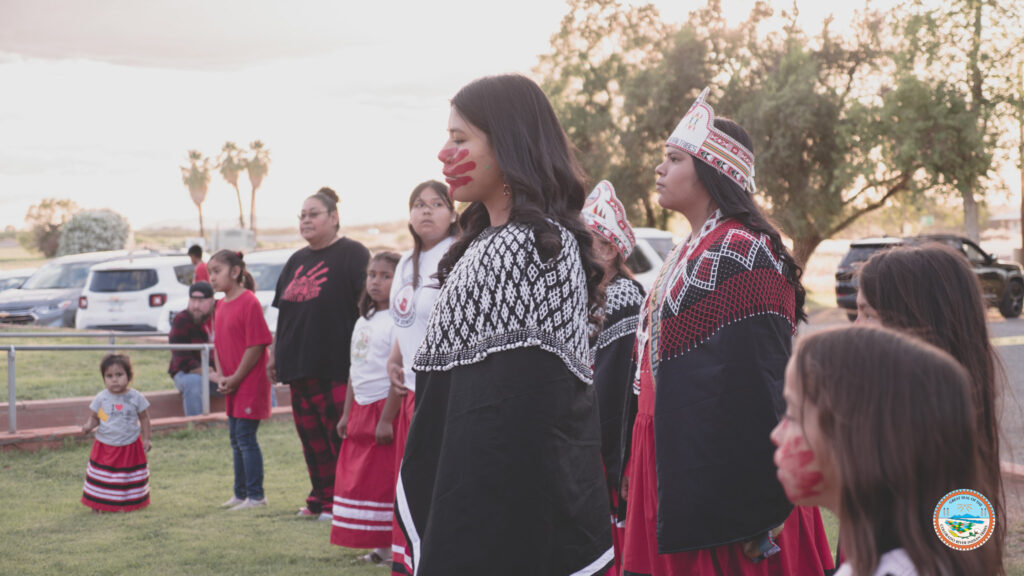
On Tuesday, May 5th, 2026 CRIT hosted an event honoring MMIWP, bringing the community together in remembrance, reflection, and support for affected families.
Several speakers courageously shared the stories of loved ones from the reservation who have gone missing or were tragically murdered and are not forgotten. Young girls spoke about the heartbreaking loss of their father, siblings shared memories of missing sisters, mothers, and grandparents.
A special thank you to Councilman Tommy Drennan for organizing the event with Janice Patch and other organizers of this very important day for CRIT and all of Indian Country.
The Lower Basin States of Arizona, California, and Nevada have advanced a plan to stabilize the Colorado River through 2028, responding to declining reservoir levels, record low inflows to Lake Powell, and increasing risk of reaching critical elevations at both Lake Powell and Lake Mead.
Earlier in the post-2026 process, the Lower Basin took a significant step by proposing 1.25 million acre-feet in annual reductions, with an additional 250,000 acre-feet from Mexico, totaling approximately 1.5 million acre-feet per year.
This proposal builds on that foundation with an expanded system conservation program across the Lower Basin with an estimated contribution of at least 700,000 acre-feet. In total, the plan identifies up to 3.2 million acre-feet of water savings to the system through 2028.
The proposal is an integrated package addressing Lake Powell releases, Upper Initial Unit operations, Lower Basin reductions, additional conservation, use of Intentionally Created Surplus, and system infrastructure improvements. Lower Basin contributions are contingent on these coordinated operations to ensure system stability as well as appropriate funding.
“With this proposal, the Lower Basin is putting forth real action to stabilize water supply along the Colorado River. We’re putting forward additional measurable water contributions for the system. Without that, the system will continue to decline,” said JB Hamby “This proposal is about moving from ideas to implementation,” said John Entsminger. “It pairs real measurable water contributions with sensible dry-condition operations at Lake Powell and across the Upper Initial Units. Now is the time for every water user in the Basin to double down on water conservation as we face historically dry hydrology.”
“This proposal reflects the creativity and commitment of water users across the Lower Basin who continue to step forward with solutions that support the river,” said Tom Buschatzke. “We have shown that collaborative, voluntary efforts and reductions that are certain can produce meaningful water savings.” (more…)