September 3, 2026 11:30 pm
CRIT Nation, Parker, AZ
September 3, 2026 11:30 pm
CRIT Nation, Parker, AZ

Arizona opened August with strong pushback to the federal government’s new framework for managing the Colorado River after 2026.

The Bureau of Reclamation’s Final Environmental Impact Statement lays out a 10-year framework for future operations at Lake Powell and Lake Mead. The current operating rules expire after 2026, and the seven Basin states have not reached a long-term agreement on how future shortages should be shared.

Under the federal framework, Arizona, California, and Nevada could face mandatory reductions in Colorado River use. The Department of the Interior said the plan allows Lower Basin shortages of up to 3 million acre-feet, depending on reservoir conditions. The Upper Basin states — Colorado, Utah, Wyoming, and New Mexico — would not face mandatory reductions for now.

Arizona officials and water leaders criticized that approach, saying it places too much of the burden on the Lower Basin and especially on Arizona. Fox 10 reported that the Central Arizona Project, which delivers Colorado River water to central and southern Arizona, raised concerns that the federal framework could lead to deeper cuts for the state. CAP serves cities, farms, and Tribal communities through its 336-mile canal system.

Several Arizona leaders said the state has already conserved significant amounts of Colorado River water and should not be forced to carry the largest share of future reductions. KNAU reported that Arizona officials called on Upper Basin states to do more to share the burden, while Upper Basin officials argued that drought and reduced snowpack already limit the amount of water available to them.

Central Arizona Project President Terry Goddard also criticized the federal plan. KTAR reported that Goddard said the plan requires Lower Basin states to cut water use while Upper Basin states face no mandatory reductions. CAP said it expects the final operating guidelines for 2027 and 2028 to better reflect the Lower Basin proposal, which would conserve more than 3.2 million acre-feet of water through 2028.

The issue is especially important for Arizona because cuts to Colorado River water would not affect every community the same way. ABC15 reported that reductions would hit Valley cities unevenly because Central Arizona Project water is delivered under a priority system. Some communities have stronger priority, stored water, other supplies, or Tribal water leases that may help reduce the impact. Others could be more exposed.

Phoenix said it is prepared for possible Colorado River reductions because of conservation, underground storage, diverse supplies, and long-term infrastructure planning. The city has also joined regional water-sharing efforts meant to help Arizona communities manage shortages.

Infrastructure is becoming a larger part of the state’s water planning. KJZZ reported that Salt River Project opened the Gilbert Road Pipeline, a $25 million project that will help Valley cities access stored groundwater during dry times. The pipeline connects water stored near the Granite Reef Underground Storage Project to the Arizona Canal, making it easier for cities to recover water they banked for shortage conditions.

The SRP project also involved the Salt River Pima-Maricopa Indian Community. KJZZ reported that the pipeline crosses part of the community near Mesa, and President Martin Harvier spoke at the ribbon-cutting, connecting the project to the long history of canal systems in the Valley.

Lake Powell remains one of the biggest concerns. KTAR reported that the reservoir could lose the ability to generate hydropower as early as March 2027 if water levels continue to fall. Glen Canyon Dam provides power for millions of people across the Southwest, and low reservoir levels can also affect dam infrastructure, releases through the Grand Canyon, and downstream operations. (more…)

The final days of July brought the clearest picture yet of how the federal government may manage the Colorado River after 2026.

The Bureau of Reclamation released its Final Environmental Impact Statement for future operations at Lake Powell and Lake Mead, setting up a 10-year framework for managing the river through 2036. The current operating rules expire after 2026, and the Basin states have not reached a long-term agreement on how future shortages should be shared.

The federal framework does not settle every question. Instead, it gives Reclamation room to adjust operations over shorter periods as river conditions change. The Department of the Interior said the preferred alternative allows for annual Lake Powell releases between 5 million and 12 million acre-feet, Lower Basin shortages of up to 3 million acre-feet, and new options to store conserved water in Lake Powell and Lake Mead for future use.

For Arizona, the proposal carries serious consequences. The Associated Press reported that Arizona, California, and Nevada would share reductions under the federal plan, while the Upper Basin states would not face mandatory cuts for now. The Lower Basin could be required to reduce use by up to 3 million acre-feet annually through 2036, depending on river conditions.

Arizona officials pushed back quickly. Gov. Katie Hobbs called parts of the federal framework unacceptable, and the Arizona Department of Water Resources said reductions of up to 3 million acre-feet per year, in priority, would harm Arizona water users and the state economy. ADWR said it wants the final Record of Decision and operating guidelines to follow the May 1 Lower Basin Proposal, which includes shared reductions among Arizona, California, and Nevada of 1.25 million acre-feet each year, plus 700,000 acre-feet of system conservation water.

Central Arizona Project also responded to the FEIS, saying future rules must recognize Arizona’s existing rights and the realities of how Colorado River water is used in the state. CAP delivers Colorado River water to central and southern Arizona, including cities, agriculture, and tribal users. Any major reduction to CAP supplies would affect communities differently depending on their water priority, stored supplies, and access to other sources.

Arizona communities were already preparing before the FEIS was released. KJZZ reported that Salt River Project opened the Gilbert Road Pipeline, a $25 million project that will help Valley cities access stored groundwater during dry times. The pipeline connects underground storage near the Granite Reef Underground Storage Project to the Arizona Canal, making it easier for cities to recover water they stored for shortage conditions.

That project also involved the Salt River Pima-Maricopa Indian Community. KJZZ reported that the pipeline crosses a portion of the community near Mesa, and President Martin Harvier spoke at the ribbon-cutting, connecting the project to the long history of canal systems in the Valley.

Stored water and infrastructure are becoming more important as cities look for backup supplies. City of Phoenix officials said the city is prepared for potential Colorado River cuts because of its diverse water portfolio, conservation work, underground storage, and investments in infrastructure. Other Arizona cities are also turning to conservation, including turf conversion programs and water-saving rebates.

In Queen Creek, local reporting said turf conversions are saving water and money. Fox 10 reported that Gilbert residents are seeing higher water rates, showing how water planning costs are reaching household budgets. KTAR reported that Kearny expects its current water supply to last through this year, but 2027 remains uncertain.

Drought conditions also continued across Arizona. Payson Roundup reported that Arizona has been designated a drought disaster area, while other local reports showed concern in rural communities that rely on limited supplies or groundwater. These conditions show how water shortages are not only a Colorado River issue. They also affect small towns, farms, local utilities, and private well users.

Lake Powell remained one of the most urgent concerns. KTAR reported that Lake Powell could lose the ability to generate hydropower by early 2027 if water levels continue to fall. CBS 5 Arizona’s Family also reported that the Colorado River crisis threatens both water supply and hydropower for millions of people. Low reservoir levels affect more than storage. They can affect dam operations, electricity generation, water deliveries, and the ability to manage future dry years.

Scientists are also working to better understand how much water is being lost from the system. Colorado Public Radio and KUNR reported that researchers are expanding evaporation monitoring across the Colorado River Basin. The work is meant to give water managers better information about how much water is lost from reservoirs and other parts of the system, an issue that becomes more important as Lake Mead and Lake Powell remain low.

The pressure is being felt outside Arizona as well. Nevada Independent reported that Nevada could lose a significant share of its Colorado River water under the federal framework, while Las Vegas-area reporting focused on conservation and what continued cuts could mean for Southern Nevada. California outlets reported that future Colorado River reductions could affect Southern California water planning, including agencies that depend on Colorado River supplies.

Public concern is also rising. A Walton Family Foundation poll found that residents across all seven Basin states view shrinking Colorado River supplies as a priority. KJZZ reported that Arizonans are worried about water and want elected officials to respond. Those findings reflect what many local water stories showed throughout July: the Colorado River issue is no longer limited to technical negotiations. It is showing up in city budgets, water rates, infrastructure projects, agriculture, energy, and household concerns.

By the end of July, the federal FEIS became the main turning point. It did not end the negotiations, but it set the stage for the next federal decision. Reclamation will still issue a Record of Decision and operating guidelines, which will provide more detail on how the framework will be used. (more…)

The Bureau of Reclamation has released its Final Environmental Impact Statement for future Colorado River operations, a major step toward deciding how Lake Powell and Lake Mead will be managed after 2026.

The document comes as the current river rules near expiration. The 2007 Interim Guidelines, the 2019 Drought Contingency Plans, and several related agreements are set to expire after the 2026 operating year. Those rules helped guide shortages and coordinated operations between Lake Powell and Lake Mead, but Reclamation said they have not been strong enough to stop the continued decline of the river’s two largest reservoirs.

Instead of adopting one fixed long-term operating plan, Reclamation’s preferred alternative creates a 10-year adaptive framework for operations from 2027 through 2036. Under that framework, operating guidelines could be issued in shorter periods, likely every two years, unless the Basin states reach a longer consensus agreement.

That approach gives the federal government more flexibility as river conditions change. It also shows that the seven Basin states have not yet reached a long-term agreement on how future shortages should be shared.

The Department of the Interior said the framework is meant to guide operations at Lake Powell and Lake Mead while leaving room for future agreements among the Basin states. The preferred alternative includes “sideboards,” or operating limits, that set the range of actions federal officials could use.

Those sideboards include annual releases from Lake Powell between 5 million and 12 million acre-feet, Lower Basin shortages of up to 3 million acre-feet, and new options to store conserved water in Lake Powell and Lake Mead for future use. The framework also allows voluntary Upper Basin conservation of up to 200,000 acre-feet, depending on hydrologic conditions.

Lake Powell and Lake Mead remain central to the federal planning process. Lake Powell helps regulate releases from the Upper Basin through Glen Canyon Dam, while Lake Mead supports Lower Basin deliveries to Arizona, California, and Nevada through Hoover Dam. When either reservoir drops too low, the risk is not only less stored water. Low levels can also affect hydropower, dam operations, deliveries, and the ability to respond to future dry years.

Reclamation’s Executive Summary says the Colorado River supports about 40 million people, nearly 5.5 million acres of agricultural land, ecological resources, hydropower, cultural resources, and communities across seven states and Mexico. It also identifies 30 federally recognized Tribes in the Basin, including the Colorado River Indian Tribes.

The Final EIS directly addresses Tribal concerns. Reclamation said Basin Tribes have expressed that the current approach to Colorado River management does not fully address their rights, needs, and interests. The document says future guidelines should provide more flexibility and predictability for Basin Tribes to benefit from their water rights and participate in voluntary conservation programs.

That language is important because it places Tribal Nations inside the future operating framework, not outside of it. For CRIT, that matters because the Tribe holds senior Colorado River rights and has agricultural, cultural, and governmental interests tied directly to the river.

The Arizona Department of Water Resources released a statement after the FEIS was published. ADWR said Arizona, California, and Nevada submitted a Lower Basin proposal to help stabilize Lake Powell and Lake Mead with more than 3 million acre-feet of water savings over two years. ADWR said the FEIS includes analysis that could allow many core parts of that proposal to move forward.

ADWR also raised concerns. The agency objected to parts of the federal framework that could allow Lower Basin reductions of up to 3 million acre-feet per year, in priority. ADWR said reductions at that level would harm Arizona water users and the state economy. The agency also said the framework does not include Upper Basin reductions or enough use of water stored in reservoirs above Lake Powell.

ADWR said it wants the forthcoming Record of Decision and operating guidelines to follow the May 1 Lower Basin Proposal. That plan includes shared reductions among Arizona, California, and Nevada of 1.25 million acre-feet each year, plus an additional 700,000 acre-feet of system conservation water.

The next major step will be the federal Record of Decision and operating guidelines. Those documents are expected to provide more detail on how operations will be handled through 2028 and how the broader framework will guide decisions through 2036.

For CRIT, the FEIS is significant because future operations at Lake Powell and Lake Mead shape the larger river system where the Tribe’s senior rights are exercised. CRIT is not in the same legal position as many junior-priority users, but federal rules on reservoir operations, conservation programs, shortage planning, and stored water can still influence Basin-wide policy. (more…)

July 16 reporting focused on what future Colorado River rules may need to account for: water users, reservoir levels, river health, and the cost of keeping the system operating.

KJZZ reported that environmental advocates want future Colorado River rules to leave some water for the river itself. The article focused on the Colorado River below Glen Canyon Dam, where river conditions are shaped by dam operations, reservoir levels, and releases from Lake Powell. Advocates told KJZZ that a healthier river system can also support the water supply system that cities, farms, and ecosystems depend on.

Lake Mead also remained under pressure. Water Online reported that the Metropolitan Water District of Southern California is partnering with the federal government to leave water in Lake Mead. The agreement is meant to help slow the reservoir’s decline while the Basin states continue working on new river rules.

Several Nevada outlets reported that Lake Mead is expected to keep dropping. KLAS reported that the reservoir could fall nearly 33 feet by June 2028, and the Las Vegas Review-Journal reported that forecasters expect Lake Mead to continue setting record lows over the next two years. KVVU also reported that Lake Mead is nearing its all-time low as Boulder City continues to raise concerns about a proposed data center and its power demands.

Lake Powell remained a major concern as well. St. George News reported that the reservoir reached a critical threshold amid the ongoing Colorado River crisis. Low levels at Lake Powell affect hydropower generation, releases through Glen Canyon Dam, and the overall operation of the river system.

Weather added another layer of uncertainty. CAP Know Your Water News reported that a possible “Super El Niño” could bring wetter conditions to parts of the Southwest, but it does not guarantee relief for the Colorado River Basin. CAP reported that snowpack, runoff, and conditions in the Upper Basin will still determine how much water reaches Lake Powell and Lake Mead.

In the Upper Basin, Colorado water officials announced a new state-run conservation program. Aspen Journalism reported that the program will use federal funding to pay water users to voluntarily reduce use in 2027 and 2028. The program is expected to include criteria meant to avoid negative community impacts, encourage participation across sectors, and support drought resiliency. (more…)

July reporting continued to focus on how Arizona and the wider Colorado River Basin are preparing for reduced water supplies, with attention on Tribal water leadership, advanced water purification, and low reservoir levels.

Lake Powell Chronicle reported on the growing role of Tribal Nations in Arizona water policy. The article focused on how Tribal water rights, settlements, and planning are becoming more central as the state and federal government respond to long-term shortages. The reporting also reflects a broader shift across the Basin, where Tribal Nations are not only water rights holders but key governments in future river decisions.

Arizona water agencies are also looking at new supply options. AMWUA reported on advanced water purification, a process that treats recycled water to drinking-water standards. The technology is receiving more attention as cities look for options beyond traditional surface water, groundwater, and stored credits.

At the same time, Lake Powell remains under serious pressure. ABC News reported that the reservoir is nearing “dead power pool,” the elevation where water levels become too low for Glen Canyon Dam to generate hydropower. Newsweek also reported on concerns about Lake Powell and Lake Mead, including ideas being discussed by scientists and water experts as both reservoirs remain low.

John Fleck at Inkstain described the reservoir conditions as a grim Colorado River milestone. The continued decline of Lake Powell and Lake Mead shows how storage, hydropower, and future water deliveries are tied together. When the reservoirs fall, the issue is not only how much water remains but how the system can continue operating.

California water issues also remained part of the regional picture. Smart Water Magazine reported that California voters rank water among their top priorities for the next governor. While California’s water system is different from Arizona’s, the state remains part of Colorado River negotiations and shares in decisions over future Lower Basin reductions.

The July reports show several parts of the water discussion moving at once. Tribal Nations are gaining more recognition in water policy. Cities are exploring advanced purification. Lake Powell and Lake Mead remain low. States are still facing pressure to plan for a river system that can no longer support all demands in the same way.

What does this mean for CRIT?

For CRIT, the reporting on Tribal water power is directly relevant. It shows that Tribal Nations are becoming more visible in statewide and Basin-wide water decisions, especially as shortages force governments to revisit how water is managed.

CRIT’s senior Colorado River rights are a major part of that larger water policy landscape. As Arizona cities look at reuse, purification, and future water supplies, Tribal rights and Tribal governments remain central to any complete discussion about the river’s future.

The Lake Powell reporting also matters because reservoir levels affect federal operations, hydropower, and shortage planning across the Basin. CRIT’s Water Code and Water Resiliency Act help guide local water management as those conditions change, while the Personhood Resolution reflects the Tribe’s cultural and environmental connection to the Colorado River. (more…)

July reporting continued to focus on how Arizona and the wider Colorado River Basin are preparing for reduced water supplies, with attention on Tribal water leadership, advanced water purification, and low reservoir levels.

Lake Powell Chronicle reported on the growing role of Tribal Nations in Arizona water policy. The article focused on how Tribal water rights, settlements, and planning are becoming more central as the state and federal government respond to long-term shortages. The reporting also reflects a broader shift across the Basin, where Tribal Nations are not only water rights holders but key governments in future river decisions.

Arizona water agencies are also looking at new supply options. AMWUA reported on advanced water purification, a process that treats recycled water to drinking-water standards. The technology is receiving more attention as cities look for options beyond traditional surface water, groundwater, and stored credits.

At the same time, Lake Powell remains under serious pressure. ABC News reported that the reservoir is nearing “dead power pool,” the elevation where water levels become too low for Glen Canyon Dam to generate hydropower. Newsweek also reported on concerns about Lake Powell and Lake Mead, including ideas being discussed by scientists and water experts as both reservoirs remain low.

John Fleck at Inkstain described the reservoir conditions as a grim Colorado River milestone. The continued decline of Lake Powell and Lake Mead shows how storage, hydropower, and future water deliveries are tied together. When the reservoirs fall, the issue is not only how much water remains but how the system can continue operating.

California water issues also remained part of the regional picture. Smart Water Magazine reported that California voters rank water among their top priorities for the next governor. While California’s water system is different from Arizona’s, the state remains part of Colorado River negotiations and shares in decisions over future Lower Basin reductions.

The July reports show several parts of the water discussion moving at once. Tribal Nations are gaining more recognition in water policy. Cities are exploring advanced purification. Lake Powell and Lake Mead remain low. States are still facing pressure to plan for a river system that can no longer support all demands in the same way.

What does this mean for CRIT?

For CRIT, the reporting on Tribal water power is directly relevant. It shows that Tribal Nations are becoming more visible in statewide and Basin-wide water decisions, especially as shortages force governments to revisit how water is managed. (more…)

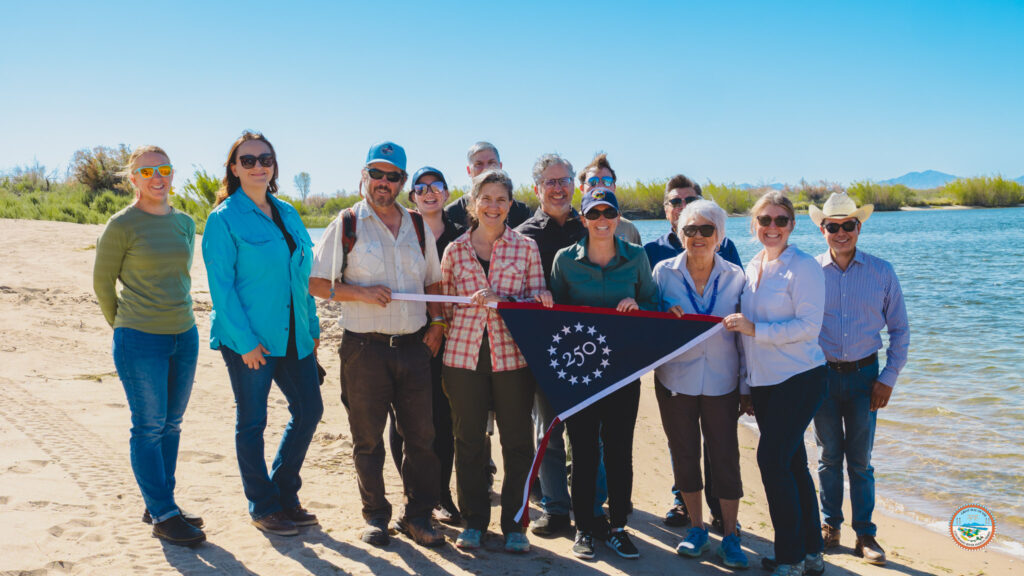
CRIT Media was formally invited to tour the Metropolitan Water District (MWD) facility in Parker, Arizona, alongside local business owners from Lake Havasu, Parker Area Chamber of Commerce, representatives, and local law enforcement agencies. The tour provided an inside look at the facility’s operations, including how water is stored and managed along the Colorado River system. Guests were also able to explore historic buildings constructed in the early 1930s, many of which still feature the nostalgic architecture and craftsmanship of that era.

Throughout the visit, MWD staff shared their passion for the work they do and the long history the district has in the Parker area. It is no secret that Colorado River Indian Tribes and MWD have maintained a longstanding relationship due to their close proximity and shared connection to the Colorado River. Employees like Gina Chavez, who was born and raised in Parker and grew up on MWD property, spoke about the importance of community outreach, local involvement, and helping create employment opportunities for residents in the area.

The tour highlighted not only the scale and complexity of water operations in the region, but also the deep local ties and history that continue to connect Parker, the Colorado River, and the people who work to manage one of the Southwest’s most important resources.

(more…)

The Missing and Murdered Indigenous Women and People (MMIWP) movement brings awareness to the ongoing crisis of Indigenous people who have gone missing or been murdered across Tribal communities throughout North America. For decades, Indigenous families and advocates have called attention to the lack of media coverage, jurisdictional challenges, and limited resources that have contributed to many of these cases going unsolved or overlooked.

On Tuesday, May 5th, 2026 CRIT hosted an event honoring MMIWP, bringing the community together in remembrance, reflection, and support for affected families.

Several speakers courageously shared the stories of loved ones from the reservation who have gone missing or were tragically murdered and are not forgotten. Young girls spoke about the heartbreaking loss of their father, siblings shared memories of missing sisters, mothers, and grandparents.

A special thank you to Councilman Tommy Drennan for organizing the event with Janice Patch and other organizers of this very important day for CRIT and all of Indian Country.

~ Proposal adds up to a million-acre-feet of conservation on top of the 1.25 million-acre-feet annual Lower Basin reductions proposed earlier ~

The Lower Basin States of Arizona, California, and Nevada have advanced a plan to stabilize the Colorado River through 2028, responding to declining reservoir levels, record low inflows to Lake Powell, and increasing risk of reaching critical elevations at both Lake Powell and Lake Mead.

Earlier in the post-2026 process, the Lower Basin took a significant step by proposing 1.25 million acre-feet in annual reductions, with an additional 250,000 acre-feet from Mexico, totaling approximately 1.5 million acre-feet per year.

This proposal builds on that foundation with an expanded system conservation program across the Lower Basin with an estimated contribution of at least 700,000 acre-feet. In total, the plan identifies up to 3.2 million acre-feet of water savings to the system through 2028.

The proposal is an integrated package addressing Lake Powell releases, Upper Initial Unit operations, Lower Basin reductions, additional conservation, use of Intentionally Created Surplus, and system infrastructure improvements. Lower Basin contributions are contingent on these coordinated operations to ensure system stability as well as appropriate funding.
“With this proposal, the Lower Basin is putting forth real action to stabilize water supply along the Colorado River. We’re putting forward additional measurable water contributions for the system. Without that, the system will continue to decline,” said JB Hamby “This proposal is about moving from ideas to implementation,” said John Entsminger. “It pairs real measurable water contributions with sensible dry-condition operations at Lake Powell and across the Upper Initial Units. Now is the time for every water user in the Basin to double down on water conservation as we face historically dry hydrology.”

“This proposal reflects the creativity and commitment of water users across the Lower Basin who continue to step forward with solutions that support the river,” said Tom Buschatzke. “We have shown that collaborative, voluntary efforts and reductions that are certain can produce meaningful water savings.” (more…)

Thai Yang, Broadband Director for the Colorado River Indian Tribes, is helping lead an exciting new chapter for connectivity across the CRIT community.

Yang has served with CRIT for the past two years, bringing with him a strong background in information technology, network systems, infrastructure deployment, and strategic project management. Before joining CRIT, he held technology leadership roles in hospitality, resort operations, and casino infrastructure, including more than 15 years as IT Director at Glen Ivy Hot Springs and earlier experience helping launch technology systems at Morongo Casino Resort & Spa.

“At CRIT, that experience now supports my mission to strengthen broadband infrastructure, improve digital access, and create long-term opportunities that will benefit current and future generations of our Tribal community,” Yang said.

As Broadband Director, Yang oversees the planning, funding, development, and implementation of broadband infrastructure projects across Tribal lands. The Broadband Department is responsible for securing grants, coordinating engineering and construction, managing vendors and consultants, meeting funding requirements, and preparing for future broadband growth.

For many people, broadband simply means internet access, but Yang explained that broadband is much more than that.

“Broadband is more than just connectivity—it is the foundation for education, healthcare, economic growth, public safety, and communication,” he said.

For the CRIT community, reliable broadband has the potential to improve daily life in many ways. Students can benefit from online learning and educational resources. Families can stay better connected and access important services. Elders may have greater access to telehealth and healthcare resources. Local businesses can grow through online services and e-commerce, while Tribal departments can improve operations, communication, and public service delivery. (more…)

TUCSON, Ariz. — The University of Arizona will host a special series of sign unveiling ceremonies on Friday, September 4, 2026, honoring the four languages of the Colorado River Indian Tribes (CRIT): Mohave, Chemehuevi, Hopi, & Navajo. These ceremonies represent an important milestone in an ongoing campus-wide initiative to elevate the visibility, recognition, and continued presence of Indigenous languages and cultural heritage within the campus community.

The events are organized by the University of Arizona’s Office of Native American Advancement & Tribal Engagement (NAATE) in collaboration with individual academic colleges. Students, faculty, staff, tribal community members, and the general public are invited to attend the progression of ceremonies throughout the day.

The schedule for the Friday ceremonies includes:

  • 9:00 AM – Emil W. Haury Anthropology Building (1009 E South Campus Dr): Honoring the CRIT Chemehuevi language. The ceremony features a welcome and land acknowledgment from Levi Esquerra (Special Advisor, NAATE), a prayer by Eloy DeLeon, remarks from Clarissa Robles Parra on behalf of the Office of the Provost, and an address by CRIT Chairwoman Amelia Flores. Cultural sharing will feature the Salt Song(s) and Red Foot, followed by refreshments.
  • 10:30 AM – Environment and Natural Resources 2 (ENR2) Building (1064 E Lowell St): Honoring the CRIT Navajo language. Hosted by Liz Petterson, Associate Director, Arizona Institute for Resilience, alongside CRIT Chairwoman Amelia Flores, and a Navajo language representative featuring a traditional blessing and cultural demonstration.
  • 1:00 PM – Forbes Building (1140 E South Campus Dr): Honoring the CRIT Hopi language with remarks from Dr. Edward Martin (Associate Dean, CALES Cooperative Extension), Professor Sheilah Nicholas, and Dean George W. Smith.
  • 2:30 PM – College of Education Building (1430 E 2nd St): Honoring the CRIT Mohave language. The concluding sign unveiling of the day will include introductions by students, remarks from CRIT Chairwoman Amelia Flores, and a final cultural demonstration.

The celebration of Indigenous culture continues into the weekend with the Native American Heritage Game on Saturday, September 5, 2026. The Arizona Wildcats will face Northern Arizona at Casino Del Sol Stadium, with kick-off scheduled for 6:30 PM MST. Pre-game festivities at Bear Down Field will begin at 3:15 PM with the Bear Down Bash, featuring 18-minute cultural performances from each tribe. A traditional gift presentation will follow during the Wildcat Walk at 4:15 PM, leading up to an on-field tribal recognition ceremony during the second quarter of the football game.

For more operational schedules or to register for the unveiling events, please visit the official University of Arizona Event Page.