September 23, 2026 10:03 pm
CRIT Nation, Parker, AZ
September 23, 2026 10:03 pm
CRIT Nation, Parker, AZ

The Colorado River Indian Tribes Tribal Council has made a historic decision to protect the lifeblood of their Reservation. On November 6, 2025, the Council unanimously approved Resolution No. R-375-25, which proclaims the personhood status of the Colorado River under tribal law.

This resolution acknowledges the Colorado River as a living entity whose health and well-being are intrinsically linked to the well-being of the Colorado River Indian Tribes (CRIT) members. The Tribes’ deep-rooted connection to the river spans centuries, providing cultural identity, spiritual strength, food systems, and economic stability that continue to shape their community life today.

The resolution emphasizes the central role the river has played in defining the identity of the CRIT. It highlights that CRIT’s ancestors have preserved and protected these lands since before the establishment of the Colorado River Indian Reservation in 1865.

The Council underscores the crucial role the river plays in sustaining traditional practices, wildlife, and agriculture, including the federal irrigation systems authorized as early as 1867. Today, the Colorado River Indian Irrigation Project stands as a cornerstone of the tribal economy.

The resolution underscores significant legal milestones that acknowledged CRIT’s water rights. In the landmark 1964 and 2006 Arizona v. California U.S. Supreme Court decisions, the Tribes secured 719,248 acre-feet of water annually, ensuring their access to the river for generations to come.

By granting personhood to the River, the Tribal Council reaffirmed its sovereign duty to honor and protect it. This status mandates that the River’s well-being must be a priority in governance and decision-making moving forward.

As part of the resolution, the Attorney General and their staff will develop legal safeguards and propose updates to the CRIT Water Code and other relevant regulations. These updates may include the potential designation of the river as a protected cultural landscape.

Council members recognized that protecting the river is not merely a legal obligation but a continuation of cultural beliefs passed down through generations.

Through this declaration, CRIT demonstrates its unwavering commitment to stewardship. The resolution concludes with a resolute message: the Colorado River is, and will always remain, a vital entity deserving of respect, care, and protection for all future generations.

Article Written by CRIT Media Reporter Ariana Romero

News Update November 12, 2025

Negotiations over the future of the Colorado River have reached a standstill after all seven basin states failed to meet a key federal deadline. Reports from 12News and 8NewsNow confirm that the states were unable to agree on a new water-sharing plan, leaving the situation unresolved as the river continues to decline.

High Country News explains that the biggest disagreements involve how much each state should give up in the future. The upper Basin states want fewer mandatory reductions, while the Lower Basin states, including Arizona, say they have already taken the deepest cuts and cannot continue to absorb the majority of the impacts.

With no agreement in place, Arizona Governor Katie Hobbs has asked the Trump administration to intervene. She stated that Arizona has made significant sacrifices and cannot carry the weight of the reductions while other states refuse to commit to measurable cuts. If the states cannot reach a plan soon, the federal government may create one for them.

For the Colorado River Indian Tribes, the outcome of these negotiations has major importance. CRIT holds valuable senior water rights and relies on a stable and fair management plan to ensure long-term security for the community and the region.

For more information, you can read the news articles with the links below.

8NewsNow
https://www.8newsnow.com/news/local-news/colorado-river-negotiations-fail-to-meet-federal-deadline-for-7-state-agreement/

High Country News
https://www.hcn.org/articles/why-colorado-river-negotiations-are-so-difficult/


ABC 15 News
https://www.abc15.com/weather/impact-earth/why-gov-katie-hobbs-wants-trump-administration-to-broker-colorado-river-deal


12 News
/wednesday-is-deadline-for-7-state-including-arizona-to-negotiate-the-colorado-river

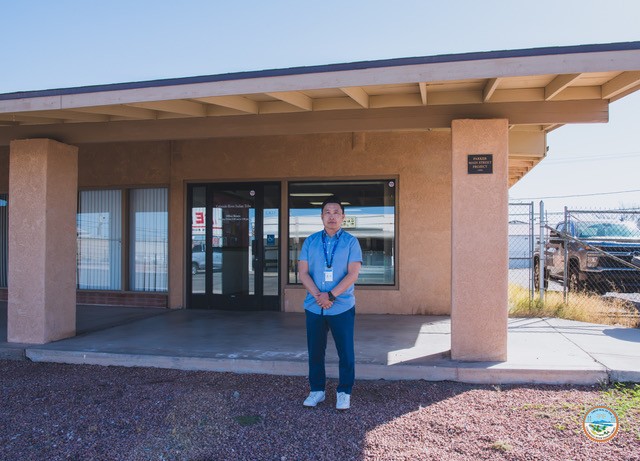
Thai Yang, Broadband Director for the Colorado River Indian Tribes, is helping lead an exciting new chapter for connectivity across the CRIT community.

Yang has served with CRIT for the past two years, bringing with him a strong background in information technology, network systems, infrastructure deployment, and strategic project management. Before joining CRIT, he held technology leadership roles in hospitality, resort operations, and casino infrastructure, including more than 15 years as IT Director at Glen Ivy Hot Springs and earlier experience helping launch technology systems at Morongo Casino Resort & Spa.

“At CRIT, that experience now supports my mission to strengthen broadband infrastructure, improve digital access, and create long-term opportunities that will benefit current and future generations of our Tribal community,” Yang said.

As Broadband Director, Yang oversees the planning, funding, development, and implementation of broadband infrastructure projects across Tribal lands. The Broadband Department is responsible for securing grants, coordinating engineering and construction, managing vendors and consultants, meeting funding requirements, and preparing for future broadband growth.

For many people, broadband simply means internet access, but Yang explained that broadband is much more than that.

“Broadband is more than just connectivity—it is the foundation for education, healthcare, economic growth, public safety, and communication,” he said.
For the CRIT community, reliable broadband has the potential to improve daily life in many ways. Students can benefit from online learning and educational resources. Families can stay better connected and access important services. Elders may have greater access to telehealth and healthcare resources. Local businesses can grow through online services and e-commerce, while Tribal departments can improve operations, communication, and public service delivery. (more…)

If you’ve seen this missing child, please click this link below to help locate her.

https://www.missingkids.org/poster.print.html/NCMC/2084582/1

As CRIT Media approaches this year’s first newspaper, we’re inviting the community to help us celebrate the amazing mothers in our lives this Mother’s Day.
If you’d like to honor a special mom, you can submit her photo along with a short message sharing why she means so much to you and what makes her an incredible mother. Her photo and bio will be featured in the upcoming Manataba Messenger Newspaper.

As part of this celebration, we’re also offering complimentary family portrait sessions in our Media studio for any selected participants who would like to take part or you can send us a photo with a summary explaining why you are nominating this special mom for Mothers Day!

The deadline for entering is May 1st.
Please email critmedia@crit-nsn.gov to nominate a special mother!

The prolonged drought combined with the lowest winter snowpack on record is requiring swift actions to protect this vital water system  

WASHINGTON – Long-term drought has reduced Colorado River system storage to about 36 percent of capacity, and the combination of the lowest snowpack on record and record-breaking March heat has further intensified drought conditions across the Basin. These compounding factors are creating elevated risks to essential water and power infrastructure that supply water to more than 40 million people, underscoring the need for immediate action.

Lake Powell’s water year minimum probable inflow is forecasted at just 2.78 million acre-feet—29% of historical average and one of the lowest on record. Reclamation’s April “24 Month Study” projects Lake Powell may decline to below 3,490 feet—the minimum power pool level—by August 2026 without major intervention. If Glen Canyon Dam declines below 3,490 feet, water releases would be only through the river outlet works, which could cause operational issues, uncertainty for users, downstream impacts, instability in regional power and water supplies, and a reduction in power generation.

Secretary of the Interior Doug Burgum met with Governors for the seven basin states, Arizona, California, Colorado, Nevada, New Mexico, Utah and Wyoming, and their designees again today to discuss the concerning hydrology and plans for operations.

“I am grateful for the Governors and their teams working diligently to find a solution to the complex challenges created by these unprecedented drought conditions which require immediate action,” said Interior Secretary Doug Burgum. “Interior and Reclamation continue to coordinate with the basin states, tribes, Mexico and basin stakeholders as we make the decisions necessary to operate and protect the system.”

To stabilize the system, Reclamation is moving quickly and initial plans include adding up to about 2.48 maf of water to Lake Powell by moving water from the upstream Flaming Gorge Reservoir and by reducing releases from Lake Powell.

Through the 2019 Drought Response Operating Agreements, Reclamation is intending to release 660,000 acre-feet to 1 maf from Flaming Gorge Reservoir from April 2026 through April 2027. In addition, Reclamation is intending to reduce the annual release volume from Lake Powell to Lake Mead by 1.48 maf—from 7.48 maf to 6.0 maf—through September 2026 by utilizing section 6E of the Record of Decision from the final 2024 Supplemental Environmental Impact Statement for near-term Colorado River Operations.

Together, these actions are expected to increase Lake Powell’s elevation by approximately 54 ft to at least elevation 3500 feet by April 2027. Through the current, ongoing DROA process, the basin states, tribes and partners continue to provide feedback related to the proposed releases. A final decision will be coming next week.

Flaming Gorge Reservoir now holds about 3.1 maf of water, which is 83% full. These actions are expected to lower the reservoir’s elevation by roughly 35 feet over the next year to approximately 59% of capacity. This will have no effect on contracted water rights at Flaming Gorge or Lake Powell. No additional releases from the other upstream initial units of the Colorado River Storage Project Act—Blue Mesa and Navajo reservoirs—are planned at this time, due to their low water levels and poor forecasted inflows.

“Given the severity of the risks facing the Colorado River system, it is imperative that we take action quickly to protect a resource that supplies water to 40 million people and supports vital agricultural, hydropower production, tribal, wildlife, and recreational uses across the region,” said Assistant Secretary — Water and Science Andrea Travnicek. “As we weigh current conditions and prepare for future operations by working with states, tribal nations and stakeholders, the Department of the Interior and Reclamation remain fully committed to taking the actions necessary to reduce impacts on water deliveries, safeguard critical infrastructure, and preserve as much operational flexibility as possible.”  (more…)
TUCSON, Ariz. — The University of Arizona will host a special series of sign unveiling ceremonies on Friday, September 4, 2026, honoring the four languages of the Colorado River Indian Tribes (CRIT): Mohave, Chemehuevi, Hopi, & Navajo. These ceremonies represent an important milestone in an ongoing campus-wide initiative to elevate the visibility, recognition, and continued presence of Indigenous languages and cultural heritage within the campus community.

The events are organized by the University of Arizona’s Office of Native American Advancement & Tribal Engagement (NAATE) in collaboration with individual academic colleges. Students, faculty, staff, tribal community members, and the general public are invited to attend the progression of ceremonies throughout the day.

The schedule for the Friday ceremonies includes:

  • 9:00 AM – Emil W. Haury Anthropology Building (1009 E South Campus Dr): Honoring the CRIT Chemehuevi language. The ceremony features a welcome and land acknowledgment from Levi Esquerra (Special Advisor, NAATE), a prayer by Eloy DeLeon, remarks from Clarissa Robles Parra on behalf of the Office of the Provost, and an address by CRIT Chairwoman Amelia Flores. Cultural sharing will feature the Salt Song(s) and Red Foot, followed by refreshments.
  • 10:30 AM – Environment and Natural Resources 2 (ENR2) Building (1064 E Lowell St): Honoring the CRIT Navajo language. Hosted by Liz Petterson, Associate Director, Arizona Institute for Resilience, alongside CRIT Chairwoman Amelia Flores, and a Navajo language representative featuring a traditional blessing and cultural demonstration.
  • 1:00 PM – Forbes Building (1140 E South Campus Dr): Honoring the CRIT Hopi language with remarks from Dr. Edward Martin (Associate Dean, CALES Cooperative Extension), Professor Sheilah Nicholas, and Dean George W. Smith.
  • 2:30 PM – College of Education Building (1430 E 2nd St): Honoring the CRIT Mohave language. The concluding sign unveiling of the day will include introductions by students, remarks from CRIT Chairwoman Amelia Flores, and a final cultural demonstration.

The celebration of Indigenous culture continues into the weekend with the Native American Heritage Game on Saturday, September 5, 2026. The Arizona Wildcats will face Northern Arizona at Casino Del Sol Stadium, with kick-off scheduled for 6:30 PM MST. Pre-game festivities at Bear Down Field will begin at 3:15 PM with the Bear Down Bash, featuring 18-minute cultural performances from each tribe. A traditional gift presentation will follow during the Wildcat Walk at 4:15 PM, leading up to an on-field tribal recognition ceremony during the second quarter of the football game.

For more operational schedules or to register for the unveiling events, please visit the official University of Arizona Event Page.