According to KJZZ News, Colorado River negotiators may be leaning toward a short-term agreement as states remain divided on a long-term plan for managing the river before current operating rules expire. Ongoing drought, climate pressures, and disagreements between Upper Basin and Lower Basin states have stalled progress, and some officials believe a temporary deal could help avoid a major court battle while allowing more time for negotiations. Is a five-year deal better than no deal? As Nevada water negotiator John Entsminger noted, “If the alternative is litigation… then a five-year deal starts pretty good,” reflecting concerns that legal disputes could complicate future water management even further. For CRIT, these discussions remain important because federal river management decisions, compact negotiations, and potential legal outcomes directly affect how tribal water rights are protected, recognized, and sustained for future generations.
According to AZ Free News, the Arizona House has approved an additional $1 million for the state’s Colorado River litigation fund, signaling growing concern that water allocation disputes could end up in court as negotiations over future river management continue. State leaders say the funding is meant to ensure Arizona is prepared to defend its interests if talks between basin states break down, reflecting increasing tension as drought, population growth, and competing demands strain the river system. Legal disputes have historically shaped water distribution in the Lower Basin, including the Arizona v. California Supreme Court decision that affirmed tribal water rights. For CRIT, continued legal developments around Colorado River allocations are significant because court decisions often influence how tribal water rights are protected, enforced, and recognized in future negotiations.
According to the Las Vegas Review-Journal, ongoing drought conditions and limited snowpack are increasing pressure on Colorado River water supplies, raising concerns that the basin may face even tighter shortages in the near future. Experts note that declining reservoir levels and continued demand across the Southwest make it harder to stabilize the system, especially as negotiations continue over future operating rules. Some officials warn that without significant conservation or improved conditions, legal disputes between basin states could become more likely. For CRIT, ongoing shortage risks matter because long-term river stability and federal allocation decisions directly influence how tribal water rights are protected and exercised.
According to Arizona Capitol Times, a judge is reviewing whether agricultural groundwater pumping by Fondomonte in western Arizona constitutes a public nuisance, a case that could shape future groundwater regulation statewide. The lawsuit argues that heavy pumping may be affecting nearby wells and water sustainability, highlighting ongoing tensions between agriculture, development, and long-term water conservation. Outcomes from cases like this can influence how groundwater use is monitored and regulated across Arizona. For CRIT, groundwater policy discussions are important because regional water management decisions can affect broader basin planning and long-term protection of tribal water resources.
According to Nevada Current, growing data center development across the Southwest is increasing demand for both water and power, raising concerns among regulators and rural communities about sustainability. Large technology facilities often require significant cooling resources, prompting discussions about infrastructure planning, water efficiency, and future resource allocation. As population growth and technology expansion continue, water demand from emerging industries is becoming part of broader basin conversations. For CRIT, rising industrial water demand across the region highlights the importance of protecting tribal water rights and ensuring long-term sustainability of Colorado River resources.
Article written by CRIT Media Reporter Ariana Romero
End of January 2026
Axios Phoenix
Governor Katie Hobbs traveled to Washington, D.C. to meet with federal officials and other Basin state governors as the deadline to reach a Colorado River agreement approaches. Arizona is pushing to avoid deeper mandatory cuts that would heavily affect Central Arizona Project deliveries.
Colorado Sun
Colorado Governor Jared Polis and the state’s top water negotiator joined the D.C. meetings, signaling growing urgency among Upper Basin states. Officials acknowledged drought forecasts are “exceedingly grim,” with reservoirs unlikely to recover soon.
Las Vegas Weekly
Nevada and six other Basin states are running out of time to agree on a plan for managing the shrinking Colorado River. If no consensus is reached, the federal government is expected to impose its own operating rules.
Rep. David Schweikert Press Release
Congressman Schweikert introduced the “Equal Access to the Colorado River Act,” claiming it would protect Arizona during future shortages. The proposal focuses on reallocating access during drought conditions.
Prescott eNews
Panels of experts and negotiators warned that despite ongoing talks, major disagreements remain unresolved. Some officials are openly preparing for legal and political fights if negotiations fail.
Post Independent
Colorado officials are signaling readiness to fight for their water allocations if no deal is reached, reflecting hardened positions among states.
Arizona Republic / State Affairs
New legislation would make it easier to move water from rural Arizona to growing cities, including changes affecting irrigation and groundwater use.
NBC Palm Springs / LA Times
California officials are debating how to manage water deliveries as federal Colorado River rules near expiration. Environmental groups warn that ecosystem collapse is possible if large diversions continue.
Nevada Independent
Nevada’s warmer winter may reduce snowpack and hydropower generation, potentially increasing water and energy costs for residents.
KJZZ
Arizona lawmakers advanced legislation to increase the state’s Colorado River litigation fund, signaling preparation for court battles if negotiations collapse. Colorado is doing the same, underscoring how close the basin is to legal confrontation rather than collaboration.
KJZZ
Central Arizona Project leaders warned that deep federal water cuts would severely impact Arizona communities, agriculture, and economies that rely on CAP deliveries.
Arizona Water News (ADWR)
Arizona’s water director told state lawmakers that the Colorado River is entering a “new paradigm” where historic rules no longer match hydrology or climate reality. Long-term shortages are now assumed, not hypothetical.
California Department of Water Resources
California announced increased State Water Project allocations following December storms, improving flexibility for cities and farms. Officials emphasized that this does not end long-term supply risks. (more…)
KAWC Yuma Public Radio
As the federal deadline approaches, Colorado River stewards and water managers are openly debating which options remain viable to stabilize the river. Discussions now center on short-term operational changes, deeper conservation, and the possibility of federal intervention if states cannot agree.
Parker Pioneer
Local officials and residents raised concerns over proposed legislation that would allow groundwater transfers out of the McMullen Valley Basin, fearing it could accelerate depletion in western Arizona.
SignalsAZ
Queen Creek announced steps to secure its long-term water future through a mix of groundwater, imported water, and infrastructure investment.
NBC 9 News Denver / ABC4 Utah
Lawmakers and governors across the Basin are aligning legislative agendas around water security as negotiations intensify. Leaders acknowledge that compromise will be unavoidable.
Eurasia Review
An international analysis examines how climate change, overuse, and governance failures have pushed the Colorado River toward crisis, calling for coordinated action across jurisdictions.
Arizona House Committee on Natural Resources (Video)
Arizona Department of Water Resources Director Tom Buschatzke testified before lawmakers, outlining the seriousness of the Colorado River situation and the potential consequences if Basin states fail to reach agreement. He emphasized that Arizona remains highly vulnerable to deeper cuts under federal plans.
Colorado Sun
State water officials warn that drought forecasts and reservoir levels in Colorado are worse than previously expected, increasing urgency for action.
January 26, 2026
ABC15 Arizona
The Central Arizona Project’s general manager warned that deeper Colorado River cuts would have severe impacts across Arizona, affecting municipal supplies, agriculture, and long-term planning. Officials stressed that Arizona is particularly vulnerable because CAP deliveries are among the first reduced during shortages.
Lake Havasu News Herald
Arizona lawmakers are weighing funding for drone-based cloud seeding programs aimed at increasing snowfall in key watersheds. Supporters see it as a potential tool to enhance runoff into the Colorado River system.
Arizona Republic
Mesa is finishing a $210 million water reuse pipeline that will reduce reliance on Colorado River water by recycling treated wastewater for non-drinking uses.
KJZZ
New aircraft equipped with laser technology will measure snow depth and water content across Arizona’s mountains, improving runoff forecasts.
Wyoming is exploring a voluntary program to conserve Colorado River water, potentially paying users to leave water in the river.
ABC15 Arizona
Seven Western governors, including Arizona’s governor, are traveling to Washington, D.C., as negotiations intensify and deadlines approach. States are scrambling to present unified positions ahead of federal meetings.
KUNR
Extraordinary winter warmth continues to suppress snowpack across much of the West. Officials warn that poor snow accumulation could require additional reservoir releases, including from Flaming Gorge, to meet downstream needs.
Colorado Sun
As data centers expand into Colorado, concerns are growing about their large water footprints in already-stressed regions.
Federal officials again summoned governors from all seven Colorado River Basin states to Washington, D.C., signaling growing concern that negotiations remain stuck. Reports indicate the federal government is preparing to step in more forcefully if states cannot agree on near-term shortage management and a longer-term framework.
Governor Katie Hobbs is escalating efforts to restrict groundwater pumping tied to Saudi-backed alfalfa farming in La Paz County. The reporting highlights how years of unregulated groundwater use have drawn down aquifers connected to Colorado River–dependent regions.
New analysis outlines what may come next if Basin states fail to reach agreement, including deeper federal control, stricter shortage tiers, and more aggressive conservation.
Sources – January 23, 2026
Arizona Budget Proposal Includes Major Funding for Colorado River Protection
On January 16, 2026, the Arizona Department of Water Resources (ADWR) shared details of Governor Katie Hobbs’ FY 2027 Executive Budget Proposal focused on preparing for long-term challenges facing the Colorado River. The plan includes new and expanded funding aimed at strengthening water security across Arizona in the face of ongoing Colorado River shortages.
Key points from the budget related to water:
Source:
Arizona Water News https://azwaternews.com/2026/01/16/fy2027_execbudgetproposal/
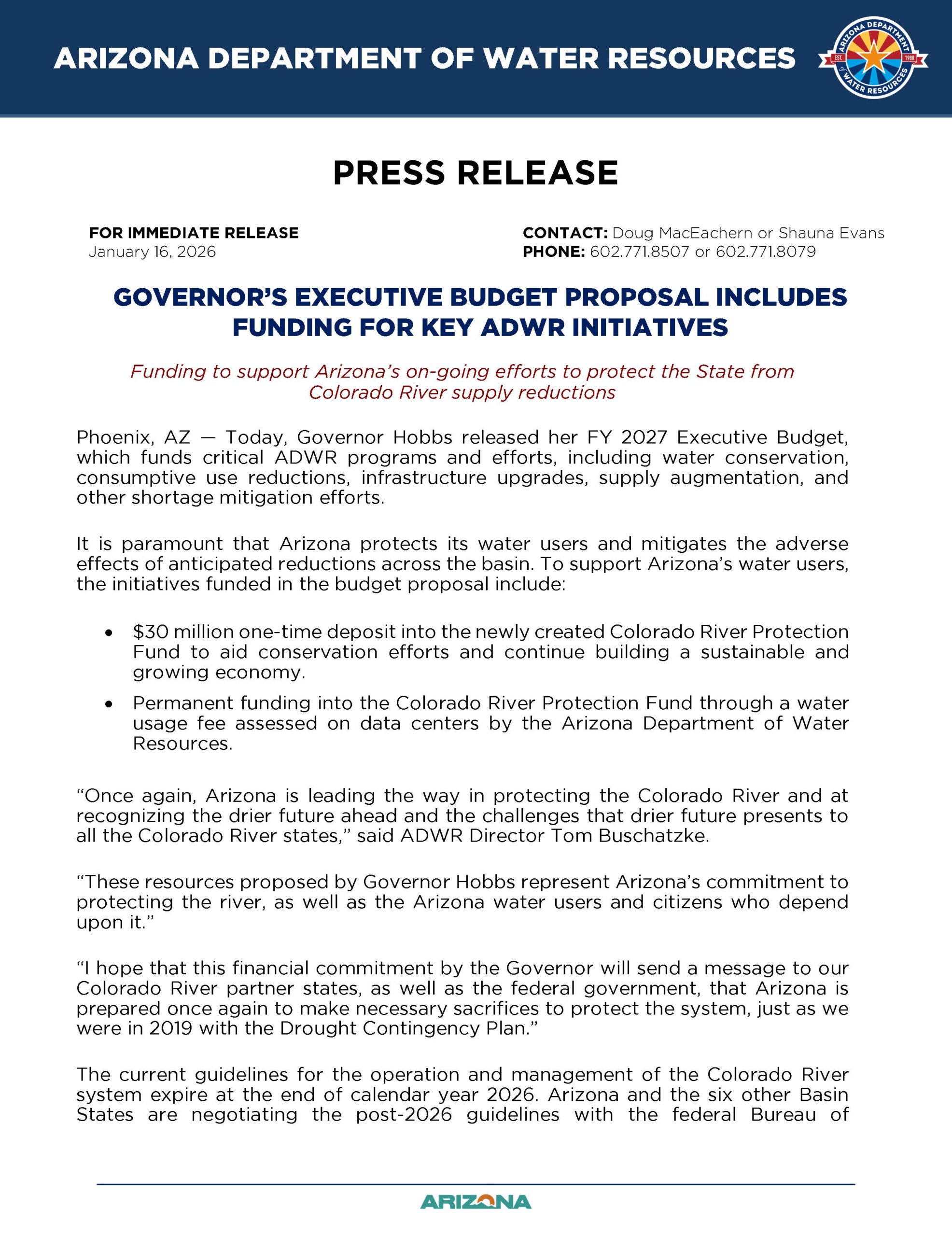
The Colorado River Indian Tribes (CRIT) is honoring a historic milestone this year with the 80th Anniversary of the Hopi and Navajo Migration to what is now known as the CRIT Reservation. The celebration not only commemorates the journey of the Hopi and Navajo people in 1945 but also reflects on the cultural richness and resilience they brought with them, shaping CRIT as we know it today.
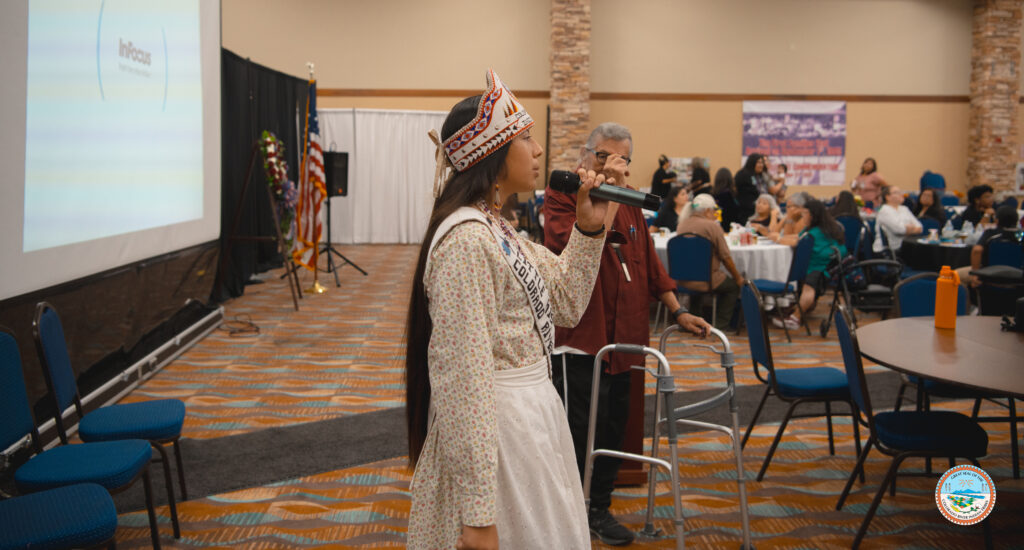
In 1945, following World War II, the Bureau of Indian Affairs initiated a relocation project that brought both Hopi and Navajo families from northern and northeastern Arizona to the CRIT Reservation. They joined the Mohave and Chemehuevi people already living on the land, forming what is now a unique and diverse community of four distinct tribal groups. For the Hopi, this migration continued their long tradition of settled village life. Known for their deep connection to religion and ceremony, the Hopi brought their agricultural expertise in dry farming as well as their renowned artistry — pottery, overlay jewelry, and kachina doll carving. The Navajo, also part of this relocation, carried with them strong traditions of craftsmanship and resilience. They were celebrated silversmiths, a skill believed to have been introduced by Spaniards, and Navajo women were widely known for their weaving of colorful intricate rugs. (more…)
The Colorado River Indian Tribes (CRIT) was buzzing with energy as the CRIT Special Diabetes Project-Recreation Program partnered with the Phoenix Suns/Mercury Foundation and the Inter Tribal Council of Arizona to host the ORIGINATIV Youth Basketball Clinic. The event brought together tribal youth, culture, and community spirit for an unforgettable weekend of basketball, wellness, and celebration.
Festivities tipped off Friday evening at Irataba Hall with a special clinic for the younger CRIT youth. On Saturday, the action expanded to Parker High School, where more than 180 youth from surrounding river tribes—including CRIT, Fort Mojave, Hualapai, Quechan, Cocopah, and Havasupai—hit the courts to learn new skills, build teamwork, and connect through basketball.
This two-day event was a celebration of unity among tribes, culture, and healthy living—echoing the importance of staying active and supporting the next generation.

Saturday’s opening ceremony brought together tradition and excitement. Mr. Willy Tahbo opened with a blessing, setting the tone of gratitude and respect. The Ase’Smaav Bird Singers and the River Tribes United Dance Group then filled the gym with song and movement, reminding everyone of the importance of cultural roots alongside athletic achievement. Youth and community members cheered as dancers performed in traditional dress, blending the energy of the game with the beauty of heritage. (more…)
On August 25, 2025, Senior DOI officials including, Acting Assistant Secretary of the Interior for Water and Science, Scott Cameron, and Acting Commissioner of Reclamation David Palumbo, made a significant visit the Colorado River Indian Tribes (CRIT) Reservation. He was welcomed by Chairwoman Amelia Flores, Tribal Secretary Josephine Tahbo, Treasurer Anisa Patch, and Council members Bill Beeson, Tommy Drennan, Raeanne Patch, and Tracey Quillen.
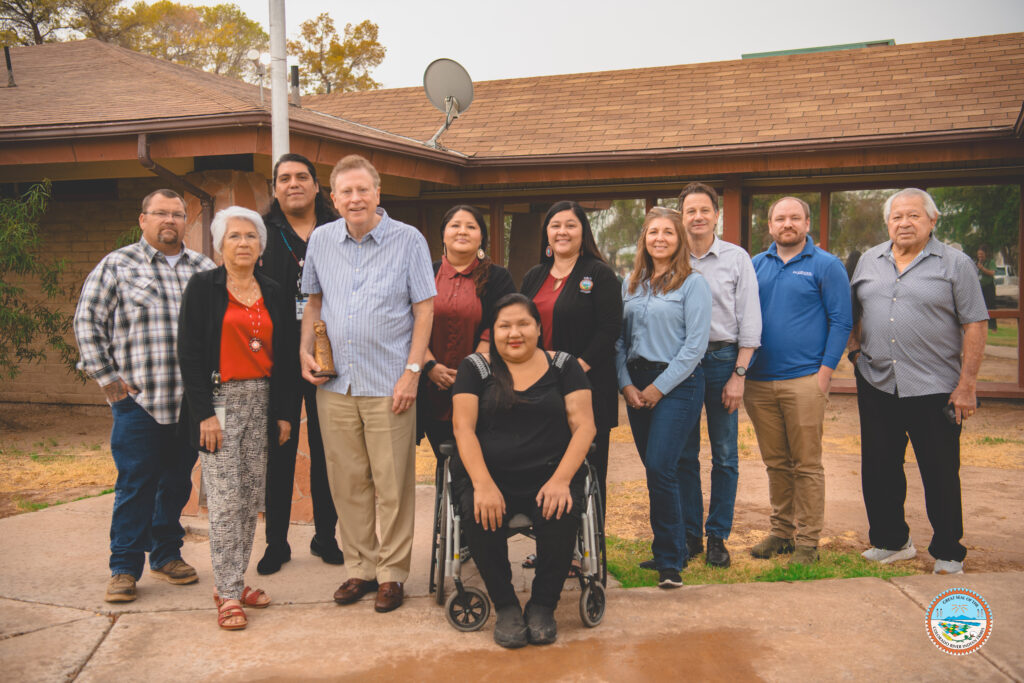
Cameron and Palumbo were guided through the reservation by Realty Director Herman Laffoon and Water Resource Director Dillon Esquerra. The tour highlighted the importance of CRIT’s lands and waters, beginning at Headgate Rock Dam and extending across the valley’s farmlands and irrigation canals. Along the way, they were shown the green, thriving fields sustained by the Colorado River, offering a firsthand look at the deep connection between the river and the Tribe’s lifeways.
The visit reinforces the critical role CRIT plays in the stewardship of the Colorado River. By showcasing the Tribe’s sustainable use of the river, CRIT emphasized the importance of protecting this vital resource, building trust, and strengthening government-to-government relationships. The tour also provided a space to discuss CRIT’s rights, responsibilities, and ongoing efforts to conserve, restore, and manage the river system for future generations.
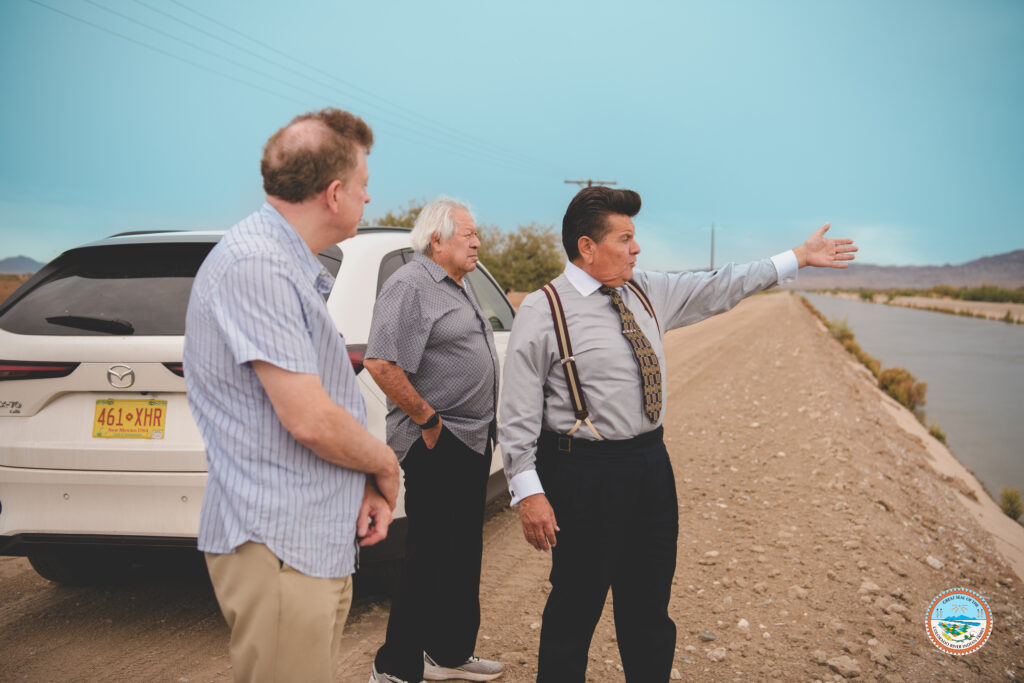
Councilman Tommy Drennan shared that CRIT’s presence in conversations about water is vital and that highlighting these efforts ensures the Tribe remains a central part of shaping the river’s future. “I hope the presence of CRIT is always a part of the solution,” said Drennan. (more…)
Since May 2024, Bryan Enas has been managing the CRIT Food Distribution Program. With nearly 20 years of experience working in warehouses and grocery stores, Bryan has learned the
ins and outs of produce and supervision. Those skills now help him run a program that makes a big difference for families in our community.
The Food Distribution Program is here to support individuals and families who may be lowincome, on social security, students, or just going through a tough time. This program is
available for both tribal and non-tribal members who live on the CRIT Reservation (this also extends to those who live off reservation within a 25 mile radius but you must have at least 1
person in your household who is a CRIT Tribal Member). Everything is confidential, and the goal is to make healthy food more accessible for everyone.
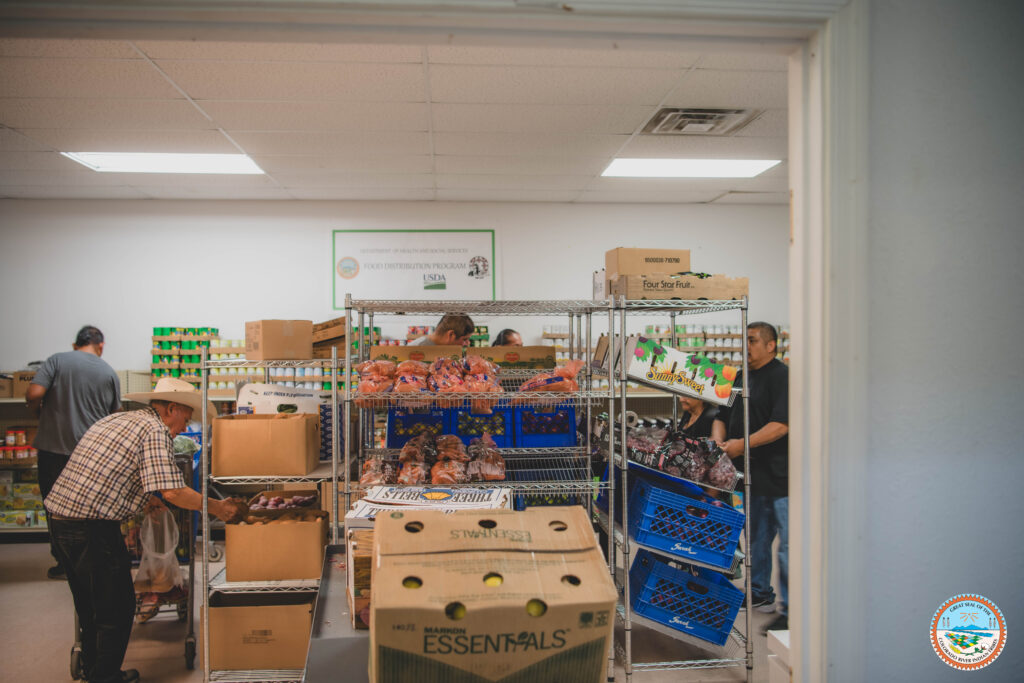
The program offers a variety of items each month such as, fresh fruits and vegetables, pantry staples, meats, dairy, grains, and more. Families can come by and pick up a pre-packed box, or
if transportation is an issue, deliveries can be arranged. For Bryan, this work is personal. “My home is here, my family is here and it’s a blessing to come back and be able to help the community,” he said. Looking ahead, he hopes to add a greenhouse to keep fresh produce growing year-round. If you think you or someone you know might qualify, the program is worth checking out. Applications are simple, and staff are always happy to help walk you through the process.
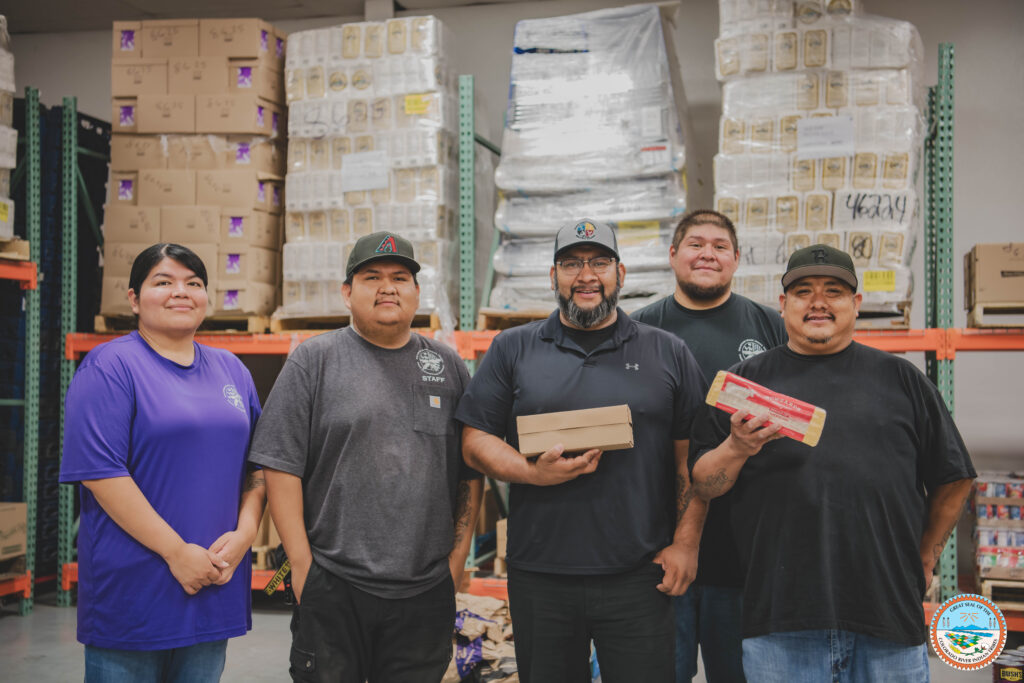
The CRIT Food Distribution Program is more than just food—it’s about making sure our families are supported, cared for, and never left behind. We highly encourage you to take advantage of this program – follow the link below to download the application to see if you qualify.
CRIT FDP APPLICATION & REQUIREMENTS PDF FY.24-25 (1)
CRIT Food Distribution Program is located at:
13951 2nd Avenue & Mohave Road, Parker, AZ
Phone: (928) 575-1191

Article written by CRIT Media Reporter Ariana Romero
Photography by CRIT Media Tech Naythen T. Lowe