July 29, 2026 8:01 pm
CRIT Nation, Parker, AZ
July 29, 2026 8:01 pm
CRIT Nation, Parker, AZ

The Ten Tribes Partnership (TTP) is seeking a lead contractor. This contractor position is supported by the Colorado River Sustainability Campaign, a fiscally sponsored project of the New Venture Fund.

TTP Background

The TTP was formed in 1992 and is a coalition of ten federally recognized Upper and Lower Basin Tribes that hold water rights in the Colorado River Basin. The member Tribes are: Chemehuevi Indian Tribe, Cocopah Indian Tribe, Colorado River Indian Tribes, Fort Mojave Indian Tribe, Jicarilla Apache Nation, Navajo Nation, Quechan Indian Tribe, Southern Ute Indian Tribe, Ute Indian Tribe, and Ute Mountain Ute Tribe.

The goal of the TTP is to increase the influence of Tribes in Colorado River management and provide support for the protection and use of Tribal water resources. The Colorado River Basin is suffering from extended drought, and the impact of climate change is palpable. TTP is committed to developing a new management framework that uplifts tribal priorities ahead of the 2026 expiration of the 2007 Interim Guidelines. TTP has determined this to be a critical time to hire a Lead Contractor to coordinate its efforts.

(more…)


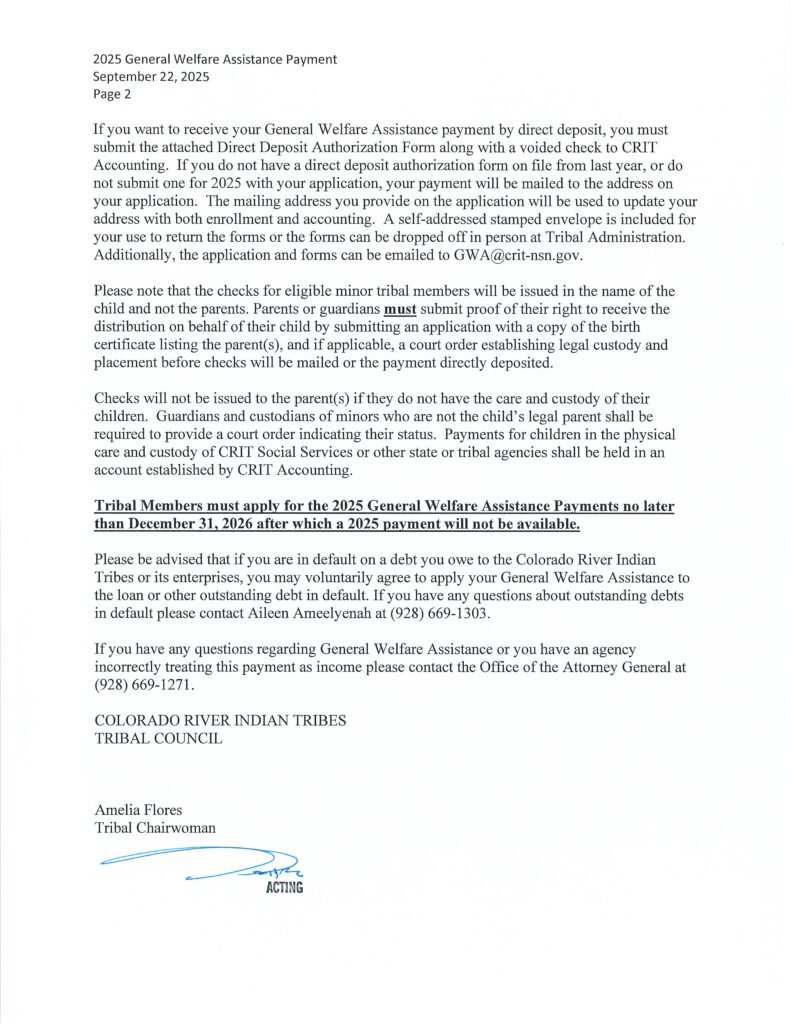
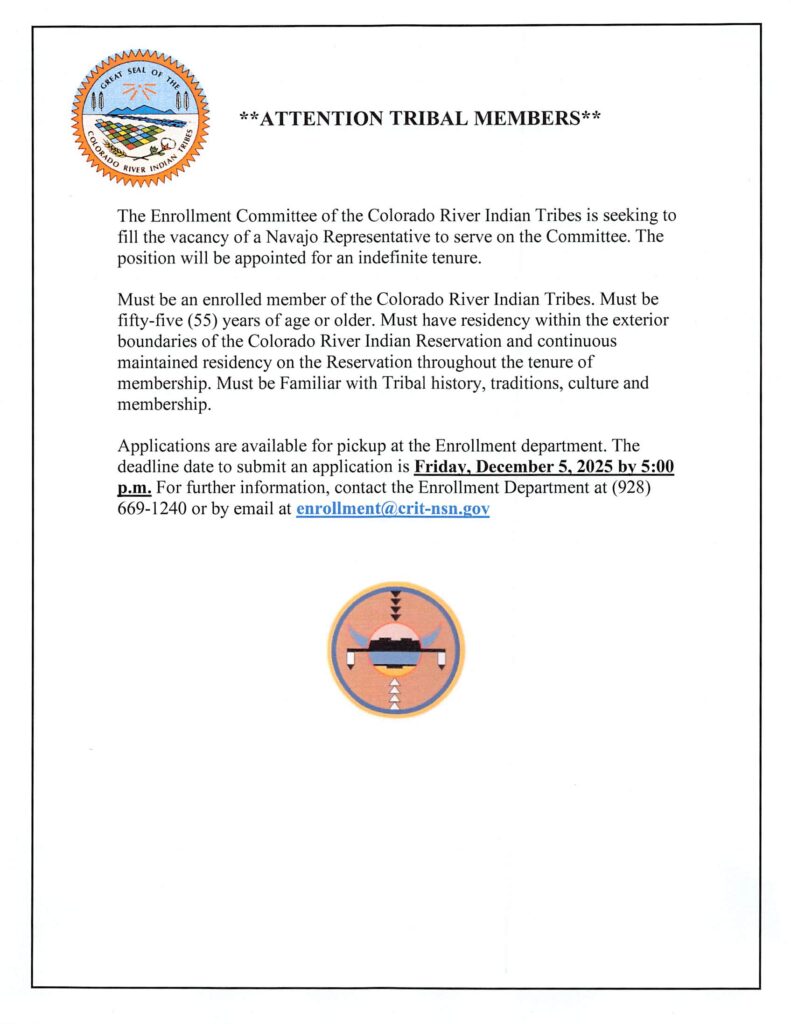
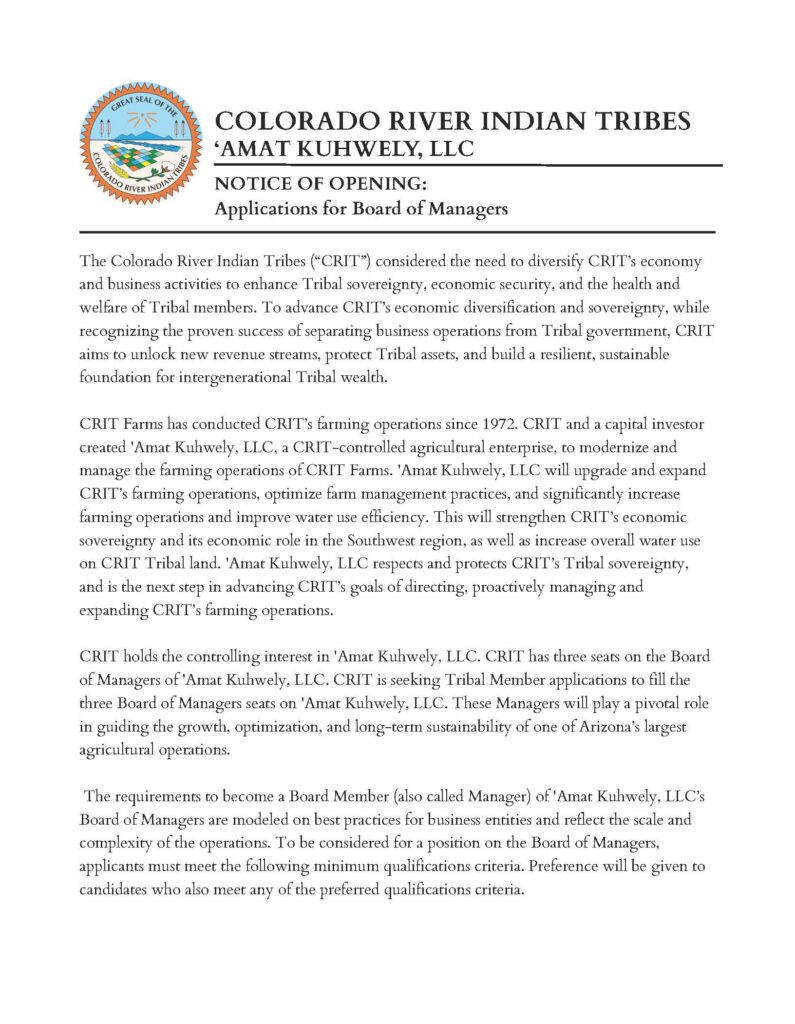
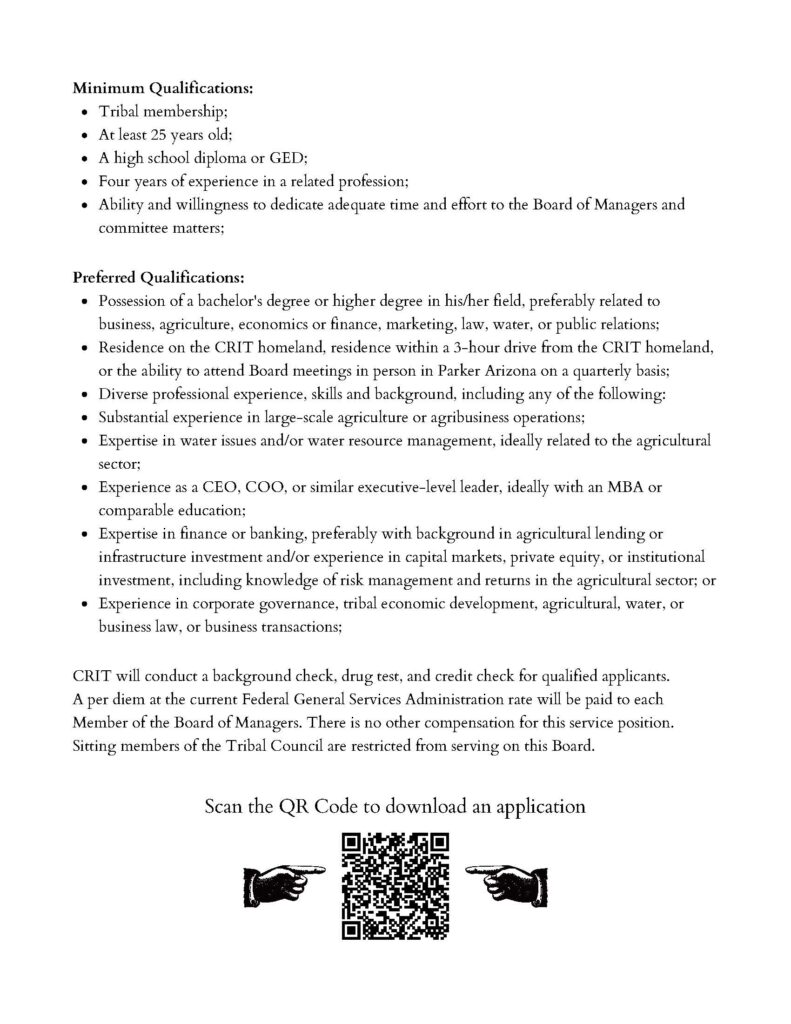
ATTENTION CRIT TRIBAL MEMBERS
Tribal Board/Committee/Commission Vacancies

Applications may be picked up at the Tribal Executive Offices or online at www.critmanatabamessenger.com for the following:

IRRIGATION COMMITTEE
1—Term VACANT Chairman
3—Term VACANT Member

EDUCATION BOARD
1 – Term Expiring 12/31/2025

LIQUOR CONTROL BOARD
1 – Term Alternate Expiring 12/31/2026

ENVIRONMENTAL AGRICULTURAL COMMITTEE
1 – Term Expiring 12/31/2026

ETHICS REVIEW BOARD
2 – Full Term Expiring 12/31/2025
3 -Full Terms-Expiring 12/31/2026

CHILDREN’S RESIDENTIAL CENTER ADVISORY BOARD
1—Term Medical Professional
1—Term VACANT Nurse
1—Term VACANT Parent
1—Term VACANT Behavioral Professional
1—Term VACANT Grandparent

ADHOC CEMETERY ADVISORY COMMITTEE
1– Undetermined Term VACANT

PARKS AND RECREATION COMMITTEE
2 – Two Year Terms Expiring 12/31/2026
2 – Two Year Terms Expiring 12/31/2027
1 – Two Year Alternate Term Expiring 12/31/2026

Deadline: Until Filled

COLORADO RIVER INDIAN TRIBES
26600 Mohave Road, Parker, Arizona 85344 Telephone (928)669-1280
Email applications to b.c@crit-nsn.gov or drop off at the Executive Offices.

Follow the link to download an application

2025BOARDAPPLICATIONS_09042025 (002)

Happy Birthday to our very own Ariana Romero! She has been flourishing in the Media Department of CRIT going to all the fun events in the community, writing articles, and becoming quite the photographer! Ariana has been a great proactive reporter providing insightful ideas on what the next story should be and how we can best showcase the wonderful CRIT Community. We are lucky to have her on our team and we wish her a wonderful birthday.

The Colorado River Indian Tribes Tribal Council has made a historic decision to protect the lifeblood of their Reservation. On November 6, 2025, the Council unanimously approved Resolution No. R-375-25, which proclaims the personhood status of the Colorado River under tribal law.

This resolution acknowledges the Colorado River as a living entity whose health and well-being are intrinsically linked to the well-being of the Colorado River Indian Tribes (CRIT) members. The Tribes’ deep-rooted connection to the river spans centuries, providing cultural identity, spiritual strength, food systems, and economic stability that continue to shape their community life today.

The resolution emphasizes the central role the river has played in defining the identity of the CRIT. It highlights that CRIT’s ancestors have preserved and protected these lands since before the establishment of the Colorado River Indian Reservation in 1865.

The Council underscores the crucial role the river plays in sustaining traditional practices, wildlife, and agriculture, including the federal irrigation systems authorized as early as 1867. Today, the Colorado River Indian Irrigation Project stands as a cornerstone of the tribal economy.

The resolution underscores significant legal milestones that acknowledged CRIT’s water rights. In the landmark 1964 and 2006 Arizona v. California U.S. Supreme Court decisions, the Tribes secured 719,248 acre-feet of water annually, ensuring their access to the river for generations to come.

By granting personhood to the River, the Tribal Council reaffirmed its sovereign duty to honor and protect it. This status mandates that the River’s well-being must be a priority in governance and decision-making moving forward.

As part of the resolution, the Attorney General and their staff will develop legal safeguards and propose updates to the CRIT Water Code and other relevant regulations. These updates may include the potential designation of the river as a protected cultural landscape.

Council members recognized that protecting the river is not merely a legal obligation but a continuation of cultural beliefs passed down through generations.

Through this declaration, CRIT demonstrates its unwavering commitment to stewardship. The resolution concludes with a resolute message: the Colorado River is, and will always remain, a vital entity deserving of respect, care, and protection for all future generations.

Article Written by CRIT Media Reporter Ariana Romero

News Update November 12, 2025

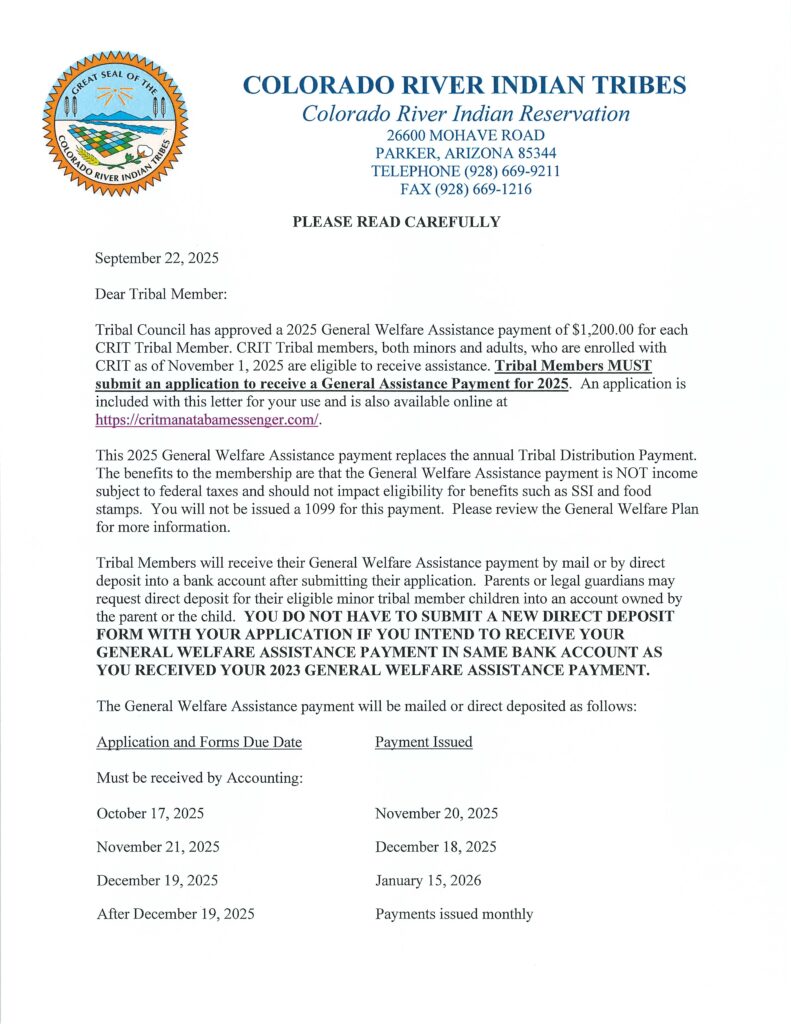
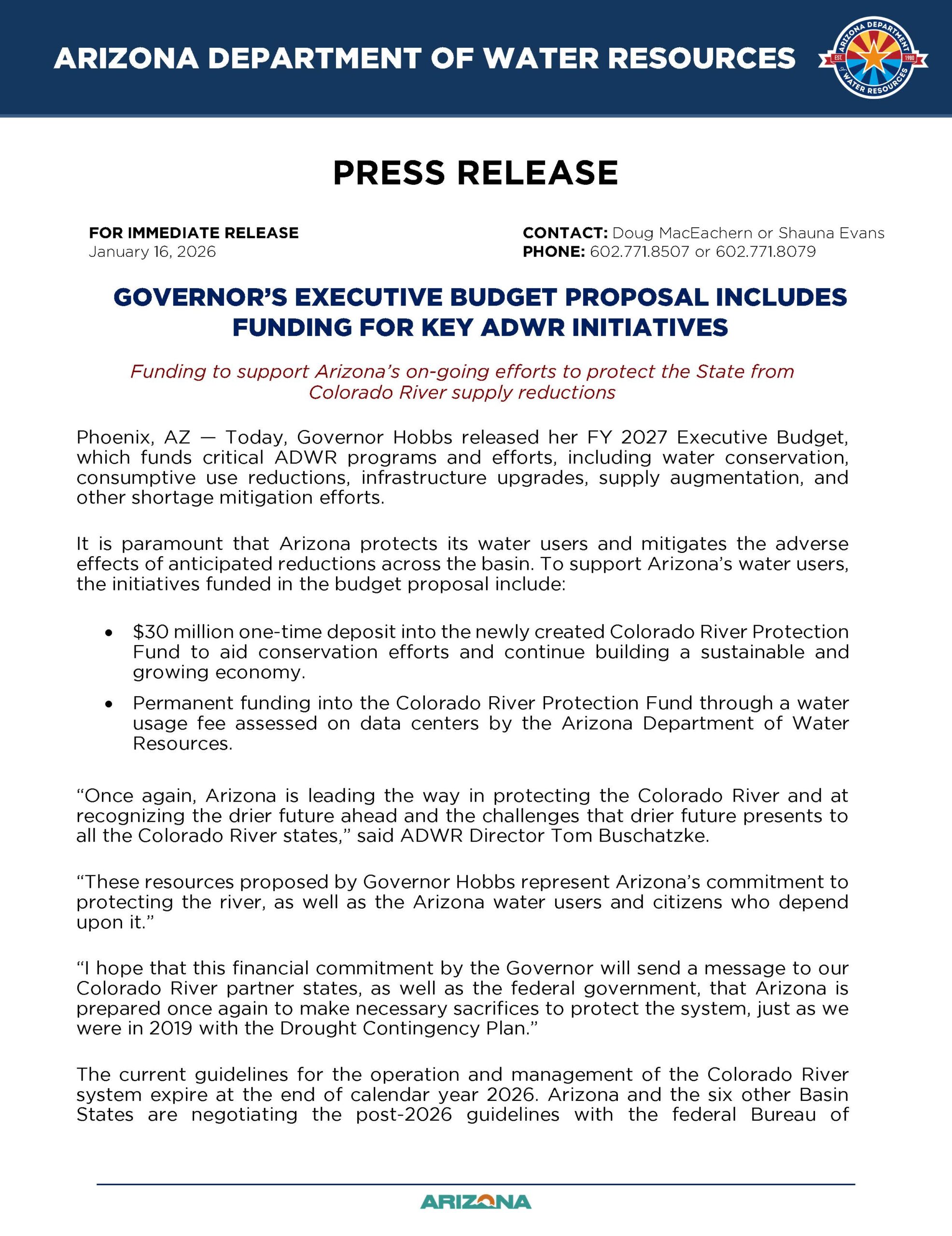
Negotiations over the future of the Colorado River have reached a standstill after all seven basin states failed to meet a key federal deadline. Reports from 12News and 8NewsNow confirm that the states were unable to agree on a new water-sharing plan, leaving the situation unresolved as the river continues to decline.

High Country News explains that the biggest disagreements involve how much each state should give up in the future. The upper Basin states want fewer mandatory reductions, while the Lower Basin states, including Arizona, say they have already taken the deepest cuts and cannot continue to absorb the majority of the impacts.

With no agreement in place, Arizona Governor Katie Hobbs has asked the Trump administration to intervene. She stated that Arizona has made significant sacrifices and cannot carry the weight of the reductions while other states refuse to commit to measurable cuts. If the states cannot reach a plan soon, the federal government may create one for them.

For the Colorado River Indian Tribes, the outcome of these negotiations has major importance. CRIT holds valuable senior water rights and relies on a stable and fair management plan to ensure long-term security for the community and the region.

For more information, you can read the news articles with the links below.

8NewsNow
https://www.8newsnow.com/news/local-news/colorado-river-negotiations-fail-to-meet-federal-deadline-for-7-state-agreement/

High Country News
https://www.hcn.org/articles/why-colorado-river-negotiations-are-so-difficult/


ABC 15 News
https://www.abc15.com/weather/impact-earth/why-gov-katie-hobbs-wants-trump-administration-to-broker-colorado-river-deal


12 News
/wednesday-is-deadline-for-7-state-including-arizona-to-negotiate-the-colorado-river

The Colorado River Indian Tribes Building and Safety Department is welcoming new director Alfred Mauer, whose background in inspections, compliance, and facility operations brings both technical expertise and a strong local connection to the role.

Mauer’s career began at just 18 years old working as a gold miner in northern Nevada. That early hands-on experience eventually led him into compliance, inspections, and administrative work. From underground mining operations, he later worked with Praxair at an air separation plant operating under strict federal regulations, including Homeland Security oversight. That experience helped shape his commitment to precision, safety, and doing things the right way.

Over the past five years, he has worked as a licensed building inspector while also operating his own inspection business. Managing everything from office communication and consulting to on-site inspections provided experience not only in technical building standards but also in customer service, project coordination, and helping facilities operate safely and efficiently.

Mauer also has a personal connection to the area. He attended elementary school in Parker before moving to northern Nevada and has now returned to serve the community. He says coming back to work with CRIT brings a strong sense of purpose and connection.

Now stepping into his new role, Mauer’s focus is clear: supporting safe, quality construction while helping tribal departments, businesses, and community members navigate the permitting and inspection process smoothly. The Building and Safety Department plays an important role in protecting the community by ensuring structures are built safely and responsibly, with an emphasis on prevention, communication, and long-term safety.

He emphasizes that the department is there to help guide people through the process, whether it involves new construction, renovations, or facility improvements. Clear communication and accessibility are key priorities as he settles into the position, helping ensure questions are answered early and projects move forward safely.

Having grown up around the community, Mauer says one of the things that stands out most about working at CRIT is the strong sense of family, pride, and connection among tribal members and employees. That sense of community motivates his commitment to safety and responsible development. Having witnessed preventable accidents in his career, he says his goal is always to promote safe structures that protect people first.

(more…)

CRIT Auto Welcomes a Familiar Leader

After 47 years of dedicated service, Winstill Humeumptewa Sr. has stepped into the role of Fleet Manager of CRIT Auto, bringing with him decades of experience, leadership, and deep pride in the work he does for the Colorado River Indian Tribes.

Winstill began working at CRIT Auto in 1979. Born and raised in the community, he returned home after completing his automotive education to put his skills to work serving his people. Over the years, he has worked his way through nearly every role in the department, gaining hands-on experience as a mechanic, supervisor, service manager, and most recently as Acting Auto Shop Fleet Manager.

His decision to apply for the manager position came after the retirement of former manager Fernando “Bo” Flores. Winstill credits Bo’s leadership, mentorship, and strong work ethic as a major influence and source of inspiration throughout his career. Having worked side by side with him for many years, Winstill felt prepared to take on the responsibility and continue moving the department forward.

Winstill oversees a fleet of more than 300 tribal vehicles serving multiple departments. His goals include rebuilding and strengthening his crew, improving shop organization, and modernizing operations. One of his immediate priorities is cleaning up the shop area and removing unused gas pumps and tanks that are no longer in service.

Supporting his staff is central to Winstill’s vision. He plans to keep his team up to date through trainings, educational videos, and courses, emphasizing that knowledge and skill development are key to quality service. He describes his leadership style as firm, noting that quality work is non-negotiable. Every vehicle, he says, should be safe, reliable, and properly tested before returning to service.

While CRIT Auto primarily services tribal vehicles, Winstill hopes to eventually reopen the shop to the community once staffing is full. He wants the community to know that even when repairs take time, the work is being done with care and commitment.

Winstill says he is proud of his crew, whom he considers family, and proud of the work they accomplish together every day. After nearly five decades at CRIT Auto, his dedication remains strong, driven by a desire to provide dependable service to the Tribes and give back to the community he calls home.

Congratulations to Winstill Humeumptewa Sr. on this new chapter as the Fleet Manager for CRIT Auto.

Article and Photos by CRIT Media Reporter Ariana Romero


The Tribal Council for the Colorado River Indian Tribes has approved a new water code that both affirms tribal sovereignty over its water while protecting the life of the Colorado River.

Before the Tribal Council vote,  there was a series of meetings with Tribal Membership in both Parker and in Phoenix where Tribal members provided their thoughts regarding the language of the final code.

These meetings with Tribal Membership provide Tribal Council with valuable insight in creating the Water Code.

The Code is a comprehensive legal framework to govern the use, protection, and
management of all water resources on the Reservation. It affirms the Colorado River Indian Tribes’ sovereign authority over water, ensures sustainable development, and protects the cultural, spiritual, and economic interests of the Tribes and their members.

Passage of the Water Code paves the way for economic opportunities for CRIT while protecting cultural and environmental values.

The Water Code protects CRIT’s full ownership and control of its water. It creates a fair, transparent system for water use and the potential of off reservation leasing of CRIT’s water resources.  It ensures that all decisions are made by CRIT. (more…)