The Colorado River Indian Tribes (CRIT) has issued a Request for Proposals (RFP) for the CPUC Broadband Deployment Phase I Project, a major infrastructure initiative aimed at expanding reliable, high-capacity internet service for Tribal communities and surrounding areas. Through this public bid process, CRIT is seeking qualified contractors to furnish, install, splice, and test outside plant fiber-optic infrastructure that will form the foundation of an expanded broadband network. The project will support improved connectivity along key regional corridors near the Reservation, including areas within San Bernardino and Riverside Counties and surrounding communities such as Blythe, Earp, and Parker Dam. This investment represents an important step toward strengthening digital access, supporting economic development, enhancing education and telehealth opportunities, and ensuring long-term technological resilience for CRIT members and neighboring communities. Proposals will be evaluated based on cost, qualifications, construction schedule, and Indian Preference in accordance with Tribal procurement policy.
Follow the links below for bidding information and specs.
Appendix B_CRIT CPUC_Phase 1_Contractor Bid Sheet_02.23.2026
Appendix C_CRIT CPUC_Phase I_Project Specifications_Sealed_02.23.2026
Follow the link below for the propsed amended code
2026 Amended and Restated Gaming Code_Public Hearing

Follow the link below to download an application.
CRIT Tribal Board Vacancies Application 2026

News Update November 12, 2025
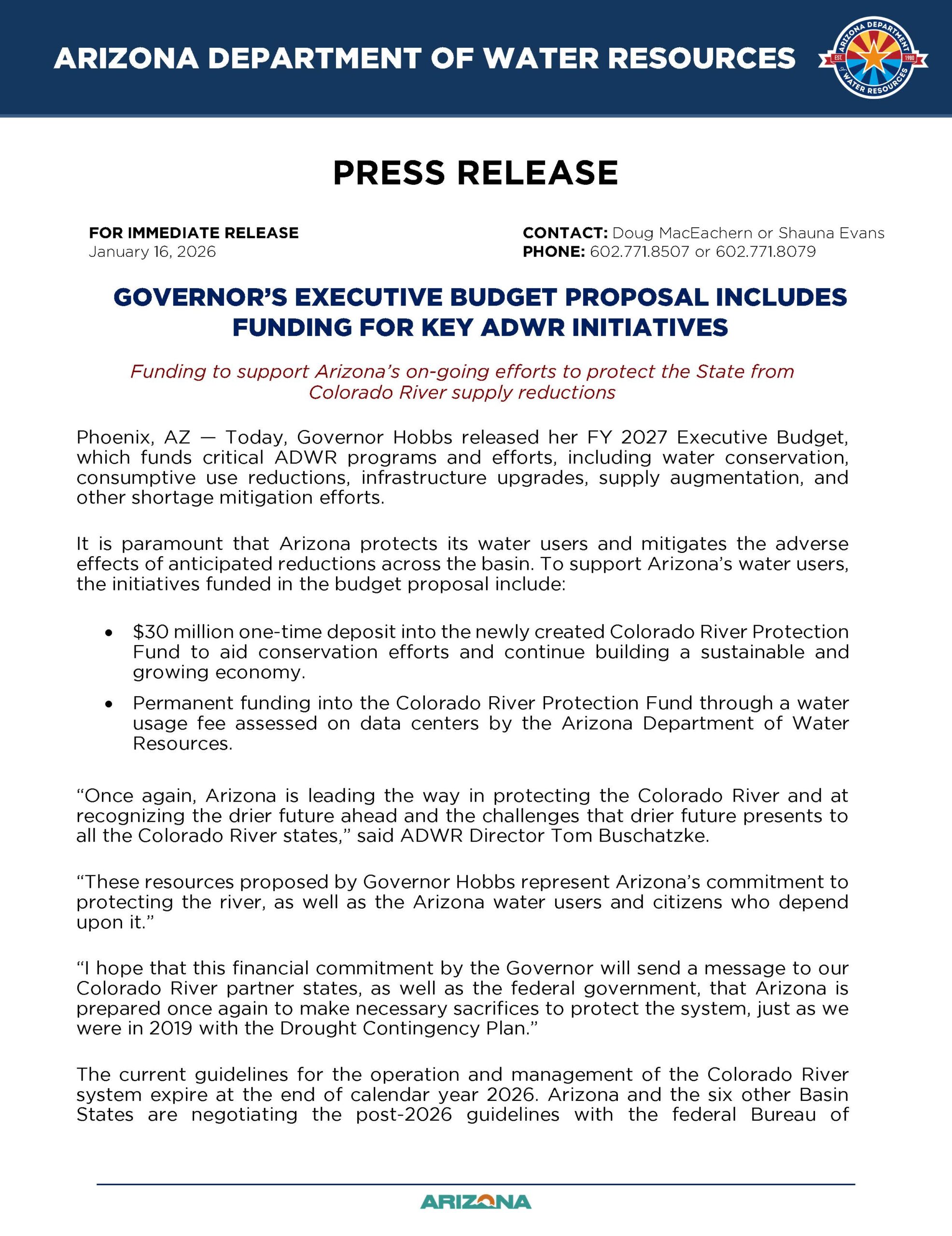
Negotiations over the future of the Colorado River have reached a standstill after all seven basin states failed to meet a key federal deadline. Reports from 12News and 8NewsNow confirm that the states were unable to agree on a new water-sharing plan, leaving the situation unresolved as the river continues to decline.
High Country News explains that the biggest disagreements involve how much each state should give up in the future. The upper Basin states want fewer mandatory reductions, while the Lower Basin states, including Arizona, say they have already taken the deepest cuts and cannot continue to absorb the majority of the impacts.
With no agreement in place, Arizona Governor Katie Hobbs has asked the Trump administration to intervene. She stated that Arizona has made significant sacrifices and cannot carry the weight of the reductions while other states refuse to commit to measurable cuts. If the states cannot reach a plan soon, the federal government may create one for them.
For the Colorado River Indian Tribes, the outcome of these negotiations has major importance. CRIT holds valuable senior water rights and relies on a stable and fair management plan to ensure long-term security for the community and the region.
For more information, you can read the news articles with the links below.
High Country News
https://www.hcn.org/articles/why-colorado-river-negotiations-are-so-difficult/
12 News
/wednesday-is-deadline-for-7-state-including-arizona-to-negotiate-the-colorado-river
The Colorado River Indian Tribes have taken a history making step to implement the Colorado River Indian Tribes Water Resiliency Act of 2022. At a ceremony on the CRIT Reservation April 26th, leadership from the Colorado River Indian Tribes, the State of Arizona, and the United Staes Department of the Interior signed agreements required under the act.

The Colorado River Indian Tribes Fire Department has some critical equipment to keep fire fighters safe. The department was able to secure new SCBA (Self-Contained Breathing Apparatus) for CRIT fire fighters. This vital piece of equipment helps secure the safety of our fire fighters when entering a structure fire. CRIT Fire says once completion of its procurement process is final, CRIT Fire will be equipped with a total of 14 new SCBAs.
This will help dramatically decrease the chance of smoke inhalation or any form of hazardous vapers or particles floating in the air, along with providing a clean steady flow of oxygen to their masks for breathing.
These SCBA’s were paid for by the tribal homeland security grant with help from grant writer Randy Brawley of Wise Consulting LLC.
The Colorado River Indian Tribes has broken ground on a new Head Start facility recognizing a dream that has taken years to realize. In 2009, Tribal Council designated 12 acres for the permanent site and in the years that followed CRIT has worked jointly and tirelessly to get the necessary funding to make the project happen.
(Parker, Ariz.) Arizona Governor Katie Hobbs has a much better understanding of the issues facing the Colorado River Indian Tribes following a visit to the community on March 26th. The Governor was welcomed by CRIT Chairwoman Amelia Flores and CRIT Farms Manager Joshua Moore. Hobbs and her staff toured some key sites at CRIT that bring into focus agricultural and water issues that are top of mind for both CRIT and Arizona governing bodies.
Hobbs toured the Headgate Dam, irrigation canals, active and fallowed farmland, the Ahakhav Tribal Preserve, among other sites.
Following the tour, Hobbs met with several members of the Tribal Council where she listened to concerns ranging from water rights, water conservation, irrigation systems, sober living homes, tribal sovereignty, and pending water agreements. In addition to Chairwoman Flores, Tribal Council members who spoke with Governor Hobbs included Vice Chairman Dwight Lomayesva, Secretary Johnson Fisher, and Council Members Robert “Bobby” Page, Jaymee Moore, Anisa Patch, and Vanessa Olivares.
Governor Hobbs said, “I just want to say how much I appreciate your leadership on the Colorado River. Recognizing your leadership is why the Chairwoman was on my Water Policy Council where we brought all the stakeholders together. Primarily looking at groundwater issues but recognizing your leadership on water, that was really important to have you there.”
Hobbs said partnerships between CRIT and the State of Arizona should go beyond water issues including broadband and the sober living homes crisis.
Hobbs added that when she ran for Secretary of State years ago, Native American leaders would tell her that politicians only come around when they are seeking votes. Hobbs vowed to be an exception. “As Secretary I worked really hard to build relationships specifically around voting rights and elections. And I knew when I got to the Governor’s office, I really wanted to expand that. And we can be working on so many other issues together. This isn’t the last time you’ll see me. I will be back and not just when I want your votes. I think it’s important to continue those relationships so that you to have a seat at the table.”
Charwoman Flores hoped the visit to CRIT gave Governor Hobbs the opportunity to escape the confines of the State Capitol and learn more about CRIT. Chairwoman Flores said, “Coming on our homelands, it opened up a grounded relationship with her administration. She saw firsthand the deficiencies of our irrigation system and hopefully she will be an advocate for us in getting more funding for our irrigation projects.”