Arizona Budget Proposal Includes Major Funding for Colorado River Protection
On January 16, 2026, the Arizona Department of Water Resources (ADWR) shared details of Governor Katie Hobbs’ FY 2027 Executive Budget Proposal focused on preparing for long-term challenges facing the Colorado River. The plan includes new and expanded funding aimed at strengthening water security across Arizona in the face of ongoing Colorado River shortages.
Key points from the budget related to water:
Source:
Arizona Water News https://azwaternews.com/2026/01/16/fy2027_execbudgetproposal/
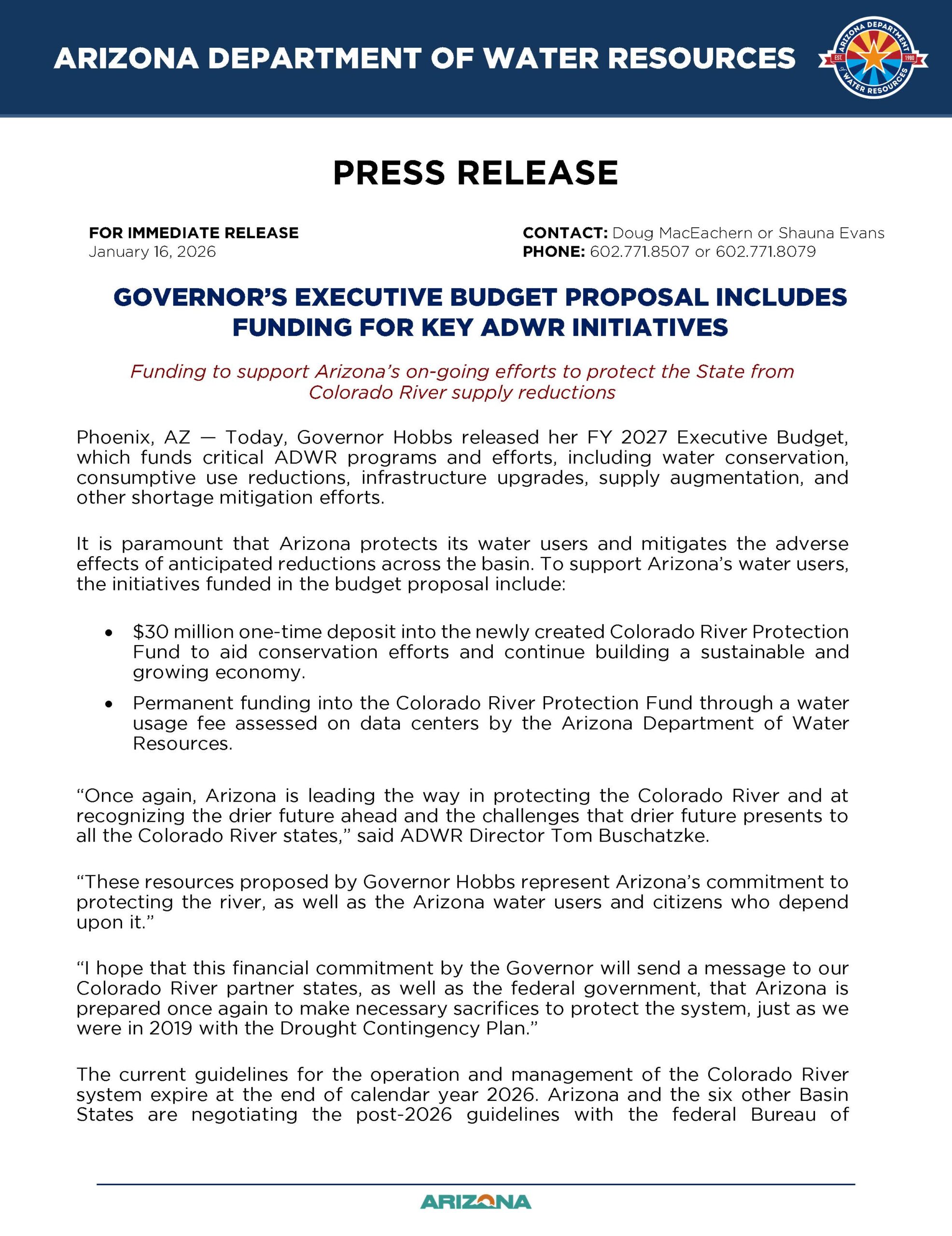
On Friday, October 3, 2025, the Colorado River Indian Tribes kicked off Native American Days with a lively celebration at Manataba Park under the tin shed, bringing together community members, families, and visitors for a day full of culture, food, games, and laughter.
The event opened with Tribal Council presentations, led by Councilwoman Raeanne Patch, Councilman Billy Beeson, Councilman Tommy Drennan, and Treasurer Anisa Patch. Their presence set the tone for a meaningful day of honoring culture and community. Following a blessing by Carol Claw Hammond, the crowd gathered for a hearty lunch of pitted meat, tortillas, macaroni salad, and beans. A feast that kept everyone smiling and full throughout the day.
Vendors brought extra flavor to the celebration with NDN Joe, who kept the crowd refreshed with his famous beverages, while Carrie Burns offered custom cups, popcorn, and sweet treats. Terri Lynn’s snow cones and piccadillys were a big hit, especially under the warm afternoon sun. Visitors also enjoyed the Hopi booth, which raffled off beautiful jewelry, and the Chemehuevi booth, which shared crafts to enjoy and make. The Regional Center for Border Health joined in, connecting with the community and offering helpful resources.
Throughout the day, families enjoyed a wide variety of activities. Native language bingo quickly became a favorite, teaching words from the four tribal languages—Mohave, Chemehuevi, Hopi, and Navajo—in a fun and interactive way. Smiles and laughter filled the air as people competed for prizes while learning more about their heritage.
The regalia presentations were a true highlight of the afternoon. Toddlers charmed the crowd in their tiny regalia while older youth and adults showcased beautifully crafted dresses and traditional wear. The pride and joy that radiated from each participant created a powerful reminder of the beauty and strength of tradition. (more…)
The Colorado River Indian Tribes (CRIT) is honoring a historic milestone this year with the 80th Anniversary of the Hopi and Navajo Migration to what is now known as the CRIT Reservation. The celebration not only commemorates the journey of the Hopi and Navajo people in 1945 but also reflects on the cultural richness and resilience they brought with them, shaping CRIT as we know it today.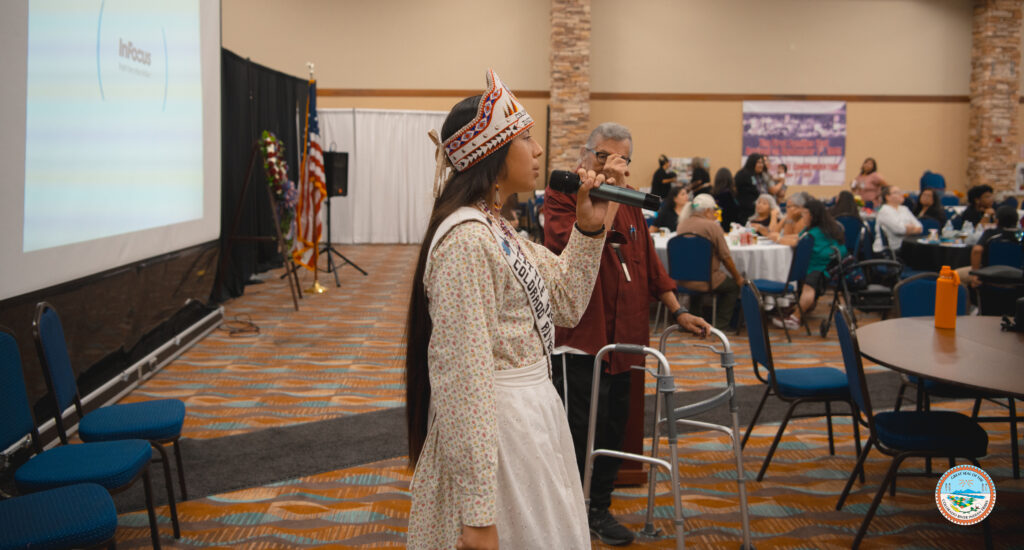
In 1945, following World War II, the Bureau of Indian Affairs initiated a relocation project that brought both Hopi and Navajo families from northern and northeastern Arizona to the CRIT Reservation. They joined the Mohave and Chemehuevi people already living on the land, forming what is now a unique and diverse community of four distinct tribal groups. For the Hopi, this migration continued their long tradition of settled village life. Known for their deep connection to religion and ceremony, the Hopi brought their agricultural expertise in dry farming as well as their renowned artistry — pottery, overlay jewelry, and kachina doll carving. The Navajo, also part of this relocation, carried with them strong traditions of craftsmanship and resilience. They were celebrated silversmiths, a skill believed to have been introduced by Spaniards, and Navajo women were widely known for their weaving of colorful intricate rugs. (more…)
The Colorado River Indian Tribes (CRIT) was buzzing with energy as the CRIT Special Diabetes Project-Recreation Program partnered with the Phoenix Suns/Mercury Foundation and the Inter Tribal Council of Arizona to host the ORIGINATIV Youth Basketball Clinic. The event brought together tribal youth, culture, and community spirit for an unforgettable weekend of basketball, wellness, and celebration.
Festivities tipped off Friday evening at Irataba Hall with a special clinic for the younger CRIT youth. On Saturday, the action expanded to Parker High School, where more than 180 youth from surrounding river tribes—including CRIT, Fort Mojave, Hualapai, Quechan, Cocopah, and Havasupai—hit the courts to learn new skills, build teamwork, and connect through basketball.
This two-day event was a celebration of unity among tribes, culture, and healthy living—echoing the importance of staying active and supporting the next generation.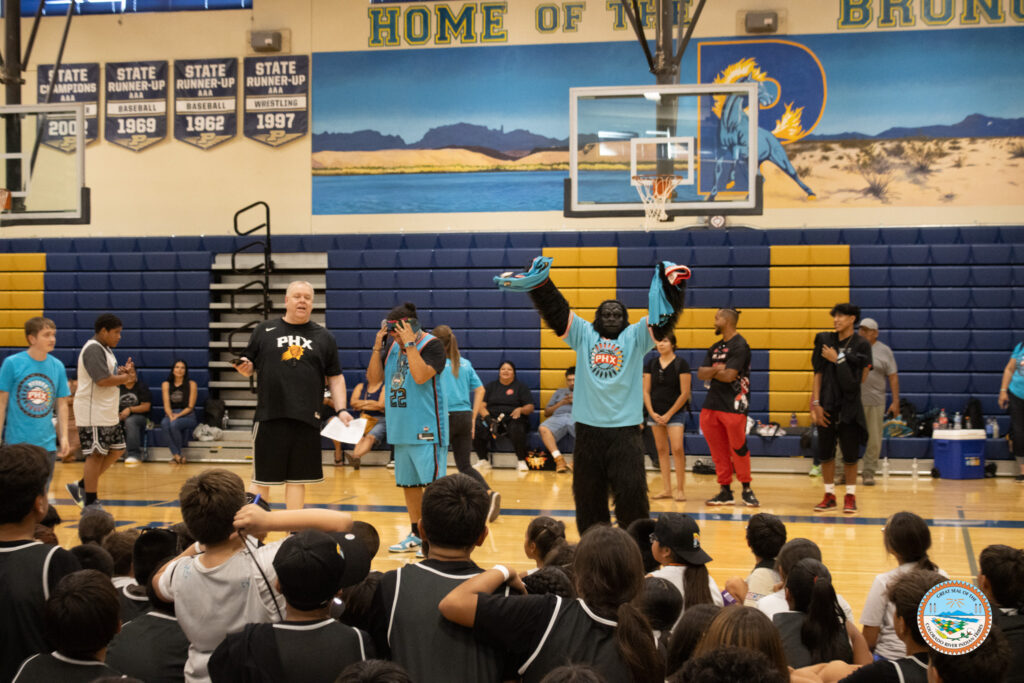
Saturday’s opening ceremony brought together tradition and excitement. Mr. Willy Tahbo opened with a blessing, setting the tone of gratitude and respect. The Ase’Smaav Bird Singers and the River Tribes United Dance Group then filled the gym with song and movement, reminding everyone of the importance of cultural roots alongside athletic achievement. Youth and community members cheered as dancers performed in traditional dress, blending the energy of the game with the beauty of heritage. (more…)