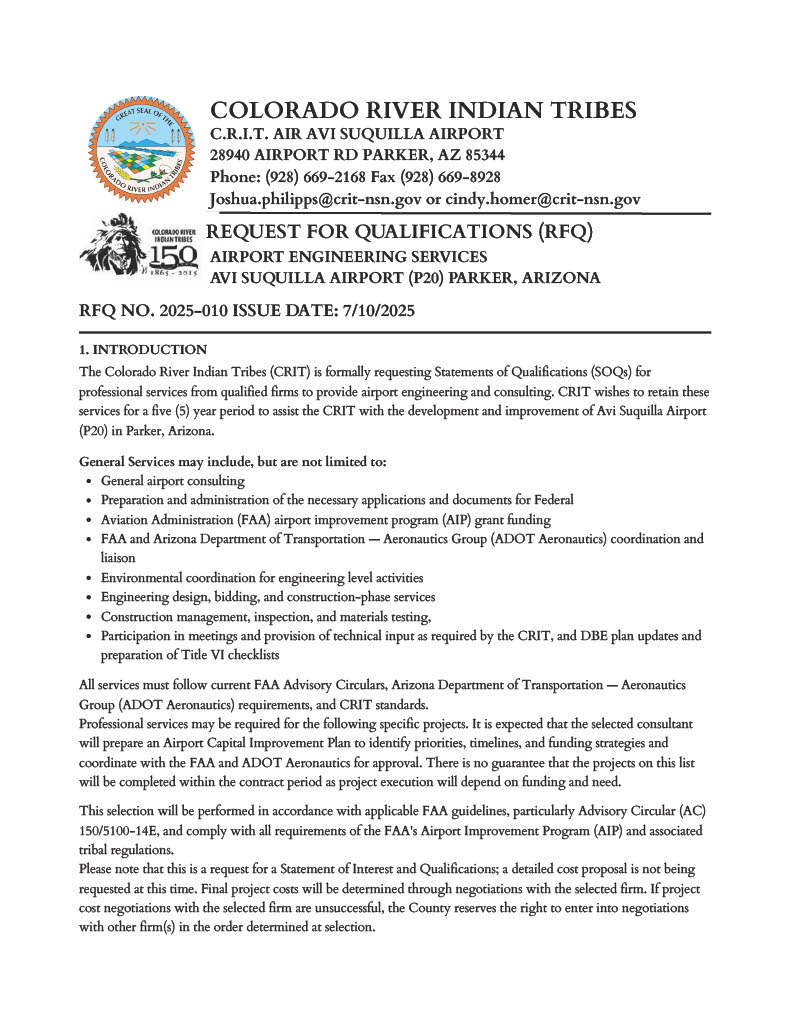

The Ten Tribes Partnership (TTP) is seeking a lead contractor. This contractor position is supported by the Colorado River Sustainability Campaign, a fiscally sponsored project of the New Venture Fund.
The TTP was formed in 1992 and is a coalition of ten federally recognized Upper and Lower Basin Tribes that hold water rights in the Colorado River Basin. The member Tribes are: Chemehuevi Indian Tribe, Cocopah Indian Tribe, Colorado River Indian Tribes, Fort Mojave Indian Tribe, Jicarilla Apache Nation, Navajo Nation, Quechan Indian Tribe, Southern Ute Indian Tribe, Ute Indian Tribe, and Ute Mountain Ute Tribe.
The goal of the TTP is to increase the influence of Tribes in Colorado River management and provide support for the protection and use of Tribal water resources. The Colorado River Basin is suffering from extended drought, and the impact of climate change is palpable. TTP is committed to developing a new management framework that uplifts tribal priorities ahead of the 2026 expiration of the 2007 Interim Guidelines. TTP has determined this to be a critical time to hire a Lead Contractor to coordinate its efforts.

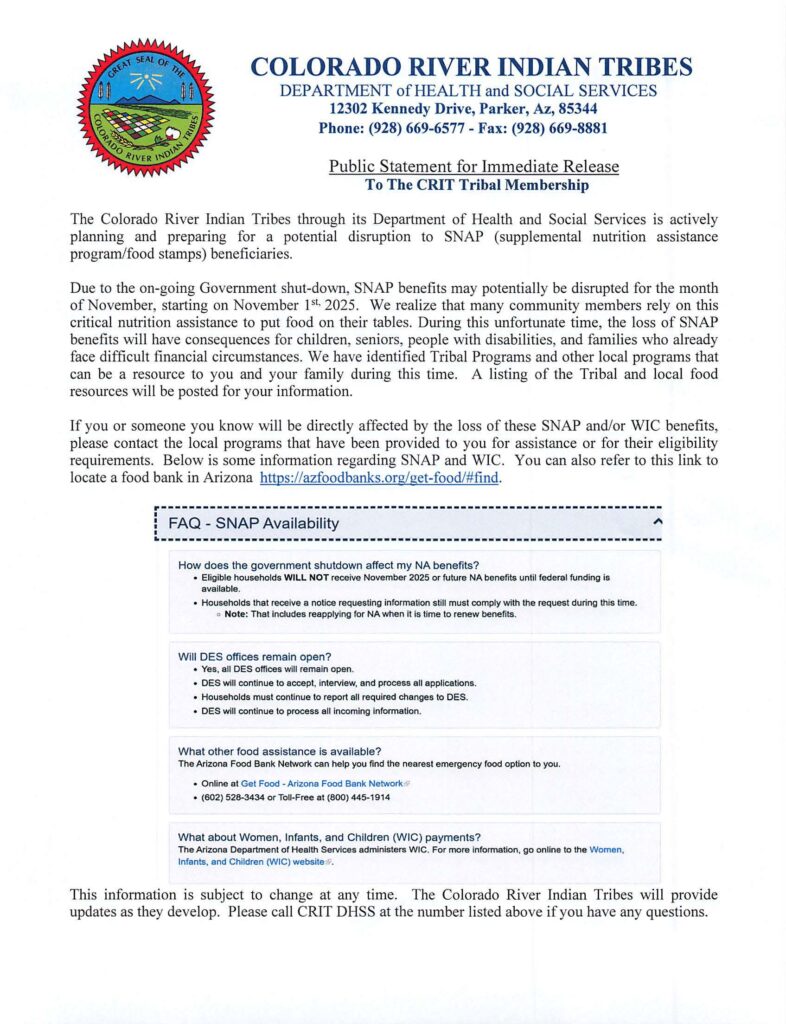
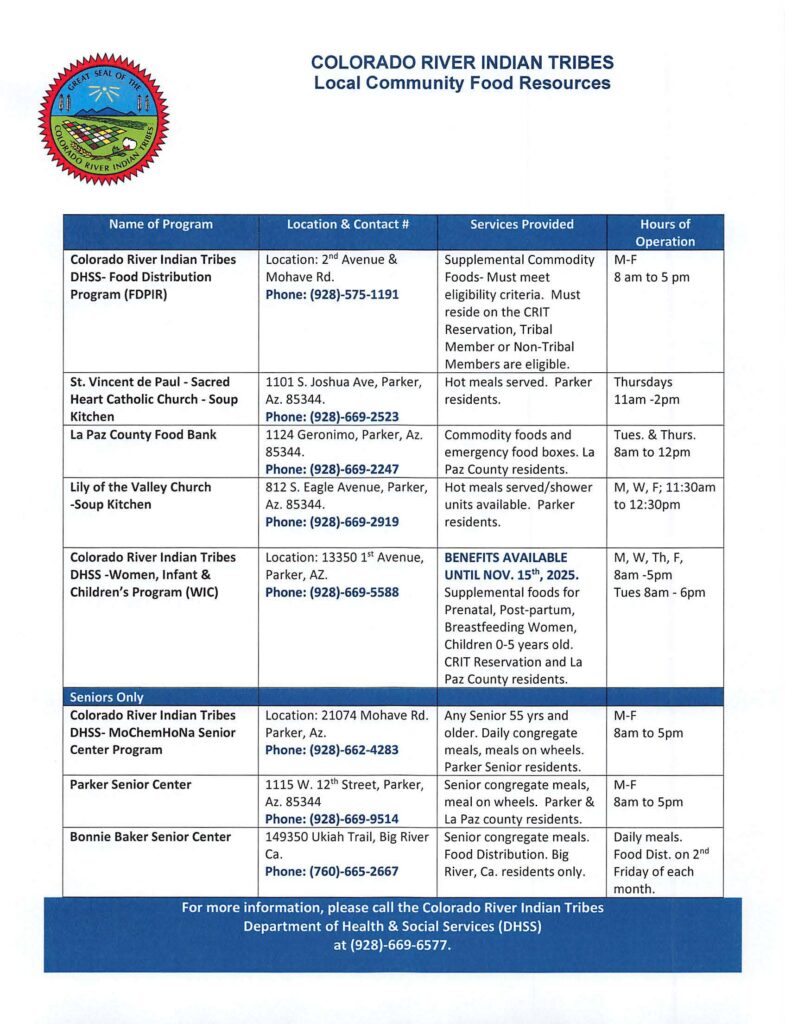
ATTENTION CRIT TRIBAL MEMBERS
Tribal Board/Committee/Commission Vacancies
Applications may be picked up at the Tribal Executive Offices or online at www.critmanatabamessenger.com for the following:
IRRIGATION COMMITTEE
1—Term VACANT Chairman
3—Term VACANT Member
EDUCATION BOARD
1 – Term Expiring 12/31/2025
LIQUOR CONTROL BOARD
1 – Term Alternate Expiring 12/31/2026
ENVIRONMENTAL AGRICULTURAL COMMITTEE
1 – Term Expiring 12/31/2026
ETHICS REVIEW BOARD
2 – Full Term Expiring 12/31/2025
3 -Full Terms-Expiring 12/31/2026
CHILDREN’S RESIDENTIAL CENTER ADVISORY BOARD
1—Term Medical Professional
1—Term VACANT Nurse
1—Term VACANT Parent
1—Term VACANT Behavioral Professional
1—Term VACANT Grandparent
ADHOC CEMETERY ADVISORY COMMITTEE
1– Undetermined Term VACANT
PARKS AND RECREATION COMMITTEE
2 – Two Year Terms Expiring 12/31/2026
2 – Two Year Terms Expiring 12/31/2027
1 – Two Year Alternate Term Expiring 12/31/2026
Deadline: Until Filled
COLORADO RIVER INDIAN TRIBES
26600 Mohave Road, Parker, Arizona 85344 Telephone (928)669-1280
Email applications to b.c@crit-nsn.gov or drop off at the Executive Offices.
Follow the link to download an application
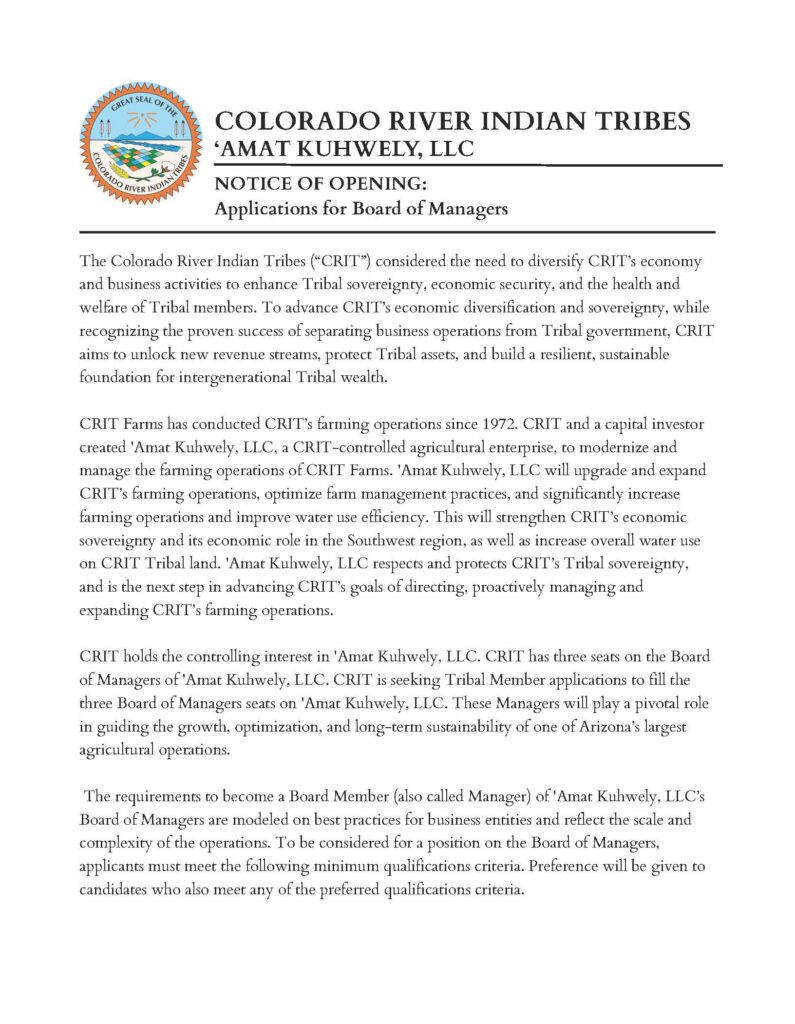
Follow the link for information on qualifications and to download related forms.Board Managers Opening ‘Amat Kuhwely, LLC
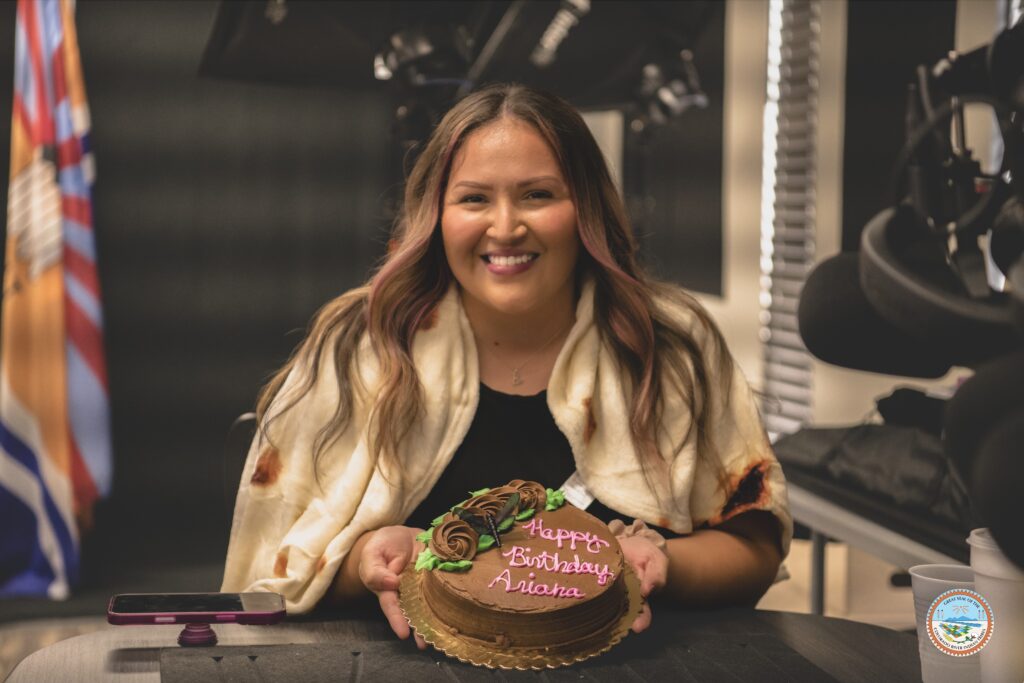
Happy Birthday to our very own Ariana Romero! She has been flourishing in the Media Department of CRIT going to all the fun events in the community, writing articles, and becoming quite the photographer! Ariana has been a great proactive reporter providing insightful ideas on what the next story should be and how we can best showcase the wonderful CRIT Community. We are lucky to have her on our team and we wish her a wonderful birthday.
The Colorado River Indian Tribes Tribal Council has made a historic decision to protect the lifeblood of their Reservation. On November 6, 2025, the Council unanimously approved Resolution No. R-375-25, which proclaims the personhood status of the Colorado River under tribal law.
This resolution acknowledges the Colorado River as a living entity whose health and well-being are intrinsically linked to the well-being of the Colorado River Indian Tribes (CRIT) members. The Tribes’ deep-rooted connection to the river spans centuries, providing cultural identity, spiritual strength, food systems, and economic stability that continue to shape their community life today.
The resolution emphasizes the central role the river has played in defining the identity of the CRIT. It highlights that CRIT’s ancestors have preserved and protected these lands since before the establishment of the Colorado River Indian Reservation in 1865.
The Council underscores the crucial role the river plays in sustaining traditional practices, wildlife, and agriculture, including the federal irrigation systems authorized as early as 1867. Today, the Colorado River Indian Irrigation Project stands as a cornerstone of the tribal economy.
The resolution underscores significant legal milestones that acknowledged CRIT’s water rights. In the landmark 1964 and 2006 Arizona v. California U.S. Supreme Court decisions, the Tribes secured 719,248 acre-feet of water annually, ensuring their access to the river for generations to come.
By granting personhood to the River, the Tribal Council reaffirmed its sovereign duty to honor and protect it. This status mandates that the River’s well-being must be a priority in governance and decision-making moving forward.
As part of the resolution, the Attorney General and their staff will develop legal safeguards and propose updates to the CRIT Water Code and other relevant regulations. These updates may include the potential designation of the river as a protected cultural landscape.
Council members recognized that protecting the river is not merely a legal obligation but a continuation of cultural beliefs passed down through generations.
Through this declaration, CRIT demonstrates its unwavering commitment to stewardship. The resolution concludes with a resolute message: the Colorado River is, and will always remain, a vital entity deserving of respect, care, and protection for all future generations.
Article Written by CRIT Media Reporter Ariana Romero
News Update November 12, 2025
Negotiations over the future of the Colorado River have reached a standstill after all seven basin states failed to meet a key federal deadline. Reports from 12News and 8NewsNow confirm that the states were unable to agree on a new water-sharing plan, leaving the situation unresolved as the river continues to decline.
High Country News explains that the biggest disagreements involve how much each state should give up in the future. The upper Basin states want fewer mandatory reductions, while the Lower Basin states, including Arizona, say they have already taken the deepest cuts and cannot continue to absorb the majority of the impacts.
With no agreement in place, Arizona Governor Katie Hobbs has asked the Trump administration to intervene. She stated that Arizona has made significant sacrifices and cannot carry the weight of the reductions while other states refuse to commit to measurable cuts. If the states cannot reach a plan soon, the federal government may create one for them.
For the Colorado River Indian Tribes, the outcome of these negotiations has major importance. CRIT holds valuable senior water rights and relies on a stable and fair management plan to ensure long-term security for the community and the region.
For more information, you can read the news articles with the links below.
High Country News
https://www.hcn.org/articles/why-colorado-river-negotiations-are-so-difficult/
12 News
/wednesday-is-deadline-for-7-state-including-arizona-to-negotiate-the-colorado-river
On Friday, October 3, 2025, the Colorado River Indian Tribes kicked off Native American Days with a lively celebration at Manataba Park under the tin shed, bringing together community members, families, and visitors for a day full of culture, food, games, and laughter.
The event opened with Tribal Council presentations, led by Councilwoman Raeanne Patch, Councilman Billy Beeson, Councilman Tommy Drennan, and Treasurer Anisa Patch. Their presence set the tone for a meaningful day of honoring culture and community. Following a blessing by Carol Claw Hammond, the crowd gathered for a hearty lunch of pitted meat, tortillas, macaroni salad, and beans. A feast that kept everyone smiling and full throughout the day.
Vendors brought extra flavor to the celebration with NDN Joe, who kept the crowd refreshed with his famous beverages, while Carrie Burns offered custom cups, popcorn, and sweet treats. Terri Lynn’s snow cones and piccadillys were a big hit, especially under the warm afternoon sun. Visitors also enjoyed the Hopi booth, which raffled off beautiful jewelry, and the Chemehuevi booth, which shared crafts to enjoy and make. The Regional Center for Border Health joined in, connecting with the community and offering helpful resources.
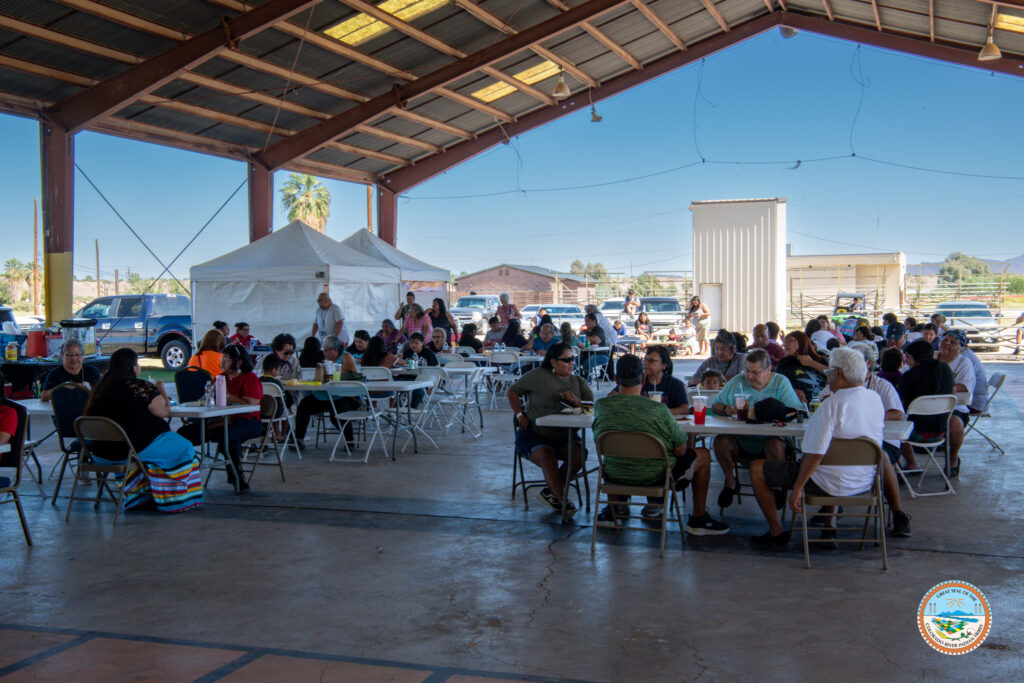
Throughout the day, families enjoyed a wide variety of activities. Native language bingo quickly became a favorite, teaching words from the four tribal languages—Mohave, Chemehuevi, Hopi, and Navajo—in a fun and interactive way. Smiles and laughter filled the air as people competed for prizes while learning more about their heritage.
The regalia presentations were a true highlight of the afternoon. Toddlers charmed the crowd in their tiny regalia while older youth and adults showcased beautifully crafted dresses and traditional wear. The pride and joy that radiated from each participant created a powerful reminder of the beauty and strength of tradition. (more…)
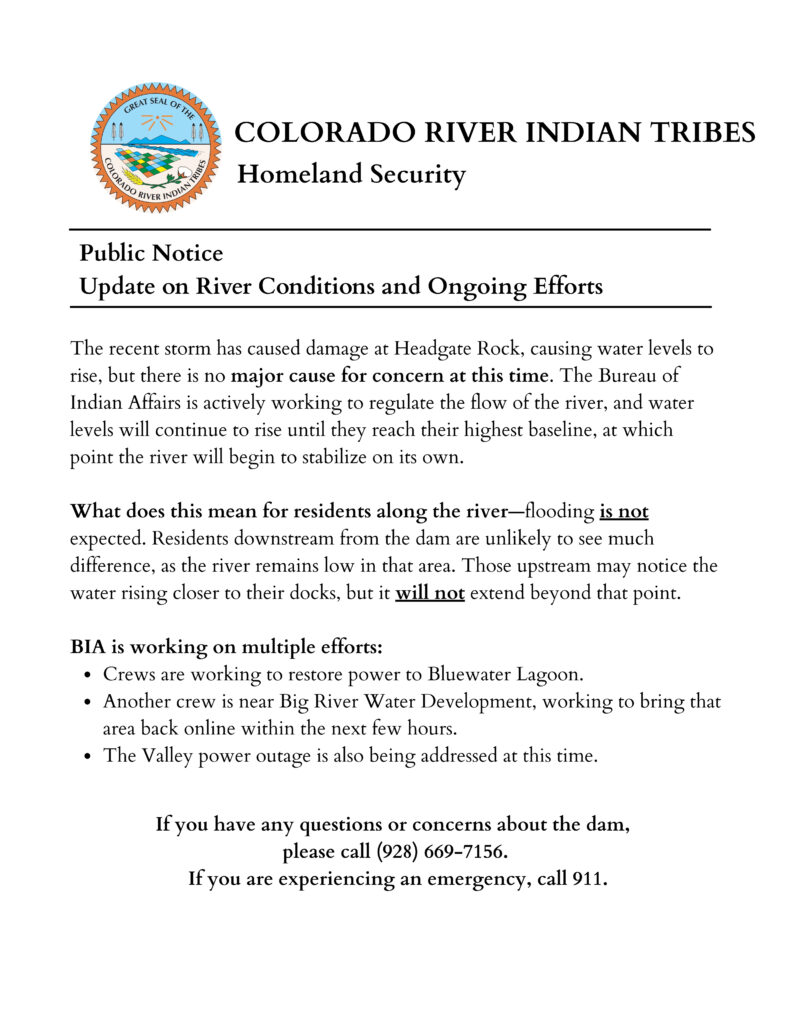
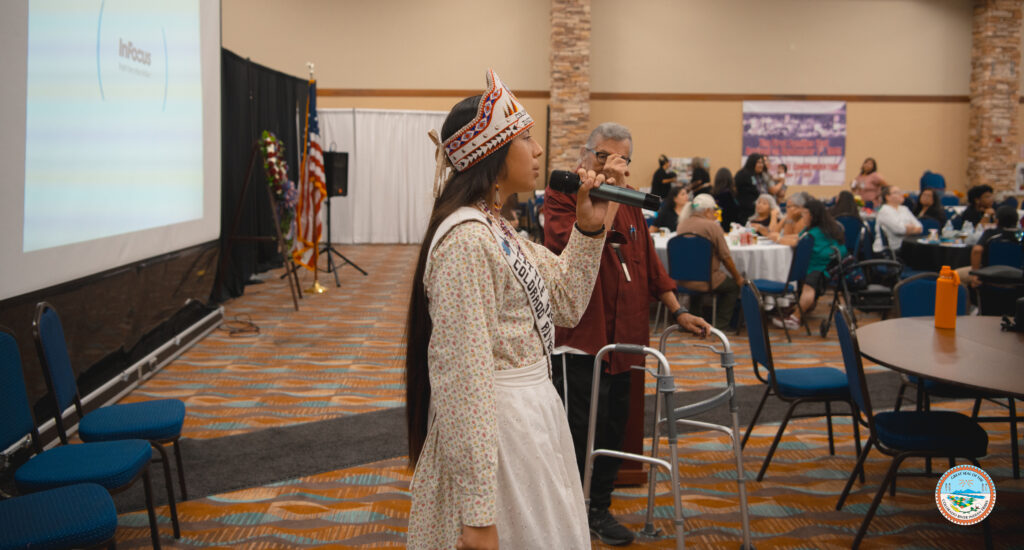
The Colorado River Indian Tribes (CRIT) is honoring a historic milestone this year with the 80th Anniversary of the Hopi and Navajo Migration to what is now known as the CRIT Reservation. The celebration not only commemorates the journey of the Hopi and Navajo people in 1945 but also reflects on the cultural richness and resilience they brought with them, shaping CRIT as we know it today.
In 1945, following World War II, the Bureau of Indian Affairs initiated a relocation project that brought both Hopi and Navajo families from northern and northeastern Arizona to the CRIT Reservation. They joined the Mohave and Chemehuevi people already living on the land, forming what is now a unique and diverse community of four distinct tribal groups. For the Hopi, this migration continued their long tradition of settled village life. Known for their deep connection to religion and ceremony, the Hopi brought their agricultural expertise in dry farming as well as their renowned artistry — pottery, overlay jewelry, and kachina doll carving. The Navajo, also part of this relocation, carried with them strong traditions of craftsmanship and resilience. They were celebrated silversmiths, a skill believed to have been introduced by Spaniards, and Navajo women were widely known for their weaving of colorful intricate rugs. (more…)