March 2, 2026 3:04 pm
CRIT Nation, Parker, AZ
March 2, 2026 3:04 pm
CRIT Nation, Parker, AZ

The Colorado River Indian Tribes (CRIT) Water Resources Department is now accepting proposals for Drain Cleaning and Mechanical Vegetation Management services for the Colorado River Irrigation Project (CRIP) near Parker and Poston, Arizona.

This project supports the continued care and functionality of CRIT’s irrigation system, which is vital to agricultural operations and stewardship of the Colorado River. Qualified contractors are encouraged to review the full Request for Proposals and submit by the stated deadline.

For full details, submission guidelines, and requirements, click the link below.

2026-01-29 CRIT RFP Drain Cleaning CRIP_Final

According to Arizona Mirror, Colorado River negotiations hit a setback as Lower Basin states, including Arizona, criticized Upper Basin states for resisting deeper water conservation commitments. Officials say ongoing drought conditions and declining reservoir levels are increasing pressure to finalize new operating rules before current guidelines expire. The disagreement highlights continuing tension over how water reductions should be shared across the basin. For CRIT, these negotiations are important because interstate agreements and federal management decisions directly influence how tribal water rights are protected and incorporated into long-term river planning.

Source: Arizona Mirror — https://azmirror.com/2026/02/13/arizona-blasts-upper-basin-states-for-refusing-cuts-as-colorado-river-talks-fail/

According to the Arizona Department of Water Resources, state officials say they will continue protecting Arizona’s Colorado River resources even after basin states failed to reach a consensus ahead of the federal deadline. Leaders emphasized ongoing drought challenges and the need for continued negotiations to maintain stability for water users across the region. State agencies say collaboration with federal partners and neighboring states remains essential moving forward. For CRIT, continued state and federal coordination is significant because long-term Colorado River policies directly affect how tribal water rights are recognized and sustained.

Source: ADWR Statement — https://azwaternews.com/2026/02/13/021326_statement/

According to USA Today, Colorado River negotiations approached a critical deadline without a final agreement, reflecting ongoing disputes over how to manage shrinking water supplies across the Southwest. Experts say declining snowpack, persistent drought, and competing demands are making consensus more difficult as states prepare for new post-2026 operating guidelines. Federal involvement may increase if states cannot reach agreement. For CRIT, these developments matter because federal river management decisions play a key role in protecting tribal water rights and ensuring long-term water security.

Source: USA Today — https://www.usatoday.com/story/news/nation/2026/02/13/colorado-river-deal-deadline/88658491007/

According to Arizona Water News, Arizona water leaders recently received a briefing from the governor’s office, the Arizona Department of Water Resources, and the Central Arizona Project on ongoing Colorado River negotiations as a federal deadline approaches. Officials discussed current drought conditions, possible future cutbacks, and the importance of coordinated state and federal planning to stabilize river supplies. The briefing highlights continued uncertainty as states work toward new post-2026 operating guidelines for the river. For CRIT, these negotiations are important because federal and interstate decisions on Colorado River management directly influence how tribal water rights are protected and incorporated into long-term planning.

Source: Arizona Water News — https://www.azwater.gov/news/articles/2026-02-11

According to KJZZ News, Colorado River basin states are facing a federal deadline to reach an agreement on future water management rules, with uncertainty remaining about whether consensus can be reached in time. Experts say possible outcomes range from short-term agreements to federal intervention if negotiations stall, reflecting ongoing tension between Upper Basin and Lower Basin states. Continued drought and competing water demands have made long-term planning increasingly complex. For CRIT, these negotiations matter because federal decisions about river operations directly affect how tribal water rights are recognized and sustained within the broader basin framework.

Source: KJZZ News — https://www.kjzz.org/the-show/2026-02-12/colorado-river-states-are-staring-down-a-feb-14-deadline-heres-what-might-happen-next

According to the Lake Powell Chronicle, federal officials have outlined a post-2026 framework aimed at preventing further decline of the Colorado River system as drought pressures continue. The proposed blueprint focuses on conservation strategies, operational adjustments, and coordinated planning among basin states to stabilize reservoir levels and long-term water supplies. These discussions reflect ongoing efforts to balance environmental conditions, population growth, and water demand across the Southwest. For CRIT, long-term federal planning for the Colorado River is significant because these policies help shape how tribal water rights are protected and managed for future generations.

Source: Lake Powell Chronicle — https://lakepowellchronicle.com/stories/feds-unveil-post-2026-blueprint-to-avert-colorado-river-collapse,99303

According to ABC 15 Arizona, researchers at Arizona State University are developing technology that converts industrial wastewater into ultra-pure water, potentially expanding future water reuse options in the Southwest. Scientists say advanced treatment methods could help supplement limited freshwater supplies while supporting growing populations and industries. Water recycling and reuse are increasingly discussed as part of long-term drought resilience strategies. For CRIT, emerging water reuse technologies may play a role in future regional water planning as tribes, states, and federal agencies work to protect limited Colorado River resources.

Source: ABC 15 Arizona — https://www.abc15.com/news/local-news/asu-turns-industrial-wastewater-into-ultra-pure-water

(more…)

According to KJZZ News, potential Colorado River cutbacks could increase operating costs for Arizona water utilities and even affect their credit ratings, which utilities rely on to fund infrastructure projects. Analysts say uncertainty around long-term river supplies makes financial planning more difficult and could raise costs tied to water treatment, delivery, and conservation investments. These financial ripple effects show how water shortages extend beyond environmental concerns into economic stability across the region. For CRIT, shifts in regional water costs and infrastructure planning can influence broader river management decisions that ultimately affect how tribal water rights are maintained and utilized.

Source: KJZZ News — https://www.kjzz.org/the-show/2026-02-11/colorado-river-cuts-could-increase-arizona-utilities-costs-and-affect-their-credit-ratings

According to the Sierra Vista Herald Review, basin states are facing an approaching deadline to agree on new Colorado River management guidelines before current rules expire. Ongoing disagreements between Upper Basin and Lower Basin states, combined with continued drought pressures, have slowed negotiations and raised concerns about potential legal disputes if a consensus is not reached. Federal oversight remains a key factor in shaping how future allocations will be determined. For CRIT, these negotiations are important because federal river management decisions directly affect how tribal water rights are recognized, protected, and incorporated into long-term basin planning.

Source: Sierra Vista Herald Review — https://www.myheraldreview.com/news/state/deadline-approaches-for-colorado-river-negotiations/article_5dd6fa1d-eed1-4d98-82f2-4a754853da3c.html

According to KTNV Channel 13 News in Las Vegas, low snowpack levels across the Mountain West are raising concerns about water supplies for Southern Nevada and the broader Colorado River Basin. Snowpack acts as a natural reservoir that feeds rivers and storage lakes during spring runoff, so below-average levels can reduce future water availability and increase pressure on already stressed reservoirs. Experts say continued dry conditions could complicate long-term water planning across the Southwest. For CRIT, declining snowpack is significant because reduced river flows can influence future allocation decisions and federal management strategies affecting tribal water resources.

Source: KTNV News — https://www.ktnv.com/news/why-low-snowpack-levels-raising-alarms-for-southern-nevada-water-supply

According to Newsweek, new data showing concerning water levels at Lake Powell is adding to ongoing worries about the long-term stability of the Colorado River system. Reservoir levels play a critical role in determining water deliveries, hydropower production, and shortage declarations throughout the Southwest. Continued drought conditions combined with sustained demand have kept pressure on the basin’s major storage systems. For CRIT, reservoir conditions remain important because federal water management decisions tied to storage levels directly affect how tribal water allocations are managed and protected.

Source: Newsweek — https://www.newsweek.com/lake-powell-water-levels-as-concerning-data-revealed-11500468

According to the Center for Colorado River Studies at Utah State University, Lake Powell and Lake Mead have recently shown differing storage trends, reflecting the complexity of managing water across the Colorado River system. Researchers say reservoir operations, inflows, releases, and ongoing drought conditions all contribute to shifting water levels that can affect supply planning throughout the basin. Understanding how these reservoirs interact is key to long-term river management decisions. For CRIT, these reservoir dynamics matter because federal operational decisions tied to storage levels directly influence how Colorado River water is allocated and protected for tribal communities.

Source: Center for Colorado River Studies — https://qanr.usu.edu/coloradoriver/news/blog-2026-2-9

According to KJZZ News, the Colorado River Basin is experiencing one of its driest winters in decades, with snowpack levels far below average in key areas that supply water to Lake Powell and Lake Mead. Scientists warn that reduced snowpack could lead to lower river flows this year, increasing pressure on already strained reservoirs and complicating ongoing negotiations over long-term water management. Because snowpack acts as the primary natural storage system for the river, weaker winters often translate into tighter water supplies downstream. For CRIT, these conditions matter because reduced river flows can influence future allocation decisions, federal management strategies, and long-term planning for tribal water resources.

Source: KJZZ News — https://www.kjzz.org/science/2026-02-09/the-colorado-river-is-having-its-driest-winter-in-decades

According to ABC News, record-low snowpack across much of the western United States is raising concerns about potential water shortages, wildfire risks, and continued stress on major river systems including the Colorado River. Experts say warmer temperatures and shifting precipitation patterns are reducing snow accumulation that normally feeds reservoirs during spring runoff. These trends could influence future water allocation planning as states and federal agencies work toward updated river management strategies. For CRIT, changes in snowpack levels matter because they directly affect Colorado River flows that shape long-term water availability and policy decisions impacting tribal communities.

Source: ABC News — https://abcnews.com/US/wireStory/record-snow-drought-western-us-raises-concern-spring-130016613

According to the San Mateo Daily Journal, a key deadline is approaching for Colorado River basin states to reach an agreement on new water management rules before current guidelines expire. Ongoing disagreements between upper and lower basin states, combined with persistent drought conditions, have slowed progress and increased concerns about potential legal disputes if consensus is not reached. Federal oversight plays a major role in shaping these negotiations, particularly for the Lower Basin where water allocations are closely regulated. For CRIT, these negotiations are significant because future federal river management decisions directly affect how tribal water rights are recognized, protected, and incorporated into basin planning.

Source: San Mateo Daily Journal — https://www.djournal.com/news/national/deadline-approaches-for-colorado-river-negotiations/article_5a129b32-06cb-50c0-8945-5186943db1db.html

According to KJZZ News, a new groundwater monitoring tool developed in Nevada is helping scientists better understand how groundwater pumping affects habitats, water availability, and long-term sustainability across the Mountain West. Researchers say improved data can support more informed water management decisions as communities balance development, agriculture, and environmental needs. Groundwater use is increasingly important as surface water supplies face ongoing pressure from drought and climate variability. For CRIT, regional groundwater management discussions matter because they influence broader basin water planning and long-term strategies for protecting tribal water resources.

Source: KJZZ News — https://www.kjzz.org/science/2026-02-08/a-nevada-groundwater-tool-highlights-strained-habitats-with-lessons-for-the-mountain-west

According to Reuters, the Colorado River has been identified as the most endangered river in the United States due to ongoing drought, rising demand, and increasing pressure on its limited water supplies. Experts say declining reservoir levels, climate impacts, and competing state interests continue to challenge long-term sustainability across the basin. The designation highlights growing national attention on the need for cooperative water management and conservation efforts. For CRIT, this recognition underscores the importance of protecting tribal water rights as regional policies evolve to address long-term river stability.

Source: Reuters — https://www.reutersconnect.com/item/colorado-river-is-named-the-most-endangered-river-in-the-united-states-as-the-southwestern-states-face-water-shortages/dGFnOnJldXRlcnMuY29tLDIwMjI6bmV3c21sX1JDMjBRVDlVUEZKMg

According to KJZZ News, Colorado River negotiators may be leaning toward a short-term agreement as states remain divided on a long-term plan for managing the river before current operating rules expire. Ongoing drought, climate pressures, and disagreements between Upper Basin and Lower Basin states have stalled progress, and some officials believe a temporary deal could help avoid a major court battle while allowing more time for negotiations. Is a five-year deal better than no deal? As Nevada water negotiator John Entsminger noted, “If the alternative is litigation… then a five-year deal starts pretty good,” reflecting concerns that legal disputes could complicate future water management even further. For CRIT, these discussions remain important because federal river management decisions, compact negotiations, and potential legal outcomes directly affect how tribal water rights are protected, recognized, and sustained for future generations.

According to AZ Free News, the Arizona House has approved an additional $1 million for the state’s Colorado River litigation fund, signaling growing concern that water allocation disputes could end up in court as negotiations over future river management continue. State leaders say the funding is meant to ensure Arizona is prepared to defend its interests if talks between basin states break down, reflecting increasing tension as drought, population growth, and competing demands strain the river system. Legal disputes have historically shaped water distribution in the Lower Basin, including the Arizona v. California Supreme Court decision that affirmed tribal water rights. For CRIT, continued legal developments around Colorado River allocations are significant because court decisions often influence how tribal water rights are protected, enforced, and recognized in future negotiations.

According to the Las Vegas Review-Journal, ongoing drought conditions and limited snowpack are increasing pressure on Colorado River water supplies, raising concerns that the basin may face even tighter shortages in the near future. Experts note that declining reservoir levels and continued demand across the Southwest make it harder to stabilize the system, especially as negotiations continue over future operating rules. Some officials warn that without significant conservation or improved conditions, legal disputes between basin states could become more likely. For CRIT, ongoing shortage risks matter because long-term river stability and federal allocation decisions directly influence how tribal water rights are protected and exercised.

According to Arizona Capitol Times, a judge is reviewing whether agricultural groundwater pumping by Fondomonte in western Arizona constitutes a public nuisance, a case that could shape future groundwater regulation statewide. The lawsuit argues that heavy pumping may be affecting nearby wells and water sustainability, highlighting ongoing tensions between agriculture, development, and long-term water conservation. Outcomes from cases like this can influence how groundwater use is monitored and regulated across Arizona. For CRIT, groundwater policy discussions are important because regional water management decisions can affect broader basin planning and long-term protection of tribal water resources.

According to Nevada Current, growing data center development across the Southwest is increasing demand for both water and power, raising concerns among regulators and rural communities about sustainability. Large technology facilities often require significant cooling resources, prompting discussions about infrastructure planning, water efficiency, and future resource allocation. As population growth and technology expansion continue, water demand from emerging industries is becoming part of broader basin conversations. For CRIT, rising industrial water demand across the region highlights the importance of protecting tribal water rights and ensuring long-term sustainability of Colorado River resources.

Article written by CRIT Media Reporter Ariana Romero

(more…)

End of January 2026

Axios Phoenix
Governor Katie Hobbs traveled to Washington, D.C. to meet with federal officials and other Basin state governors as the deadline to reach a Colorado River agreement approaches. Arizona is pushing to avoid deeper mandatory cuts that would heavily affect Central Arizona Project deliveries.

Colorado Sun
Colorado Governor Jared Polis and the state’s top water negotiator joined the D.C. meetings, signaling growing urgency among Upper Basin states. Officials acknowledged drought forecasts are “exceedingly grim,” with reservoirs unlikely to recover soon.

Las Vegas Weekly
Nevada and six other Basin states are running out of time to agree on a plan for managing the shrinking Colorado River. If no consensus is reached, the federal government is expected to impose its own operating rules.

Rep. David Schweikert Press Release
Congressman Schweikert introduced the “Equal Access to the Colorado River Act,” claiming it would protect Arizona during future shortages. The proposal focuses on reallocating access during drought conditions.

Prescott eNews
Panels of experts and negotiators warned that despite ongoing talks, major disagreements remain unresolved. Some officials are openly preparing for legal and political fights if negotiations fail.

Post Independent
Colorado officials are signaling readiness to fight for their water allocations if no deal is reached, reflecting hardened positions among states.

Arizona Republic / State Affairs
New legislation would make it easier to move water from rural Arizona to growing cities, including changes affecting irrigation and groundwater use.

NBC Palm Springs / LA Times
California officials are debating how to manage water deliveries as federal Colorado River rules near expiration. Environmental groups warn that ecosystem collapse is possible if large diversions continue.

Nevada Independent
Nevada’s warmer winter may reduce snowpack and hydropower generation, potentially increasing water and energy costs for residents.

KJZZ
Arizona lawmakers advanced legislation to increase the state’s Colorado River litigation fund, signaling preparation for court battles if negotiations collapse. Colorado is doing the same, underscoring how close the basin is to legal confrontation rather than collaboration.

KJZZ
Central Arizona Project leaders warned that deep federal water cuts would severely impact Arizona communities, agriculture, and economies that rely on CAP deliveries.

Arizona Water News (ADWR)
Arizona’s water director told state lawmakers that the Colorado River is entering a “new paradigm” where historic rules no longer match hydrology or climate reality. Long-term shortages are now assumed, not hypothetical.

California Department of Water Resources 
California announced increased State Water Project allocations following December storms, improving flexibility for cities and farms. Officials emphasized that this does not end long-term supply risks. (more…)

The Colorado River is not just a water source for the Colorado River Indian Tribes (CRIT); it is the foundation of life, culture, and survival on the Reservation. It sustains farms and families, supports wildlife, and holds deep cultural and spiritual meaning for the Tribes who have lived along its banks for generations. For CRIT, decisions about the river are not abstract policy debates, they directly affect the Tribe’s ability to live, govern, and prosper for future generations.
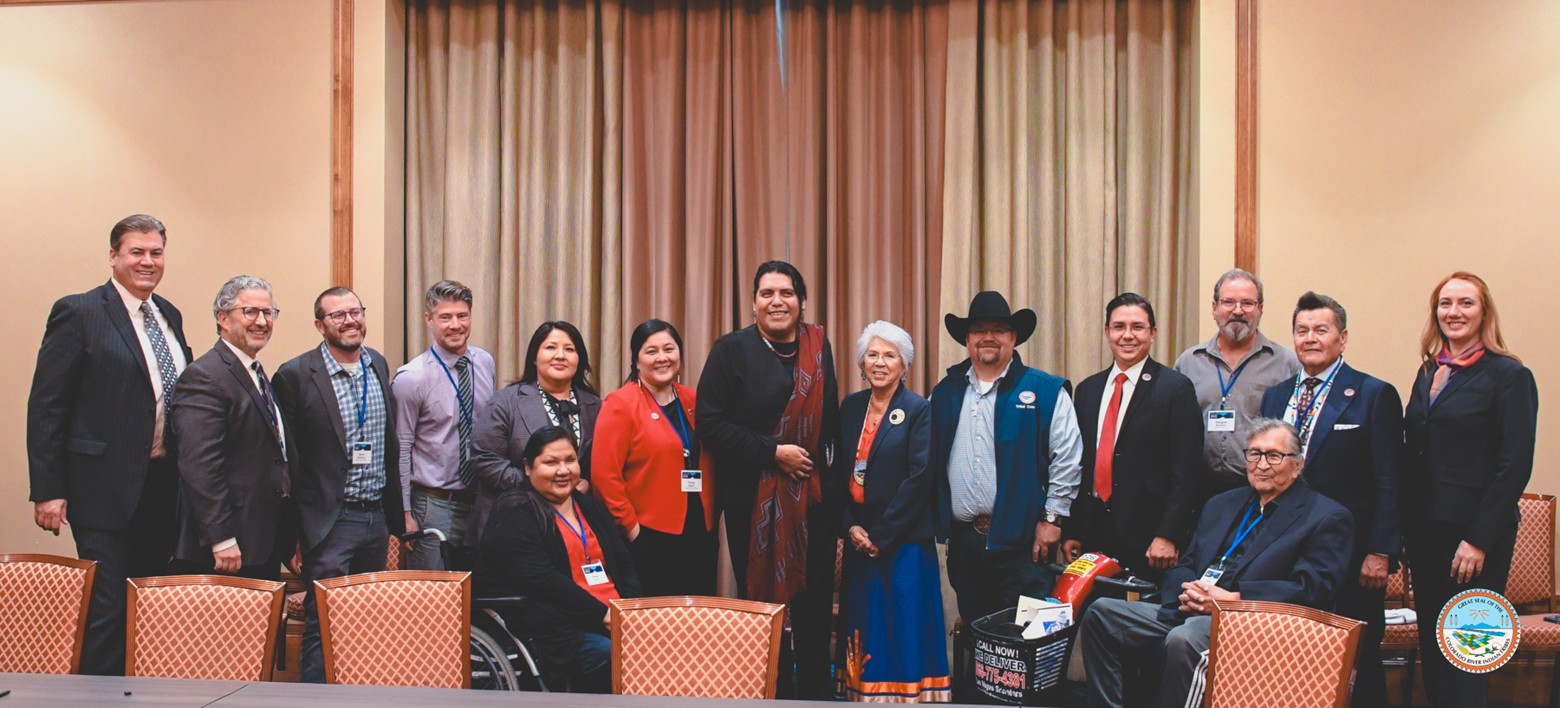
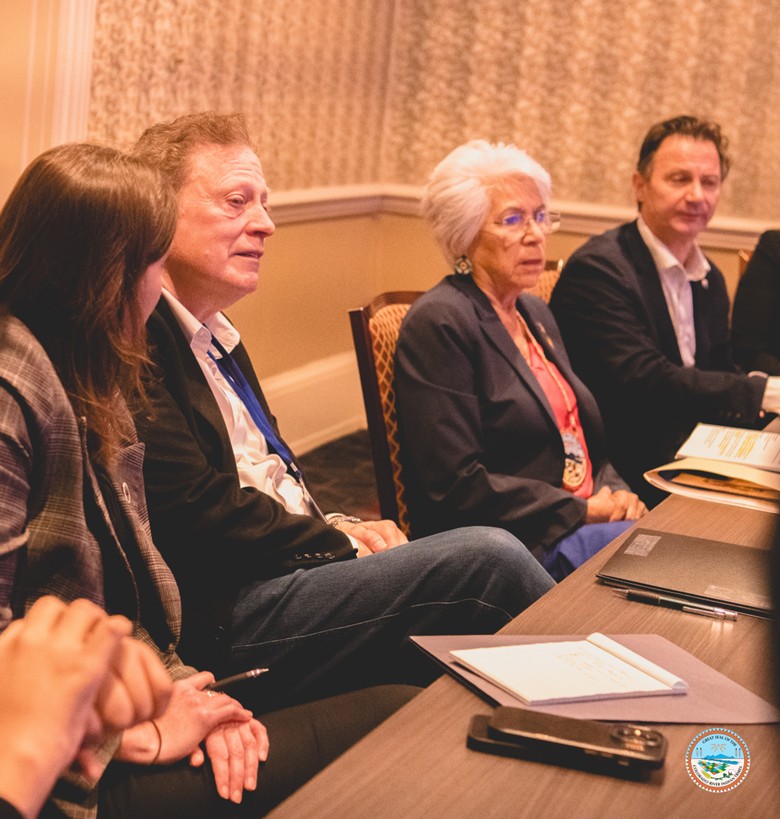
END LEFT THROUGH RIGHT SIDE: Tom Farley, Public Affairs, LLC., John Bezdek, Lead Water Attorney, Devin Rhinerson, D.C Lobbyist, Zach Stevens, Managing Attorney, CRIT Councilwoman Raeanne Patch, Councilwoman Anisa Patch, Councilwoman Tracey Quillen, Councilman Tommy Drennan, Chairwoman Amelia Flores, Chairman Billy Beeson, CRIT Deputy Attorney General Travis Nez, Douglass F. Bonamici, CRIT Office of Attorney Generals Law Clerk, Dillon Esquerra, Director of CRIT Water Resources, Vice Chairman Dwight Lomayesva, and Holly Roberson, Water Attorney.

That reality framed a series of high-level meetings held alongside the Colorado River Water Users Association (CRWUA) Conference, where CRIT was represented by a unified and prepared delegation consisting of Tribal Council, legal counsel, the CRIT Attorney General’s Office, Public Affairs, and the Tribe’s Washington, D.C. and Phoenix lobbying teams, all actively engaged in advancing and defending CRIT’s water rights and sovereignty.

This delegation engaged in multiple meetings with neighboring tribes, federal agencies, state representatives, and regional water districts. As the Colorado River Basin approaches major changes after 2026, these discussions focused on the future of the river, tribal water rights, and CRIT’s role as a sovereign water authority.

At the center of these discussions was a clear and unwavering position from CRIT: the Tribe’s senior water rights, tribal sovereignty, and responsibility to protect the Colorado River are not negotiable. CRIT Deputy Attorney General Travis Nez explained that the Tribe is expanding its agricultural footprint by investing in and growing farming operations on the Reservation. This ensures that the Tribe’s water is put to use on tribal lands to generate the greatest possible economic benefit for the community. While many water users across the Basin are reducing agricultural use, CRIT is intentionally increasing on-reservation water use to reclaim water that has historically gone unused and to convert it into long-term economic benefits for the Tribe.
LEFT to RIGHT: Andrea Travicek, Assistant Sec. of Water & Science, Dept. of Interior, Scott Cameron, Acting Commissioner, BOR, Amelia Flores, Chairwoman of the Colorado River Indian Tribes, Dave Palumbo, Deputy Commissioner of Operations, BOR.

CRIT leadership and the Tribe is fully cognizant that neighboring and downstream entities have economically benefited for decades from CRIT’s unused Colorado River allocation. This includes large regional water agencies such as the Metropolitan Water District of Southern California. Their Colorado River Aqueduct diverts water at Lake Havasu upstream of the CRIT Reservation, supporting municipal growth and generating substantial economic value. Simultaneously, CRIT’s own ability to fully use its water has long been constrained by outdated irrigation infrastructure constructed and controlled by the Bureau of Indian Affairs (BIA). (more…)

When people talk about climate change, it can sound political or exaggerated, but at its core, it’s about environmental changes we can measure over time. Scientists like Brad Udall, who studies long-term weather patterns, have found that the Earth’s average temperature has risen slightly over the past century, mostly because of how people consume energy. When coal, gas, or oil is burned, it releases gases that trap more heat in the atmosphere, like a blanket wrapped around the planet. Despite whether someone believes it is man-made or not, climate change forces us to pay attention, and develop methods to protect the land and water that sustain us.

On Monday, September 29th, Udall, an internationally recognized scientist on water and climate change from Colorado State University, visited the Colorado River Indian Reservation to share his latest findings on the Colorado River. He spoke with Tribal leaders about what the future may hold.

Udall is known for his research on the connection between climate change and river systems in the American West. He has spent decades studying how heat, drought, and rainfall affect water levels, especially in the Colorado River Basin. Additionally, Udall co-wrote parts of the U.S. National Climate Assessment, and has testified before the United States Congress about the effects of climate change on western water supplies. His work focuses on researching solutions that balance the needs of people, agriculture, and the environment.

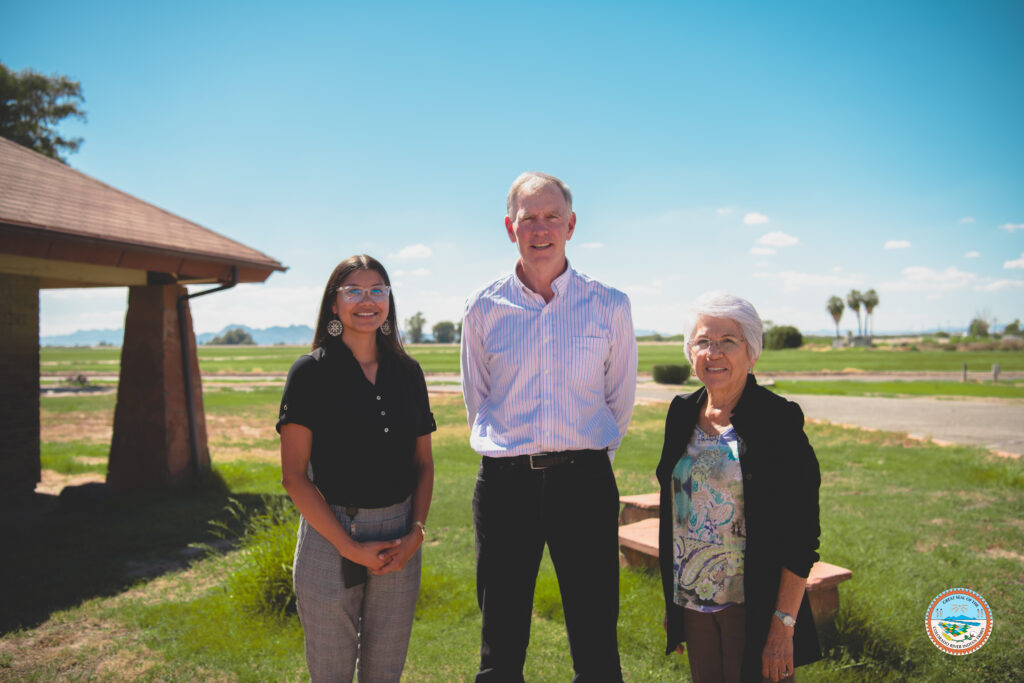
When Udall met with Tribal leadership at the Colorado River Indian Tribes (CRIT) Council Chambers, he was greeted by Chairwoman Amelia Flores, Councilwoman Vanessa Welch, CRIT Attorney General Rebecca Loudbear, CRIT Water Resources Director Dillion Esquerra, CRIT Realty Commercial Manager Herman “TJ” Lafoon Jr., and CRIT Lead Water Attorney John Bezdek.
During his presentation, Udall explained that flows in the Colorado River have dropped about 20% since the year 2000, and that precipitation – the rain and snow that feed the river – is also down about 20%. He said several studies have found that this isn’t just a temporary drought, but a long-term trend he believes is caused largely by human-driven climate change. Temperatures are rising across the Southwest, and according to Udall, “We are now on target for 3 degrees Celsius of warming by the year 2100.” Udall reiterated that his studies show this increase in temperatures is based on an average of estimates, and that temperatures in certain areas, including the desert southwest, could see higher increases.

Udall described the situation as serious and with little optimism. He shared that some scientists are exploring ideas like adding sulfur dioxide to the atmosphere to help cool the planet, though he said most researchers are cautious about such steps because they involve more human interference in nature. “It’s not a perfect solution,” he explained, “but it shows how far people are thinking about how to slow down the warming.” Councilwoman Vanessa Welsh was thankful for Udall’s frankness about the situation stating, “Many of us do know this, but we don’t hear it very often…We intend to protect the river as one of our own.” (more…)

The Department of Revenue and Finance Welcomes Director

The Colorado River Indian Tribes is pleased to welcome Andrew Quillen as the new Director of the Revenue and Finance Department.

Mr. Quillen is a CRIT tribal member who was born and raised in the community. He brings both professional experience and a deep personal connection to the reservation into his new leadership role. He has worked for the Tribes for the past three years and has steadily grown within the department.

Mr. Quillen earned his Bachelor of Arts degree in Business Administration with a concentration in management from the University of La Verne. Upon returning to Parker, he began his career with the Tribes as a tax examiner and revenue agent. He quickly found that the work aligned with his long-standing interest in business, compliance, and economic development.

When the former Revenue and Finance Director was elected to Tribal Council, Mr. Quillen felt it was the right time to step forward and continue the work the department had already established. His background in sales, service, and compliance has helped shape his understanding of how the department supports businesses and the community as a whole.
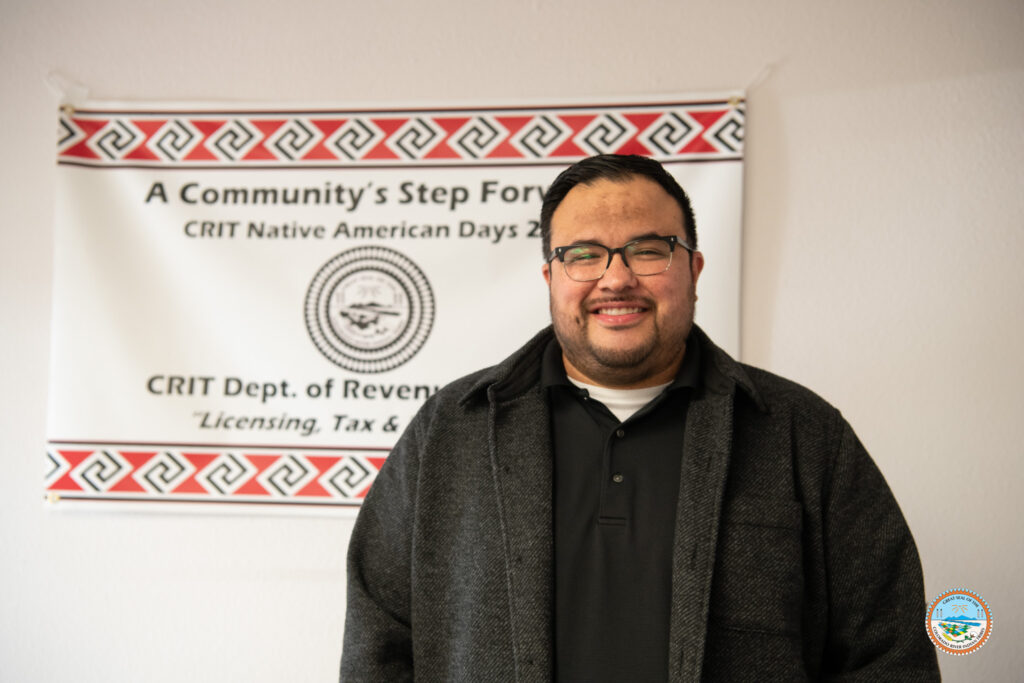
As a lifelong community member, Mr. Quillen understands the economic landscape of the reservation and the opportunities for growth. One of his personal goals is to see more tribal members become business owners. Being part of the reservation’s continued development is something that holds special meaning for him. (more…)

The Colorado River Indian Tribes Utilities Department has welcomed a familiar face into its leadership, naming Alex Covarrubias Jr. as the new Utilities Director.

Covarrubias is a Parker and Poston local who grew up in the community he now serves. His career in the water industry began in 2013, giving him more than a decade of hands-on and leadership experience in the field.

He started his professional journey working in Big River for three years before joining CRIT Utilities, where he served as Water Department Supervisor. During his time with the Tribe, Covarrubias gained valuable experience learning the day-to-day operations of the department and the importance of understanding the work from the ground up.

“Learning the ins and outs of the job builds character,” Covarrubias said. “I’m glad I was able to learn from the bottom.”

In 2022, he stepped away from CRIT Utilities to continue building his experience, working with the Rural Water Association of Arizona. Along with his previous roles, Covarrubias has spent years in management and believes that with a good attitude and strong work ethic, he can be an effective leader.

Returning to CRIT Utilities as Director is a full-circle moment for Covarrubias, and one he says he is excited about.

CRIT Utilities oversees essential services including water, wastewater, and solid waste for the reservation. Having spent years doing hands-on work in the field, Covarrubias believes that experience helps him better support his team. (more…)