A new federal policy proposal is threatening to Colorado River tribal water rights, and tribal leaders are fighting back. The Colorado River Indian Tribes (CRIT) issued a forceful set of comments in response to the Bureau of Reclamation’s Draft Environmental Impact Statement (DEIS) outlining proposed alternatives for post-2026 operations for Lake Powell and Lake Mead.
In its current form, the DEIS includes an analysis of several alternatives for Colorado River operations that would distribute water shortages by cutting water to all users on a pro-rata basis. By doing this, it aims to treat all users the same, regardless of priority date. For CRIT, which holds senior rights in the Lower Colorado River, rights that date back to 1865, and are protected under the Supreme Court decree in Arizona v. California. Such an approach would undermine the very legal foundation that secures the Tribe’s access to water. Making matters worse, the draft also relies on assumptions tied to current consumptive use. This framework risks penalizing CRIT for the Bureau of Indian Affairs’ (BIA) failure to efficiently operate and properly maintain the Colorado River Indian Irrigation Project, which is the primary means for CRIT to use its water.
If this draft is finalized without any changes, and these policies are put into action, some of the alternatives proposed in the report would represent significant policy shift for Colorado River management. Current operating agreements that govern the river expire at the end of 2026, which is the reason for federal officials to develop new guidelines intended to manage rising demand. Currently, there is extreme pressure to find solutions due to worsening drought conditions, declining reservoir levels, and increasing uncertainty across the basin.
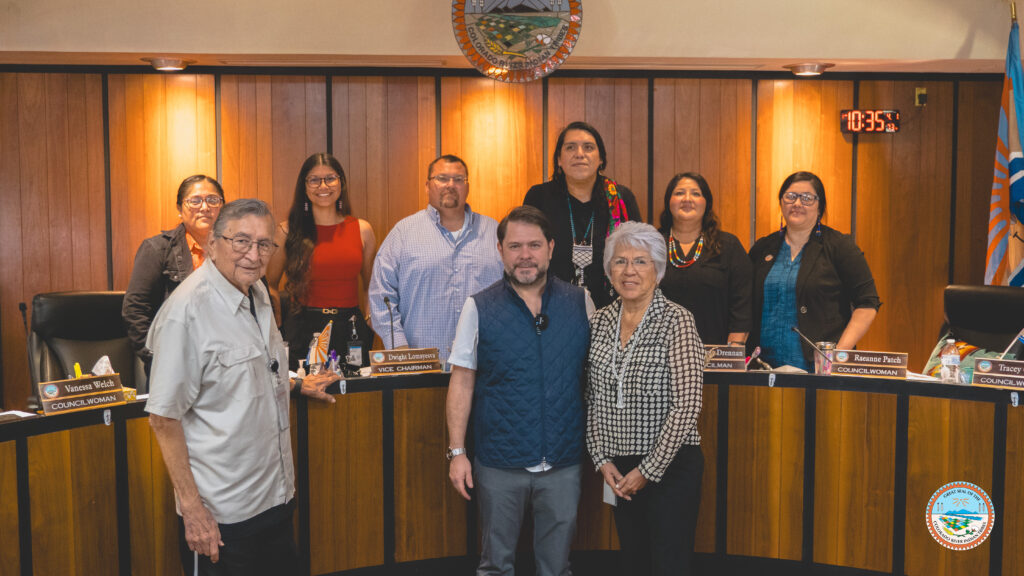
In its response, CRIT asserts that several proposed federal approaches conflict with long-established water law and threaten to undermine the Tribe’s senior water rights. CRIT’s comment letter warns that without significant revision, the draft could place federal actions in violation of existing U.S. Supreme Court decrees. In its letter, Tribal Council made very clear to the Secretary of the Interior and Reclamation officials that it will take any actions it deems necessary to protect CRIT’s rights, including litigation before the Supreme Court.
Why Pro-rata should never be considered:
Pro-rata was put into consideration under the previous presidential administration, and continues on in the current government. This was one of several potential alternatives to address the significant shortages in Arizona, which stands to lose at least 27% of its entire water allocation. Under the Department of the Interior’s (DOI) pro-rata concept, they would address water shortages by cutting deliveries evenly among users based on the percentage of water they currently use (or consume), rather than on each user’s legal priority.
Priority Matters: First in Time – First in Right
A water-user’s ‘priority’ is like a place in line, users at the front of the line are usually those who established their right to use water first. They get their water first, and in full, while lower-priority users, who established their water rights later in time, get their full share of water if there is still enough to go around. Only in times of extraordinary shortage, and after all lower-priority users are cut to zero, would ‘first-priority’ users have to take less than they are legally entitled to use. This is a long-established truth about Western U.S. water law: though it can lead to harsh outcomes, first in time = first in right… and all western water-users know this is how water law works.
But under a pro-rata approach, the Priority system would conveniently disappear, and all water users, regardless of when their rights were established, would share reductions during times of shortage. For CRIT, whose water rights are among the most senior in the Lower Basin, a pro-rata system represents a fundamental shift away from long-standing legal principles that have historically governed how Colorado River water is distributed.
Pro-rata has been vehemently opposed by CRIT leaders as a violation of the law and an attack on CRIT tribal sovereignty. On two separate occasions in the past 6 months, leaders from DOI and Reclamation have met with Council. On both of those occasions, Tribal Council has been forceful that pro-rata shortages are illegal.
Due to a hotter and drier climate, reservoirs at Lake Mead and Lake Powell have dropped to historically low elevations, and federal officials warn that existing management strategies have not been sufficient to stabilize the system. The DEIS proposes a range of operational alternatives designed to balance two competing priorities; 1) maintaining water deliveries to users across seven states, and 2) protecting reservoir storage in order to maintain infrastructure integrity.
Federal officials state that new guidelines are needed to provide predictability to water users while adapting to increasingly dry conditions expected in the future. The proposed framework would guide operations for up to 20 years, beginning in October 2026. CRIT argues that portions of the draft plan conflict with established federal law and the Supreme Court Decree governing the Colorado River.
Water Rights and Infrastructure Challenges
CRIT’s response also highlights longstanding infrastructure challenges affecting the Colorado River Indian Irrigation Project (CRIIP). Since its original construction, the irrigation system serving the Reservation has seen little modernization or meaningful improvement to meet 21st-century operational standards. As a result, aging canals leak significant amounts of water into the ground before it ever reaches a field or crops, and the canals operate so inefficiently that enormous amounts of water is allowed to spill off the end of the system, straight back into the Colorado River, without ever being turned out onto a field.
Addressing this problem is no simple undertaking. The irrigation system is federally owned and managed by the Bureau of Indian Affairs (BIA), an agency that has faced decades of declining funding and limited operational capacity. According to CRIT’s response, these systemic challenges have prevented the Tribe from fully utilizing water.
The passage of the Colorado River Indian Tribes Water Resiliency Act of 2022 further strengthens this effort by granting CRIT the authority to store, conserve, and lease its water. Historically, the water has been lost through deteriorating canals can instead be preserved for tribal agriculture, community development, and, if the Tribe chooses, leased to generate revenue that directly benefits CRIT and its members. The Tribe’s adoption of its Water Code and recognition of the Colorado River’s Personhood Status under tribal law further reinforces this framework of sovereignty and stewardship. One of the main goals for CRIT in pursuing these efforts is to expand agricultural operations across the reservation. These efforts will create greater opportunities for Tribal members and ensure long-term prosperity for the community and more importantly, for future generations.
CRIT also forcefully argues that Reclamation must acknowledge the Personhood Status of the Colorado River under tribal law. The Tribe claims that the DEIS must analyze the impacts on the Colorado River from diverting water for use in central Arizona. The water is best left in-stream to benefit and protect its status as a living entity, which provides spiritual, cultural, and religious benefits to tribal members.
Taken together, these developments underscore why CRIT views the current federal proposal as a defining moment. This is why pro-rata should never be considered, because it undermines all the progress CRIT has made to ensure it can use its water rights entirely, and within the long-established, existing legal framework. The Tribe’s response makes clear that decisions affecting the Colorado River cannot move forward without full recognition of tribal rights and authority. CRIT has signaled that it is prepared to defend those rights, and if necessary, take this matter to the United States Supreme Court.
Read the document in its entirety – Comments from the Colorado River Indian Tribes on the Draft Environmental Impact Statement on Post-2026 Operational Guidelines for Lake Powell and Lake Mead. Follow the link below.
BOR_Comments CRIT Draft Environmental Impact Statement on Post 2026 Operational Guidelines and Strategies for La