
CDO HIGHER EDUCATION PROGRAM
2026-2027 HE Application
CDO ADULT VOCATIONAL TRAINING PROGRAM
2026-2027 AVT Application
CDO Youth Services (YS) PROGRAM
CDO YOUTH SERVICES APPLICATION
Computer Assistance Program
COMPUTER PROGRAM APPLICATION
The Colorado River Indian Tribes is seeking applicants to fill a number of Tribal Board, Committee, and Commission vacancies. Applications are open until filled. Applications may be picked up at the Tribal Executive Offices or you can download the PDF’s here.
May 1st CommitteeBoard Member Application
Completed applications may be emailed to b.c@crit-nsn.go or dropped off at the Executive Offices.
Applicants must be CRIT Tribal Members, at least 21 years old, reside on or within the exterior boundaries of the reservation, and meet all board eligibility requirements.
Additional paperwork may be required depending on the board or committee.
According to the Arizona Capitol Times, city officials across Arizona are warning that a proposed tax freeze could put future water infrastructure projects at risk. Local leaders say limiting revenue could reduce their ability to fund essential projects like water treatment, storage, and delivery systems.
As Arizona faces increasing pressure from Colorado River shortages, investment in infrastructure is becoming more critical. Officials argue that without reliable funding, communities may struggle to prepare for long-term water challenges.
For CRIT, water infrastructure funding is directly tied to how water is managed and delivered. Decisions that limit investment could impact the reliability and sustainability of water systems across the region.
According to AZPM News, ongoing Colorado River negotiations remain stalled, raising concerns about potential cuts to the Central Arizona Project (CAP). CAP supplies Colorado River water to central and southern Arizona, and reductions could affect cities, agriculture, and economic development.
With no agreement in place, federal intervention is becoming more likely as officials work to establish post-2026 operating rules. The uncertainty continues to create concern across Arizona as water users prepare for possible shortages.
For CRIT, CAP reductions reflect broader challenges in how Colorado River water is allocated, making these negotiations critical for understanding future impacts to Tribal water rights and regional water access.
According to the Arizona Republic, Tribal leaders are calling for greater input and influence in federal drought planning for the Colorado River. Tribes argue that as sovereign nations with significant water rights, they must have a stronger role in shaping decisions about how water shortages are managed.
The push comes as federal agencies work to develop new guidelines for the river, with Tribal Nations seeking a more active seat at the table. Leaders emphasize that their rights and interests must be fully considered in future plans.
For CRIT, this is especially important because it highlights the need for Tribal representation in decisions that directly affect water rights, allocation, and long-term management of the Colorado River.
According to the Lake Havasu News Herald, Arizona is approaching a critical moment in its water future as Colorado River supplies continue to decline and demand increases. Officials warn that the state must prepare for long-term shortages and make difficult decisions about water use.
The report highlights growing concern about how Arizona will balance population growth, agriculture, and limited water resources. Planning efforts are becoming more urgent as conditions worsen across the basin. (more…)
According to AZPM PBS, potential Colorado River cuts could significantly impact Tucson’s water supply, even though the city has built a more diversified system that includes groundwater and stored Colorado River water. Officials say Tucson is better prepared than some areas, but continued reductions would still require careful management and conservation efforts.
The report highlights how different regions across Arizona will experience the effects of Colorado River shortages in different ways, depending on their water sources and infrastructure. Even with preparation, long-term cuts could still place pressure on supplies.
For CRIT, this shows how deeply communities across Arizona rely on the Colorado River and how future reductions could reshape water use and planning throughout the state.
According to AZPM PBS, negotiations over the Colorado River have stalled, and significant cuts to the Central Arizona Project (CAP) are becoming more likely. CAP delivers Colorado River water to central and southern Arizona, and reductions could impact cities, agriculture, and industries.
With no agreement in place, federal officials may step in to determine how shortages are handled moving forward. The situation reflects ongoing disagreements between basin states over how to share limited water supplies.
For CRIT, CAP reductions are important because they are tied directly to how Colorado River water is allocated and managed, which can influence broader decisions affecting Tribal water rights.
According to the Office of the Arizona Governor, Governor Katie Hobbs has appointed new experts to the Water Infrastructure Finance Authority to help guide Arizona through ongoing water challenges. The authority plays a key role in funding water projects and supporting long-term supply strategies.
The appointments come at a critical time as Arizona faces increasing pressure from Colorado River shortages and the need for infrastructure investment. Officials say strengthening leadership will help improve planning and response efforts.
For CRIT, water infrastructure decisions are closely tied to how water is stored, delivered, and managed, making these leadership roles important for shaping future water policy across the state.
According to Fox 10 Phoenix, record spring heat is already impacting water conditions across the West, accelerating snowmelt and reducing the amount of water that reaches rivers like the Colorado River. Early melting can lead to less efficient water storage and increased evaporation.
Experts warn that these conditions could worsen water shortages as less runoff reaches key reservoirs. The changing climate is making water supply more unpredictable and harder to manage.
For CRIT, reduced runoff into the Colorado River system directly affects water availability and reinforces the need for careful management and protection of water resources.
According to CBS 5 Arizona’s Family, Governor Hobbs is seeking support from national business leaders in Washington, D.C. as Colorado River cuts become more likely. The effort aims to strengthen Arizona’s position in negotiations and highlight the economic risks tied to water shortages.
State leaders are working to build broader coalitions as water issues increasingly intersect with economic and political concerns. The approach reflects how water negotiations now involve multiple sectors beyond government.
For CRIT, expanding influence in water discussions can shape how decisions are made about Colorado River allocations, which ultimately affect Tribal communities and water rights.
According to KUNC Northern Colorado Public Radio, Colorado River negotiations are continuing with a focus on short-term or “stopgap” measures as conditions worsen. With long-term agreements still unresolved, officials are considering temporary solutions to manage shortages.
The report notes that declining snowpack and worsening hydrology are increasing urgency, making it more difficult for states to reach consensus. Short-term actions may be necessary while broader negotiations continue.
For CRIT, stopgap measures could directly influence how water is managed in the near term, affecting river operations and allocation decisions that impact Tribal water access.
According to The Conversation, Colorado River negotiations have stalled due to ongoing disagreements between Upper and Lower Basin states over how to share water shortages. Experts say future progress may depend on compromise and a clearer framework for dividing reductions.
The article explains that differences in water use, legal interpretations, and priorities have made it difficult to reach agreement. However, there is still potential for negotiations to resume and produce a workable solution.
For CRIT, understanding why negotiations stall is important because these discussions shape the policies and agreements that determine how water is shared across the basin, including Tribal water rights.
According to Newsweek, Lake Powell is facing worsening conditions as heat waves and low snowpack reduce expected water levels. Forecasts show that inflows into the reservoir may be lower than anticipated, adding pressure to an already strained system.
Lower water levels could impact hydropower production and reduce the system’s ability to store and release water efficiently. Officials are closely monitoring conditions as the situation develops.
For CRIT, Lake Powell is a key part of the Colorado River system, and declining levels can influence how water is managed downstream, affecting availability and long-term planning.
Sources
By Ariana Romero
CRIT Media Reporter
According to ASU News, recent snow surveys conducted by Arizona State University and the Salt River Project show that much of Arizona’s headwater snowpack has melted within just a few weeks. Warmer temperatures caused snow to melt earlier than expected, reducing the amount of water that can slowly feed rivers over time.
This rapid melt limits how much water reaches streams and reservoirs later in the season, making water supplies less reliable. Snowpack typically acts as a natural storage system, and when it disappears too quickly, more water is lost to evaporation or runoff that cannot be captured.
For CRIT, reduced and fast-melting snowpack directly impacts the Colorado River system, affecting how much water ultimately flows downstream and influencing long-term water availability.
According to Fox 10 Phoenix, Arizona is considering a potential agreement to purchase water from California as Colorado River tensions continue. State officials are exploring alternative ways to secure water supplies as negotiations over river allocations remain uncertain.
The idea reflects growing pressure on Arizona to find additional water sources as shortages become more likely. Any agreement would depend on legal, financial, and logistical factors, but it highlights how states are looking beyond traditional allocations.
For CRIT, interstate water deals could influence how Colorado River water is shared and managed, making it important to monitor how these agreements may affect overall allocation and Tribal water interests.
According to Courthouse News Service, a large agricultural company is seeking to pause a public nuisance lawsuit related to groundwater use in Arizona. The case centers on concerns that excessive groundwater pumping may be harming nearby communities and water supplies.
The lawsuit reflects ongoing tensions over groundwater regulation in Arizona, particularly in areas without strong oversight. Water use by large-scale agriculture continues to be a major issue as demand increases and supplies become more limited.
For CRIT, groundwater disputes are closely tied to the broader conversation about water management and protection, especially as pressure on Colorado River supplies pushes greater reliance on groundwater sources.
According to the Salt Lake Tribune, Lake Powell is heading toward potentially record-low levels as Colorado River states remain deadlocked in negotiations. Experts warn that declining inflows and ongoing drought conditions are pushing the reservoir closer to critical thresholds.
Low water levels at Lake Powell can impact hydropower generation and reduce the system’s ability to manage water deliveries across the basin. The lack of agreement between states is increasing uncertainty about how the situation will be addressed.
For CRIT, Lake Powell is a key part of the Colorado River system, and declining levels can affect how water is released downstream, influencing water availability and management decisions that impact Tribal communities.
According to CBS News, Denver Water has implemented mandatory restrictions limiting outdoor watering to just two days per week due to ongoing drought conditions. Officials say the restrictions are necessary to conserve water as supplies remain below normal.
Water providers across the West are taking similar steps as drought and low snowpack continue to strain resources. Conservation measures are becoming more common as utilities try to manage limited supplies.
For CRIT, increasing restrictions across the basin show how widespread water shortages have become, reinforcing the importance of careful management and protection of Colorado River water resources.
Sources
Ariana Romero
CRIT Media Reporter
According to the Arizona Capitol Times, cracks are beginning to show in Arizona’s previously unified position on Colorado River negotiations. Disagreements are emerging between state leaders and local communities over how water should be managed and protected as shortages worsen.
Some regions, particularly rural areas, are pushing back against policies they believe prioritize urban growth over local water security. These divisions highlight the increasing pressure Arizona faces as it works to defend its share of Colorado River water.
For CRIT, internal disagreements within Arizona matter because they can influence how the state approaches negotiations and allocation decisions, which ultimately affect Tribal water rights and the broader river system.
According to the Office of the Arizona Governor, Governor Katie Hobbs is expanding Arizona’s efforts to protect its Colorado River water by engaging national business leaders. The goal is to build broader support and strengthen Arizona’s position in ongoing negotiations over future river operations.
State officials are working to highlight the economic importance of Colorado River water and the potential impacts of shortages on industries and communities. This approach reflects how water issues are increasingly tied to economic and political strategy.
For CRIT, these efforts show how states are mobilizing additional influence in negotiations, which can shape how water is allocated and how Tribal interests are considered in future agreements.
According to the Las Vegas Review-Journal, a recent heat wave is accelerating snowmelt across the Colorado River Basin, raising concerns about reduced spring runoff. Experts warn that early melting can lead to less water reaching major reservoirs like Lake Powell and Lake Mead.
The situation is being described as a “blaring alarm” for the river, as warming temperatures continue to impact how water is stored and delivered. Reduced runoff could worsen already declining reservoir levels.
For CRIT, early snowmelt and reduced runoff directly affect how much water flows through the Colorado River system, influencing future water availability and management decisions. (more…)
According to CBS 5 Arizona’s Family, Yuma officials are preparing for possible Colorado River water cuts as negotiations over future river operations continue. Yuma, a major agricultural hub, depends heavily on Colorado River water, and local leaders say reductions could impact farming, jobs, and the regional economy.
As federal and state officials work toward new post-2026 guidelines, communities like Yuma are closely watching how water shortages will be distributed across the basin. The uncertainty reflects ongoing challenges in reaching agreement among the seven basin states.
For CRIT, impacts to Yuma highlight how reductions in Colorado River water can affect agriculture and economies across the region, reinforcing the importance of protecting water rights and ensuring fair allocation decisions.
According to KJZZ, water conservation efforts in Arizona are becoming increasingly expensive, and officials are exploring whether large corporations could help cover some of the costs. Programs aimed at reducing water use, such as paying farmers or industries to conserve water, require significant funding.
State leaders and water managers are looking at partnerships with businesses to support conservation efforts as Colorado River supplies continue to decline. The goal is to find sustainable ways to reduce water use without placing the entire financial burden on taxpayers.
For CRIT, this reflects a broader shift in how water conservation is being funded and managed. As water becomes more limited, decisions about who pays for conservation efforts will play a key role in shaping long-term water policy.
According to the U.S. Department of the Interior, nearly $889 million is being invested in water infrastructure projects across the western United States. The funding will support efforts to improve water storage, conservation, and system efficiency as drought conditions continue.
The investment is part of a larger federal effort to strengthen water systems and address long-term shortages in the Colorado River Basin and other regions. Projects may include upgrades to canals, reservoirs, and water delivery systems. (more…)
By Ariana Romero CRIT Media
According to CBS 5 Arizona’s Family, Yuma officials are preparing for possible Colorado River water cuts as negotiations over future river operations continue. Yuma, a major agricultural hub, depends heavily on Colorado River water, and local leaders say reductions could impact farming, jobs, and the regional economy.
As federal and state officials work toward new post-2026 guidelines, communities like Yuma are closely watching how water shortages will be distributed across the basin. The uncertainty reflects ongoing challenges in reaching agreement among the seven basin states.
For CRIT, impacts to Yuma highlight how reductions in Colorado River water can affect agriculture and economies across the region, reinforcing the importance of protecting water rights and ensuring fair allocation decisions.
According to KJZZ, water conservation efforts in Arizona are becoming increasingly expensive, and officials are exploring whether large corporations could help cover some of the costs. Programs aimed at reducing water use, such as paying farmers or industries to conserve water, require significant funding.
State leaders and water managers are looking at partnerships with businesses to support conservation efforts as Colorado River supplies continue to decline. The goal is to find sustainable ways to reduce water use without placing the entire financial burden on taxpayers.
For CRIT, this reflects a broader shift in how water conservation is being funded and managed. As water becomes more limited, decisions about who pays for conservation efforts will play a key role in shaping long-term water policy.
According to the Daily Independent, Governor Katie Hobbs is working to involve national business leaders in Arizona’s efforts to address Colorado River water challenges. The state is seeking support from major industries to help advocate for Arizona’s position in ongoing river negotiations.
The move comes as Arizona faces potential reductions in its Colorado River allocation and increasing pressure to secure long-term water supplies. State officials are expanding their approach by bringing in economic stakeholders to strengthen their position.
For CRIT, this shows how water negotiations are expanding beyond government agencies to include business interests. These broader coalitions could influence how water decisions are made and how resources are prioritized across the basin. (more…)
The ‘Blue Water Fire’ has burned 150 acres across the river from the BlueWater Resort and Casino. However, no structures have been damaged and there are no injuries.
During the July 6th fireworks performance at the BlueWater Resort , three small fires started on the California side of the river across from the resort.
Windy and hot weather conditions caused the fires to merge and head towards the Bermuda Palms community. While reports indicate a structure was threatened, crews positioned around the structure and kept the fire at bay and the structure safe.
The fire is 20% contained as firefighters have managed to slow the fire’s progression and growth.
Those fighting the fire include crews from the BIA, the BLM, San Bernardino Fire, Buckskin Fire, CRIT Fire, CRIT Wildland Fire, Parker Fire, Contract Heavy Equipment, and the San Bernadino County Sheriff’s Office.
The official cause of the fire remains under investigation.
CRIT LAW ENFORCEMENT SERVICES
Date: June 25, 2024
Location: Desert Avenue and 9th Street (Western Park) Parker, AZ
Incident: Shooting Investigation
On June 24th at approximately 10:16 pm, CRIT Police Department was contacted by La Paz County Central Dispatch to assist Parker Police Department to Desert Ave and 9th Street (Western Park) in reference to shots fired. Officers arrived on scene to find a male juvenile victim with apparent gunshot wounds located in his vehicle. The male juvenile was pronounced deceased on scene.
Officers from CRIT Police, Parker Police, and La Paz County Sheriffs canvassing the area were able to find evidence that indicated the suspect in the shooting fled the scene on foot. At 10:21 pm CRIT Criminal Investigator was called to respond to scene. Several witnesses in the surrounding area described a male subject in the area fleeing on foot. Description was given to all agencies on scene.
A person of interest was taken into custody on unrelated charges pending investigation. This case is being investigated by the CRIT Police Department, Parker Police Department, Federal Bureau of Investigations, and Bureau of Indian Affairs. If you have any information regarding this case, please contact CRIT Police Department TIPS Line at 928-669-5341.
The Arizona Department of Transportation advises drivers to plan ahead for lane restrictions and ramp closures on east- and westbound Interstate 10 in Quartzsite.
The following lane restrictions will occur nightly beginning Monday, June 24, and ending Friday, June 28, for paving:
The following ramp closure will occur:
The following daytime lane restrictions will occur from 6 a.m. to 5 p.m. beginning Monday, June 24, and ending Wednesday, June 26, for guardrail repair:
Drivers should plan for delays, obey posted speed limits and traffic control devices and use caution around construction personnel.
Crews have restored power in the Big River area. An outage is impacting customers north of the railroad tracks along the river began around 1:30pm on June 15th
BIA Electric was able to make repairs and power was restored just before 9pm.
Tribal government reponded quickly establishing cooling stations for impacted customers at the BlueWater Resort and at the Big River Baptist Church.
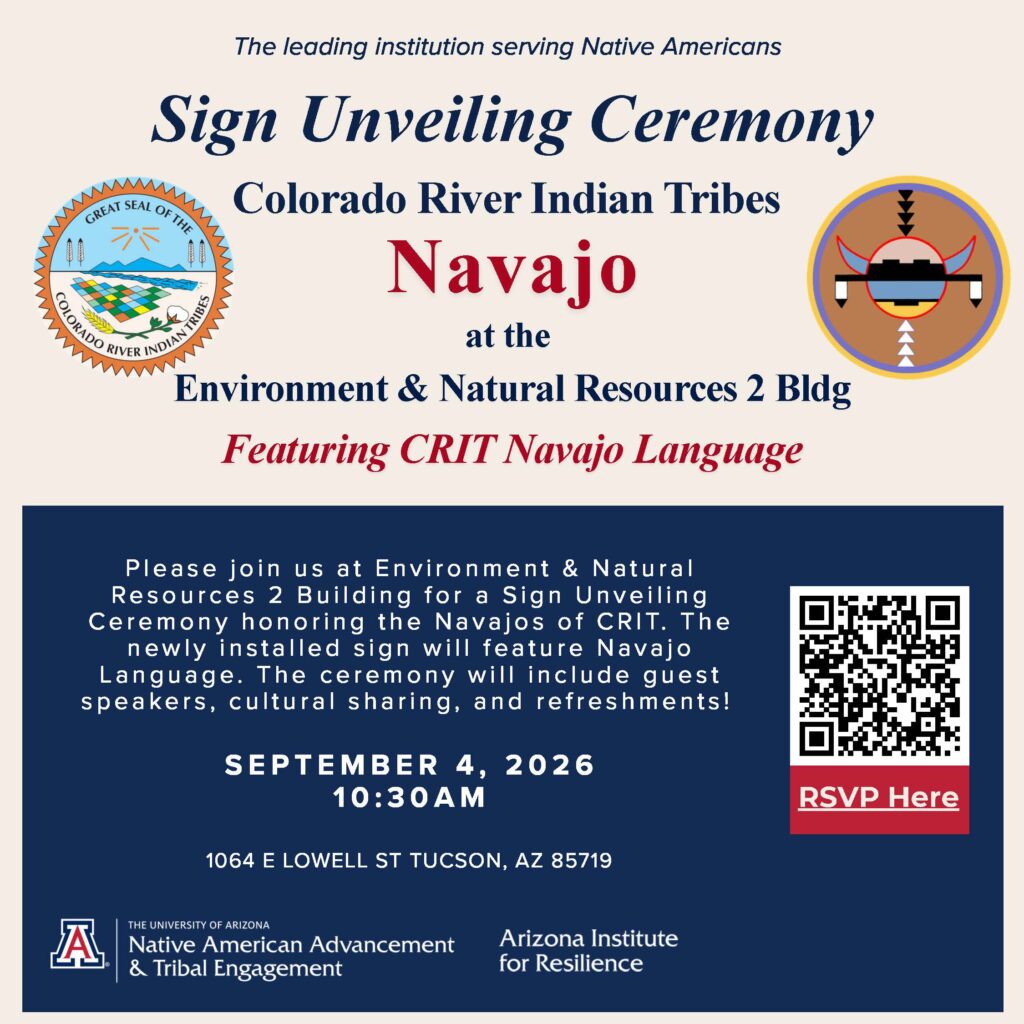
TUCSON, Ariz. — The University of Arizona will host a special series of sign unveiling ceremonies on Friday, September 4, 2026, honoring the four languages of the Colorado River Indian Tribes (CRIT): Mohave, Chemehuevi, Hopi, & Navajo. These ceremonies represent an important milestone in an ongoing campus-wide initiative to elevate the visibility, recognition, and continued presence of Indigenous languages and cultural heritage within the campus community.
The events are organized by the University of Arizona’s Office of Native American Advancement & Tribal Engagement (NAATE) in collaboration with individual academic colleges. Students, faculty, staff, tribal community members, and the general public are invited to attend the progression of ceremonies throughout the day.
The schedule for the Friday ceremonies includes:
The celebration of Indigenous culture continues into the weekend with the Native American Heritage Game on Saturday, September 5, 2026. The Arizona Wildcats will face Northern Arizona at Casino Del Sol Stadium, with kick-off scheduled for 6:30 PM MST. Pre-game festivities at Bear Down Field will begin at 3:15 PM with the Bear Down Bash, featuring 18-minute cultural performances from each tribe. A traditional gift presentation will follow during the Wildcat Walk at 4:15 PM, leading up to an on-field tribal recognition ceremony during the second quarter of the football game.
For more operational schedules or to register for the unveiling events, please visit the official University of Arizona Event Page.