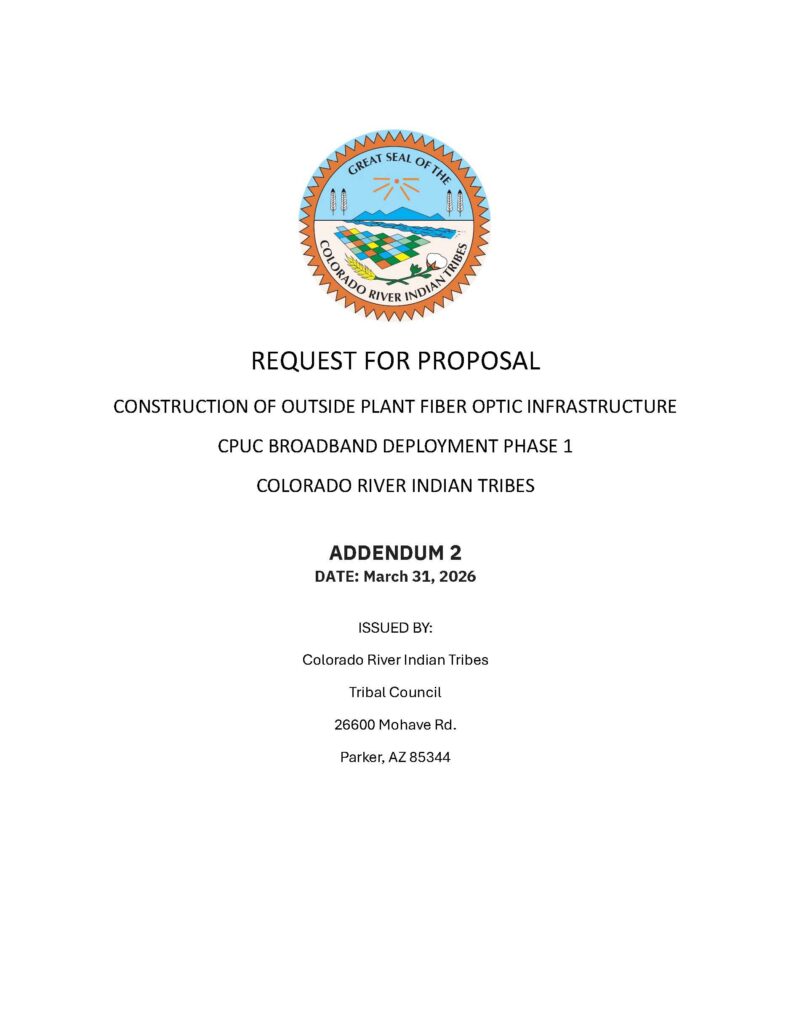
Notice to Contractors: The Colorado River Indian Tribes has issued Addendum 1 for the CPUC Broadband Deployment Phase I Request for Proposals for the construction of outside plant fiber optic infrastructure. This addendum includes answers to questions discussed during the March 17 pre-bid meeting, along with revisions to the construction specifications. Proposers are required to acknowledge receipt of Addendum 1 in the cover letter of their proposal.
Click the link for details
The Colorado River Indian Tribes (CRIT) is requesting proposals from qualified contractors for the renovation of a building located at 1405 S. Joshua Ave. in Parker, Arizona, which will serve as the future CRIT Broadband Operations Facility. The project will convert the existing structure into a secure, fully functional center to support CRIT’s expanding broadband network.
A pre-proposal site visit will take place on March 18, 2026 at 10:00 AM at the project location. Proposals are due by April 7, 2026 at 2:00 PM (Arizona Time).
Follow the link below for details.
REQUEST FOR PROPOSAL-Broadband building (002)
By Ariana Romero CRIT Media
According to the Arizona Department of Water Resources (ADWR), the February 2026 drought status report shows ongoing drought conditions across much of Arizona, with long-term dryness continuing to impact water supplies. While some areas have seen minor improvements, snowpack and precipitation levels remain below average in key regions that help feed rivers and groundwater systems.
These conditions are part of a broader trend across the Colorado River Basin, where reduced snowpack and warmer temperatures continue to limit water availability. Drought conditions not only affect surface water but also place increased pressure on groundwater resources as communities rely more heavily on alternative supplies.
For CRIT, ongoing drought conditions are critical because they directly impact the Colorado River system. Reduced water availability upstream can influence river flows, reservoir levels, and long-term water management decisions that affect Tribal water rights and future planning.
According to CBS 5 Arizona’s Family, two proposed Arizona bills would allow rural groundwater to be sold and transported to larger cities. Supporters say the legislation could help address water shortages in growing urban areas, while opponents argue it could drain rural water supplies and negatively impact local communities.
Residents in rural areas have raised concerns about losing control over their groundwater, especially as demand increases from cities facing Colorado River cutbacks. The issue highlights growing tension between rural and urban water needs in Arizona.
For CRIT, groundwater policy is closely tied to the broader conversation about water use and resource protection. As pressure on the Colorado River increases, decisions about groundwater transfers could reshape how water is distributed across the state and impact long-term water security.
According to the Payson Roundup, Arizona’s congressional delegation is متحد in opposing a federal plan that could reduce the state’s Colorado River water supply. Lawmakers argue the proposal would unfairly impact Arizona and are calling for a more balanced approach to managing shortages across the basin.
The opposition reflects ongoing disagreements between states and federal officials as new rules for managing the Colorado River after 2026 are developed. Arizona leaders say they are working to protect the state’s share of river water amid growing scarcity.
For CRIT, federal decisions about Colorado River allocations are especially important because they influence how water shortages are shared and how Tribal water rights are recognized within the system.
According to NOAA Drought.gov, snow drought conditions continue across much of the western United States, meaning there is less snowpack available to supply rivers like the Colorado River. Even when storms occur, warmer temperatures can cause snow to melt too early or fall as rain instead.
Snowpack acts as a natural storage system for water, slowly releasing runoff into rivers during the spring and summer. When snowpack is low, less water flows into reservoirs like Lake Powell and Lake Mead, which are critical to the Colorado River system.
For CRIT, snow drought conditions are a key concern because they directly affect how much water enters the Colorado River each year, influencing water availability for Tribal communities and long-term resource planning.
According to the Navajo Nation Office of the President and Vice President, President Buu Nygren is urging swift passage of a water rights settlement aimed at addressing long-standing water access challenges for the Navajo Nation. The settlement is intended to help secure water infrastructure and provide reliable access to water for communities that have faced shortages for generations.
Tribal leaders emphasize that water rights settlements are essential for ensuring that allocated water can actually be delivered and used, especially in areas lacking infrastructure.
For CRIT, this highlights the broader importance of Tribal water rights across the Colorado River Basin. Securing and developing water rights remains a key issue for Tribal Nations working to protect their resources and support their communities.
According to Tribal Business News, federal officials are warning of a funding gap as tribes support a proposed $5 billion Arizona water settlement. The settlement aims to resolve water rights issues and fund infrastructure projects, but concerns remain about whether sufficient federal funding will be available.
Tribal leaders continue to advocate for investment in water systems to ensure that water rights can be fully realized. Without funding, even legally secured water rights may remain difficult to access or use.
For CRIT, this reinforces the importance of both water rights and the infrastructure needed to support them. Funding decisions at the federal level can directly impact how Tribal Nations develop and protect their water resources.
By Ariana Romero CRIT Media
According to 12News (KPNX), the Central Arizona Project (CAP) is warning that Arizona could face up to $2.7 trillion in economic losses under a worst-case Colorado River management scenario.
CAP officials say severe water reductions could impact agriculture, housing development, and overall economic growth across the state. The Colorado River is a primary water source for Arizona, and any major cutbacks would ripple through multiple sectors.
For CRIT, this highlights how closely water is tied to economic stability. Decisions about Colorado River water are not just environmental, they directly affect jobs, infrastructure, and the long-term well-being of Tribal communities that depend on the river.
According to Newsweek, Lake Powell could see some of its lowest water levels in 25 years due to continued drought and low snowpack across the Colorado River Basin.
Forecasts show that inflows into the reservoir this year could be among the lowest on record, with only about 36% of average runoff expected. If water levels drop too low, it could threaten hydropower production at Glen Canyon Dam and reduce the system’s ability to store and deliver water.
For CRIT, Lake Powell plays a major role in managing the Colorado River system. Declining reservoir levels can affect how water is released downstream, which impacts water availability for communities, agriculture, and Tribal Nations along the river.
According to Indianz.com, the Senate Committee on Indian Affairs is preparing to hold a hearing focused on Tribal water rights.
The hearing will address ongoing efforts to secure and protect water rights for Tribal Nations, many of which are still working to finalize settlements and access infrastructure needed to fully use their water allocations.
For CRIT, this is especially important because Tribal Nations hold some of the most senior water rights on the Colorado River. Federal discussions and decisions around these rights can influence how water is allocated, protected, and developed for Tribal communities now and in the future.
Sources
Indianz.com: https://indianz.com/News/2026/03/10/senate-committee-on-indian-affairs-sets-hearing-on-water-rights/
According to KOLD News 13, ongoing debates over how Colorado River water should be allocated could have major consequences for Arizona farmers. Agriculture relies heavily on Colorado River water, particularly through deliveries from the Central Arizona Project.
If deeper cuts are implemented under new federal operating guidelines, many agricultural operations could face significant reductions in available water. Farmers and water managers are closely watching negotiations as federal officials work to finalize new management rules for the river after 2026.
For CRIT, these discussions are important because agriculture remains one of the largest users of Colorado River water. Decisions about water allocations across the basin could influence farming operations, economic stability, and long-term water planning throughout the region.
According to the Los Angeles Times, officials from Arizona, California, and Nevada are urging the federal government to reconsider parts of its draft plan for managing Colorado River water shortages.
Leaders from the Lower Basin states say the proposal could shift too much responsibility for water reductions onto their states, even though they have already implemented conservation measures in recent years. The request highlights ongoing tensions between the Upper Basin and Lower Basin states as the federal government works toward new operating rules.
For CRIT and other Tribal Nations along the river, the outcome of these negotiations will shape how water shortages are shared across the basin and how the Colorado River is managed in the future.
According to KJZZ, a new agreement involving Arizona and Mexico could move forward plans to produce desalinated ocean water that could eventually supplement Colorado River supplies.
The concept would involve building desalination facilities along the Gulf of California and transporting treated water inland. While the project would require major infrastructure and investment, supporters say it could help reduce reliance on the Colorado River during prolonged drought conditions.
For CRIT, proposals like this reflect how states are exploring alternative water sources as pressure on the Colorado River increases and long-term supply challenges continue.
According to KJZZ, Arizona water officials are pushing back against a draft federal proposal that would guide how the Colorado River is managed after 2026. Leaders from Arizona’s water agencies say the proposal could unfairly shift more water reductions onto Lower Basin states like Arizona.
The plan is part of the Bureau of Reclamation’s process to create new operating rules for Lake Mead and Lake Powell as the river continues to face long-term drought and declining flows. Arizona officials argue the draft proposal does not adequately account for previous conservation efforts already made by Lower Basin states.
For CRIT and other Tribal Nations along the Colorado River, these negotiations are critical because the final federal plan will shape how water shortages are shared and how the river system is managed in the decades ahead.
According to the Colorado Sun, water experts are exploring a “conservation pool” concept that could help stabilize water levels in the Colorado River’s major reservoirs. The idea would create a reserve of water stored specifically to protect Lake Mead and Lake Powell from dropping to critically low levels.
Under the proposal, water users across the basin would contribute conserved water that could be held in reserve and used during severe shortages. Supporters say the concept could provide more flexibility in managing the river during drought conditions.
For CRIT and other Colorado River communities, ideas like this illustrate the kinds of creative management strategies being discussed as officials work to protect the long-term reliability of the river system.
Source:
https://coloradosun.com/2026/03/04/conservation-pool-path-forward-colorado-river/
According to the Imperial Valley Press, California water officials are warning that the federal government’s proposed Colorado River management plan could conflict with the Colorado River Compact and other long-standing water agreements.
State officials say parts of the draft plan could undermine legal water rights that have governed the river for more than a century. The warning highlights growing tension among the basin states as they struggle to reach consensus on how to manage declining river supplies.
For CRIT, discussions about the Law of the River, compacts, and federal authority are especially important because Tribal Nations hold legally recognized water rights that must be considered in future river management decisions.
According to KTAR News, decisions being made about the future management of the Colorado River will have major consequences for Arizona’s water supply. State leaders say upcoming federal decisions on post-2026 river operations could determine how much water Arizona receives during future shortages.
The Colorado River supplies water to millions of people across the Southwest and supports agriculture, cities, and power generation. As negotiations among the seven basin states remain unresolved, federal officials may ultimately have to determine how water reductions are shared.
For CRIT and other Tribal Nations along the Colorado River, these decisions are especially important because new operating rules will guide how the river is managed for decades and could influence water deliveries, infrastructure planning, and long-term water security.
According to 9News Denver, the seven Colorado River Basin states have missed key deadlines to reach a new agreement on how to manage the shrinking river. With negotiations stalled, the federal government may ultimately step in and set new operating rules.
The U.S. Department of the Interior has been working with the states to develop guidelines for managing Lake Mead and Lake Powell after 2026, when current shortage agreements expire. Without consensus among the states, federal officials could impose a plan to prevent reservoir levels from dropping to dangerously low levels.
For CRIT, federal involvement in Colorado River operations is significant because Tribal Nations are key stakeholders in the river system. Decisions made during this process could affect water allocations, infrastructure planning, and the long-term stability of the river that supports communities across the basin.
According to 12News (KPNX), Arizona leaders say the state is approaching a critical moment as Colorado River negotiations continue and water cutbacks remain likely. Officials described the situation as a crossroads, warning that the next few years will require difficult decisions about conservation, water use, and long-term planning.
The looming reductions stem from ongoing negotiations over post-2026 operating rules for the Colorado River, which will determine how water shortages are shared among the seven basin states. Arizona has already taken significant reductions under earlier shortage agreements, and additional cuts could affect cities, agriculture, and water providers across the state.
For CRIT and other Tribal Nations along the river, these discussions are important because future operating guidelines will shape how the Colorado River is managed for decades. Tribal water rights, infrastructure investments, and long-term planning will all be influenced by how states and the federal government resolve these negotiations.
According to the Arizona Republic, scientists say the western United States may not simply be experiencing a drought but a long-term shift toward a drier climate known as “aridification.” Researchers say the region has effectively been in a 32-year drought, but climate patterns suggest the West could remain permanently drier than historical averages.
This shift is affecting the Colorado River Basin, where reservoirs like Lake Mead and Lake Powell remain far below historic levels despite occasional wet years. Scientists say warmer temperatures cause more water to evaporate and reduce snowpack that normally feeds the river.
For CRIT, this concept of aridification is important because it changes how water planning is approached. Instead of preparing for drought cycles followed by recovery, water managers may need to plan for a permanently smaller Colorado River supply.
According to KJZZ, lawmakers introduced around 30 groundwater-related bills during the current Arizona legislative session, but most proposals do not directly focus on conservation. Instead, many of the bills address water development, transportation, or regulatory changes.
Arizona groundwater policy has become a growing concern as communities increasingly turn to underground aquifers to supplement shrinking Colorado River supplies. Some lawmakers and water experts argue stronger conservation policies are needed to protect these aquifers for future generations.
For CRIT and other Tribal communities, groundwater policy is significant because it influences regional water demand and long-term water sustainability across Arizona. As Colorado River supplies tighten, groundwater management decisions could shape how the state balances growth with water availability.
The Colorado River Indian Tribes (CRIT) was buzzing with energy as the CRIT Special Diabetes Project-Recreation Program partnered with the Phoenix Suns/Mercury Foundation and the Inter Tribal Council of Arizona to host the ORIGINATIV Youth Basketball Clinic. The event brought together tribal youth, culture, and community spirit for an unforgettable weekend of basketball, wellness, and celebration.
Festivities tipped off Friday evening at Irataba Hall with a special clinic for the younger CRIT youth. On Saturday, the action expanded to Parker High School, where more than 180 youth from surrounding river tribes—including CRIT, Fort Mojave, Hualapai, Quechan, Cocopah, and Havasupai—hit the courts to learn new skills, build teamwork, and connect through basketball.
This two-day event was a celebration of unity among tribes, culture, and healthy living—echoing the importance of staying active and supporting the next generation.
Saturday’s opening ceremony brought together tradition and excitement. Mr. Willy Tahbo opened with a blessing, setting the tone of gratitude and respect. The Ase’Smaav Bird Singers and the River Tribes United Dance Group then filled the gym with song and movement, reminding everyone of the importance of cultural roots alongside athletic achievement. Youth and community members cheered as dancers performed in traditional dress, blending the energy of the game with the beauty of heritage. (more…)
On August 25, 2025, Senior DOI officials including, Acting Assistant Secretary of the Interior for Water and Science, Scott Cameron, and Acting Commissioner of Reclamation David Palumbo, made a significant visit the Colorado River Indian Tribes (CRIT) Reservation. He was welcomed by Chairwoman Amelia Flores, Tribal Secretary Josephine Tahbo, Treasurer Anisa Patch, and Council members Bill Beeson, Tommy Drennan, Raeanne Patch, and Tracey Quillen.
Cameron and Palumbo were guided through the reservation by Realty Director Herman Laffoon and Water Resource Director Dillon Esquerra. The tour highlighted the importance of CRIT’s lands and waters, beginning at Headgate Rock Dam and extending across the valley’s farmlands and irrigation canals. Along the way, they were shown the green, thriving fields sustained by the Colorado River, offering a firsthand look at the deep connection between the river and the Tribe’s lifeways.
The visit reinforces the critical role CRIT plays in the stewardship of the Colorado River. By showcasing the Tribe’s sustainable use of the river, CRIT emphasized the importance of protecting this vital resource, building trust, and strengthening government-to-government relationships. The tour also provided a space to discuss CRIT’s rights, responsibilities, and ongoing efforts to conserve, restore, and manage the river system for future generations.
Councilman Tommy Drennan shared that CRIT’s presence in conversations about water is vital and that highlighting these efforts ensures the Tribe remains a central part of shaping the river’s future. “I hope the presence of CRIT is always a part of the solution,” said Drennan. (more…)
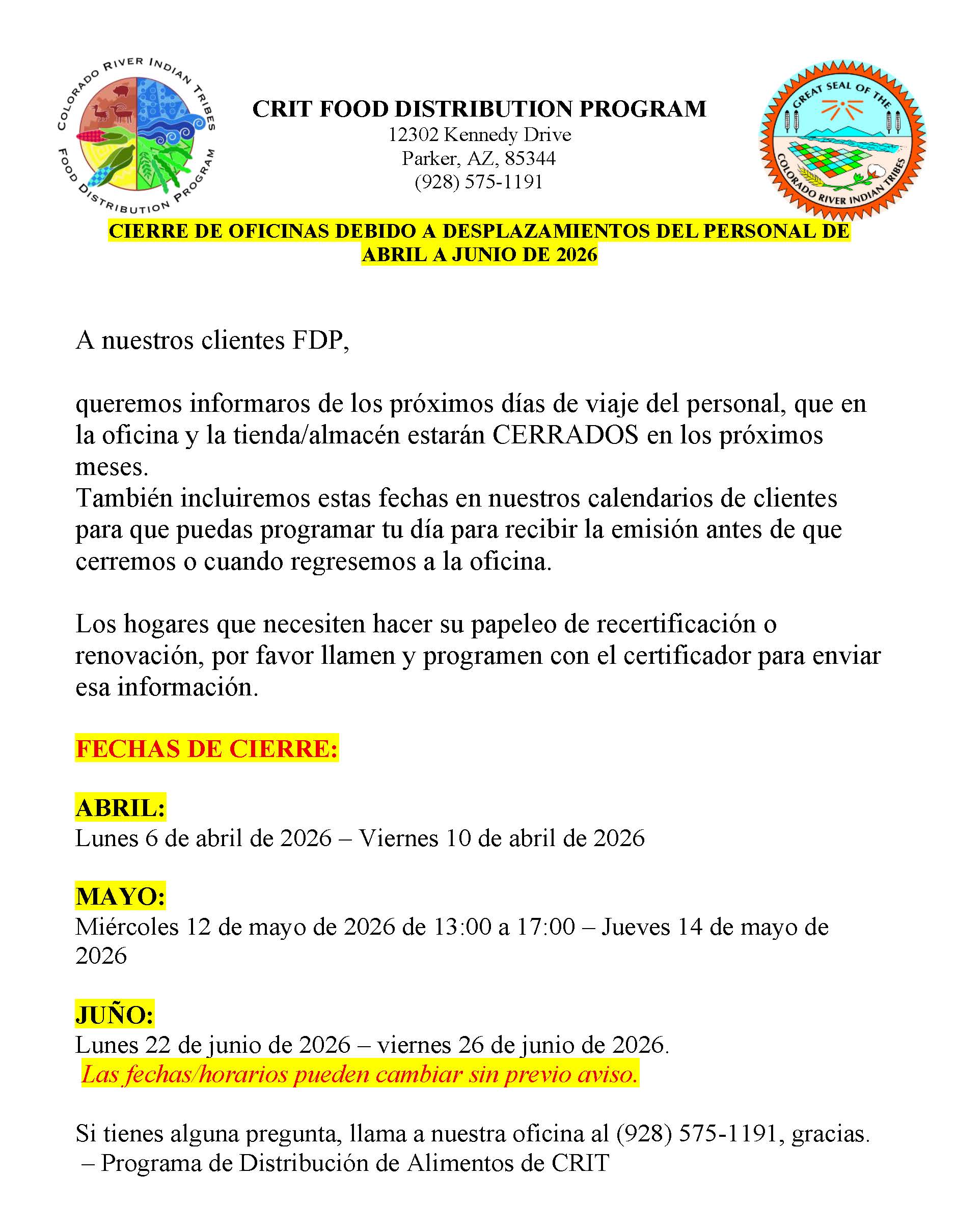
Since May 2024, Bryan Enas has been managing the CRIT Food Distribution Program. With nearly 20 years of experience working in warehouses and grocery stores, Bryan has learned the
ins and outs of produce and supervision. Those skills now help him run a program that makes a big difference for families in our community.
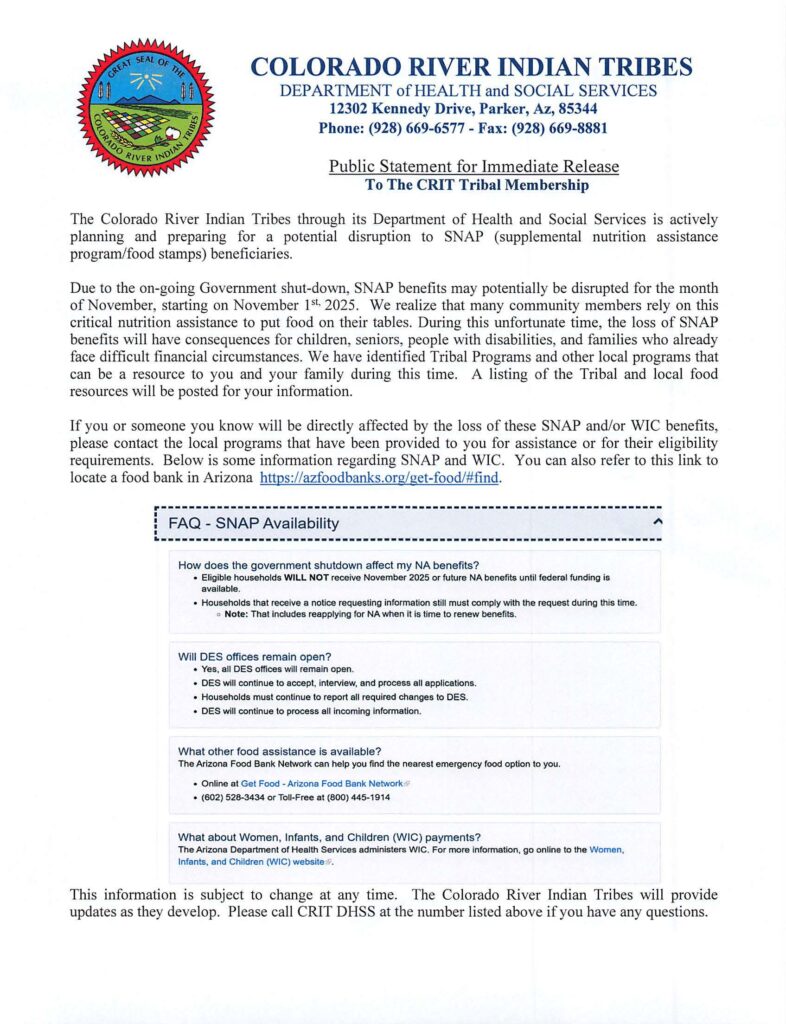
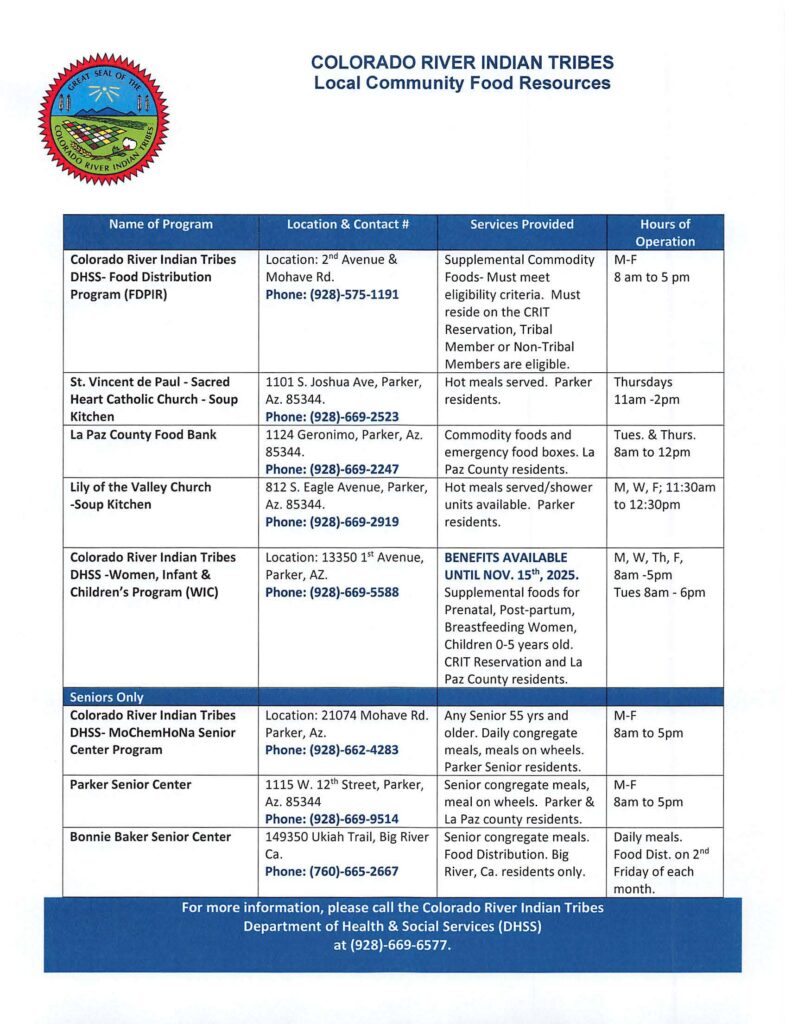
The Food Distribution Program is here to support individuals and families who may be lowincome, on social security, students, or just going through a tough time. This program is
available for both tribal and non-tribal members who live on the CRIT Reservation (this also extends to those who live off reservation within a 25 mile radius but you must have at least 1
person in your household who is a CRIT Tribal Member). Everything is confidential, and the goal is to make healthy food more accessible for everyone.
The program offers a variety of items each month such as, fresh fruits and vegetables, pantry staples, meats, dairy, grains, and more. Families can come by and pick up a pre-packed box, or
if transportation is an issue, deliveries can be arranged. For Bryan, this work is personal. “My home is here, my family is here and it’s a blessing to come back and be able to help the community,” he said. Looking ahead, he hopes to add a greenhouse to keep fresh produce growing year-round. If you think you or someone you know might qualify, the program is worth checking out. Applications are simple, and staff are always happy to help walk you through the process.

The CRIT Food Distribution Program is more than just food—it’s about making sure our families are supported, cared for, and never left behind. We highly encourage you to take advantage of this program – follow the link below to download the application to see if you qualify.
CRIT FDP APPLICATION & REQUIREMENTS PDF FY.24-25 (1)
CRIT Food Distribution Program is located at:
13951 2nd Avenue & Mohave Road, Parker, AZ
Phone: (928) 575-1191

Article written by CRIT Media Reporter Ariana Romero
Photography by CRIT Media Tech Naythen T. Lowe
CRIT recently welcomed KUNC News Reporter Alex Hager, who was interested in covering CRIT’s Personhood Status and why it is so important to the Colorado River Indian Tribes. Upon his visit, he interviewed Water Resource Director Dillon Esquerra, Councilwoman Anisa Patch, and Chairwoman Amelia Flores, each offering insight into why this initiative is vital for the tribe and future generations.

The day began with a visit to the Ahakhav Preserve, where Acting Director Marisol Chavira highlighted how the plants, trees, and natural environment are deeply connected to cultural traditions, from crafting gourds to the sacred use of wood in burials. Alex showed a great interest in learning about the cultural and historic roots of CRIT, and both Dillon and Marisol provided an in-depth explanation of the tribe’s connection to the land and river. Hager then toured Willow Beach, a scenic area of the Preserve, before continuing on to CRIT Chambers for interviews.

Councilwoman Anisa Patch shared her perspective on the river’s personhood status, reflecting on her upbringing along the river and its role as a lifeline for tribal members. Chairwoman Amelia Flores further emphasized the importance, stating: “It is essential for us to take care of the river, to protect and defend it. We need to protect the river for future generations.”

The Personhood status is currently being considered as CRIT tribal law, a groundbreaking step that would formally recognize the Colorado River as a living entity under the tribe’s governance. For CRIT, this is not only a legal step but it builds on the foundation of our beliefs, reflecting the longstanding cultural and spiritual commitment to the river, which has sustained the people, land and traditions for countless generations. Establishing Personhood Status will ensure CRIT beliefs are always held by all future council members and chair persons. This will be the foundation CRIT stands by and relies on when future tough decisions will need to be made about the river. Raising awareness about the personhood initiative is key. It allows both tribal members and the broader public to understand the importance of protecting the Colorado River, not just as a resource, but as a relative, a lifeblood, and a sacred responsibility.

“We are the people along the river, Hamakhav. It’s within us, that’s who we are” says Chairwoman Flores.
Councilman Raeanne Patch provided additional details and context in a follow up interview with Alex detailing the importance of the Personhood Status.
To learn more, you can read Alex Hager’s full article or listen to his podcast at KUNC follow this link.