November 18, 2026 7:48 pm
CRIT Nation, Parker, AZ
November 18, 2026 7:48 pm
CRIT Nation, Parker, AZ

Arizona cities are pressing for clearer answers on water they stored underground as the state prepares for possible Colorado River cuts.

KJZZ reported that Phoenix-area cities and the Arizona Water Banking Authority are in disagreement over how stored Colorado River water should be distributed during shortages. Since the late 1990s, excess Colorado River water has been stored underground as a backup supply. With new river rules expected and cuts likely for Central Arizona Project users, cities want to know how much water they will be allowed to recover, when it would be available, and what requirements may come with it.

The question is not just how much water exists underground. It is also how the Water Bank decides who gets access and how much should be saved for future shortages. KJZZ reported that Water Bank officials are considering policies that could limit distribution or require cities to show conservation efforts before receiving stored water.

Scottsdale is also adding to its stored-water portfolio. KJZZ reported that the city approved an $8.25 million purchase of water credits from Harquahala Valley through the Central Arizona Project. The credits represent water stored underground for future use. According to KJZZ, the purchase amounts to about 15,000 acre-feet of water and brings Scottsdale’s long-term water credits to just under 300,000 acre-feet.

The purchase shows how cities are looking beyond current deliveries and preparing for uncertainty. Stored credits can help provide backup during shortages, but they still depend on access, recovery, and long-term management.

Drought conditions are also affecting Arizona counties. Congressman Eli Crane’s office reported that the U.S. Department of Agriculture issued drought disaster designations for several Arizona counties. Gila, Pinal, and Yuma counties were elevated to primary disaster status in a later designation, while other counties were listed as contiguous. The designations can help make agricultural assistance available to eligible producers affected by drought.

Groundwater recharge remains part of the broader water planning conversation. Agri-Pulse reported that California lawmakers are again trying to address permitting delays for groundwater recharge projects. The bill discussed in the report would give farmers and water agencies more flexibility to capture high flows and move water underground when wet conditions allow. Supporters say current permitting can be too slow for short windows of available water.

The issue connects to Arizona’s own recharge discussions. Across the West, water managers are looking at ways to store more water underground during wet periods so communities and farms have more flexibility during dry years.

The legal side of western water also continues to grow. The Colorado Sun reported that the U.S. Supreme Court agreed to hear Nebraska’s lawsuit against Colorado over the proposed Perkins Canal. Nebraska says the canal is needed to bring South Platte River water into Nebraska under a 1923 compact. Colorado officials say the state is complying with the compact and will defend its water rights. (more…)

Arizona’s water coverage centered on a practical question: if the Colorado River keeps shrinking, how much backup water is actually available, and who can use it?

KJZZ reported that Phoenix-area cities are asking for clearer answers about Colorado River water stored underground by the Arizona Water Banking Authority. The Water Bank was created in 1996 to store excess Colorado River water underground for use during a shortage. Cities that rely on the Central Arizona Project say they need to know how much of that stored water they can access, when it would be available, and how it would be recovered.

The issue is becoming more urgent as federal officials consider new Colorado River operating rules. Arizona Farm Bureau News reported that Arizona water officials are pushing for the Lower Basin proposal as an alternative to deeper federal cuts. The proposal includes mandatory reductions across Arizona, California, and Nevada, along with additional voluntary savings through 2028.

The Arizona Farm Bureau also reported that the Central Arizona Project is now projecting a 14% shortage in its municipal water pool instead of 20%, partly by using water from Lake Pleasant and wells in Yuma. Even with that smaller projected shortage, cities and farms are still preparing for less water.

Agriculture remains a major part of the discussion. Arizona farmers are watching possible cuts closely because reductions to Colorado River water can affect planting decisions, crop choices, and operating costs. Those changes can also move beyond farms, reaching workers, local economies, and food supply chains.

Arizona is also looking at how to keep more water in the state. KJZZ reported that more than 95% of precipitation that falls in Arizona is lost to evapotranspiration. The reporting was based on the Arizona Tri-University Recharge and Water Reliability Project, which is studying ways to capture more rain, snowmelt, and runoff before it is lost to evaporation or plant use. The project is also looking at how more water can be moved into aquifers through recharge.

That research connects directly to questions about groundwater. As Colorado River supplies become less reliable, cities and rural areas are paying closer attention to underground storage, recharge, and long-term access to stored water.

The Desert Review reported that the Central Arizona Irrigation and Drainage District secured up to 10,000 acre-feet per year of new water supply from the Mojave Groundwater Bank in California. The agreement is another example of Arizona water users looking outside traditional supplies as Colorado River shortages continue.

Lake Powell also remained under pressure. The Guardian reported that the reservoir could fall to unprecedented lows after poor snowpack and limited spring runoff. KUTV and Newsweek reported on a proposal from scientists to move more water from Lake Powell to Lake Mead, arguing that storing more water in Lake Mead could reduce losses and protect downstream supplies. The idea is part of a larger debate over how the two major reservoirs should be managed as both remain low. (more…)

Lake Powell remained one of the biggest concerns. The Colorado Sun reported that low water levels are creating new pressure at Glen Canyon Dam, where federal officials are working to protect dam infrastructure as the reservoir drops. The report focused on cavitation, a problem caused when fast-moving water creates vapor bubbles that can damage dam equipment and concrete surfaces.

The issue shows how falling reservoir levels affect more than water storage. Lake Powell also supports hydropower generation, downstream releases, and dam operations. When the reservoir drops too low, federal managers have fewer options to move water through the system safely and efficiently.

Arizona water users are also watching federal planning closely. The Arizona Daily Star reported that a Colorado River water savings plan could reduce the effect of future cuts on Arizona users. The plan is part of ongoing Lower Basin negotiations as Arizona, California, and Nevada look for ways to conserve water and avoid deeper mandatory reductions.

Those negotiations remain unsettled. Fox 13 Salt Lake City reported that Colorado River governors said they are not at a stalemate, even as the deadline for new river rules gets closer. The current operating guidelines are set to expire after 2026, and the seven Basin states still need agreement on how future shortages will be shared.

For Arizona, Central Arizona Project water remains a major concern. The CAP canal moves Colorado River water to central and southern Arizona, including cities, farms, and tribal users. If future cuts fall heavily on CAP water, impacts would vary depending on each user’s legal priority, water portfolio, and access to stored supplies.

AMWUA reported on the importance of municipal access to stored water credits. Cities have stored water underground for years to prepare for shortages, but access to those credits becomes more important as Colorado River supplies become less reliable. Stored credits can help cities manage short-term gaps, but they are not a permanent replacement for long-term river reductions.

The idea of moving new water into Arizona also received attention. Some proposals have looked at whether abandoned energy pipelines could be used to bring water west. These ideas reflect the search for new supplies, but large importation projects often involve high costs, legal questions, energy demands, and environmental review. (more…)

Recent developments across the Colorado River Basin show how changes in water supply are beginning to affect recreation, agriculture, and future water planning. While the seven Basin states remain divided over how to manage the river, communities are already dealing with the effects of lower flows and looking at new ways to protect their water.

Colorado River negotiators recently made a rare public appearance together, but there was little indication that the states are closer to an agreement. Representatives from the Upper and Lower basins continue to disagree over how future water reductions should be shared and whether the next plan should offer long-term certainty or act as a temporary bridge.

Nevada negotiator John Entsminger said the latest Lower Basin proposal could provide a workable plan for the next few years and help keep the states out of court while discussions continue. Colorado negotiator Becky Mitchell questioned whether returning to negotiations every two years would build stability or simply create another series of temporary fixes.

The negotiators also discussed mediation as a possible next step. One idea would involve choosing three mediators: one selected by the Upper Basin, another by the Lower Basin, and a third selected by the first two. The ongoing disagreement is also making it difficult for Mexico, which receives Colorado River water under international agreements, to prepare for future shortages.

While those larger negotiations continue, uncertainty is reaching businesses that depend directly on the river. KNAU reported that Grand Canyon rafting companies are watching lower water levels near Lees Ferry following a historically dry winter and reduced releases from Lake Powell.

Rafting trips are still operating, and visitors may not notice a major difference today. However, business owners and river guides are concerned about what lower and less predictable flows could mean in the future. One company reported that bookings were down about 25% this year, although it was unclear whether water conditions were the main reason.

The concern shows how Colorado River operations support more than drinking water, agriculture, and hydropower. Releases from Glen Canyon Dam also affect rafting companies, guides, tourism, and communities connected to Grand Canyon recreation.

Arizona is also looking at less traditional ways to increase its water supply. Voice of San Diego reported that a private utility proposed using Arizona funding to help treat wastewater from the Tijuana River. The water would be treated and returned to Mexico, while Arizona could seek part of Mexico’s Colorado River allocation in exchange.

The proposal could initially produce more than 14,000 acre-feet of water each year, with the possibility of increasing that amount through future development. However, the project is still being studied and would involve complicated questions involving water quality, cost, environmental review, and agreements between the United States and Mexico.

Colorado, meanwhile, has taken action to reduce the damage left behind when agricultural water is sold and transferred to cities. A new state law will require farmland in the Arkansas River Basin to be revegetated before irrigation water can be moved to another use. (more…)

As Colorado River negotiations remain stalled, water leaders across the West are looking beyond temporary reservoir protections and considering broader changes to how water is managed. Recent reports show growing interest in mediation, permanent groundwater conservation, less water-intensive agriculture, and stronger tribal participation in state water decisions.

Representatives from the seven Colorado River Basin states recently addressed criticism over their failure to reach an agreement for managing the river after the current operating rules expire. KJZZ reported that negotiators remain divided over how future reductions should be shared between the Upper and Lower basins, despite more than a year of talks and worsening conditions across the watershed.

The negotiators acknowledged the frustration surrounding the process but maintained that the disagreements involve difficult legal, economic, and hydrological questions. Some state representatives have suggested bringing in a mediator to help narrow the divide. Mediation could provide another path toward compromise, but it would not remove the central dispute over who should reduce water use and by how much.

While the states continue debating Colorado River operations, groundwater is becoming another area of concern. KJZZ examined whether Arizona could establish a program to voluntarily purchase and permanently retire groundwater rights, similar to a program being developed in Nevada. Nevada’s approach would pay willing water-right holders to stop pumping permanently in areas experiencing declining aquifers, threats to groundwater-dependent ecosystems, or conflicts between existing users. An assessment of more than 6,000 Nevada wells found that nearly 40% showed significant declines over several decades.

A similar program could offer Arizona another tool for addressing groundwater depletion, especially in rural basins where pumping can exceed natural recharge. However, the cost of purchasing water rights would vary by location, and a voluntary program would require stable funding and clear priorities. Buying back rights would not restore an aquifer immediately, but it could prevent additional pumping and reduce long-term pressure.

Agriculture is also being asked to adapt to shrinking supplies. The Colorado Sun reported that researchers and farmers are testing crops that require less water, including black-eyed peas and drought-tolerant grains. Black-eyed peas can reach strong production with considerably less water than some traditional crops and can withstand heat without showing the same level of stress.

The challenge is not only whether farmers can grow less-thirsty crops, but whether there is a reliable market for them. Farmers must consider processing, transportation, buyers, and prices before replacing established crops. Water conservation will be difficult to sustain if producers are asked to take on the financial risk alone. Researchers say successful transitions will require partnerships among farmers, universities, buyers, and public agencies.

New reporting also provides a clearer picture of agriculture on California tribal lands. The Public Policy Institute of California found that about 15,800 acres are irrigated annually on tribal reservations in the state, representing roughly 0.2% of California’s irrigated acreage and agricultural water use. Most irrigated tribal acreage is located within the Colorado River Basin.

The report found that tribal agriculture generally has a more balanced mix of crops than agriculture statewide, with fewer permanent orchards and vineyards and a greater share of annual crops, pasture, and vegetables. Because annual crops can be changed more easily from year to year, tribal agricultural operations may have more flexibility during drought. However, tribal producers still face challenges involving infrastructure, financing, water access, and unquantified rights.

California lawmakers are also considering a measure that would strengthen the role of tribes in water policymaking. Assembly Bill 2218 passed the State Assembly and would require certain state agencies to consult affected tribes when reviewing water rights and policies. The bill would also recognize historical inequities caused by state actions that excluded tribes from access to and control over water.

Supporters say existing tribal consultation policies are not always legally secure and can depend on executive decisions. The proposed law would provide a stronger requirement for agencies to consider tribal water uses, Indigenous knowledge, and ecosystem restoration when making water decisions. (more…)

While much of the latest Basin Brief coverage has been focused on the new interstate water-exchange agreement between Arizona, California, and Nevada, other reports show the growing consequences of the Basin’s worsening drought. Declining reservoirs are affecting wildlife, hydropower, recreation, and local economies, while new industrial development continues to raise questions about how limited water supplies should be used.

The environmental effects of the Colorado River crisis extend far beyond the millions of people who depend on the river for drinking water, agriculture, and power. ABC15 reported that at least 150 threatened species of mammals, reptiles, fish, and plants depend on the Colorado River. As federal officials work toward new rules for dividing the river, conservation experts say the future of the Basin must also account for the ecosystems that rely on healthy river flows.

The river’s decline can change water temperatures, damage habitat, and place additional pressure on native species. These environmental concerns show that decisions about shortages and reservoir operations are not only about how much water reaches cities and farms. They also determine whether the river can continue supporting the plants, animals, and landscapes that make up the Colorado River ecosystem.

The effects of emergency river operations are already being felt in the Upper Basin. WyoFile reported that additional releases from Flaming Gorge Reservoir are causing serious problems for recreation businesses and communities along the Wyoming-Utah border. Federal water managers plan to release about 1 million additional acre-feet from Flaming Gorge between April 2026 and April 2027 to support Lake Powell.

The releases are expected to lower Flaming Gorge by approximately 35 feet, bringing the reservoir to about 59% of capacity. Falling water levels have already damaged boat ramps and marina structures, caused cancellations, and raised concerns about access to drinking water, fishing, and the future of the local recreation economy.

Flaming Gorge serves as an emergency water bank for the broader Colorado River system, but drawing it down to protect Lake Powell shifts some of the consequences of drought upstream. Communities that depend on the reservoir for tourism and local business are being asked to absorb losses so the larger system can continue operating. Water managers have also warned that using Flaming Gorge now reduces its ability to provide the same emergency support during future dry years.

Colorado may also be moving toward a statewide drought emergency declaration as poor snowpack and dry conditions affect agriculture, waterways, and communities. The Upper Basin provides much of the Colorado River’s flow through mountain snowpack, meaning worsening drought in Colorado has consequences throughout the entire river system. When less water reaches the river’s headwaters, less water is available to refill Lake Powell and serve downstream users.

At the same time, growing industrial demand continues to raise concerns in the Lower Basin. Reports about proposed data centers near Lake Mead have led to questions about whether water-intensive development should continue in areas facing long-term shortages. Data centers require large amounts of electricity and, depending on their cooling systems, can also consume significant amounts of water.

Lake Mead remains at approximately 30% of capacity, yet Southern Nevada and other parts of the Southwest continue to attract new technology and industrial projects. The tension between economic development and water security is becoming harder to ignore. Communities must now consider whether new projects can be supported without placing additional pressure on residents, existing businesses, and the Colorado River. (more…)

Thai Yang, Broadband Director for the Colorado River Indian Tribes, is helping lead an exciting new chapter for connectivity across the CRIT community.

Yang has served with CRIT for the past two years, bringing with him a strong background in information technology, network systems, infrastructure deployment, and strategic project management. Before joining CRIT, he held technology leadership roles in hospitality, resort operations, and casino infrastructure, including more than 15 years as IT Director at Glen Ivy Hot Springs and earlier experience helping launch technology systems at Morongo Casino Resort & Spa.

“At CRIT, that experience now supports my mission to strengthen broadband infrastructure, improve digital access, and create long-term opportunities that will benefit current and future generations of our Tribal community,” Yang said.

As Broadband Director, Yang oversees the planning, funding, development, and implementation of broadband infrastructure projects across Tribal lands. The Broadband Department is responsible for securing grants, coordinating engineering and construction, managing vendors and consultants, meeting funding requirements, and preparing for future broadband growth.

For many people, broadband simply means internet access, but Yang explained that broadband is much more than that.

“Broadband is more than just connectivity—it is the foundation for education, healthcare, economic growth, public safety, and communication,” he said.
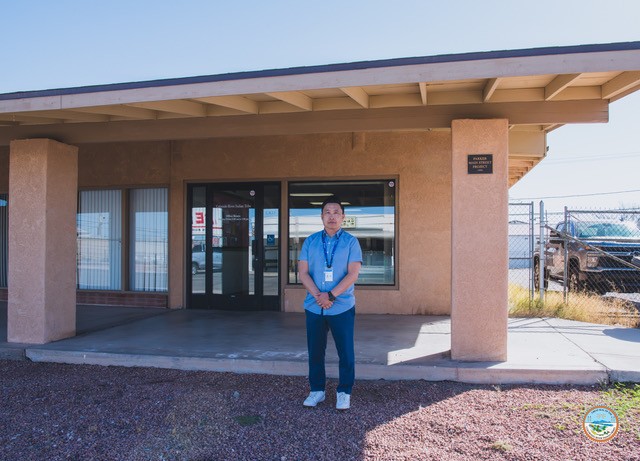
For the CRIT community, reliable broadband has the potential to improve daily life in many ways. Students can benefit from online learning and educational resources. Families can stay better connected and access important services. Elders may have greater access to telehealth and healthcare resources. Local businesses can grow through online services and e-commerce, while Tribal departments can improve operations, communication, and public service delivery. (more…)

If you’ve seen this missing child, please click this link below to help locate her.

https://www.missingkids.org/poster.print.html/NCMC/2084582/1

As CRIT Media approaches this year’s first newspaper, we’re inviting the community to help us celebrate the amazing mothers in our lives this Mother’s Day.
If you’d like to honor a special mom, you can submit her photo along with a short message sharing why she means so much to you and what makes her an incredible mother. Her photo and bio will be featured in the upcoming Manataba Messenger Newspaper.

As part of this celebration, we’re also offering complimentary family portrait sessions in our Media studio for any selected participants who would like to take part or you can send us a photo with a summary explaining why you are nominating this special mom for Mothers Day!

The deadline for entering is May 1st.
Please email critmedia@crit-nsn.gov to nominate a special mother!

The prolonged drought combined with the lowest winter snowpack on record is requiring swift actions to protect this vital water system  

WASHINGTON – Long-term drought has reduced Colorado River system storage to about 36 percent of capacity, and the combination of the lowest snowpack on record and record-breaking March heat has further intensified drought conditions across the Basin. These compounding factors are creating elevated risks to essential water and power infrastructure that supply water to more than 40 million people, underscoring the need for immediate action.

Lake Powell’s water year minimum probable inflow is forecasted at just 2.78 million acre-feet—29% of historical average and one of the lowest on record. Reclamation’s April “24 Month Study” projects Lake Powell may decline to below 3,490 feet—the minimum power pool level—by August 2026 without major intervention. If Glen Canyon Dam declines below 3,490 feet, water releases would be only through the river outlet works, which could cause operational issues, uncertainty for users, downstream impacts, instability in regional power and water supplies, and a reduction in power generation.

Secretary of the Interior Doug Burgum met with Governors for the seven basin states, Arizona, California, Colorado, Nevada, New Mexico, Utah and Wyoming, and their designees again today to discuss the concerning hydrology and plans for operations.

“I am grateful for the Governors and their teams working diligently to find a solution to the complex challenges created by these unprecedented drought conditions which require immediate action,” said Interior Secretary Doug Burgum. “Interior and Reclamation continue to coordinate with the basin states, tribes, Mexico and basin stakeholders as we make the decisions necessary to operate and protect the system.”

To stabilize the system, Reclamation is moving quickly and initial plans include adding up to about 2.48 maf of water to Lake Powell by moving water from the upstream Flaming Gorge Reservoir and by reducing releases from Lake Powell.

Through the 2019 Drought Response Operating Agreements, Reclamation is intending to release 660,000 acre-feet to 1 maf from Flaming Gorge Reservoir from April 2026 through April 2027. In addition, Reclamation is intending to reduce the annual release volume from Lake Powell to Lake Mead by 1.48 maf—from 7.48 maf to 6.0 maf—through September 2026 by utilizing section 6E of the Record of Decision from the final 2024 Supplemental Environmental Impact Statement for near-term Colorado River Operations.

Together, these actions are expected to increase Lake Powell’s elevation by approximately 54 ft to at least elevation 3500 feet by April 2027. Through the current, ongoing DROA process, the basin states, tribes and partners continue to provide feedback related to the proposed releases. A final decision will be coming next week.

Flaming Gorge Reservoir now holds about 3.1 maf of water, which is 83% full. These actions are expected to lower the reservoir’s elevation by roughly 35 feet over the next year to approximately 59% of capacity. This will have no effect on contracted water rights at Flaming Gorge or Lake Powell. No additional releases from the other upstream initial units of the Colorado River Storage Project Act—Blue Mesa and Navajo reservoirs—are planned at this time, due to their low water levels and poor forecasted inflows.

“Given the severity of the risks facing the Colorado River system, it is imperative that we take action quickly to protect a resource that supplies water to 40 million people and supports vital agricultural, hydropower production, tribal, wildlife, and recreational uses across the region,” said Assistant Secretary — Water and Science Andrea Travnicek. “As we weigh current conditions and prepare for future operations by working with states, tribal nations and stakeholders, the Department of the Interior and Reclamation remain fully committed to taking the actions necessary to reduce impacts on water deliveries, safeguard critical infrastructure, and preserve as much operational flexibility as possible.”  (more…)