
November 18, 2026 7:17 pm
CRIT Nation, Parker, AZ
November 18, 2026 7:17 pm
CRIT Nation, Parker, AZ

Arizona may have to use less Colorado River water than it has at any point in modern history, while water agencies are also preparing for possible legal fights and emergency reservoir operations.

KJZZ reported on a new analysis from independent Colorado River experts that described the reductions facing Arizona, California, and Nevada as “unprecedented.” The researchers said recent water use in the Lower Basin is already relatively low, leaving fewer easy conservation options if deeper cuts are required.

Arizona is expected to take the largest share of the 2027 and 2028 Lower Basin reductions. The Central Arizona Project would absorb much of that impact because of its junior priority within Arizona’s Colorado River allocation.

CAP leaders are also preparing for the possibility that the dispute could move into court. KJZZ reported that the Central Arizona Water Conservation District board took a procedural step that could allow future legal action over the federal Colorado River plan. The agency has not filed a lawsuit, but the move keeps that option open as Arizona evaluates the federal framework.

While legal and policy questions continue, federal officials are also trying to protect Lake Powell. KSL reported that the Bureau of Reclamation is releasing between 660,000 and 1 million acre-feet of additional water from Flaming Gorge Reservoir through April 2027. The releases are intended to help keep Lake Powell above critical elevations needed for dam operations and hydropower. Utah officials said Flaming Gorge cannot serve as a permanent solution to Lake Powell’s decline.

The additional release shows how connected the Upper and Lower basins are. Water stored hundreds of miles upstream can be moved to protect Lake Powell, which in turn affects releases into the Lower Basin and the larger operation of the Colorado River.

Boise State Public Radio and the Mountain West News Bureau analyzed Bureau of Reclamation data and found that irrigated agriculture accounted for about 65% of overall Colorado River consumptive use from 2000 through 2024. When evaporation is excluded and only human uses are considered, agriculture accounted for roughly 74%. Reservoir evaporation itself represented at least 12% of total use in the analysis.

The report also found differences in how water use is measured across the Basin. Lower Basin deliveries are generally measured directly from reservoirs and canals, while Upper Basin use is often estimated by calculating stream depletion and return flows. Those different systems can make exact comparisons difficult.

Groundwater pressures are developing alongside the Colorado River shortage. The Arizona Farm Bureau reported that the Willcox Basin is losing about 150,000 acre-feet more groundwater each year than is naturally replaced. Arizona’s proposed management approach would seek to cut that overdraft roughly in half over time, which could require significant reductions from agriculture.

Together, the Sept. 8 reports show that the next phase of Colorado River management will involve more than setting a shortage number. Arizona and other Basin states are dealing with legal questions, reservoir operations, agricultural demand, groundwater decline, and even disagreements over how water use should be measured.

What does this mean for CRIT?

These reports are especially relevant because the Tribe holds senior Colorado River rights and is a major agricultural water user directly along the river.

The CAP legal discussion mainly concerns users with different priorities than CRIT, but the larger dispute still matters. Decisions about Lake Powell, Lake Mead, and the division of shortages shape the river system where CRIT’s rights are exercised.

The Flaming Gorge releases also show how federal managers are using water throughout the Basin to protect critical reservoir elevations. Even though that water originates far upstream, the condition of Lake Powell affects the entire Colorado River system.

The water-use reporting is particularly relevant to agriculture. With agriculture representing the largest share of consumptive use Basin-wide, future conservation discussions are likely to continue focusing heavily on farms. For CRIT, that makes it important to distinguish the Tribe’s senior rights, agricultural economy, and existing water management from other categories of water use.

Sources

KJZZ, “Colorado River cuts could force ‘unprecedented’ low water use for Arizona, new study finds.”
https://www.kjzz.org/science/2026-09-08/colorado-river-cuts-could-force-unprecedented-low-water-use-for-arizona-new-study-finds

KJZZ, “CAP leaders take a step toward legal action over Arizona’s Colorado River water share.”
https://www.kjzz.org/politics/2026-09-05/cap-leaders-take-a-step-toward-legal-action-over-arizonas-colorado-river-water-share

KSL, “More water being released from Flaming Gorge to help Lake Powell.”
https://www.ksl.com/article/news/utah/environment/more-water-being-released-from-flaming-gorge-to-help-lake-powell/51621145

Boise State Public Radio, “Measuring the use of Colorado River water is harder than it looks.”
https://www.boisestatepublicradio.org/news/2026-09-08/measuring-the-use-of-colorado-river-water-is-harder-than-it-looks

Arizona Farm Bureau, “Willcox Plan Shakes Up Arizona Groundwater Policy.”
https://www.azfb.org/Article/arizona-groundwater-willcox-management-plan


Arizona’s water future is coming down to more than how much Colorado River water the state receives. It is also about whether communities can store, treat, move, and protect the water they already have.

KTAR reported that residents in McMullen Valley are pushing for a special election to designate the rural western Arizona basin as an Active Management Area. An AMA would allow the area to regulate groundwater pumping where supplies are limited.

The effort is being led by the McMullen Valley Water Defenders PAC, which is collecting signatures to place the question before local voters. The group is concerned about groundwater pumping, outside investment, and the possibility of water being moved out of the basin for use elsewhere. KTAR reported that an Arizona Department of Water Resources report found the McMullen Valley aquifer is in deficit, with more water being taken out than replaced.

Groundwater protection is becoming more important as Colorado River supplies shrink. If less water comes through the Central Arizona Project canal, more communities may look to groundwater, stored water, and local wells. That makes rural groundwater basins a larger part of Arizona’s water conversation.

At the same time, Valley cities are preparing for less Colorado River water. KJZZ reported that most people in metro Phoenix may not notice immediate day-to-day changes when cuts begin because cities have spent years developing backup supplies. Those supplies include Salt and Verde River water, groundwater, and water stored underground for dry years.

But KJZZ also reported that residents may notice the cost. Cities are building expensive infrastructure to manage future shortages, including water purification facilities, wells, and other projects. Phoenix, for example, is investing more than $300 million in one advanced water purification facility that would clean wastewater to safe drinking water standards.

Gilbert is also preparing. ABC15 reported that about 41% of Gilbert’s water portfolio comes from the Colorado River, and the town expects to lose about 20% of that supply if the Lower Basin proposal is adopted for 2027 and 2028. Gilbert said the cuts could move the town into Stage 2 of its water shortage plan as early as Jan. 1, 2027.

ABC15 reported that Gilbert is investing in the North Water Treatment Plant expansion and eight new wells. The town said its conservation programs saved 459 million gallons in 2025, but future infrastructure needs could still lead to higher water rates.

Tucson is also investing in water security, but from a different angle. KGUN reported that Gov. Katie Hobbs and Tucson Mayor Regina Romero cut the ribbon on an expanded PFAS water treatment facility on Tucson’s west side. The Tucson Airport Remediation Project is designed to protect groundwater and strengthen the city’s locally controlled water supply as Colorado River cuts approach.

KGUN reported that the $25 million project was funded through the American Rescue Plan Act. The expanded facility treats water affected by PFAS and reduces those chemicals to non-detectable levels before the water is used for parks and golf courses.

The Arizona water discussion is also reaching planning and development. AZ Big Media reported that the new federal Colorado River plan will require Arizona to reduce water use by 760,000 acre-feet in 2027 and 2028, while California reduces by about 440,000 acre-feet and Nevada by 50,000 acre-feet. The article said the plan is less aggressive than earlier federal proposals, but it still puts Arizona’s long-term planning to the test. (more…)

The Colorado River’s next operating plan is now official, but the larger fight over the river’s future is still unsettled.

On Aug. 21, the Department of the Interior finalized the 2027–2028 Operating Guidelines and Record of Decision for future Colorado River operations. The decision sets the near-term rules for Lake Powell and Lake Mead after the current operating agreements expire in 2026.

Under the plan, Arizona, California, and Nevada will reduce their use of Colorado River water by 1.25 million acre-feet each year in 2027 and 2028. If the Lower Basin states use their proposed sharing agreement, Arizona would take the largest reduction at 760,000 acre-feet per year. California would reduce use by 440,000 acre-feet, and Nevada would reduce use by 50,000 acre-feet.

The plan also calls for at least 700,000 acre-feet of additional voluntary conservation over the two-year period to help protect the system.

Arizona officials said the final decision gives the state some short-term certainty, but it does not resolve the longer-term issue. ADWR said the federal decision avoids the most severe near-term reductions that had been discussed earlier, but the larger framework for years three through 10 remains a concern.

KJZZ reported that Arizona will still take the biggest cuts under the new plan. The reductions are expected to affect Central Arizona Project supplies, which serve cities, farms, and some Tribal communities in central and southern Arizona. Central Arizona Project users are more exposed because CAP holds junior-priority Colorado River rights.

CRIT and other Tribal leaders also raised concerns about the federal process. ICT reported that the Colorado River Indian Tribes and the Gila River Indian Community pushed back on the federal plan, saying Tribal governments were not sufficiently included in the decision-making process. ICT reported that CRIT holds water rights to more than 23% of Arizona’s Colorado River allocation, making the Tribe one of the largest Colorado River water rights holders in the state.

Arizona Digital Free Press also reported that CRIT asked Reclamation to delay the Record of Decision to allow more time for review and government-to-government consultation. CRIT said decisions about Lake Powell and Lake Mead must respect senior water rights, federal trust responsibilities, and meaningful Tribal consultation.

The federal decision came as the river’s two largest reservoirs remained at historic lows. AP reported that Lake Powell hit a record low, threatening water and electricity supplies for millions of people. The low levels at Lake Powell and Lake Mead continue to raise concerns about hydropower, reservoir operations, and future water deliveries.

Those power concerns are tied directly to agriculture. The Arizona Farm Bureau reported that farmers are asking where they will turn if the hydropower they rely on becomes less available. Irrigation districts and farms depend on power to move water, and higher energy costs can increase the cost of producing crops.

Arizona cities are also preparing for more expensive water. Fox 10 reported that Colorado River cuts could drive up water prices as cities invest in infrastructure, wells, conservation programs, and alternative supplies. Gilbert has been one example. ABC15 reported that the town is preparing for less Colorado River water before expected 2027 cuts, including work to secure backup supplies and expand water infrastructure.

Arizona is also looking beyond conservation. KJZZ reported that a state agency advanced partnership projects with California and Mexico that could increase Arizona’s water supply. Those ideas include projects that would generate or conserve water elsewhere in exchange for benefits to Arizona’s Colorado River supply.

At the same time, KJZZ reported that Arizona’s water systems received a “C” grade from the American Society of Civil Engineers. The report said larger cities tend to be better prepared, while smaller and rural communities often face greater infrastructure challenges. That difference matters as shortage planning becomes more dependent on storage, treatment, wells, and delivery systems. (more…)

The Colorado River’s new operating rules are now in place for 2027 and 2028, but the final week of August showed that the fight over the river’s future is far from settled.

Arizona’s top water official told KJZZ that the state is preparing for a 760,000 acre-foot reduction in 2027 and 2028. Most of that reduction is expected to come from the Central Arizona Project, which delivers Colorado River water to central and southern Arizona. Tom Buschatzke, director of the Arizona Department of Water Resources, said Arizona is prepared to manage that level of reduction in the short term, partly because the Arizona Water Banking Authority has stored water underground for future shortages.

But the short-term plan does not answer the larger question. Reclamation’s framework extends through 2036, and future operations could still change every two years depending on hydrology, reservoir levels, and whether the Basin states reach new agreements.

The Central Arizona Project said the Record of Decision and operating guidelines show the need for Arizona, California, and Nevada to complete a three-state agreement. CAP said the 2027–2028 guidelines adopt a historic level of conservation proposed by the Lower Basin states, but the post-2028 framework remains a major concern because it could allow deeper cuts to Arizona and CAP users.

Nevada has already gone to court. Several Nevada outlets reported that the state sued the federal government over the new Colorado River operating plan. Navajo Times reported that Nevada’s lawsuit could also affect the Navajo Nation’s push to move its Arizona water rights settlement through Congress before the end of the year. The article reported that the lawsuit asks a federal judge to set aside the July Final Environmental Impact Statement, the Aug. 21 Record of Decision, and the 2027–2028 operating guidelines.

High Country News reported that the new Colorado River rules will affect Tribal Nations differently because not all Tribes hold the same type of rights or receive water through the same infrastructure. Some Tribes have senior rights directly on the river. Others rely on Central Arizona Project supplies, federal settlement water, or infrastructure that has not yet been built.

The article also discussed CRIT’s position. CRIT’s reservation stretches along the Colorado River in Arizona and California, and its rights are governed by the 1963 U.S. Supreme Court decree in Arizona v. California. CRIT Chairwoman Amelia Flores described CRIT’s rights as the most senior Tribal water rights in the Lower Basin, going back to 1865. High Country News reported that CRIT welcomed Reclamation’s statement that it would follow the court decree and would not impose reductions on CRIT’s allocation, but Tribal leaders said consultation must remain part of every Colorado River decision.

Arizona communities are also adjusting to the new water reality. KTAR, through AMWUA, reported that Arizona’s 2027 and 2028 cuts could mean up to a 20% reduction in municipal providers’ Central Arizona Project supplies. AMWUA said the larger concern is the 2029–2036 framework, which could allow deeper reductions if conditions worsen.

Water costs are also expected to rise. KOLD reported that Colorado River cuts could drive up water bills as cities invest in new wells, storage, conservation, and infrastructure. KGUN reported that state leaders at the Arizona Water Summit said residents should not expect their taps to run dry in the next few years, but long-term planning and investment will be needed.

That planning is already happening in some communities. CBS 5 Arizona’s Family reported that San Luis is preparing for a major wastewater plant upgrade as water scarcity grows. The project is part of a larger effort to improve local water infrastructure and prepare for future demand.

Groundwater remains another pressure point. KJZZ reported that a rural coalition is starting a campaign to establish a groundwater protection zone in McMullen Valley. The effort reflects a broader concern in rural Arizona: as surface water becomes less reliable, groundwater basins may face more pressure from growth, agriculture, and new development.

The final week of August showed that Colorado River planning is now moving on several fronts at once. Arizona is preparing for near-term reductions. Nevada is challenging the federal plan in court. CAP wants a three-state deal. Tribal Nations are watching how the rules affect senior rights, settlement water, and infrastructure. Cities are preparing for higher costs. Rural communities are looking for stronger groundwater protections. (more…)

Early reports showed the river’s challenges from several angles. The headwaters are drying out, and Arizona is pushing back against the federal government’s post-2026 river plan. Cities are using federal money to conserve and build local resilience. Farmers and rural communities are facing uncertainty. Tribal Nations are also raising concerns about groundwater projects and the long history of being left out of major water decisions.

KJZZ reported that warming temperatures are reducing base flow in streams that feed the Colorado River. Base flow is the water in streams that does not come directly from rainfall. Much of it comes from groundwater and snowmelt. A study published in Earth’s Future found that base flow in Western streams has been declining since 1950, and researchers projected that headwater streams could see 45% to 65% less base flow by the end of the century if warming continues.

That matters because the Colorado River depends on those smaller mountain streams before the water reaches Lake Powell, Lake Mead, or the Lower Basin. If streamflow comes earlier in the year or drops during dry months, water managers have less reliability when demand is highest.

At the same time, Arizona continued to challenge the federal government’s Final Environmental Impact Statement for future Colorado River operations. KJZZ reported that Arizona’s top water official, Tom Buschatzke, warned Reclamation that the federal plan could cause “catastrophic harm” to Arizona. The state argued that the plan does not provide enough certainty and could allow deep Lower Basin cuts without resolving the broader conflict between the Upper and Lower basins.

KTAR reported similar concerns from Sarah Porter, director of Arizona State University’s Kyl Center for Water Policy. Porter said the federal framework focuses on protecting infrastructure and hydropower but does not put the Basin on a path to stability. She said cities may be able to reduce some impacts through conservation and advanced water purification, but Tribal and rural communities could feel deeper disruption, especially where agriculture is involved.

Cities are already moving to conserve more water. KJZZ reported that several Phoenix-area cities are working on agreements with the Bureau of Reclamation to leave Colorado River water in Lake Mead in exchange for federal funding. Glendale, Mesa, and Gilbert were among the cities discussed. KJZZ reported that Glendale previously left about one-third of its Colorado River water in Lake Mead, and Gilbert has a 10-year agreement that will bring nearly $17 million to the town for water-saving projects.

Gilbert is also expanding its water infrastructure. ABC15 reported that the town is planning to expand the Greenfield Water Reclamation Plant from 12 million gallons a day to 16 million gallons a day. The treated wastewater can be reused for irrigation or recharged underground, helping the town prepare for future growth and Colorado River uncertainty.

Groundwater remained another major issue. The University of Arizona Water Resources Research Center highlighted a study on water banking and groundwater security, finding that managed aquifer recharge and water banking can improve drought resilience when policies encourage long-term storage. The Arizona Attorney General’s Office also reported early results from a groundwater settlement with Riverview Dairy in Cochise County. The agreement includes funding for well drilling, water hauling, and groundwater access, along with commitments to reduce groundwater use over time.

Tribal groundwater concerns also reached court. ICT reported that the Fort Mojave and Chemehuevi Indian Tribes sued the Interior Department over the Cadiz groundwater project in the Mojave Desert. The project would pump groundwater from beneath the Mojave Trails National Monument and move it through a converted pipeline. Tribal leaders said the project threatens cultural, ecological, and sacred resources tied to the desert and its water.

Conditions upstream also showed the river’s physical stress. Aspen Journalism reported that extremely low flows in Colorado’s 15-mile reach affected boaters, irrigators, and endangered fish. The report said the reach, located between Palisade and the Gunnison River, is a chronically depleted section of the Colorado River and critical habitat for endangered fish.

Together, the week’s reporting showed that water security is no longer only about legal allocations. It is about timing, infrastructure, storage, groundwater protection, conservation funding, and whether communities have the resources to adapt.

What does this mean for CRIT?

CRIT holds senior Colorado River rights, which remain central to the Tribe’s position in Basin planning. But the reporting shows that water security also depends on infrastructure, storage, delivery systems, and meaningful inclusion in federal decision-making.

The KTAR reporting on Tribal and rural impacts is important because CRIT is both a sovereign Tribal Nation and a major agricultural water user along the Colorado River. The ICT reporting also shows how groundwater projects can raise Tribal concerns when water, land, wildlife, and cultural resources are connected. (more…)

The Colorado River shortage conversation is starting to move from federal planning into city budgets, backup supplies, and long-term infrastructure decisions.

On Aug. 11, AMWUA reported that its member cities have been preparing for a smaller Colorado River for years. The Arizona Municipal Water Users Association represents 10 cities: Avondale, Chandler, Gilbert, Glendale, Goodyear, Mesa, Peoria, Phoenix, Scottsdale, and Tempe. Together, those cities serve about 3.7 million people, more than half of Arizona’s population.

AMWUA said the cities are entering a new era of less Colorado River water, especially as federal officials finalize operating rules for 2027 through 2036. The organization said Central Arizona Project water is at the center of that risk because many Valley cities rely on CAP deliveries.

AMWUA said city planning has focused on three main areas: efficiency, resilience, and technology. Those efforts include advanced water meters, leak detection, turf removal rebates, landscape conversion programs, reclaimed water, aquifer recharge, advanced purified water treatment, and updated development rules.

The goal is not only to use less water. It is also to reduce dependence on Colorado River supplies and build local water sources that are less tied to Lake Mead’s elevation.

Gilbert is one example of how cities are preparing. ABC15 reported that about 40% of Gilbert’s water comes from the Colorado River, and town staff expect reductions to Central Arizona Project water to begin in 2027. The town is considering a Firming Water Delivery Agreement that would give Gilbert more flexibility to access water it previously stored underground during shortages.

ABC15 also reported that Gilbert has drilled eight new wells to access backup supplies. The town’s approach reflects a broader trend in Arizona: communities are trying to make stored water and groundwater more usable before deeper Colorado River cuts arrive.

These local efforts do not remove all risk. AMWUA said no level of city preparation can completely eliminate Arizona’s vulnerability to a smaller Colorado River. More investment will be needed, especially in new water supplies, treatment technology, and infrastructure.

The cost of that uncertainty is becoming a bigger part of the discussion. The Bond Buyer reported that Arizona and Nevada officials criticized the federal Colorado River plan, while analysts said the Final Environmental Impact Statement raises the stakes for long-term water planning. The article said utilities with strong storage, conservation programs, and financial flexibility may be better positioned in the near term, but long-term credit quality will depend on how effectively water providers secure alternative supplies while keeping rates affordable.

That point matters because water planning is not only about engineering. It is also about financing. Wells, pipelines, treatment plants, recharge projects, conservation programs, and new supply agreements can take years to develop and cost millions of dollars. If Colorado River rules change every two years, cities and water agencies may have to make expensive decisions without knowing exactly how much water they will receive in the future.

California is watching the federal framework as well. Spectrum News reported that the new Colorado River proposal could mean future cuts for California. California has historically held stronger priority than Arizona in the Lower Basin, but the federal framework could still bring reductions depending on reservoir conditions and future agreements.

The uncertainty is also reaching water law. Courthouse News Service reported on a Ninth Circuit case involving companies that say California denied them due process in a water rights matter. While the case is separate from Arizona’s Colorado River negotiations, it shows how water disputes across the West are increasingly moving through courts and administrative processes.

Drought conditions are also affecting the Upper Basin. Denver7 reported that Denver Water has moved into an enforcement phase as drought conditions worsen. Customers are limited to watering lawns two days a week, and the utility has begun issuing warnings and fines for violations. Denver Water officials said the goal is to protect supplies heading into next year, when snowpack remains uncertain. (more…)

The Colorado River Indian Tribes’ second annual General Sessions meetings gave Tribal Members a closer look at the programs, services, and projects serving their community. Two meetings, one at BlueWater Resort & Casino for members living on the reservation and another for members in the Phoenix area, drew strong attendance, with hopes of welcoming even more participants in the years ahead. Councilwoman Raeanne Patch has championed these annual fall gatherings as an opportunity to strengthen communication between Tribal Members and their government. Each year, a different group of departments is highlighted, giving members an informal overview of their responsibilities, services, and contributions to CRIT. Councilwoman Patch’s goal is for each featured department head to attend and present directly to the membership.

This year, the Environmental Protection Office outlined its water and air quality programs, while Fish and Game highlighted conservation, reservation patrols, and youth education. The Tribal Historic Preservation Office explained how monitors protect sacred sites, ancestral lands, and cultural resources on and off the reservation. Updates on Tribal finances, the new Head Start facility, and proposed health facilities provided a broader picture of current operations and future plans. CRIT Media highlighted its efforts to keep members informed through the Manataba Messenger, 4 Tribes One Mic podcast, and digital storytelling.

Agriculture was another highlight, with ’Amat Kuwley Farms showcasing its role in CRIT’s economic future and stewardship of Colorado River water. General Manager Joshua Moore oversees production while building relationships with customers domestically and internationally. The farm reported impressive production accomplishments and plans to expand cultivation across available farmland, putting CRIT’s senior Colorado River water rights to productive use while generating revenue for the Tribes. Its alfalfa serves high-profile clientele, including Saudi royalty and owners of Kentucky Derby racehorses, helping establish a reputation for premium quality on the world stage. Moore’s work reflects a long-term commitment to building an agricultural enterprise that supports generations of Tribal Members while helping safeguard CRIT’s water rights.

Members who missed this year’s meetings are encouraged to watch for flyers announcing the next gatherings in fall 2027. Thank you to Councilwoman Raeanne Patch for organizing these annual opportunities for members to learn, connect, and stay informed about the work happening across CRIT.

By Nicole Jennings

A decade after college, 1L and 2026 Nash Scholar Lauren Drennan’s strong ties to her Indigenous community led her to pivot in her career path.

Growing up on the Colorado River Indian Tribal (CRIT) lands in rural Arizona, Drennan had always planned to go into agriculture, even choosing a STEM path for her undergrad studies at the University of Arizona. A self-proclaimed “farm kid,” Drennan had participated in 4-H as a child and raised animals on her family’s property.

But returning home to her tribe through internships while earning her degree convinced her there was another path for her. The internships centered around community programs in areas such as environmental preservation and restoration.

“That’s where I found my passion, working for my community in these outreach programs,” Drennan said. “Those tribal internships saved me because getting to connect back to my home and finding that thing that made me happy felt like it clicked.”

Drennan’s hometown of Parker is small and tight-knit, with many of the other residents numbering among her relatives.

“The services I worked for were for community and my family,” she said, crediting her mentors in the region with instilling a sense of civic-mindedness within her.

She went on to spend 10 years after her undergrad and graduate studies at the CRIT Department of Health and Social Services, which provides a variety of tribal programs ranging from mental health to senior support to child protective services. Drennan held a variety of roles in that time, including interim director, deputy director, coordinator, grant writer, budget specialist, and even HR staffer. (more…)

Article written by CRIT Media Reporter Ariana Romero

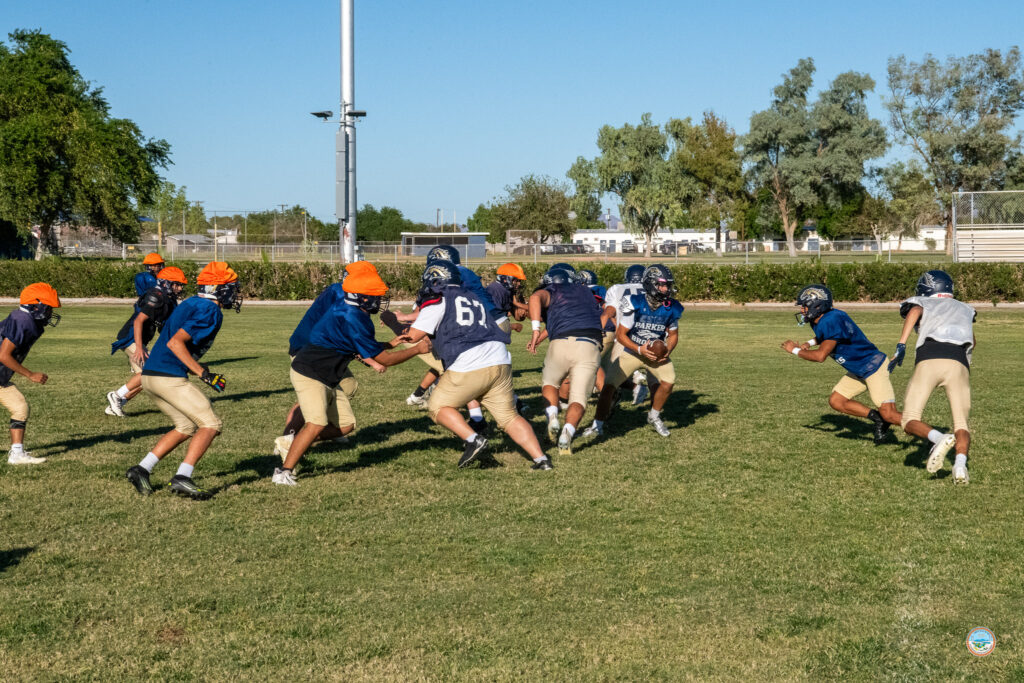
The young men of the Parker Broncs football team have shown strength, endurance, and determination throughout an incredible season. The Broncs remain undefeated at 8-0, but tonight, there is even more on the line.

Parker will take on Arizona Lutheran Academy in a battle for the 2A Metro 2 region title. Both teams enter the matchup undefeated in region play, with the Broncs looking to protect their perfect season in their final home game of the regular season.

Tonight will also mark Senior Night, giving the Parker community an opportunity to recognize the seniors who will take their home field one more time. After years of practices, games, and representing Parker High School, the seniors have a chance to close out their final home game with a region title on the line.

Kickoff is set for 7 p.m. at Joe Bush Stadium, and the Broncs are hoping to see the community pack the stands, get loud, and bring the energy.
Hard Work, Brotherhood, and One Goal

Being undefeated means a lot to this group of young men. The work behind their 8-0 record started long before Friday nights under the lights. Players trained through Parker’s extreme heat, spent hours lifting weights and conditioning, and continued working in the classroom to maintain the grades needed to compete.

During interviews with CRIT Media, one thing became clear: this is a TEAM.

When asked to describe their teammates and what has made this season special, the players gave many of the same answers: brotherhood, family, and best friends. Their similar responses reflected the bond they have built through long practices, workouts, wins, and challenges together.

That bond was just as noticeable while speaking with the team. The players were humble, polite, and proud to be Parker Broncs. Each showed respect for his teammates, coaches, and the game. While an undefeated record is something to celebrate, their focus remains on what is still ahead.

Their goal for the season is simple: keep winning and bring home the trophy. (more…)

Chairwoman Flores says CRIT And Tribal Governments must have a meaningful voice in decisions affecting the Colorado River and future generations

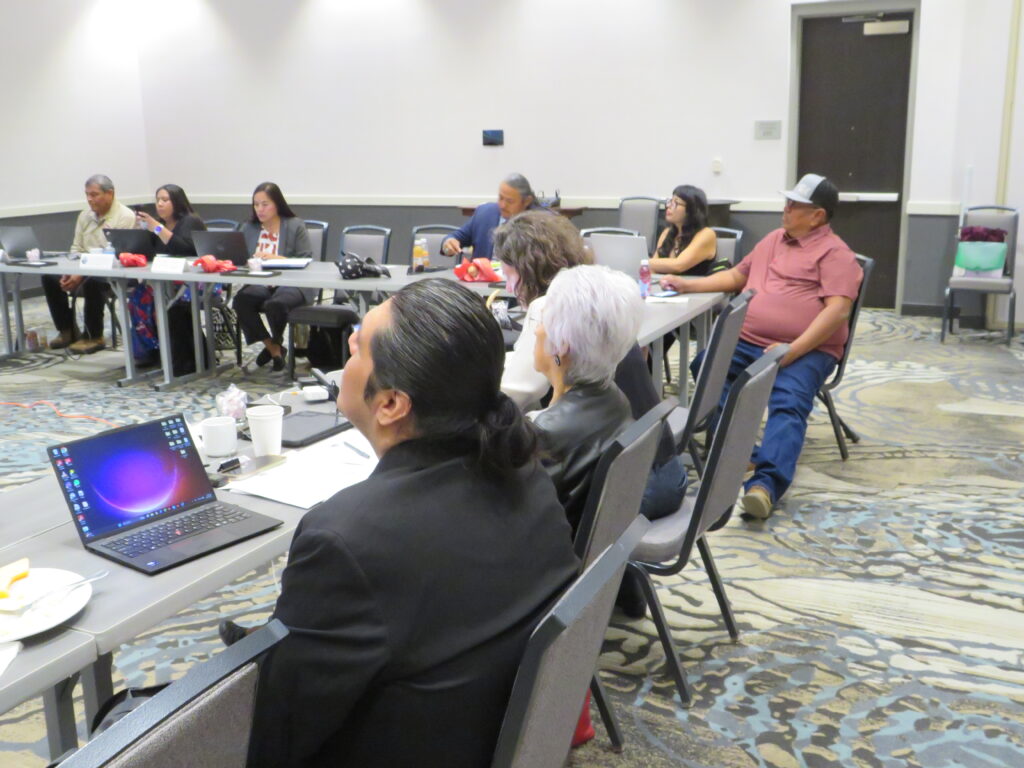
(SCOTTSDALE, Ariz.) Colorado River Indian Tribes leaders carried a message rooted in the Reservation’s past, present and future to the Ten Tribes Partnership meeting Wednesday: CRIT’s water rights must be protected, and tribal governments must have a meaningful voice in decisions shaping the Colorado River.

CRIT Chairwoman Amelia Flores chaired the October 14 meeting, joined on site by Tribal Councilmember Tommy Drennan. CRIT water attorney John Bezdek and other CRIT Tribal Council members participated remotely. CRIT’s presentation  outlined the legal protections surrounding CRIT’s water rights and concerns about federal proposals that could threaten them.

With river levels declining and demand continuing to grow, Flores said tribal governments cannot remain on the sidelines as decisions are made about how the Colorado River is managed.

“We need to be included. We have the solutions,” Flores told representatives of the other tribes.

She said tribal leaders have spent years fighting for a meaningful role in Colorado River negotiations—decisions with direct consequences for CRIT lands, resources and future generations.

“I think we got a small corner of the room,” Flores said. “We’re allowed in, but yet we still are not at the table.”

Bezdek’s presentation focused on CRIT’s longstanding water rights, which were recognized by the U.S. Supreme Court in the landmark Arizona v. California decision in 1963 and the subsequent 1964 decree.

Those rights date to the establishment of the Colorado River Indian Reservation in 1865, predating Arizona statehood and the creation of the Bureau of Reclamation.

“Because at CRIT, we are not a contractor, our water rights predate the Bureau of Reclamation,” Bezdek said.
He explained that CRIT’s water rights are not subject to evaporation and transportation losses that can apply to other Colorado River water users.

At the center of CRIT’s concern are Bureau of Reclamation proposals to spread shortages proportionally among water users, regardless of their established rights. Bezdek said those “pro rata” reductions could erode the priority system that protects senior water rights, including CRIT’s.

Bezdek said the Bureau of Reclamation has included the possibility of proportional reductions in two recent environmental reviews, despite objections from CRIT.

He argued that such reductions would violate the Supreme Court decree, undermine the Winters doctrine protecting federally reserved tribal water rights and raise constitutional concerns.

“It would basically just write it out of existence,” Bezdek said of the Winters doctrine, warning against abandoning the priority system during water shortages.

He said CRIT successfully pushed back against the latest proposal, resulting in federal acknowledgment that water shortages would be handled through voluntary agreements or, absent such agreements, the existing priority system.

Still, Bezdek said the repeated appearance of proportional reductions in federal planning documents is reason for concern.

“We continue to remain vigilant because we believe this will come back again,” Bezdek said.

He emphasized that the issue extends well beyond CRIT.

“This is not just a CRIT issue. This is not just a five tribes issue. This is every tribe,” he said.

For CRIT, protecting its water rights is only part of the challenge. The Tribes’ ability to put that water to use on the Reservation also depends on the aging Colorado River Indian Irrigation Project, which serves tribal agricultural lands in Arizona.

Authorized in 1867, it is the oldest Indian irrigation project in the United States. Bezdek said years of inadequate federal funding have left the system in serious disrepair, with irrigation efficiency estimated at approximately 56% to 58%, according to his presentation.

He explained that water lost through the inefficient system eventually returns to the Colorado River, benefiting other water users while limiting CRIT’s ability to fully use its entitlement.

“They were the beneficiaries of the Bureau of Indian Affairs chronically underfunding the project,” Bezdek said, referring to other water users.

CRIT has received a Bureau of Reclamation grant to study what it would take to modernize the irrigation system to 21st-century standards. (more…)