Please follow the hyper link for Career Development Applications
Youth Service Application
CDO YOUTH SERVICES APPLICATION
Career Enhancement Program Application
CE Program Application
Higher Education Program Application
2025-2026 Higher Ed Application0001
Adult Vocational Training Program Application
2025-2026 AVT Application
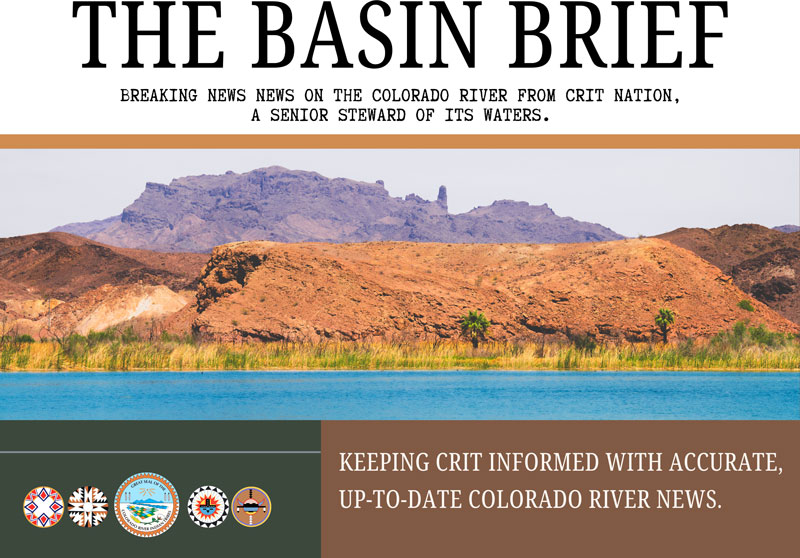
Arizona, California and Nevada have put forward a new short-term Colorado River proposal aimed at protecting Lake Mead and Lake Powell while the Basin states continue working toward a longer-term agreement. The proposal comes at a critical time, as the Colorado River system continues to face worsening drought, shrinking runoff and growing pressure from cities, farms and communities that depend on the river. According to KOLD 13 Tucson, the three Lower Basin states submitted a plan to reduce their use of Colorado River water by at least 3.2 million acre-feet through 2028 as the nation’s two largest reservoirs remain under serious stress.
The proposal is being described as a temporary bridge, not a permanent fix. Utah Public Radio reported that the Lower Basin states offered the plan after about two years of disagreement with the Upper Basin states over who should take cuts and how deep those reductions should be. The current Colorado River operating agreements are set to expire in October, and federal officials have warned they may step in if the Basin states do not reach a deal.
For Arizona, the proposal could make future water cuts less severe than what federal officials had previously considered. KJZZ reported that the plan would help Phoenix-area cities avoid the deepest cuts that had been proposed for the Central Arizona Project, the 336-mile canal system that carries Colorado River water to the Phoenix and Tucson areas. Although Arizona would still leave some of its water in the river, the new proposal would move the state away from what Central Arizona Project officials had described as potentially “devastating” reductions.
Arizona would still carry a major share of the reductions. KOLD reported that Arizona would pledge to conserve 760,000 acre-feet of water per year under the Lower Basin proposal. In southern Arizona, Tucson Water said its ability to order future water could be reduced by about 20%. The report also noted that Arizona’s junior water rights status made the federal government’s earlier draft proposal especially concerning for the state. Under this new proposal, water officials said the burden would be spread more broadly across Arizona, California and Nevada.
The Arizona Municipal Water Users Association said the proposal may buy time, but it does not remove the larger problem. AMWUA reported that cities and municipal water providers in Arizona would still have at least 20% less Colorado River water for the next two years. That reduction is significant, but AMWUA said it is smaller than the cuts proposed in the Bureau of Reclamation’s January draft Environmental Impact Statement. In other words, the plan may give cities more time to prepare for deeper reductions, but it does not erase the reality that less Colorado River water will be available. (more…)
Arizona, California, and Nevada have put forward a new proposal to conserve Colorado River water through 2028, offering a short-term plan meant to stabilize Lake Mead and Lake Powell while the seven Basin states continue working toward a long-term agreement. The proposal comes after more than a year of stalled negotiations and as the river system faces worsening drought, low snowpack, and declining reservoir levels. NPR reported that the Colorado River supplies nearly 40 million people across the West, while Lake Mead and Lake Powell remain near dangerously low levels after more than two decades of megadrought.
The plan is being described as a temporary “bridge,” not a permanent solution. Under the proposal, the Lower Basin states would voluntarily reduce the amount of water they take from the river, helping protect water levels in the nation’s two largest reservoirs while negotiations continue. KNAU and KJZZ reported that Arizona, California, and Nevada would leave 700,000 to 1 million acre-feet of water in the Colorado River system, adding to earlier conservation efforts. State leaders say the total savings would add up to more than 3.2 million acre-feet of water through 2028.
For Arizona, the proposal is being viewed as both a warning and a possible lifeline. ABC15 reported that Arizona joined California and Nevada in offering deeper voluntary cuts after more than a year of stalled negotiations. Arizona’s Colorado River negotiator, Tom Buschatzke, said the proposal shows that water users across the Lower Basin are stepping forward with solutions that support the river. The plan is meant to keep water levels high enough at Lake Powell and Lake Mead to continue delivering water and power across the Southwest, but experts warned that the river’s future will still depend heavily on snowpack, precipitation, and long-term reductions in water use.
The urgency behind the proposal is tied directly to conditions at Lake Powell and throughout the Colorado River system. Smart Water Magazine reported that inflows to Lake Powell are forecast at only 29% of the historical average, while total system storage is roughly 36% of capacity. Those numbers show why negotiators are under pressure to take action now. If Lake Powell continues to fall, it could threaten hydropower production at Glen Canyon Dam and make it harder to move water downstream through the system.
The proposal also reflects the growing divide between the Lower Basin and Upper Basin states. Fox 13 Salt Lake City reported that California, Arizona, and Nevada offered the plan as a way to manage water for more than 40 million people in the West, but disagreements remain over who should take cuts and how deep those cuts should be. The Upper Basin states, which include Utah, Colorado, Wyoming, and New Mexico, have argued that the Lower Basin uses too much water from the reservoirs. Lower Basin leaders say they are putting forward measurable water savings and need federal leadership to help move the plan forward.
The Guardian reported that the Lower Basin proposal would save 3.2 million acre-feet of water through voluntary cutbacks through 2028, with an additional 700,000 acre-feet expected through conservation measures and infrastructure improvements. The plan also includes the creation of a conservation pool connected to federal trust obligations to tribes in Arizona. This is an important piece of the proposal because tribal water rights remain central to the future of Colorado River management. Across the Basin, many tribes hold legal rights to Colorado River water, but some of those rights remain unquantified or difficult to fully access.
At the same time, drought impacts are already being felt in tribal communities. Navajo Times reported that the Navajo Nation is being urged to pray for water as the Colorado River Basin enters another dangerous dry stretch. Federal forecasts warn that Navajo Reservoir could face shortages from November 2026 through February 2027, and Lake Powell could drop toward levels that make hydropower production more difficult. The report also noted that federal projections show weak spring runoff, with inflows into Lake Powell at about 22% of average. (more…)
Once designed to stabilize water deliveries to the Lower Basin, the Glen Canyon dam is now becoming a liability due to declining water levels caused by record breaking drought. The reservoir is less than a quarter full, and inflows are projected to be among the lowest ever recorded, driven by unusually early heat and a collapsing snowpack. The dam’s infrastructure was never designed to function at such low elevations, and as water levels drop, the systems that releases water downstream has become unreliable and even dangerous to operate.
This vulnerability could disrupt legally required flows under the 1922 Colorado River Compact, which is an agreement that divides the river’s water between the Upper and Lower Basin states. According to the compact, the Upper Basin States are required by law to provide a fixed amount of water flow annually. This has become an increasingly difficult task to fulfill due to the extreme drought.
The Bureau of Reclamation and other federal entities are attempting short-term emergency measures, such as holding back water in Lake Powell and releasing additional water from upstream reservoirs like Flaming Gorge. However, these actions are described as temporary “triage” that shift risk rather than solve it. This could lower levels in downstream reservoirs like Lake Mead and creating new ecological and economic problems. Long-term solutions, including major engineering retrofits to the dam, are being studied but will require years, congressional approval, and significant funding.
Cities across Arizona, with Phoenix leading the charge, are actively preparing for a future with less Colorado River water. Roughly 40% of Phoenix’s water supply comes from the Colorado River, and officials are anticipating bigger federal cuts around the corner. In response, the city is expanding groundwater access, storing water underground, investing in infrastructure to move water across regions, and developing advanced purification systems that can turn wastewater into drinking water. Programs like the Secure Water Arizona Program (SWAP) aim to create cooperative, market-like exchanges between cities to share water more efficiently. Despite decades of preparation and reduced per-capita water use, officials acknowledge that worsening drought conditions, stalled interstate negotiations, and federal policy decisions are pushing the system toward more restrictive measures, including potential Stage 2 drought warnings with conservation requirements and rising costs for consumers. (more…)
Drought and water uncertainty continue to build across the Colorado River Basin as Arizona, Colorado, Utah, and the broader Southwest face growing pressure over how water is managed, stored, protected, and shared. Recent reports show the crisis is not limited to one city, one river, or one reservoir. It is being felt through court decisions over groundwater, city water planning, farming operations, statewide drought warnings, and the ongoing lack of agreement over the future of Colorado River management.
In Arizona, the question of groundwater oversight remains a major concern. KJZZ reported that the Arizona Court of Appeals will not force the state to review whether greater water-use oversight is needed near the upper San Pedro River. The case centered on whether the Arizona Department of Water Resources should be required to review the area for possible designation as an Active Management Area, which could lead to new limits on groundwater pumping. The court acknowledged that the San Pedro River is unique as one of the last undammed, free-flowing rivers in the desert Southwest, but ruled that state law does not clearly define how often the department must conduct such reviews. Because of that, the court said the decision remains within the department’s discretion.
That ruling reflects a larger issue across Arizona: when surface water becomes less reliable, groundwater often becomes the backup. But groundwater is not unlimited. As Colorado River supplies become more uncertain, decisions about groundwater management will become even more important for cities, rural communities, agriculture, development, and river ecosystems.
Phoenix is already preparing for a future with less certainty. KTAR reported that the City of Phoenix says it is not running out of water, but it may need to use backup water supplies to meet demand over the next 10 years. The report said Phoenix recently reviewed its water supply and demand while also evaluating how potential Colorado River cuts could affect the city’s water management.
Phoenix’s planning shows how major cities are trying to prepare before conditions become more severe. For large urban areas, backup supplies, conservation, water storage, and long-term planning are becoming part of regular water management. Still, the need to plan for backup supplies shows how serious the Colorado River situation has become. The river has long supported cities, farms, tribes, and ecosystems across the West, but continued drought and unresolved negotiations are making the future less predictable.
That uncertainty is also tied to the lack of a long-term Colorado River agreement. KPNX 12News reported that drought concerns are growing as the fight over Colorado River water continues without a deal. The report included discussion of the economic impact of the water fight, showing that the issue reaches beyond conservation and into the future of business, growth, agriculture, and community stability.
In Colorado, CBS News Colorado reported that drought is forcing farmers to adapt as water becomes more scarce. Farmers are moving away from traditional flood irrigation and toward sprinkler systems that use water more precisely. Some producers may also need to plant fewer acres, switch crops, or find new ways to stretch limited water supplies. Agriculture remains one of the most important water uses in the Colorado River Basin, and changes in farming practices in headwater states can affect the entire system downstream.
Utah is also facing worsening drought conditions. KUER reported that Gov. Spencer Cox said an emergency drought declaration is “coming fairly soon.” The report said Utah’s water outlook does not look good, and Cox stated that the drought is forcing difficult water issues to come to a head. Utah is part of the Upper Basin, where snowpack and runoff play an important role in feeding the Colorado River system. When drought deepens in Upper Basin states, the impacts do not stay there. They move downstream through reduced flows, stressed reservoirs, and more difficult negotiations between states.
The Sierra Club placed these concerns into a larger Colorado River warning, reporting that water levels in the river are approaching dangerous lows that could affect millions of people. The article focused on whether the Colorado River can survive 2026 as drought, low flows, and continued demand place the system under extreme stress.
Together, these reports show a river system under pressure from many directions at once. Arizona is facing legal and policy questions over groundwater. Phoenix is preparing to rely on backup supplies. Colorado farmers are changing how they use water. Utah is preparing for emergency drought action. Basin states still do not have a long-term agreement for how to share the river in the future. At the same time, the Colorado River itself continues to show the physical signs of stress through low flows, drought, and declining reliability.
What does this mean for CRIT?
For the Colorado River Indian Tribes, these developments reinforce why CRIT’s senior Colorado River rights and stewardship responsibilities remain so important. As states, cities, farmers, and federal agencies prepare for a future with less water, CRIT must continue to have a strong seat at the table in decisions that affect the river. The Tribe’s Water Code, the Personhood Resolution for the Colorado River, and the Water Resiliency Act all support CRIT’s efforts to protect the river, strengthen sovereignty, and assert its role as one of the river’s oldest stewards. As drought conditions grow more serious and negotiations continue, CRIT’s voice is essential.
Sources
KTAR News
https://play.cdnstream1.com/s/bonneville/ktar-news-water-watch/city-of-phoenix-to-tap-b-cbc7d3
NBC 12News Phoenix
https://www.12news.com/video/news/local/water-wars/drought-concerns-growing-without-deal-about-colorado-river-water/75-78394a7b-d39b-45b8-9b6f-ac82cb5861be
CBS News Colorado
https://www.cbsnews.com/colorado/news/farmers-colorado-drought-adapt-water-scarce/
KUER Utah Public Radio
https://www.kuer.org/politics-government/2026-04-30/a-utah-emergency-drought-declaration-is-coming-fairly-soon-says-gov-cox
Sierra Club
https://www.sierraclub.org/sierra/can-colorado-river-survive-2026?
According to KJZZ, federal water managers are considering a short-term fix to protect Lake Powell while Colorado River negotiations continue. The Bureau of Reclamation is looking at releases from Flaming Gorge Reservoir in Utah and Wyoming to help keep Lake Powell from dropping too low. If Lake Powell falls much further, Glen Canyon Dam could struggle to generate hydropower and eventually face problems moving water downstream. This matters to CRIT because Lake Powell and Lake Mead operations are tied directly to Lower Basin water planning, future shortage decisions and the ongoing post-2026 Colorado River negotiations.
According to the Colorado Sun, Lake Powell’s outlook has grown more serious after one of the driest snow years on record. The Bureau of Reclamation reported Lake Powell’s lower probable inflow is forecast at 2.78 million acre-feet, about 29% of the historical average and one of the lowest on record. Federal officials are weighing reduced releases from Lake Powell to Lake Mead, along with releases from Flaming Gorge, to protect Glen Canyon Dam. This matters to CRIT because emergency reservoir decisions upstream can affect Lake Mead, Hoover Dam, Lower Basin water supplies and the larger negotiations over how the river will be managed after 2026.
Source: https://coloradosun.com/2026/04/20/feds-water-releases-lake-powell-colorado-river-drought/
According to Courthouse News Service, Arizona’s record-breaking March heat has worsened the state’s drought outlook. Experts said Arizona experienced temperatures in March that were more typical of late spring or early summer, undoing some of the progress from a wetter fall. The heat, combined with dry soil and low snowpack, adds pressure to already strained water supplies. This matters to CRIT because hotter and drier conditions across Arizona directly affect Colorado River planning, drought response and the long-term value of senior Tribal water rights.
Source: https://www.courthousenews.com/record-breaking-march-heat-worsens-arizona-drought-outlook/
According to KJZZ, Arizona Republican lawmakers met with members of the Trump administration to discuss the Colorado River crisis. The meeting focused on low water levels at Lake Mead and Lake Powell, short-term conservation ideas and longer-term infrastructure needs. These political discussions show that Colorado River negotiations are moving beyond state-level talks and into direct conversations with federal officials. This matters to CRIT because any federal approach to the river must include Tribal water rights, Lower Basin impacts and the future of communities that depend on the Colorado River.
According to KSL News, Kearny, Arizona is facing severe water restrictions as the town works to avoid running out of water this summer. The town’s mayor warned residents that Kearny could run out of water around July 15, 2026, if conditions do not improve. The crisis is tied to drought, reduced supply and pressure on the Gila River system. This matters to CRIT because Kearny’s situation shows how quickly water shortages can become a public emergency for Arizona communities.
According to AZ Big Media, Arizona communities are looking at advanced water purification as traditional drinking water sources shrink. The article explains that drought has reduced Colorado River supplies and affected other Arizona basins, even as the state uses less water today than it did decades ago. Advanced water purification would allow treated wastewater to be cleaned further and reused as drinking water. This matters to CRIT because cities are searching for new water sources while the Colorado River remains under pressure from drought, growth and long-term overuse.
According to Smart Water Magazine, the Metropolitan Water District of Southern California approved $150 million for continued planning of the Pure Water Southern California recycling project. The project would purify and reuse treated wastewater that currently flows to the ocean, eventually producing up to 150 million gallons of purified water per day. Metropolitan says the project could serve about 1.5 million people when fully developed. This matters to CRIT because Southern California’s push for local recycled water shows how major cities are trying to reduce reliance on imported supplies, including water connected to the Colorado River.
According to GV Wire, California’s groundwater reporting portal experienced problems as a major deadline approached for farmers in parts of Kings and Tulare counties. The issue comes as groundwater users in the Tule Subbasin face a May 1, 2026 deadline to submit their first groundwater extraction reports. The reporting requirement is part of California’s effort to manage groundwater overdraft under the Sustainable Groundwater Management Act. This matters to CRIT because groundwater regulation is becoming a bigger issue across the West as surface water supplies become less reliable.
According to the Los Banos Enterprise, $540 million in federal funding has been announced for California water projects, including the Delta-Mendota Canal. The Department of the Interior announced $889 million for western water infrastructure, with $540 million going to California projects that support water conveyance, storage and modernization. These projects serve farms, communities and businesses throughout the Central Valley. This matters to CRIT because federal water infrastructure spending shows how western states are investing in delivery systems as drought and aging infrastructure put more pressure on limited water supplies.
According to West Valley View (Cronkite News), a proposed federal plan to divide Colorado River water is facing strong pushback from Arizona leaders and water officials. Critics argue the plan could unfairly shift more water cuts onto Lower Basin states, including Arizona, while not requiring equal reductions from Upper Basin states.
The disagreement highlights ongoing tensions as the federal government moves forward with post-2026 operating guidelines without full state consensus.
For CRIT, these negotiations are critical because federal decisions will directly affect how Colorado River water is allocated and how shortages are shared.
According to CBS News, California’s Sierra snowpack remains near historic lows despite recent storms, raising concerns about summer water supplies. Snowpack plays a key role in replenishing rivers and reservoirs, and current levels are not enough to recover from long-term drought conditions.
Officials warn that even with some winter precipitation, water shortages are still likely as temperatures rise and demand increases.
For CRIT, reduced snowpack in California contributes to lower overall flows in the Colorado River system, impacting long-term water availability.
According to KRCR ABC 7 News, a proposal to raise Shasta Dam in California is raising concerns from Tribal communities who say it could flood sacred sites. Tribal leaders are warning that the project threatens cultural resources and highlights ongoing conflicts between water infrastructure development and Indigenous rights.
The proposal is part of broader efforts to increase water storage, but it has sparked debate about how those projects impact Tribal lands and sovereignty.
For CRIT, this underscores the importance of protecting Tribal interests and ensuring that water projects do not come at the expense of cultural resources or rights.
Chairwoman Amelia Flores:
“The Colorado River Indian Tribes appreciates the continued engagement by the Bureau of Reclamation as the Post-2026 Colorado River operations process moves forward. In response to CRIT’s request Reclamation recently reached out to us and walked us through the portions of the final Environmental Impact Statement relating to changes made to the document in response to comments CRIT raised during the process, but we were not shown the entire statement.
We are encouraged that Reclamation has acknowledged in the final EIS the recent action taken by Tribal Council acknowledging the Colorado River is alive and entitled to protection under CRIT Tribal law.We are also encouraged the final preferred alternative does not include allocating shortages on a pro rata basis for all water users, but instead any allocation of shortages would occur through the existing priority system or through agreements between willing parties. As long as federal agencies follow the law CRIT’s senior water rights will be protected.
We remain concerned that the BIA’s failure to properly maintain our irrigation systems adversely impacts on our ability to conserve and properly use our Colorado River water allocation.
We are mindful of the significant shortages that will be borne by tribal and other water users elsewhere in Arizona and we remain hopeful that an agreement between the United States, and the seven basin states that respects tribal sovereignty will be reached.
At the same time, we remain concerned that the highly compressed schedule severely limits our ability to conduct a comprehensive review before the document becomes final. The conversation with Reclamation was helpful, but it was not government-to-government consultation. Going forward, as the preferred alternative is being implemented, CRIT expects true consultation that respects our sovereign status and provides adequate time for meaningful review and input.”
Vice Chairman Dwight Lomayesva:
“This consultation was a good start. Our immediate need is to protect CRIT’s allocation and ensure the federal government follows the law. When received, CRIT will evaluate the final EIS and protect the Tribe’s rights, resources, and future on the Colorado River.”
The CRIT Museum hosted a hands-on bark skirt construction class on July 16 at Lazy D Park, giving participants an opportunity to learn a traditional skill while connecting with cultural knowledge.
The class was led by traditional craftsman Richard Montague of the Fort Yuma Quechan Indian Reservation. Montague learned bark skirt construction and many other traditional skills from his grandparents, who are Quechan, Maricopa, and Mohave.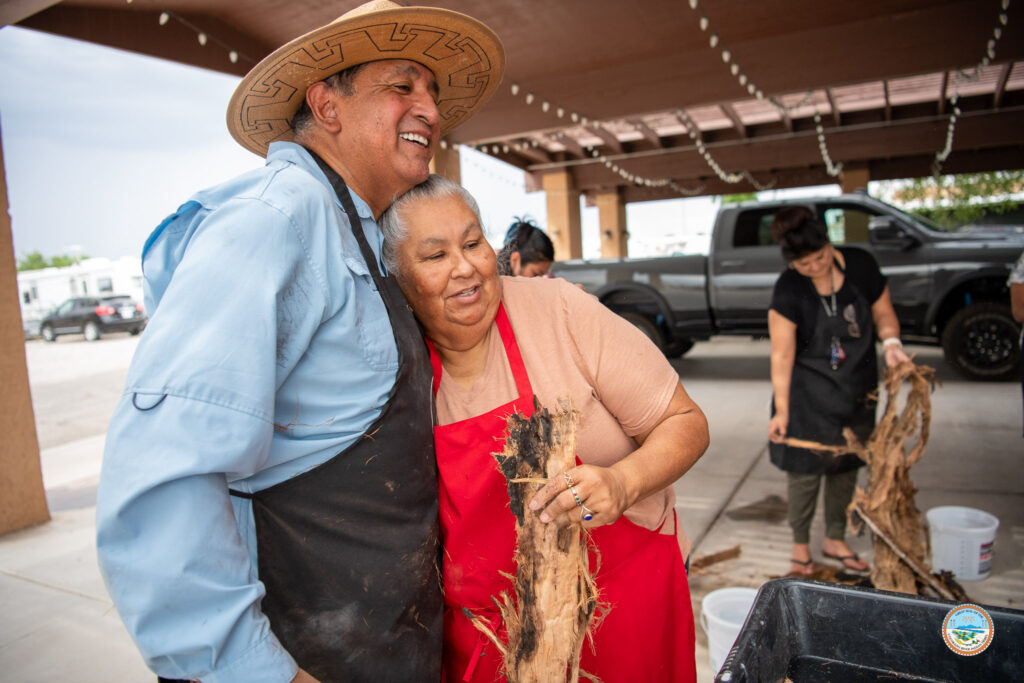
During two sessions, Montague guided participants through the process of creating a traditional bark skirt, from preparing harvested plant materials to constructing a finished skirt panel. All materials used during the workshop were harvested from the Tribes’ homelands.
Participants learned how to identify cured willow and cottonwood bark, recognize when the plants are ready to be harvested and carefully collect the bark in a way that allows the plants to continue growing. They also sorted and prepared the bark for weaving before learning how to attach it to a cordage belt foundation. (more…)
The Colorado River has always sustained the Colorado River Indian Tribes, and protecting it means understanding CRIT’s history, sovereignty, and senior water rights. This presentation by Lead Water Counsel John Bezdek walks Tribal Members through the timeline of CRIT’s connection to the river from the original establishment of the Reservation in 1865, to major court decisions, federal infrastructure, drought conditions, water shortages, and current efforts to protect CRIT’s future.
The update also explains why CRIT holds the senior-most Tribal water rights in the Colorado River Basin, what current shortage discussions could mean for the Tribe, why CRIT strongly opposes pro-rata reductions, and how Tribal Council and the CRIT Water Team are working to protect CRIT’s water resources for future generations. Tribal Members are encouraged to stay informed, remain vigilant, and continue protecting their connection to the river. Click on the link below to download the presentation.