
Colorado is moving forward with a new voluntary conservation program as pressure grows for both the Upper and Lower basins to reduce demands on the Colorado River.
Colorado Newsline reported that the Colorado Water Conservation Board conditionally approved a “near-term contribution program” aimed at conserving 50,000 acre-feet of water during the 2027 water year. The program would use federal funding to compensate participants for conservation measures including temporary fallowing, deficit irrigation, and switching crops.
The program is voluntary and temporary, but farmers and Western Slope water managers have raised concerns about how it could affect agricultural communities. Some questioned whether conserved water can be tracked all the way downstream to Lake Powell and whether Colorado will receive credit for those reductions.
Colorado officials said they want participation from several water-use sectors rather than placing the responsibility primarily on agriculture. Water managers also emphasized that large-scale fallowing is not the only conservation option being considered.
The size of Colorado’s proposed conservation is relatively small compared with reductions facing the Lower Basin. Colorado Newsline reported that the program targets 50,000 acre-feet, while Arizona, California, and Nevada are expected to reduce their combined use by 1.25 million acre-feet in 2027.
At the same time, business groups from across all seven Colorado River Basin states are asking Congress for at least $2 billion in new federal funding for water projects.
KUNC reported that chambers of commerce and other business groups sent a letter to Congress seeking money for projects that could include repairing leaking municipal pipes, protecting watersheds from wildfire, and supporting programs that leave water in major reservoirs. (more…)
As Colorado River supplies remain under pressure, water agencies are investing in infrastructure to secure future deliveries while federal officials consider how declining reservoir levels affect hydropower and the river’s ecosystem.
One of the latest developments involves the Navajo Nation. Smart Water Magazine reported that the Bureau of Reclamation awarded an $81 million contract to Carstensen Contracting for construction of the final major segment of the Navajo-Gallup Water Supply Project in New Mexico.
The project is intended to bring reliable drinking water to nearly 250,000 people on the Navajo Nation and surrounding communities, fulfilling a longstanding water rights settlement. The newly awarded contract covers a pipeline connecting the Frank Chee Willetto Reservoir, east of Shiprock, to the San Juan Lateral Water Treatment Plant.
The San Juan Lateral is now more than 75% complete, with initial deliveries targeted for late 2028 and full completion expected by the end of 2029. Once finished, the broader Navajo-Gallup project will include approximately 300 miles of pipeline, two water treatment plants, and 19 pumping plants, addressing a longstanding infrastructure challenge in communities where many households still rely on hauling water.
In Arizona, cities are also developing additional water supplies ahead of federal Colorado River reductions.
12News reported that Peoria is spending $104 million on a water farm west of Tonopah to strengthen its long-term water supply. The investment is part of the city’s preparation for reduced Colorado River deliveries and reflects how communities are looking beyond their existing allocations to secure water for future needs.
Meanwhile, conditions at the Basin’s two largest reservoirs continue to influence federal water management decisions.
KLAS reported that two-year projections show Lake Mead potentially declining by approximately 40 feet while Lake Powell rises by a similar amount. The projected changes highlight how operations at one reservoir are connected to conditions throughout the Colorado River system.
Circle of Blue also examined how low water levels at Lake Powell are affecting decisions at Glen Canyon Dam. According to the report, the Bureau of Reclamation decided against certain environmental water releases this year because of concerns about hydropower generation.
Those releases would have helped rebuild eroded sandbars in the Grand Canyon and provided colder water to limit the reproduction of invasive smallmouth bass, which threaten native fish such as the humpback chub.
The proposed environmental releases would change the timing or temperature of water passing through Glen Canyon Dam rather than the total amount released over the year. However, using the dam’s bypass tubes would reduce electricity generation.
Reclamation said it is considering other measures to protect native fish, including removing invasive species and studying infrastructure that could regulate downstream water temperatures.
Water quality is also receiving attention elsewhere in Arizona.
KTAR reported that the Upper Verde River is nearing designation as an Outstanding Arizona Water, the state’s highest level of surface water quality protection. The designation would help protect the river from new discharges that permanently degrade its water quality.
The Upper Verde supports drinking water supplies, recreation, and habitat for several threatened and endangered species.
Together, these developments show how water management across the Basin involves more than dividing available supplies. Tribal communities are working toward reliable water deliveries, Arizona cities are developing additional resources, federal officials are balancing hydropower and ecosystem needs, and state agencies are considering stronger protections for rivers.
What does this mean for CRIT?
The Navajo-Gallup pipeline development is especially relevant because it illustrates the difference between holding water rights and having the infrastructure necessary to use them.
The project is fulfilling a longstanding Tribal water rights settlement by creating the physical system needed to deliver water to Navajo communities. It provides another example of how Tribal water management involves legal rights, infrastructure, federal commitments, and long-term planning. (more…)
Two Tribal Nations in Arizona have taken new steps to protect their water resources and culturally significant landscapes as the Colorado River Basin continues to face declining supplies and growing development demands.
KJZZ reported that the Hualapai Tribal Council recently approved a moratorium opposing the development of hyperscale data centers on its nearly one-million-acre reservation. The Tribe shares a 108-mile boundary with the Colorado River and raised concerns about the potential effects of large-scale data centers on water supplies, land, and the environment.
Hyperscale data centers are large facilities that support cloud computing and artificial intelligence. Depending on their design, these facilities can require substantial water for cooling and electricity generation.
Hualapai Chairman Duane Clarke told KJZZ that protecting the Tribe’s air, land, and water remains a priority. The resolution also states that outside entities and private developers cannot use or compromise Tribal resources without the Tribe’s free, prior, and informed consent.
The decision comes as other Colorado River communities consider similar developments. KJZZ reported that residents in Bullhead City have raised concerns about potential data center projects, while a proposed facility near Page has drawn opposition from the Navajo Nation’s LeChee Chapter.
Another development involving the Navajo Nation highlights the cultural significance of the Colorado River.
Grand Canyon Trust reported that the Navajo Nation has formally designated the confluence of the Little Colorado River and Colorado River as a sacred site under Tribal law.
Known as Tooh Ahidiilíní, the confluence is located within the Grand Canyon and holds cultural and spiritual significance for the Navajo people and other Indigenous communities.
The designation follows more than a decade of efforts by Navajo families and the Save the Confluence coalition. Those efforts included opposition to the proposed Grand Canyon Escalade development, which would have constructed a tramway, hotels, and other commercial facilities near the confluence.
The new legislation recognizes the confluence, Little Colorado River Gorge, and surrounding cultural landscape as a sacred site protected under the Navajo Nation Cultural Resources Protection Act.
Meanwhile, uncertainty continues over how the federal government will manage the Colorado River.
ABC15 reported that Nevada’s lawsuit challenging the new federal operating guidelines could potentially delay their implementation. Nevada argues that the plan places too much of the shortage burden on the Lower Basin states without adequately considering economic and public health consequences.
The state is seeking to block the plan before Oct. 1. If a court grants that request, existing operating rules and reductions could remain in place while the lawsuit proceeds.
University of Nevada, Las Vegas professor Tom Romero told ABC15 that litigation could encourage the Basin states to resume negotiations, but a court decision would not resolve the river’s declining water supply.
A Reuters analysis published Sept. 14 helps explain that underlying challenge. The report found that the Colorado River’s average annual natural flow declined from approximately 14.9 million acre-feet during the 20th century to 12.3 million acre-feet between 2000 and 2025.
Reuters also reported that water consumption exceeded the river’s natural supply in 16 of the last 24 years analyzed, with reservoirs making up the difference.
Together, these developments show how Colorado River management involves more than dividing water between states. Tribal governments are exercising their authority to protect resources and culturally significant places, while federal officials and water users continue working through legal disputes and a river system that is producing less water than in previous decades.
What does this mean for CRIT?
The Hualapai and Navajo Nation developments connect directly to CRIT’s ongoing work involving water sovereignty, resource protection, and the cultural significance of the Colorado River.
The Hualapai decision demonstrates how a Tribal government can use its authority to address proposed development and potential impacts on its natural resources. The Navajo Nation’s designation of the Confluence also provides an example of Tribal law being used to formally recognize and protect a culturally significant river landscape. (more…)
Colorado River shortages are raising questions about more than how much water each state receives. For Tribal Nations along the river, decisions about reservoir operations can affect their ability to use water they already have legal rights to.
Nevada Public Radio, in a report carried by Utah Public Radio, highlighted the Fort Mojave Indian Tribe’s concerns as the federal government moves forward with new Colorado River operating guidelines. The Tribe holds approximately 133,000 acre-feet of water rights annually, with much of that water supporting agricultural operations that help fund housing, healthcare, education, and other Tribal services.
Fort Mojave Chairman Timothy Williams told the news outlet that changing river levels are already affecting the Tribe’s ability to deliver water to its farms. Last winter, water levels dropped so low that one of the Tribe’s pumping stations could not draw water for four months. Farm manager Andrew Harter said continued low-water conditions could limit what the Tribe can grow.
The report also addressed a longstanding concern among Tribal Nations: despite holding substantial water rights, Tribes do not have the same formal role as the seven Basin states in negotiating the river’s operating rules.
Jay Weiner, a water attorney for the Quechan Indian Tribe and a member of the Water and Tribes Initiative leadership team, said Tribal governments have historically been excluded from important water management decisions. With 30 federally recognized Tribes in the Colorado River Basin, the issue extends beyond any one reservation.
The impact of future shortages is also becoming a concern for Arizona agriculture.
Cronkite News reported that the federal reductions planned for 2027 and 2028 are not expected to immediately affect Yuma-area farmers, who hold senior Colorado River water rights. Much of the reduction will instead affect the Central Arizona Project, which delivers water to central and southern Arizona.
However, Arizona Farm Bureau President John Boelts said farmers remain concerned about what happens after the two-year operating period. Yuma-area farms supply approximately 90% of the leafy greens consumed in the United States and Canada between October and April.
Central Arizona farmers have already experienced significant reductions. Cronkite News reported that many farmers who previously relied on CAP agricultural water lost access around 2023, forcing some to leave fields fallow or turn to groundwater.
Meanwhile, Arizona’s growing technology industry is adding another dimension to the water discussion.
A separate Cronkite News report examined concerns about data centers, which require water for cooling and indirectly through electricity generation. Water experts interviewed by the outlet said data centers are not responsible for the current Colorado River shortage, although their continued growth could increase pressure on Arizona’s limited supplies.
Arizona State University water law professor Rhett Larson said data centers are growing rapidly, but determining their total water use remains difficult because facilities use different cooling systems and many are not required to publicly disclose their consumption.
Together, the Sept. 11 reports highlight several connected issues facing the Colorado River Basin: protecting access to Tribal water rights, preparing agriculture for future reductions, and understanding how new development adds to water demand.
What does this mean for CRIT?
The Fort Mojave reporting is particularly relevant to CRIT because both Tribes hold senior Colorado River rights and depend on the river for agriculture, economic activity, and cultural traditions.
Fort Mojave’s experience also illustrates the difference between possessing water rights and being able to physically use that water. Changes in river elevation can affect pumping infrastructure even when a Tribe’s legal allocation remains unchanged.
For CRIT, the reporting reinforces the significance of Tribal participation in Colorado River negotiations. Decisions about reservoir operations, conservation, and future shortages can have practical consequences for Tribal governments that rely directly on the river.
The agricultural reporting also connects to CRIT’s farming operations. Although senior rights place CRIT in a different position than many junior-priority users, the wider discussion about agricultural water use, conservation, and future shortages remains relevant to the Tribe’s economic interests.
Sources
Utah Public Radio / Nevada Public Radio: “Tribes depend on the Colorado River, but don’t have a formal say in managing it”
https://www.upr.org/politics/2026-09-11/native-tribes-colorado-river-negotiations-mojave
Cronkite News: “Colorado River cuts haven’t hit Arizona farmers yet, but that might be coming”
https://cronkitenews.azpbs.org/2026/09/10/water-cuts-arizona-farms/
Cronkite News: “Don’t blame data centers for Arizona’s Colorado River cuts, water experts say”
https://cronkitenews.azpbs.org/2026/09/11/data-centers-water-colorado-river/
Colorado River negotiations are moving on several fronts, and this week one of those developments directly involved the Colorado River Indian Tribes.
The Central Arizona Water Conservation District Board approved an agreement with CRIT involving 9,009 acre-feet of Intentionally Created Surplus (ICS) water, while also authorizing the district to protect its rights through legal action if necessary as disputes over future Colorado River operations continue.
Central Arizona Project reported that the agreement involves Extraordinary Conservation Intentionally Created Surplus, or EC-ICS, created through fallowing activities at the CRIT farm in 2019 and 2020. Under the agreement, the Central Arizona Groundwater Replenishment District will acquire the right to take delivery of the 9,009 acre-feet currently held in CRIT’s ICS account.
If transferring the ICS is not feasible, CAP reported that CAWCD and CRIT would instead execute a lease for an equivalent amount of water under the same terms. The agreement also states that the two parties will look for additional opportunities to work together on water governance and management.
The same CAWCD meeting addressed the growing legal uncertainty surrounding Colorado River operations. The board authorized CAWCD to protect and defend its rights if legal action becomes necessary. CAP did not announce a new lawsuit at the meeting, but the authorization gives the district the ability to respond as disputes over the federal operating framework develop.
While Arizona water agencies consider their next steps, another agreement is taking shape farther downstream.
The United States and Mexico reached a Colorado River agreement covering 2027 and 2028. WaterWorld reported that Mexico’s annual deliveries will be reduced by 250,000 acre-feet during each of those years. Those reductions accompany the 1.25 million acre-feet in annual reductions planned for Lower Basin water users in Arizona, California and Nevada.
The agreement also continues cooperation between the two countries on salinity management, environmental programs and studies of potential new water supplies and desalination. If conditions worsen, the United States and Mexico agreed to discuss possible additional reductions in 2028. If Lake Mead improves significantly, the countries would discuss increasing Mexico’s deliveries.
The international agreement provides another piece of the short-term operating picture, but the seven Basin states still have not reached their own long-term agreement.
Arizona Water News reported that Arizona Department of Water Resources Director Tom Buschatzke continues to identify Upper Basin conservation as a major unresolved issue. During a PBS NewsHour Colorado River discussion, Buschatzke said Arizona wants the Upper Basin states to provide conservation that can be measured and delivered into Lake Powell with greater certainty. (more…)
The Colorado River’s new operating framework may provide short-term direction, but the larger fight over how the river should be divided is still unresolved.
University of Arizona News reported that the Bureau of Reclamation’s Aug. 21 decision sets operations for 2027 and 2028, with new guidelines to be reconsidered every two years after that as negotiations continue.
Under the framework, Arizona’s Colorado River deliveries will be reduced by 760,000 acre-feet. Sharon Megdal, director of the University of Arizona Water Resources Research Center, said the reductions are significant but not as deep as some earlier possibilities. She also noted that Tucson has spent years storing Central Arizona Project water underground, giving the city an additional supply to draw from during shortages.
The framework gives Arizona and other Lower Basin users some near-term certainty, but it does not settle the disagreement between the Upper and Lower basins.
Colorado Public Radio reported that the river’s 10-year flow at Lee’s Ferry may soon fall below a level that has become an important point in the debate over the 1922 Colorado River Compact.
The Compact states that the Upper Basin cannot cause flows at Lee’s Ferry to fall below 75 million acre-feet over any 10-year period. The question becomes more complicated when Mexico’s share of Colorado River water is included. Water experts interviewed by CPR said the Upper Basin disputes how much additional water it may be obligated to provide.
Officials estimate that the 10-year flow could fall below 82.5 million acre-feet by October. Some Lower Basin officials have pointed to that level as a possible legal trigger in the ongoing dispute over Compact obligations.
If the states cannot resolve those disagreements through negotiation, the issue could eventually reach the U.S. Supreme Court. CPR reported that both Upper and Lower Basin states are already preparing for possible litigation.
That would not be a quick process. The last major interstate Colorado River case, Arizona v. California, took more than a decade to reach a ruling, with additional decrees continuing for decades afterward.
Tribal water rights are also part of the legal landscape. CPR reported that 30 federally recognized Tribal Nations in the Colorado River Basin collectively hold rights to more than one-quarter of the river’s water. Some of those rights remain unresolved, while other Tribes still lack the infrastructure needed to fully use their water.
The KJZZ “Troubled Waters” project also highlights another concern: much of the negotiation over the river’s future has taken place behind closed doors. The reporting notes that Tribal leaders and transparency advocates have raised questions about who is included in negotiations and how decisions affecting the entire Basin are being made.
Together, the Sept. 9 reports show that the Basin is moving through two different processes at the same time. Arizona and other Lower Basin users are preparing for immediate reductions beginning in 2027, while the seven Basin states continue arguing over the much larger question of how the Colorado River should be managed over the long term.
What does this mean for CRIT?
The short-term framework provides more clarity about what will happen in 2027 and 2028, but the larger negotiations remain important.
CRIT’s senior Colorado River rights put the Tribe in a different legal position than many Central Arizona Project users. Still, disputes between the Upper and Lower basins could shape reservoir operations, federal decision-making, and the broader legal framework surrounding the river. (more…)
The Colorado River Indian Tribes’ second annual General Sessions meetings gave Tribal Members a closer look at the programs, services, and projects serving their community. Two meetings, one at BlueWater Resort & Casino for members living on the reservation and another for members in the Phoenix area, drew strong attendance, with hopes of welcoming even more participants in the years ahead. Councilwoman Raeanne Patch has championed these annual fall gatherings as an opportunity to strengthen communication between Tribal Members and their government. Each year, a different group of departments is highlighted, giving members an informal overview of their responsibilities, services, and contributions to CRIT. Councilwoman Patch’s goal is for each featured department head to attend and present directly to the membership.
This year, the Environmental Protection Office outlined its water and air quality programs, while Fish and Game highlighted conservation, reservation patrols, and youth education. The Tribal Historic Preservation Office explained how monitors protect sacred sites, ancestral lands, and cultural resources on and off the reservation. Updates on Tribal finances, the new Head Start facility, and proposed health facilities provided a broader picture of current operations and future plans. CRIT Media highlighted its efforts to keep members informed through the Manataba Messenger, 4 Tribes One Mic podcast, and digital storytelling.
Agriculture was another highlight, with ’Amat Kuwley Farms showcasing its role in CRIT’s economic future and stewardship of Colorado River water. General Manager Joshua Moore oversees production while building relationships with customers domestically and internationally. The farm reported impressive production accomplishments and plans to expand cultivation across available farmland, putting CRIT’s senior Colorado River water rights to productive use while generating revenue for the Tribes. Its alfalfa serves high-profile clientele, including Saudi royalty and owners of Kentucky Derby racehorses, helping establish a reputation for premium quality on the world stage. Moore’s work reflects a long-term commitment to building an agricultural enterprise that supports generations of Tribal Members while helping safeguard CRIT’s water rights.
Members who missed this year’s meetings are encouraged to watch for flyers announcing the next gatherings in fall 2027. Thank you to Councilwoman Raeanne Patch for organizing these annual opportunities for members to learn, connect, and stay informed about the work happening across CRIT.

By Nicole Jennings
A decade after college, 1L and 2026 Nash Scholar Lauren Drennan’s strong ties to her Indigenous community led her to pivot in her career path.
Growing up on the Colorado River Indian Tribal (CRIT) lands in rural Arizona, Drennan had always planned to go into agriculture, even choosing a STEM path for her undergrad studies at the University of Arizona. A self-proclaimed “farm kid,” Drennan had participated in 4-H as a child and raised animals on her family’s property.
But returning home to her tribe through internships while earning her degree convinced her there was another path for her. The internships centered around community programs in areas such as environmental preservation and restoration.
“That’s where I found my passion, working for my community in these outreach programs,” Drennan said. “Those tribal internships saved me because getting to connect back to my home and finding that thing that made me happy felt like it clicked.”
Drennan’s hometown of Parker is small and tight-knit, with many of the other residents numbering among her relatives.
“The services I worked for were for community and my family,” she said, crediting her mentors in the region with instilling a sense of civic-mindedness within her.
She went on to spend 10 years after her undergrad and graduate studies at the CRIT Department of Health and Social Services, which provides a variety of tribal programs ranging from mental health to senior support to child protective services. Drennan held a variety of roles in that time, including interim director, deputy director, coordinator, grant writer, budget specialist, and even HR staffer. (more…)
Article written by CRIT Media Reporter Ariana Romero
The young men of the Parker Broncs football team have shown strength, endurance, and determination throughout an incredible season. The Broncs remain undefeated at 8-0, but tonight, there is even more on the line.
Parker will take on Arizona Lutheran Academy in a battle for the 2A Metro 2 region title. Both teams enter the matchup undefeated in region play, with the Broncs looking to protect their perfect season in their final home game of the regular season.
Tonight will also mark Senior Night, giving the Parker community an opportunity to recognize the seniors who will take their home field one more time. After years of practices, games, and representing Parker High School, the seniors have a chance to close out their final home game with a region title on the line.
Kickoff is set for 7 p.m. at Joe Bush Stadium, and the Broncs are hoping to see the community pack the stands, get loud, and bring the energy.

Hard Work, Brotherhood, and One Goal
Being undefeated means a lot to this group of young men. The work behind their 8-0 record started long before Friday nights under the lights. Players trained through Parker’s extreme heat, spent hours lifting weights and conditioning, and continued working in the classroom to maintain the grades needed to compete.
During interviews with CRIT Media, one thing became clear: this is a TEAM.
When asked to describe their teammates and what has made this season special, the players gave many of the same answers: brotherhood, family, and best friends. Their similar responses reflected the bond they have built through long practices, workouts, wins, and challenges together.
That bond was just as noticeable while speaking with the team. The players were humble, polite, and proud to be Parker Broncs. Each showed respect for his teammates, coaches, and the game. While an undefeated record is something to celebrate, their focus remains on what is still ahead.
Their goal for the season is simple: keep winning and bring home the trophy. (more…)
Chairwoman Flores says CRIT And Tribal Governments must have a meaningful voice in decisions affecting the Colorado River and future generations
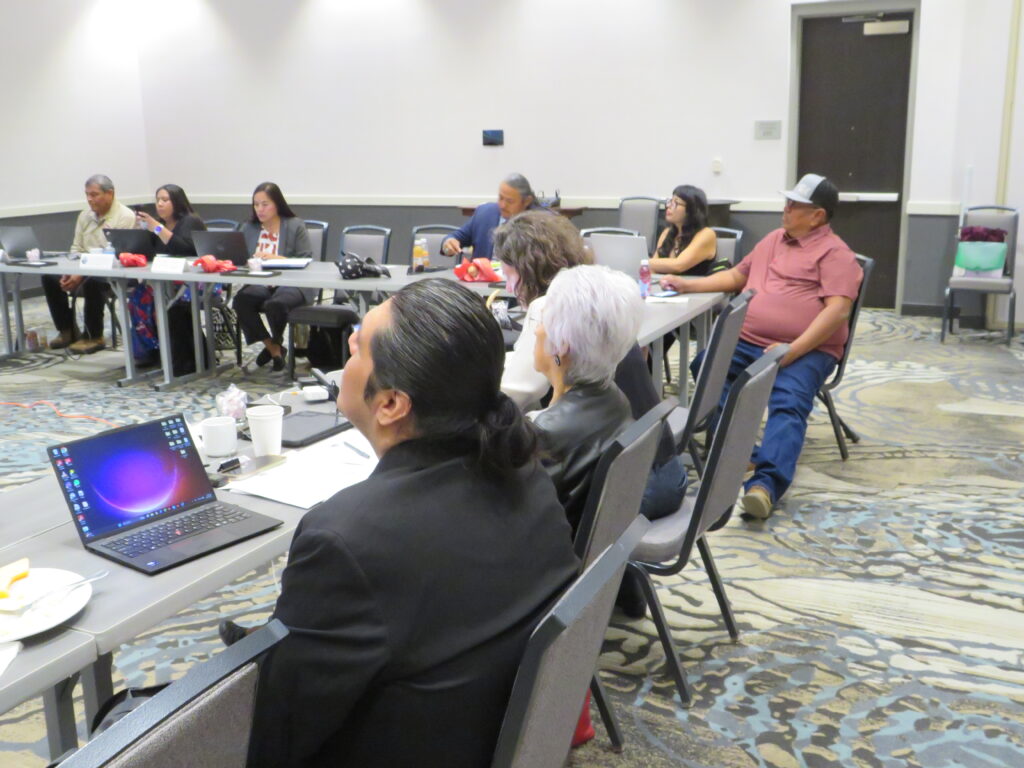
(SCOTTSDALE, Ariz.) Colorado River Indian Tribes leaders carried a message rooted in the Reservation’s past, present and future to the Ten Tribes Partnership meeting Wednesday: CRIT’s water rights must be protected, and tribal governments must have a meaningful voice in decisions shaping the Colorado River.
CRIT Chairwoman Amelia Flores chaired the October 14 meeting, joined on site by Tribal Councilmember Tommy Drennan. CRIT water attorney John Bezdek and other CRIT Tribal Council members participated remotely. CRIT’s presentation outlined the legal protections surrounding CRIT’s water rights and concerns about federal proposals that could threaten them.
With river levels declining and demand continuing to grow, Flores said tribal governments cannot remain on the sidelines as decisions are made about how the Colorado River is managed.
“We need to be included. We have the solutions,” Flores told representatives of the other tribes.
She said tribal leaders have spent years fighting for a meaningful role in Colorado River negotiations—decisions with direct consequences for CRIT lands, resources and future generations.
“I think we got a small corner of the room,” Flores said. “We’re allowed in, but yet we still are not at the table.”
Bezdek’s presentation focused on CRIT’s longstanding water rights, which were recognized by the U.S. Supreme Court in the landmark Arizona v. California decision in 1963 and the subsequent 1964 decree.
Those rights date to the establishment of the Colorado River Indian Reservation in 1865, predating Arizona statehood and the creation of the Bureau of Reclamation.
“Because at CRIT, we are not a contractor, our water rights predate the Bureau of Reclamation,” Bezdek said.
He explained that CRIT’s water rights are not subject to evaporation and transportation losses that can apply to other Colorado River water users.
At the center of CRIT’s concern are Bureau of Reclamation proposals to spread shortages proportionally among water users, regardless of their established rights. Bezdek said those “pro rata” reductions could erode the priority system that protects senior water rights, including CRIT’s.
Bezdek said the Bureau of Reclamation has included the possibility of proportional reductions in two recent environmental reviews, despite objections from CRIT.
He argued that such reductions would violate the Supreme Court decree, undermine the Winters doctrine protecting federally reserved tribal water rights and raise constitutional concerns.
“It would basically just write it out of existence,” Bezdek said of the Winters doctrine, warning against abandoning the priority system during water shortages.
He said CRIT successfully pushed back against the latest proposal, resulting in federal acknowledgment that water shortages would be handled through voluntary agreements or, absent such agreements, the existing priority system.
Still, Bezdek said the repeated appearance of proportional reductions in federal planning documents is reason for concern.
“We continue to remain vigilant because we believe this will come back again,” Bezdek said.
He emphasized that the issue extends well beyond CRIT.
“This is not just a CRIT issue. This is not just a five tribes issue. This is every tribe,” he said.
For CRIT, protecting its water rights is only part of the challenge. The Tribes’ ability to put that water to use on the Reservation also depends on the aging Colorado River Indian Irrigation Project, which serves tribal agricultural lands in Arizona.
Authorized in 1867, it is the oldest Indian irrigation project in the United States. Bezdek said years of inadequate federal funding have left the system in serious disrepair, with irrigation efficiency estimated at approximately 56% to 58%, according to his presentation.
He explained that water lost through the inefficient system eventually returns to the Colorado River, benefiting other water users while limiting CRIT’s ability to fully use its entitlement.
“They were the beneficiaries of the Bureau of Indian Affairs chronically underfunding the project,” Bezdek said, referring to other water users.
CRIT has received a Bureau of Reclamation grant to study what it would take to modernize the irrigation system to 21st-century standards. (more…)