
October 19, 2026 8:33 pm
CRIT Nation, Parker, AZ
October 19, 2026 8:33 pm
CRIT Nation, Parker, AZ

Colorado River negotiations are moving on several fronts, and this week one of those developments directly involved the Colorado River Indian Tribes.

The Central Arizona Water Conservation District Board approved an agreement with CRIT involving 9,009 acre-feet of Intentionally Created Surplus (ICS) water, while also authorizing the district to protect its rights through legal action if necessary as disputes over future Colorado River operations continue.

Central Arizona Project reported that the agreement involves Extraordinary Conservation Intentionally Created Surplus, or EC-ICS, created through fallowing activities at the CRIT farm in 2019 and 2020. Under the agreement, the Central Arizona Groundwater Replenishment District will acquire the right to take delivery of the 9,009 acre-feet currently held in CRIT’s ICS account.

If transferring the ICS is not feasible, CAP reported that CAWCD and CRIT would instead execute a lease for an equivalent amount of water under the same terms. The agreement also states that the two parties will look for additional opportunities to work together on water governance and management.

The same CAWCD meeting addressed the growing legal uncertainty surrounding Colorado River operations. The board authorized CAWCD to protect and defend its rights if legal action becomes necessary. CAP did not announce a new lawsuit at the meeting, but the authorization gives the district the ability to respond as disputes over the federal operating framework develop.

While Arizona water agencies consider their next steps, another agreement is taking shape farther downstream.

The United States and Mexico reached a Colorado River agreement covering 2027 and 2028. WaterWorld reported that Mexico’s annual deliveries will be reduced by 250,000 acre-feet during each of those years. Those reductions accompany the 1.25 million acre-feet in annual reductions planned for Lower Basin water users in Arizona, California and Nevada.

The agreement also continues cooperation between the two countries on salinity management, environmental programs and studies of potential new water supplies and desalination. If conditions worsen, the United States and Mexico agreed to discuss possible additional reductions in 2028. If Lake Mead improves significantly, the countries would discuss increasing Mexico’s deliveries.

The international agreement provides another piece of the short-term operating picture, but the seven Basin states still have not reached their own long-term agreement.

Arizona Water News reported that Arizona Department of Water Resources Director Tom Buschatzke continues to identify Upper Basin conservation as a major unresolved issue. During a PBS NewsHour Colorado River discussion, Buschatzke said Arizona wants the Upper Basin states to provide conservation that can be measured and delivered into Lake Powell with greater certainty. (more…)

The Colorado River’s new operating framework may provide short-term direction, but the larger fight over how the river should be divided is still unresolved.

University of Arizona News reported that the Bureau of Reclamation’s Aug. 21 decision sets operations for 2027 and 2028, with new guidelines to be reconsidered every two years after that as negotiations continue.

Under the framework, Arizona’s Colorado River deliveries will be reduced by 760,000 acre-feet. Sharon Megdal, director of the University of Arizona Water Resources Research Center, said the reductions are significant but not as deep as some earlier possibilities. She also noted that Tucson has spent years storing Central Arizona Project water underground, giving the city an additional supply to draw from during shortages.

The framework gives Arizona and other Lower Basin users some near-term certainty, but it does not settle the disagreement between the Upper and Lower basins.

Colorado Public Radio reported that the river’s 10-year flow at Lee’s Ferry may soon fall below a level that has become an important point in the debate over the 1922 Colorado River Compact.

The Compact states that the Upper Basin cannot cause flows at Lee’s Ferry to fall below 75 million acre-feet over any 10-year period. The question becomes more complicated when Mexico’s share of Colorado River water is included. Water experts interviewed by CPR said the Upper Basin disputes how much additional water it may be obligated to provide.

Officials estimate that the 10-year flow could fall below 82.5 million acre-feet by October. Some Lower Basin officials have pointed to that level as a possible legal trigger in the ongoing dispute over Compact obligations.

If the states cannot resolve those disagreements through negotiation, the issue could eventually reach the U.S. Supreme Court. CPR reported that both Upper and Lower Basin states are already preparing for possible litigation.

That would not be a quick process. The last major interstate Colorado River case, Arizona v. California, took more than a decade to reach a ruling, with additional decrees continuing for decades afterward.

Tribal water rights are also part of the legal landscape. CPR reported that 30 federally recognized Tribal Nations in the Colorado River Basin collectively hold rights to more than one-quarter of the river’s water. Some of those rights remain unresolved, while other Tribes still lack the infrastructure needed to fully use their water.

The KJZZ “Troubled Waters” project also highlights another concern: much of the negotiation over the river’s future has taken place behind closed doors. The reporting notes that Tribal leaders and transparency advocates have raised questions about who is included in negotiations and how decisions affecting the entire Basin are being made.

Together, the Sept. 9 reports show that the Basin is moving through two different processes at the same time. Arizona and other Lower Basin users are preparing for immediate reductions beginning in 2027, while the seven Basin states continue arguing over the much larger question of how the Colorado River should be managed over the long term.

What does this mean for CRIT?

The short-term framework provides more clarity about what will happen in 2027 and 2028, but the larger negotiations remain important.

CRIT’s senior Colorado River rights put the Tribe in a different legal position than many Central Arizona Project users. Still, disputes between the Upper and Lower basins could shape reservoir operations, federal decision-making, and the broader legal framework surrounding the river. (more…)

Arizona may have to use less Colorado River water than it has at any point in modern history, while water agencies are also preparing for possible legal fights and emergency reservoir operations.

KJZZ reported on a new analysis from independent Colorado River experts that described the reductions facing Arizona, California, and Nevada as “unprecedented.” The researchers said recent water use in the Lower Basin is already relatively low, leaving fewer easy conservation options if deeper cuts are required.

Arizona is expected to take the largest share of the 2027 and 2028 Lower Basin reductions. The Central Arizona Project would absorb much of that impact because of its junior priority within Arizona’s Colorado River allocation.

CAP leaders are also preparing for the possibility that the dispute could move into court. KJZZ reported that the Central Arizona Water Conservation District board took a procedural step that could allow future legal action over the federal Colorado River plan. The agency has not filed a lawsuit, but the move keeps that option open as Arizona evaluates the federal framework.

While legal and policy questions continue, federal officials are also trying to protect Lake Powell. KSL reported that the Bureau of Reclamation is releasing between 660,000 and 1 million acre-feet of additional water from Flaming Gorge Reservoir through April 2027. The releases are intended to help keep Lake Powell above critical elevations needed for dam operations and hydropower. Utah officials said Flaming Gorge cannot serve as a permanent solution to Lake Powell’s decline.

The additional release shows how connected the Upper and Lower basins are. Water stored hundreds of miles upstream can be moved to protect Lake Powell, which in turn affects releases into the Lower Basin and the larger operation of the Colorado River.

Boise State Public Radio and the Mountain West News Bureau analyzed Bureau of Reclamation data and found that irrigated agriculture accounted for about 65% of overall Colorado River consumptive use from 2000 through 2024. When evaporation is excluded and only human uses are considered, agriculture accounted for roughly 74%. Reservoir evaporation itself represented at least 12% of total use in the analysis.

The report also found differences in how water use is measured across the Basin. Lower Basin deliveries are generally measured directly from reservoirs and canals, while Upper Basin use is often estimated by calculating stream depletion and return flows. Those different systems can make exact comparisons difficult.

Groundwater pressures are developing alongside the Colorado River shortage. The Arizona Farm Bureau reported that the Willcox Basin is losing about 150,000 acre-feet more groundwater each year than is naturally replaced. Arizona’s proposed management approach would seek to cut that overdraft roughly in half over time, which could require significant reductions from agriculture.

Together, the Sept. 8 reports show that the next phase of Colorado River management will involve more than setting a shortage number. Arizona and other Basin states are dealing with legal questions, reservoir operations, agricultural demand, groundwater decline, and even disagreements over how water use should be measured.

What does this mean for CRIT?

These reports are especially relevant because the Tribe holds senior Colorado River rights and is a major agricultural water user directly along the river.

The CAP legal discussion mainly concerns users with different priorities than CRIT, but the larger dispute still matters. Decisions about Lake Powell, Lake Mead, and the division of shortages shape the river system where CRIT’s rights are exercised.

The Flaming Gorge releases also show how federal managers are using water throughout the Basin to protect critical reservoir elevations. Even though that water originates far upstream, the condition of Lake Powell affects the entire Colorado River system.

The water-use reporting is particularly relevant to agriculture. With agriculture representing the largest share of consumptive use Basin-wide, future conservation discussions are likely to continue focusing heavily on farms. For CRIT, that makes it important to distinguish the Tribe’s senior rights, agricultural economy, and existing water management from other categories of water use.

Sources

KJZZ, “Colorado River cuts could force ‘unprecedented’ low water use for Arizona, new study finds.”
https://www.kjzz.org/science/2026-09-08/colorado-river-cuts-could-force-unprecedented-low-water-use-for-arizona-new-study-finds

KJZZ, “CAP leaders take a step toward legal action over Arizona’s Colorado River water share.”
https://www.kjzz.org/politics/2026-09-05/cap-leaders-take-a-step-toward-legal-action-over-arizonas-colorado-river-water-share

KSL, “More water being released from Flaming Gorge to help Lake Powell.”
https://www.ksl.com/article/news/utah/environment/more-water-being-released-from-flaming-gorge-to-help-lake-powell/51621145

Boise State Public Radio, “Measuring the use of Colorado River water is harder than it looks.”
https://www.boisestatepublicradio.org/news/2026-09-08/measuring-the-use-of-colorado-river-water-is-harder-than-it-looks

Arizona Farm Bureau, “Willcox Plan Shakes Up Arizona Groundwater Policy.”
https://www.azfb.org/Article/arizona-groundwater-willcox-management-plan


Arizona’s water future is coming down to more than how much Colorado River water the state receives. It is also about whether communities can store, treat, move, and protect the water they already have.

KTAR reported that residents in McMullen Valley are pushing for a special election to designate the rural western Arizona basin as an Active Management Area. An AMA would allow the area to regulate groundwater pumping where supplies are limited.

The effort is being led by the McMullen Valley Water Defenders PAC, which is collecting signatures to place the question before local voters. The group is concerned about groundwater pumping, outside investment, and the possibility of water being moved out of the basin for use elsewhere. KTAR reported that an Arizona Department of Water Resources report found the McMullen Valley aquifer is in deficit, with more water being taken out than replaced.

Groundwater protection is becoming more important as Colorado River supplies shrink. If less water comes through the Central Arizona Project canal, more communities may look to groundwater, stored water, and local wells. That makes rural groundwater basins a larger part of Arizona’s water conversation.

At the same time, Valley cities are preparing for less Colorado River water. KJZZ reported that most people in metro Phoenix may not notice immediate day-to-day changes when cuts begin because cities have spent years developing backup supplies. Those supplies include Salt and Verde River water, groundwater, and water stored underground for dry years.

But KJZZ also reported that residents may notice the cost. Cities are building expensive infrastructure to manage future shortages, including water purification facilities, wells, and other projects. Phoenix, for example, is investing more than $300 million in one advanced water purification facility that would clean wastewater to safe drinking water standards.

Gilbert is also preparing. ABC15 reported that about 41% of Gilbert’s water portfolio comes from the Colorado River, and the town expects to lose about 20% of that supply if the Lower Basin proposal is adopted for 2027 and 2028. Gilbert said the cuts could move the town into Stage 2 of its water shortage plan as early as Jan. 1, 2027.

ABC15 reported that Gilbert is investing in the North Water Treatment Plant expansion and eight new wells. The town said its conservation programs saved 459 million gallons in 2025, but future infrastructure needs could still lead to higher water rates.

Tucson is also investing in water security, but from a different angle. KGUN reported that Gov. Katie Hobbs and Tucson Mayor Regina Romero cut the ribbon on an expanded PFAS water treatment facility on Tucson’s west side. The Tucson Airport Remediation Project is designed to protect groundwater and strengthen the city’s locally controlled water supply as Colorado River cuts approach.

KGUN reported that the $25 million project was funded through the American Rescue Plan Act. The expanded facility treats water affected by PFAS and reduces those chemicals to non-detectable levels before the water is used for parks and golf courses.

The Arizona water discussion is also reaching planning and development. AZ Big Media reported that the new federal Colorado River plan will require Arizona to reduce water use by 760,000 acre-feet in 2027 and 2028, while California reduces by about 440,000 acre-feet and Nevada by 50,000 acre-feet. The article said the plan is less aggressive than earlier federal proposals, but it still puts Arizona’s long-term planning to the test. (more…)

The Colorado River’s next operating plan is now official, but the larger fight over the river’s future is still unsettled.

On Aug. 21, the Department of the Interior finalized the 2027–2028 Operating Guidelines and Record of Decision for future Colorado River operations. The decision sets the near-term rules for Lake Powell and Lake Mead after the current operating agreements expire in 2026.

Under the plan, Arizona, California, and Nevada will reduce their use of Colorado River water by 1.25 million acre-feet each year in 2027 and 2028. If the Lower Basin states use their proposed sharing agreement, Arizona would take the largest reduction at 760,000 acre-feet per year. California would reduce use by 440,000 acre-feet, and Nevada would reduce use by 50,000 acre-feet.

The plan also calls for at least 700,000 acre-feet of additional voluntary conservation over the two-year period to help protect the system.

Arizona officials said the final decision gives the state some short-term certainty, but it does not resolve the longer-term issue. ADWR said the federal decision avoids the most severe near-term reductions that had been discussed earlier, but the larger framework for years three through 10 remains a concern.

KJZZ reported that Arizona will still take the biggest cuts under the new plan. The reductions are expected to affect Central Arizona Project supplies, which serve cities, farms, and some Tribal communities in central and southern Arizona. Central Arizona Project users are more exposed because CAP holds junior-priority Colorado River rights.

CRIT and other Tribal leaders also raised concerns about the federal process. ICT reported that the Colorado River Indian Tribes and the Gila River Indian Community pushed back on the federal plan, saying Tribal governments were not sufficiently included in the decision-making process. ICT reported that CRIT holds water rights to more than 23% of Arizona’s Colorado River allocation, making the Tribe one of the largest Colorado River water rights holders in the state.

Arizona Digital Free Press also reported that CRIT asked Reclamation to delay the Record of Decision to allow more time for review and government-to-government consultation. CRIT said decisions about Lake Powell and Lake Mead must respect senior water rights, federal trust responsibilities, and meaningful Tribal consultation.

The federal decision came as the river’s two largest reservoirs remained at historic lows. AP reported that Lake Powell hit a record low, threatening water and electricity supplies for millions of people. The low levels at Lake Powell and Lake Mead continue to raise concerns about hydropower, reservoir operations, and future water deliveries.

Those power concerns are tied directly to agriculture. The Arizona Farm Bureau reported that farmers are asking where they will turn if the hydropower they rely on becomes less available. Irrigation districts and farms depend on power to move water, and higher energy costs can increase the cost of producing crops.

Arizona cities are also preparing for more expensive water. Fox 10 reported that Colorado River cuts could drive up water prices as cities invest in infrastructure, wells, conservation programs, and alternative supplies. Gilbert has been one example. ABC15 reported that the town is preparing for less Colorado River water before expected 2027 cuts, including work to secure backup supplies and expand water infrastructure.

Arizona is also looking beyond conservation. KJZZ reported that a state agency advanced partnership projects with California and Mexico that could increase Arizona’s water supply. Those ideas include projects that would generate or conserve water elsewhere in exchange for benefits to Arizona’s Colorado River supply.

At the same time, KJZZ reported that Arizona’s water systems received a “C” grade from the American Society of Civil Engineers. The report said larger cities tend to be better prepared, while smaller and rural communities often face greater infrastructure challenges. That difference matters as shortage planning becomes more dependent on storage, treatment, wells, and delivery systems. (more…)

The Colorado River’s new operating rules are now in place for 2027 and 2028, but the final week of August showed that the fight over the river’s future is far from settled.

Arizona’s top water official told KJZZ that the state is preparing for a 760,000 acre-foot reduction in 2027 and 2028. Most of that reduction is expected to come from the Central Arizona Project, which delivers Colorado River water to central and southern Arizona. Tom Buschatzke, director of the Arizona Department of Water Resources, said Arizona is prepared to manage that level of reduction in the short term, partly because the Arizona Water Banking Authority has stored water underground for future shortages.

But the short-term plan does not answer the larger question. Reclamation’s framework extends through 2036, and future operations could still change every two years depending on hydrology, reservoir levels, and whether the Basin states reach new agreements.

The Central Arizona Project said the Record of Decision and operating guidelines show the need for Arizona, California, and Nevada to complete a three-state agreement. CAP said the 2027–2028 guidelines adopt a historic level of conservation proposed by the Lower Basin states, but the post-2028 framework remains a major concern because it could allow deeper cuts to Arizona and CAP users.

Nevada has already gone to court. Several Nevada outlets reported that the state sued the federal government over the new Colorado River operating plan. Navajo Times reported that Nevada’s lawsuit could also affect the Navajo Nation’s push to move its Arizona water rights settlement through Congress before the end of the year. The article reported that the lawsuit asks a federal judge to set aside the July Final Environmental Impact Statement, the Aug. 21 Record of Decision, and the 2027–2028 operating guidelines.

High Country News reported that the new Colorado River rules will affect Tribal Nations differently because not all Tribes hold the same type of rights or receive water through the same infrastructure. Some Tribes have senior rights directly on the river. Others rely on Central Arizona Project supplies, federal settlement water, or infrastructure that has not yet been built.

The article also discussed CRIT’s position. CRIT’s reservation stretches along the Colorado River in Arizona and California, and its rights are governed by the 1963 U.S. Supreme Court decree in Arizona v. California. CRIT Chairwoman Amelia Flores described CRIT’s rights as the most senior Tribal water rights in the Lower Basin, going back to 1865. High Country News reported that CRIT welcomed Reclamation’s statement that it would follow the court decree and would not impose reductions on CRIT’s allocation, but Tribal leaders said consultation must remain part of every Colorado River decision.

Arizona communities are also adjusting to the new water reality. KTAR, through AMWUA, reported that Arizona’s 2027 and 2028 cuts could mean up to a 20% reduction in municipal providers’ Central Arizona Project supplies. AMWUA said the larger concern is the 2029–2036 framework, which could allow deeper reductions if conditions worsen.

Water costs are also expected to rise. KOLD reported that Colorado River cuts could drive up water bills as cities invest in new wells, storage, conservation, and infrastructure. KGUN reported that state leaders at the Arizona Water Summit said residents should not expect their taps to run dry in the next few years, but long-term planning and investment will be needed.

That planning is already happening in some communities. CBS 5 Arizona’s Family reported that San Luis is preparing for a major wastewater plant upgrade as water scarcity grows. The project is part of a larger effort to improve local water infrastructure and prepare for future demand.

Groundwater remains another pressure point. KJZZ reported that a rural coalition is starting a campaign to establish a groundwater protection zone in McMullen Valley. The effort reflects a broader concern in rural Arizona: as surface water becomes less reliable, groundwater basins may face more pressure from growth, agriculture, and new development.

The final week of August showed that Colorado River planning is now moving on several fronts at once. Arizona is preparing for near-term reductions. Nevada is challenging the federal plan in court. CAP wants a three-state deal. Tribal Nations are watching how the rules affect senior rights, settlement water, and infrastructure. Cities are preparing for higher costs. Rural communities are looking for stronger groundwater protections. (more…)

When people talk about climate change, it can sound political or exaggerated, but at its core, it’s about environmental changes we can measure over time. Scientists like Brad Udall, who studies long-term weather patterns, have found that the Earth’s average temperature has risen slightly over the past century, mostly because of how people consume energy. When coal, gas, or oil is burned, it releases gases that trap more heat in the atmosphere, like a blanket wrapped around the planet. Despite whether someone believes it is man-made or not, climate change forces us to pay attention, and develop methods to protect the land and water that sustain us.

On Monday, September 29th, Udall, an internationally recognized scientist on water and climate change from Colorado State University, visited the Colorado River Indian Reservation to share his latest findings on the Colorado River. He spoke with Tribal leaders about what the future may hold.

Udall is known for his research on the connection between climate change and river systems in the American West. He has spent decades studying how heat, drought, and rainfall affect water levels, especially in the Colorado River Basin. Additionally, Udall co-wrote parts of the U.S. National Climate Assessment, and has testified before the United States Congress about the effects of climate change on western water supplies. His work focuses on researching solutions that balance the needs of people, agriculture, and the environment.

When Udall met with Tribal leadership at the Colorado River Indian Tribes (CRIT) Council Chambers, he was greeted by Chairwoman Amelia Flores, Councilwoman Vanessa Welch, CRIT Attorney General Rebecca Loudbear, CRIT Water Resources Director Dillion Esquerra, CRIT Realty Commercial Manager Herman “TJ” Lafoon Jr., and CRIT Lead Water Attorney John Bezdek.
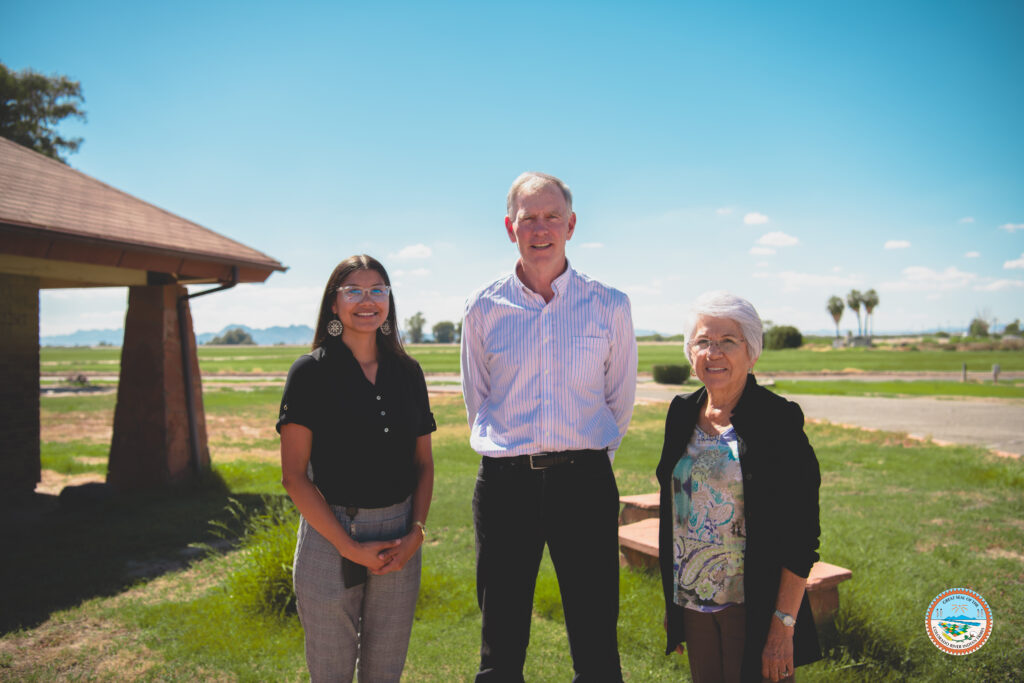
During his presentation, Udall explained that flows in the Colorado River have dropped about 20% since the year 2000, and that precipitation – the rain and snow that feed the river – is also down about 20%. He said several studies have found that this isn’t just a temporary drought, but a long-term trend he believes is caused largely by human-driven climate change. Temperatures are rising across the Southwest, and according to Udall, “We are now on target for 3 degrees Celsius of warming by the year 2100.” Udall reiterated that his studies show this increase in temperatures is based on an average of estimates, and that temperatures in certain areas, including the desert southwest, could see higher increases.

Udall described the situation as serious and with little optimism. He shared that some scientists are exploring ideas like adding sulfur dioxide to the atmosphere to help cool the planet, though he said most researchers are cautious about such steps because they involve more human interference in nature. “It’s not a perfect solution,” he explained, “but it shows how far people are thinking about how to slow down the warming.” Councilwoman Vanessa Welsh was thankful for Udall’s frankness about the situation stating, “Many of us do know this, but we don’t hear it very often…We intend to protect the river as one of our own.” (more…)

The Department of Revenue and Finance Welcomes Director

The Colorado River Indian Tribes is pleased to welcome Andrew Quillen as the new Director of the Revenue and Finance Department.

Mr. Quillen is a CRIT tribal member who was born and raised in the community. He brings both professional experience and a deep personal connection to the reservation into his new leadership role. He has worked for the Tribes for the past three years and has steadily grown within the department.

Mr. Quillen earned his Bachelor of Arts degree in Business Administration with a concentration in management from the University of La Verne. Upon returning to Parker, he began his career with the Tribes as a tax examiner and revenue agent. He quickly found that the work aligned with his long-standing interest in business, compliance, and economic development.

When the former Revenue and Finance Director was elected to Tribal Council, Mr. Quillen felt it was the right time to step forward and continue the work the department had already established. His background in sales, service, and compliance has helped shape his understanding of how the department supports businesses and the community as a whole.
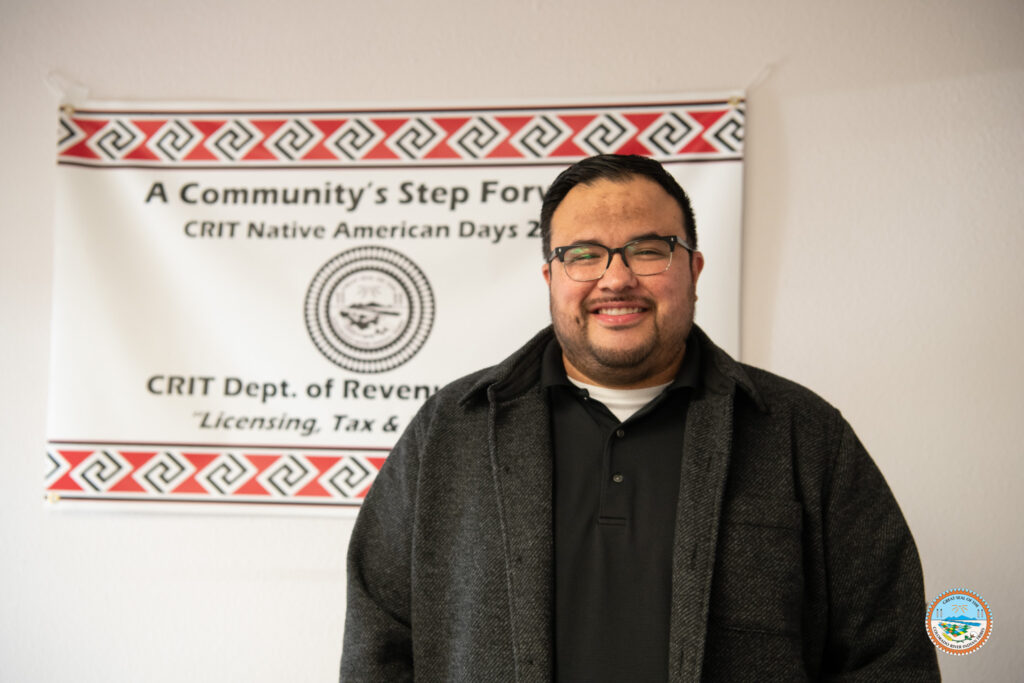
As a lifelong community member, Mr. Quillen understands the economic landscape of the reservation and the opportunities for growth. One of his personal goals is to see more tribal members become business owners. Being part of the reservation’s continued development is something that holds special meaning for him. (more…)

The Colorado River Indian Tribes Utilities Department has welcomed a familiar face into its leadership, naming Alex Covarrubias Jr. as the new Utilities Director.

Covarrubias is a Parker and Poston local who grew up in the community he now serves. His career in the water industry began in 2013, giving him more than a decade of hands-on and leadership experience in the field.

He started his professional journey working in Big River for three years before joining CRIT Utilities, where he served as Water Department Supervisor. During his time with the Tribe, Covarrubias gained valuable experience learning the day-to-day operations of the department and the importance of understanding the work from the ground up.

“Learning the ins and outs of the job builds character,” Covarrubias said. “I’m glad I was able to learn from the bottom.”
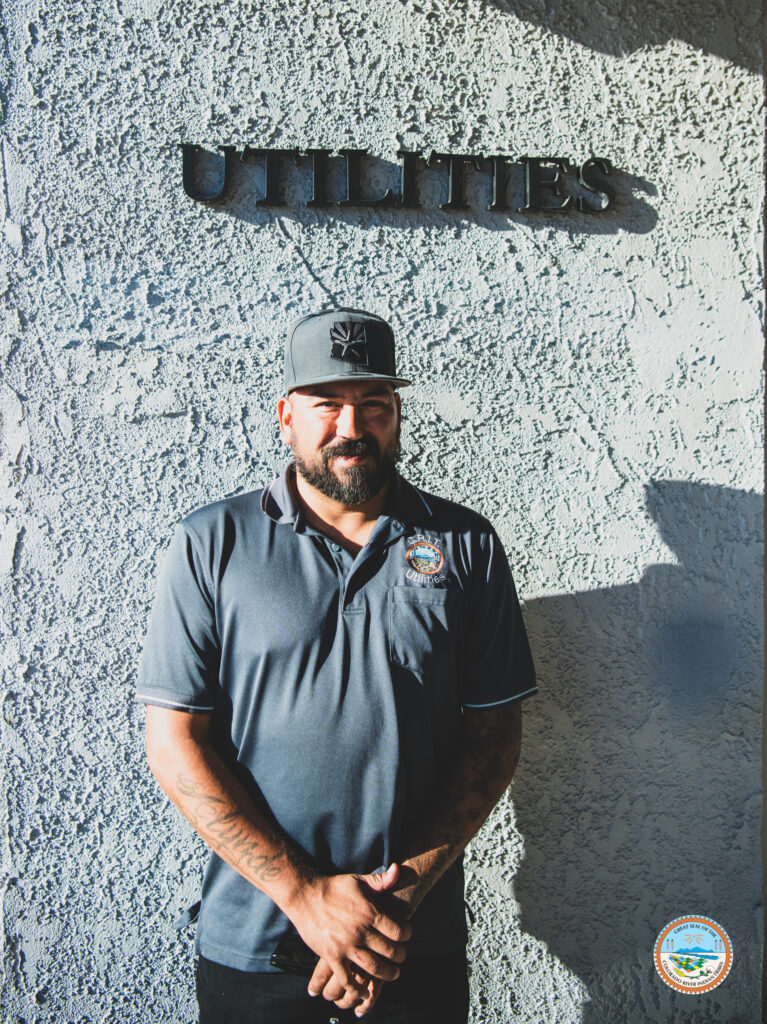
In 2022, he stepped away from CRIT Utilities to continue building his experience, working with the Rural Water Association of Arizona. Along with his previous roles, Covarrubias has spent years in management and believes that with a good attitude and strong work ethic, he can be an effective leader.

Returning to CRIT Utilities as Director is a full-circle moment for Covarrubias, and one he says he is excited about.

CRIT Utilities oversees essential services including water, wastewater, and solid waste for the reservation. Having spent years doing hands-on work in the field, Covarrubias believes that experience helps him better support his team. (more…)

Navajo customs find a way to heal and reignite the strength of those in suffering and spiritual pain of what lingers in their heart, their mind, their body, their soul. But here, we have a film that questions and wrestles with the idea of how we feel out, process, and learn to forgive those who’ve done harm to us for no longer. FINDING HÓZHÓ, the newest film from writer/director/producer Travis Holt Hamilton, searches for that idea from within the protagonist Secody, a man whose silent dignity masks a history of childhood trauma left behind by the violence of his father, remembered as an angry and aggressive alcoholic. Now an older man, Secody is morally stuck on how to best care for his dying/bedridden elder father; he secretly wrestles with the emotional turmoil of not knowing how to confront his abuser and comfort his dying father. We jump back and forth between the present narrative and the 60s’ period flashbacks to show how Secody had to endure his father’s drunken rage(s), while also finding peace and serenity with his warm and loving grandfather, who teaches him the traditional Diné methods of beliefs and guidance. We see a different coin side of father figures within Secody’s life – one figure showing him what pain can bring by self-destruction, and another figure teaching what beauty and tranquility can be found with personal strength and faith rooted in traditional values. (A scene plays out in flashback with the grandfather and son looking after the depressed father, drowning in sorrow about his dead wife with a bottle; the grandfather tells his grandson, “Your father is not a bad man, he’s a broken man.” They carry him back home and spend the night traditional praying over him repeatedly, showing Secody what the bonds of family and holding hope in one’s beauty does for our health & growth.)

What stood out on top of the story with the film itself, the reviewer found the production value to be a crowning achievement; in particular, the cinematography and direction seen on screen proves that the story has a backbone of visual style and gravitas of a filmmaker’s dedication to making a story based on the concept and company he keeps. Here, Hamilton finds the weight of the emotional journey in his character’s choices and reflections in facing the confrontation of familial bonds and those painful memories that we put to rest. The actors’ are all allowed to shine and breathe life into their on-screen personas’, with many of the cast having the strength to carry weight of dialogue while the main lead is left in silence of his own accord. By the end of the film (as per audience reactions at the screening), you’ll be needing the tissues to help handle the teary emotions we see in the finale of the film reinterpreting the themes of Hózhó being an internal spiritual awakening that anyone can ignite from within, from family, and from the values/beliefs we hold strong. Anyone of any generation can find something out of the story, as the reviewer recounts how much an audience engagement could be found in the Q/A section of the premiere – prompting discussions of elder’s recollections that touched on personal experiences they found identifiable through the film. It’s a beautiful film that stands as one of Hamilton’s most mature and enlightening features that showcases the humanity and culture of Diné customs and traditions. FINDING HÓZHÓ is a film that wants you to be emotionally and spiritually ready to find the light, beauty, and forgiveness to give ourselves from all the burdens of the world.
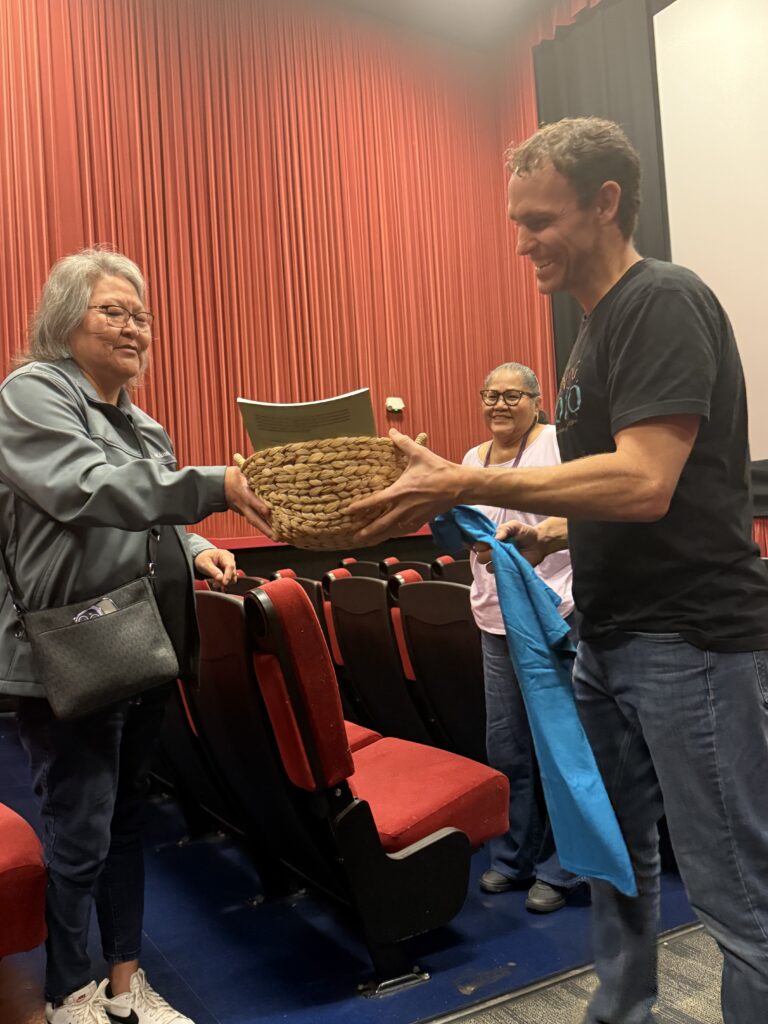
Holt Hamilton, in his steadfast devotion to furthering his filmmaking goals and working with the best talent/crews, finds solace in the audience he has acquired with his filmography. Speaking with him, you understand that the storytelling that he’s writing and formulating is based on the influences and ideas that surround him; and it’s no surprise seeing how much influence the honor and beauty of Navajo country has struck a cord with his sensibilities. We spoke with him after the screening –

CRIT MEDIA: How do you anticipate everything that you do with the challenges of filmmaking? What does the weight of this lifestyle feel like for you?

HAMILTON: “I think the start of it was of just giving myself that goal: if I had one more chance to make a movie, what would I do? Not that the other films haven’t been a passion project or something, but there’s something about like, okay, what, there’s more thought, there’s a lot more prayer into it, there’s a lot more like, okay, what do I leave with? And so I think I set, that was one thing I think that really played into it.” (more…)



