November 13, 2026 6:18 pm
CRIT Nation, Parker, AZ
November 13, 2026 6:18 pm
CRIT Nation, Parker, AZ

Per BIA Electric, Mochem Housing in the Valley will not lose power


Según BIA Electric, Mochem Housing en el valle no se quedará sin electricidad.

Click the links below to download a form

Direct Deposit Authorization Form

General Welfare Application_09242024

General Welfare Application Minors_09242024

PLEASE READ CAREFULLY


Dear Tribal Member:

Tribal Council has approved a 2024 General Welfare Assistance payment of $2,000.00 for each CRIT Tribal Member. CRIT Tribal members, both minors and adults, who are enrolled with CRIT as of November 1, 2024 are eligible to receive assistance. Tribal Members MUST submit an application to receive a General Assistance Payment for 2024.

Click the links below to download a form

Direct Deposit Authorization Form

General Welfare Application_09242024

General Welfare Application Minors_09242024

This 2024 General Welfare Assistance payment replaces the annual Tribal Distribution Payment.  The benefits to the membership are that the General Welfare Assistance payment is NOT income subject to federal taxes and should not impact eligibility for benefits such as SSI and food stamps.  You will not be issued a 1099 for this payment.  Please review the General Welfare Plan for more information.

Tribal Members will receive their General Welfare Assistance payment by mail or by direct deposit into a bank account after submitting their application.  Parents or legal guardians may request direct deposit for their eligible minor tribal member children into an account owned by the parent or the child.  YOU DO NOT HAVE TO SUBMIT A NEW DIRECT DEPOSIT FORM WITH YOUR APPLICATION IF YOU INTEND TO RECEIVE YOUR GENERAL WELFARE ASSISTANCE PAYMENT IN SAME BANK ACCOUNT AS YOU RECEIVED YOUR 2023 GENERAL WELFARE ASSISTANCE PAYMENT.

The General Welfare Assistance payment will be mailed or direct deposited as follows:

Application and Forms Due Date                   Payment Issued

Must be received by Accounting:

October 18, 2024                                            November 21, 2024

November 22, 2024                                        December 19, 2024

December 20, 2024                                         January 16, 2025

After December 20, 2024                              Payments issued monthly on a rolling basis

and before December 31, 2025

If you want to receive your General Welfare Assistance payment by direct deposit, you must submit the attached Direct Deposit Authorization Form along with a voided check to CRIT Accounting.  If you do not have a direct deposit authorization form on file from last year, or do not submit one for 2024 with your application, your payment will be mailed to the address on your application.  The mailing address you provide on the application will be used to update your address with both enrollment and accounting.   You may have already  received written notification  along with  an application and a self-addressed stamped envelope for your use to return the forms or the forms can be dropped off in person at Tribal Administration.  Additionally, the application and forms can be emailed to GWA@crit-nsn.gov.

Please note that the checks for eligible minor tribal members will be issued in the name of the child and not the parents. Parents or guardians must submit proof of their right to receive the distribution on behalf of their child by submitting an application with a copy of the birth certificate listing the parent(s), and if applicable, a court order establishing legal custody and placement before checks will be mailed or the payment directly deposited.

Checks will not be issued to the parent(s) if they do not have the care and custody of their children.  Guardians and custodians of minors who are not the child’s legal parent shall be required to provide a court order indicating their status.  Payments for children in the physical care and custody of CRIT Social Services or other state or tribal agencies shall be held in an account established by CRIT Accounting.

Tribal Members must apply for the 2024 General Welfare Assistance Payments no later than December 31, 2025 after which a 2024 payment will not be available.

Please be advised that if you are in default on a debt you owe to the Colorado River Indian Tribes or its enterprises, you may voluntarily agree to apply your General Welfare Assistance to the loan or other outstanding debt in default.  If you have any questions about outstanding debts in default please contact Tracey Quillen at (928) 669-1239.

If you have any questions regarding General Welfare Assistance or you have an agency incorrectly treating this payment as income please contact the Office of the Attorney General at (928) 669-1271.

Click the links below to download a form

Direct Deposit Authorization Form

General Welfare Application_09242024

General Welfare Application Minors_09242024

A recent statement from Colorado River Commissioner JB Hamby says California and other Lower Basin states have been working with federal officials and neighboring states to develop new long-term operating rules for the Colorado River after 2026. He noted that the original 1922 Colorado River Compact was based on water supply estimates that no longer match today’s reality, as river flows have declined over the past 25 years while demand continues to grow. 

According to the statement, California, Arizona, and Nevada committed to major conservation efforts in recent years and have already exceeded planned water savings meant to stabilize Lake Mead and Lake Powell. However, disagreements remain between Upper Basin and Lower Basin states about how future reductions should be shared, and negotiators have not yet reached a final agreement. 

For CRIT, these ongoing negotiations are important because federal Colorado River policies, interstate agreements, and conservation requirements directly influence how tribal water rights are protected, managed, and incorporated into long-term river planning that affects the entire region.

Source: https://crb.ca.gov/2026/02/statement-from-jb-hamby-colorado-river-commissioner-for-california/


February 14, 2026

According to the U.S. Department of the Interior, federal officials are moving forward with new operating guidelines for the Colorado River even though the seven basin states have not yet reached full agreement. The updated rules, expected by October 2026, are meant to provide stability for water deliveries, power generation, and long-term management as drought conditions and declining inflows continue to strain the river system. Interior Secretary Doug Burgum said discussions with states, Tribal Nations, and Mexico are ongoing, but federal action is needed to ensure future reliability of the river.

The Colorado River supplies water to about 40 million people, supports millions of acres of farmland, generates hydropower, and serves 30 Tribal Nations, making it one of the most important water sources in the West. Federal officials are currently accepting public comments on the draft environmental review that will guide future reservoir operations.

For CRIT, these federal guidelines are important because Colorado River management decisions directly affect how tribal water rights are protected, how water is allocated in the Lower Basin, and how long-term planning supports the Tribe’s water security, economy, and future generations.

Source: U.S. Department of the Interior / Bureau of Reclamation press release

According to Arizona Mirror, Colorado River negotiations hit a setback as Lower Basin states, including Arizona, criticized Upper Basin states for resisting deeper water conservation commitments. Officials say ongoing drought conditions and declining reservoir levels are increasing pressure to finalize new operating rules before current guidelines expire. The disagreement highlights continuing tension over how water reductions should be shared across the basin. For CRIT, these negotiations are important because interstate agreements and federal management decisions directly influence how tribal water rights are protected and incorporated into long-term river planning.

Source: Arizona Mirror — https://azmirror.com/2026/02/13/arizona-blasts-upper-basin-states-for-refusing-cuts-as-colorado-river-talks-fail/

According to the Arizona Department of Water Resources, state officials say they will continue protecting Arizona’s Colorado River resources even after basin states failed to reach a consensus ahead of the federal deadline. Leaders emphasized ongoing drought challenges and the need for continued negotiations to maintain stability for water users across the region. State agencies say collaboration with federal partners and neighboring states remains essential moving forward. For CRIT, continued state and federal coordination is significant because long-term Colorado River policies directly affect how tribal water rights are recognized and sustained.

Source: ADWR Statement — https://azwaternews.com/2026/02/13/021326_statement/

According to USA Today, Colorado River negotiations approached a critical deadline without a final agreement, reflecting ongoing disputes over how to manage shrinking water supplies across the Southwest. Experts say declining snowpack, persistent drought, and competing demands are making consensus more difficult as states prepare for new post-2026 operating guidelines. Federal involvement may increase if states cannot reach agreement. For CRIT, these developments matter because federal river management decisions play a key role in protecting tribal water rights and ensuring long-term water security.

Source: USA Today — https://www.usatoday.com/story/news/nation/2026/02/13/colorado-river-deal-deadline/88658491007/

According to Arizona Water News, Arizona water leaders recently received a briefing from the governor’s office, the Arizona Department of Water Resources, and the Central Arizona Project on ongoing Colorado River negotiations as a federal deadline approaches. Officials discussed current drought conditions, possible future cutbacks, and the importance of coordinated state and federal planning to stabilize river supplies. The briefing highlights continued uncertainty as states work toward new post-2026 operating guidelines for the river. For CRIT, these negotiations are important because federal and interstate decisions on Colorado River management directly influence how tribal water rights are protected and incorporated into long-term planning.

Source: Arizona Water News — https://www.azwater.gov/news/articles/2026-02-11

According to KJZZ News, Colorado River basin states are facing a federal deadline to reach an agreement on future water management rules, with uncertainty remaining about whether consensus can be reached in time. Experts say possible outcomes range from short-term agreements to federal intervention if negotiations stall, reflecting ongoing tension between Upper Basin and Lower Basin states. Continued drought and competing water demands have made long-term planning increasingly complex. For CRIT, these negotiations matter because federal decisions about river operations directly affect how tribal water rights are recognized and sustained within the broader basin framework.

Source: KJZZ News — https://www.kjzz.org/the-show/2026-02-12/colorado-river-states-are-staring-down-a-feb-14-deadline-heres-what-might-happen-next

According to the Lake Powell Chronicle, federal officials have outlined a post-2026 framework aimed at preventing further decline of the Colorado River system as drought pressures continue. The proposed blueprint focuses on conservation strategies, operational adjustments, and coordinated planning among basin states to stabilize reservoir levels and long-term water supplies. These discussions reflect ongoing efforts to balance environmental conditions, population growth, and water demand across the Southwest. For CRIT, long-term federal planning for the Colorado River is significant because these policies help shape how tribal water rights are protected and managed for future generations.

Source: Lake Powell Chronicle — https://lakepowellchronicle.com/stories/feds-unveil-post-2026-blueprint-to-avert-colorado-river-collapse,99303

According to ABC 15 Arizona, researchers at Arizona State University are developing technology that converts industrial wastewater into ultra-pure water, potentially expanding future water reuse options in the Southwest. Scientists say advanced treatment methods could help supplement limited freshwater supplies while supporting growing populations and industries. Water recycling and reuse are increasingly discussed as part of long-term drought resilience strategies. For CRIT, emerging water reuse technologies may play a role in future regional water planning as tribes, states, and federal agencies work to protect limited Colorado River resources.

Source: ABC 15 Arizona — https://www.abc15.com/news/local-news/asu-turns-industrial-wastewater-into-ultra-pure-water

(more…)

According to KJZZ News, potential Colorado River cutbacks could increase operating costs for Arizona water utilities and even affect their credit ratings, which utilities rely on to fund infrastructure projects. Analysts say uncertainty around long-term river supplies makes financial planning more difficult and could raise costs tied to water treatment, delivery, and conservation investments. These financial ripple effects show how water shortages extend beyond environmental concerns into economic stability across the region. For CRIT, shifts in regional water costs and infrastructure planning can influence broader river management decisions that ultimately affect how tribal water rights are maintained and utilized.

Source: KJZZ News — https://www.kjzz.org/the-show/2026-02-11/colorado-river-cuts-could-increase-arizona-utilities-costs-and-affect-their-credit-ratings

According to the Sierra Vista Herald Review, basin states are facing an approaching deadline to agree on new Colorado River management guidelines before current rules expire. Ongoing disagreements between Upper Basin and Lower Basin states, combined with continued drought pressures, have slowed negotiations and raised concerns about potential legal disputes if a consensus is not reached. Federal oversight remains a key factor in shaping how future allocations will be determined. For CRIT, these negotiations are important because federal river management decisions directly affect how tribal water rights are recognized, protected, and incorporated into long-term basin planning.

Source: Sierra Vista Herald Review — https://www.myheraldreview.com/news/state/deadline-approaches-for-colorado-river-negotiations/article_5dd6fa1d-eed1-4d98-82f2-4a754853da3c.html

According to KTNV Channel 13 News in Las Vegas, low snowpack levels across the Mountain West are raising concerns about water supplies for Southern Nevada and the broader Colorado River Basin. Snowpack acts as a natural reservoir that feeds rivers and storage lakes during spring runoff, so below-average levels can reduce future water availability and increase pressure on already stressed reservoirs. Experts say continued dry conditions could complicate long-term water planning across the Southwest. For CRIT, declining snowpack is significant because reduced river flows can influence future allocation decisions and federal management strategies affecting tribal water resources.

Source: KTNV News — https://www.ktnv.com/news/why-low-snowpack-levels-raising-alarms-for-southern-nevada-water-supply

According to Newsweek, new data showing concerning water levels at Lake Powell is adding to ongoing worries about the long-term stability of the Colorado River system. Reservoir levels play a critical role in determining water deliveries, hydropower production, and shortage declarations throughout the Southwest. Continued drought conditions combined with sustained demand have kept pressure on the basin’s major storage systems. For CRIT, reservoir conditions remain important because federal water management decisions tied to storage levels directly affect how tribal water allocations are managed and protected.

Source: Newsweek — https://www.newsweek.com/lake-powell-water-levels-as-concerning-data-revealed-11500468

According to the Center for Colorado River Studies at Utah State University, Lake Powell and Lake Mead have recently shown differing storage trends, reflecting the complexity of managing water across the Colorado River system. Researchers say reservoir operations, inflows, releases, and ongoing drought conditions all contribute to shifting water levels that can affect supply planning throughout the basin. Understanding how these reservoirs interact is key to long-term river management decisions. For CRIT, these reservoir dynamics matter because federal operational decisions tied to storage levels directly influence how Colorado River water is allocated and protected for tribal communities.

Source: Center for Colorado River Studies — https://qanr.usu.edu/coloradoriver/news/blog-2026-2-9

According to KJZZ News, the Colorado River Basin is experiencing one of its driest winters in decades, with snowpack levels far below average in key areas that supply water to Lake Powell and Lake Mead. Scientists warn that reduced snowpack could lead to lower river flows this year, increasing pressure on already strained reservoirs and complicating ongoing negotiations over long-term water management. Because snowpack acts as the primary natural storage system for the river, weaker winters often translate into tighter water supplies downstream. For CRIT, these conditions matter because reduced river flows can influence future allocation decisions, federal management strategies, and long-term planning for tribal water resources.

Source: KJZZ News — https://www.kjzz.org/science/2026-02-09/the-colorado-river-is-having-its-driest-winter-in-decades

According to ABC News, record-low snowpack across much of the western United States is raising concerns about potential water shortages, wildfire risks, and continued stress on major river systems including the Colorado River. Experts say warmer temperatures and shifting precipitation patterns are reducing snow accumulation that normally feeds reservoirs during spring runoff. These trends could influence future water allocation planning as states and federal agencies work toward updated river management strategies. For CRIT, changes in snowpack levels matter because they directly affect Colorado River flows that shape long-term water availability and policy decisions impacting tribal communities.

Source: ABC News — https://abcnews.com/US/wireStory/record-snow-drought-western-us-raises-concern-spring-130016613

According to the San Mateo Daily Journal, a key deadline is approaching for Colorado River basin states to reach an agreement on new water management rules before current guidelines expire. Ongoing disagreements between upper and lower basin states, combined with persistent drought conditions, have slowed progress and increased concerns about potential legal disputes if consensus is not reached. Federal oversight plays a major role in shaping these negotiations, particularly for the Lower Basin where water allocations are closely regulated. For CRIT, these negotiations are significant because future federal river management decisions directly affect how tribal water rights are recognized, protected, and incorporated into basin planning.

Source: San Mateo Daily Journal — https://www.djournal.com/news/national/deadline-approaches-for-colorado-river-negotiations/article_5a129b32-06cb-50c0-8945-5186943db1db.html

According to KJZZ News, a new groundwater monitoring tool developed in Nevada is helping scientists better understand how groundwater pumping affects habitats, water availability, and long-term sustainability across the Mountain West. Researchers say improved data can support more informed water management decisions as communities balance development, agriculture, and environmental needs. Groundwater use is increasingly important as surface water supplies face ongoing pressure from drought and climate variability. For CRIT, regional groundwater management discussions matter because they influence broader basin water planning and long-term strategies for protecting tribal water resources.

Source: KJZZ News — https://www.kjzz.org/science/2026-02-08/a-nevada-groundwater-tool-highlights-strained-habitats-with-lessons-for-the-mountain-west

According to Reuters, the Colorado River has been identified as the most endangered river in the United States due to ongoing drought, rising demand, and increasing pressure on its limited water supplies. Experts say declining reservoir levels, climate impacts, and competing state interests continue to challenge long-term sustainability across the basin. The designation highlights growing national attention on the need for cooperative water management and conservation efforts. For CRIT, this recognition underscores the importance of protecting tribal water rights as regional policies evolve to address long-term river stability.

Source: Reuters — https://www.reutersconnect.com/item/colorado-river-is-named-the-most-endangered-river-in-the-united-states-as-the-southwestern-states-face-water-shortages/dGFnOnJldXRlcnMuY29tLDIwMjI6bmV3c21sX1JDMjBRVDlVUEZKMg

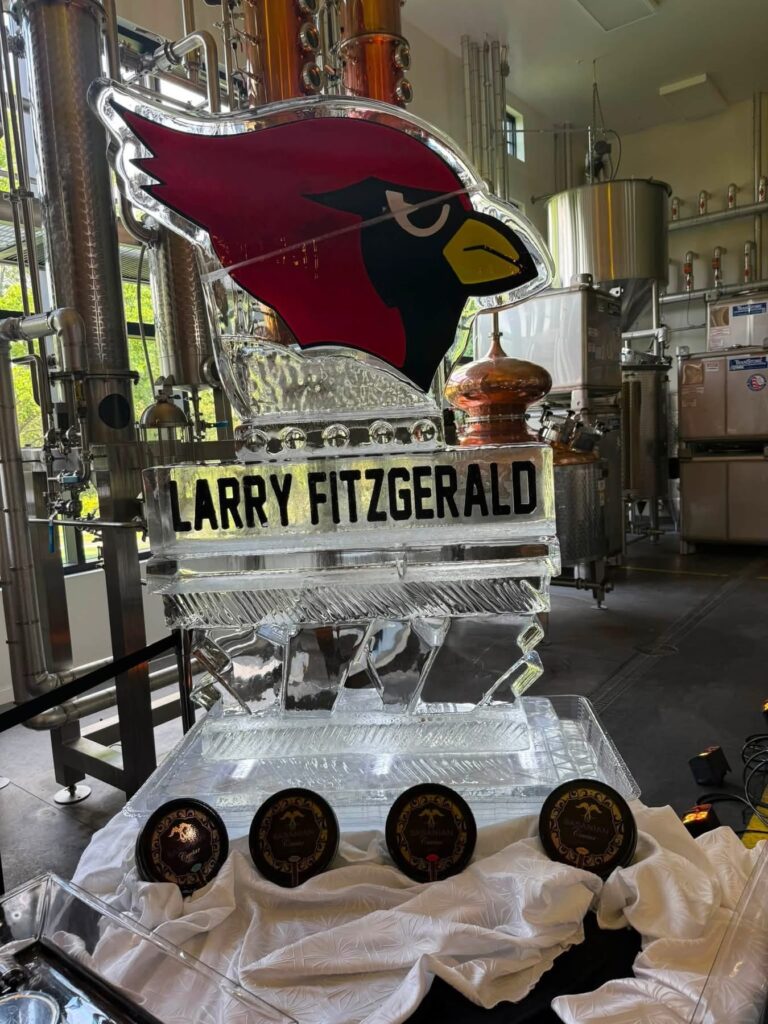
From his start as a dishwasher to his role as a head chef at Steak 44 in Phoenix, CRIT Tribal Member Quincy Stone has built a culinary career that recently took him to Canton, Ohio. There, he helped cater a banquet honoring former Arizona Cardinals wide receiver Larry Fitzgerald during his induction into the Pro Football Hall of Fame.

His aunt, Rachel Martinez, contacted CRIT Media because she wanted his hard work and accomplishment to be recognized. “It’s not every day one of our Tribal Members is invited to such an event,” Martinez said. “He doesn’t feel it’s a big deal, but I do, and I am very proud of him.”

Stone recently learned that he will travel to Beverly Hills next month to assist with additional catering events. Details about the events have not yet been announced.

Congratulations to Quincy on this accomplishment. The Colorado River Indian Tribes wishes him continued success as he represents the CRIT community and continues building his culinary career. Congratulations, Quincy on all your success and you always have the support from your home, the Colorado River Indian Tribes.



Location: Desert Sun Development #86 (100 Homes) Parker Arizona, 85344

Incident: Shooting

******Update******

At this time there is no more threat to the community. Taylor Goodman is now in custody at the CRIT Men’s Detention Facility. I would like to personally thank the community for sharing the post and spreading this information for people to see and help find this person. Thank you.

Cody Paddock, Chief of Police
Colorado River Indian Tribes Police Department


Date: September 20, 2026

Location: Desert Sun Development #86 (100 Homes) Parker Arizona, 85344

Incident: Shooting

At approximately 2:52 a.m. in the morning, CRIT Dispatch received 911 calls in reference to a possible break-in at #86 Desert Sun Development. As officers arrived on scene, they found an unresponsive male subject lying at the front doorway of the residence with a single gunshot wound.

Medical and Fire were called and responded to assist the subject with life saving measures. The male subject was pronounced deceased on scene by medical personnel. Bureau of Indian Affairs Investigator and Federal Bureau of Investigations were called and responded to the scene. At this time, it was stated that a male subject fled the scene, unknown direction of travel. This is currently an active investigation.

Person of interest: Taylor Joel Goodman, Native American, Height 5’09” Weight 300 Hair: brown, Eyes: Brown. If seen, do not approach the subject, he is considered armed and dangerous. Call 911 or CRIT Police Department.

If you have any information regarding this investigation, please call the CRIT Police Department at (928) 669-1277 or the TIPPS Hotline at (928) 669-5341

This case is being investigated by the CRIT Police Department, Federal Bureau of Investigations, Bureau of Indian Affairs.  We will update as soon as more information is available.

Cody Paddock, Chief of Police

Colorado River Indian Tribes Police Department


Agreement will deliver 9,009 acre-feet of CRIT Intentionally Created Surplus Water To The Central Arizona Water Conservancy
District and complete CRIT’s involvement in the Drought Contingency Plan

The Colorado River Indian Tribes and the Central Arizona Water Conservation District (CAWCD) have reached an agreement to deliver 9,009 acre-feet of CRIT Intentionally Created Surplus (ICS) water to the CAWCD.  This represents the last remaining water CRIT made available as part of the Drought Contingency Plan (DCP) that was agreed to back in 2019.

The ICS was previously conserved between 2020 and 2022, when in response to requests from the federal government, CRIT conserved water to help stabilize Lake Mead. CRIT conserved approximately 160,000 acre-feet and was compensated $38 million for 150,000 acre-feet of conservation (the average value of that water was approximately $254 per acre-foot). There was additional conserved water of approximately 10,009 acre-feet for which CRIT was never compensated.  It was converted into ICS so it would not be lost and is still behind Hoover Dam in Lake Mead.

Under the agreement, the CAWCD will compensate CRIT at $590 per acre-foot, for a total of $5.3 million, to be executed in two payments.

The CAWCD is the public agency that operates and maintains the physical infrastructure of the Central Arizona Project (CAP).

The ICS Agreements include requirements to account for system and evaporation losses, accounting, and use. By entering into this agreement now, CRIT will avoid future reductions in its ICS to account for evaporation and system losses; CRIT’s ICS water has already been allocated a 10% reduction, which is why the account balance is now 9009 acre-feet.  In addition to system losses and evaporation, there are also upcoming limitations that restrict ICS recovery when Lake Mead falls to certain elevations.  In agreeing to allow CAWCD to recover CRIT’s ICS, Tribal Council is being proactive in gaining compensation for this remaining water made available in the DCP prior to this water being devalued or otherwise lost.  (more…)

The Colorado River Indian Tribes’ new Head Start School is moving closer to opening, with the sewer system expected to be ready for final inspection during the week of September 21, 2026. Once final approvals are received, the project team will be able to move toward opening the new school.

The delay has been tied primarily to operation and capacity issues at the Joint Venture Sewer treatment facility. Because of those issues, the project team had to redesign the school’s sewer system so it would meet Joint Venture Sewer requirements before the facility could become operational.

That redesign required additional engineering work for a holding tank and lift station system. The system will temporarily store wastewater and then release it into the Joint Venture Sewer system in a controlled, timed discharge during non-peak hours. A contractor also had to be brought on to complete the additional installation and related work.
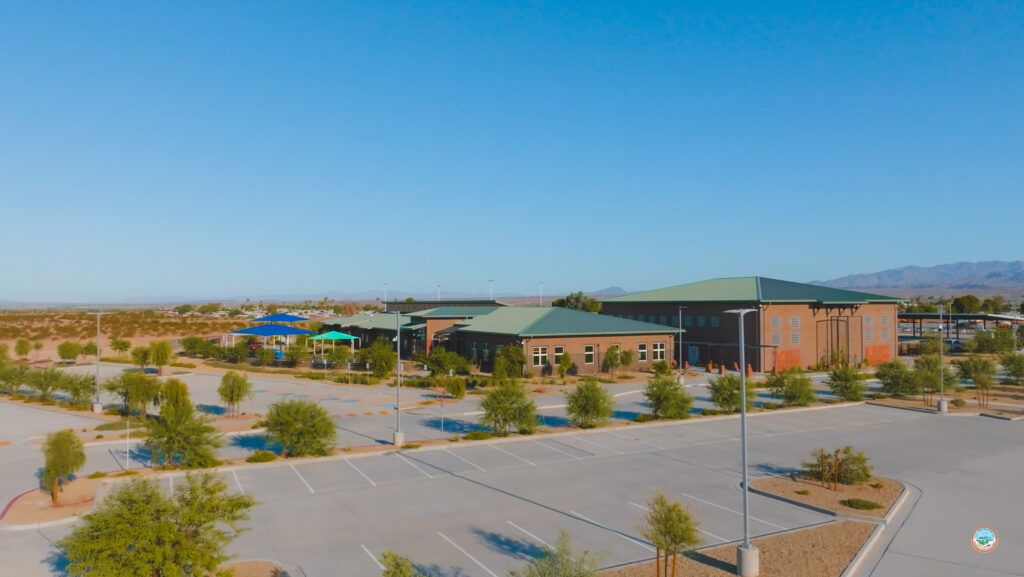
The project team has continued working closely with Joint Venture Sewer, CRIT Utilities, CRIT Building & Safety, the engineering team, and contractors to finish the required work and secure final approval.

When it opens, the new facility will include 10 classrooms, a large multi-purpose room with capacity for 500 people, a playground, a bus barn, and room for future expansion.

CRIT received a $13.8 million federal grant to help fund the project. CRIT is contributing another $7.2 million, bringing the total investment to nearly $20.8 million.

CRIT Chairwoman Amelia Flores said, “This represents a vital investment in our children. The benefits of this facility will be felt for generations as we seek to provide our children with the best possible head start as they prepare for school, life, and the opportunities that await. We want to thank everyone for their patience during this time. This is a momentous step forward in the right direction for the entire community, and we thank everyone who helped get us this far.”