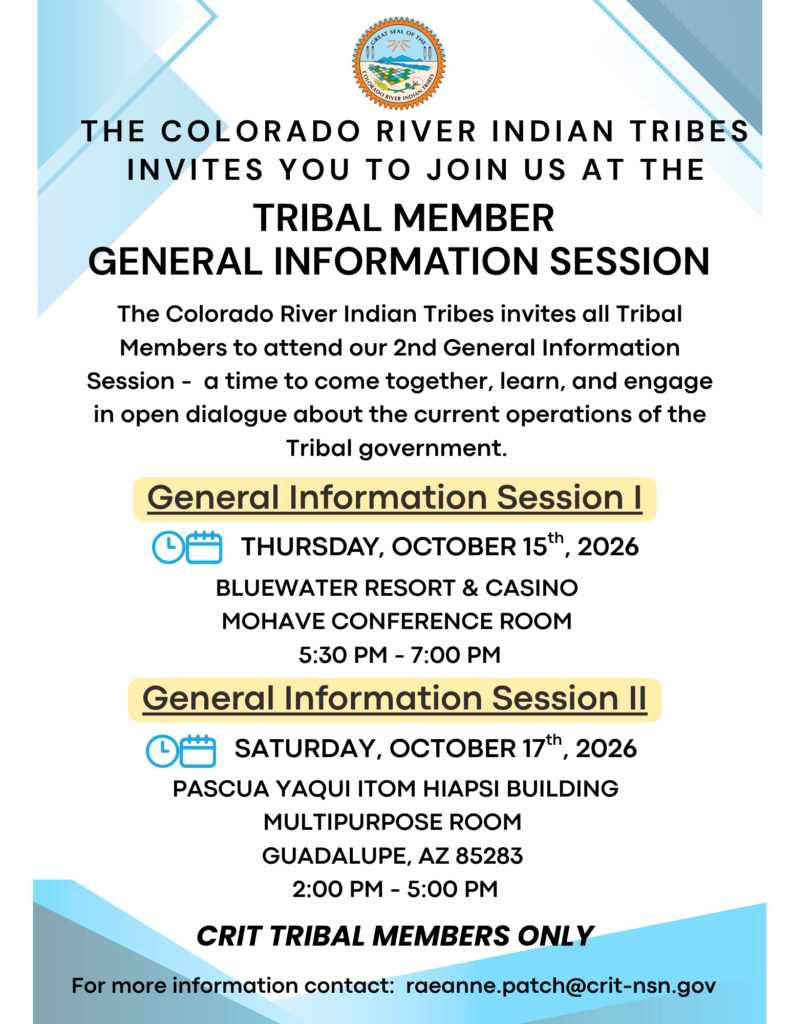
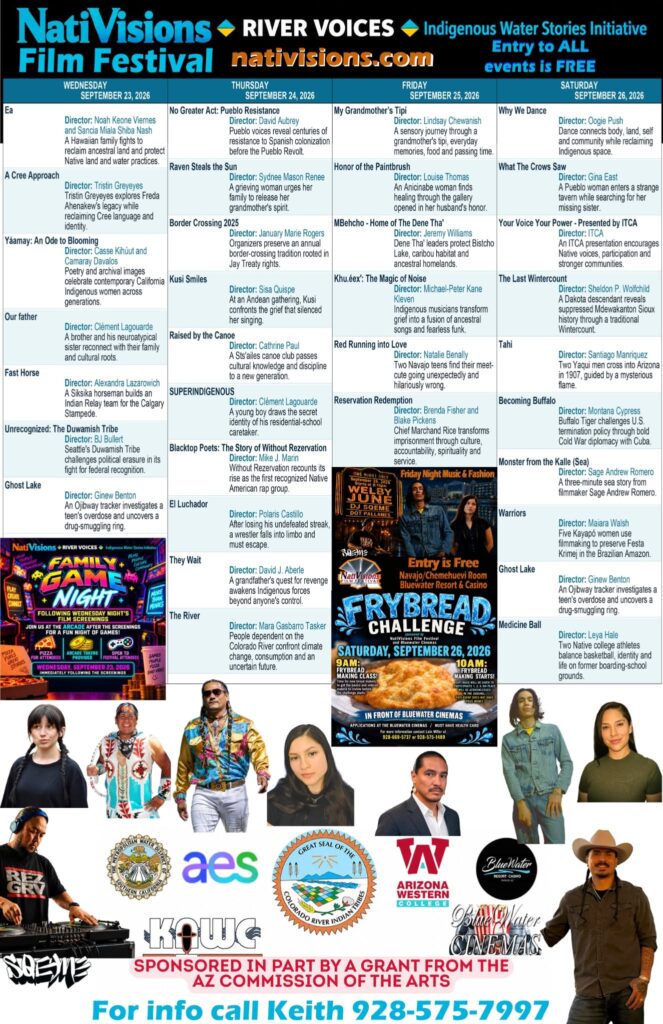
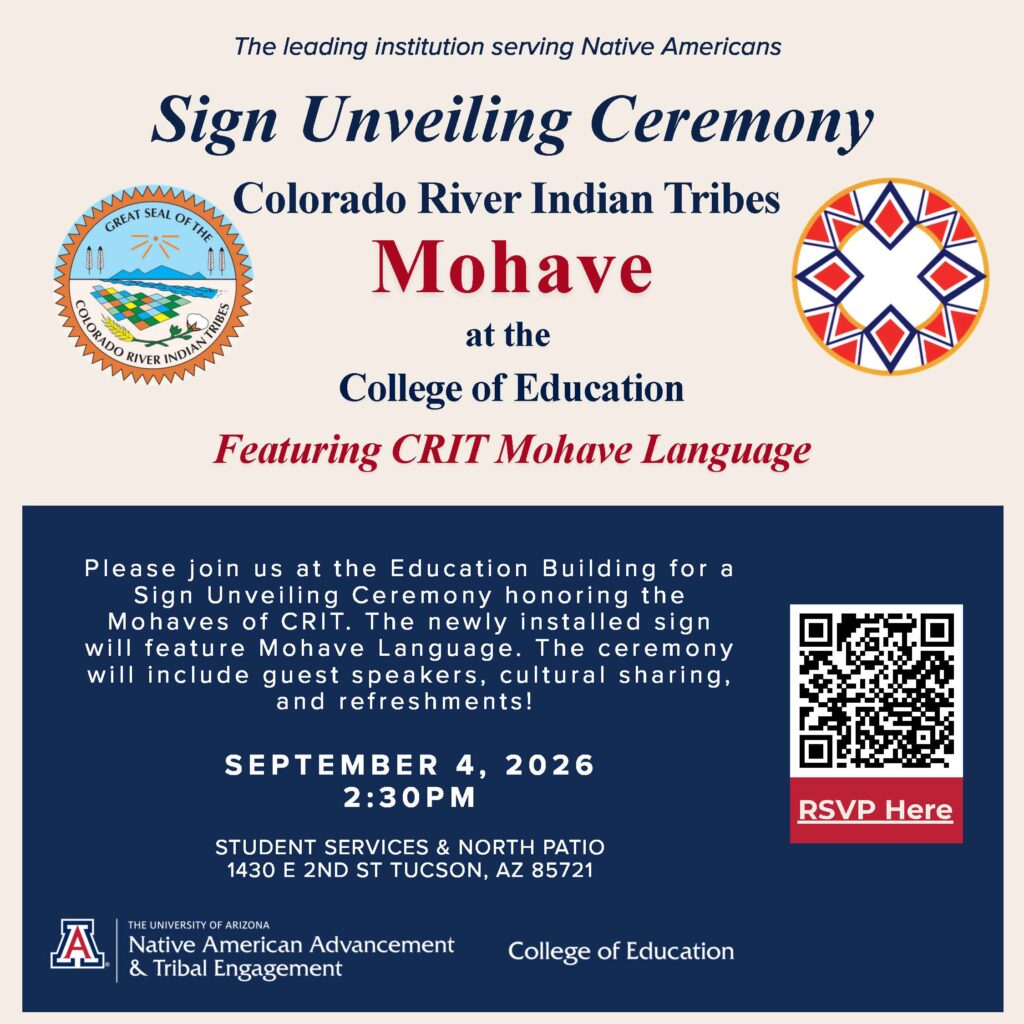
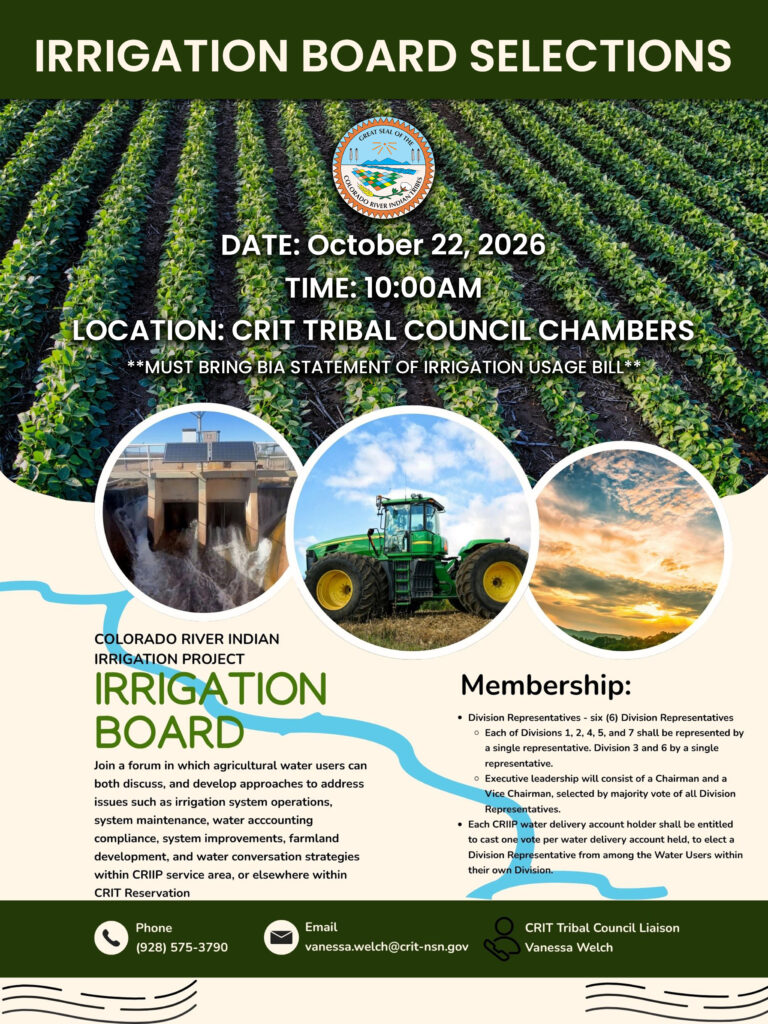
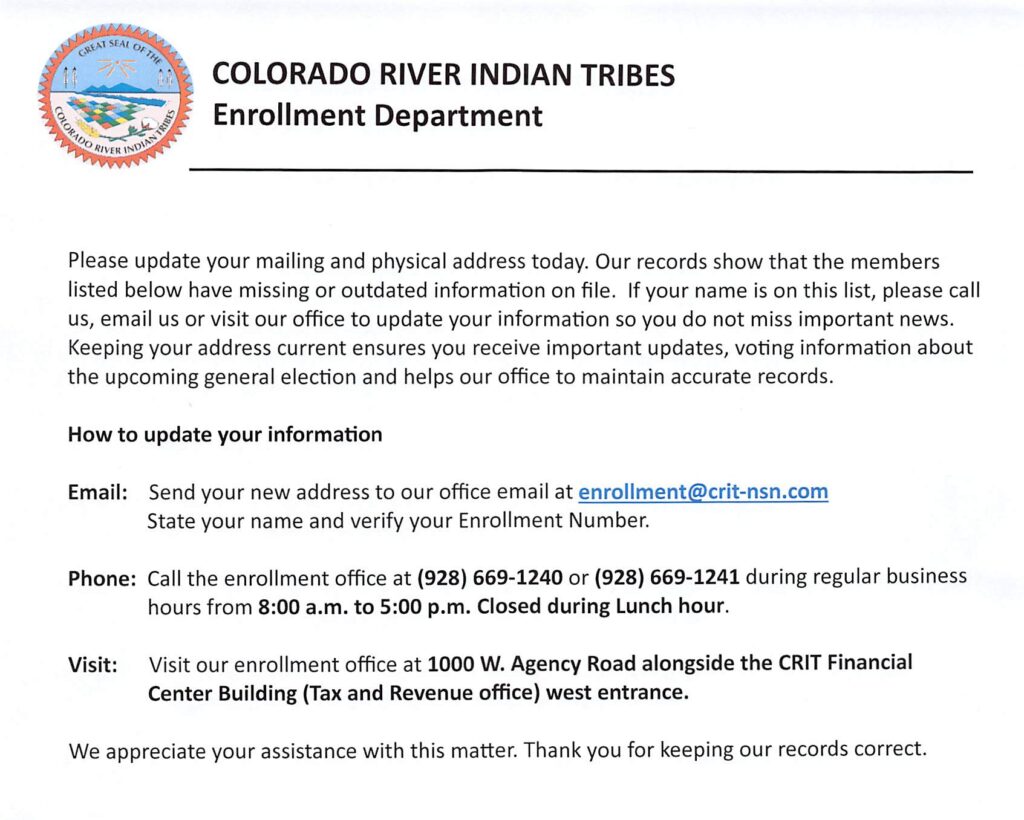
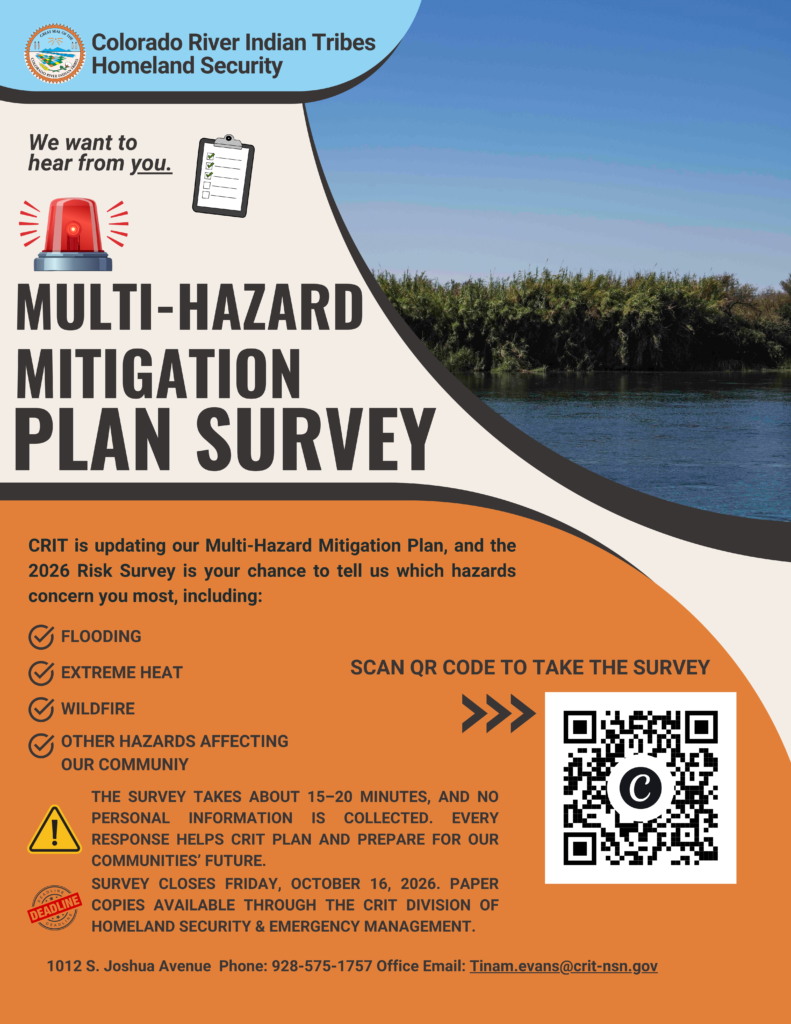
Click this link to access the survey or click the notice.

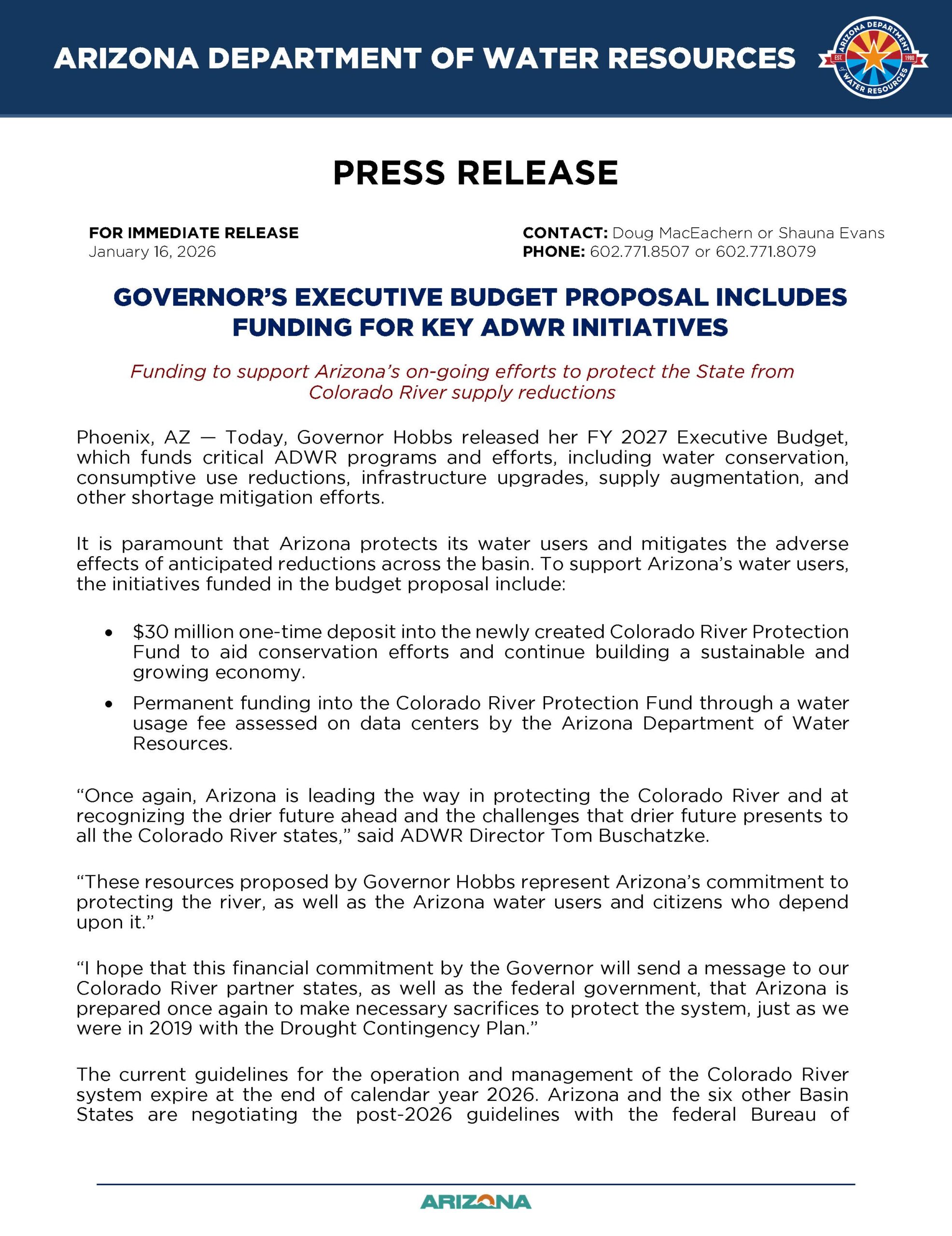
Arizona Budget Proposal Includes Major Funding for Colorado River Protection
On January 16, 2026, the Arizona Department of Water Resources (ADWR) shared details of Governor Katie Hobbs’ FY 2027 Executive Budget Proposal focused on preparing for long-term challenges facing the Colorado River. The plan includes new and expanded funding aimed at strengthening water security across Arizona in the face of ongoing Colorado River shortages.
Key points from the budget related to water:
Source:
Arizona Water News https://azwaternews.com/2026/01/16/fy2027_execbudgetproposal/
The Ahakhav Tribal Preserve is a treasured outdoor space for the Colorado River Indian Tribes community. Located along the beautiful Colorado River in Parker, the Preserve offers a peaceful and educational environment where families can explore nature, relax, and learn about the land we call home.
Newly hired Project Administrator, Marisol Chavira, has been dedicated to the Preserve for more than 20 years. Born and raised in Parker, she’s passionate about caring for the land and helping future generations enjoy it. After serving as the Administrative Assistant for many years, she began acting as the Project Administrator in 2021 and officially stepped into the role in November 2025.
Marisol shared that her favorite part about working at the Preserve is the quiet and comfort it brings. “It’s green, beautiful, and peaceful,” she said. “There’s so much for people to enjoy here.” From walking trails and bird watching to designated playground areas for families, the Preserve is an inviting space for all ages.
A typical day for the Preserve team includes maintaining the park, trimming trees, caring for the natural habitat, and working on grants to continue improving the area. One of Marisol’s favorite spots is Willow Beach, a scenic area where families can enjoy the water, shade, and open spaces.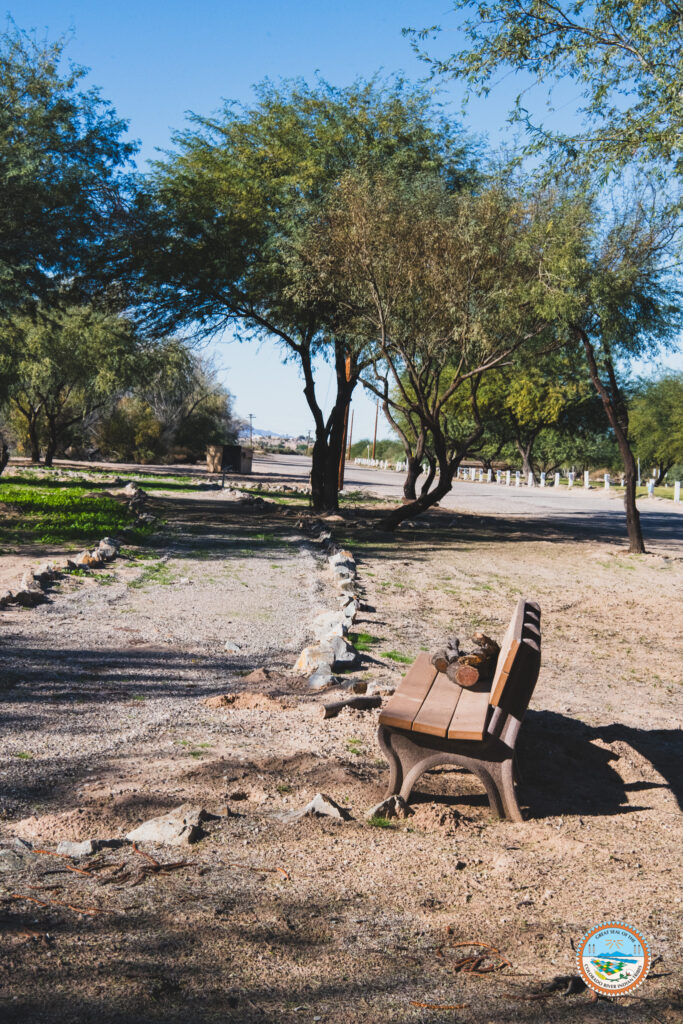
Fall is her favorite season at the Preserve because the changing leaves bring the area to life with color. She even recalled one memorable morning early in her career when a doe fell into a ditch. Without hesitation, she rushed in to help and ended up drenched but proud of what she did. It’s moments like these that show how much she cares for the wildlife and environment.
The Preserve is also home to important cultural resources. Marisol was surprised to learn just how many of the trees and plants hold cultural value and are monitored and preserved with great respect. Restoration continues to be a major focus. A recent grant supports the revegetation of native trees, including cottonwood, willows, and mesquite, helping to restore the natural habitat and strengthen the ecosystem for future generations. (more…)
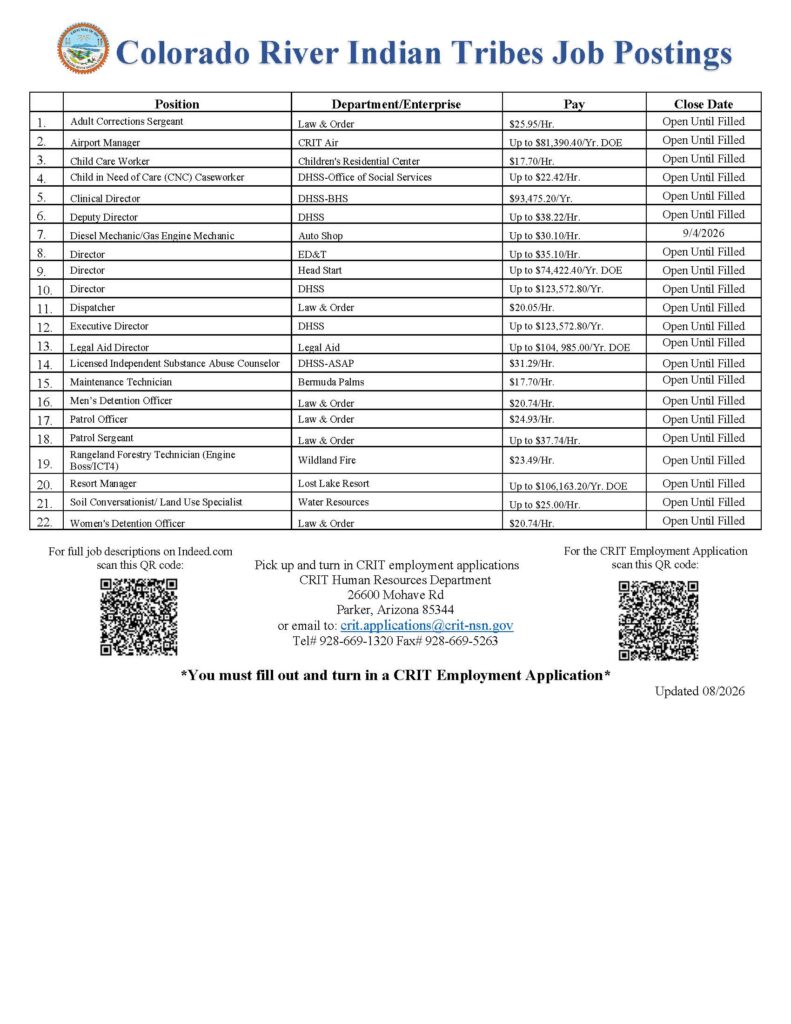
The Colorado River Indian Tribes Employment Development and Training Department (ED&T) continues to be a vital resource for tribal members seeking support, skills, and employment. Through partnerships with the Department of Labor, Arizona Tribal Workforce, and the Department of Economic Security, ED&T provides job readiness services, education support, and hands-on work experience to those enrolled in a federally recognized tribe. Their mission focuses on promoting general welfare, encouraging educational progress, protecting tribal interests, and helping community members build stable, independent futures.
The department offers a wide range of services designed to meet people where they are. Community members can receive help studying for a driver’s permit or license, creating resumes and cover letters, preparing job applications, and building job readiness skills. ED&T also assists with obtaining needed documents such as a GED or ID. For those looking to gain work experience, the Adult Work Experience program offers a 90-day on-the-job training period with the goal of permanent employment once training is complete. High school and college students can participate in the Summer Youth Experience Program, which provides hands-on workplace exposure during summer break. When needed, ED&T also provides supportive services such as work clothing, tuition assistance, certifications, testing fees, and education supplies if those items cannot be obtained through another program.
Click the links below to upload needed forms
UPDATED SUPPORTIVE SERVICE FORM 2025
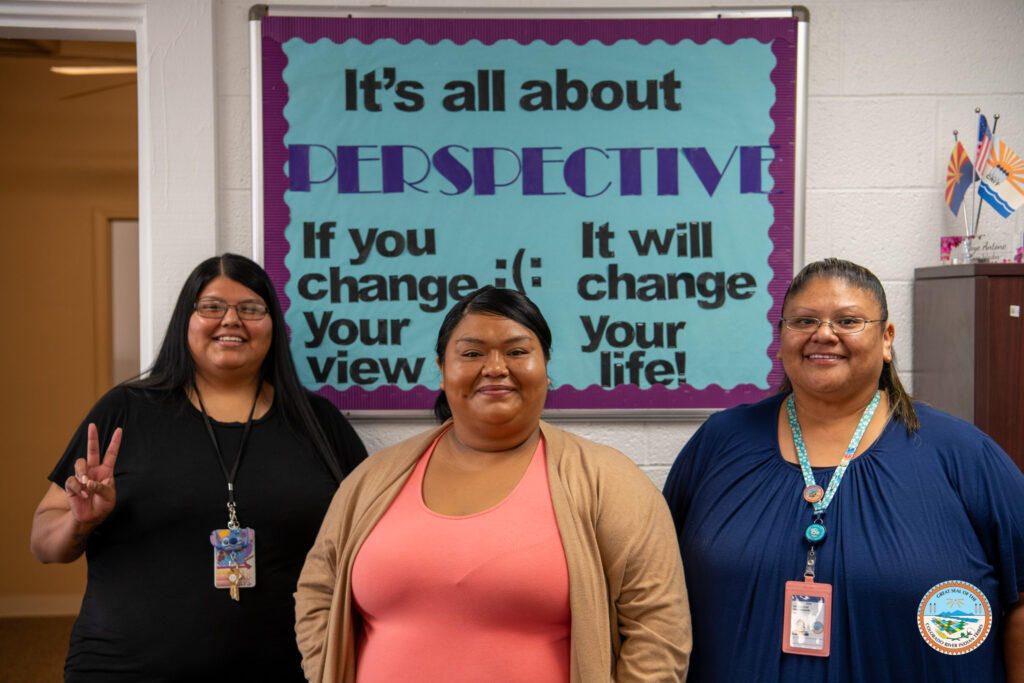
The department is guided by a committed team dedicated to helping the community move forward. Acting Director and Case Worker Kaye Antone works closely with participants to understand their goals, explore their interests, and determine what support they may need. Office Administrator Madolyn Brenner reviews applications, assists staff, and helps maintain a welcoming and organized department. Office Assistant Deaun Johnson and ED&T participant supports daily operations, helps participants with questions, and ensures they receive assistance quickly and respectfully. Together, the team works one-on-one with community members and emphasizes the importance of offering help confidentially and with care, recognizing that every situation is different. (more…)

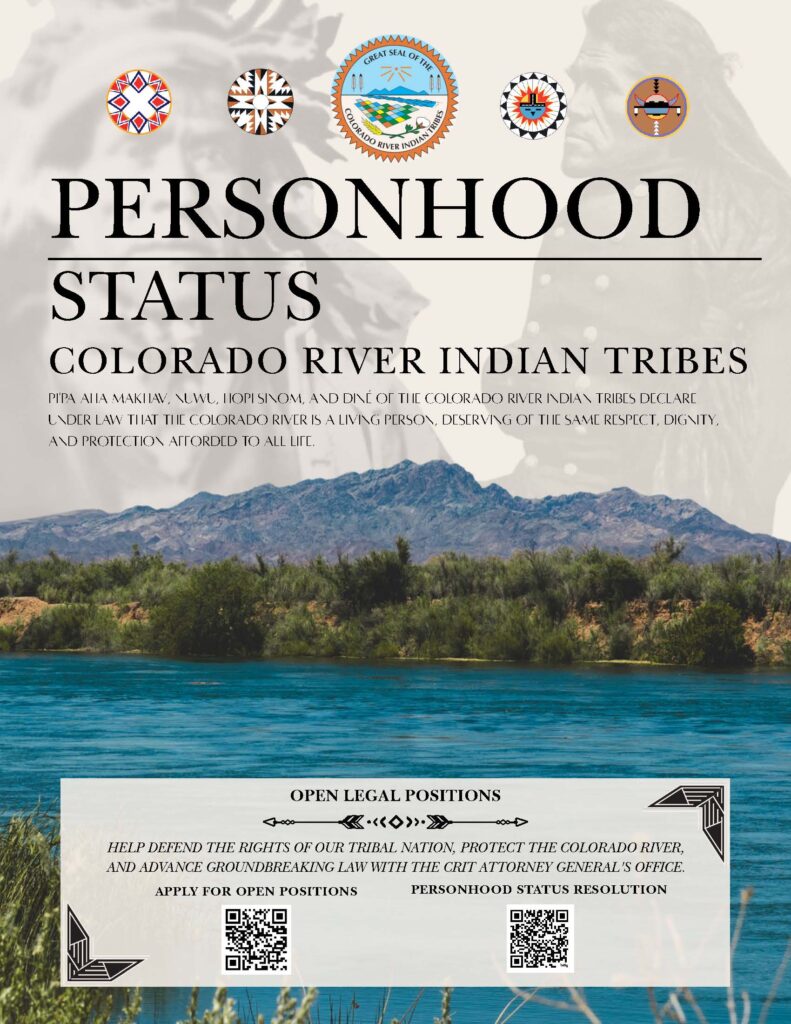
(Parker, Ariz.) CRIT’s Tribal Council has voted to acknowledge personhood status for the Colorado River under Tribal Law. The Tribal Council approved the resolution on November 6th.
Click the link below to see the entire resolution.
personhood resolution
The council’s decision came after soliciting substantial input from Tribal Members in person and in writing through numerous outreaches.
Other Tribes have approved similar measures to safeguard natural resources. CRIT would be the first community to do so for the Colorado River. The status comes as overuse and drought are threatening the life of the River which CRIT considers to be a living entity in addition to being a life-giving resource.
Personhood status means the Colorado River has the right to be protected under Tribal Law. The status directs current and future Tribal Councils to account for the needs of the River in decision-making as well as giving CRIT legal means to address the damage climate change is causing to the Colorado River.
The resolution states in part:
“There is no greater expression of sovereignty than protecting, stewarding, and securing for future generations what our Ancestors handed down to us, and that personhood status is a reflection of our values as a people and our spiritual, cultural, and religious connection to the Colorado River from the beginning of time through the end of time;”
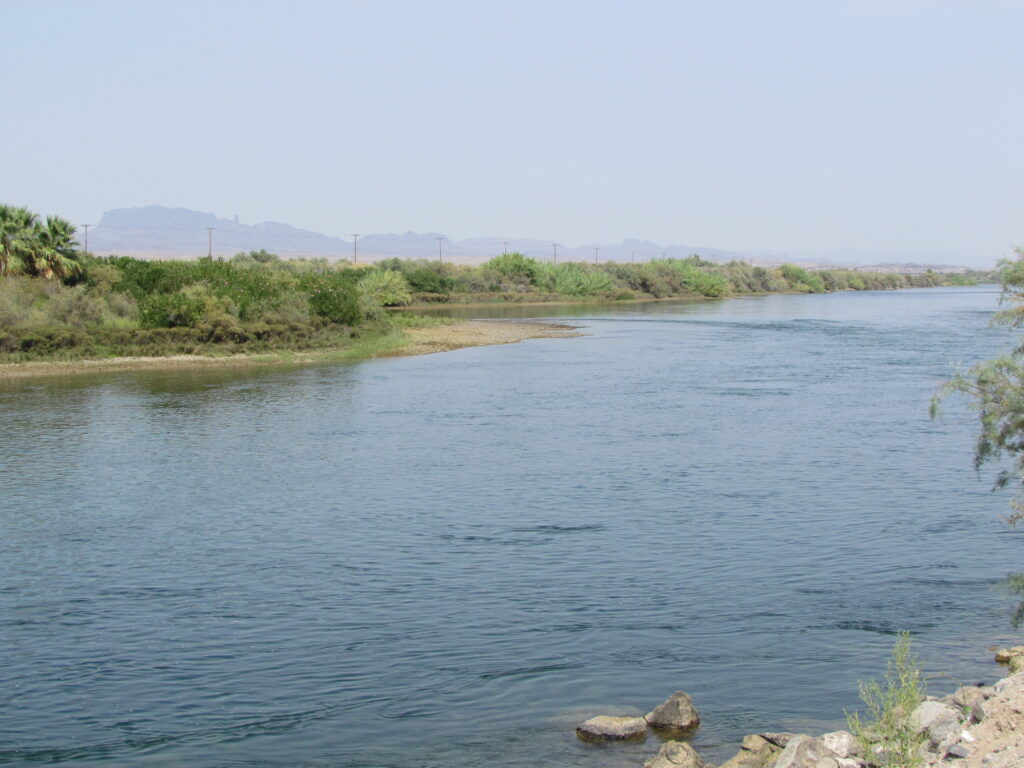
CRIT’s Attorney General and staff will be developing provisions for Tribal Council review and possible approval for inclusion in the tribal code, including the Water Code, to reflect the personhood status of the Colorado River as well as all the protections to which the Colorado River will be entitled under tribal law.
CRIT Chairwoman Amelia Flores said, “This resolution authorizes CRIT to take specific and concrete actions for the river and its ecosystem at a time when, more than ever, it is needed. Within Arizona, CRIT will be inevitably asked to help shoulder the burden of maintaining Arizona’s economy and way of life. This must be a two-way street, however. At CRIT we are prepared to engage and be part of the solution for Arizona, but part of the solution is the long-term protection of our river. The river is a part of who we are and who we will always be: The Colorado River Indian Tribes.”