July 29, 2026 5:00 pm
CRIT Nation, Parker, AZ
July 29, 2026 5:00 pm
CRIT Nation, Parker, AZ

The Ten Tribes Partnership (TTP) is seeking a lead contractor. This contractor position is supported by the Colorado River Sustainability Campaign, a fiscally sponsored project of the New Venture Fund.

TTP Background

The TTP was formed in 1992 and is a coalition of ten federally recognized Upper and Lower Basin Tribes that hold water rights in the Colorado River Basin. The member Tribes are: Chemehuevi Indian Tribe, Cocopah Indian Tribe, Colorado River Indian Tribes, Fort Mojave Indian Tribe, Jicarilla Apache Nation, Navajo Nation, Quechan Indian Tribe, Southern Ute Indian Tribe, Ute Indian Tribe, and Ute Mountain Ute Tribe.

The goal of the TTP is to increase the influence of Tribes in Colorado River management and provide support for the protection and use of Tribal water resources. The Colorado River Basin is suffering from extended drought, and the impact of climate change is palpable. TTP is committed to developing a new management framework that uplifts tribal priorities ahead of the 2026 expiration of the 2007 Interim Guidelines. TTP has determined this to be a critical time to hire a Lead Contractor to coordinate its efforts.

(more…)


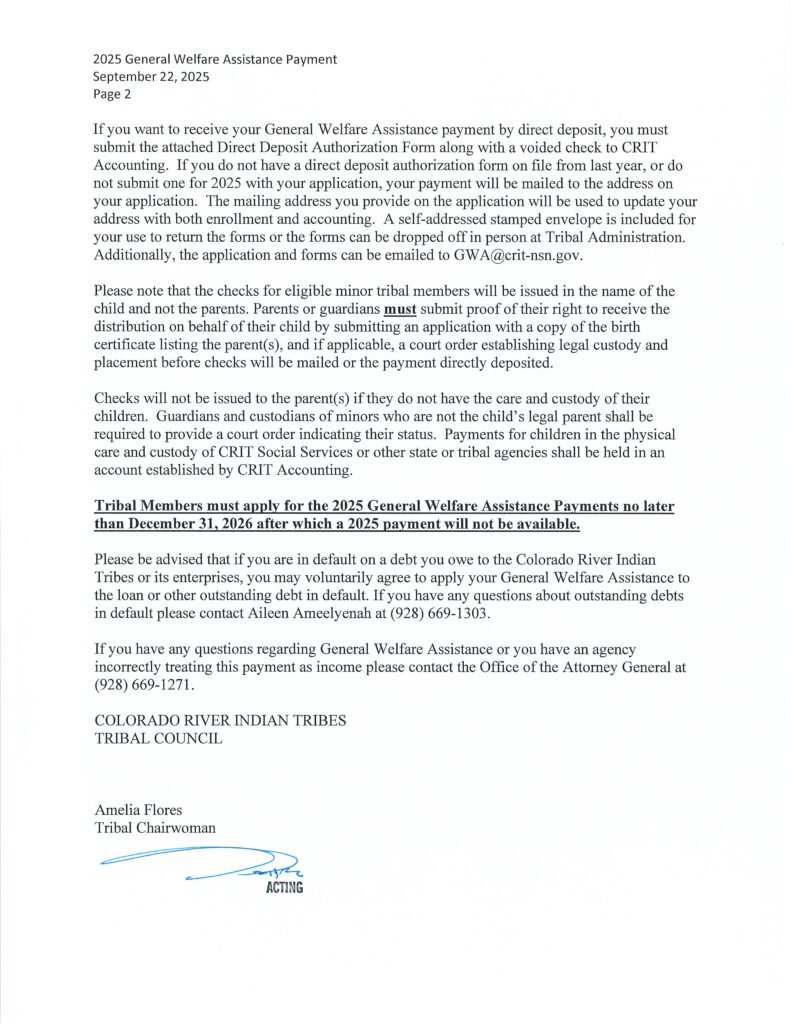
ATTENTION CRIT TRIBAL MEMBERS
Tribal Board/Committee/Commission Vacancies

Applications may be picked up at the Tribal Executive Offices or online at www.critmanatabamessenger.com for the following:

IRRIGATION COMMITTEE
1—Term VACANT Chairman
3—Term VACANT Member

EDUCATION BOARD
1 – Term Expiring 12/31/2025

LIQUOR CONTROL BOARD
1 – Term Alternate Expiring 12/31/2026

ENVIRONMENTAL AGRICULTURAL COMMITTEE
1 – Term Expiring 12/31/2026

ETHICS REVIEW BOARD
2 – Full Term Expiring 12/31/2025
3 -Full Terms-Expiring 12/31/2026

CHILDREN’S RESIDENTIAL CENTER ADVISORY BOARD
1—Term Medical Professional
1—Term VACANT Nurse
1—Term VACANT Parent
1—Term VACANT Behavioral Professional
1—Term VACANT Grandparent

ADHOC CEMETERY ADVISORY COMMITTEE
1– Undetermined Term VACANT

PARKS AND RECREATION COMMITTEE
2 – Two Year Terms Expiring 12/31/2026
2 – Two Year Terms Expiring 12/31/2027
1 – Two Year Alternate Term Expiring 12/31/2026

Deadline: Until Filled

COLORADO RIVER INDIAN TRIBES
26600 Mohave Road, Parker, Arizona 85344 Telephone (928)669-1280
Email applications to b.c@crit-nsn.gov or drop off at the Executive Offices.

Follow the link to download an application

2025BOARDAPPLICATIONS_09042025 (002)

Happy Birthday to our very own Ariana Romero! She has been flourishing in the Media Department of CRIT going to all the fun events in the community, writing articles, and becoming quite the photographer! Ariana has been a great proactive reporter providing insightful ideas on what the next story should be and how we can best showcase the wonderful CRIT Community. We are lucky to have her on our team and we wish her a wonderful birthday.

The Colorado River Indian Tribes Tribal Council has made a historic decision to protect the lifeblood of their Reservation. On November 6, 2025, the Council unanimously approved Resolution No. R-375-25, which proclaims the personhood status of the Colorado River under tribal law.

This resolution acknowledges the Colorado River as a living entity whose health and well-being are intrinsically linked to the well-being of the Colorado River Indian Tribes (CRIT) members. The Tribes’ deep-rooted connection to the river spans centuries, providing cultural identity, spiritual strength, food systems, and economic stability that continue to shape their community life today.

The resolution emphasizes the central role the river has played in defining the identity of the CRIT. It highlights that CRIT’s ancestors have preserved and protected these lands since before the establishment of the Colorado River Indian Reservation in 1865.

The Council underscores the crucial role the river plays in sustaining traditional practices, wildlife, and agriculture, including the federal irrigation systems authorized as early as 1867. Today, the Colorado River Indian Irrigation Project stands as a cornerstone of the tribal economy.

The resolution underscores significant legal milestones that acknowledged CRIT’s water rights. In the landmark 1964 and 2006 Arizona v. California U.S. Supreme Court decisions, the Tribes secured 719,248 acre-feet of water annually, ensuring their access to the river for generations to come.

By granting personhood to the River, the Tribal Council reaffirmed its sovereign duty to honor and protect it. This status mandates that the River’s well-being must be a priority in governance and decision-making moving forward.

As part of the resolution, the Attorney General and their staff will develop legal safeguards and propose updates to the CRIT Water Code and other relevant regulations. These updates may include the potential designation of the river as a protected cultural landscape.

Council members recognized that protecting the river is not merely a legal obligation but a continuation of cultural beliefs passed down through generations.

Through this declaration, CRIT demonstrates its unwavering commitment to stewardship. The resolution concludes with a resolute message: the Colorado River is, and will always remain, a vital entity deserving of respect, care, and protection for all future generations.

Article Written by CRIT Media Reporter Ariana Romero

News Update November 12, 2025

Negotiations over the future of the Colorado River have reached a standstill after all seven basin states failed to meet a key federal deadline. Reports from 12News and 8NewsNow confirm that the states were unable to agree on a new water-sharing plan, leaving the situation unresolved as the river continues to decline.

High Country News explains that the biggest disagreements involve how much each state should give up in the future. The upper Basin states want fewer mandatory reductions, while the Lower Basin states, including Arizona, say they have already taken the deepest cuts and cannot continue to absorb the majority of the impacts.

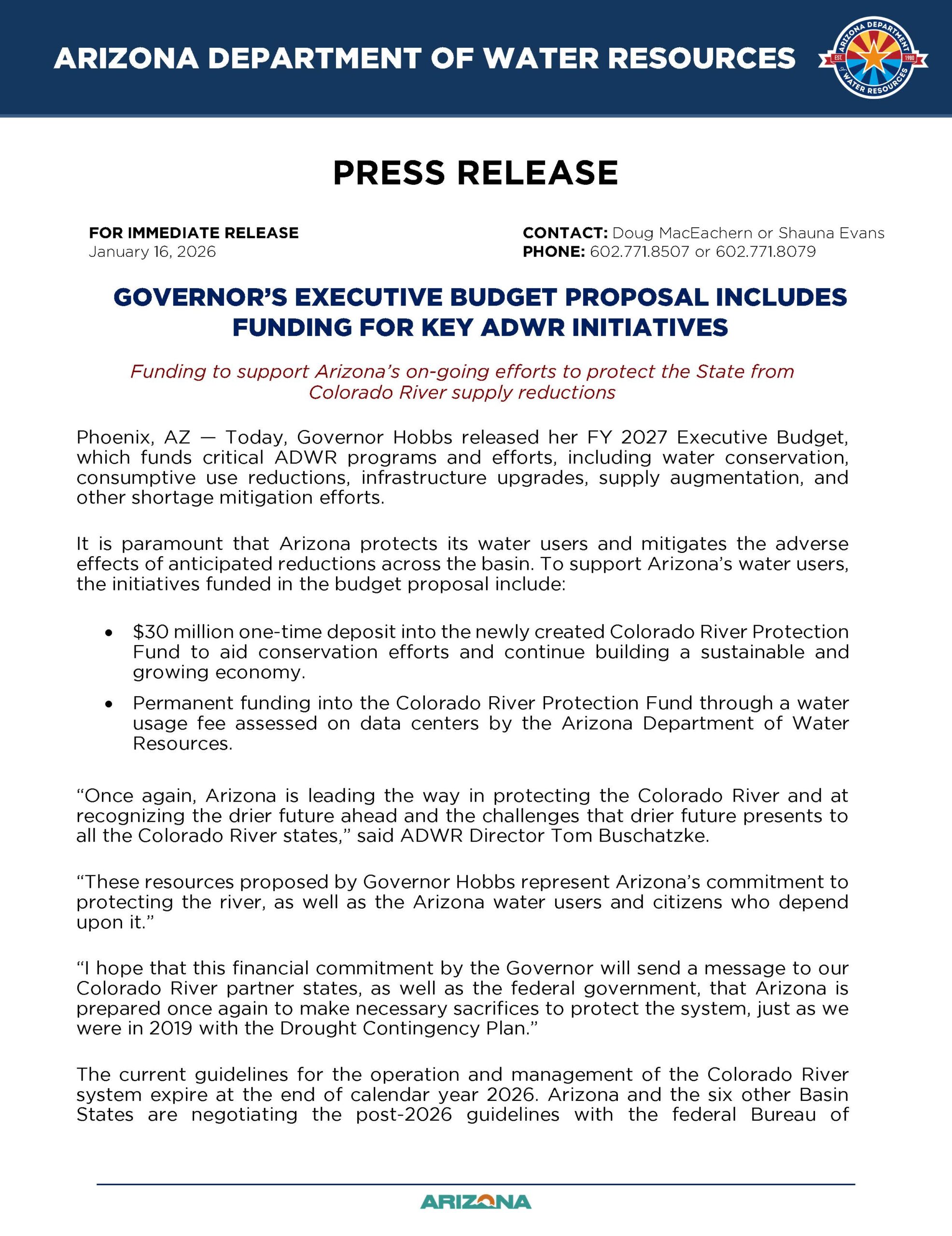
With no agreement in place, Arizona Governor Katie Hobbs has asked the Trump administration to intervene. She stated that Arizona has made significant sacrifices and cannot carry the weight of the reductions while other states refuse to commit to measurable cuts. If the states cannot reach a plan soon, the federal government may create one for them.

For the Colorado River Indian Tribes, the outcome of these negotiations has major importance. CRIT holds valuable senior water rights and relies on a stable and fair management plan to ensure long-term security for the community and the region.

For more information, you can read the news articles with the links below.

8NewsNow
https://www.8newsnow.com/news/local-news/colorado-river-negotiations-fail-to-meet-federal-deadline-for-7-state-agreement/

High Country News
https://www.hcn.org/articles/why-colorado-river-negotiations-are-so-difficult/


ABC 15 News
https://www.abc15.com/weather/impact-earth/why-gov-katie-hobbs-wants-trump-administration-to-broker-colorado-river-deal


12 News
/wednesday-is-deadline-for-7-state-including-arizona-to-negotiate-the-colorado-river

Chairwoman Amelia Flores:
“The Colorado River Indian Tribes appreciates the continued engagement by the Bureau of Reclamation as the Post-2026 Colorado River operations process moves forward. In response to CRIT’s request Reclamation recently reached out to us and walked us through the portions of the final Environmental Impact Statement relating to changes made to the document in response to comments CRIT raised during the process, but we were not shown the entire statement.

We are encouraged that Reclamation has acknowledged in the final EIS the recent action taken by Tribal Council acknowledging the Colorado River is alive and entitled to protection under CRIT Tribal law.We are also encouraged the final preferred alternative does not include allocating shortages on a pro rata basis for all water users, but instead any allocation of shortages would occur through the existing priority system or through agreements between willing parties. As long as federal agencies follow the law CRIT’s senior water rights will be protected.

We remain concerned that the BIA’s failure to properly maintain our irrigation systems adversely impacts on our ability to conserve and properly use our Colorado River water allocation.

We are mindful of the significant shortages that will be borne by tribal and other water users elsewhere in Arizona and we remain hopeful that an agreement between the United States, and the seven basin states that respects tribal sovereignty will be reached.

At the same time, we remain concerned that the highly compressed schedule severely limits our ability to conduct a comprehensive review before the document becomes final. The conversation with Reclamation was helpful, but it was not government-to-government consultation. Going forward, as the preferred alternative is being implemented, CRIT expects true consultation that respects our sovereign status and provides adequate time for meaningful review and input.”

Vice Chairman Dwight Lomayesva:
“This consultation was a good start. Our immediate need is to protect CRIT’s allocation and ensure the federal government follows the law. When received, CRIT will evaluate the final EIS and protect the Tribe’s rights, resources, and future on the Colorado River.”

The CRIT Museum hosted a hands-on bark skirt construction class on July 16 at Lazy D Park, giving participants an opportunity to learn a traditional skill while connecting with cultural knowledge.

The class was led by traditional craftsman Richard Montague of the Fort Yuma Quechan Indian Reservation. Montague learned bark skirt construction and many other traditional skills from his grandparents, who are Quechan, Maricopa, and Mohave.

During two sessions, Montague guided participants through the process of creating a traditional bark skirt, from preparing harvested plant materials to constructing a finished skirt panel. All materials used during the workshop were harvested from the Tribes’ homelands.

Participants learned how to identify cured willow and cottonwood bark, recognize when the plants are ready to be harvested and carefully collect the bark in a way that allows the plants to continue growing. They also sorted and prepared the bark for weaving before learning how to attach it to a cordage belt foundation. (more…)

The Colorado River has always sustained the Colorado River Indian Tribes, and protecting it means understanding CRIT’s history, sovereignty, and senior water rights. This presentation by Lead Water Counsel John Bezdek walks Tribal Members through the timeline of CRIT’s connection to the river from the original establishment of the Reservation in 1865, to major court decisions, federal infrastructure, drought conditions, water shortages, and current efforts to protect CRIT’s future.

The update also explains why CRIT holds the senior-most Tribal water rights in the Colorado River Basin, what current shortage discussions could mean for the Tribe, why CRIT strongly opposes pro-rata reductions, and how Tribal Council and the CRIT Water Team are working to protect CRIT’s water resources for future generations. Tribal Members are encouraged to stay informed, remain vigilant, and continue protecting their connection to the river. Click on the link below to download the presentation.

Colorado River Update