Según BIA Electric, Mochem Housing en el valle no se quedará sin electricidad.


Según BIA Electric, Mochem Housing en el valle no se quedará sin electricidad.

Click the links below to download a form
Direct Deposit Authorization Form
General Welfare Application_09242024
General Welfare Application Minors_09242024
PLEASE READ CAREFULLY
Dear Tribal Member:
Tribal Council has approved a 2024 General Welfare Assistance payment of $2,000.00 for each CRIT Tribal Member. CRIT Tribal members, both minors and adults, who are enrolled with CRIT as of November 1, 2024 are eligible to receive assistance. Tribal Members MUST submit an application to receive a General Assistance Payment for 2024.
Click the links below to download a form
Direct Deposit Authorization Form
General Welfare Application_09242024
General Welfare Application Minors_09242024
This 2024 General Welfare Assistance payment replaces the annual Tribal Distribution Payment. The benefits to the membership are that the General Welfare Assistance payment is NOT income subject to federal taxes and should not impact eligibility for benefits such as SSI and food stamps. You will not be issued a 1099 for this payment. Please review the General Welfare Plan for more information.
Tribal Members will receive their General Welfare Assistance payment by mail or by direct deposit into a bank account after submitting their application. Parents or legal guardians may request direct deposit for their eligible minor tribal member children into an account owned by the parent or the child. YOU DO NOT HAVE TO SUBMIT A NEW DIRECT DEPOSIT FORM WITH YOUR APPLICATION IF YOU INTEND TO RECEIVE YOUR GENERAL WELFARE ASSISTANCE PAYMENT IN SAME BANK ACCOUNT AS YOU RECEIVED YOUR 2023 GENERAL WELFARE ASSISTANCE PAYMENT.
The General Welfare Assistance payment will be mailed or direct deposited as follows:
Application and Forms Due Date Payment Issued
Must be received by Accounting:
October 18, 2024 November 21, 2024
November 22, 2024 December 19, 2024
December 20, 2024 January 16, 2025
After December 20, 2024 Payments issued monthly on a rolling basis
and before December 31, 2025
If you want to receive your General Welfare Assistance payment by direct deposit, you must submit the attached Direct Deposit Authorization Form along with a voided check to CRIT Accounting. If you do not have a direct deposit authorization form on file from last year, or do not submit one for 2024 with your application, your payment will be mailed to the address on your application. The mailing address you provide on the application will be used to update your address with both enrollment and accounting. You may have already received written notification along with an application and a self-addressed stamped envelope for your use to return the forms or the forms can be dropped off in person at Tribal Administration. Additionally, the application and forms can be emailed to GWA@crit-nsn.gov.
Please note that the checks for eligible minor tribal members will be issued in the name of the child and not the parents. Parents or guardians must submit proof of their right to receive the distribution on behalf of their child by submitting an application with a copy of the birth certificate listing the parent(s), and if applicable, a court order establishing legal custody and placement before checks will be mailed or the payment directly deposited.
Checks will not be issued to the parent(s) if they do not have the care and custody of their children. Guardians and custodians of minors who are not the child’s legal parent shall be required to provide a court order indicating their status. Payments for children in the physical care and custody of CRIT Social Services or other state or tribal agencies shall be held in an account established by CRIT Accounting.
Tribal Members must apply for the 2024 General Welfare Assistance Payments no later than December 31, 2025 after which a 2024 payment will not be available.
Please be advised that if you are in default on a debt you owe to the Colorado River Indian Tribes or its enterprises, you may voluntarily agree to apply your General Welfare Assistance to the loan or other outstanding debt in default. If you have any questions about outstanding debts in default please contact Tracey Quillen at (928) 669-1239.
If you have any questions regarding General Welfare Assistance or you have an agency incorrectly treating this payment as income please contact the Office of the Attorney General at (928) 669-1271.
Click the links below to download a form
Direct Deposit Authorization Form
Follow this link for more information including how to apply.
This position is located with the Bureau of Indian Affairs, Superintendent, Colorado River Agency in Poston, Arizona.
According to Arizona Water News, Arizona and its Lower Basin partners say they remain committed to finding common ground on new Colorado River operating rules despite stalled negotiations among the seven basin states. Officials emphasized continued collaboration with federal agencies and neighboring states to stabilize water supplies beyond 2026 as drought conditions persist. The effort reflects ongoing attempts to balance conservation, water demand, and long-term river sustainability. For CRIT, these negotiations remain important because federal and interstate agreements directly influence how tribal water rights are recognized and protected in future Colorado River management decisions.
Source: Arizona Water News — https://www.azwater.gov/news/articles/2026-02-19
According to the Navajo Times, federal officials are moving forward with developing new Colorado River operating guidelines even as state negotiations remain stalled. The Department of the Interior is continuing its environmental review process to prepare for post-2026 river management, highlighting the federal government’s role when states cannot reach consensus. Tribal consultation remains part of that process. For CRIT, federal involvement is significant because Colorado River policies shaped at the federal level directly affect tribal water rights, long-term planning, and regional water security.
Source: Navajo Times — https://navajotimes.com/reznews/federal-officials-move-forward-on-colorado-river-operating-rules-as-state-negotiations-stall/
According to ABC 15 Arizona, tribal nations along the Colorado River are among those with the most at stake as negotiations over future water allocations continue. Tribal leaders emphasize the importance of protecting established water rights while ensuring sustainable solutions to ongoing drought conditions. The article highlights how tribal participation is increasingly central in discussions about the river’s future. For CRIT, these conversations are especially important because tribal sovereignty and water rights remain critical factors in how Colorado River resources are managed across the basin. (more…)
According to CBS 5 Arizona’s Family, Arizona could face deeper Colorado River water cuts following missed negotiation deadlines, raising concerns about future water supply stability across the state. Officials say ongoing drought and reduced reservoir levels continue to challenge long-term planning efforts. These developments may lead to increased federal involvement in river management decisions. For CRIT, potential cutbacks are important because federal allocation decisions directly influence how tribal water rights are maintained and protected.
Source: CBS 5 Arizona’s Family — https://www.azfamily.com/2026/02/17/arizona-faces-major-colorado-river-water-cuts-deadline-passes/
According to the Colorado Sun, new forecasts suggest Lake Powell could reach critically low levels that threaten hydropower production and water deliveries if drought conditions persist. Reservoir storage plays a central role in determining how water is distributed across the Colorado River Basin. Experts say ongoing climate pressures and declining inflows continue to complicate long-term planning. For CRIT, reservoir conditions remain important because federal operational decisions tied to storage levels directly affect how tribal water allocations are managed and protected.
Source: Colorado Sun — https://coloradosun.com/2026/02/18/lake-powell-forecast-critical-lows-federal-study/
According to AZPM News, Colorado River basin states missed another federal deadline to reach agreement on future water reductions, increasing the likelihood of additional cutbacks across the Southwest. Officials warn that continued drought and declining reservoir levels could force tougher decisions about water allocation in the coming years. The missed deadline highlights growing uncertainty about long-term river management. For CRIT, potential water reductions and federal policy decisions directly influence how tribal water rights are protected and incorporated into basin planning.
Source: AZPM News — https://news.azpm.org/s/102728-arizona-and-western-states-miss-colorado-river-water-deadline-as-cuts-loom/
According to Newsweek, Lake Powell water levels could drop to critical levels sooner than expected, raising concerns about hydropower production and water deliveries across the Colorado River Basin. Experts say continued drought, reduced snowpack, and high demand are contributing to declining reservoir storage. These conditions add urgency to ongoing negotiations about future river operations. For CRIT, reservoir levels are important because federal decisions tied to storage conditions directly affect how tribal water allocations are managed and sustained.
Source: Newsweek — https://www.newsweek.com/lake-powell-water-could-drop-to-critical-levels-sooner-than-expected-11531274
According to Pinal Central, the Gila River Indian Community expressed concern over the lack of agreement among Colorado River basin states, noting the importance of tribal voices in ongoing water negotiations. Tribal leaders emphasized the need for sustainable solutions that recognize existing water rights while addressing long-term drought conditions. The statement highlights growing awareness of tribal participation in basin discussions. For CRIT, tribal engagement in Colorado River negotiations is significant because it reinforces the importance of protecting tribal sovereignty and water rights across the region.
Source: Pinal Central — https://www.pinalcentral.com/sacaton_central/gric-laments-lack-of-deal-over-colorado-river-water/article_cb91f461-07de-4f88-8d70-c3dec3b96c67.html
A recent statement from Colorado River Commissioner JB Hamby says California and other Lower Basin states have been working with federal officials and neighboring states to develop new long-term operating rules for the Colorado River after 2026. He noted that the original 1922 Colorado River Compact was based on water supply estimates that no longer match today’s reality, as river flows have declined over the past 25 years while demand continues to grow.
According to the statement, California, Arizona, and Nevada committed to major conservation efforts in recent years and have already exceeded planned water savings meant to stabilize Lake Mead and Lake Powell. However, disagreements remain between Upper Basin and Lower Basin states about how future reductions should be shared, and negotiators have not yet reached a final agreement.
For CRIT, these ongoing negotiations are important because federal Colorado River policies, interstate agreements, and conservation requirements directly influence how tribal water rights are protected, managed, and incorporated into long-term river planning that affects the entire region.
Source: https://crb.ca.gov/2026/02/statement-from-jb-hamby-colorado-river-commissioner-for-california/
February 14, 2026
According to the U.S. Department of the Interior, federal officials are moving forward with new operating guidelines for the Colorado River even though the seven basin states have not yet reached full agreement. The updated rules, expected by October 2026, are meant to provide stability for water deliveries, power generation, and long-term management as drought conditions and declining inflows continue to strain the river system. Interior Secretary Doug Burgum said discussions with states, Tribal Nations, and Mexico are ongoing, but federal action is needed to ensure future reliability of the river.
The Colorado River supplies water to about 40 million people, supports millions of acres of farmland, generates hydropower, and serves 30 Tribal Nations, making it one of the most important water sources in the West. Federal officials are currently accepting public comments on the draft environmental review that will guide future reservoir operations.
For CRIT, these federal guidelines are important because Colorado River management decisions directly affect how tribal water rights are protected, how water is allocated in the Lower Basin, and how long-term planning supports the Tribe’s water security, economy, and future generations.
Source: U.S. Department of the Interior / Bureau of Reclamation press release
According to Arizona Mirror, Colorado River negotiations hit a setback as Lower Basin states, including Arizona, criticized Upper Basin states for resisting deeper water conservation commitments. Officials say ongoing drought conditions and declining reservoir levels are increasing pressure to finalize new operating rules before current guidelines expire. The disagreement highlights continuing tension over how water reductions should be shared across the basin. For CRIT, these negotiations are important because interstate agreements and federal management decisions directly influence how tribal water rights are protected and incorporated into long-term river planning.
Source: Arizona Mirror — https://azmirror.com/2026/02/13/arizona-blasts-upper-basin-states-for-refusing-cuts-as-colorado-river-talks-fail/
According to the Arizona Department of Water Resources, state officials say they will continue protecting Arizona’s Colorado River resources even after basin states failed to reach a consensus ahead of the federal deadline. Leaders emphasized ongoing drought challenges and the need for continued negotiations to maintain stability for water users across the region. State agencies say collaboration with federal partners and neighboring states remains essential moving forward. For CRIT, continued state and federal coordination is significant because long-term Colorado River policies directly affect how tribal water rights are recognized and sustained.
Source: ADWR Statement — https://azwaternews.com/2026/02/13/021326_statement/
According to USA Today, Colorado River negotiations approached a critical deadline without a final agreement, reflecting ongoing disputes over how to manage shrinking water supplies across the Southwest. Experts say declining snowpack, persistent drought, and competing demands are making consensus more difficult as states prepare for new post-2026 operating guidelines. Federal involvement may increase if states cannot reach agreement. For CRIT, these developments matter because federal river management decisions play a key role in protecting tribal water rights and ensuring long-term water security.
Source: USA Today — https://www.usatoday.com/story/news/nation/2026/02/13/colorado-river-deal-deadline/88658491007/
The Colorado River Indian Tribes’ second annual General Sessions meetings gave Tribal Members a closer look at the programs, services, and projects serving their community. Two meetings, one at BlueWater Resort & Casino for members living on the reservation and another for members in the Phoenix area, drew strong attendance, with hopes of welcoming even more participants in the years ahead. Councilwoman Raeanne Patch has championed these annual fall gatherings as an opportunity to strengthen communication between Tribal Members and their government. Each year, a different group of departments is highlighted, giving members an informal overview of their responsibilities, services, and contributions to CRIT. Councilwoman Patch’s goal is for each featured department head to attend and present directly to the membership.
This year, the Environmental Protection Office outlined its water and air quality programs, while Fish and Game highlighted conservation, reservation patrols, and youth education. The Tribal Historic Preservation Office explained how monitors protect sacred sites, ancestral lands, and cultural resources on and off the reservation. Updates on Tribal finances, the new Head Start facility, and proposed health facilities provided a broader picture of current operations and future plans. CRIT Media highlighted its efforts to keep members informed through the Manataba Messenger, 4 Tribes One Mic podcast, and digital storytelling.
Agriculture was another highlight, with ’Amat Kuwley Farms showcasing its role in CRIT’s economic future and stewardship of Colorado River water. General Manager Joshua Moore oversees production while building relationships with customers domestically and internationally. The farm reported impressive production accomplishments and plans to expand cultivation across available farmland, putting CRIT’s senior Colorado River water rights to productive use while generating revenue for the Tribes. Its alfalfa serves high-profile clientele, including Saudi royalty and owners of Kentucky Derby racehorses, helping establish a reputation for premium quality on the world stage. Moore’s work reflects a long-term commitment to building an agricultural enterprise that supports generations of Tribal Members while helping safeguard CRIT’s water rights.
Members who missed this year’s meetings are encouraged to watch for flyers announcing the next gatherings in fall 2027. Thank you to Councilwoman Raeanne Patch for organizing these annual opportunities for members to learn, connect, and stay informed about the work happening across CRIT.

By Nicole Jennings
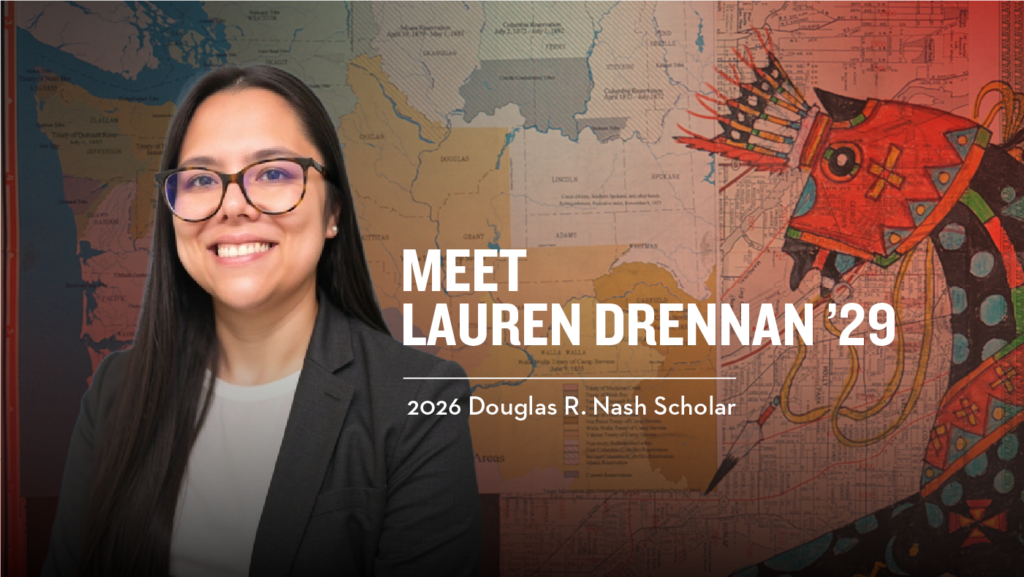
A decade after college, 1L and 2026 Nash Scholar Lauren Drennan’s strong ties to her Indigenous community led her to pivot in her career path.
Growing up on the Colorado River Indian Tribal (CRIT) lands in rural Arizona, Drennan had always planned to go into agriculture, even choosing a STEM path for her undergrad studies at the University of Arizona. A self-proclaimed “farm kid,” Drennan had participated in 4-H as a child and raised animals on her family’s property.
But returning home to her tribe through internships while earning her degree convinced her there was another path for her. The internships centered around community programs in areas such as environmental preservation and restoration.
“That’s where I found my passion, working for my community in these outreach programs,” Drennan said. “Those tribal internships saved me because getting to connect back to my home and finding that thing that made me happy felt like it clicked.”
Drennan’s hometown of Parker is small and tight-knit, with many of the other residents numbering among her relatives.
“The services I worked for were for community and my family,” she said, crediting her mentors in the region with instilling a sense of civic-mindedness within her.
She went on to spend 10 years after her undergrad and graduate studies at the CRIT Department of Health and Social Services, which provides a variety of tribal programs ranging from mental health to senior support to child protective services. Drennan held a variety of roles in that time, including interim director, deputy director, coordinator, grant writer, budget specialist, and even HR staffer. (more…)
Article written by CRIT Media Reporter Ariana Romero
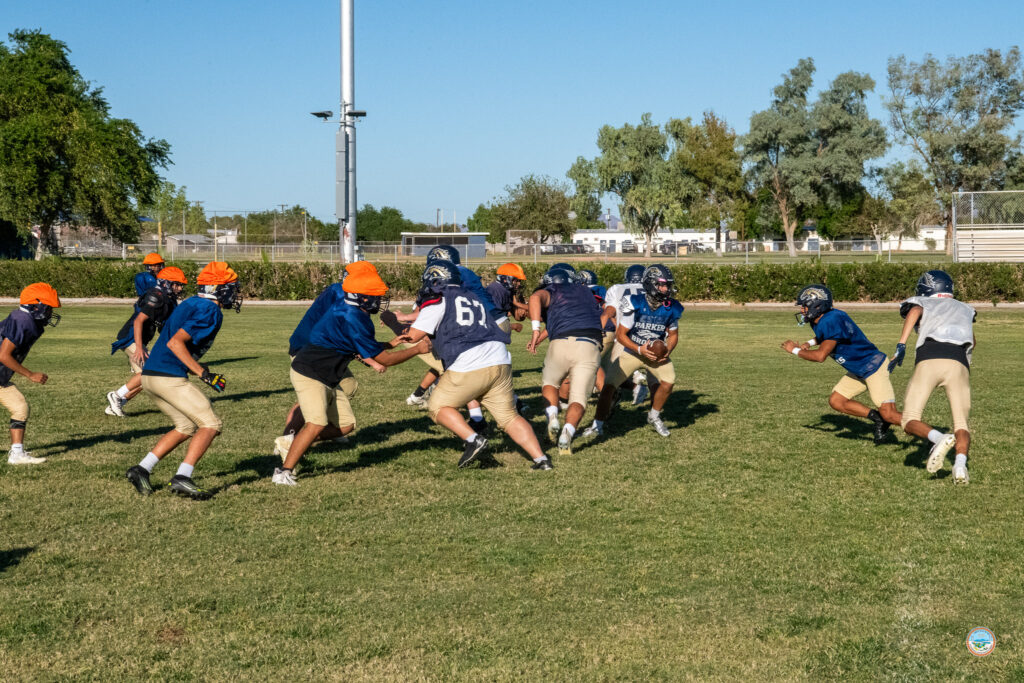
The young men of the Parker Broncs football team have shown strength, endurance, and determination throughout an incredible season. The Broncs remain undefeated at 8-0, but tonight, there is even more on the line.
Parker will take on Arizona Lutheran Academy in a battle for the 2A Metro 2 region title. Both teams enter the matchup undefeated in region play, with the Broncs looking to protect their perfect season in their final home game of the regular season.
Tonight will also mark Senior Night, giving the Parker community an opportunity to recognize the seniors who will take their home field one more time. After years of practices, games, and representing Parker High School, the seniors have a chance to close out their final home game with a region title on the line.
Kickoff is set for 7 p.m. at Joe Bush Stadium, and the Broncs are hoping to see the community pack the stands, get loud, and bring the energy.
Hard Work, Brotherhood, and One Goal
Being undefeated means a lot to this group of young men. The work behind their 8-0 record started long before Friday nights under the lights. Players trained through Parker’s extreme heat, spent hours lifting weights and conditioning, and continued working in the classroom to maintain the grades needed to compete.
During interviews with CRIT Media, one thing became clear: this is a TEAM.
When asked to describe their teammates and what has made this season special, the players gave many of the same answers: brotherhood, family, and best friends. Their similar responses reflected the bond they have built through long practices, workouts, wins, and challenges together.
That bond was just as noticeable while speaking with the team. The players were humble, polite, and proud to be Parker Broncs. Each showed respect for his teammates, coaches, and the game. While an undefeated record is something to celebrate, their focus remains on what is still ahead.
Their goal for the season is simple: keep winning and bring home the trophy. (more…)
Chairwoman Flores says CRIT And Tribal Governments must have a meaningful voice in decisions affecting the Colorado River and future generations
(SCOTTSDALE, Ariz.) Colorado River Indian Tribes leaders carried a message rooted in the Reservation’s past, present and future to the Ten Tribes Partnership meeting Wednesday: CRIT’s water rights must be protected, and tribal governments must have a meaningful voice in decisions shaping the Colorado River.
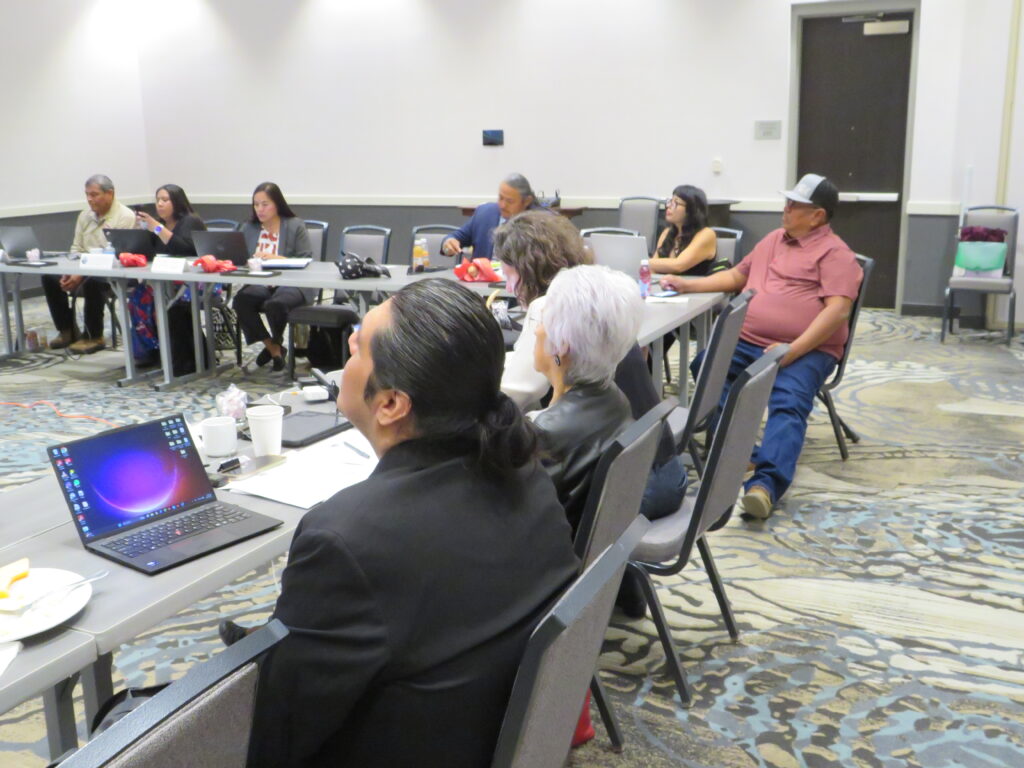
CRIT Chairwoman Amelia Flores chaired the October 14 meeting, joined on site by Tribal Councilmember Tommy Drennan. CRIT water attorney John Bezdek and other CRIT Tribal Council members participated remotely. CRIT’s presentation outlined the legal protections surrounding CRIT’s water rights and concerns about federal proposals that could threaten them.
With river levels declining and demand continuing to grow, Flores said tribal governments cannot remain on the sidelines as decisions are made about how the Colorado River is managed.
“We need to be included. We have the solutions,” Flores told representatives of the other tribes.
She said tribal leaders have spent years fighting for a meaningful role in Colorado River negotiations—decisions with direct consequences for CRIT lands, resources and future generations.
“I think we got a small corner of the room,” Flores said. “We’re allowed in, but yet we still are not at the table.”
Bezdek’s presentation focused on CRIT’s longstanding water rights, which were recognized by the U.S. Supreme Court in the landmark Arizona v. California decision in 1963 and the subsequent 1964 decree.
Those rights date to the establishment of the Colorado River Indian Reservation in 1865, predating Arizona statehood and the creation of the Bureau of Reclamation.
“Because at CRIT, we are not a contractor, our water rights predate the Bureau of Reclamation,” Bezdek said.
He explained that CRIT’s water rights are not subject to evaporation and transportation losses that can apply to other Colorado River water users.
At the center of CRIT’s concern are Bureau of Reclamation proposals to spread shortages proportionally among water users, regardless of their established rights. Bezdek said those “pro rata” reductions could erode the priority system that protects senior water rights, including CRIT’s.
Bezdek said the Bureau of Reclamation has included the possibility of proportional reductions in two recent environmental reviews, despite objections from CRIT.
He argued that such reductions would violate the Supreme Court decree, undermine the Winters doctrine protecting federally reserved tribal water rights and raise constitutional concerns.
“It would basically just write it out of existence,” Bezdek said of the Winters doctrine, warning against abandoning the priority system during water shortages.
He said CRIT successfully pushed back against the latest proposal, resulting in federal acknowledgment that water shortages would be handled through voluntary agreements or, absent such agreements, the existing priority system.
Still, Bezdek said the repeated appearance of proportional reductions in federal planning documents is reason for concern.
“We continue to remain vigilant because we believe this will come back again,” Bezdek said.
He emphasized that the issue extends well beyond CRIT.
“This is not just a CRIT issue. This is not just a five tribes issue. This is every tribe,” he said.
For CRIT, protecting its water rights is only part of the challenge. The Tribes’ ability to put that water to use on the Reservation also depends on the aging Colorado River Indian Irrigation Project, which serves tribal agricultural lands in Arizona.
Authorized in 1867, it is the oldest Indian irrigation project in the United States. Bezdek said years of inadequate federal funding have left the system in serious disrepair, with irrigation efficiency estimated at approximately 56% to 58%, according to his presentation.
He explained that water lost through the inefficient system eventually returns to the Colorado River, benefiting other water users while limiting CRIT’s ability to fully use its entitlement.
“They were the beneficiaries of the Bureau of Indian Affairs chronically underfunding the project,” Bezdek said, referring to other water users.
CRIT has received a Bureau of Reclamation grant to study what it would take to modernize the irrigation system to 21st-century standards. (more…)