


Help expand energy dominance and support Tribal energy futures with the Bureau of Indian Affairs (BIA)! We are pleased to announce 23 new hiring opportunities to help support energy development and permitting at BIA, with more opportunities coming soon.
All position announcements opened on 6/1/2026 and will close on Friday 6/12/2026, so act fast! We encourage all qualified applicants to submit application materials by applying online at USAJobs. Please help us spread the word and recruit high-qualitycandidates to help fulfill the BIA mission.
Positions include:
(1) Environmental Protection Specialist Series 28 (GS 11) at Southwest Regional Office
(Albuquerque, NM); DE-26-12973039-CAWY-SR;
(1) Environmental Protection Specialist Series 28 (GS 9/11) at Western Regional Office
(Phoenix, AZ); DE-26-12973039-CAWY-SR;
(2) Archeologist Series 193 (GS 7/11) at Southwest Regional Office (Albuquerque, NM);
DE-26-12973279-CAWV-MH;
(2) GIS Specialist Series 301 (GS 5/11) at Great Plains Regional Office (Aberdeen, SD);
DE-26-12973052-CAWV-JM;
(2) Geographic Information System Specialist Series 301 (GS 9/11) at Navajo Regional
Office (Gallup, NM); DE-26-12973052-CAWV-JM;
(1) Supervisory Engineer Technician (Petro) Series 802 (GS 11) at Osage Agency
(Pawhuska, OK); DE-26-12972843-CAWV-BSc;
(1) Realty Assistant Series 1101 (GS 7) at Farmington Indian Minerals Office (Farmington,
NM); DE-26-12972357-CAWV-TB;
(1) Realty Assistant (CM) Series 1101 (GS 5/7) at Anadarko Agency (Anadarko, OK); DE-
26-12972357-CAWV-TB; (more…)
Click the link below to download the application
26-27 SG Application Policy (Fillable)


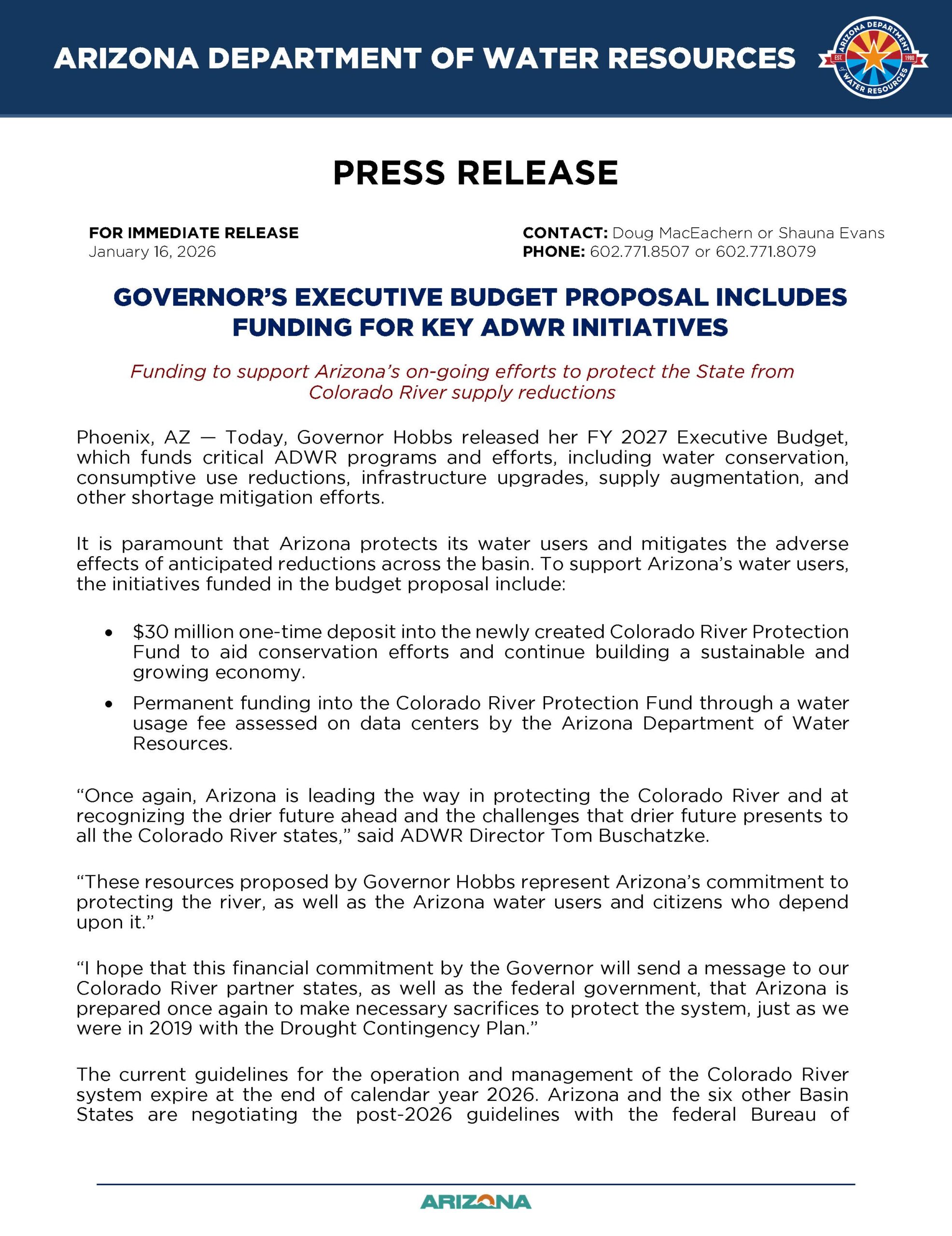
Arizona Budget Proposal Includes Major Funding for Colorado River Protection
On January 16, 2026, the Arizona Department of Water Resources (ADWR) shared details of Governor Katie Hobbs’ FY 2027 Executive Budget Proposal focused on preparing for long-term challenges facing the Colorado River. The plan includes new and expanded funding aimed at strengthening water security across Arizona in the face of ongoing Colorado River shortages.
Key points from the budget related to water:
Source:
Arizona Water News https://azwaternews.com/2026/01/16/fy2027_execbudgetproposal/
The Colorado River Indian Tribes and the Central Arizona Water Conservation District (CAWCD) have reached an agreement to deliver 9,009 acre-feet of CRIT Intentionally Created Surplus (ICS) water to the CAWCD. This represents the last remaining water CRIT made available as part of the Drought Contingency Plan (DCP) that was agreed to back in 2019.
The ICS was previously conserved between 2020 and 2022, when in response to requests from the federal government, CRIT conserved water to help stabilize Lake Mead. CRIT conserved approximately 160,000 acre-feet and was compensated $38 million for 150,000 acre-feet of conservation (the average value of that water was approximately $254 per acre-foot). There was additional conserved water of approximately 10,009 acre-feet for which CRIT was never compensated. It was converted into ICS so it would not be lost and is still behind Hoover Dam in Lake Mead.
Under the agreement, the CAWCD will compensate CRIT at $590 per acre-foot, for a total of $5.3 million, to be executed in two payments.
The CAWCD is the public agency that operates and maintains the physical infrastructure of the Central Arizona Project (CAP).
The ICS Agreements include requirements to account for system and evaporation losses, accounting, and use. By entering into this agreement now, CRIT will avoid future reductions in its ICS to account for evaporation and system losses; CRIT’s ICS water has already been allocated a 10% reduction, which is why the account balance is now 9009 acre-feet. In addition to system losses and evaporation, there are also upcoming limitations that restrict ICS recovery when Lake Mead falls to certain elevations. In agreeing to allow CAWCD to recover CRIT’s ICS, Tribal Council is being proactive in gaining compensation for this remaining water made available in the DCP prior to this water being devalued or otherwise lost. (more…)
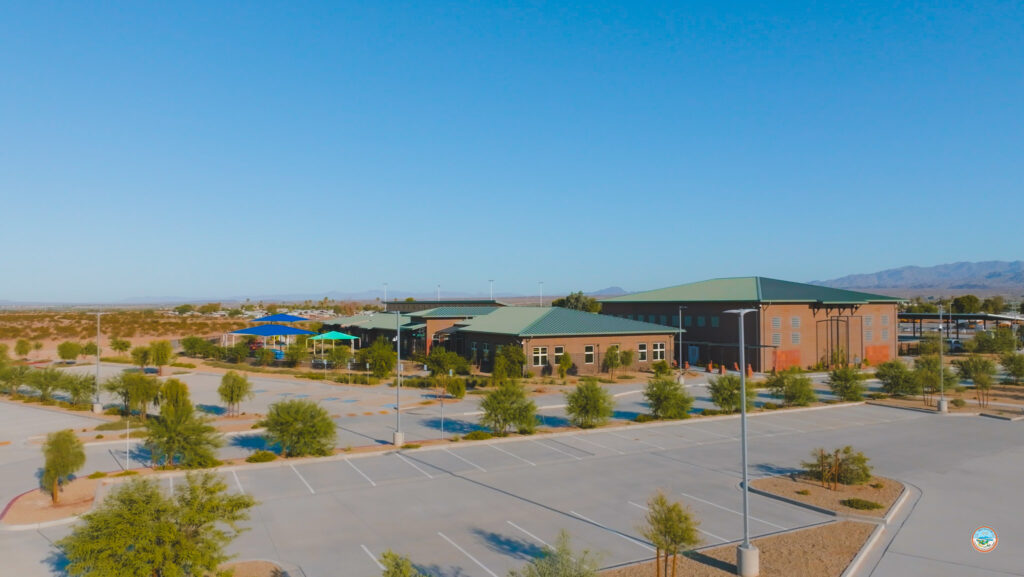
The Colorado River Indian Tribes’ new Head Start School is moving closer to opening, with the sewer system expected to be ready for final inspection during the week of September 21, 2026. Once final approvals are received, the project team will be able to move toward opening the new school.
The delay has been tied primarily to operation and capacity issues at the Joint Venture Sewer treatment facility. Because of those issues, the project team had to redesign the school’s sewer system so it would meet Joint Venture Sewer requirements before the facility could become operational.
That redesign required additional engineering work for a holding tank and lift station system. The system will temporarily store wastewater and then release it into the Joint Venture Sewer system in a controlled, timed discharge during non-peak hours. A contractor also had to be brought on to complete the additional installation and related work.
The project team has continued working closely with Joint Venture Sewer, CRIT Utilities, CRIT Building & Safety, the engineering team, and contractors to finish the required work and secure final approval.
When it opens, the new facility will include 10 classrooms, a large multi-purpose room with capacity for 500 people, a playground, a bus barn, and room for future expansion.
CRIT received a $13.8 million federal grant to help fund the project. CRIT is contributing another $7.2 million, bringing the total investment to nearly $20.8 million.
CRIT Chairwoman Amelia Flores said, “This represents a vital investment in our children. The benefits of this facility will be felt for generations as we seek to provide our children with the best possible head start as they prepare for school, life, and the opportunities that await. We want to thank everyone for their patience during this time. This is a momentous step forward in the right direction for the entire community, and we thank everyone who helped get us this far.”
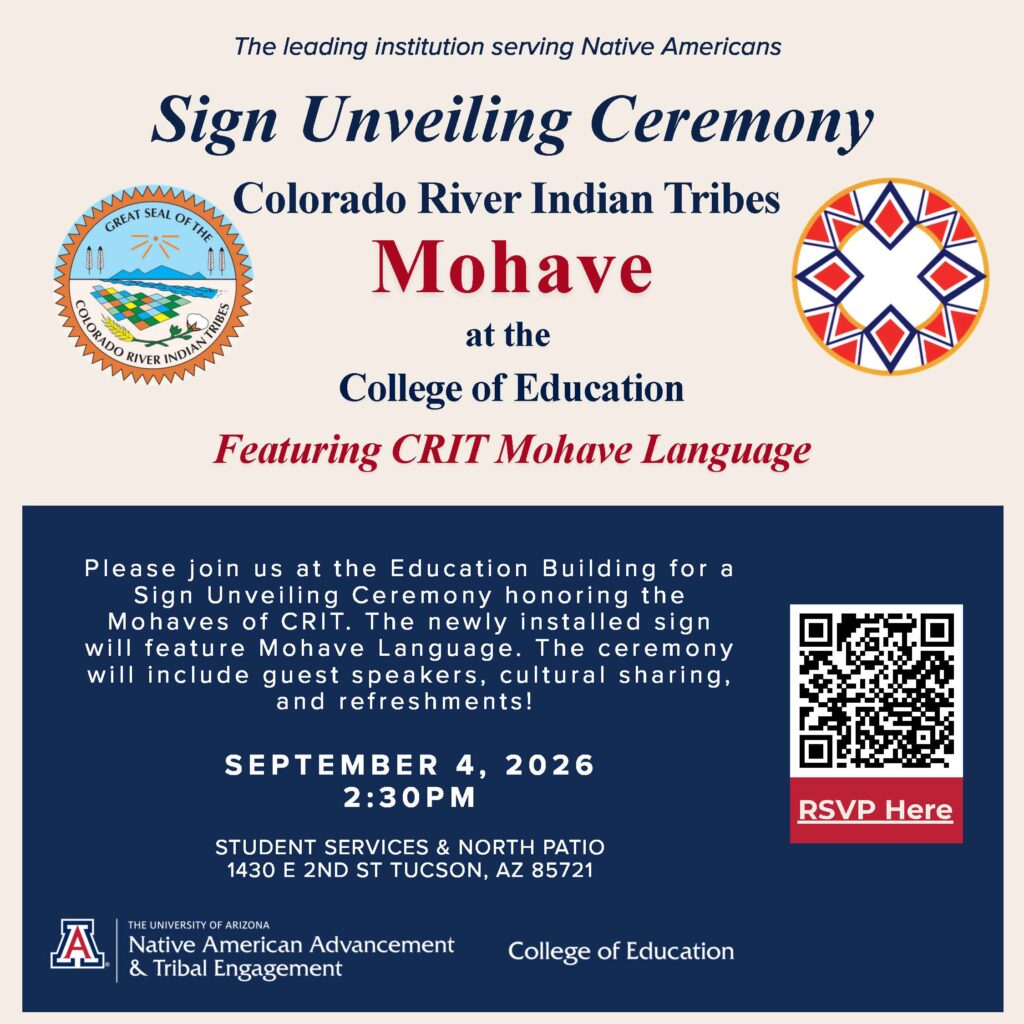
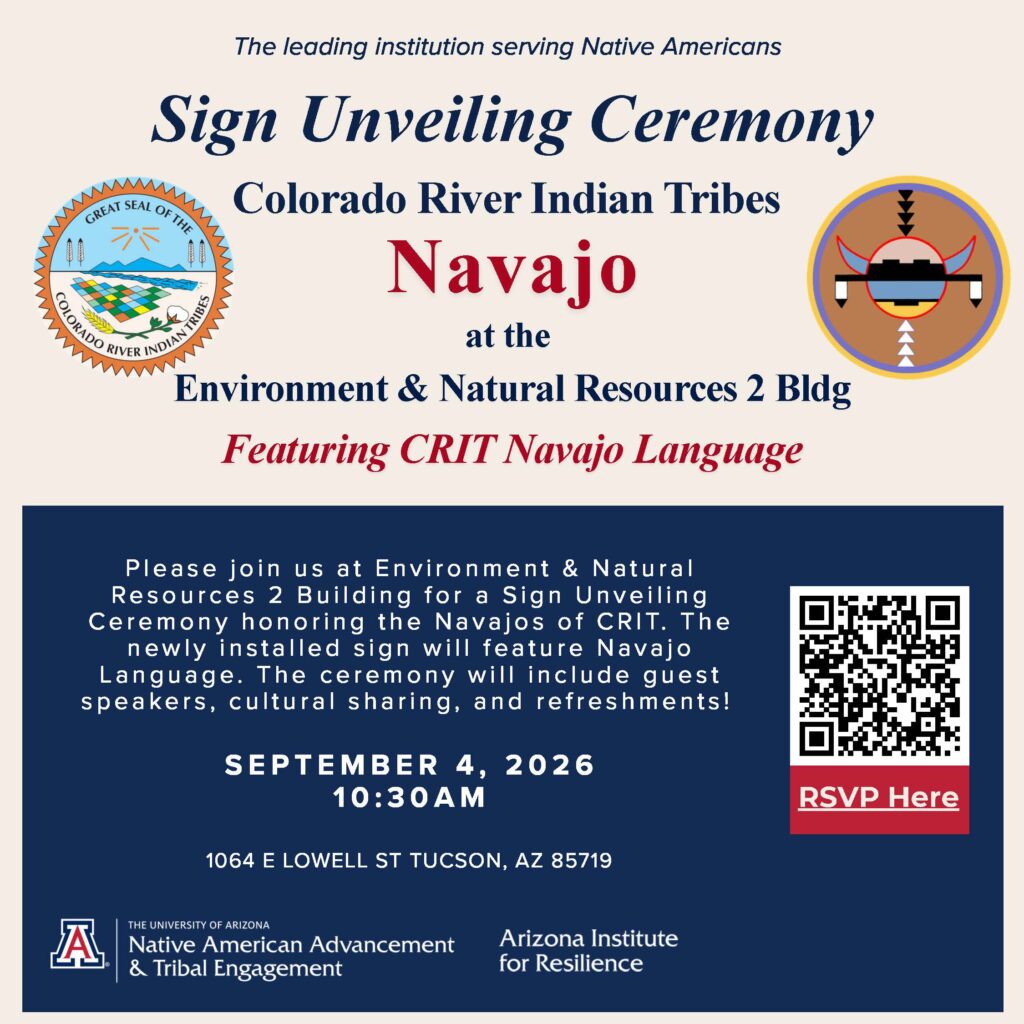
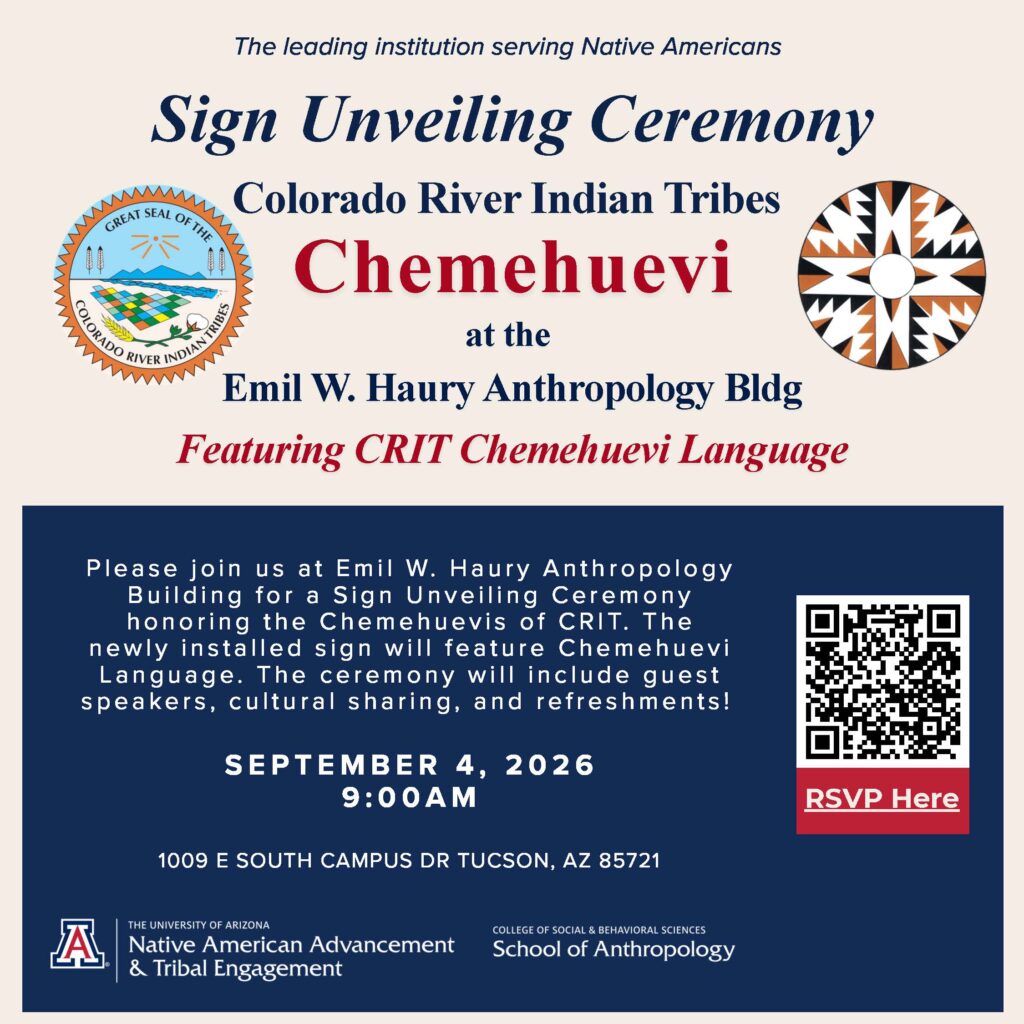
Following a series of historic ceremonies on Friday, September 4, 2026, the University of Arizona has permanently integrated the four native languages of the Colorado River Indian Tribes (CRIT) into its campus landscape. Organized by the university’s Office of Native American Advancement & Tribal Engagement (NAATE) in partnership with individual academic colleges, the Native Languages Campus Sign Initiative unveiled a progression of permanent building signs throughout the day to celebrate the Mohave, Chemehuevi, Hopi, and Navajo languages.
Members of the CRIT Tribal Council attended the sign ceremonies, including Treasurer Anisa Patch, Secretary Josephine Tahbo, Councilmember Vanessa Welch, and Councilmember Raeanne Patch.
The continuous initiative aims to elevate the visibility, recognition, and enduring presence of Indigenous communities within academic spaces. Levi Esquerra, Special Advisor for NAATE, explained that the permanent structural markers grew out of a linguistics department tradition where temporary language signs were posted for just one day each February to observe International Mother Language Day. “They used to put up tarps of native languages throughout campus at six o’clock in the morning, take them down by six, and they wanted permanent signage,” Esquerra said. “We started an initiative of reaching out to tribes and having them add language to our buildings… What makes CRIT so unique is, you know, CRIT is made up of four distinct tribes. And so we felt it was only correct to honor each of those tribes that make up the CRIT nation.”
The day-long celebration began at 9:00 AM at the Emil W. Haury Anthropology Building, home to the School of Anthropology. The Chemehuevi language inscription “Puha” was added to the building’s sign, translating to the “Power of learning about the people.” School of Anthropology Director Rob Schon noted that the naming honors and renews structural ties established in 1954 when Emil Haury preserved Chemehuevi baskets for the Arizona State Museum. Reflecting on the word chosen for the sign, Schon remarked, “Phua is a sacred term… As interpreted here, Puha means power of learning about the people. There is no greater calling for an anthropologist to aspire to.” CRIT Chairwoman Amelia Flores highlighted the deep perseverance required to bring the project to fruition, stating, “When I first heard of the university asking the tribes in Arizona to name buildings, I approached him and I said, ‘Why not CRIT? Why not CRIT?’ … It’s taken this long. So thank you, my dear friend, for making this happen… Most tribes have only one, but CRIT, you have four.”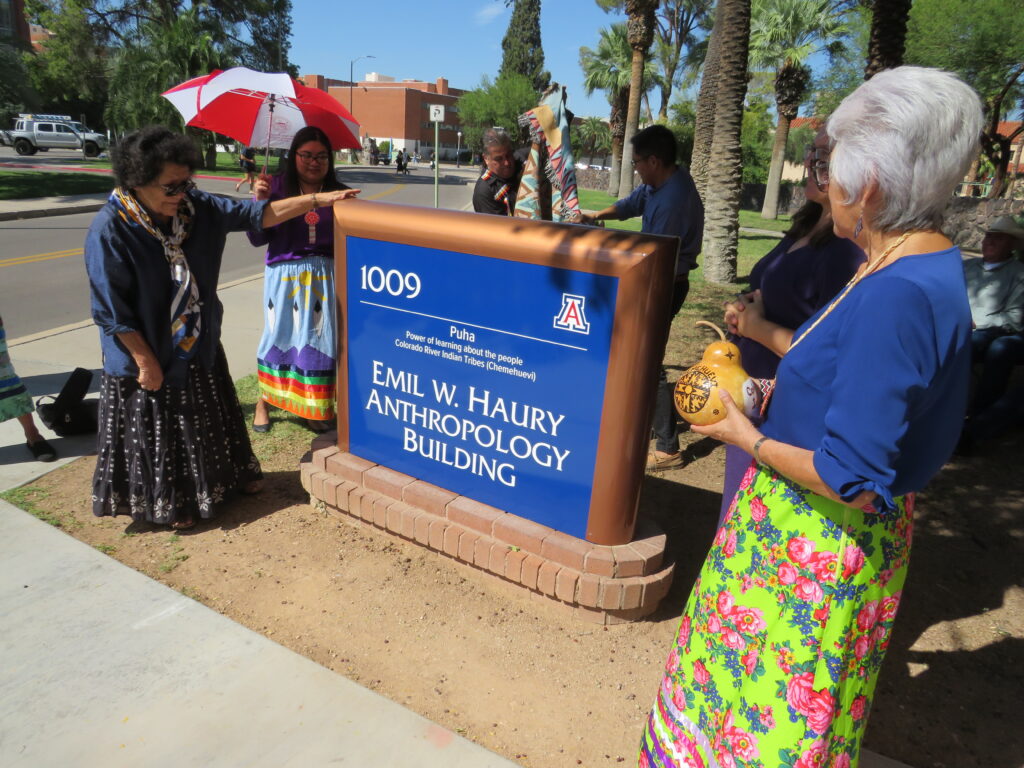
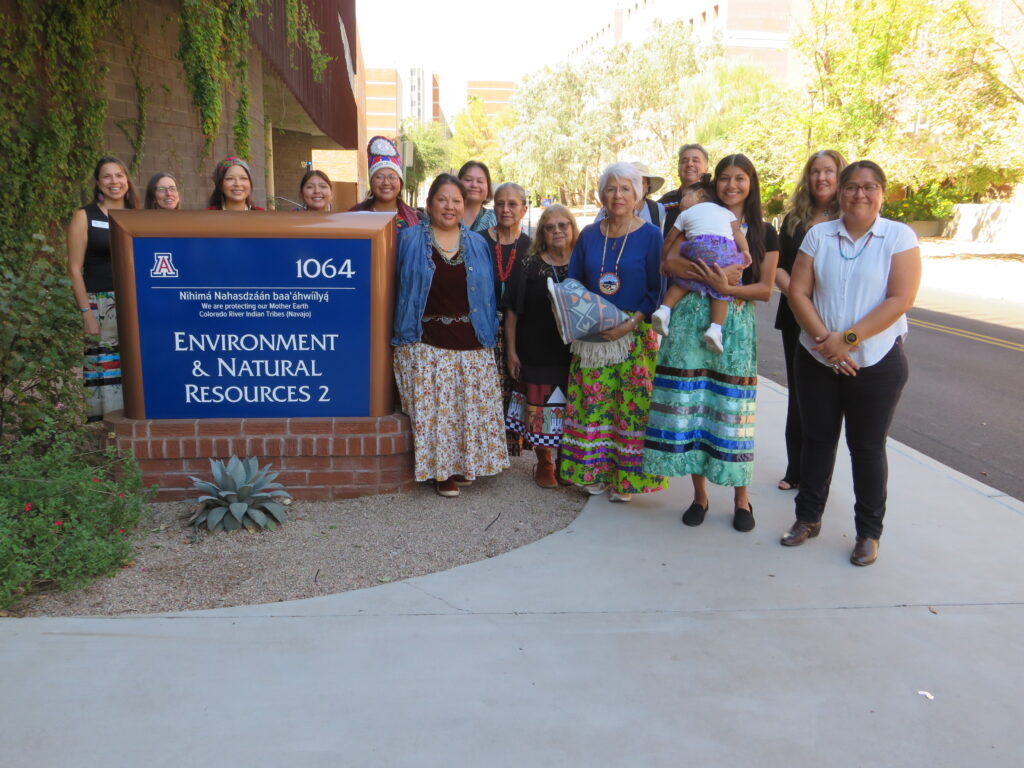
At 10:30 AM, the procession moved to the Environment and Natural Resources 2 (ENR2) Building to honor the CRIT Navajo language with the phrase “Nihimá Nahasdzáán baa’áhwíílyą́,” meaning “We are protecting Mother Earth.” During the ceremony, CRIT Navajo representative Harlietta Mitchell shared her family’s history of post-World War II relocation to the western Arizona desert, emphasizing that true ecological resilience requires a marriage of academic science and ancestral wisdom. “I hope this building will be more than a place where people study environmental science,” Mitchell said. “May it be a place where indigenous knowledge and scientific knowledge meet with respect.” Chairwoman Flores added, “This signage marks a permanent and visible commitment to honoring the first people of the land. When you see the words… they are a powerful, powerful declaration that indigenous knowledge and culture belongs in academia.” Navajo artist Nicole Pete also presented the history of the official CRIT Tribal Seal, which was designed by her grandfather, John Scott Sr., in 1966.
The afternoon continued at 1:00 PM at the Forbes Building, the home of the College of Agriculture, Life, and Environmental Sciences (CALES) and the Cooperative Extension. Honoring the CRIT Hopi language, the building’s new sign reads “Tutskwat, Sinmuy, pu’ Natwanit Kyaptsilalwa,” which translates to “Honoring the land, the people and the Harvest.” Professor Sheilah Nicholas detailed the deep, remote history inherent in the chosen Hopi vocabulary. “Means land, but the nuances of the Hopi perspective of land inherent in the word changes,” Nicholas explained. “…encompasses the understanding of land as place and a specific place where groups of people coalesced and became a distinct people…” (more…)
Written by CRIT Media Reporter Ariana Romero
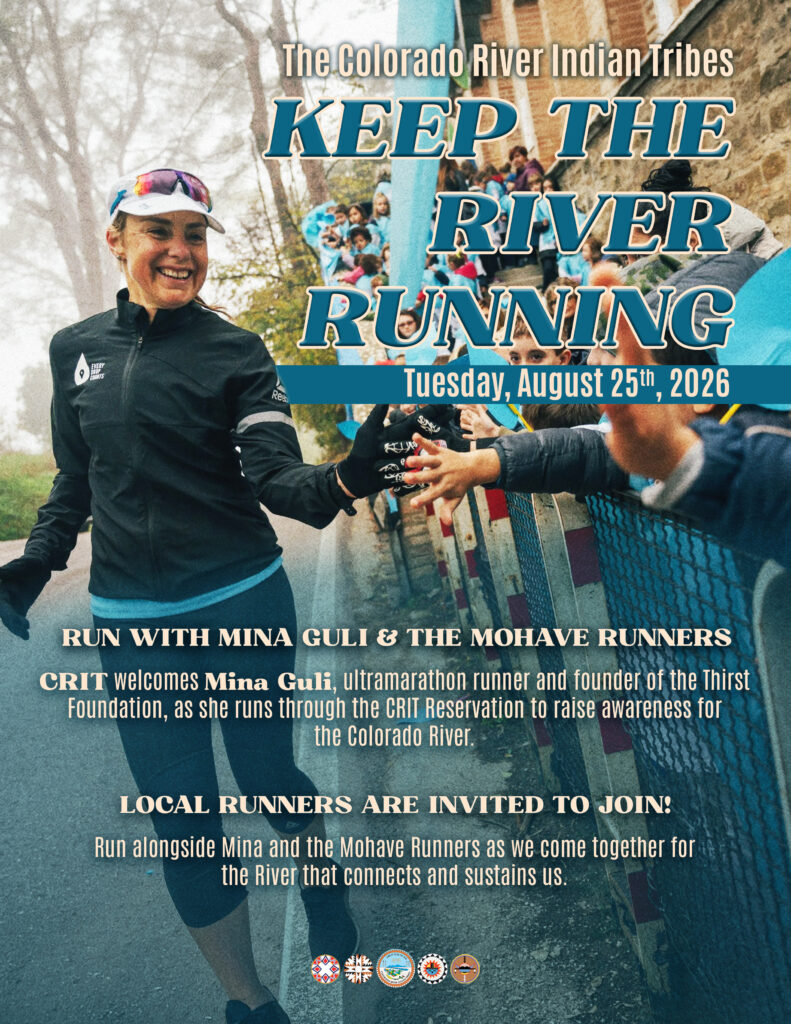
“This river is everything to so many people. And yet so many of us treat it as if it’s nothing.”
Those words from ultradistance runner and water advocate Mina Guli carry added weight as the Colorado River faces more than two decades of drought, declining reservoir levels, and growing uncertainty over how the river will be managed in the years ahead.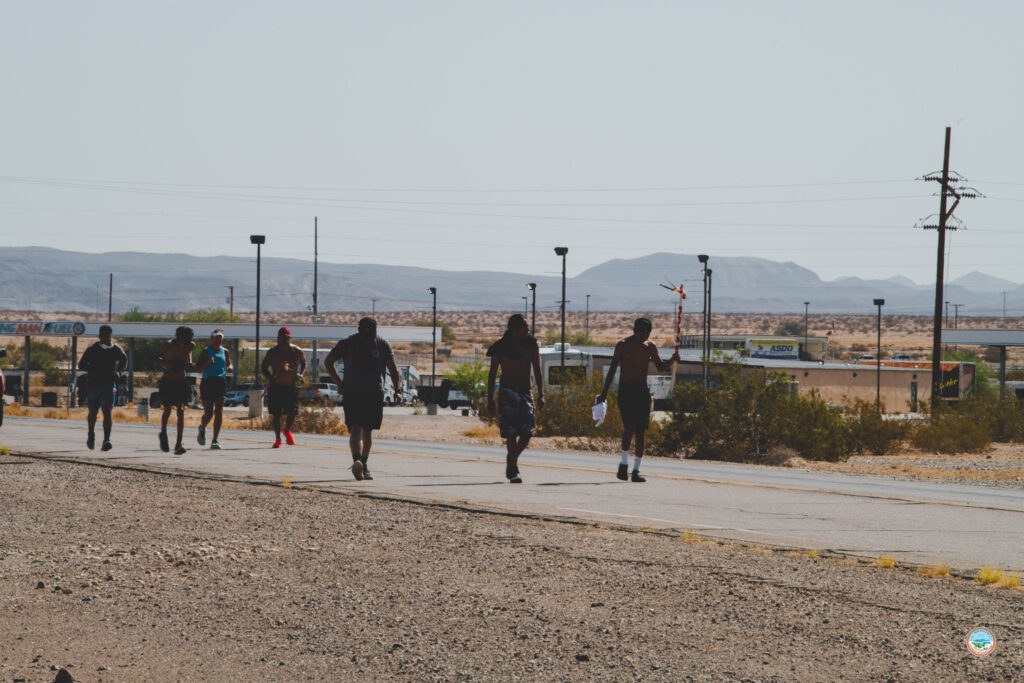
For the Colorado River Indian Tribes, the future of the river is not a distant issue. CRIT lives along its banks, holds senior Colorado River water rights, and continues to play an active role in conversations surrounding conservation, management, and the river’s future.
Those conditions gave added significance to Guli’s 2,000-mile “Keep the River Running” journey as it reached the Colorado River Indian Reservation.
Guli is running approximately 2,000 miles in 100 days along the Colorado River as part of her “Keep the River Running” campaign. Her journey follows the river through communities that depend on it, with a focus on raising awareness, listening to local voices, and encouraging cooperation around the river’s future.
Her CRIT visit began on the California side of the Reservation, where Councilman Tommy Drennan, Councilwoman Raeanne Patch, and Councilwoman Tracey Quillen greeted and welcomed her before the run.
From there, members of the Mohave Runners, Adrian Pulido, Nolan Taliman, Irving Sharp, Elan Drennan-Webb, Joseph “Joe” Deleon, Aniah “AB” Booth, Mickey Anderson Jr., Joshua Mike, Oslette Johnson, and Chance Fisher joined Guli and ran alongside her through scorching desert heat. Together, they crossed the Colorado River from the California side into Arizona and continued through the community to the Tribal Council Chambers on Mohave Road.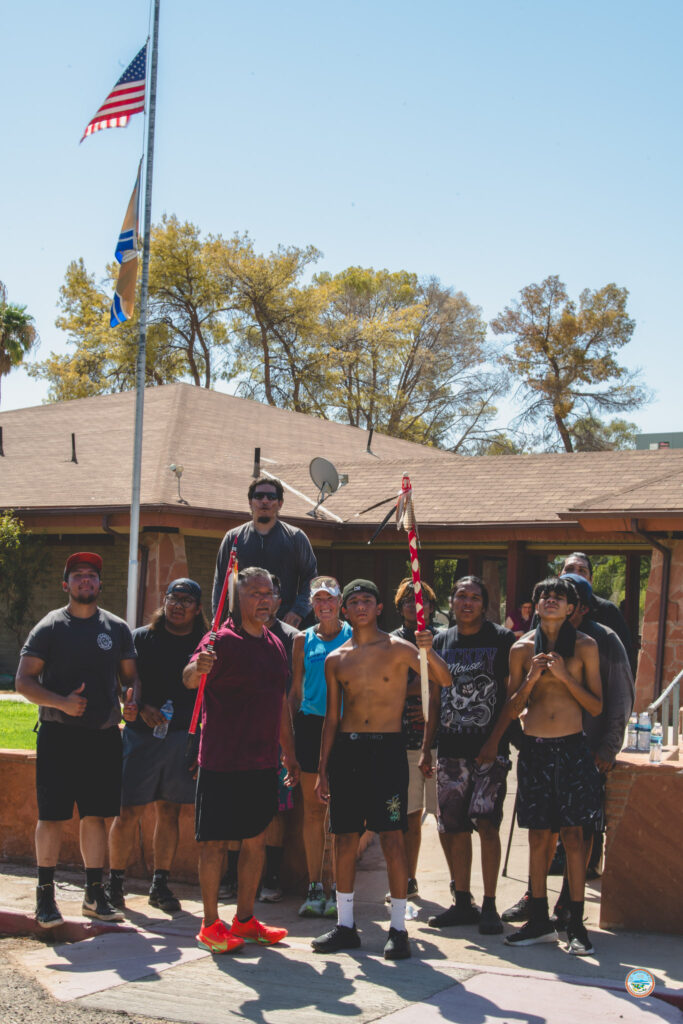
The Mohave Runners brought a strong local presence to the event. Their participation reflected more than physical endurance. They were running beside a river that has sustained their community for generations, showing strength and determination while taking part in a larger effort focused on the future of the Colorado.
Guli said running alongside local people gave her a deeper understanding of the communities tied to the river.
“These are people who have spent their lives here and have so much to share and so much knowledge,” she said.
After the run, Guli, Tribal Council, and community members gathered inside the Tribal Council Chambers. Vice Chairman Dwight Lomayesva, Secretary Josephine Tahbo, Treasurer Anisa Patch, Councilwomen Tracey Quillen, Vanessa Welch, and Raeanne Patch, and Councilman Tommy Drennan were among those in attendance.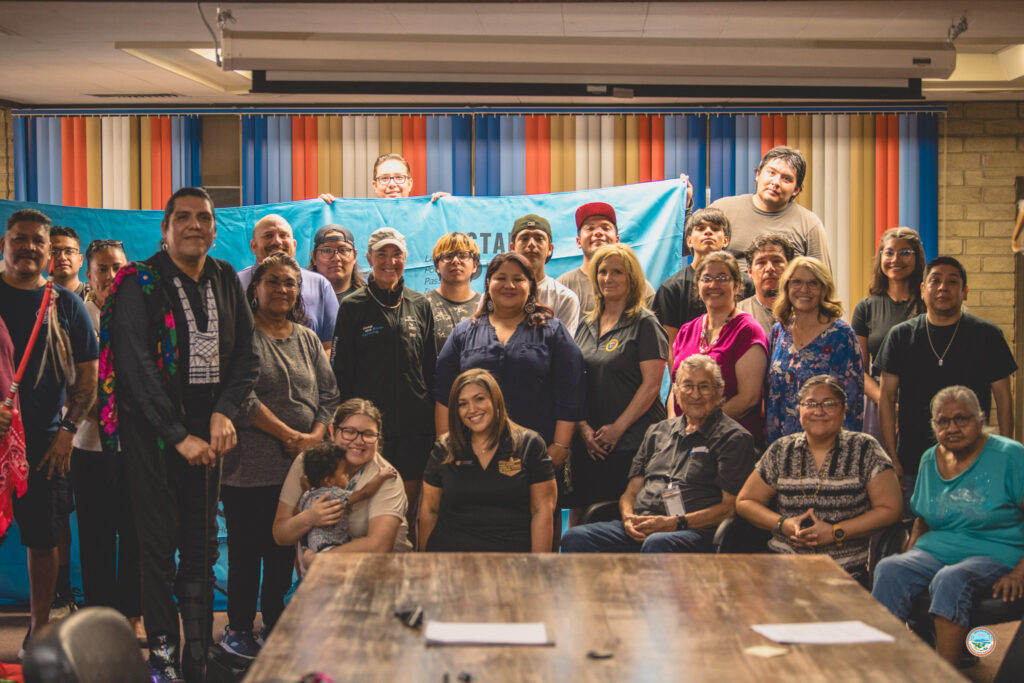
The Tribal Council welcomed Guli, presented her with a gift, and thanked her for bringing attention to the Colorado River and the people whose lives are connected to it.
During the gathering and her interview with CRIT Media, one message continued to surface: the importance of working together.
Guli spoke about the many challenges facing the river, including fragmentation among governments, communities, industries, and organizations. She said long-term solutions will require people to look beyond individual interests and focus on a shared future.
“Together doesn’t mean that the river is yours or mine,” Guli said. “It means that it’s ours.”
She also described what she called the “power of together,” saying the future of the river will depend on people being willing to listen to one another, include different perspectives, and work across boundaries.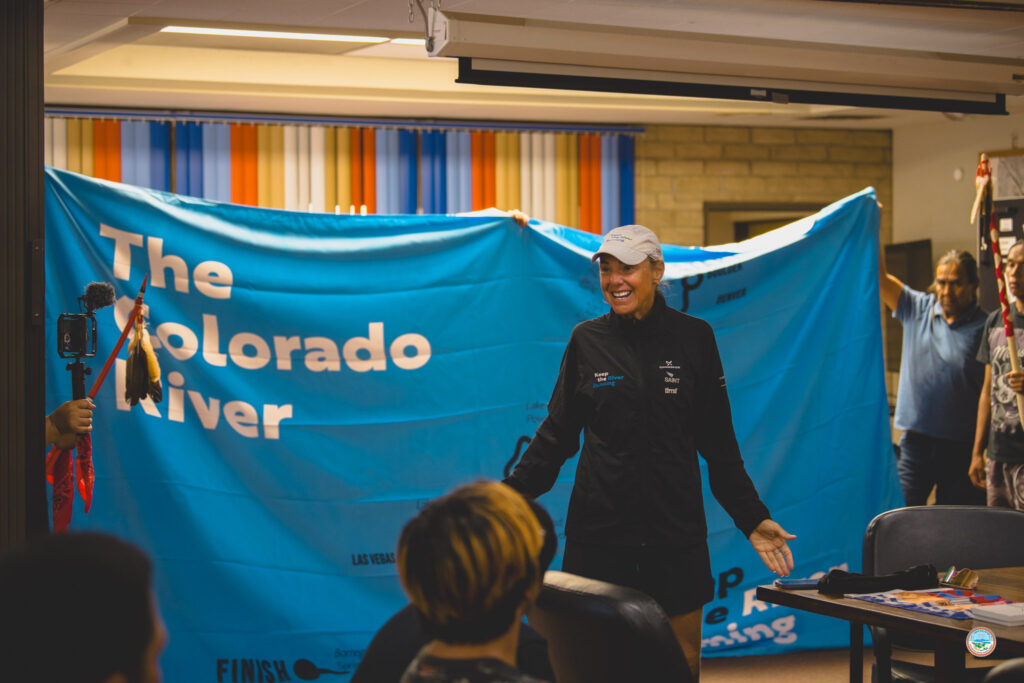
For Guli, that includes Tribal communities whose relationship with the river goes back generations.
She said being at CRIT gave her the opportunity to listen directly to people who have lived with and understood the Colorado River “since time immemorial.” She also pointed to CRIT’s work involving legal personhood as an example of thinking about the river as more than simply a resource.
“The way to hear them is to be here,” she said. (more…)