


Help expand energy dominance and support Tribal energy futures with the Bureau of Indian Affairs (BIA)! We are pleased to announce 23 new hiring opportunities to help support energy development and permitting at BIA, with more opportunities coming soon.
All position announcements opened on 6/1/2026 and will close on Friday 6/12/2026, so act fast! We encourage all qualified applicants to submit application materials by applying online at USAJobs. Please help us spread the word and recruit high-qualitycandidates to help fulfill the BIA mission.
Positions include:
(1) Environmental Protection Specialist Series 28 (GS 11) at Southwest Regional Office
(Albuquerque, NM); DE-26-12973039-CAWY-SR;
(1) Environmental Protection Specialist Series 28 (GS 9/11) at Western Regional Office
(Phoenix, AZ); DE-26-12973039-CAWY-SR;
(2) Archeologist Series 193 (GS 7/11) at Southwest Regional Office (Albuquerque, NM);
DE-26-12973279-CAWV-MH;
(2) GIS Specialist Series 301 (GS 5/11) at Great Plains Regional Office (Aberdeen, SD);
DE-26-12973052-CAWV-JM;
(2) Geographic Information System Specialist Series 301 (GS 9/11) at Navajo Regional
Office (Gallup, NM); DE-26-12973052-CAWV-JM;
(1) Supervisory Engineer Technician (Petro) Series 802 (GS 11) at Osage Agency
(Pawhuska, OK); DE-26-12972843-CAWV-BSc;
(1) Realty Assistant Series 1101 (GS 7) at Farmington Indian Minerals Office (Farmington,
NM); DE-26-12972357-CAWV-TB;
(1) Realty Assistant (CM) Series 1101 (GS 5/7) at Anadarko Agency (Anadarko, OK); DE-
26-12972357-CAWV-TB; (more…)
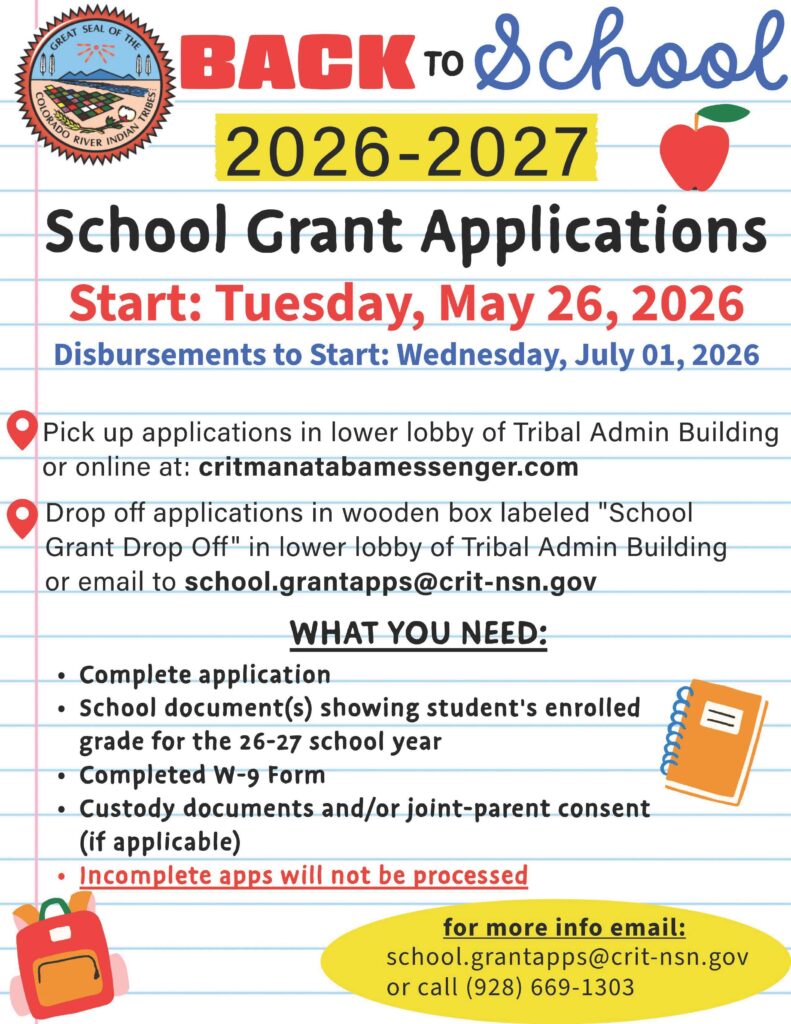
Click the link below to download the application
26-27 SG Application Policy (Fillable)
Arizona Budget Proposal Includes Major Funding for Colorado River Protection
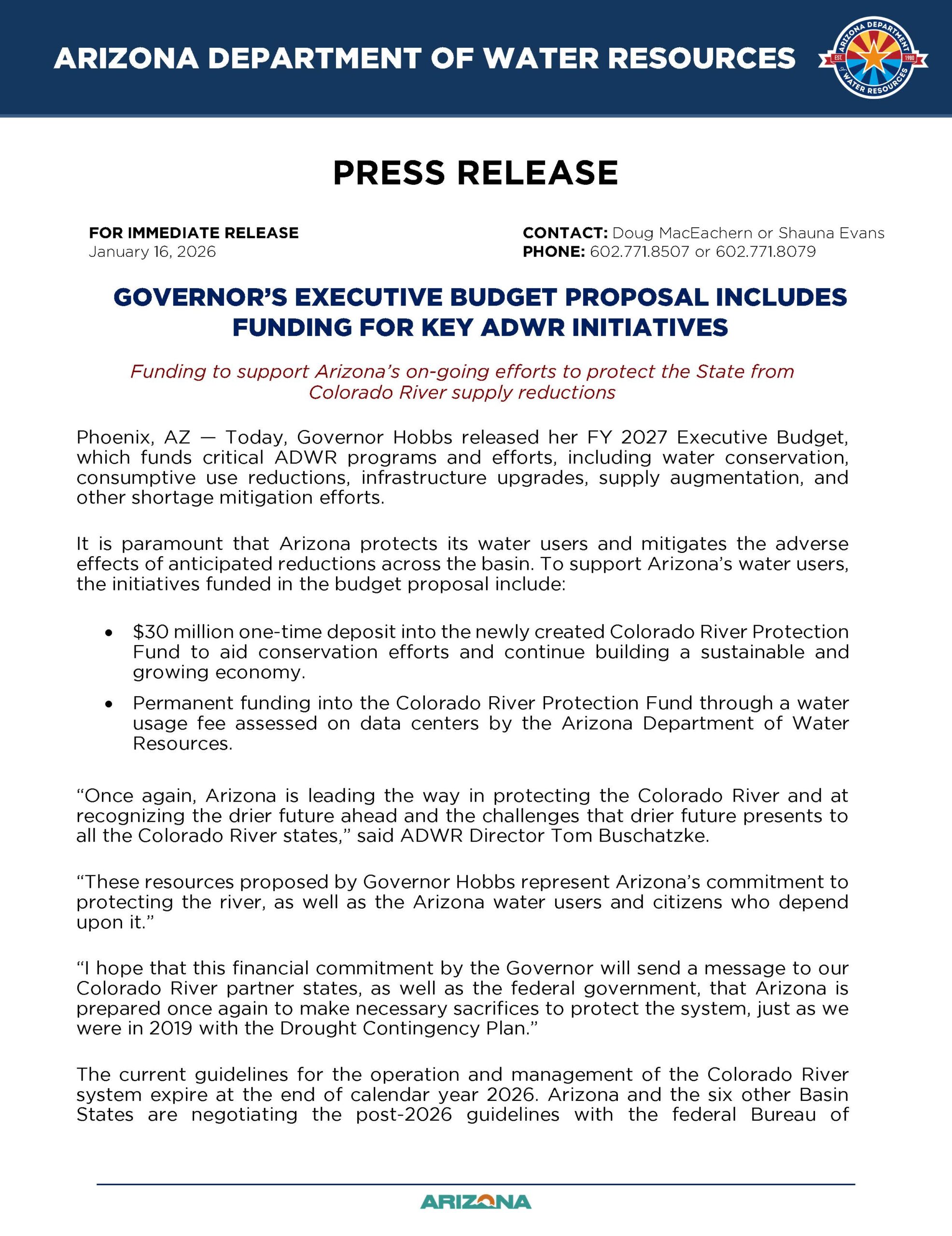
On January 16, 2026, the Arizona Department of Water Resources (ADWR) shared details of Governor Katie Hobbs’ FY 2027 Executive Budget Proposal focused on preparing for long-term challenges facing the Colorado River. The plan includes new and expanded funding aimed at strengthening water security across Arizona in the face of ongoing Colorado River shortages.
Key points from the budget related to water:
Source:
Arizona Water News https://azwaternews.com/2026/01/16/fy2027_execbudgetproposal/
Tiny Cactus Daycare, located at 143 W. Riverside Dr Parker, recently held its Grand Opening for children ages 1 to 5 years old.
Tiny Cactus Daycare features bright, engaging classrooms, an outdoor play area, and age-appropriate learning materials to support early childhood development.
The daycare is staffed by trained professionals with a focus on safety, creativity, and social development.
Tiny Cactus Daycare offers flexible scheduling options, including full-time and part-time care.
For more information, visit 143 W. Riverside Dr Parker, Arizona or call (928) 575-1095. Follow Tiny Cactus Daycare on Facebook @TinyCactusDayCare or Instagram @tinycactusdaycare for updates and parenting tips!
https://tinycactusdaycare.com

On May 3, 2025, Colorado River Indian Tribes (CRIT) youth including Junior Miss CRIT along with Little Miss CRIT attended a solemn and impactful event at the Arizona State Capitol in Phoenix to honor Missing and Murdered Indigenous Women (MMIW). The gathering brought together tribal leaders, activists, and community members to raise awareness about the ongoing crisis of violence against Indigenous women and girls.
The event featured speeches from tribal representatives, survivors, and advocates, highlighting the urgent need for systemic change, improved law enforcement response, and greater public awareness. CRIT’s royalty participated in prayers, a memorial walk, and a ceremonial display of red dresses—symbolizing the countless missing Indigenous women whose cases remain unresolved.
The MMIW movement has gained significant momentum in recent years, with Arizona joining other states in declaring May 5 as a day of awareness. CRIT’s presence at the Capitol underscored the tribe’s commitment to advocacy and community leadership in addressing this critical issue.
As the event concluded, participants called for continued collaboration between tribal nations and state officials to implement stronger protections for Indigenous women and ensure their stories are never forgotten.

The Elks Lodge partnered with the Colorado River Indian Tribes (CRIT) and CRIT Education Department to host Elks Youth Day on May 1st. It’s a celebration of education, leadership, and cultural pride. The event brought together students, educators, and community leaders.
The festivities included interactive workshops on STEM (Science, Technology, Engineering, and Math), traditional tribal arts, and career development. Elks Lodge members provided scholarships and awards to outstanding students, reinforcing their commitment to youth empowerment.
Members of the Tribal Council and Chairwoman Amelia Flores thanked the students for their hard work and dedication.

The CRIT Head Start dance was alive with rhythm and excitement as young dancers from the CRIT Head Start program took to the dance floor on April 25th.
The CRIT Head Start program focuses on fostering creativity and physical activity in young learners, incorporating dance as a way to build confidence, coordination and teamwork. The School dance included a photo booth as well a pizza made by the CRIT Head Start Staff.
“It’s amazing to see how much these kids have grown,” said CRIT Head Start Director Caroline Alcaida. “Dance isn’t just about movement it’s about expression, and tonight they truly shined.”
Parents praised the event for giving their children a chance to showcase their skills in a supportive environment. Blake School, known for its community engagement, provided the perfect venue for the celebration.
CRIT Head start would like to thank everyone who helped set up and volunteered their time for the event.