CDO HIGHER EDUCATION PROGRAM
2026-2027 HE Application
CDO ADULT VOCATIONAL TRAINING PROGRAM
2026-2027 AVT Application
CDO Youth Services (YS) PROGRAM
CDO YOUTH SERVICES APPLICATION
Computer Assistance Program
COMPUTER PROGRAM APPLICATION
CDO HIGHER EDUCATION PROGRAM
2026-2027 HE Application
CDO ADULT VOCATIONAL TRAINING PROGRAM
2026-2027 AVT Application
CDO Youth Services (YS) PROGRAM
CDO YOUTH SERVICES APPLICATION
Computer Assistance Program
COMPUTER PROGRAM APPLICATION

The Colorado River Indian Tribes is seeking applicants to fill a number of Tribal Board, Committee, and Commission vacancies. Applications are open until filled. Applications may be picked up at the Tribal Executive Offices or you can download the PDF’s here.
May 1st CommitteeBoard Member Application
Completed applications may be emailed to b.c@crit-nsn.go or dropped off at the Executive Offices.
Applicants must be CRIT Tribal Members, at least 21 years old, reside on or within the exterior boundaries of the reservation, and meet all board eligibility requirements.
Additional paperwork may be required depending on the board or committee.
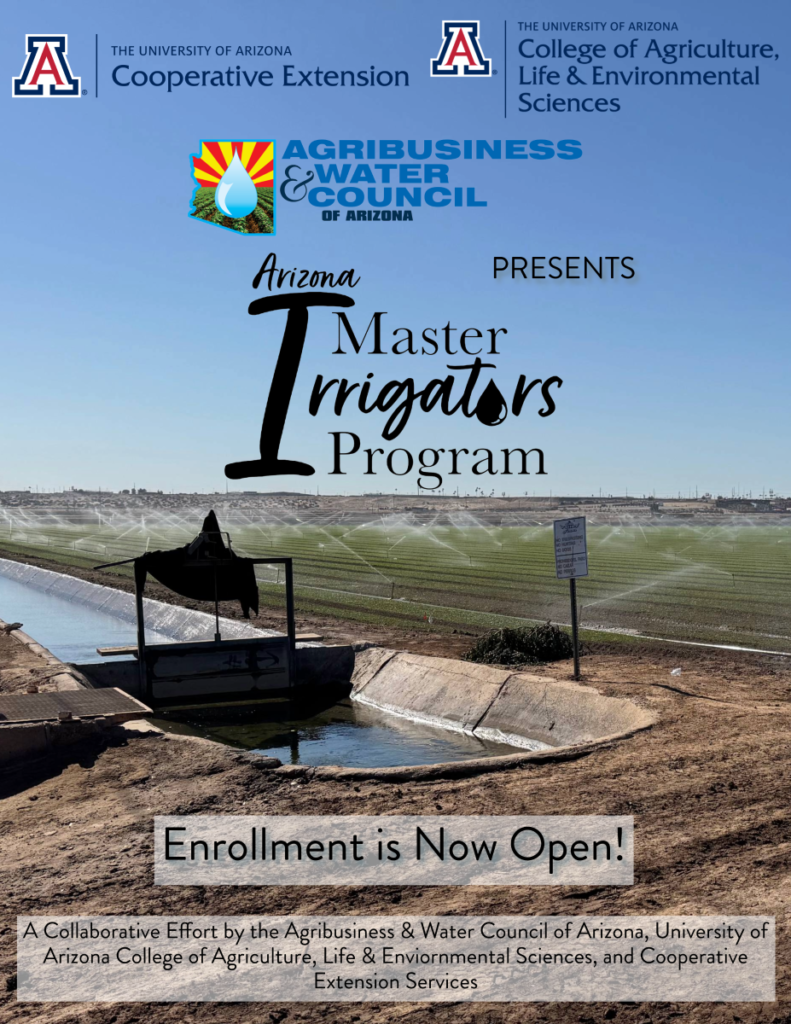
Enrollment is now open for the Arizona Master Irrigators Program, a collaborative effort by the Agribusiness & Water Council of Arizona, University of Arizona College of Agriculture, Life & Environmental Sciences, and Cooperative Extension Services. This program covers a wide range of irrigation and agriculture-focused topics, including soil, water and plant relationships, calculations, canal and ditch water distribution, irrigation practices, pumps and flow systems, fertility, food safety, field management, and safety leadership. 💧🌱
Courses will be offered in both English and Spanish, with translation technology available for students to take home. Those interested in participating should submit their affiliation, contact information, and completed application.
For more information, visit www.agribusinessarizona.org or contact the Agribusiness & Water Council of Arizona at (480) 558-5301 or Stephanie@agribusinessarizona.org

According to Arizona Water News, Arizona and its Lower Basin partners say they remain committed to finding common ground on new Colorado River operating rules despite stalled negotiations among the seven basin states. Officials emphasized continued collaboration with federal agencies and neighboring states to stabilize water supplies beyond 2026 as drought conditions persist. The effort reflects ongoing attempts to balance conservation, water demand, and long-term river sustainability. For CRIT, these negotiations remain important because federal and interstate agreements directly influence how tribal water rights are recognized and protected in future Colorado River management decisions.
Source: Arizona Water News — https://www.azwater.gov/news/articles/2026-02-19
According to the Navajo Times, federal officials are moving forward with developing new Colorado River operating guidelines even as state negotiations remain stalled. The Department of the Interior is continuing its environmental review process to prepare for post-2026 river management, highlighting the federal government’s role when states cannot reach consensus. Tribal consultation remains part of that process. For CRIT, federal involvement is significant because Colorado River policies shaped at the federal level directly affect tribal water rights, long-term planning, and regional water security.
Source: Navajo Times — https://navajotimes.com/reznews/federal-officials-move-forward-on-colorado-river-operating-rules-as-state-negotiations-stall/
According to ABC 15 Arizona, tribal nations along the Colorado River are among those with the most at stake as negotiations over future water allocations continue. Tribal leaders emphasize the importance of protecting established water rights while ensuring sustainable solutions to ongoing drought conditions. The article highlights how tribal participation is increasingly central in discussions about the river’s future. For CRIT, these conversations are especially important because tribal sovereignty and water rights remain critical factors in how Colorado River resources are managed across the basin. (more…)
According to CBS 5 Arizona’s Family, Arizona could face deeper Colorado River water cuts following missed negotiation deadlines, raising concerns about future water supply stability across the state. Officials say ongoing drought and reduced reservoir levels continue to challenge long-term planning efforts. These developments may lead to increased federal involvement in river management decisions. For CRIT, potential cutbacks are important because federal allocation decisions directly influence how tribal water rights are maintained and protected.
Source: CBS 5 Arizona’s Family — https://www.azfamily.com/2026/02/17/arizona-faces-major-colorado-river-water-cuts-deadline-passes/
According to the Colorado Sun, new forecasts suggest Lake Powell could reach critically low levels that threaten hydropower production and water deliveries if drought conditions persist. Reservoir storage plays a central role in determining how water is distributed across the Colorado River Basin. Experts say ongoing climate pressures and declining inflows continue to complicate long-term planning. For CRIT, reservoir conditions remain important because federal operational decisions tied to storage levels directly affect how tribal water allocations are managed and protected.
Source: Colorado Sun — https://coloradosun.com/2026/02/18/lake-powell-forecast-critical-lows-federal-study/
According to AZPM News, Colorado River basin states missed another federal deadline to reach agreement on future water reductions, increasing the likelihood of additional cutbacks across the Southwest. Officials warn that continued drought and declining reservoir levels could force tougher decisions about water allocation in the coming years. The missed deadline highlights growing uncertainty about long-term river management. For CRIT, potential water reductions and federal policy decisions directly influence how tribal water rights are protected and incorporated into basin planning.
Source: AZPM News — https://news.azpm.org/s/102728-arizona-and-western-states-miss-colorado-river-water-deadline-as-cuts-loom/
According to Newsweek, Lake Powell water levels could drop to critical levels sooner than expected, raising concerns about hydropower production and water deliveries across the Colorado River Basin. Experts say continued drought, reduced snowpack, and high demand are contributing to declining reservoir storage. These conditions add urgency to ongoing negotiations about future river operations. For CRIT, reservoir levels are important because federal decisions tied to storage conditions directly affect how tribal water allocations are managed and sustained.
Source: Newsweek — https://www.newsweek.com/lake-powell-water-could-drop-to-critical-levels-sooner-than-expected-11531274
According to Pinal Central, the Gila River Indian Community expressed concern over the lack of agreement among Colorado River basin states, noting the importance of tribal voices in ongoing water negotiations. Tribal leaders emphasized the need for sustainable solutions that recognize existing water rights while addressing long-term drought conditions. The statement highlights growing awareness of tribal participation in basin discussions. For CRIT, tribal engagement in Colorado River negotiations is significant because it reinforces the importance of protecting tribal sovereignty and water rights across the region.
Source: Pinal Central — https://www.pinalcentral.com/sacaton_central/gric-laments-lack-of-deal-over-colorado-river-water/article_cb91f461-07de-4f88-8d70-c3dec3b96c67.html
A recent statement from Colorado River Commissioner JB Hamby says California and other Lower Basin states have been working with federal officials and neighboring states to develop new long-term operating rules for the Colorado River after 2026. He noted that the original 1922 Colorado River Compact was based on water supply estimates that no longer match today’s reality, as river flows have declined over the past 25 years while demand continues to grow.
According to the statement, California, Arizona, and Nevada committed to major conservation efforts in recent years and have already exceeded planned water savings meant to stabilize Lake Mead and Lake Powell. However, disagreements remain between Upper Basin and Lower Basin states about how future reductions should be shared, and negotiators have not yet reached a final agreement.
For CRIT, these ongoing negotiations are important because federal Colorado River policies, interstate agreements, and conservation requirements directly influence how tribal water rights are protected, managed, and incorporated into long-term river planning that affects the entire region.
Source: https://crb.ca.gov/2026/02/statement-from-jb-hamby-colorado-river-commissioner-for-california/
February 14, 2026
According to the U.S. Department of the Interior, federal officials are moving forward with new operating guidelines for the Colorado River even though the seven basin states have not yet reached full agreement. The updated rules, expected by October 2026, are meant to provide stability for water deliveries, power generation, and long-term management as drought conditions and declining inflows continue to strain the river system. Interior Secretary Doug Burgum said discussions with states, Tribal Nations, and Mexico are ongoing, but federal action is needed to ensure future reliability of the river.
The Colorado River supplies water to about 40 million people, supports millions of acres of farmland, generates hydropower, and serves 30 Tribal Nations, making it one of the most important water sources in the West. Federal officials are currently accepting public comments on the draft environmental review that will guide future reservoir operations.
For CRIT, these federal guidelines are important because Colorado River management decisions directly affect how tribal water rights are protected, how water is allocated in the Lower Basin, and how long-term planning supports the Tribe’s water security, economy, and future generations.
Source: U.S. Department of the Interior / Bureau of Reclamation press release
According to Arizona Mirror, Colorado River negotiations hit a setback as Lower Basin states, including Arizona, criticized Upper Basin states for resisting deeper water conservation commitments. Officials say ongoing drought conditions and declining reservoir levels are increasing pressure to finalize new operating rules before current guidelines expire. The disagreement highlights continuing tension over how water reductions should be shared across the basin. For CRIT, these negotiations are important because interstate agreements and federal management decisions directly influence how tribal water rights are protected and incorporated into long-term river planning.
Source: Arizona Mirror — https://azmirror.com/2026/02/13/arizona-blasts-upper-basin-states-for-refusing-cuts-as-colorado-river-talks-fail/
According to the Arizona Department of Water Resources, state officials say they will continue protecting Arizona’s Colorado River resources even after basin states failed to reach a consensus ahead of the federal deadline. Leaders emphasized ongoing drought challenges and the need for continued negotiations to maintain stability for water users across the region. State agencies say collaboration with federal partners and neighboring states remains essential moving forward. For CRIT, continued state and federal coordination is significant because long-term Colorado River policies directly affect how tribal water rights are recognized and sustained.
Source: ADWR Statement — https://azwaternews.com/2026/02/13/021326_statement/
According to USA Today, Colorado River negotiations approached a critical deadline without a final agreement, reflecting ongoing disputes over how to manage shrinking water supplies across the Southwest. Experts say declining snowpack, persistent drought, and competing demands are making consensus more difficult as states prepare for new post-2026 operating guidelines. Federal involvement may increase if states cannot reach agreement. For CRIT, these developments matter because federal river management decisions play a key role in protecting tribal water rights and ensuring long-term water security.
Source: USA Today — https://www.usatoday.com/story/news/nation/2026/02/13/colorado-river-deal-deadline/88658491007/
CRIT recently welcomed KUNC News Reporter Alex Hager, who was interested in covering CRIT’s Personhood Status and why it is so important to the Colorado River Indian Tribes. Upon his visit, he interviewed Water Resource Director Dillon Esquerra, Councilwoman Anisa Patch, and Chairwoman Amelia Flores, each offering insight into why this initiative is vital for the tribe and future generations.
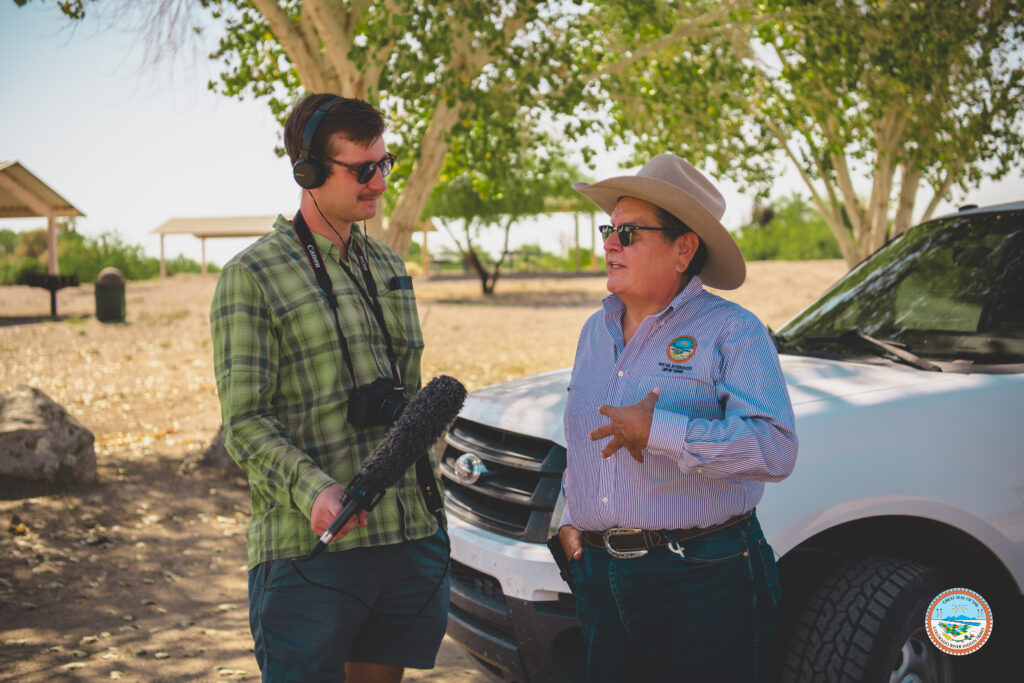
The day began with a visit to the Ahakhav Preserve, where Acting Director Marisol Chavira highlighted how the plants, trees, and natural environment are deeply connected to cultural traditions, from crafting gourds to the sacred use of wood in burials. Alex showed a great interest in learning about the cultural and historic roots of CRIT, and both Dillon and Marisol provided an in-depth explanation of the tribe’s connection to the land and river. Hager then toured Willow Beach, a scenic area of the Preserve, before continuing on to CRIT Chambers for interviews.
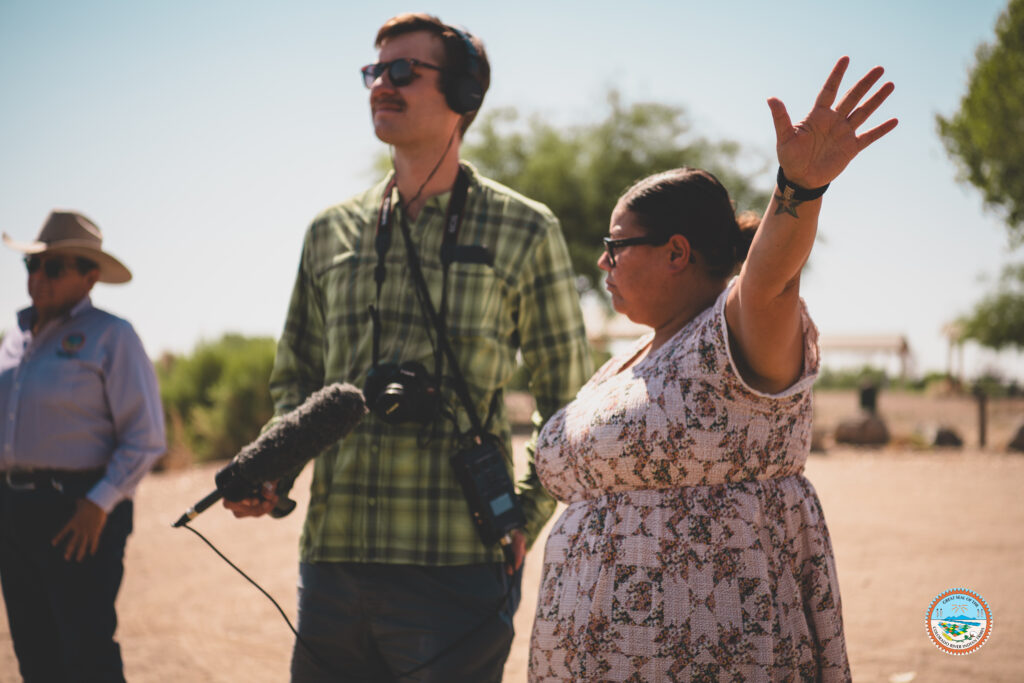
Councilwoman Anisa Patch shared her perspective on the river’s personhood status, reflecting on her upbringing along the river and its role as a lifeline for tribal members. Chairwoman Amelia Flores further emphasized the importance, stating: “It is essential for us to take care of the river, to protect and defend it. We need to protect the river for future generations.”
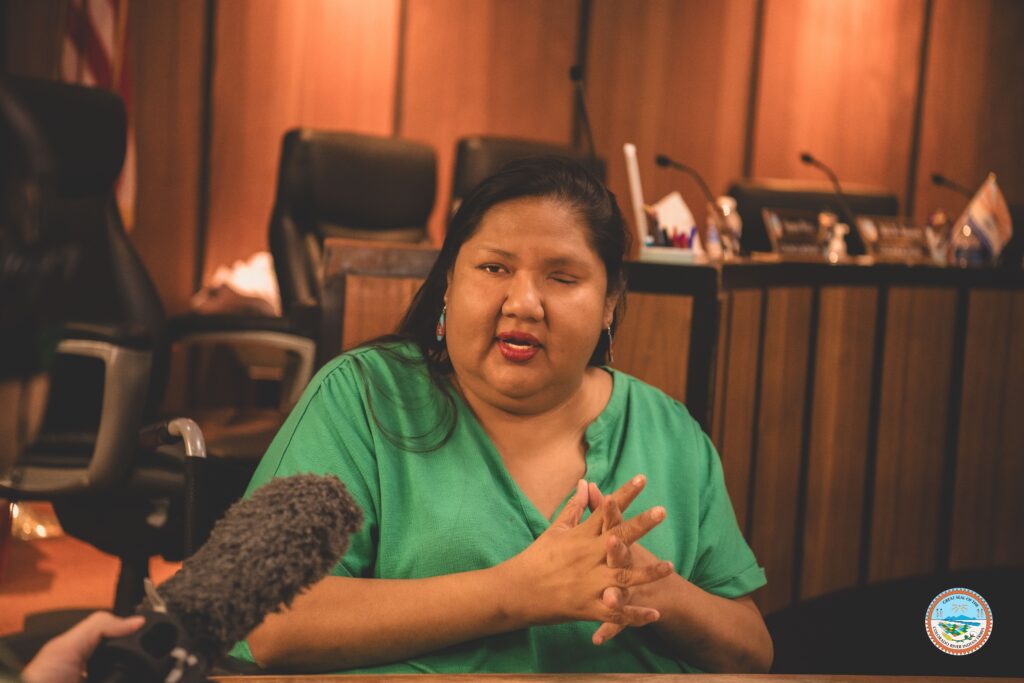
The Personhood status is currently being considered as CRIT tribal law, a groundbreaking step that would formally recognize the Colorado River as a living entity under the tribe’s governance. For CRIT, this is not only a legal step but it builds on the foundation of our beliefs, reflecting the longstanding cultural and spiritual commitment to the river, which has sustained the people, land and traditions for countless generations. Establishing Personhood Status will ensure CRIT beliefs are always held by all future council members and chair persons. This will be the foundation CRIT stands by and relies on when future tough decisions will need to be made about the river. Raising awareness about the personhood initiative is key. It allows both tribal members and the broader public to understand the importance of protecting the Colorado River, not just as a resource, but as a relative, a lifeblood, and a sacred responsibility.
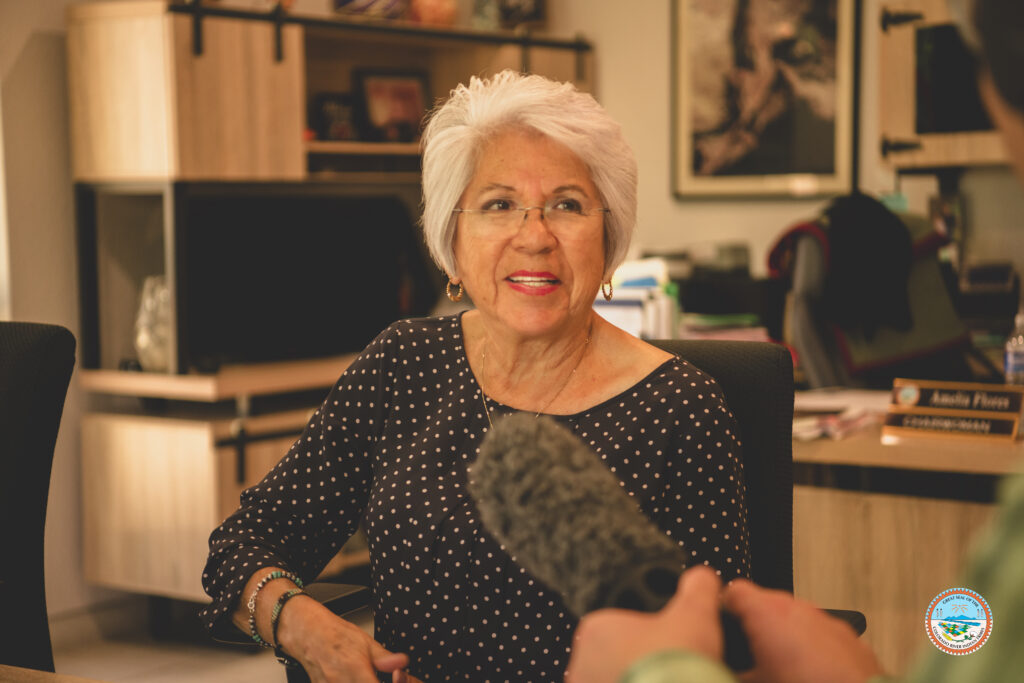
“We are the people along the river, Hamakhav. It’s within us, that’s who we are” says Chairwoman Flores.
Councilman Raeanne Patch provided additional details and context in a follow up interview with Alex detailing the importance of the Personhood Status.
To learn more, you can read Alex Hager’s full article or listen to his podcast at KUNC follow this link.
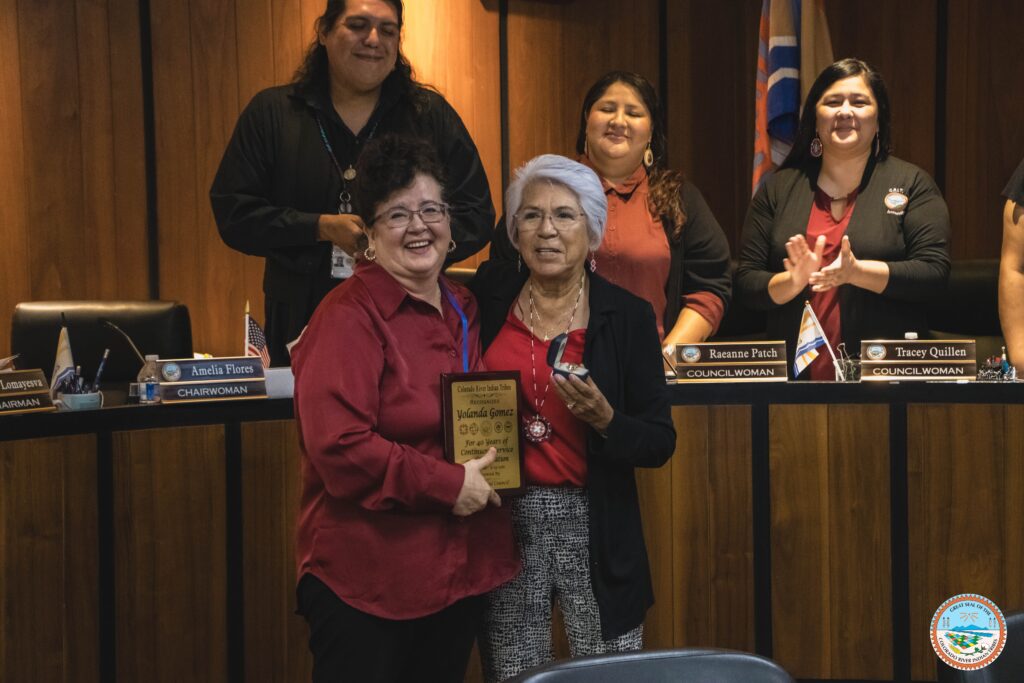
On behalf of CRIT we would like to congratulate Yolanda Gomez for 40 years of service and dedication.
Yolanda started her career with the Colorado River Indian Tribes on August 19, 1985 as Secretary with CRIT Farms.
In May of 1991, Yolanda transferred to Accounting as Enterprise Bookkeeper, and in 2008, she received a promotion to Senior Staff Accountant. Because of her expertise and dedication, “Yoli” as she is affectionately called, has also been appointed Acting Controller during times of need.
The Tribal Council and Human Resources Department thanks you for 40+ years of continued service to the Colorado River Indian Tribes.
COLORADO RIVER INDIAN TRIBES
DEPARTMENT OF HEALTH AND SOCIAL SERVICES
12302 KENNEDY DRIVE
PARKER, ARIZONA 85344
TELEPHONE (928) 669-6577
FAX (928) 669-8881
August 22, 2025
Notice to the Public:
The Colorado River Indian Tribes Department of Health and Social Services (DHSS) has received information that Mosquito Arbovirus Surveillance was conducted on the Colorado River Indian Reservation on August 19“’ & 20“’, 2025. This surveillance was conducted by the Parker Indian Health Service Office of Environment Health and Engineering (IHS;OEH&E) in partnership with the CRIT Environmental Protection Office (EPO).
There were mosquito pools that were tested for the presence of the West Nile Virus. One sample tested Positive for the presence of the West Nile virus collected at the Poston, Arizona – 50 Homes site. The best way to prevent infection is to avoid mosquito bites by taking precautionary measures to protect you and your family from dusk to dawn.
● Use an insect repellent and reapply as directed.
● Wear long-sleeved shirts and pants, covering arms and legs.
● Treat clothing and gear with repellant.
● Take steps to control mosquitoes indoors and outdoors, drain standing water
in flower pots, bird baths, or old tires.
● Keep doors and windows shut.
Eighty percent (80%) of people infected with WNV will not show any symptoms but we are asking the public to report any symptoms that you may be experiencing after a mosquito bite that you feel could be due to the West Nile virus. Symptoms can be flu-like and can include: a fever, a headache, body aches, diarrhea, a rash, nausea and vomiting and can be mild or severe, and may last a few days to a few weeks. However, in rare cases, severe illness can occur; that might include brain infections such as meningitis or encephalitis, paralysis or even death. There is no vaccine for the WNV in the United States, and there are no specific treatments.
The 50 Homes area was treated in the early morning hours of Friday, August 22, 2025, by CRIT EPO, The Parker IHS OEH&E and CRIT EPO will continue to monitor the area as well as the surrounding areas for West Nile virus activity to reduce the mosquito population.
● If you want to report an environmental issue such as standing water, please call the CRIT Environmental Office at 928-662-4336.
For any symptoms that you may be experiencing, please contact your primary care physician or visit the Emergency Department or call the Parker Indian Health Services Public Health Nursing at 928- 669-213
● For more information on the West Nile virus, please visit this link.
You can also contact the Department of Health and Social Services at 928-669-6577, for more information