July 28, 2026 5:08 pm
CRIT Nation, Parker, AZ
July 28, 2026 5:08 pm
CRIT Nation, Parker, AZ

Enrollment is now open for the Arizona Master Irrigators Program, a collaborative effort by the Agribusiness & Water Council of Arizona, University of Arizona College of Agriculture, Life & Environmental Sciences, and Cooperative Extension Services. This program covers a wide range of irrigation and agriculture-focused topics, including soil, water and plant relationships, calculations, canal and ditch water distribution, irrigation practices, pumps and flow systems, fertility, food safety, field management, and safety leadership. 💧🌱

Courses will be offered in both English and Spanish, with translation technology available for students to take home. Those interested in participating should submit their affiliation, contact information, and completed application.

For more information, visit www.agribusinessarizona.org or contact the Agribusiness & Water Council of Arizona at (480) 558-5301 or Stephanie@agribusinessarizona.org


KJZZ – Arizona water chiefs report movement in Colorado River talks, potential Lake Powell protections

Arizona water leaders say there is some movement in long-stalled Colorado River negotiations, including discussions around protecting critical elevations at Lake Powell. While no agreement has been reached, officials describe cautious progress as pressure mounts ahead of post-2026 management decisions.

Mohave Valley Daily News – Arizona bill would add $1 million to Colorado River legal fund

Arizona lawmakers are considering adding $1 million to the state’s legal fund to prepare for potential litigation if Colorado River negotiations fail. The proposal reflects how seriously states are preparing for court battles over water rights.

Nevada Current – Tribes stake their claim on the Colorado River, and help conserve it

This article highlights how tribes across the Basin are asserting their legal rights while also leading conservation efforts. It emphasizes tribes as both senior water rights holders and active stewards of the river.

Circle of Blue – Tribal Water Rights Settlement in Arizona Reintroduced in Congress

A long-standing tribal water rights settlement in Arizona has been reintroduced in Congress, aiming to resolve unresolved claims and provide certainty for tribes and non-tribal users alike.

KLAS CBS 8 Las Vegas – Water shortage in 2026: Pressure builds on Colorado River, Lake Mead

Officials warn that 2026 could bring increased pressure on Lake Mead and the Colorado River if snowpack and runoff do not improve. Water managers stress that short-term storms do not erase long-term shortages.

SFGate – America’s largest reservoir remains in peril

Despite recent storms, Lake Mead remains far below healthy levels. Experts caution against assuming drought is over, noting long-term structural shortages.

Newsweek – Where Lake Mead water levels stand amid heavy California rain

Lake Mead has seen limited gains, but experts stress that precipitation alone cannot resolve decades of overuse.

KUNC – Colorado ends 2025 with extremely low snowpack (more…)

As 2025 came to a close and 2026 began, water issues across Arizona and the Colorado River Basin remained front and center. New reporting highlighted continued uncertainty around Colorado River negotiations, growing concern over snowpack levels, and major developments in local groundwater and community water planning.

Local Groundwater and Community Water Planning

In western Arizona, the Parker Pioneer reports that an Active Management Area is being proposed for the Ranegras Plain. The proposal reflects growing concern over groundwater depletion and signals a shift toward stronger oversight in areas increasingly relied upon as Colorado River supplies tighten.

Meanwhile, years of uncertainty came to an end for residents of Rio Verde Foothills. Multiple Arizona outlets report that permanent water infrastructure is now coming online, including new pipelines and water filling stations. The long-awaited solution brings relief to residents, local businesses, and even animal sanctuaries, while also serving as a cautionary example of what can happen when development moves forward without secure water planning.

Snowpack and Weather Conditions Raise Red Flags

Snowpack remained a major concern across the Basin. Reports from KJZZ, KTAR News, CBS News, AP News, and several California outlets show that while recent storms boosted snowpack in parts of California, overall levels remain below average for this point in the season.

Officials with the Central Arizona Project acknowledged concern about snowpack levels, though they noted it is still early in the water year. Upstream, conditions appear more troubling. Colorado news outlets report historically low snowpack in some regions, while Utah coverage shows Lake Powell has dropped significantly over the past year, underscoring the fragile state of the system.

Late December also brought renewed uncertainty around water infrastructure projects. Coverage from KJZZ, Colorado outlets, and national public media reports on a presidential veto of a major Colorado water pipeline project. The decision disrupted financing for a project already underway and prompted calls from lawmakers to reconsider or override the veto. (more…)

By Ariana Romero
Reporter, CRIT Media

As 2025 comes to a close, new reporting shows Colorado River negotiations narrowing toward what many leaders describe as a final window for agreement, while local water solutions and long-term risks continue to take shape across the Southwest.

ABC15 Arizona reports that Colorado River states may only have one last realistic chance to reach a deal before federal intervention becomes unavoidable. With existing guidelines set to expire and reservoir conditions still fragile, officials warn that failure to compromise soon could lead to decisions being imposed rather than negotiated.

CBS 5 Arizona’s Family highlights what is at stake specifically for Arizona as talks drag on. The report notes that unresolved negotiations could affect everything from water deliveries to long-term planning for cities, tribes, agriculture, and industry, reinforcing why Arizona leaders are under pressure to help move talks forward.

Several opinion pieces stress the need for compromise in the Upper Basin. Phys.org and the Imperial Valley Press argue that without meaningful concessions, negotiations risk collapse, deepening divisions among states and prolonging uncertainty across the Basin.

At the local level, attention turned to Rio Verde Foothills, a community that famously ran out of water. The Arizona Republic, CBS 5, and AZ Big Media report that a permanent water solution has now been secured, ending years of uncertainty. However, the Arizona Republic notes that questions remain about the long-term cost of that solution, underscoring the financial realities of securing water in unregulated areas.

Water policy and development pressures remain closely linked. The Daily Independent reports that Valley water officials are urging legislators to invest more heavily in water resources, while opinion pieces from Nevada question whether the continued expansion of data centers is compatible with long-term water sustainability.

Conditions on the river itself remain mixed. Newsweek reports on how Lake Mead’s water levels changed throughout 2025, showing modest gains at times but continued overall vulnerability. Meanwhile, CBS News warns that Colorado is facing its worst snowpack on record for this point in the season, a troubling signal for future Colorado River flows, though experts say late-season storms could still offer some relief.

Despite tensions, collaboration remains a recurring theme. An opinion from the University of Colorado Boulder notes that Colorado River discussions continue to bring together unlikely partners through forums like the Colorado River Water Users Association, even as disagreements persist. Another Colorado Sun opinion stresses that public access to rivers and responsible stewardship must remain part of broader water policy discussions.

Together, these reports show a Basin approaching a crossroads. With negotiations nearing a critical moment, local water fixes highlighting real costs, and climate signals raising alarm, decisions made in the months ahead will play a major role in shaping the future of the Colorado River.

Sources

As the year comes to a close, new reporting underscores how unresolved negotiations, worsening climate impacts, and continued growth are colliding across the Colorado River Basin.

The Lake Havasu News-Herald reports that federal officials are demanding compromise from Basin states as water shortages deepen. Despite repeated warnings, states remain divided, prompting stronger signals that the federal government may intervene if agreements are not reached soon.

Several opinion pieces question long-held assumptions about water security. The Sun City Independent argues that Arizona’s promise of “assured” water is increasingly disconnected from reality, while national commentary emphasizes that decades of overuse and delayed action have left little room for error.

Weather extremes continued to dominate headlines. The Los Angeles Times reports that Southern California experienced its wettest Christmas holiday on record, highlighting the growing drought-to-deluge cycle driven by climate change. Despite heavy rain in some areas, drought conditions persist elsewhere, according to California and national drought summaries. In Colorado, the Denver Gazette reports snowpack levels are at the lowest ever recorded for this point in the season, raising serious concerns for future Colorado River flows.

Local and regional responses remain mixed. The Payson Roundup reports progress on water system improvements in Star Valley and a brief return to normal rainfall in Payson, though officials caution that short-term relief does not change long-term conditions. In Nevada, the Las Vegas Review-Journal reports that rapid growth in Las Vegas is continuing despite the Colorado River crisis, intensifying concerns about sustainability.

Across the Basin, journalists and experts reflected on the year’s biggest water stories. Aspen Journalism and Aspen Public Radio highlight how climate change is worsening drought conditions and pushing leaders toward difficult decisions in 2026. National Parks Traveler reports that declining Colorado River flows are already affecting national park sites along the river, signaling broader environmental consequences.

Some coverage points toward potential paths forward. Fox 13 in Utah explores ideas aimed at easing water conflicts, while opinion pieces emphasize the need for compromise among Upper Basin states. The Sierra Club highlights how Indigenous knowledge and stewardship can play a key role in adapting to climate change and managing water more sustainably.

Sources

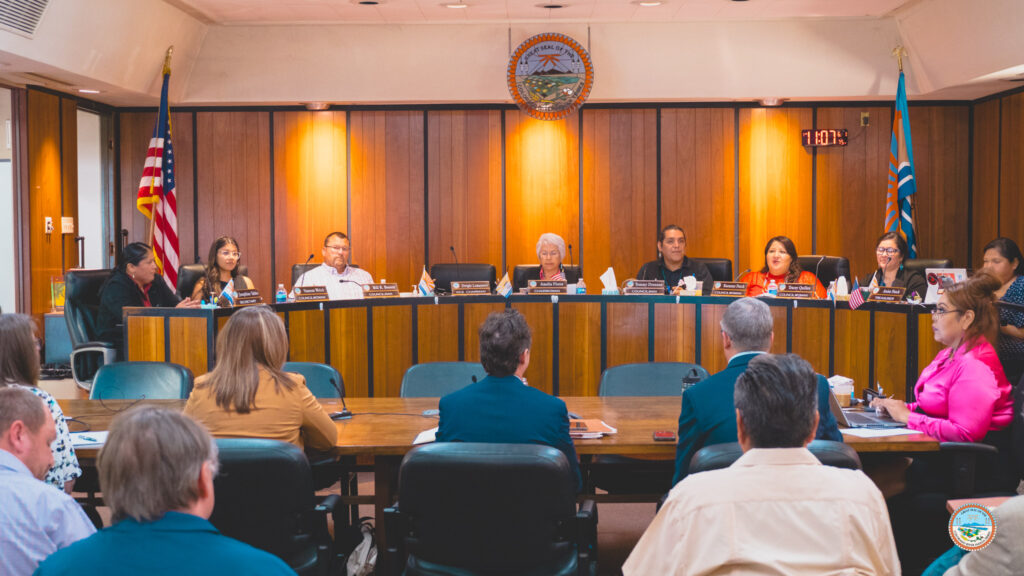
The Colorado River Indian Tribes Tribal Council has made a historic decision to protect the lifeblood of their Reservation. On November 6, 2025, the Council unanimously approved Resolution No. R-375-25, which proclaims the personhood status of the Colorado River under tribal law.

This resolution acknowledges the Colorado River as a living entity whose health and well-being are intrinsically linked to the well-being of the Colorado River Indian Tribes (CRIT) members. The Tribes’ deep-rooted connection to the river spans centuries, providing cultural identity, spiritual strength, food systems, and economic stability that continue to shape their community life today.

The resolution emphasizes the central role the river has played in defining the identity of the CRIT. It highlights that CRIT’s ancestors have preserved and protected these lands since before the establishment of the Colorado River Indian Reservation in 1865.

The Council underscores the crucial role the river plays in sustaining traditional practices, wildlife, and agriculture, including the federal irrigation systems authorized as early as 1867. Today, the Colorado River Indian Irrigation Project stands as a cornerstone of the tribal economy.

The resolution underscores significant legal milestones that acknowledged CRIT’s water rights. In the landmark 1964 and 2006 Arizona v. California U.S. Supreme Court decisions, the Tribes secured 719,248 acre-feet of water annually, ensuring their access to the river for generations to come.

By granting personhood to the River, the Tribal Council reaffirmed its sovereign duty to honor and protect it. This status mandates that the River’s well-being must be a priority in governance and decision-making moving forward.

As part of the resolution, the Attorney General and their staff will develop legal safeguards and propose updates to the CRIT Water Code and other relevant regulations. These updates may include the potential designation of the river as a protected cultural landscape.

Council members recognized that protecting the river is not merely a legal obligation but a continuation of cultural beliefs passed down through generations.

Through this declaration, CRIT demonstrates its unwavering commitment to stewardship. The resolution concludes with a resolute message: the Colorado River is, and will always remain, a vital entity deserving of respect, care, and protection for all future generations.

Article Written by CRIT Media Reporter Ariana Romero

News Update November 12, 2025

Negotiations over the future of the Colorado River have reached a standstill after all seven basin states failed to meet a key federal deadline. Reports from 12News and 8NewsNow confirm that the states were unable to agree on a new water-sharing plan, leaving the situation unresolved as the river continues to decline.

High Country News explains that the biggest disagreements involve how much each state should give up in the future. The upper Basin states want fewer mandatory reductions, while the Lower Basin states, including Arizona, say they have already taken the deepest cuts and cannot continue to absorb the majority of the impacts.

With no agreement in place, Arizona Governor Katie Hobbs has asked the Trump administration to intervene. She stated that Arizona has made significant sacrifices and cannot carry the weight of the reductions while other states refuse to commit to measurable cuts. If the states cannot reach a plan soon, the federal government may create one for them.

For the Colorado River Indian Tribes, the outcome of these negotiations has major importance. CRIT holds valuable senior water rights and relies on a stable and fair management plan to ensure long-term security for the community and the region.

For more information, you can read the news articles with the links below.

8NewsNow
https://www.8newsnow.com/news/local-news/colorado-river-negotiations-fail-to-meet-federal-deadline-for-7-state-agreement/

High Country News
https://www.hcn.org/articles/why-colorado-river-negotiations-are-so-difficult/


ABC 15 News
https://www.abc15.com/weather/impact-earth/why-gov-katie-hobbs-wants-trump-administration-to-broker-colorado-river-deal


12 News
/wednesday-is-deadline-for-7-state-including-arizona-to-negotiate-the-colorado-river

If you’ve seen this missing child, please click this link below to help locate her.

https://www.missingkids.org/poster.print.html/NCMC/2084582/1

As CRIT Media approaches this year’s first newspaper, we’re inviting the community to help us celebrate the amazing mothers in our lives this Mother’s Day.
If you’d like to honor a special mom, you can submit her photo along with a short message sharing why she means so much to you and what makes her an incredible mother. Her photo and bio will be featured in the upcoming Manataba Messenger Newspaper.

As part of this celebration, we’re also offering complimentary family portrait sessions in our Media studio for any selected participants who would like to take part or you can send us a photo with a summary explaining why you are nominating this special mom for Mothers Day!

The deadline for entering is May 1st.
Please email critmedia@crit-nsn.gov to nominate a special mother!

The prolonged drought combined with the lowest winter snowpack on record is requiring swift actions to protect this vital water system  

WASHINGTON – Long-term drought has reduced Colorado River system storage to about 36 percent of capacity, and the combination of the lowest snowpack on record and record-breaking March heat has further intensified drought conditions across the Basin. These compounding factors are creating elevated risks to essential water and power infrastructure that supply water to more than 40 million people, underscoring the need for immediate action.

Lake Powell’s water year minimum probable inflow is forecasted at just 2.78 million acre-feet—29% of historical average and one of the lowest on record. Reclamation’s April “24 Month Study” projects Lake Powell may decline to below 3,490 feet—the minimum power pool level—by August 2026 without major intervention. If Glen Canyon Dam declines below 3,490 feet, water releases would be only through the river outlet works, which could cause operational issues, uncertainty for users, downstream impacts, instability in regional power and water supplies, and a reduction in power generation.

Secretary of the Interior Doug Burgum met with Governors for the seven basin states, Arizona, California, Colorado, Nevada, New Mexico, Utah and Wyoming, and their designees again today to discuss the concerning hydrology and plans for operations.

“I am grateful for the Governors and their teams working diligently to find a solution to the complex challenges created by these unprecedented drought conditions which require immediate action,” said Interior Secretary Doug Burgum. “Interior and Reclamation continue to coordinate with the basin states, tribes, Mexico and basin stakeholders as we make the decisions necessary to operate and protect the system.”

To stabilize the system, Reclamation is moving quickly and initial plans include adding up to about 2.48 maf of water to Lake Powell by moving water from the upstream Flaming Gorge Reservoir and by reducing releases from Lake Powell.

Through the 2019 Drought Response Operating Agreements, Reclamation is intending to release 660,000 acre-feet to 1 maf from Flaming Gorge Reservoir from April 2026 through April 2027. In addition, Reclamation is intending to reduce the annual release volume from Lake Powell to Lake Mead by 1.48 maf—from 7.48 maf to 6.0 maf—through September 2026 by utilizing section 6E of the Record of Decision from the final 2024 Supplemental Environmental Impact Statement for near-term Colorado River Operations.

Together, these actions are expected to increase Lake Powell’s elevation by approximately 54 ft to at least elevation 3500 feet by April 2027. Through the current, ongoing DROA process, the basin states, tribes and partners continue to provide feedback related to the proposed releases. A final decision will be coming next week.

Flaming Gorge Reservoir now holds about 3.1 maf of water, which is 83% full. These actions are expected to lower the reservoir’s elevation by roughly 35 feet over the next year to approximately 59% of capacity. This will have no effect on contracted water rights at Flaming Gorge or Lake Powell. No additional releases from the other upstream initial units of the Colorado River Storage Project Act—Blue Mesa and Navajo reservoirs—are planned at this time, due to their low water levels and poor forecasted inflows.

“Given the severity of the risks facing the Colorado River system, it is imperative that we take action quickly to protect a resource that supplies water to 40 million people and supports vital agricultural, hydropower production, tribal, wildlife, and recreational uses across the region,” said Assistant Secretary — Water and Science Andrea Travnicek. “As we weigh current conditions and prepare for future operations by working with states, tribal nations and stakeholders, the Department of the Interior and Reclamation remain fully committed to taking the actions necessary to reduce impacts on water deliveries, safeguard critical infrastructure, and preserve as much operational flexibility as possible.”  (more…)

Parker, Ariz.) The Colorado River Indian Tribes (CRIT) welcomes the news that The U.S. Ninth Circuit Court of Appeals has rejected the Arizona Legislature’s challenge to Baaj Nwaavjo I’tah Kukveni-Ancestral Footprints of the Grand Canyon National Monument. The monument, established by a 2023 presidential proclamation, protects approximately 917,000 acres of federal land surrounding the Grand Canyon.

CRIT is part of the Grand Canyon Tribal Leaders’ Coalition and the Baaj Nwaavjo I’tah Kukveni Tribal Commission.

CRIT Chairwoman Amelia Flores said, “The Colorado River is indistinguishably  connected to the lands of the Baaj Nwaavjo I’tah Kukveni Grand Canyon National Monument. This monument protects the health of the Colorado River, the surrounding lands, and the irreplaceable cultural resources.   This ruling designation honors the tribal connections to the surrounding lands and the value of tribal stewardship in protecting the waters that flow through the Grand Canyon down to our reservation.”

Leadership from the Colorado River Indian Tribal Council served a major role in the official designation of the Monument an attended its dedication ceremony in August 2023.