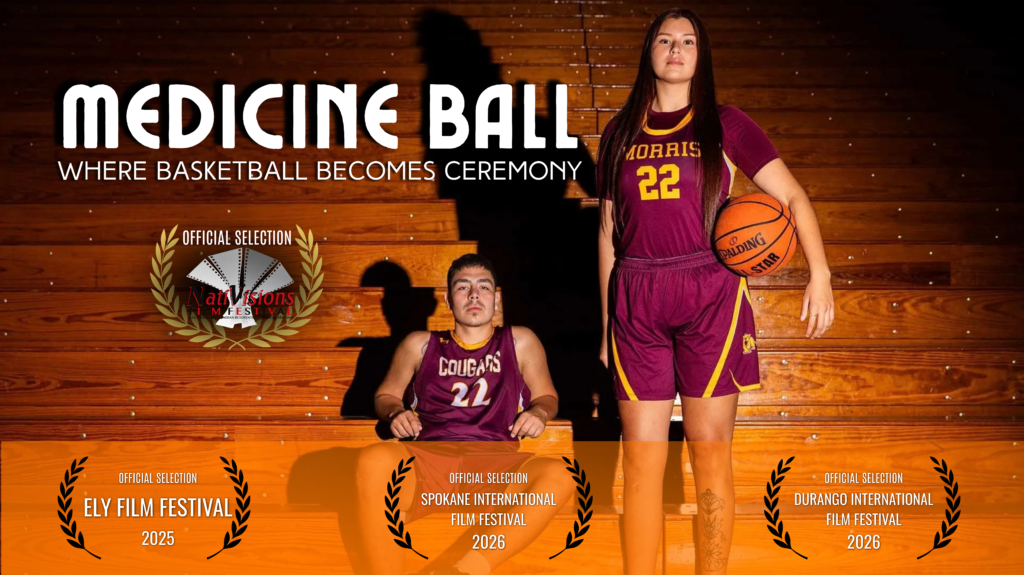
Around the 1800s, with the establishment of boarding schools, Natives endured terrible conditions and suffered emotional and physical abuse from religious staff intent on erasing their Native identities. Students, taken from their families, were punished for speaking their Native languages or for practicing any sort of traditions, and received a very poor education. Many never returned home. In 1891, Dr. James Naismith invented the game of basketball, created as an “athletic distraction” while taking inspiration from other games, like the tribal originated sport of lacrosse. Later, Naismith noted how well the game was played among the Native children (and soon adults) when introducing the sport into the schools. From there, history shows the Native American university basketball teams that went onto great success and growth as state/national contestants and champions. Such is the case for two Indigenous students and basketball player’s: Lexus Redthunder (Sisseton Wahpeton Oyate) and Leroy Staples Fairbanks IV (Leech Lake Band of Ojibwe), attending college at the University of Minnesota Morris – whose campus is occupying the same location and partial remains of a former boarding school called the Morris Industrial School for Indians. Both learn more about the ingrained history about the Indigenous influence of the game, the boarding school’s assimilation of Indian children through sports, and the modern day reception and acknowledgement to break the cycle of trauma by embracing and enlivening Indigenous spirit through athletics in the documentary short, “Medicine Ball” (2026), directed by Twin Cities PBS producer Leya Hale.
You can feel the grace and quality of the filmmaking going on with each angle being covered on the sports culture mixed with indigenous influence, facing opposite the harsh history surrounding both players’ families having connections to the boarding school. The greatest strengths of this film would be in the direction and editing of the short’s cinematography and profiling of the students/academics/elders, and the post production flare seen on screen with the sound mixing and soundtrack blending seamlessly. The footage of the basketball games happening on screen feel visceral and magnetic, which makes the quieter more slice-of-life segments of the film breathe a calm light in the background and coverage of the students’ home/personal lives. Lexus explores the generational run of her family’s attendance of the school, her grandmother originally and later following after her sister – noting that she feels her family is “stuck” in a cycle of carrying the trauma and negativity of it’s history. Leroy discovers his past relatives being in the school system and having the courage to accept and carry on the legacy of the family he’s proud to represent today with embracing the advocacy side of being a forefront athletic leader for the face of Indigenous sports. Both meet and discuss with their academic/cultural advisors and elders on discovering more about the school’s past, and keying into the idea of carrying on the spirit of those who can’t be here today by building awareness and reconciliation for the tribal families and communities affected by these boarding schools. This is a film that asks you to breathe new life into the academia and cultural malaise surrounding Indigenous assimilation and exploitation history, using the great sport of basketball as the winning goal of Indigenous spirit growth – “Medicine Ball” is a film that heals and creates more space to rebuild our future.
4/4 SEALS ! ! !