
Once designed to stabilize water deliveries to the Lower Basin, the Glen Canyon dam is now becoming a liability due to declining water levels caused by record breaking drought. The reservoir is less than a quarter full, and inflows are projected to be among the lowest ever recorded, driven by unusually early heat and a collapsing snowpack. The dam’s infrastructure was never designed to function at such low elevations, and as water levels drop, the systems that releases water downstream has become unreliable and even dangerous to operate.
This vulnerability could disrupt legally required flows under the 1922 Colorado River Compact, which is an agreement that divides the river’s water between the Upper and Lower Basin states. According to the compact, the Upper Basin States are required by law to provide a fixed amount of water flow annually. This has become an increasingly difficult task to fulfill due to the extreme drought.
The Bureau of Reclamation and other federal entities are attempting short-term emergency measures, such as holding back water in Lake Powell and releasing additional water from upstream reservoirs like Flaming Gorge. However, these actions are described as temporary “triage” that shift risk rather than solve it. This could lower levels in downstream reservoirs like Lake Mead and creating new ecological and economic problems. Long-term solutions, including major engineering retrofits to the dam, are being studied but will require years, congressional approval, and significant funding.
Cities across Arizona, with Phoenix leading the charge, are actively preparing for a future with less Colorado River water. Roughly 40% of Phoenix’s water supply comes from the Colorado River, and officials are anticipating bigger federal cuts around the corner. In response, the city is expanding groundwater access, storing water underground, investing in infrastructure to move water across regions, and developing advanced purification systems that can turn wastewater into drinking water. Programs like the Secure Water Arizona Program (SWAP) aim to create cooperative, market-like exchanges between cities to share water more efficiently. Despite decades of preparation and reduced per-capita water use, officials acknowledge that worsening drought conditions, stalled interstate negotiations, and federal policy decisions are pushing the system toward more restrictive measures, including potential Stage 2 drought warnings with conservation requirements and rising costs for consumers. (more…)
Drought and water uncertainty continue to build across the Colorado River Basin as Arizona, Colorado, Utah, and the broader Southwest face growing pressure over how water is managed, stored, protected, and shared. Recent reports show the crisis is not limited to one city, one river, or one reservoir. It is being felt through court decisions over groundwater, city water planning, farming operations, statewide drought warnings, and the ongoing lack of agreement over the future of Colorado River management.
In Arizona, the question of groundwater oversight remains a major concern. KJZZ reported that the Arizona Court of Appeals will not force the state to review whether greater water-use oversight is needed near the upper San Pedro River. The case centered on whether the Arizona Department of Water Resources should be required to review the area for possible designation as an Active Management Area, which could lead to new limits on groundwater pumping. The court acknowledged that the San Pedro River is unique as one of the last undammed, free-flowing rivers in the desert Southwest, but ruled that state law does not clearly define how often the department must conduct such reviews. Because of that, the court said the decision remains within the department’s discretion.
That ruling reflects a larger issue across Arizona: when surface water becomes less reliable, groundwater often becomes the backup. But groundwater is not unlimited. As Colorado River supplies become more uncertain, decisions about groundwater management will become even more important for cities, rural communities, agriculture, development, and river ecosystems.
Phoenix is already preparing for a future with less certainty. KTAR reported that the City of Phoenix says it is not running out of water, but it may need to use backup water supplies to meet demand over the next 10 years. The report said Phoenix recently reviewed its water supply and demand while also evaluating how potential Colorado River cuts could affect the city’s water management.
Phoenix’s planning shows how major cities are trying to prepare before conditions become more severe. For large urban areas, backup supplies, conservation, water storage, and long-term planning are becoming part of regular water management. Still, the need to plan for backup supplies shows how serious the Colorado River situation has become. The river has long supported cities, farms, tribes, and ecosystems across the West, but continued drought and unresolved negotiations are making the future less predictable.
That uncertainty is also tied to the lack of a long-term Colorado River agreement. KPNX 12News reported that drought concerns are growing as the fight over Colorado River water continues without a deal. The report included discussion of the economic impact of the water fight, showing that the issue reaches beyond conservation and into the future of business, growth, agriculture, and community stability.
In Colorado, CBS News Colorado reported that drought is forcing farmers to adapt as water becomes more scarce. Farmers are moving away from traditional flood irrigation and toward sprinkler systems that use water more precisely. Some producers may also need to plant fewer acres, switch crops, or find new ways to stretch limited water supplies. Agriculture remains one of the most important water uses in the Colorado River Basin, and changes in farming practices in headwater states can affect the entire system downstream.
Utah is also facing worsening drought conditions. KUER reported that Gov. Spencer Cox said an emergency drought declaration is “coming fairly soon.” The report said Utah’s water outlook does not look good, and Cox stated that the drought is forcing difficult water issues to come to a head. Utah is part of the Upper Basin, where snowpack and runoff play an important role in feeding the Colorado River system. When drought deepens in Upper Basin states, the impacts do not stay there. They move downstream through reduced flows, stressed reservoirs, and more difficult negotiations between states.
The Sierra Club placed these concerns into a larger Colorado River warning, reporting that water levels in the river are approaching dangerous lows that could affect millions of people. The article focused on whether the Colorado River can survive 2026 as drought, low flows, and continued demand place the system under extreme stress.
Together, these reports show a river system under pressure from many directions at once. Arizona is facing legal and policy questions over groundwater. Phoenix is preparing to rely on backup supplies. Colorado farmers are changing how they use water. Utah is preparing for emergency drought action. Basin states still do not have a long-term agreement for how to share the river in the future. At the same time, the Colorado River itself continues to show the physical signs of stress through low flows, drought, and declining reliability.
What does this mean for CRIT?
For the Colorado River Indian Tribes, these developments reinforce why CRIT’s senior Colorado River rights and stewardship responsibilities remain so important. As states, cities, farmers, and federal agencies prepare for a future with less water, CRIT must continue to have a strong seat at the table in decisions that affect the river. The Tribe’s Water Code, the Personhood Resolution for the Colorado River, and the Water Resiliency Act all support CRIT’s efforts to protect the river, strengthen sovereignty, and assert its role as one of the river’s oldest stewards. As drought conditions grow more serious and negotiations continue, CRIT’s voice is essential.
Sources
KTAR News
https://play.cdnstream1.com/s/bonneville/ktar-news-water-watch/city-of-phoenix-to-tap-b-cbc7d3
NBC 12News Phoenix
https://www.12news.com/video/news/local/water-wars/drought-concerns-growing-without-deal-about-colorado-river-water/75-78394a7b-d39b-45b8-9b6f-ac82cb5861be
CBS News Colorado
https://www.cbsnews.com/colorado/news/farmers-colorado-drought-adapt-water-scarce/
KUER Utah Public Radio
https://www.kuer.org/politics-government/2026-04-30/a-utah-emergency-drought-declaration-is-coming-fairly-soon-says-gov-cox
Sierra Club
https://www.sierraclub.org/sierra/can-colorado-river-survive-2026?
According to KJZZ, federal water managers are considering a short-term fix to protect Lake Powell while Colorado River negotiations continue. The Bureau of Reclamation is looking at releases from Flaming Gorge Reservoir in Utah and Wyoming to help keep Lake Powell from dropping too low. If Lake Powell falls much further, Glen Canyon Dam could struggle to generate hydropower and eventually face problems moving water downstream. This matters to CRIT because Lake Powell and Lake Mead operations are tied directly to Lower Basin water planning, future shortage decisions and the ongoing post-2026 Colorado River negotiations.
According to the Colorado Sun, Lake Powell’s outlook has grown more serious after one of the driest snow years on record. The Bureau of Reclamation reported Lake Powell’s lower probable inflow is forecast at 2.78 million acre-feet, about 29% of the historical average and one of the lowest on record. Federal officials are weighing reduced releases from Lake Powell to Lake Mead, along with releases from Flaming Gorge, to protect Glen Canyon Dam. This matters to CRIT because emergency reservoir decisions upstream can affect Lake Mead, Hoover Dam, Lower Basin water supplies and the larger negotiations over how the river will be managed after 2026.
Source: https://coloradosun.com/2026/04/20/feds-water-releases-lake-powell-colorado-river-drought/
According to Courthouse News Service, Arizona’s record-breaking March heat has worsened the state’s drought outlook. Experts said Arizona experienced temperatures in March that were more typical of late spring or early summer, undoing some of the progress from a wetter fall. The heat, combined with dry soil and low snowpack, adds pressure to already strained water supplies. This matters to CRIT because hotter and drier conditions across Arizona directly affect Colorado River planning, drought response and the long-term value of senior Tribal water rights.
Source: https://www.courthousenews.com/record-breaking-march-heat-worsens-arizona-drought-outlook/
According to KJZZ, Arizona Republican lawmakers met with members of the Trump administration to discuss the Colorado River crisis. The meeting focused on low water levels at Lake Mead and Lake Powell, short-term conservation ideas and longer-term infrastructure needs. These political discussions show that Colorado River negotiations are moving beyond state-level talks and into direct conversations with federal officials. This matters to CRIT because any federal approach to the river must include Tribal water rights, Lower Basin impacts and the future of communities that depend on the Colorado River.
According to KSL News, Kearny, Arizona is facing severe water restrictions as the town works to avoid running out of water this summer. The town’s mayor warned residents that Kearny could run out of water around July 15, 2026, if conditions do not improve. The crisis is tied to drought, reduced supply and pressure on the Gila River system. This matters to CRIT because Kearny’s situation shows how quickly water shortages can become a public emergency for Arizona communities.
According to AZ Big Media, Arizona communities are looking at advanced water purification as traditional drinking water sources shrink. The article explains that drought has reduced Colorado River supplies and affected other Arizona basins, even as the state uses less water today than it did decades ago. Advanced water purification would allow treated wastewater to be cleaned further and reused as drinking water. This matters to CRIT because cities are searching for new water sources while the Colorado River remains under pressure from drought, growth and long-term overuse.
According to Smart Water Magazine, the Metropolitan Water District of Southern California approved $150 million for continued planning of the Pure Water Southern California recycling project. The project would purify and reuse treated wastewater that currently flows to the ocean, eventually producing up to 150 million gallons of purified water per day. Metropolitan says the project could serve about 1.5 million people when fully developed. This matters to CRIT because Southern California’s push for local recycled water shows how major cities are trying to reduce reliance on imported supplies, including water connected to the Colorado River.
According to GV Wire, California’s groundwater reporting portal experienced problems as a major deadline approached for farmers in parts of Kings and Tulare counties. The issue comes as groundwater users in the Tule Subbasin face a May 1, 2026 deadline to submit their first groundwater extraction reports. The reporting requirement is part of California’s effort to manage groundwater overdraft under the Sustainable Groundwater Management Act. This matters to CRIT because groundwater regulation is becoming a bigger issue across the West as surface water supplies become less reliable.
According to the Los Banos Enterprise, $540 million in federal funding has been announced for California water projects, including the Delta-Mendota Canal. The Department of the Interior announced $889 million for western water infrastructure, with $540 million going to California projects that support water conveyance, storage and modernization. These projects serve farms, communities and businesses throughout the Central Valley. This matters to CRIT because federal water infrastructure spending shows how western states are investing in delivery systems as drought and aging infrastructure put more pressure on limited water supplies.
According to West Valley View (Cronkite News), a proposed federal plan to divide Colorado River water is facing strong pushback from Arizona leaders and water officials. Critics argue the plan could unfairly shift more water cuts onto Lower Basin states, including Arizona, while not requiring equal reductions from Upper Basin states.
The disagreement highlights ongoing tensions as the federal government moves forward with post-2026 operating guidelines without full state consensus.
For CRIT, these negotiations are critical because federal decisions will directly affect how Colorado River water is allocated and how shortages are shared.
According to CBS News, California’s Sierra snowpack remains near historic lows despite recent storms, raising concerns about summer water supplies. Snowpack plays a key role in replenishing rivers and reservoirs, and current levels are not enough to recover from long-term drought conditions.
Officials warn that even with some winter precipitation, water shortages are still likely as temperatures rise and demand increases.
For CRIT, reduced snowpack in California contributes to lower overall flows in the Colorado River system, impacting long-term water availability.
According to KRCR ABC 7 News, a proposal to raise Shasta Dam in California is raising concerns from Tribal communities who say it could flood sacred sites. Tribal leaders are warning that the project threatens cultural resources and highlights ongoing conflicts between water infrastructure development and Indigenous rights.
The proposal is part of broader efforts to increase water storage, but it has sparked debate about how those projects impact Tribal lands and sovereignty.
For CRIT, this underscores the importance of protecting Tribal interests and ensuring that water projects do not come at the expense of cultural resources or rights.
According to CBS 5 Arizona’s Family, growing interest in building data centers in Yuma is raising concerns about water use and extreme heat. Data centers require large amounts of energy and, in many cases, water for cooling, which has led to questions about whether the region can support that kind of growth during ongoing drought conditions. Local leaders and residents are weighing the economic benefits against long-term sustainability, especially as Colorado River supplies remain uncertain.
For CRIT, increased industrial demand near the lower Colorado River highlights the importance of protecting water resources and ensuring future development does not strain limited supplies.
Source: https://www.azfamily.com/2026/04/07/data-center-interest-yuma-raises-questions-about-water-heat/
According to DataCentre Magazine, new data center designs in Arizona are beginning to use waterless cooling technology to reduce strain on local water supplies. These systems rely on alternative cooling methods that significantly lower or eliminate water use compared to traditional facilities. The shift reflects growing awareness of water limitations in arid regions like Arizona.
For CRIT, innovations like waterless cooling could help reduce future water demand from industry, which is important as competition for Colorado River water continues to grow.
Source: https://datacentremagazine.com/news/how-edged-us-new-data-centre-uses-waterless-cooling
According to Daylight San Diego, the ongoing decline of the Colorado River is creating serious concerns for the future of the Imperial Valley, one of the most productive agricultural regions in the country. Reduced river flows threaten farming operations that rely heavily on Colorado River water, raising questions about long-term sustainability.
For CRIT, impacts to downstream agricultural areas reflect the broader strain on the Colorado River system, reinforcing the need to protect Tribal water rights and plan for reduced supplies.
Source: https://www.daylightsandiego.org/a-drying-colorado-river-threatens-imperial-valleys-future/
According to the Public Policy Institute of California, the rapid growth of data centers could significantly impact water demand across the West, though the extent varies depending on cooling technology. Some facilities rely heavily on water, while others are shifting toward more water-efficient or waterless systems. The report emphasizes that policy decisions and technology choices will play a key role in determining how much strain data centers place on already limited water resources.
For CRIT, understanding emerging water demands like data centers is important as new industries compete for water within the Colorado River Basin.
Source: https://www.ppic.org/blog/will-data-centers-threaten-californias-water-its-complicated/
According to KOLO ABC 8 News Now, Nevada’s snowpack has dropped to record lows, though recent rain has helped stabilize water outlooks in some areas like the Tahoe/Truckee region. Despite this short-term relief, long-term concerns remain due to persistent drought and warming temperatures. Water managers continue to prepare for reduced runoff and potential shortages in the months ahead.
For CRIT, ongoing snowpack deficits across the basin contribute to reduced Colorado River flows, impacting water availability for downstream users.
According to NBC 9 News Denver, the city of Aurora has approved new water restrictions in response to ongoing drought conditions and low water supplies. The measures aim to reduce outdoor water use and preserve available resources as snowpack and reservoir levels remain below average. Officials say conservation efforts are necessary to prepare for continued dry conditions. (more…)
According to the Colorado Sun, advocates working to protect the Colorado River are exploring multiple strategies, including the concept of granting the river legal “personhood.” This approach would give the river legal rights, similar to a person, allowing it to be represented in court and better protected from overuse. Supporters believe this could strengthen environmental protections, while critics question how it would work within existing water law frameworks. For CRIT, the idea of personhood is especially relevant as it connects to broader discussions about sovereignty, stewardship, and long-term protection of the Colorado River.
Source: https://coloradosun.com/2026/04/06/colorado-river-advocacy-threats-tools-personhood/
According to KJZZ, a new report suggests the United States and Mexico may need to renegotiate how they share Colorado River water as drought conditions worsen. The current agreement, rooted in the 1944 treaty, may no longer reflect the reality of reduced river flows, prompting calls for more flexible and updated water-sharing strategies. Experts argue that future agreements must account for climate change and declining water supplies to avoid further strain on the system.
Source: https://www.kjzz.org/business/2026-04-06/u-s-mexico-water-sharing-should-change-under-a-dry-colorado-river-new-report-argues
According to KTAR News, Interior Secretary Doug Burgum emphasized that all Colorado River Basin states will need to make sacrifices as negotiations continue over future water management. He noted that reaching a fair agreement will require shared responsibility, especially as water supplies continue to decline. The statement comes as federal officials move closer to making decisions if states cannot reach consensus on their own. For CRIT, federal involvement and shared sacrifice discussions are critical because they will shape how water cuts are distributed and how Tribal water rights are respected moving forward.
Source: https://ktar.com/arizona-water-news/colorado-river-water-burgum/5844418/
According to Arizona PBS Horizon, Arizona has hired a law firm to prepare for potential legal battles over Colorado River water usage. State officials are anticipating possible litigation as negotiations between basin states continue to stall and tensions rise over how water cuts should be handled. This move signals that states are preparing for court involvement if agreements cannot be reached through negotiation.
Source: https://azpbs.org/horizon/2026/04/arizona-hires-law-firm-amid-colorado-river-water-usage-battle/
The Colorado River Indian Tribes’ second annual General Sessions meetings gave Tribal Members a closer look at the programs, services, and projects serving their community. Two meetings, one at BlueWater Resort & Casino for members living on the reservation and another for members in the Phoenix area, drew strong attendance, with hopes of welcoming even more participants in the years ahead. Councilwoman Raeanne Patch has championed these annual fall gatherings as an opportunity to strengthen communication between Tribal Members and their government. Each year, a different group of departments is highlighted, giving members an informal overview of their responsibilities, services, and contributions to CRIT. Councilwoman Patch’s goal is for each featured department head to attend and present directly to the membership.
This year, the Environmental Protection Office outlined its water and air quality programs, while Fish and Game highlighted conservation, reservation patrols, and youth education. The Tribal Historic Preservation Office explained how monitors protect sacred sites, ancestral lands, and cultural resources on and off the reservation. Updates on Tribal finances, the new Head Start facility, and proposed health facilities provided a broader picture of current operations and future plans. CRIT Media highlighted its efforts to keep members informed through the Manataba Messenger, 4 Tribes One Mic podcast, and digital storytelling.
Agriculture was another highlight, with ’Amat Kuwley Farms showcasing its role in CRIT’s economic future and stewardship of Colorado River water. General Manager Joshua Moore oversees production while building relationships with customers domestically and internationally. The farm reported impressive production accomplishments and plans to expand cultivation across available farmland, putting CRIT’s senior Colorado River water rights to productive use while generating revenue for the Tribes. Its alfalfa serves high-profile clientele, including Saudi royalty and owners of Kentucky Derby racehorses, helping establish a reputation for premium quality on the world stage. Moore’s work reflects a long-term commitment to building an agricultural enterprise that supports generations of Tribal Members while helping safeguard CRIT’s water rights.
Members who missed this year’s meetings are encouraged to watch for flyers announcing the next gatherings in fall 2027. Thank you to Councilwoman Raeanne Patch for organizing these annual opportunities for members to learn, connect, and stay informed about the work happening across CRIT.

By Nicole Jennings
A decade after college, 1L and 2026 Nash Scholar Lauren Drennan’s strong ties to her Indigenous community led her to pivot in her career path.
Growing up on the Colorado River Indian Tribal (CRIT) lands in rural Arizona, Drennan had always planned to go into agriculture, even choosing a STEM path for her undergrad studies at the University of Arizona. A self-proclaimed “farm kid,” Drennan had participated in 4-H as a child and raised animals on her family’s property.
But returning home to her tribe through internships while earning her degree convinced her there was another path for her. The internships centered around community programs in areas such as environmental preservation and restoration.
“That’s where I found my passion, working for my community in these outreach programs,” Drennan said. “Those tribal internships saved me because getting to connect back to my home and finding that thing that made me happy felt like it clicked.”
Drennan’s hometown of Parker is small and tight-knit, with many of the other residents numbering among her relatives.
“The services I worked for were for community and my family,” she said, crediting her mentors in the region with instilling a sense of civic-mindedness within her.
She went on to spend 10 years after her undergrad and graduate studies at the CRIT Department of Health and Social Services, which provides a variety of tribal programs ranging from mental health to senior support to child protective services. Drennan held a variety of roles in that time, including interim director, deputy director, coordinator, grant writer, budget specialist, and even HR staffer. (more…)
Article written by CRIT Media Reporter Ariana Romero
The young men of the Parker Broncs football team have shown strength, endurance, and determination throughout an incredible season. The Broncs remain undefeated at 8-0, but tonight, there is even more on the line.
Parker will take on Arizona Lutheran Academy in a battle for the 2A Metro 2 region title. Both teams enter the matchup undefeated in region play, with the Broncs looking to protect their perfect season in their final home game of the regular season.
Tonight will also mark Senior Night, giving the Parker community an opportunity to recognize the seniors who will take their home field one more time. After years of practices, games, and representing Parker High School, the seniors have a chance to close out their final home game with a region title on the line.
Kickoff is set for 7 p.m. at Joe Bush Stadium, and the Broncs are hoping to see the community pack the stands, get loud, and bring the energy.
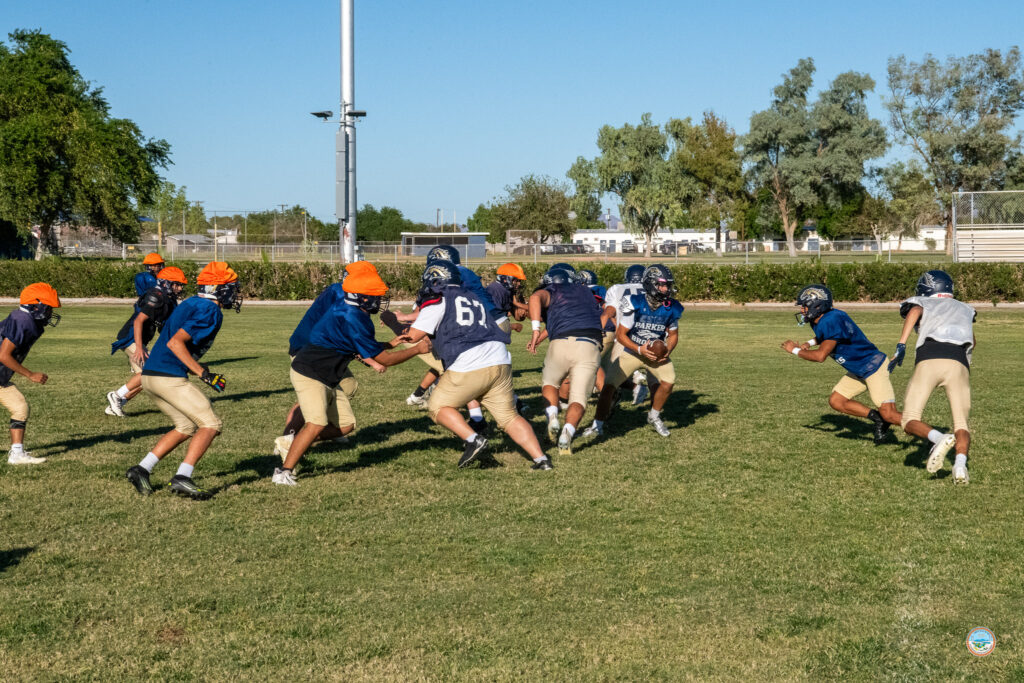
Hard Work, Brotherhood, and One Goal
Being undefeated means a lot to this group of young men. The work behind their 8-0 record started long before Friday nights under the lights. Players trained through Parker’s extreme heat, spent hours lifting weights and conditioning, and continued working in the classroom to maintain the grades needed to compete.
During interviews with CRIT Media, one thing became clear: this is a TEAM.
When asked to describe their teammates and what has made this season special, the players gave many of the same answers: brotherhood, family, and best friends. Their similar responses reflected the bond they have built through long practices, workouts, wins, and challenges together.
That bond was just as noticeable while speaking with the team. The players were humble, polite, and proud to be Parker Broncs. Each showed respect for his teammates, coaches, and the game. While an undefeated record is something to celebrate, their focus remains on what is still ahead.
Their goal for the season is simple: keep winning and bring home the trophy. (more…)
Chairwoman Flores says CRIT And Tribal Governments must have a meaningful voice in decisions affecting the Colorado River and future generations
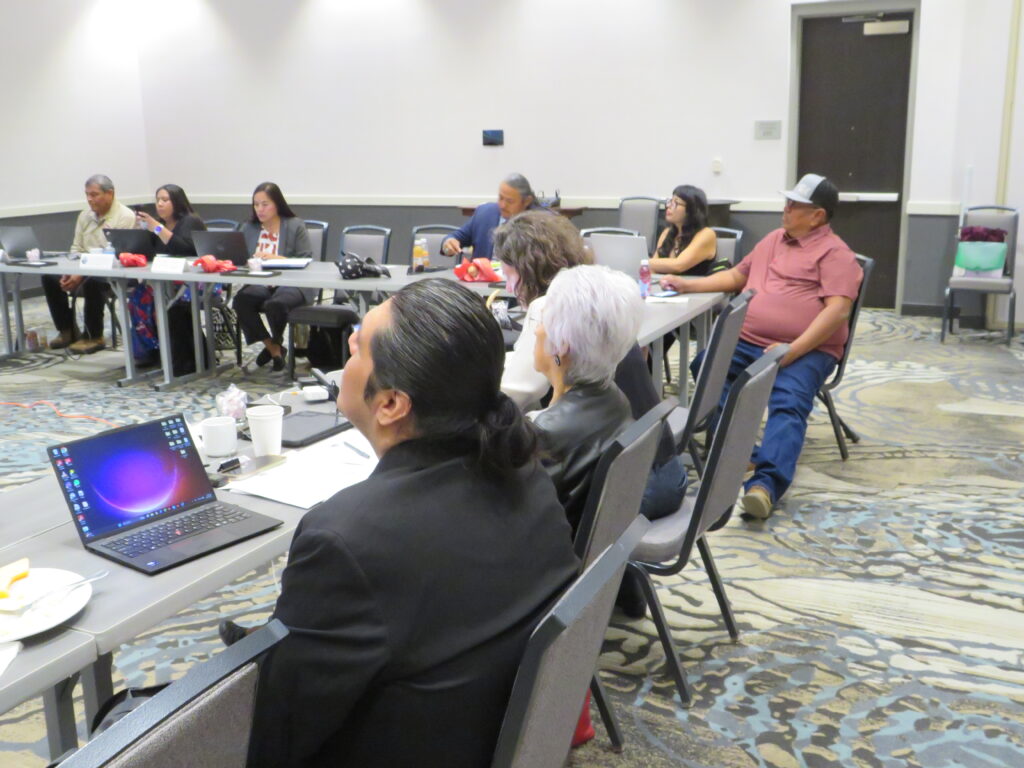
(SCOTTSDALE, Ariz.) Colorado River Indian Tribes leaders carried a message rooted in the Reservation’s past, present and future to the Ten Tribes Partnership meeting Wednesday: CRIT’s water rights must be protected, and tribal governments must have a meaningful voice in decisions shaping the Colorado River.
CRIT Chairwoman Amelia Flores chaired the October 14 meeting, joined on site by Tribal Councilmember Tommy Drennan. CRIT water attorney John Bezdek and other CRIT Tribal Council members participated remotely. CRIT’s presentation outlined the legal protections surrounding CRIT’s water rights and concerns about federal proposals that could threaten them.
With river levels declining and demand continuing to grow, Flores said tribal governments cannot remain on the sidelines as decisions are made about how the Colorado River is managed.
“We need to be included. We have the solutions,” Flores told representatives of the other tribes.
She said tribal leaders have spent years fighting for a meaningful role in Colorado River negotiations—decisions with direct consequences for CRIT lands, resources and future generations.
“I think we got a small corner of the room,” Flores said. “We’re allowed in, but yet we still are not at the table.”
Bezdek’s presentation focused on CRIT’s longstanding water rights, which were recognized by the U.S. Supreme Court in the landmark Arizona v. California decision in 1963 and the subsequent 1964 decree.
Those rights date to the establishment of the Colorado River Indian Reservation in 1865, predating Arizona statehood and the creation of the Bureau of Reclamation.
“Because at CRIT, we are not a contractor, our water rights predate the Bureau of Reclamation,” Bezdek said.
He explained that CRIT’s water rights are not subject to evaporation and transportation losses that can apply to other Colorado River water users.
At the center of CRIT’s concern are Bureau of Reclamation proposals to spread shortages proportionally among water users, regardless of their established rights. Bezdek said those “pro rata” reductions could erode the priority system that protects senior water rights, including CRIT’s.
Bezdek said the Bureau of Reclamation has included the possibility of proportional reductions in two recent environmental reviews, despite objections from CRIT.
He argued that such reductions would violate the Supreme Court decree, undermine the Winters doctrine protecting federally reserved tribal water rights and raise constitutional concerns.
“It would basically just write it out of existence,” Bezdek said of the Winters doctrine, warning against abandoning the priority system during water shortages.
He said CRIT successfully pushed back against the latest proposal, resulting in federal acknowledgment that water shortages would be handled through voluntary agreements or, absent such agreements, the existing priority system.
Still, Bezdek said the repeated appearance of proportional reductions in federal planning documents is reason for concern.
“We continue to remain vigilant because we believe this will come back again,” Bezdek said.
He emphasized that the issue extends well beyond CRIT.
“This is not just a CRIT issue. This is not just a five tribes issue. This is every tribe,” he said.
For CRIT, protecting its water rights is only part of the challenge. The Tribes’ ability to put that water to use on the Reservation also depends on the aging Colorado River Indian Irrigation Project, which serves tribal agricultural lands in Arizona.
Authorized in 1867, it is the oldest Indian irrigation project in the United States. Bezdek said years of inadequate federal funding have left the system in serious disrepair, with irrigation efficiency estimated at approximately 56% to 58%, according to his presentation.
He explained that water lost through the inefficient system eventually returns to the Colorado River, benefiting other water users while limiting CRIT’s ability to fully use its entitlement.
“They were the beneficiaries of the Bureau of Indian Affairs chronically underfunding the project,” Bezdek said, referring to other water users.
CRIT has received a Bureau of Reclamation grant to study what it would take to modernize the irrigation system to 21st-century standards. (more…)