November 18, 2026 7:48 pm
CRIT Nation, Parker, AZ
November 18, 2026 7:48 pm
CRIT Nation, Parker, AZ

Water planning in the West is becoming less about one reservoir or one shortage rule and more about whether communities have the legal tools, infrastructure, and storage to manage a drier future.

Aug. 10 reporting continued to focus on Lake Mead after the reservoir reached its lowest level ever recorded. CBS 5 Arizona’s Family reported that Lake Mead dropped to 1,040.5 feet, below the previous record set in July 2022. The reservoir, created by Hoover Dam in the 1930s, remains one of the most important storage points on the Colorado River.

Lake Mead’s decline matters because it supports water deliveries to Arizona, California, Nevada, and Mexico. It also affects hydropower production and the broader operation of the river system. CBS 5 reported that if Lake Mead and Lake Powell fall below certain thresholds, hydropower production can stop, and water deliveries to downstream users can become harder to manage.

Popular Mechanics also reported on the power side of the Colorado River crisis, focusing on how lower water levels affect Hoover Dam and Glen Canyon Dam. The article explained that these dams depend on enough water elevation to push water through turbines. When reservoirs fall too low, the issue is not only reduced water supply. It is also whether the infrastructure can continue moving water and producing power the way it was designed to do.

At the same time, the federal Colorado River plan is leaving water agencies with short planning windows. KQED, through CalMatters, reported that Reclamation’s 10-year framework sets broad limits for managing Lake Powell and Lake Mead, but detailed operating plans may be issued every two years if the Basin states remain deadlocked. The article said that the level of uncertainty makes it harder for water agencies to plan major projects, conservation agreements, and long-term investments.

Groundwater was another major focus. Arizona Independent News Network, using reporting from the Arizona Center for Investigative Reporting, reported that a lawsuit over the Hualapai Valley groundwater basin could test Arizona’s authority to protect vulnerable rural water supplies. The lawsuit challenges the state’s ability to designate an Irrigation Non-Expansion Area, which limits new irrigated farmland while allowing existing farms to continue pumping.

According to the report, ADWR designated the Hualapai Valley basin as an Irrigation Non-Expansion Area in 2022 after a surge of out-of-state investment in land for new industrial-scale farms. Two investment firms sued, arguing that ADWR should have used Arizona’s standard rule-making process. A Maricopa County Superior Court judge agreed with the investors earlier this year, and ADWR has appealed.

The case matters beyond Hualapai Valley. If the ruling stands, it could take much longer for Arizona to create future Irrigation Non-Expansion Areas. That delay could give landowners more time to expand irrigation before restrictions take effect, increasing pressure on already stressed rural aquifers.

The University of Arizona Water Resources Research Center also highlighted a new study on water banking and groundwater security. The study looked at how managed aquifer recharge and water banking can help improve long-term water security in semi-arid regions. The research found that water banking can improve drought resilience, especially in aquifers that retain stored water well. It also emphasized the importance of policies that encourage long-term storage rather than quick recovery.

The Arizona Attorney General’s Office also announced early results from a groundwater agreement with Riverview Dairy in Cochise County. Attorney General Kris Mayes said the agreement has helped residents affected by declining groundwater levels in the Sulphur Springs Valley. The settlement includes $11 million for well drilling, water hauling, and groundwater access, along with commitments to fallow or transition 2,000 acres of irrigated farmland over 12 years to reduce groundwater use.

Those Arizona groundwater stories show how the water conversation is expanding beyond the Colorado River. As surface water becomes less reliable, more pressure can shift to groundwater. But groundwater rules are different across the state, and rural areas often have fewer protections than Arizona’s Active Management Areas.

Nevada is facing similar questions. Nevada Independent reported on a legal fight over water availability at the Tahoe-Reno Industrial Center, a major industrial and technology hub east of Reno. The dispute involves whether enough water is available to serve current and future development at the site, which includes major companies such as Tesla and Switch.

The Nevada case shows how water availability can affect economic development. Communities may want new industry, jobs, and tax revenue, but growth still depends on whether water supplies can support long-term demand.

California is also looking at long-term water security. NBC Palm Springs reported on a Sierra Nevada meadow restoration project designed to improve natural water storage. Crews are restoring nearly three miles of the West Walker River and surrounding floodplains at Pickel Meadow, north of Yosemite. The goal is to help the meadow absorb snowmelt and release water more slowly into rivers and streams.

Fox Weather reported that monsoon storms were bringing needed rain to parts of the Southwest and Rockies, including areas of Colorado facing extreme and exceptional drought. The rain may help some areas in the short term, but it does not solve the larger Colorado River problem. The system depends heavily on mountain snowpack, runoff, and long-term reservoir storage. (more…)

On August 7th, reports along the basin were mostly about Lake Mead’s record-low level becoming the clearest sign yet that the Colorado River negotiations are no longer just about future planning.

CNN reported that Lake Mead, the nation’s largest reservoir, reached a new record low. The reservoir is a key part of the Colorado River system, supplying water to Arizona, California, Nevada, and Mexico while also supporting hydropower and downstream deliveries from Hoover Dam.

The new low came as Lower Basin states continue responding to Reclamation’s Final Environmental Impact Statement for future operations at Lake Powell and Lake Mead. Arizona Capitol Times reported that Arizona, California, and Nevada are bracing for possible reductions under the federal framework. The Lower Basin states have urged Reclamation to adopt their May proposal, which calls for 3.2 million acre-feet of water savings over two years, including 1.25 million acre-feet of binding reductions in both 2027 and 2028 and at least 700,000 acre-feet of additional conservation.

The federal plan has left Arizona leaders concerned that the state could face deeper reductions than it believes are fair. The Upper Basin states — Colorado, Utah, Wyoming, and New Mexico — would not face the same mandatory cuts for now, which has added to the disagreement between the two basins.

Phoenix is also preparing for the possibility of a legal fight. ABC15 reported that the City of Phoenix has retained lawyers to help protect its Colorado River interests after the release of the federal plan. The Phoenix City Council met in executive session to discuss legal advice and possible options tied to post-2026 Colorado River operations.

The dispute is also reaching smaller parts of water management. KJZZ reported that Central Arizona Project leaders are questioning whether Arizona should keep helping pay for cloud seeding in the Rocky Mountains. CAP has helped fund upstream cloud seeding work since 2007 as part of a broader effort to add snow in key Colorado River watersheds.

The question now is political as much as technical. KJZZ reported that some CAP board members questioned why Arizona should keep funding work that may benefit Upper Basin states if those states are not required to take mandatory cuts. CAP staff said the program benefits the overall river system, even if it is difficult to track exactly how much of that water eventually reaches Arizona.

Environmental concerns also grew. CBS 5 Arizona’s Family reported that federal officials will not release cool water from Lake Powell this year to protect threatened native fish downstream in the Grand Canyon. The decision is meant to avoid putting additional pressure on already strained hydropower production at Glen Canyon Dam.

The issue involves the humpback chub, a threatened native fish in the Grand Canyon. Cool water releases in 2024 and 2025 helped prevent smallmouth bass from spawning below Glen Canyon Dam. Smallmouth bass are an invasive predator that can threaten native fish when warmer water allows them to survive and reproduce downstream.

The decision shows how low reservoir levels can force tradeoffs between power generation, river ecology, and species protection. As Lake Powell declines, federal officials are trying to protect hydropower and dam operations while also managing risks to native fish and downstream habitat.

Conditions in the Upper Basin are also strained. The Colorado Sun reported that Blue Mesa Reservoir, the largest reservoir in Colorado, is about one-quarter full. Federal officials are watching reservoirs like Blue Mesa because they may be used to help protect Lake Powell from dropping to critical levels under the new federal framework.

KUNR reported that summer monsoon storms may ease drought in some parts of the West, but they will not solve the Colorado River’s larger supply problem. The river depends heavily on mountain snowpack and runoff, and one season of rain does not erase years of declining reservoir storage. (more…)

August 6th reports showed the Colorado River debate moving on several fronts at once: Arizona is pushing back against deeper federal cuts, rural groundwater protections are being tested, Tribal water infrastructure remains unsettled, and Upper Basin communities are seeing worsening drought conditions.

Arizona officials are still responding to the federal government’s Final Environmental Impact Statement (ICS) for future Colorado River operations. The Arizona Republic reported that Congressman Greg Stanton called the federal plan a “failure of leadership” and said Arizona is pushing for smaller reductions than the framework allows. The federal plan could require Arizona, California, and Nevada to share major cuts after 2026, while Upper Basin states would rely mostly on voluntary conservation for now.

KAWC Yuma Public Radio reported that Yuma water attorney Wade Noble is closely following the negotiations. Yuma agriculture depends heavily on Colorado River water, and future rules affecting Lower Basin supplies could have consequences for growers, irrigation districts, and the local economy.

Some Arizona communities are telling residents they do not expect immediate changes. The Arizona Daily Star reported that Tucson Water customers are not expected to see immediate impacts under the river cutback plan. Tucson has spent years storing Colorado River water underground and developing a mix of supplies, including reclaimed water and groundwater management.

Groundwater policy also remained a major issue. Arizona Center for Investigative Reporting reported that a lawsuit over the Hualapai Valley groundwater basin could test Arizona’s authority to protect vulnerable rural groundwater supplies. The lawsuit challenges the state’s ability to designate the basin as an Irrigation Non-Expansion Area, one of Arizona’s few tools for limiting new agricultural groundwater pumping in rural areas.

Tribal water rights also stayed in focus. Navajo Times reported that the Navajo water settlement has advanced in the Basin but is facing a funding wall in Congress. The settlement is tied to water infrastructure and long-term access for Navajo communities. It also reflects a larger issue across the Colorado River Basin: legal rights still require funding, infrastructure, and federal action before water can reliably reach homes and communities.

Conditions in the Upper Basin continued to worsen. Colorado Public Radio reported that Colorado River communities are looking for new ways to respond as reservoir levels fall. The Colorado Sun reported that the river hit a “bleak” new low near Palisade, straining supplies for fish and farms. NBC 9 News Denver reported that Denver Water’s largest reservoir is down 20 feet and expected to keep dropping.

Southern Utah News reported that the federal Colorado River plan is putting renewed focus on Lake Powell’s future. Lake Powell remains central to power generation, releases through Glen Canyon Dam, and the larger operation of the river system.

The reports show how much is still unresolved. Arizona is pushing for smaller cuts. Yuma agriculture is watching the negotiations closely. Tucson is pointing to stored water and long-term planning. Rural groundwater protections are being tested in court. Tribal water settlements still need funding. Upper Basin rivers and reservoirs are showing the strain of drought.

The next federal step remains the Record of Decision and operating guidelines. Those documents will determine how the framework is applied for 2027 and 2028, including how much water Arizona, California, and Nevada may be required to conserve.

What does this mean for CRIT?

The reports show why federal shortage rules, agriculture, groundwater, and Tribal water infrastructure all belong in the same conversation.

CRIT holds senior Colorado River rights and is not in the same position as junior-priority Central Arizona Project users. Still, Arizona’s push for smaller cuts, Yuma’s concern over Lower Basin negotiations, and the focus on agricultural impacts are relevant because CRIT is also a major agricultural water user along the Colorado River. (more…)

Aug. 5 reporting showed how the federal Colorado River framework could reach beyond city water supplies and into Tribal Nations, agriculture, recreation, and the Grand Canyon itself.

KTAR reported that lower flows through the Grand Canyon are creating problems for wildlife and commercial boating. The report said commercial boating on the Colorado River through the Grand Canyon is a nearly $50 million-a-year industry. Lower releases from Glen Canyon Dam, combined with dry conditions, have reduced flows through one of the river’s most visible stretches.

The concern is not only economic. KTAR reported that warmer, lower water has also created conditions that can affect river ecology, including invasive smallmouth bass and algae growth. The Grand Canyon is part of the same river system that supplies cities, farms, Tribal Nations, and ecosystems throughout the Basin.

Tribal Nations are also watching the federal framework closely. KNAU reported that the new Colorado River plan is creating concern and uncertainty for some Tribal Nations in Arizona. The report noted that some Tribes hold senior rights to Colorado River water, but the effect of future federal rules may vary depending on each Tribe’s legal settlement, infrastructure, and connection to the Central Arizona Project.

KNAU reported that some Tribal water rights in Arizona remain unquantified, including parts of the Navajo Nation’s claims. The report also discussed the White Mountain Apache Tribe, whose settlement includes Central Arizona Project water. Tribal leaders and legal experts told KNAU that future CAP reductions could raise questions for Tribes that rely on CAP deliveries or lease CAP water.

For Arizona cities, the picture is different. KJZZ reported that many cities will likely receive less Colorado River water, but they do not expect taps to run dry. Cities have spent years building backup supplies through groundwater storage, Salt River supplies, reclaimed water, infrastructure projects, and water-transfer agreements.

KJZZ reported that Gilbert is drilling new wells to access groundwater. Tucson has also pointed to decades of planning. KGUN reported that Tucson has used reclaimed water, protected groundwater, imported Colorado River water, and stored water underground to prepare for future reductions. Tucson Water officials said the city is not expected to run out of water, but water will likely become more expensive to provide.

Other communities are also reviewing their options. CBS 5 Arizona’s Family reported that towns and cities are looking at how they will get water if Colorado River cuts move forward. Surprise has said its water future remains secure despite uncertainty, while Scottsdale has said it can maintain water service because of its mix of supplies, stored water, and long-term planning.

Agriculture remains one of the clearest pressure points. Fox 10 reported that Arizona farmers warned Colorado River cuts could raise prices on food and everyday goods. The report focused on Caywood Farms near Casa Grande, which has already lost Central Arizona Project water from earlier shortages and is also dealing with limited local canal supplies.

Arizona Department of Agriculture Director Paul Brierley told Fox 10 that Yuma produces a large share of the leafy greens sold in the United States and Canada during winter. He warned that deeper cuts could affect rural counties that depend on agriculture.

The broader federal framework remains unsettled. Aspen Public Radio reported that Reclamation’s plan is meant to keep Lake Powell and Lake Mead infrastructure operating while the states continue trying to reach a long-term agreement. High Country News reported that the framework could be updated every two years and could require steep Lower Basin cuts, while Upper Basin states rely on voluntary conservation for now. (more…)

Arizona opened August with strong pushback to the federal government’s new framework for managing the Colorado River after 2026.

The Bureau of Reclamation’s Final Environmental Impact Statement lays out a 10-year framework for future operations at Lake Powell and Lake Mead. The current operating rules expire after 2026, and the seven Basin states have not reached a long-term agreement on how future shortages should be shared.

Under the federal framework, Arizona, California, and Nevada could face mandatory reductions in Colorado River use. The Department of the Interior said the plan allows Lower Basin shortages of up to 3 million acre-feet, depending on reservoir conditions. The Upper Basin states — Colorado, Utah, Wyoming, and New Mexico — would not face mandatory reductions for now.

Arizona officials and water leaders criticized that approach, saying it places too much of the burden on the Lower Basin and especially on Arizona. Fox 10 reported that the Central Arizona Project, which delivers Colorado River water to central and southern Arizona, raised concerns that the federal framework could lead to deeper cuts for the state. CAP serves cities, farms, and Tribal communities through its 336-mile canal system.

Several Arizona leaders said the state has already conserved significant amounts of Colorado River water and should not be forced to carry the largest share of future reductions. KNAU reported that Arizona officials called on Upper Basin states to do more to share the burden, while Upper Basin officials argued that drought and reduced snowpack already limit the amount of water available to them.

Central Arizona Project President Terry Goddard also criticized the federal plan. KTAR reported that Goddard said the plan requires Lower Basin states to cut water use while Upper Basin states face no mandatory reductions. CAP said it expects the final operating guidelines for 2027 and 2028 to better reflect the Lower Basin proposal, which would conserve more than 3.2 million acre-feet of water through 2028.

The issue is especially important for Arizona because cuts to Colorado River water would not affect every community the same way. ABC15 reported that reductions would hit Valley cities unevenly because Central Arizona Project water is delivered under a priority system. Some communities have stronger priority, stored water, other supplies, or Tribal water leases that may help reduce the impact. Others could be more exposed.

Phoenix said it is prepared for possible Colorado River reductions because of conservation, underground storage, diverse supplies, and long-term infrastructure planning. The city has also joined regional water-sharing efforts meant to help Arizona communities manage shortages.

Infrastructure is becoming a larger part of the state’s water planning. KJZZ reported that Salt River Project opened the Gilbert Road Pipeline, a $25 million project that will help Valley cities access stored groundwater during dry times. The pipeline connects water stored near the Granite Reef Underground Storage Project to the Arizona Canal, making it easier for cities to recover water they banked for shortage conditions.

The SRP project also involved the Salt River Pima-Maricopa Indian Community. KJZZ reported that the pipeline crosses part of the community near Mesa, and President Martin Harvier spoke at the ribbon-cutting, connecting the project to the long history of canal systems in the Valley.

Lake Powell remains one of the biggest concerns. KTAR reported that the reservoir could lose the ability to generate hydropower as early as March 2027 if water levels continue to fall. Glen Canyon Dam provides power for millions of people across the Southwest, and low reservoir levels can also affect dam infrastructure, releases through the Grand Canyon, and downstream operations. (more…)

The final days of July brought the clearest picture yet of how the federal government may manage the Colorado River after 2026.

The Bureau of Reclamation released its Final Environmental Impact Statement for future operations at Lake Powell and Lake Mead, setting up a 10-year framework for managing the river through 2036. The current operating rules expire after 2026, and the Basin states have not reached a long-term agreement on how future shortages should be shared.

The federal framework does not settle every question. Instead, it gives Reclamation room to adjust operations over shorter periods as river conditions change. The Department of the Interior said the preferred alternative allows for annual Lake Powell releases between 5 million and 12 million acre-feet, Lower Basin shortages of up to 3 million acre-feet, and new options to store conserved water in Lake Powell and Lake Mead for future use.

For Arizona, the proposal carries serious consequences. The Associated Press reported that Arizona, California, and Nevada would share reductions under the federal plan, while the Upper Basin states would not face mandatory cuts for now. The Lower Basin could be required to reduce use by up to 3 million acre-feet annually through 2036, depending on river conditions.

Arizona officials pushed back quickly. Gov. Katie Hobbs called parts of the federal framework unacceptable, and the Arizona Department of Water Resources said reductions of up to 3 million acre-feet per year, in priority, would harm Arizona water users and the state economy. ADWR said it wants the final Record of Decision and operating guidelines to follow the May 1 Lower Basin Proposal, which includes shared reductions among Arizona, California, and Nevada of 1.25 million acre-feet each year, plus 700,000 acre-feet of system conservation water.

Central Arizona Project also responded to the FEIS, saying future rules must recognize Arizona’s existing rights and the realities of how Colorado River water is used in the state. CAP delivers Colorado River water to central and southern Arizona, including cities, agriculture, and tribal users. Any major reduction to CAP supplies would affect communities differently depending on their water priority, stored supplies, and access to other sources.

Arizona communities were already preparing before the FEIS was released. KJZZ reported that Salt River Project opened the Gilbert Road Pipeline, a $25 million project that will help Valley cities access stored groundwater during dry times. The pipeline connects underground storage near the Granite Reef Underground Storage Project to the Arizona Canal, making it easier for cities to recover water they stored for shortage conditions.

That project also involved the Salt River Pima-Maricopa Indian Community. KJZZ reported that the pipeline crosses a portion of the community near Mesa, and President Martin Harvier spoke at the ribbon-cutting, connecting the project to the long history of canal systems in the Valley.

Stored water and infrastructure are becoming more important as cities look for backup supplies. City of Phoenix officials said the city is prepared for potential Colorado River cuts because of its diverse water portfolio, conservation work, underground storage, and investments in infrastructure. Other Arizona cities are also turning to conservation, including turf conversion programs and water-saving rebates.

In Queen Creek, local reporting said turf conversions are saving water and money. Fox 10 reported that Gilbert residents are seeing higher water rates, showing how water planning costs are reaching household budgets. KTAR reported that Kearny expects its current water supply to last through this year, but 2027 remains uncertain.

Drought conditions also continued across Arizona. Payson Roundup reported that Arizona has been designated a drought disaster area, while other local reports showed concern in rural communities that rely on limited supplies or groundwater. These conditions show how water shortages are not only a Colorado River issue. They also affect small towns, farms, local utilities, and private well users.

Lake Powell remained one of the most urgent concerns. KTAR reported that Lake Powell could lose the ability to generate hydropower by early 2027 if water levels continue to fall. CBS 5 Arizona’s Family also reported that the Colorado River crisis threatens both water supply and hydropower for millions of people. Low reservoir levels affect more than storage. They can affect dam operations, electricity generation, water deliveries, and the ability to manage future dry years.

Scientists are also working to better understand how much water is being lost from the system. Colorado Public Radio and KUNR reported that researchers are expanding evaporation monitoring across the Colorado River Basin. The work is meant to give water managers better information about how much water is lost from reservoirs and other parts of the system, an issue that becomes more important as Lake Mead and Lake Powell remain low.

The pressure is being felt outside Arizona as well. Nevada Independent reported that Nevada could lose a significant share of its Colorado River water under the federal framework, while Las Vegas-area reporting focused on conservation and what continued cuts could mean for Southern Nevada. California outlets reported that future Colorado River reductions could affect Southern California water planning, including agencies that depend on Colorado River supplies.

Public concern is also rising. A Walton Family Foundation poll found that residents across all seven Basin states view shrinking Colorado River supplies as a priority. KJZZ reported that Arizonans are worried about water and want elected officials to respond. Those findings reflect what many local water stories showed throughout July: the Colorado River issue is no longer limited to technical negotiations. It is showing up in city budgets, water rates, infrastructure projects, agriculture, energy, and household concerns.

By the end of July, the federal FEIS became the main turning point. It did not end the negotiations, but it set the stage for the next federal decision. Reclamation will still issue a Record of Decision and operating guidelines, which will provide more detail on how the framework will be used. (more…)

Thai Yang, Broadband Director for the Colorado River Indian Tribes, is helping lead an exciting new chapter for connectivity across the CRIT community.

Yang has served with CRIT for the past two years, bringing with him a strong background in information technology, network systems, infrastructure deployment, and strategic project management. Before joining CRIT, he held technology leadership roles in hospitality, resort operations, and casino infrastructure, including more than 15 years as IT Director at Glen Ivy Hot Springs and earlier experience helping launch technology systems at Morongo Casino Resort & Spa.

“At CRIT, that experience now supports my mission to strengthen broadband infrastructure, improve digital access, and create long-term opportunities that will benefit current and future generations of our Tribal community,” Yang said.

As Broadband Director, Yang oversees the planning, funding, development, and implementation of broadband infrastructure projects across Tribal lands. The Broadband Department is responsible for securing grants, coordinating engineering and construction, managing vendors and consultants, meeting funding requirements, and preparing for future broadband growth.

For many people, broadband simply means internet access, but Yang explained that broadband is much more than that.

“Broadband is more than just connectivity—it is the foundation for education, healthcare, economic growth, public safety, and communication,” he said.
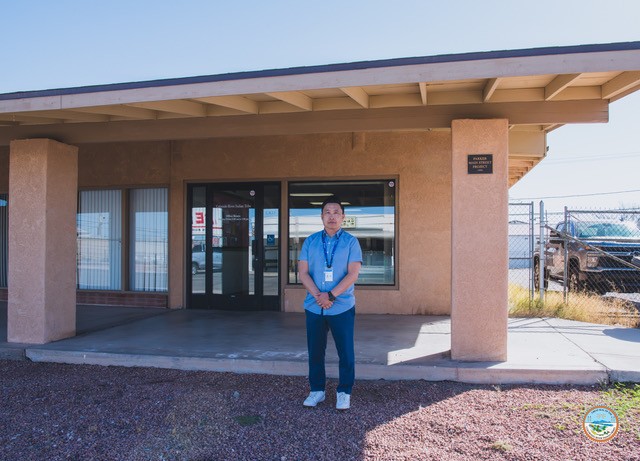
For the CRIT community, reliable broadband has the potential to improve daily life in many ways. Students can benefit from online learning and educational resources. Families can stay better connected and access important services. Elders may have greater access to telehealth and healthcare resources. Local businesses can grow through online services and e-commerce, while Tribal departments can improve operations, communication, and public service delivery. (more…)

If you’ve seen this missing child, please click this link below to help locate her.

https://www.missingkids.org/poster.print.html/NCMC/2084582/1

As CRIT Media approaches this year’s first newspaper, we’re inviting the community to help us celebrate the amazing mothers in our lives this Mother’s Day.
If you’d like to honor a special mom, you can submit her photo along with a short message sharing why she means so much to you and what makes her an incredible mother. Her photo and bio will be featured in the upcoming Manataba Messenger Newspaper.

As part of this celebration, we’re also offering complimentary family portrait sessions in our Media studio for any selected participants who would like to take part or you can send us a photo with a summary explaining why you are nominating this special mom for Mothers Day!

The deadline for entering is May 1st.
Please email critmedia@crit-nsn.gov to nominate a special mother!

The prolonged drought combined with the lowest winter snowpack on record is requiring swift actions to protect this vital water system  

WASHINGTON – Long-term drought has reduced Colorado River system storage to about 36 percent of capacity, and the combination of the lowest snowpack on record and record-breaking March heat has further intensified drought conditions across the Basin. These compounding factors are creating elevated risks to essential water and power infrastructure that supply water to more than 40 million people, underscoring the need for immediate action.

Lake Powell’s water year minimum probable inflow is forecasted at just 2.78 million acre-feet—29% of historical average and one of the lowest on record. Reclamation’s April “24 Month Study” projects Lake Powell may decline to below 3,490 feet—the minimum power pool level—by August 2026 without major intervention. If Glen Canyon Dam declines below 3,490 feet, water releases would be only through the river outlet works, which could cause operational issues, uncertainty for users, downstream impacts, instability in regional power and water supplies, and a reduction in power generation.

Secretary of the Interior Doug Burgum met with Governors for the seven basin states, Arizona, California, Colorado, Nevada, New Mexico, Utah and Wyoming, and their designees again today to discuss the concerning hydrology and plans for operations.

“I am grateful for the Governors and their teams working diligently to find a solution to the complex challenges created by these unprecedented drought conditions which require immediate action,” said Interior Secretary Doug Burgum. “Interior and Reclamation continue to coordinate with the basin states, tribes, Mexico and basin stakeholders as we make the decisions necessary to operate and protect the system.”

To stabilize the system, Reclamation is moving quickly and initial plans include adding up to about 2.48 maf of water to Lake Powell by moving water from the upstream Flaming Gorge Reservoir and by reducing releases from Lake Powell.

Through the 2019 Drought Response Operating Agreements, Reclamation is intending to release 660,000 acre-feet to 1 maf from Flaming Gorge Reservoir from April 2026 through April 2027. In addition, Reclamation is intending to reduce the annual release volume from Lake Powell to Lake Mead by 1.48 maf—from 7.48 maf to 6.0 maf—through September 2026 by utilizing section 6E of the Record of Decision from the final 2024 Supplemental Environmental Impact Statement for near-term Colorado River Operations.

Together, these actions are expected to increase Lake Powell’s elevation by approximately 54 ft to at least elevation 3500 feet by April 2027. Through the current, ongoing DROA process, the basin states, tribes and partners continue to provide feedback related to the proposed releases. A final decision will be coming next week.

Flaming Gorge Reservoir now holds about 3.1 maf of water, which is 83% full. These actions are expected to lower the reservoir’s elevation by roughly 35 feet over the next year to approximately 59% of capacity. This will have no effect on contracted water rights at Flaming Gorge or Lake Powell. No additional releases from the other upstream initial units of the Colorado River Storage Project Act—Blue Mesa and Navajo reservoirs—are planned at this time, due to their low water levels and poor forecasted inflows.

“Given the severity of the risks facing the Colorado River system, it is imperative that we take action quickly to protect a resource that supplies water to 40 million people and supports vital agricultural, hydropower production, tribal, wildlife, and recreational uses across the region,” said Assistant Secretary — Water and Science Andrea Travnicek. “As we weigh current conditions and prepare for future operations by working with states, tribal nations and stakeholders, the Department of the Interior and Reclamation remain fully committed to taking the actions necessary to reduce impacts on water deliveries, safeguard critical infrastructure, and preserve as much operational flexibility as possible.”  (more…)