By Ariana Romero
Reporter, CRIT Media
As 2025 comes to a close, new reporting shows Colorado River negotiations narrowing toward what many leaders describe as a final window for agreement, while local water solutions and long-term risks continue to take shape across the Southwest.
ABC15 Arizona reports that Colorado River states may only have one last realistic chance to reach a deal before federal intervention becomes unavoidable. With existing guidelines set to expire and reservoir conditions still fragile, officials warn that failure to compromise soon could lead to decisions being imposed rather than negotiated.
CBS 5 Arizona’s Family highlights what is at stake specifically for Arizona as talks drag on. The report notes that unresolved negotiations could affect everything from water deliveries to long-term planning for cities, tribes, agriculture, and industry, reinforcing why Arizona leaders are under pressure to help move talks forward.
Several opinion pieces stress the need for compromise in the Upper Basin. Phys.org and the Imperial Valley Press argue that without meaningful concessions, negotiations risk collapse, deepening divisions among states and prolonging uncertainty across the Basin.
At the local level, attention turned to Rio Verde Foothills, a community that famously ran out of water. The Arizona Republic, CBS 5, and AZ Big Media report that a permanent water solution has now been secured, ending years of uncertainty. However, the Arizona Republic notes that questions remain about the long-term cost of that solution, underscoring the financial realities of securing water in unregulated areas.
Water policy and development pressures remain closely linked. The Daily Independent reports that Valley water officials are urging legislators to invest more heavily in water resources, while opinion pieces from Nevada question whether the continued expansion of data centers is compatible with long-term water sustainability.
Conditions on the river itself remain mixed. Newsweek reports on how Lake Mead’s water levels changed throughout 2025, showing modest gains at times but continued overall vulnerability. Meanwhile, CBS News warns that Colorado is facing its worst snowpack on record for this point in the season, a troubling signal for future Colorado River flows, though experts say late-season storms could still offer some relief.
Despite tensions, collaboration remains a recurring theme. An opinion from the University of Colorado Boulder notes that Colorado River discussions continue to bring together unlikely partners through forums like the Colorado River Water Users Association, even as disagreements persist. Another Colorado Sun opinion stresses that public access to rivers and responsible stewardship must remain part of broader water policy discussions.
Together, these reports show a Basin approaching a crossroads. With negotiations nearing a critical moment, local water fixes highlighting real costs, and climate signals raising alarm, decisions made in the months ahead will play a major role in shaping the future of the Colorado River.
Sources
As the year comes to a close, new reporting underscores how unresolved negotiations, worsening climate impacts, and continued growth are colliding across the Colorado River Basin.
The Lake Havasu News-Herald reports that federal officials are demanding compromise from Basin states as water shortages deepen. Despite repeated warnings, states remain divided, prompting stronger signals that the federal government may intervene if agreements are not reached soon.
Several opinion pieces question long-held assumptions about water security. The Sun City Independent argues that Arizona’s promise of “assured” water is increasingly disconnected from reality, while national commentary emphasizes that decades of overuse and delayed action have left little room for error.
Weather extremes continued to dominate headlines. The Los Angeles Times reports that Southern California experienced its wettest Christmas holiday on record, highlighting the growing drought-to-deluge cycle driven by climate change. Despite heavy rain in some areas, drought conditions persist elsewhere, according to California and national drought summaries. In Colorado, the Denver Gazette reports snowpack levels are at the lowest ever recorded for this point in the season, raising serious concerns for future Colorado River flows.
Local and regional responses remain mixed. The Payson Roundup reports progress on water system improvements in Star Valley and a brief return to normal rainfall in Payson, though officials caution that short-term relief does not change long-term conditions. In Nevada, the Las Vegas Review-Journal reports that rapid growth in Las Vegas is continuing despite the Colorado River crisis, intensifying concerns about sustainability.
Across the Basin, journalists and experts reflected on the year’s biggest water stories. Aspen Journalism and Aspen Public Radio highlight how climate change is worsening drought conditions and pushing leaders toward difficult decisions in 2026. National Parks Traveler reports that declining Colorado River flows are already affecting national park sites along the river, signaling broader environmental consequences.
Some coverage points toward potential paths forward. Fox 13 in Utah explores ideas aimed at easing water conflicts, while opinion pieces emphasize the need for compromise among Upper Basin states. The Sierra Club highlights how Indigenous knowledge and stewardship can play a key role in adapting to climate change and managing water more sustainably.
The Colorado River Indian Tribes Tribal Council has made a historic decision to protect the lifeblood of their Reservation. On November 6, 2025, the Council unanimously approved Resolution No. R-375-25, which proclaims the personhood status of the Colorado River under tribal law.
This resolution acknowledges the Colorado River as a living entity whose health and well-being are intrinsically linked to the well-being of the Colorado River Indian Tribes (CRIT) members. The Tribes’ deep-rooted connection to the river spans centuries, providing cultural identity, spiritual strength, food systems, and economic stability that continue to shape their community life today.
The resolution emphasizes the central role the river has played in defining the identity of the CRIT. It highlights that CRIT’s ancestors have preserved and protected these lands since before the establishment of the Colorado River Indian Reservation in 1865.
The Council underscores the crucial role the river plays in sustaining traditional practices, wildlife, and agriculture, including the federal irrigation systems authorized as early as 1867. Today, the Colorado River Indian Irrigation Project stands as a cornerstone of the tribal economy.
The resolution underscores significant legal milestones that acknowledged CRIT’s water rights. In the landmark 1964 and 2006 Arizona v. California U.S. Supreme Court decisions, the Tribes secured 719,248 acre-feet of water annually, ensuring their access to the river for generations to come.
By granting personhood to the River, the Tribal Council reaffirmed its sovereign duty to honor and protect it. This status mandates that the River’s well-being must be a priority in governance and decision-making moving forward.
As part of the resolution, the Attorney General and their staff will develop legal safeguards and propose updates to the CRIT Water Code and other relevant regulations. These updates may include the potential designation of the river as a protected cultural landscape.
Council members recognized that protecting the river is not merely a legal obligation but a continuation of cultural beliefs passed down through generations.
Through this declaration, CRIT demonstrates its unwavering commitment to stewardship. The resolution concludes with a resolute message: the Colorado River is, and will always remain, a vital entity deserving of respect, care, and protection for all future generations.
Article Written by CRIT Media Reporter Ariana Romero
News Update November 12, 2025
Negotiations over the future of the Colorado River have reached a standstill after all seven basin states failed to meet a key federal deadline. Reports from 12News and 8NewsNow confirm that the states were unable to agree on a new water-sharing plan, leaving the situation unresolved as the river continues to decline.
High Country News explains that the biggest disagreements involve how much each state should give up in the future. The upper Basin states want fewer mandatory reductions, while the Lower Basin states, including Arizona, say they have already taken the deepest cuts and cannot continue to absorb the majority of the impacts.
With no agreement in place, Arizona Governor Katie Hobbs has asked the Trump administration to intervene. She stated that Arizona has made significant sacrifices and cannot carry the weight of the reductions while other states refuse to commit to measurable cuts. If the states cannot reach a plan soon, the federal government may create one for them.
For the Colorado River Indian Tribes, the outcome of these negotiations has major importance. CRIT holds valuable senior water rights and relies on a stable and fair management plan to ensure long-term security for the community and the region.
For more information, you can read the news articles with the links below.
High Country News
https://www.hcn.org/articles/why-colorado-river-negotiations-are-so-difficult/
12 News
/wednesday-is-deadline-for-7-state-including-arizona-to-negotiate-the-colorado-river
The Colorado River Indian Tribes’ second annual General Sessions meetings gave Tribal Members a closer look at the programs, services, and projects serving their community. Two meetings, one at BlueWater Resort & Casino for members living on the reservation and another for members in the Phoenix area, drew strong attendance, with hopes of welcoming even more participants in the years ahead. Councilwoman Raeanne Patch has championed these annual fall gatherings as an opportunity to strengthen communication between Tribal Members and their government. Each year, a different group of departments is highlighted, giving members an informal overview of their responsibilities, services, and contributions to CRIT. Councilwoman Patch’s goal is for each featured department head to attend and present directly to the membership.
This year, the Environmental Protection Office outlined its water and air quality programs, while Fish and Game highlighted conservation, reservation patrols, and youth education. The Tribal Historic Preservation Office explained how monitors protect sacred sites, ancestral lands, and cultural resources on and off the reservation. Updates on Tribal finances, the new Head Start facility, and proposed health facilities provided a broader picture of current operations and future plans. CRIT Media highlighted its efforts to keep members informed through the Manataba Messenger, 4 Tribes One Mic podcast, and digital storytelling.
Agriculture was another highlight, with ’Amat Kuwley Farms showcasing its role in CRIT’s economic future and stewardship of Colorado River water. General Manager Joshua Moore oversees production while building relationships with customers domestically and internationally. The farm reported impressive production accomplishments and plans to expand cultivation across available farmland, putting CRIT’s senior Colorado River water rights to productive use while generating revenue for the Tribes. Its alfalfa serves high-profile clientele, including Saudi royalty and owners of Kentucky Derby racehorses, helping establish a reputation for premium quality on the world stage. Moore’s work reflects a long-term commitment to building an agricultural enterprise that supports generations of Tribal Members while helping safeguard CRIT’s water rights.
Members who missed this year’s meetings are encouraged to watch for flyers announcing the next gatherings in fall 2027. Thank you to Councilwoman Raeanne Patch for organizing these annual opportunities for members to learn, connect, and stay informed about the work happening across CRIT.

By Nicole Jennings
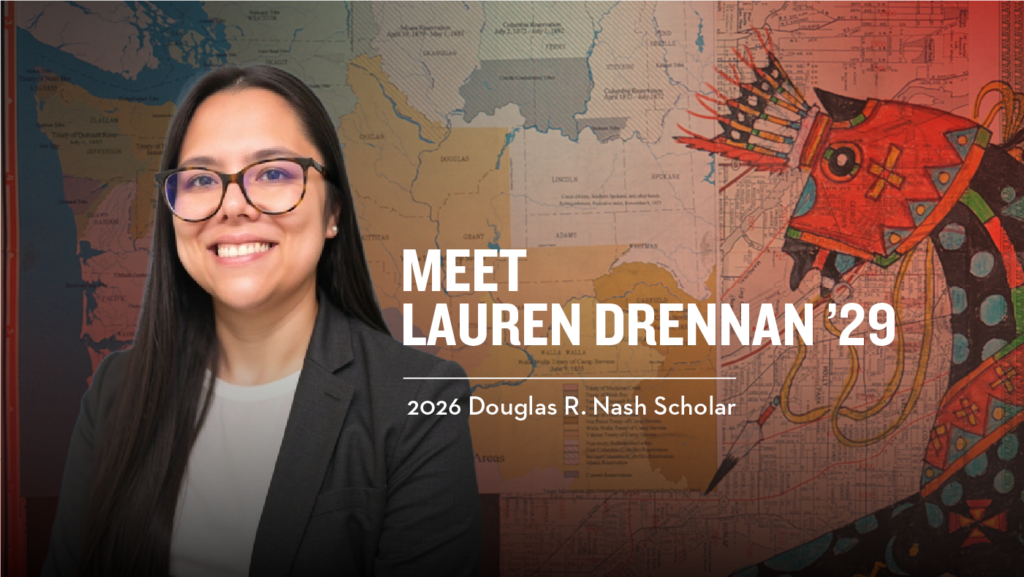
A decade after college, 1L and 2026 Nash Scholar Lauren Drennan’s strong ties to her Indigenous community led her to pivot in her career path.
Growing up on the Colorado River Indian Tribal (CRIT) lands in rural Arizona, Drennan had always planned to go into agriculture, even choosing a STEM path for her undergrad studies at the University of Arizona. A self-proclaimed “farm kid,” Drennan had participated in 4-H as a child and raised animals on her family’s property.
But returning home to her tribe through internships while earning her degree convinced her there was another path for her. The internships centered around community programs in areas such as environmental preservation and restoration.
“That’s where I found my passion, working for my community in these outreach programs,” Drennan said. “Those tribal internships saved me because getting to connect back to my home and finding that thing that made me happy felt like it clicked.”
Drennan’s hometown of Parker is small and tight-knit, with many of the other residents numbering among her relatives.
“The services I worked for were for community and my family,” she said, crediting her mentors in the region with instilling a sense of civic-mindedness within her.
She went on to spend 10 years after her undergrad and graduate studies at the CRIT Department of Health and Social Services, which provides a variety of tribal programs ranging from mental health to senior support to child protective services. Drennan held a variety of roles in that time, including interim director, deputy director, coordinator, grant writer, budget specialist, and even HR staffer. (more…)
Article written by CRIT Media Reporter Ariana Romero
The young men of the Parker Broncs football team have shown strength, endurance, and determination throughout an incredible season. The Broncs remain undefeated at 8-0, but tonight, there is even more on the line.
Parker will take on Arizona Lutheran Academy in a battle for the 2A Metro 2 region title. Both teams enter the matchup undefeated in region play, with the Broncs looking to protect their perfect season in their final home game of the regular season.
Tonight will also mark Senior Night, giving the Parker community an opportunity to recognize the seniors who will take their home field one more time. After years of practices, games, and representing Parker High School, the seniors have a chance to close out their final home game with a region title on the line.
Kickoff is set for 7 p.m. at Joe Bush Stadium, and the Broncs are hoping to see the community pack the stands, get loud, and bring the energy.

Hard Work, Brotherhood, and One Goal
Being undefeated means a lot to this group of young men. The work behind their 8-0 record started long before Friday nights under the lights. Players trained through Parker’s extreme heat, spent hours lifting weights and conditioning, and continued working in the classroom to maintain the grades needed to compete.
During interviews with CRIT Media, one thing became clear: this is a TEAM.
When asked to describe their teammates and what has made this season special, the players gave many of the same answers: brotherhood, family, and best friends. Their similar responses reflected the bond they have built through long practices, workouts, wins, and challenges together.
That bond was just as noticeable while speaking with the team. The players were humble, polite, and proud to be Parker Broncs. Each showed respect for his teammates, coaches, and the game. While an undefeated record is something to celebrate, their focus remains on what is still ahead.
Their goal for the season is simple: keep winning and bring home the trophy. (more…)
Chairwoman Flores says CRIT And Tribal Governments must have a meaningful voice in decisions affecting the Colorado River and future generations
(SCOTTSDALE, Ariz.) Colorado River Indian Tribes leaders carried a message rooted in the Reservation’s past, present and future to the Ten Tribes Partnership meeting Wednesday: CRIT’s water rights must be protected, and tribal governments must have a meaningful voice in decisions shaping the Colorado River.
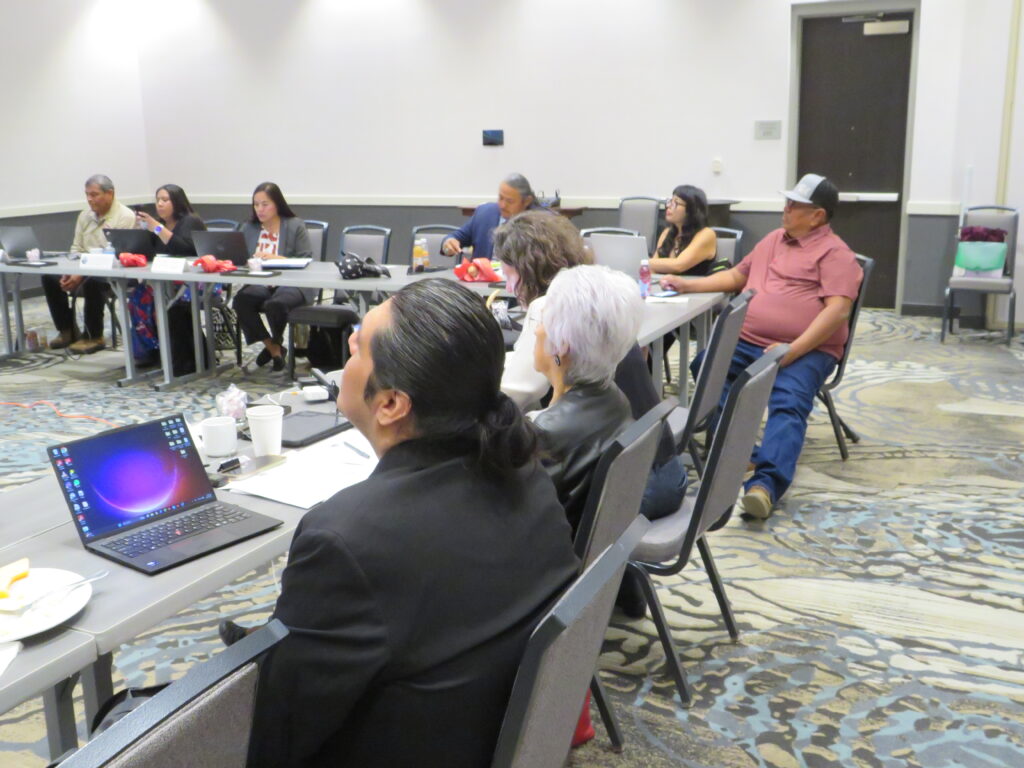
CRIT Chairwoman Amelia Flores chaired the October 14 meeting, joined on site by Tribal Councilmember Tommy Drennan. CRIT water attorney John Bezdek and other CRIT Tribal Council members participated remotely. CRIT’s presentation outlined the legal protections surrounding CRIT’s water rights and concerns about federal proposals that could threaten them.
With river levels declining and demand continuing to grow, Flores said tribal governments cannot remain on the sidelines as decisions are made about how the Colorado River is managed.
“We need to be included. We have the solutions,” Flores told representatives of the other tribes.
She said tribal leaders have spent years fighting for a meaningful role in Colorado River negotiations—decisions with direct consequences for CRIT lands, resources and future generations.
“I think we got a small corner of the room,” Flores said. “We’re allowed in, but yet we still are not at the table.”
Bezdek’s presentation focused on CRIT’s longstanding water rights, which were recognized by the U.S. Supreme Court in the landmark Arizona v. California decision in 1963 and the subsequent 1964 decree.
Those rights date to the establishment of the Colorado River Indian Reservation in 1865, predating Arizona statehood and the creation of the Bureau of Reclamation.
“Because at CRIT, we are not a contractor, our water rights predate the Bureau of Reclamation,” Bezdek said.
He explained that CRIT’s water rights are not subject to evaporation and transportation losses that can apply to other Colorado River water users.
At the center of CRIT’s concern are Bureau of Reclamation proposals to spread shortages proportionally among water users, regardless of their established rights. Bezdek said those “pro rata” reductions could erode the priority system that protects senior water rights, including CRIT’s.
Bezdek said the Bureau of Reclamation has included the possibility of proportional reductions in two recent environmental reviews, despite objections from CRIT.
He argued that such reductions would violate the Supreme Court decree, undermine the Winters doctrine protecting federally reserved tribal water rights and raise constitutional concerns.
“It would basically just write it out of existence,” Bezdek said of the Winters doctrine, warning against abandoning the priority system during water shortages.
He said CRIT successfully pushed back against the latest proposal, resulting in federal acknowledgment that water shortages would be handled through voluntary agreements or, absent such agreements, the existing priority system.
Still, Bezdek said the repeated appearance of proportional reductions in federal planning documents is reason for concern.
“We continue to remain vigilant because we believe this will come back again,” Bezdek said.
He emphasized that the issue extends well beyond CRIT.
“This is not just a CRIT issue. This is not just a five tribes issue. This is every tribe,” he said.
For CRIT, protecting its water rights is only part of the challenge. The Tribes’ ability to put that water to use on the Reservation also depends on the aging Colorado River Indian Irrigation Project, which serves tribal agricultural lands in Arizona.
Authorized in 1867, it is the oldest Indian irrigation project in the United States. Bezdek said years of inadequate federal funding have left the system in serious disrepair, with irrigation efficiency estimated at approximately 56% to 58%, according to his presentation.
He explained that water lost through the inefficient system eventually returns to the Colorado River, benefiting other water users while limiting CRIT’s ability to fully use its entitlement.
“They were the beneficiaries of the Bureau of Indian Affairs chronically underfunding the project,” Bezdek said, referring to other water users.
CRIT has received a Bureau of Reclamation grant to study what it would take to modernize the irrigation system to 21st-century standards. (more…)