September 24, 2026 2:17 am
CRIT Nation, Parker, AZ
September 24, 2026 2:17 am
CRIT Nation, Parker, AZ

Please follow the hyper link for Career Development Applications

Youth Service Application
CDO YOUTH SERVICES APPLICATION

Career Enhancement Program Application
CE Program Application

Higher Education Program Application
2025-2026 Higher Ed Application0001

Adult Vocational Training Program Application
2025-2026 AVT Application


The Colorado River Indian Tribes Tribal Council has made a historic decision to protect the lifeblood of their Reservation. On November 6, 2025, the Council unanimously approved Resolution No. R-375-25, which proclaims the personhood status of the Colorado River under tribal law.

This resolution acknowledges the Colorado River as a living entity whose health and well-being are intrinsically linked to the well-being of the Colorado River Indian Tribes (CRIT) members. The Tribes’ deep-rooted connection to the river spans centuries, providing cultural identity, spiritual strength, food systems, and economic stability that continue to shape their community life today.

The resolution emphasizes the central role the river has played in defining the identity of the CRIT. It highlights that CRIT’s ancestors have preserved and protected these lands since before the establishment of the Colorado River Indian Reservation in 1865.

The Council underscores the crucial role the river plays in sustaining traditional practices, wildlife, and agriculture, including the federal irrigation systems authorized as early as 1867. Today, the Colorado River Indian Irrigation Project stands as a cornerstone of the tribal economy.

The resolution underscores significant legal milestones that acknowledged CRIT’s water rights. In the landmark 1964 and 2006 Arizona v. California U.S. Supreme Court decisions, the Tribes secured 719,248 acre-feet of water annually, ensuring their access to the river for generations to come.

By granting personhood to the River, the Tribal Council reaffirmed its sovereign duty to honor and protect it. This status mandates that the River’s well-being must be a priority in governance and decision-making moving forward.

As part of the resolution, the Attorney General and their staff will develop legal safeguards and propose updates to the CRIT Water Code and other relevant regulations. These updates may include the potential designation of the river as a protected cultural landscape.

Council members recognized that protecting the river is not merely a legal obligation but a continuation of cultural beliefs passed down through generations.

Through this declaration, CRIT demonstrates its unwavering commitment to stewardship. The resolution concludes with a resolute message: the Colorado River is, and will always remain, a vital entity deserving of respect, care, and protection for all future generations.

Article Written by CRIT Media Reporter Ariana Romero

News Update November 12, 2025

Negotiations over the future of the Colorado River have reached a standstill after all seven basin states failed to meet a key federal deadline. Reports from 12News and 8NewsNow confirm that the states were unable to agree on a new water-sharing plan, leaving the situation unresolved as the river continues to decline.

High Country News explains that the biggest disagreements involve how much each state should give up in the future. The upper Basin states want fewer mandatory reductions, while the Lower Basin states, including Arizona, say they have already taken the deepest cuts and cannot continue to absorb the majority of the impacts.

With no agreement in place, Arizona Governor Katie Hobbs has asked the Trump administration to intervene. She stated that Arizona has made significant sacrifices and cannot carry the weight of the reductions while other states refuse to commit to measurable cuts. If the states cannot reach a plan soon, the federal government may create one for them.

For the Colorado River Indian Tribes, the outcome of these negotiations has major importance. CRIT holds valuable senior water rights and relies on a stable and fair management plan to ensure long-term security for the community and the region.

For more information, you can read the news articles with the links below.

8NewsNow
https://www.8newsnow.com/news/local-news/colorado-river-negotiations-fail-to-meet-federal-deadline-for-7-state-agreement/

High Country News
https://www.hcn.org/articles/why-colorado-river-negotiations-are-so-difficult/


ABC 15 News
https://www.abc15.com/weather/impact-earth/why-gov-katie-hobbs-wants-trump-administration-to-broker-colorado-river-deal


12 News
/wednesday-is-deadline-for-7-state-including-arizona-to-negotiate-the-colorado-river

CRIT recently welcomed KUNC News Reporter Alex Hager, who was interested in covering CRIT’s Personhood Status and why it is so important to the Colorado River Indian Tribes. Upon his visit, he interviewed Water Resource Director Dillon Esquerra, Councilwoman Anisa Patch, and Chairwoman Amelia Flores, each offering insight into why this initiative is vital for the tribe and future generations.
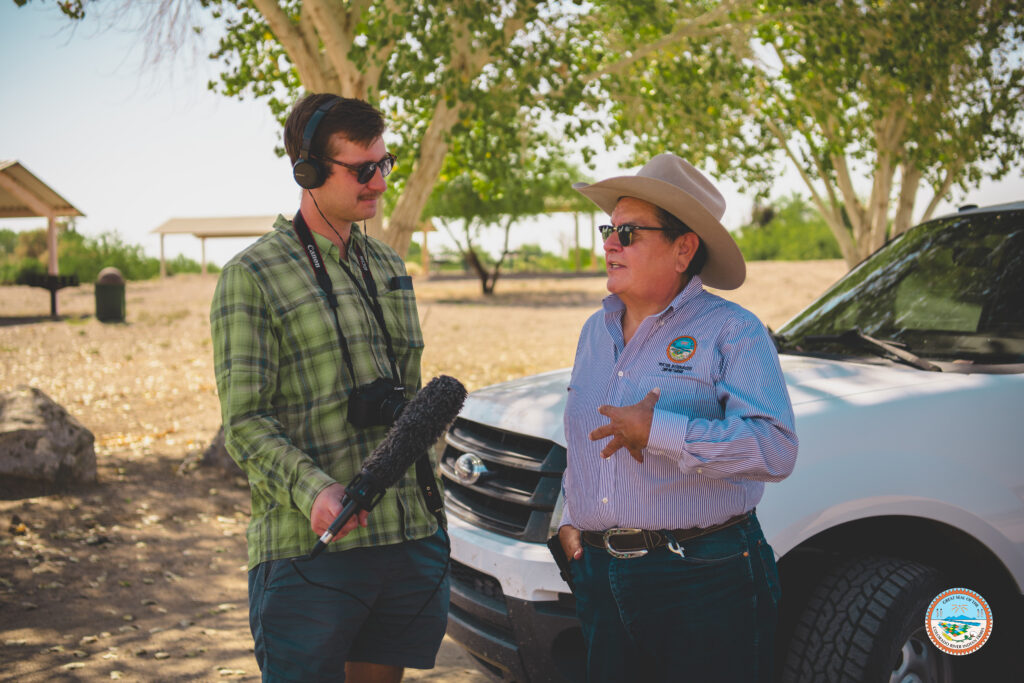
Dillon Esquerra

The day began with a visit to the Ahakhav Preserve, where Acting Director Marisol Chavira highlighted how the plants, trees, and natural environment are deeply connected to cultural traditions, from crafting gourds to the sacred use of wood in burials. Alex showed a great interest in learning about the cultural and historic roots of CRIT, and both Dillon and Marisol provided an in-depth explanation of the tribe’s connection to the land and river. Hager then toured Willow Beach, a scenic area of the Preserve, before continuing on to CRIT Chambers for interviews.
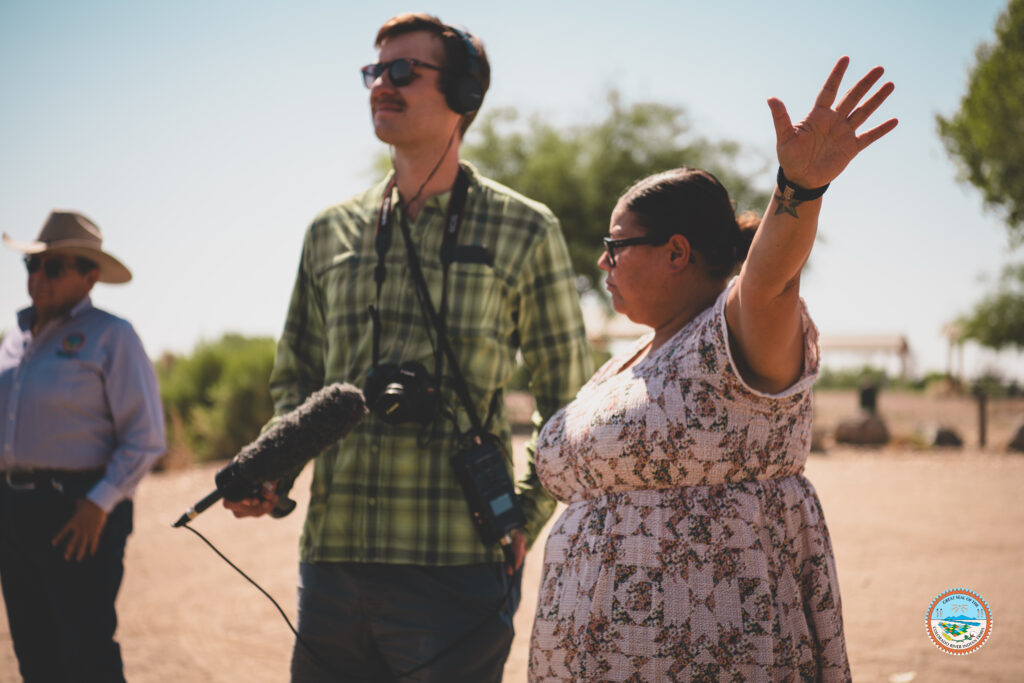
Marisol Chavira

Councilwoman Anisa Patch shared her perspective on the river’s personhood status, reflecting on her upbringing along the river and its role as a lifeline for tribal members. Chairwoman Amelia Flores further emphasized the importance, stating: “It is essential for us to take care of the river, to protect and defend it. We need to protect the river for future generations.”
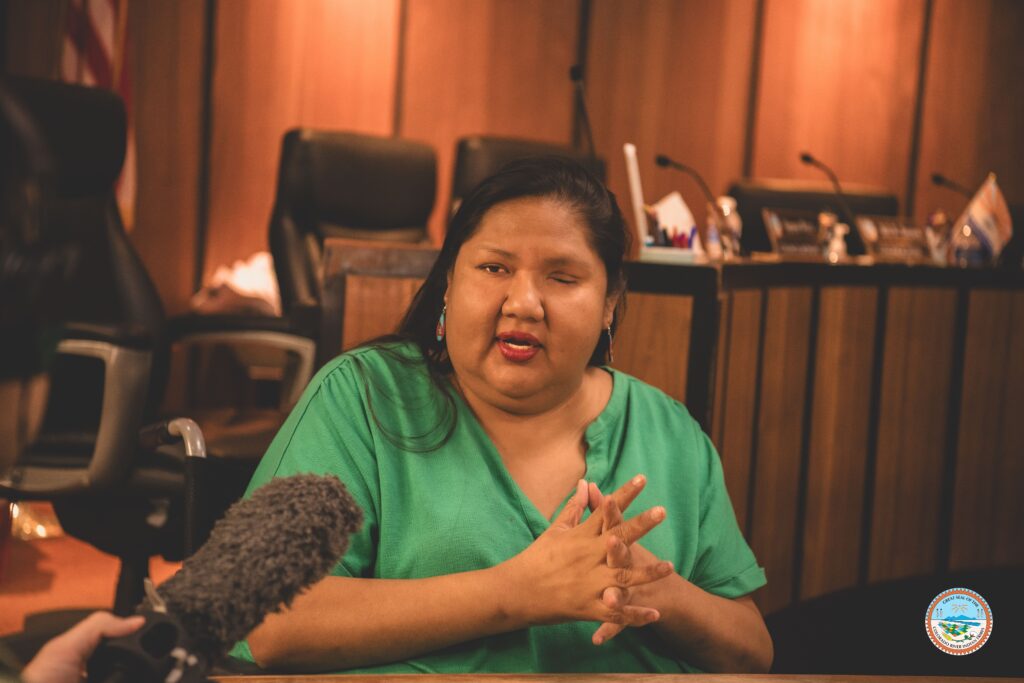
Anisa Patch

The Personhood status is currently being considered as CRIT tribal law, a groundbreaking step that would formally recognize the Colorado River as a living entity under the tribe’s governance. For CRIT, this is not only a legal step but it builds on the foundation of our beliefs, reflecting the longstanding cultural and spiritual commitment to the river, which has sustained the people, land and traditions for countless generations. Establishing Personhood Status will ensure CRIT beliefs are always held by all future council members and chair persons. This will be the foundation CRIT stands by and relies on when future tough decisions will need to be made about the river. Raising awareness about the personhood initiative is key. It allows both tribal members and the broader public to understand the importance of protecting the Colorado River, not just as a resource, but as a relative, a lifeblood, and a sacred responsibility.
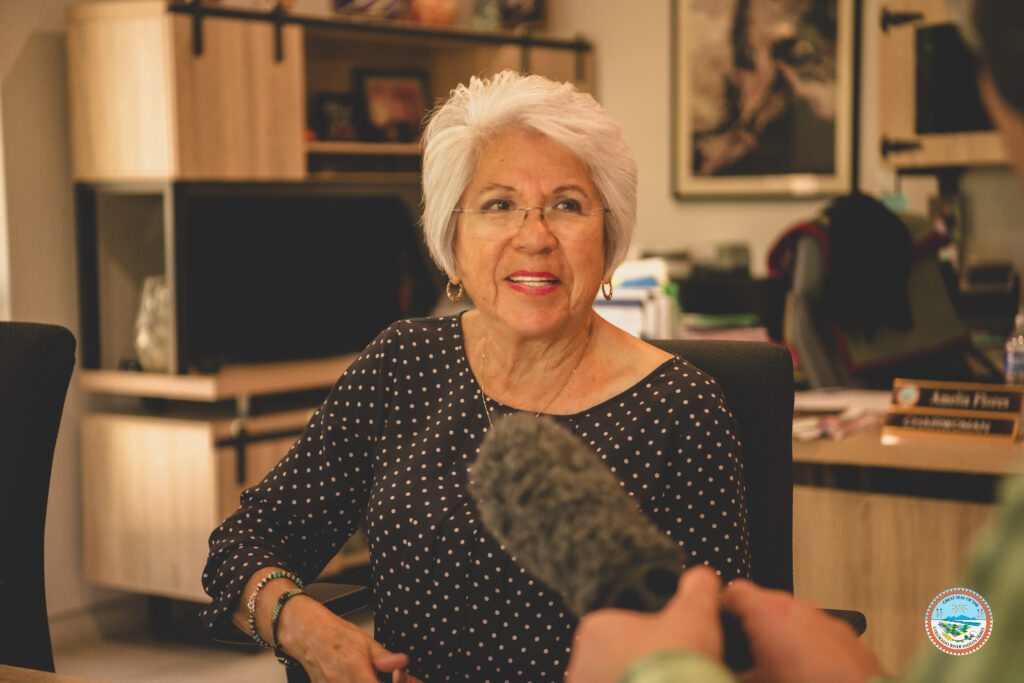
Amelia Flores

“We are the people along the river, Hamakhav. It’s within us, that’s who we are” says Chairwoman Flores.

Councilman Raeanne Patch provided additional details and context in a follow up interview with Alex detailing the importance of the Personhood Status.

To learn more, you can read Alex Hager’s full article or listen to his podcast at KUNC follow this link.
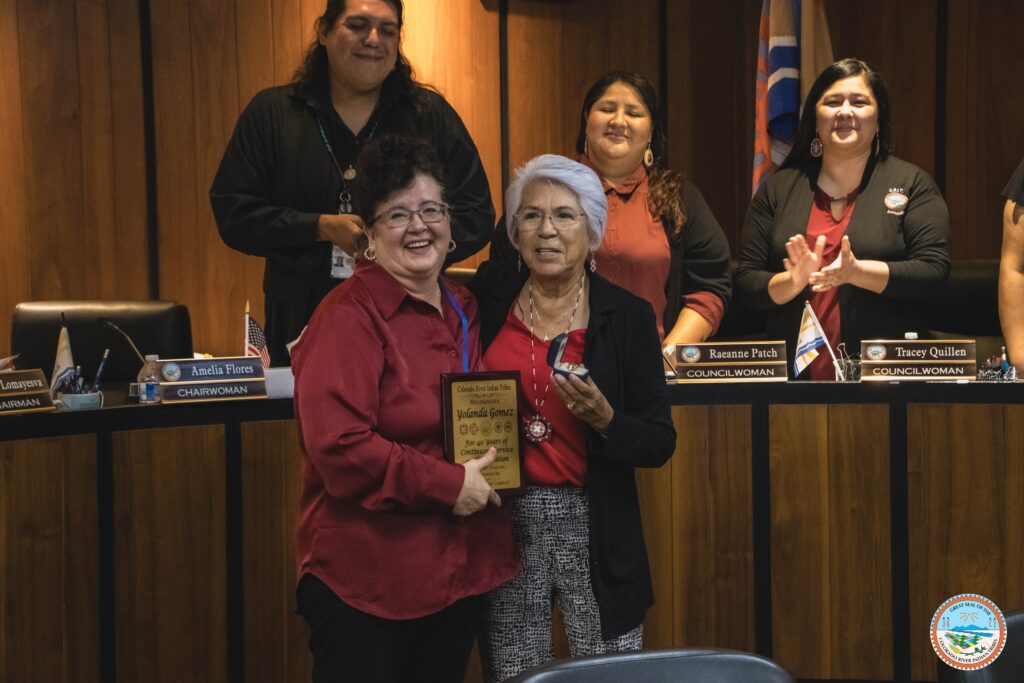
On behalf of CRIT we would like to congratulate Yolanda Gomez for 40 years of service and dedication.

Yolanda started her career with the Colorado River Indian Tribes on August 19, 1985 as Secretary with CRIT Farms.
In May of 1991, Yolanda transferred to Accounting as Enterprise Bookkeeper, and in 2008, she received a promotion to Senior Staff Accountant. Because of her expertise and dedication, “Yoli” as she is affectionately called, has also been appointed Acting Controller during times of need.

The Tribal Council and Human Resources Department thanks you for 40+ years of continued service to the Colorado River Indian Tribes.


COLORADO RIVER INDIAN TRIBES
DEPARTMENT OF HEALTH AND SOCIAL SERVICES
12302 KENNEDY DRIVE
PARKER, ARIZONA 85344
TELEPHONE (928) 669-6577
FAX (928) 669-8881

August 22, 2025
Notice to the Public:
The Colorado River Indian Tribes Department of Health and Social Services (DHSS) has received information that Mosquito Arbovirus Surveillance was conducted on the Colorado River Indian Reservation on August 19“’  & 20“’, 2025. This surveillance was conducted by the Parker Indian Health Service Office of Environment Health and Engineering (IHS;OEH&E) in partnership with the CRIT Environmental Protection Office (EPO).

There were mosquito pools that were tested for the presence of the West Nile Virus. One sample tested  Positive for the presence of the West Nile virus collected at the Poston, Arizona – 50 Homes site.  The best way to prevent infection is to avoid mosquito bites by taking precautionary measures to protect you and your family from dusk to dawn.
● Use an insect repellent and reapply as directed.
● Wear long-sleeved shirts and pants, covering arms and legs.
● Treat clothing and gear with repellant.
● Take steps to control mosquitoes indoors and outdoors, drain standing water
in flower pots, bird baths, or old tires.
● Keep doors and windows shut.

Eighty percent (80%) of people infected with WNV will not show any symptoms but we are asking the public to report any symptoms that you may be experiencing after a mosquito bite that you feel could be due to the  West Nile virus. Symptoms can be flu-like and can include: a fever, a headache, body aches, diarrhea, a rash, nausea and vomiting and can be mild or severe, and may last a few days to a few weeks. However, in  rare cases, severe illness can occur; that might include brain infections such as meningitis or encephalitis, paralysis or even death. There is no vaccine for the WNV in the United States, and there are no specific  treatments.

The 50 Homes area was treated in the early morning hours of Friday, August 22, 2025, by CRIT EPO, The Parker IHS OEH&E and CRIT EPO will continue to monitor the area as well as the surrounding areas for  West Nile virus activity to reduce the mosquito population.

● If you want to report an environmental issue such as standing water, please call the CRIT Environmental Office at 928-662-4336.
For any symptoms that you may be experiencing, please contact your primary care physician or visit  the Emergency Department or call the Parker Indian Health Services Public Health Nursing at 928- 669-213
● For more information on the West Nile virus, please visit this link.
You can also contact the Department of Health and Social Services at 928-669-6577, for more information
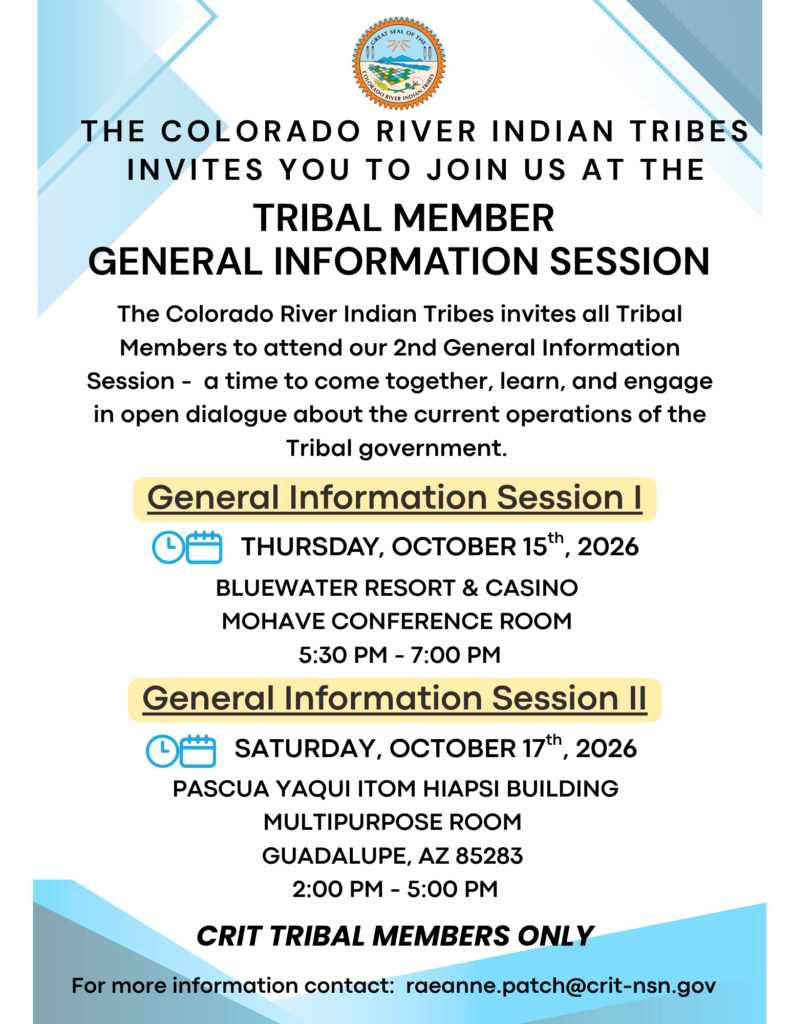
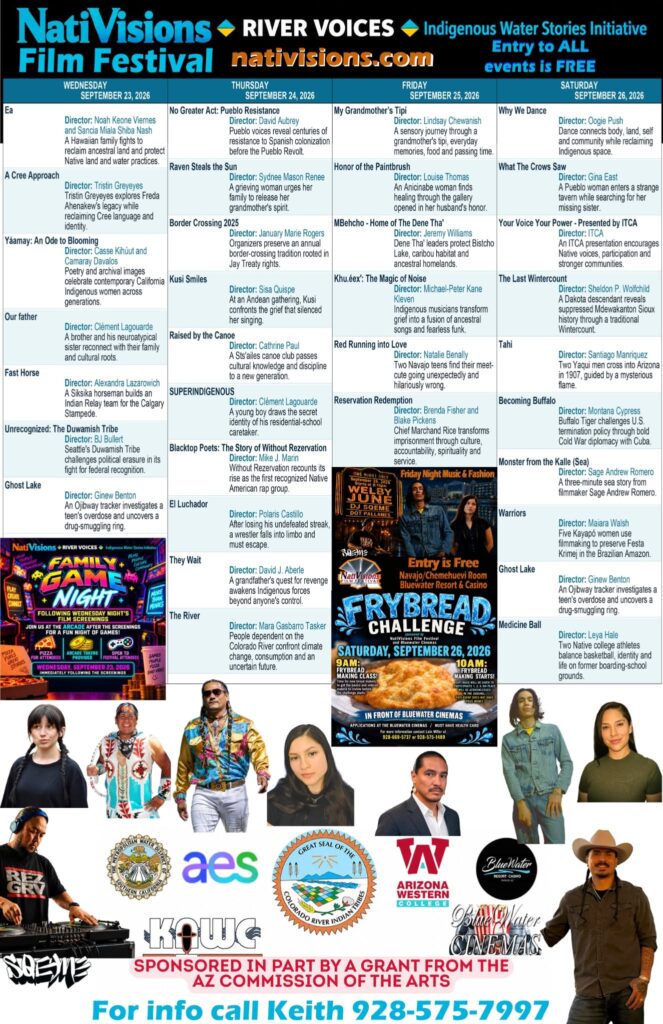
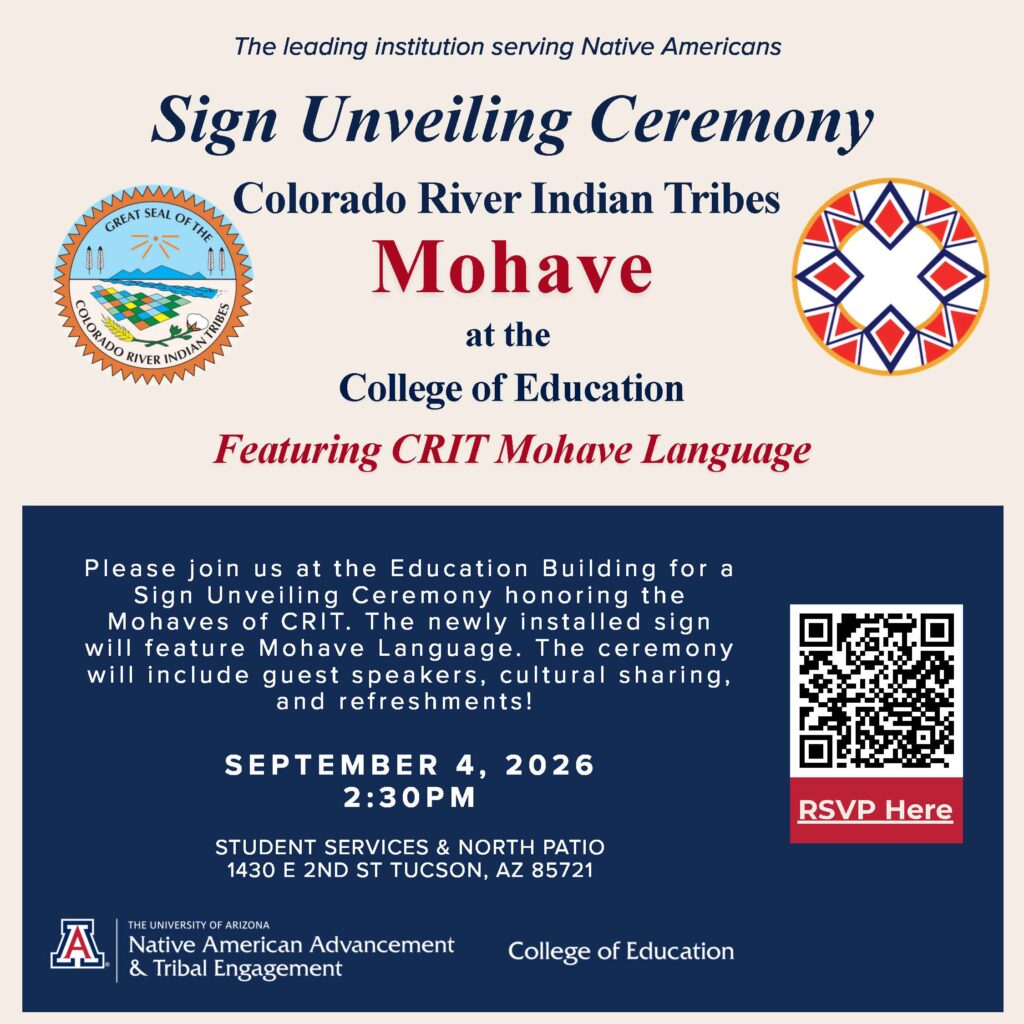
TUCSON, Ariz. — The University of Arizona will host a special series of sign unveiling ceremonies on Friday, September 4, 2026, honoring the four languages of the Colorado River Indian Tribes (CRIT): Mohave, Chemehuevi, Hopi, & Navajo. These ceremonies represent an important milestone in an ongoing campus-wide initiative to elevate the visibility, recognition, and continued presence of Indigenous languages and cultural heritage within the campus community.

The events are organized by the University of Arizona’s Office of Native American Advancement & Tribal Engagement (NAATE) in collaboration with individual academic colleges. Students, faculty, staff, tribal community members, and the general public are invited to attend the progression of ceremonies throughout the day.

The schedule for the Friday ceremonies includes:

  • 9:00 AM – Emil W. Haury Anthropology Building (1009 E South Campus Dr): Honoring the CRIT Chemehuevi language. The ceremony features a welcome and land acknowledgment from Levi Esquerra (Special Advisor, NAATE), a prayer by Eloy DeLeon, remarks from Clarissa Robles Parra on behalf of the Office of the Provost, and an address by CRIT Chairwoman Amelia Flores. Cultural sharing will feature the Salt Song(s) and Red Foot, followed by refreshments.
  • 10:30 AM – Environment and Natural Resources 2 (ENR2) Building (1064 E Lowell St): Honoring the CRIT Navajo language. Hosted by Liz Petterson, Associate Director, Arizona Institute for Resilience, alongside CRIT Chairwoman Amelia Flores, and a Navajo language representative featuring a traditional blessing and cultural demonstration.
  • 1:00 PM – Forbes Building (1140 E South Campus Dr): Honoring the CRIT Hopi language with remarks from Dr. Edward Martin (Associate Dean, CALES Cooperative Extension), Professor Sheilah Nicholas, and Dean George W. Smith.
  • 2:30 PM – College of Education Building (1430 E 2nd St): Honoring the CRIT Mohave language. The concluding sign unveiling of the day will include introductions by students, remarks from CRIT Chairwoman Amelia Flores, and a final cultural demonstration.

The celebration of Indigenous culture continues into the weekend with the Native American Heritage Game on Saturday, September 5, 2026. The Arizona Wildcats will face Northern Arizona at Casino Del Sol Stadium, with kick-off scheduled for 6:30 PM MST. Pre-game festivities at Bear Down Field will begin at 3:15 PM with the Bear Down Bash, featuring 18-minute cultural performances from each tribe. A traditional gift presentation will follow during the Wildcat Walk at 4:15 PM, leading up to an on-field tribal recognition ceremony during the second quarter of the football game.

For more operational schedules or to register for the unveiling events, please visit the official University of Arizona Event Page.