

Arizona Budget Proposal Includes Major Funding for Colorado River Protection
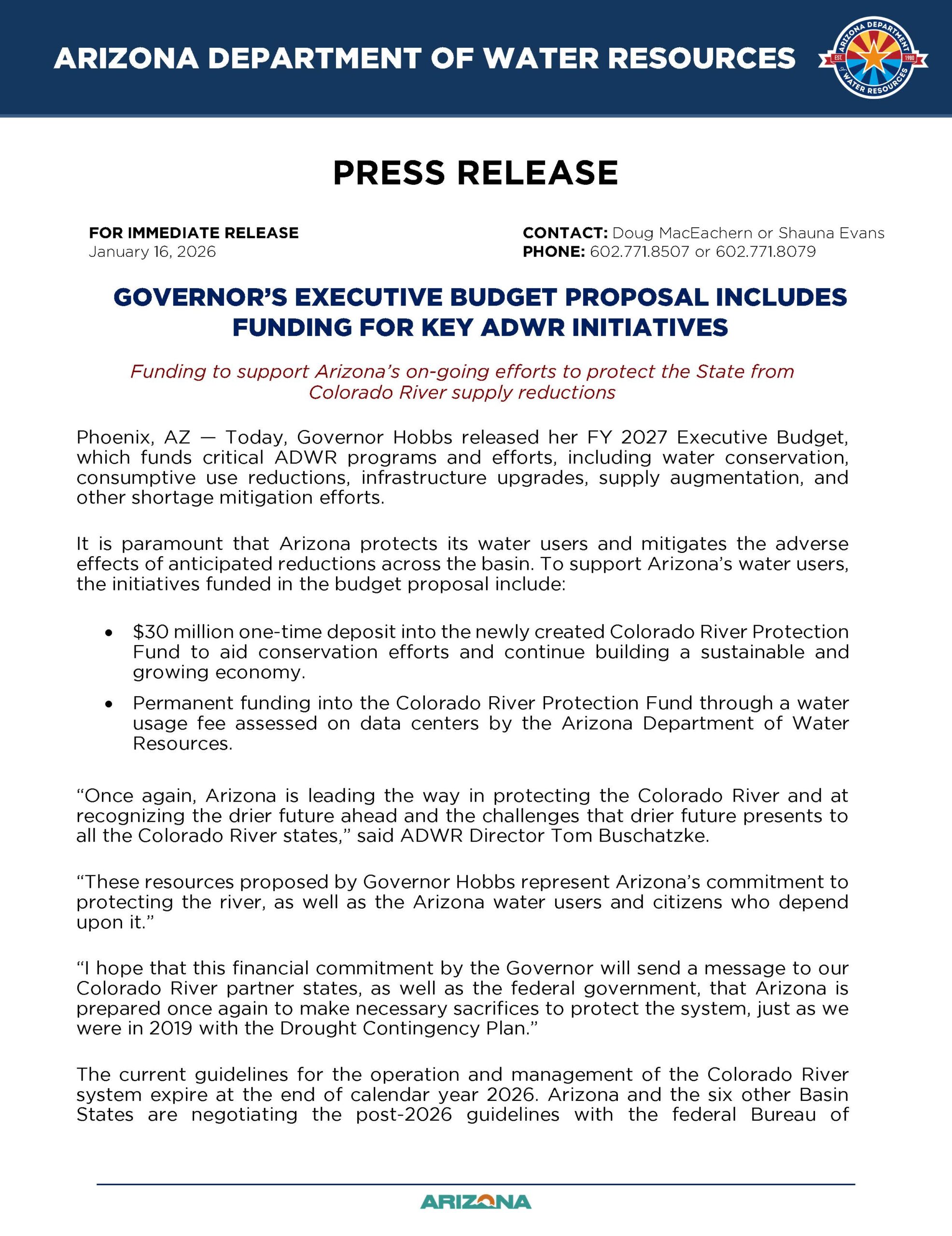
On January 16, 2026, the Arizona Department of Water Resources (ADWR) shared details of Governor Katie Hobbs’ FY 2027 Executive Budget Proposal focused on preparing for long-term challenges facing the Colorado River. The plan includes new and expanded funding aimed at strengthening water security across Arizona in the face of ongoing Colorado River shortages.
Key points from the budget related to water:
Source:
Arizona Water News https://azwaternews.com/2026/01/16/fy2027_execbudgetproposal/
Robert Esquerra started his career with the Colorado River Indian Tribes on October 18, 1999 as a EMT with CRIT Fire Department. In March of 2002 he went to Head Start as their maintenance worker. He then transferred to CRIT’s Department of Health and Social Services as a driver.
In 2004, Esquerra returned to the CRIT Fire Department as an EMT/Firefighter. In 2006 he was promoted to Captain for the Fire Department and in 2012 Esquerra was promoted to Assistant Fire Chief, the position he still holds today.
The Tribal Council and Human Resources Department thank Robert Esquerra for 25 years of continued service to the Colorado River Indian Tribes.

The Rock the Rez tour presented by CRIT ASAP (Alcohol Substance Abuse & Behavioral health services program) CRIT SDP (Special Diabetes Program), kicked off October 28th at Le Pera Elementary.. At Le Pera, the day began with a full court sprint and push up challenge, followed by a hoop shooting contest. The Reservation All-Stars basketball team gave out prizes to those who got the chance to participate. They also showcased their basketball skills on October 28th at the Irataba Hall Gym. The special diabetes program offered participants healthy food options and free tee-shirts.

CRIT Chairwoman Amelia Flores, Vice Chairman Dwight Lomayesva, and Councilmember Bobby Page attended a symposium on the Colorado River held in September in Santa Fe, New Mexico. The symposium’s theme was Bridging Divides for a Resilient Future.
Chairwoman Flores stated that anytime tribal nations can speak about their tribal water rights as conferences like this makes this a historical achievement. She further stated it was an honor to represent CRIT.
Chairwoman Flores was on a panel entitled Paradigm Shift: Inclusive Approaches to Moving Forward. Panelists included (pictured left to right) were moderator: Anne Castle, U.S. Commissioner, Upper Colorado River Commission; Bidtah Becker, Chief Legal Counsel for the Navajo Nation Office of the President and Vice President; Amelia Flores, Chairwoman Colorado River Indian Tribes; Timothy Williams, Chairman Ft. Mojave Indian Tribe; and Lorelei Cloud, Vice-Chair, Southern Ute Tribe.

Vice Chairman Dwight Lomayesva spoke on a panel called Perspective from the Field Agriculture for the Next Century. His panel included moderator Jennifer Gimbel, Senior Water Policy Scholar at the Colorado Water Center; Taylor Hawes, Colorado River Program Director for The Nature Conservancy; and Dwight Lomayesva, Vice-Chair, Colorado River Indian Tribes.
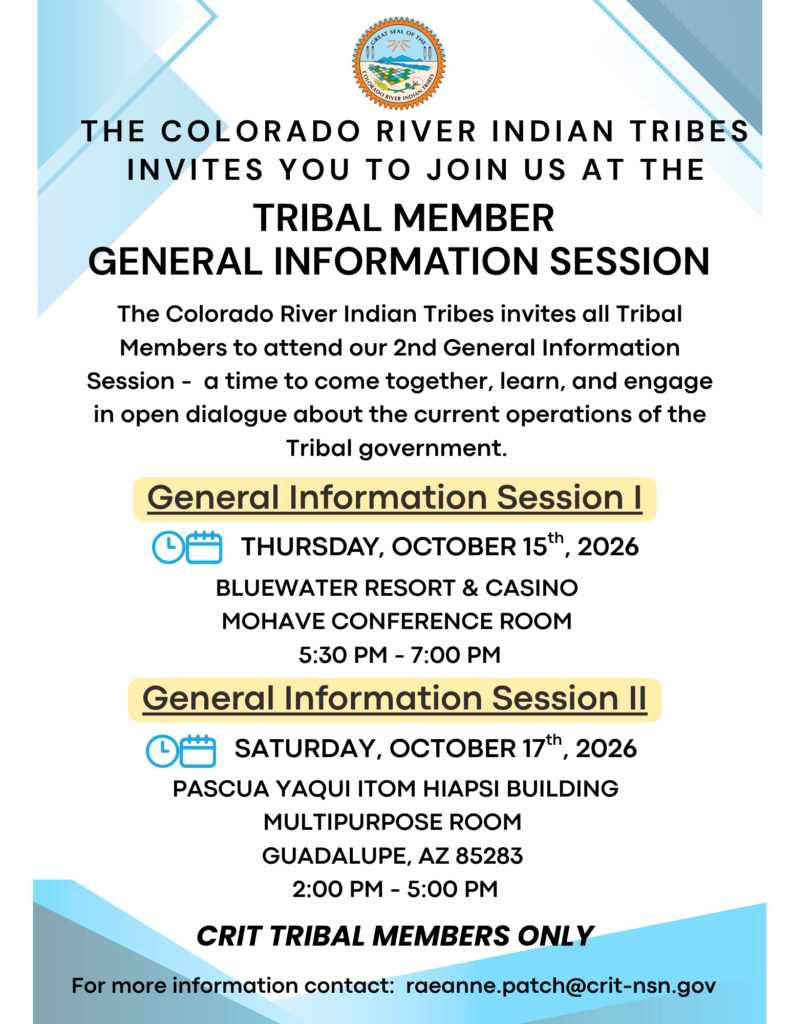
For a second time CRIT Chairwoman Amelia Flores and members of the Tribal Council provided updates, answered questions, and listened to concerns about issues surrounding Colorado River water.
About 80 people attended a meeting in August at the Blue Water Resort and Casino. In opening remarks Chairwoman Flores said, “We ae stewards of our river and that’s why we are here tonight.”
CRIT’s water attorney John Bezdek then updated tribal members on the status of potential water leasing made possible by a new federal law as well as enabling documents recently signed between CRIT, the State of Arizona, and the US Department of Interior. Bezdek stressed that CRIT has made no agreements to lease its water off reservation. Bezdek’s presentation stated, “Any potential lease, water storage agreement, or other off-reservation use of water will only occur, as required in the Referendum, after it has been approved by tribal council majority vote only after a public hearing.
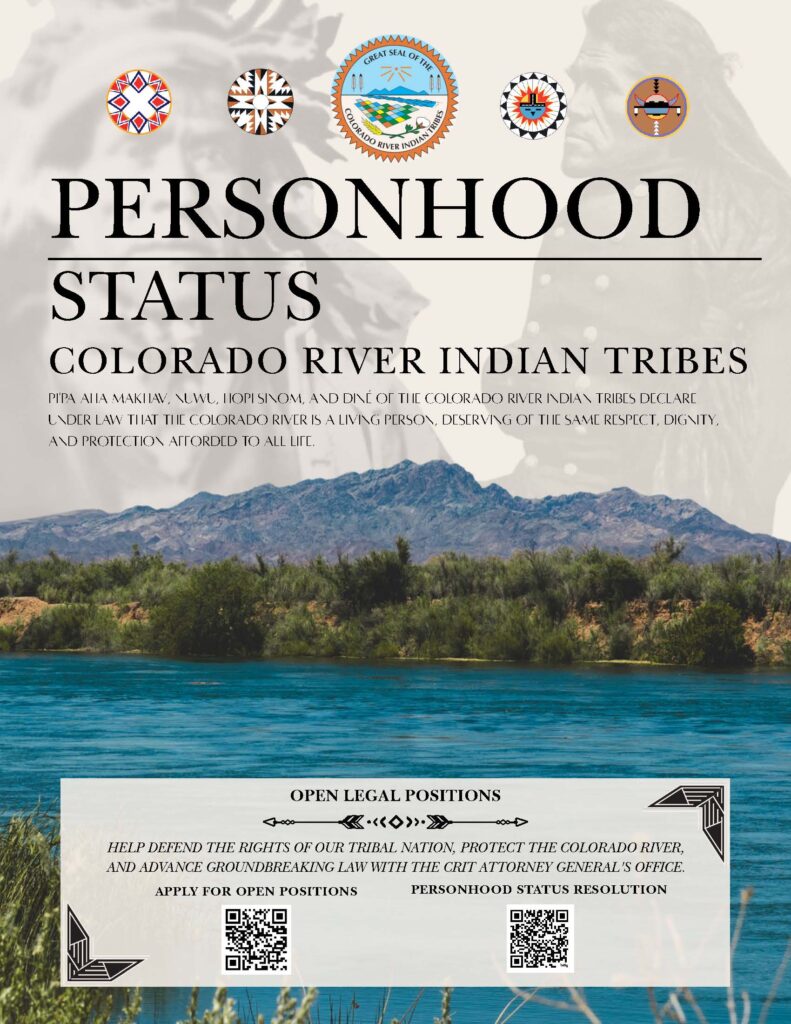
The Tribal Council is working diligently to ensure CRIT would get the best possible price in any water leasing agreement. As drought conditions persist, CRIT water becomes more valuable. That’s one of the reasons CRIT’s Tribal Council, its staff, and its legal team are working to protect CRIT’s SENIOR water rights. Recent legislation has greatly helped in that regard, but more can be done. That’s because agreements that manage the operations of the Colorado River expire in 2026.
Bezdek’s presentation states, “Tribal Council is actively engaged in meetings with federal and state officials as guidelines are developed for Colorado River operations post-2026 to ensure the Colorado River remains a living river while protecting the Tribes’ rights.”
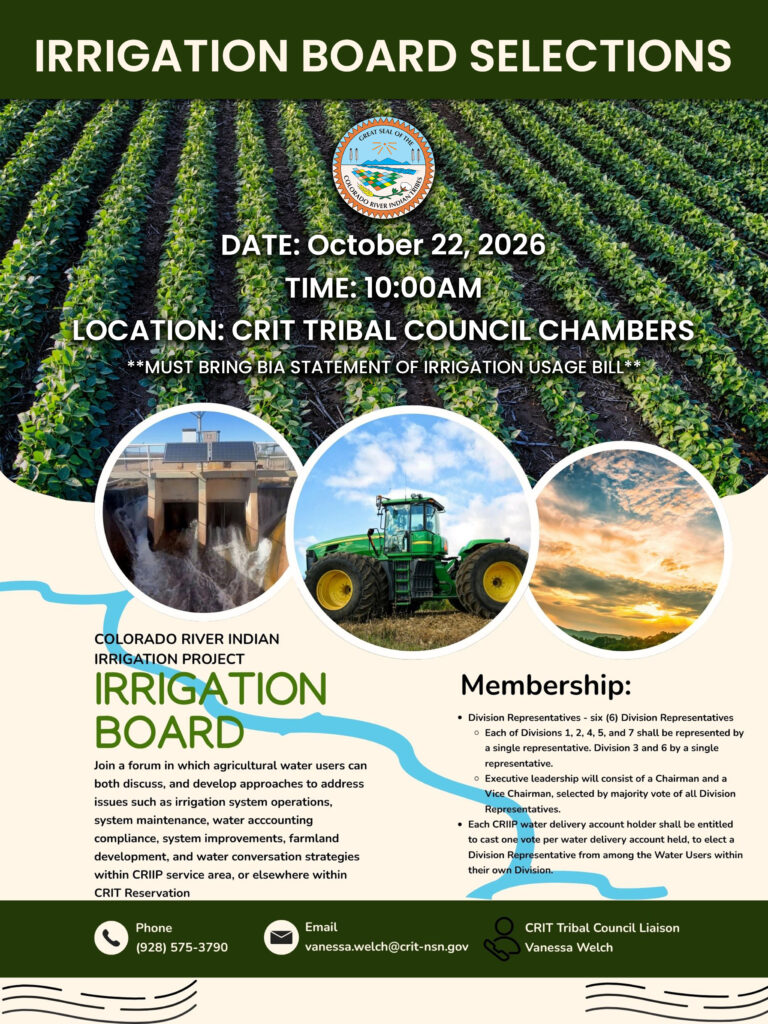
CRIT is also looking at all options to make its irrigation systems more efficient and to hold the BIA accountable for failing to do so.
The BIA irrigation project returns between 47% and 50% of the water diverted back to the Colorado River without being used. Most of the high return flow problems have been identified and solutions have been proposed, however, the BIA is NOT fixing the irrigation project. Leases will provide CRIT with funds to better capture this return-flow and increase project efficiency. This protects CRIT water from being taken in the future.
In response to a question, Tribal Councilmembers Jaymee Moore and Anisa Patch said the Tribal Council has been working to hold the BIA accountable at the local level and are now taking that effort to the next level by going higher up. (more…)