November 22, 2026 6:49 am
CRIT Nation, Parker, AZ
November 22, 2026 6:49 am
CRIT Nation, Parker, AZ

On a Proposed Ordinance to Amend
the Government Code
to Add an Article 6. Standard of Conduct and Ethics


Dates:
Thursday, November 14, 2024 at 5:30 P.M.
Saturday, November 16, 2024 at 1:00 P.M.
Monday, November 18, 2024 at 9:00 A.M.

Location:  Colorado River Indian Tribes Tribal Council Chambers

The proposed Ordinance will amend the Government Code by adding an Article 6. Standard of Conduct and Ethics, which will govern the actions and activities of Tribal Council members to ensure they are carried out in the highest ethical standards, and to set forth consequences for violating these standards.

Written comments from the public will be accepted at the address below up until 5:00 p.m., Wednesday, November 20, 2024. Any comments submitted will be made a part of the legislative record and will be considered for incorporation into the final Code.

Submit comments to:  Colorado River Indian Tribes
Office of the Attorney General
26600 Mohave Road Parker, Arizona  85344

The proposed Code can be viewed online and printed just follow this link C_Standards of Conduct Ethics _08062024 Edits


Copies will also available at the Tribal Administrative Bldg. and the CRIT Library, located at 26600 Mohave Road, Parker, Arizona.

Per BIA Electric, Mochem Housing in the Valley will not lose power


Según BIA Electric, Mochem Housing en el valle no se quedará sin electricidad.

Click the links below to download a form

Direct Deposit Authorization Form

General Welfare Application_09242024

General Welfare Application Minors_09242024

PLEASE READ CAREFULLY


Dear Tribal Member:

Tribal Council has approved a 2024 General Welfare Assistance payment of $2,000.00 for each CRIT Tribal Member. CRIT Tribal members, both minors and adults, who are enrolled with CRIT as of November 1, 2024 are eligible to receive assistance. Tribal Members MUST submit an application to receive a General Assistance Payment for 2024.

Click the links below to download a form

Direct Deposit Authorization Form

General Welfare Application_09242024

General Welfare Application Minors_09242024

This 2024 General Welfare Assistance payment replaces the annual Tribal Distribution Payment.  The benefits to the membership are that the General Welfare Assistance payment is NOT income subject to federal taxes and should not impact eligibility for benefits such as SSI and food stamps.  You will not be issued a 1099 for this payment.  Please review the General Welfare Plan for more information.

Tribal Members will receive their General Welfare Assistance payment by mail or by direct deposit into a bank account after submitting their application.  Parents or legal guardians may request direct deposit for their eligible minor tribal member children into an account owned by the parent or the child.  YOU DO NOT HAVE TO SUBMIT A NEW DIRECT DEPOSIT FORM WITH YOUR APPLICATION IF YOU INTEND TO RECEIVE YOUR GENERAL WELFARE ASSISTANCE PAYMENT IN SAME BANK ACCOUNT AS YOU RECEIVED YOUR 2023 GENERAL WELFARE ASSISTANCE PAYMENT.

The General Welfare Assistance payment will be mailed or direct deposited as follows:

Application and Forms Due Date                   Payment Issued

Must be received by Accounting:

October 18, 2024                                            November 21, 2024

November 22, 2024                                        December 19, 2024

December 20, 2024                                         January 16, 2025

After December 20, 2024                              Payments issued monthly on a rolling basis

and before December 31, 2025

If you want to receive your General Welfare Assistance payment by direct deposit, you must submit the attached Direct Deposit Authorization Form along with a voided check to CRIT Accounting.  If you do not have a direct deposit authorization form on file from last year, or do not submit one for 2024 with your application, your payment will be mailed to the address on your application.  The mailing address you provide on the application will be used to update your address with both enrollment and accounting.   You may have already  received written notification  along with  an application and a self-addressed stamped envelope for your use to return the forms or the forms can be dropped off in person at Tribal Administration.  Additionally, the application and forms can be emailed to GWA@crit-nsn.gov.

Please note that the checks for eligible minor tribal members will be issued in the name of the child and not the parents. Parents or guardians must submit proof of their right to receive the distribution on behalf of their child by submitting an application with a copy of the birth certificate listing the parent(s), and if applicable, a court order establishing legal custody and placement before checks will be mailed or the payment directly deposited.

Checks will not be issued to the parent(s) if they do not have the care and custody of their children.  Guardians and custodians of minors who are not the child’s legal parent shall be required to provide a court order indicating their status.  Payments for children in the physical care and custody of CRIT Social Services or other state or tribal agencies shall be held in an account established by CRIT Accounting.

Tribal Members must apply for the 2024 General Welfare Assistance Payments no later than December 31, 2025 after which a 2024 payment will not be available.

Please be advised that if you are in default on a debt you owe to the Colorado River Indian Tribes or its enterprises, you may voluntarily agree to apply your General Welfare Assistance to the loan or other outstanding debt in default.  If you have any questions about outstanding debts in default please contact Tracey Quillen at (928) 669-1239.

If you have any questions regarding General Welfare Assistance or you have an agency incorrectly treating this payment as income please contact the Office of the Attorney General at (928) 669-1271.

Click the links below to download a form

Direct Deposit Authorization Form

General Welfare Application_09242024

General Welfare Application Minors_09242024

According to KTAR News, decisions being made about the future management of the Colorado River will have major consequences for Arizona’s water supply. State leaders say upcoming federal decisions on post-2026 river operations could determine how much water Arizona receives during future shortages.

The Colorado River supplies water to millions of people across the Southwest and supports agriculture, cities, and power generation. As negotiations among the seven basin states remain unresolved, federal officials may ultimately have to determine how water reductions are shared.

For CRIT and other Tribal Nations along the Colorado River, these decisions are especially important because new operating rules will guide how the river is managed for decades and could influence water deliveries, infrastructure planning, and long-term water security.

Source: https://ktar.com/watch/why-is-the-colorado-river-water-decision-so-important-for-arizona/019cb1b8-04a8-8008-fe65-539f29394f62/

According to 9News Denver, the seven Colorado River Basin states have missed key deadlines to reach a new agreement on how to manage the shrinking river. With negotiations stalled, the federal government may ultimately step in and set new operating rules.

The U.S. Department of the Interior has been working with the states to develop guidelines for managing Lake Mead and Lake Powell after 2026, when current shortage agreements expire. Without consensus among the states, federal officials could impose a plan to prevent reservoir levels from dropping to dangerously low levels.

For CRIT, federal involvement in Colorado River operations is significant because Tribal Nations are key stakeholders in the river system. Decisions made during this process could affect water allocations, infrastructure planning, and the long-term stability of the river that supports communities across the basin.

Source: https://www.9news.com/article/news/local/states-miss-colorado-river-deadlines-trump-administration-could-make-new-rules/73-d4a4f18c-a07e-4c3a-97d3-d587bfd3db89

(more…)

According to 12News (KPNX), Arizona leaders say the state is approaching a critical moment as Colorado River negotiations continue and water cutbacks remain likely. Officials described the situation as a crossroads, warning that the next few years will require difficult decisions about conservation, water use, and long-term planning.

The looming reductions stem from ongoing negotiations over post-2026 operating rules for the Colorado River, which will determine how water shortages are shared among the seven basin states. Arizona has already taken significant reductions under earlier shortage agreements, and additional cuts could affect cities, agriculture, and water providers across the state.

For CRIT and other Tribal Nations along the river, these discussions are important because future operating guidelines will shape how the Colorado River is managed for decades. Tribal water rights, infrastructure investments, and long-term planning will all be influenced by how states and the federal government resolve these negotiations.

Source: https://www.12news.com/video/news/politics/sunday-square-off/were-at-a-crossroads-water-cutbacks-looming-for-az/75-f1cfe83a-b724-42e9-9b6c-e7ae04a9a4a8

According to the Arizona Republic, scientists say the western United States may not simply be experiencing a drought but a long-term shift toward a drier climate known as “aridification.” Researchers say the region has effectively been in a 32-year drought, but climate patterns suggest the West could remain permanently drier than historical averages.

This shift is affecting the Colorado River Basin, where reservoirs like Lake Mead and Lake Powell remain far below historic levels despite occasional wet years. Scientists say warmer temperatures cause more water to evaporate and reduce snowpack that normally feeds the river.

For CRIT, this concept of aridification is important because it changes how water planning is approached. Instead of preparing for drought cycles followed by recovery, water managers may need to plan for a permanently smaller Colorado River supply.

Source: https://www.azcentral.com/story/news/local/arizona-environment/2026/03/02/arizona-32-year-drought-may-now-be-aridification/87954422007/

According to KJZZ, lawmakers introduced around 30 groundwater-related bills during the current Arizona legislative session, but most proposals do not directly focus on conservation. Instead, many of the bills address water development, transportation, or regulatory changes.

Arizona groundwater policy has become a growing concern as communities increasingly turn to underground aquifers to supplement shrinking Colorado River supplies. Some lawmakers and water experts argue stronger conservation policies are needed to protect these aquifers for future generations.

For CRIT and other Tribal communities, groundwater policy is significant because it influences regional water demand and long-term water sustainability across Arizona. As Colorado River supplies tighten, groundwater management decisions could shape how the state balances growth with water availability.

Source: https://www.kjzz.org/politics/2026-03-02/30-arizona-groundwater-bills-were-introduced-this-year-most-arent-aimed-at-conservation

(more…)

According to KJZZ News, environmental groups are warning of serious long-term impacts to the Colorado River system after negotiators missed another deadline to finalize future water management rules. Advocates say declining reservoir levels, ongoing drought, and delayed agreements could increase pressure on ecosystems, agriculture, and water supplies across the Southwest. The warnings highlight growing urgency for coordinated conservation and policy action. For CRIT, these discussions are important because federal decisions about river operations directly influence how tribal water rights are protected and how long-term water stability is maintained.

Source: KJZZ News — https://www.kjzz.org/politics/2026-02-19/environmental-groups-warn-of-dire-impacts-after-colorado-river-negotiators-miss-another-deadline

According to Nevada Public Radio, Colorado River negotiations continue to face challenges as states balance drought impacts, water demand, and competing priorities. Officials involved in the talks say progress has been uneven and that future agreements may require difficult compromises across the basin. Continued uncertainty highlights the complexity of managing the river under changing climate conditions. For CRIT, ongoing interstate negotiations remain important because federal and regional policy decisions directly affect how tribal water rights are recognized and protected.

Source: Nevada Public Radio — https://knpr.org/show/knprs-state-of-nevada/2026-02-20/nevadas-main-water-negotiator-talks-about-the-bumpy-road-ahead-in-the-colorado-river-discussions

According to Newsweek, recent data shows some improvement in Lake Mead water levels following storms and conservation efforts, offering cautious optimism for the Colorado River system. However, experts note that long-term drought conditions still pose significant challenges and continued conservation will remain essential. Reservoir levels remain a key factor in determining water deliveries across the basin. For CRIT, reservoir conditions remain important because federal operational decisions tied to storage levels directly affect how tribal water allocations are managed and protected.

Source: Newsweek — https://www.newsweek.com/lake-mead-water-levels-get-good-news-11557968


According to Arizona Water News, Arizona and its Lower Basin partners say they remain committed to finding common ground on new Colorado River operating rules despite stalled negotiations among the seven basin states. Officials emphasized continued collaboration with federal agencies and neighboring states to stabilize water supplies beyond 2026 as drought conditions persist. The effort reflects ongoing attempts to balance conservation, water demand, and long-term river sustainability. For CRIT, these negotiations remain important because federal and interstate agreements directly influence how tribal water rights are recognized and protected in future Colorado River management decisions.

Source: Arizona Water News — https://www.azwater.gov/news/articles/2026-02-19

According to the Navajo Times, federal officials are moving forward with developing new Colorado River operating guidelines even as state negotiations remain stalled. The Department of the Interior is continuing its environmental review process to prepare for post-2026 river management, highlighting the federal government’s role when states cannot reach consensus. Tribal consultation remains part of that process. For CRIT, federal involvement is significant because Colorado River policies shaped at the federal level directly affect tribal water rights, long-term planning, and regional water security.

Source: Navajo Times — https://navajotimes.com/reznews/federal-officials-move-forward-on-colorado-river-operating-rules-as-state-negotiations-stall/

According to ABC 15 Arizona, tribal nations along the Colorado River are among those with the most at stake as negotiations over future water allocations continue. Tribal leaders emphasize the importance of protecting established water rights while ensuring sustainable solutions to ongoing drought conditions. The article highlights how tribal participation is increasingly central in discussions about the river’s future. For CRIT, these conversations are especially important because tribal sovereignty and water rights remain critical factors in how Colorado River resources are managed across the basin. (more…)

According to CBS 5 Arizona’s Family, Arizona could face deeper Colorado River water cuts following missed negotiation deadlines, raising concerns about future water supply stability across the state. Officials say ongoing drought and reduced reservoir levels continue to challenge long-term planning efforts. These developments may lead to increased federal involvement in river management decisions. For CRIT, potential cutbacks are important because federal allocation decisions directly influence how tribal water rights are maintained and protected.

Source: CBS 5 Arizona’s Family — https://www.azfamily.com/2026/02/17/arizona-faces-major-colorado-river-water-cuts-deadline-passes/

According to the Colorado Sun, new forecasts suggest Lake Powell could reach critically low levels that threaten hydropower production and water deliveries if drought conditions persist. Reservoir storage plays a central role in determining how water is distributed across the Colorado River Basin. Experts say ongoing climate pressures and declining inflows continue to complicate long-term planning. For CRIT, reservoir conditions remain important because federal operational decisions tied to storage levels directly affect how tribal water allocations are managed and protected.

Source: Colorado Sun — https://coloradosun.com/2026/02/18/lake-powell-forecast-critical-lows-federal-study/

According to AZPM News, Colorado River basin states missed another federal deadline to reach agreement on future water reductions, increasing the likelihood of additional cutbacks across the Southwest. Officials warn that continued drought and declining reservoir levels could force tougher decisions about water allocation in the coming years. The missed deadline highlights growing uncertainty about long-term river management. For CRIT, potential water reductions and federal policy decisions directly influence how tribal water rights are protected and incorporated into basin planning.

Source: AZPM News — https://news.azpm.org/s/102728-arizona-and-western-states-miss-colorado-river-water-deadline-as-cuts-loom/

According to Newsweek, Lake Powell water levels could drop to critical levels sooner than expected, raising concerns about hydropower production and water deliveries across the Colorado River Basin. Experts say continued drought, reduced snowpack, and high demand are contributing to declining reservoir storage. These conditions add urgency to ongoing negotiations about future river operations. For CRIT, reservoir levels are important because federal decisions tied to storage conditions directly affect how tribal water allocations are managed and sustained.

Source: Newsweek — https://www.newsweek.com/lake-powell-water-could-drop-to-critical-levels-sooner-than-expected-11531274

According to Pinal Central, the Gila River Indian Community expressed concern over the lack of agreement among Colorado River basin states, noting the importance of tribal voices in ongoing water negotiations. Tribal leaders emphasized the need for sustainable solutions that recognize existing water rights while addressing long-term drought conditions. The statement highlights growing awareness of tribal participation in basin discussions. For CRIT, tribal engagement in Colorado River negotiations is significant because it reinforces the importance of protecting tribal sovereignty and water rights across the region.

Source: Pinal Central — https://www.pinalcentral.com/sacaton_central/gric-laments-lack-of-deal-over-colorado-river-water/article_cb91f461-07de-4f88-8d70-c3dec3b96c67.html

ATTENTION CRIT TRIBAL MEMBERS! 

The Colorado River Indian Tribes General Election will take place on Saturday, December 5, 2026.
Tribal Members who wish to vote by absentee ballot must complete and submit an Absentee Ballot Request Form to the CRIT Enrollment Department.


Absentee Ballot Request Deadline:

Friday, November 13, 2026, by 5:00 PM.

Completed forms may be submitted by fax, email, or mail to the CRIT Enrollment Department. All requests must be signed by the Tribal Member requesting the ballot.

Email: enrollment@crit-nsn.gov


Mailing Address:

CRIT Election Board

P.O. Box 670

Parker, AZ 85344

Please review the attached form for complete instructions and eligibility requirements.
ABSENTEE BALLOT REQUEST FORM

Your Voice Matters — Make Your Vote Count!

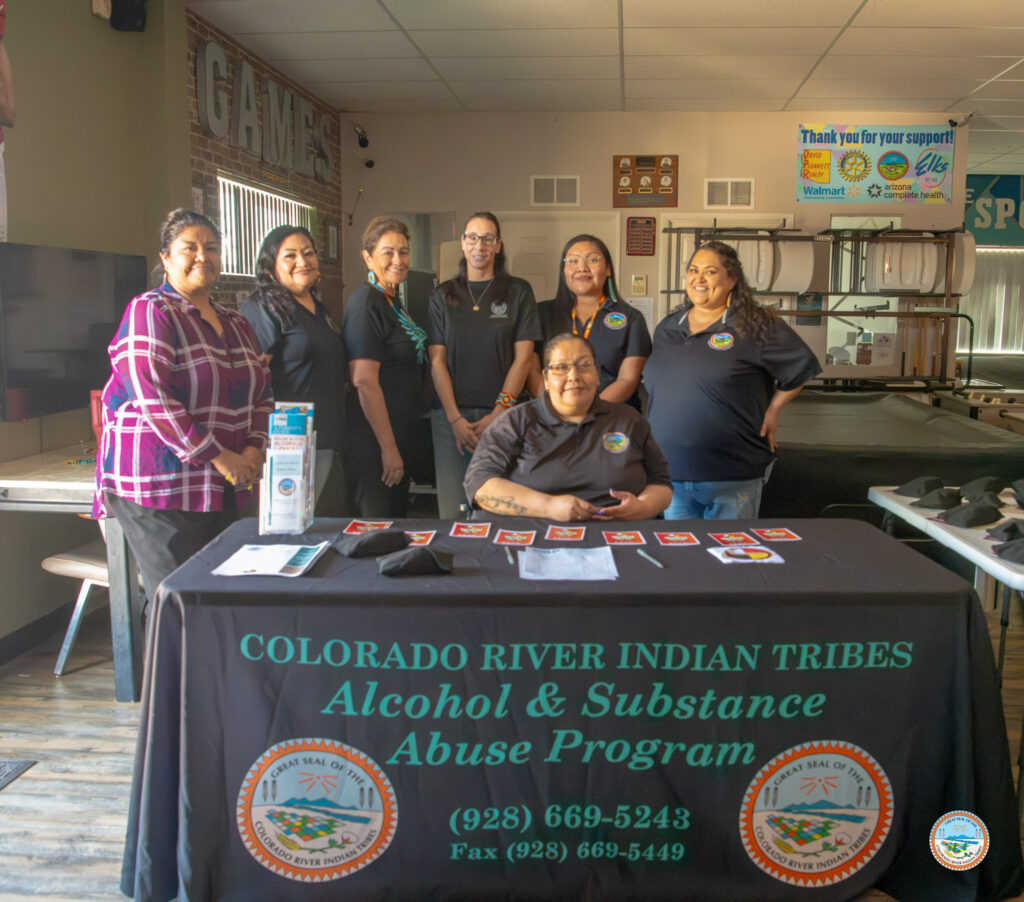
As the holidays approach, the Colorado River Indian Tribes Alcohol and Substance Abuse Program (ASAP) wants community members to know there is a place to turn when things get difficult. Throughout our interview, staff kept coming back to the same message: they are here to help, and they want people to reach out.
The holidays can bring people together, but staff understand that this time of year can also be tough. For someone struggling with alcohol or substance use, or working to maintain recovery, having support can matter. ASAP staff emphasized that they have tools and guidance to help people work through those challenges. If you are unsure where to begin, a conversation with their office can be a starting point.

Connecting with ASAP can also happen through its community events. The department has been active in bringing people together, and staff shared that there are more events to come. They encourage Tribal Members to watch for opportunities to participate, get to know the team and learn about the resources available. Follow CRIT ASAP on Facebook for upcoming events and program updates, or give the office a call to find out what is coming next.
That community involvement carries the same message as their work in the office: support is here throughout the year. Staff want Tribal Members to feel encouraged to ask questions and seek help when they need it. (more…)

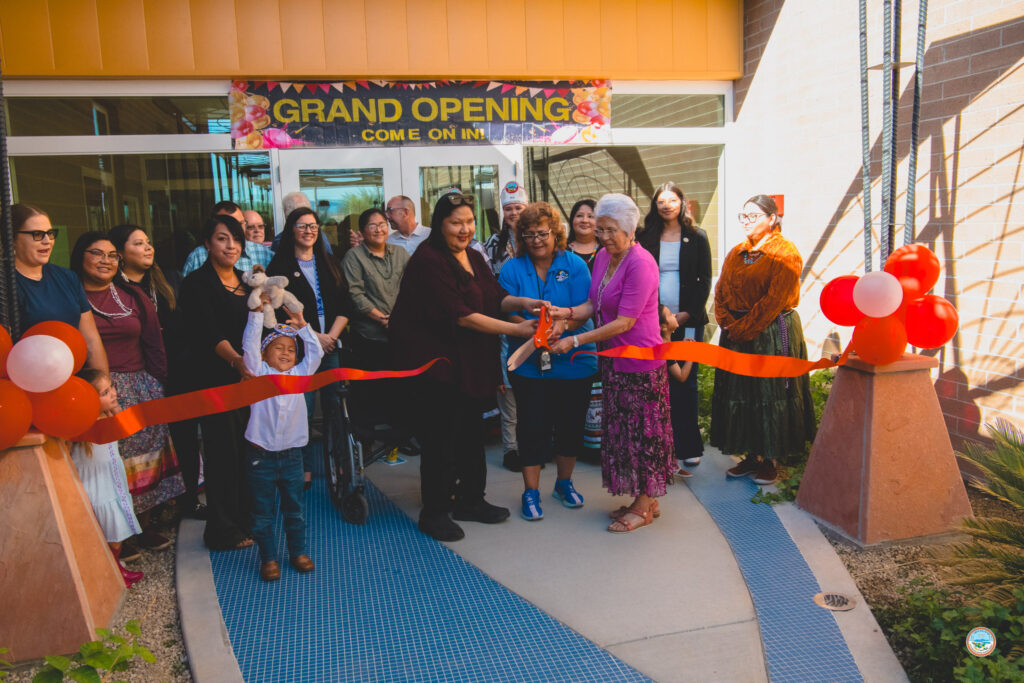
It has been a long time coming for CRIT Head Start. For many of us, Head Start holds a special place in our memories. We attended Head Start here in the valley as children, and years later, our own children have walked through its doors. The grand opening of the new facility was a meaningful moment to celebrate a program that has been part of so many families’ lives.

Community members gathered at the CRIT Head Start campus on Friday, Oct. 23, to celebrate the grand opening. With the theme “Building Futures, Opening Doors,” the celebration brought families, Tribal leaders and staff together to mark the occasion.

Acting Head Start Director Monica Rosnagle, CRIT Treasurer Anisa Patch and Chairwoman Amelia Flores cut the ribbon to officially celebrate the opening.

Tribal Council members in attendance included Chairwoman Flores, Secretary Josephine Tahbo, Treasurer Patch, Councilman Bill Beeson, Councilwoman Raeanne Patch, Councilwoman Tracey Quillen and Councilwoman Vanessa Welsh. Each shared a few words during the celebration.

The ceremony program included a welcome from Rosnagle, a blessing by Pastor Shawn Thompson and a guest speaker, Pastor Darryl Grissum. Miss CRIT Veronica Webb, Jr. Miss CRIT Jessica Scott and Little Miss CRIT Alura Rose Walrod introduced themselves and danced.

The celebration included performances representing the four Tribes of CRIT: the Mohave Singers and Dance Group, the Chemehuevi Red Foot Committee, the Hopi group and the Navajo group Tó Nílini Dá’ák’eh Dine’é, or River Field People. Head Start children also performed the ABC song. (more…)

An article by Diandra “Dee” Martinez
Assistant Film Festival Director of NatiVisions Film Festival & CRIT Tribal Member

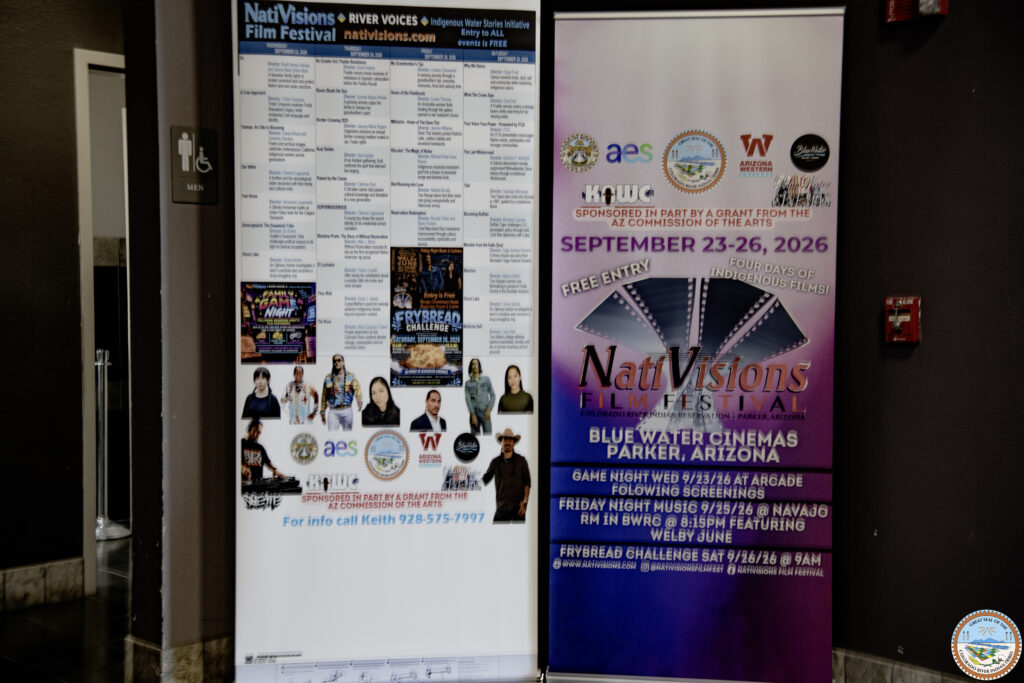
NatiVisions is an Indigenous film festival that provides a platform for Indigenous people to tell and share their stories through film, art, books, music, fashion, and other forms of creative expression. The festival is intended to provide greater visibility for Indigenous voices and create opportunities for Native filmmakers, artists, musicians, storytellers, and other creatives to share their work with the community.

One of the primary purposes of NatiVisions is to remind audiences that Indigenous people are still here and that our voices, experiences, creativity, and stories deserve to be seen and heard. The festival is free and open to everyone, making Indigenous film and cultural programming accessible to the community and visitors. Attendees have opportunities to watch films, experience music and fashion, learn about Indigenous cultures, and come together as a community.

NatiVisions is held at the Bluewater Resort & Casino Theater in Parker, Arizona, within the Colorado River Indian Tribes (CRIT) community. The festival is held annually towards the end of September. This year’s festival took place September 23–26. NatiVisions is traditionally held toward the end of September because it coincides with Native American Days in Parker, Arizona. Holding the festival during this time allows NatiVisions to be part of a larger period of community gathering and cultural celebration. It provides another opportunity for community members and visitors to come together and celebrate Indigenous culture, creativity, storytelling, and traditions.

NatiVisions provides a free, educational, cultural, and family-friendly experience that brings people together through Indigenous storytelling and creativity. The festival serves a broad and diverse community centered around Indigenous peoples of the South-west while welcoming visitors from Arizona, California, and beyond. Because the festival is held within the CRIT reservation, it provides an accessible cultural space where Indigenous community members can see stories and experiences represented on screen.

The CRIT community includes members of the Mohave, Chemehuevi, Hopi, and Navajo tribes, while NatiVisions also welcomes filmmakers, artists, and attendees representing other Native nations. Festival participants and attendees include filmmakers, cultural leaders, artists, students, educators, youth, families, community members, and visitors. Non-Native attendees are also welcomed and have an opportunity to learn about Indigenous cultures and experiences through authentic storytelling created by Indigenous people. NatiVisions is more than watching films. The festival incorporates other activities and forms of cultural and creative expression, including music, fashion, art, and a frybread contest. (more…)