
Visit highlights tribal water rights, environmental restoration and efforts to reconnect communities with the River
Protecting the Colorado River means securing tribal water rights while also restoring the river’s natural habitat, preserving cultural traditions and ensuring future generations maintain their connection to the water.
Those priorities were at the forefront when leaders of the Colorado River Indian Tribes visited Yuma on Nov. 20 to see firsthand how the Cocopah Indian Tribe is restoring portions of the lower Colorado River. The National Audubon Society organized the visit to bring the tribes together to share restoration experience and explore opportunities for collaboration.
“I think this restoration project is amazing,” CRIT Chairwoman Amelia Flores said after touring the sites. “I am very proud of the Cocopah Tribe.”
The visit offered CRIT leaders an opportunity to examine restoration efforts that complement the Tribes’ longstanding commitment to protecting their water rights and conserving the Colorado River, including work associated with CRIT’s Ahakhav Tribal Preserve.
Flores also emphasized the importance of maintaining relationships among Colorado River tribes.
“It’s always great to come and visit our southern relatives and see what you all are doing and just keeping that relationship going,” Flores said. “We need to do more of this.”
The delegation included Tribal Secretary Josephine Tahbo, Councilmember Raeanne Patch, Water Resources Director Dillon Esquerra and Chief Game Warden Woodrow Sharp. CRIT water attorney John Bezdek also participated.
The National Audubon Society has supported the Cocopah restoration projects by helping secure funding, coordinating partners and providing technical and planning assistance. Julia Morton, the society’s Colorado River program manager, welcomed the delegation and described how the work fits into broader efforts to restore habitat along the lower river. The tour included a completed 41-acre project on the Cocopah North Reservation and a planned 390-acre project on the West Reservation.
“We’re really excited to bring this group together today,” Morton said as she welcomed CRIT council members and staff, Cocopah leaders and representatives of restoration organizations.
Audubon views the tribal projects as part of a connected network of restored habitat along the lower Colorado River and its delta, benefiting wildlife and river communities.
A shared connection to the river
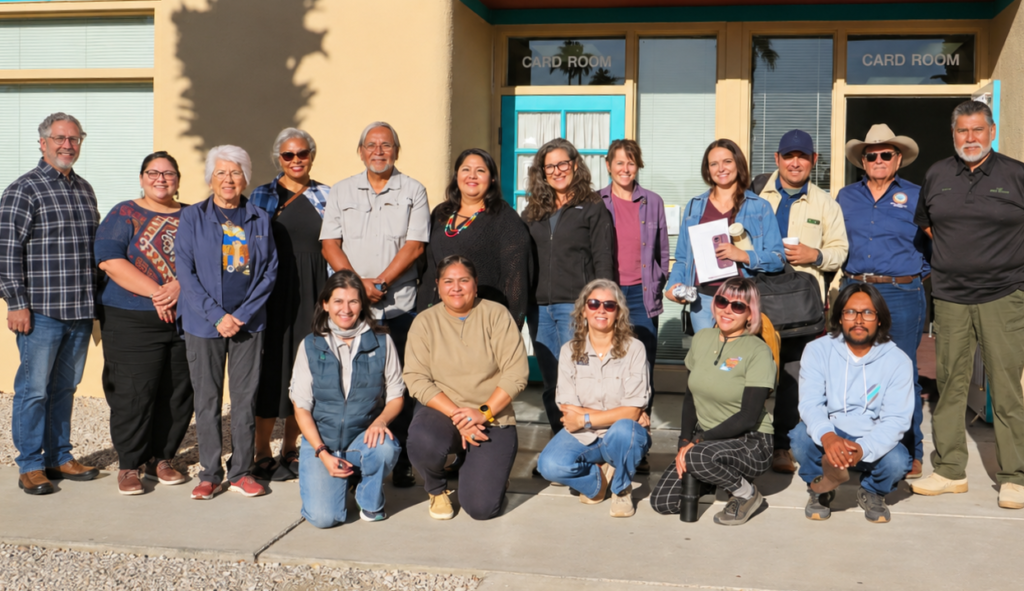
Cocopah Vice Chairman Neil White, along with Cocopah Tribal Council members Florence Fitch and Jennifer Townsend, welcomed the CRIT delegation at a brief meeting ahead of the tour. In his remarks there, White emphasized the importance of tribal cooperation and maintaining a direct connection to the river noting it’s always better to see such projects in person rather than rely solely on written reports.
“We sit down, meet with them face to face and discuss our situation, solutions, problems maybe,” he said. “The paper doesn’t talk back, it’s just black and white.”
“The water is our source of energy,” White added.
The Cocopah Tribe’s restoration efforts are particularly significant because portions of the lower Colorado River no longer flow through their ancestral lands as they once did.
Restoring cottonwood and willow trees, wetlands and other native habitat is intended to bring back wildlife while creating opportunities for tribal members, particularly younger generations, to reconnect with the river.
The effort reflects a shared understanding among Colorado River tribes that the river is not simply a source of water. It is also central to their history, culture and identity.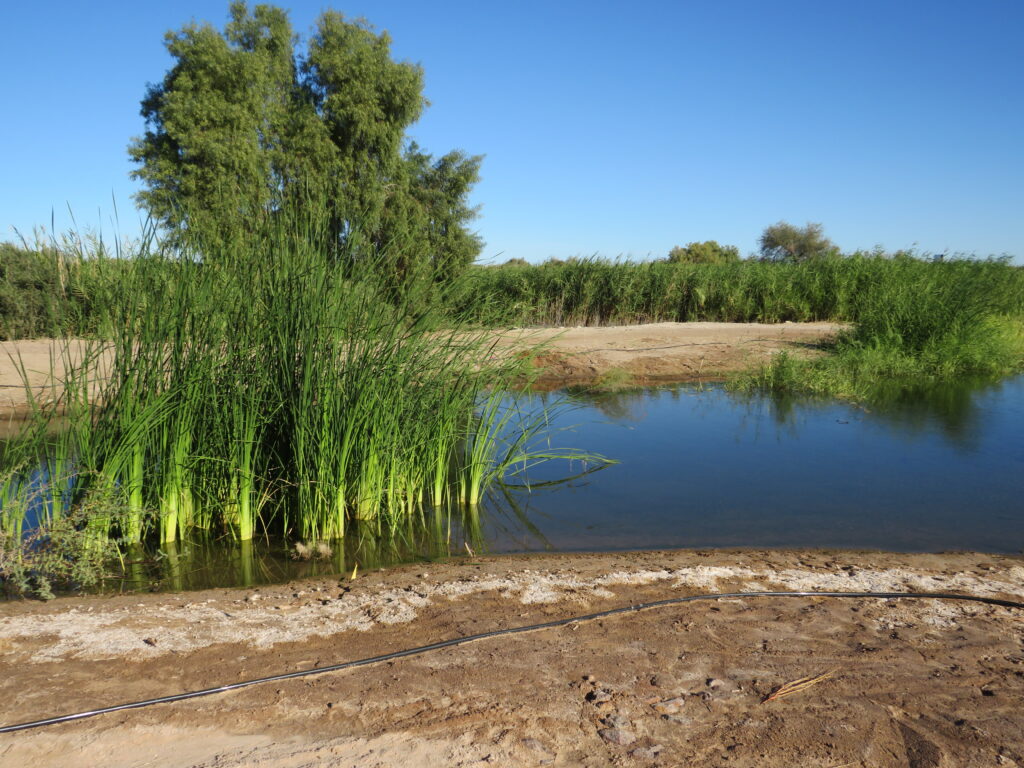
Bringing new life to the river
The delegation’s first major stop was the Cocopah North Restoration Site, also known as the Cocopah Stronghold.
The 41-acre project now features a restored stream channel, native vegetation, wetlands, a beach, and gathering areas for tribal members.
Cocopah Environmental Director Jen Alspach guided visitors through the project, explaining how treated wastewater supports the restored habitat.
“So to finally have water flowing through the new channel was really exciting,” Alspach said.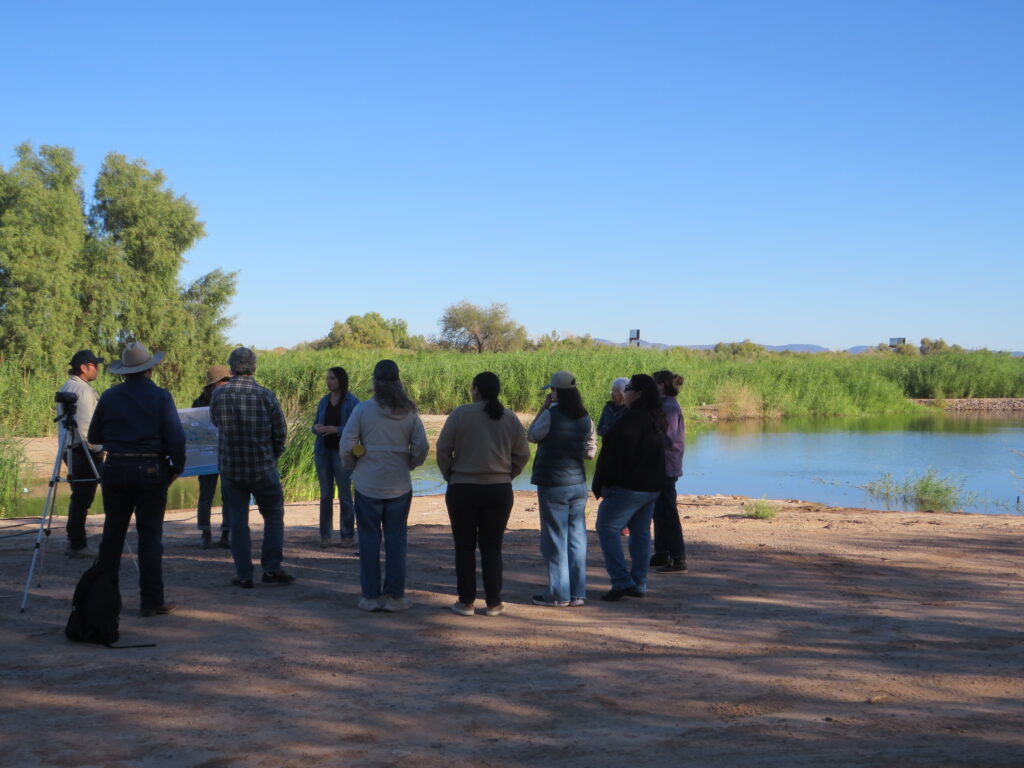
The project incorporates water-retention structures that distribute water across the landscape, supporting marsh vegetation, riparian forests and wildlife habitat.
It also includes a beach area and gathering spaces designed to reconnect tribal members with the river.
“We wanted to make sure that the community had a place to enjoy the river,” Alspach said. “We wanted an area for the elders to gather that was very close to the river.”
Audubon continues to support Cocopah staff with project coordination and practical problem-solving as restoration work progresses.
“The importance of the project for us is supporting the tribes in restoring native healthy habitat along the Colorado River,” Morton said, describing benefits for birds, wildlife and people who depend on this stretch of the river.
Morton praised Cocopah staff for turning plans into projects on the ground. She said the experience could offer lessons for CRIT, whose restoration planning has also received Audubon support.
“We’ve seen so many birds come in already,” Alspach said.
Lessons for CRIT’s own restoration efforts
For CRIT Councilmember Raeanne Patch, the Cocopah projects offered a useful comparison with the Ahakhav Tribal Preserve and other potential restoration efforts on CRIT lands.
“I think for this one it’s adapting to the current climate of the river in real time,” Patch said.
She noted that CRIT’s preserve was established with a long-term vision of protecting the river corridor, while the Cocopah projects are responding to environmental conditions that have already changed dramatically.
Patch said the Cocopah Tribe’s progress demonstrates what can be accomplished through focused restoration work.
“It’s beautiful to see because they’ve done a lot in a little bit of time,” she said.
Tribal Secretary Josephine Tahbo, a former CRIT game warden, said the visit reinforced the importance of sharing restoration strategies and learning from the challenges faced by other tribes.
“There’s always lessons in everything and the challenges that each tribe or just entity in general face when it comes to water and restoring just vegetation habitat,” Tahbo said.
She emphasized that environmental restoration is inseparable from the cultural and spiritual importance of the river.
“We say this message, water is life,” Tahbo said. “It truly is connected to this earth, it’s connected to the ground, it’s connected to the people.”
Tahbo said she would continue supporting restoration work and partnerships that help protect the Colorado River.
“I’ll always advocate for restoration work and keeping the river flowing,” she said.
She praised the Cocopah Tribe for making effective use of available resources and outside expertise.
“They’re making the best with what they got,” Tahbo said, adding that an important result is “getting your people out here to stay connected to the elements.”
A river that no longer flows
The delegation also visited a remnant cottonwood grove downstream of Morelos Dam, where the Colorado River’s natural flow has largely disappeared.
The stop offered a stark contrast to the restored landscape visitors had seen earlier.
The group then traveled to the Cocopah West Restoration Site, a 390-acre area where major restoration work is planned.
Unlike the North site, the West site has no existing on-site water source. The Cocopah Tribe plans to construct a pipeline from a nearby agricultural canal to bring water to the restoration area.
The amount of water required will depend on the vegetation and long-term irrigation needs of the site.
Alspach explained that restoration requires careful planning around the water resources available at each location.
“I think just a matter of looking at what you have available and designing around that,” she said.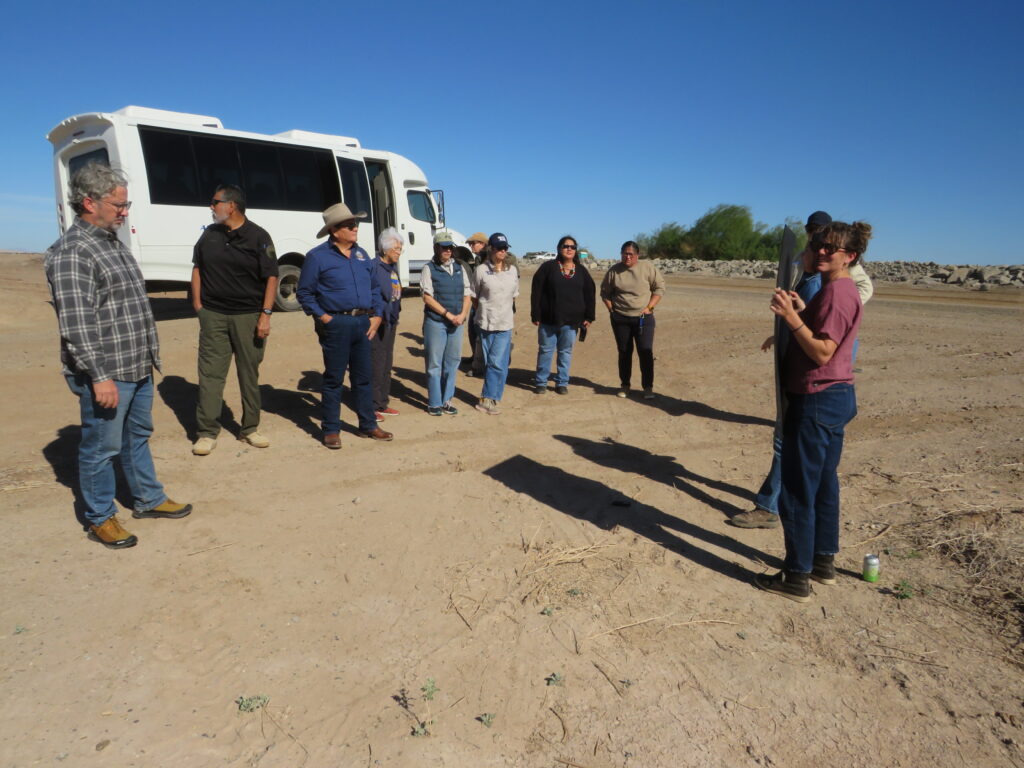
The project will include removing invasive saltcedar, preparing the land and planting native vegetation. An automated irrigation system is planned to distribute water efficiently.
Alspach said some native species, particularly cottonwoods, will require continued irrigation because natural river flows are no longer sufficient to sustain them.
The West project has been designed with long-term maintenance in mind, including the need to sustain native plants where the river no longer flows naturally.
The larger restoration effort also connects with Audubon’s work through the Raise the River Coalition, which supports habitat restoration in the Colorado River Delta in Mexico. Morton described a vision of multiple healthy habitat sites along the lower river whose combined ecological value is greater than that of isolated projects.
Despite those challenges, Alspach emphasized the significance of returning water and native habitat to the landscape.
“It means a lot to be able to bring water back here,” Alspach said. “That’s hugely meaningful and significant for the tribe.”
The West project also has the potential to complement restoration efforts across the international border in Mexico, creating a larger connected habitat corridor for birds and other wildlife.
Water policy and tribal sovereignty
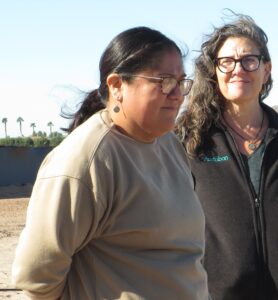 For CRIT water attorney John Bezdek, the restoration projects demonstrate how tribal sovereignty extends beyond securing water rights to determining how those rights are exercised.
“What CRIT chooses to do with its water and how it uses its water is really a question of sovereignty and of making decisions based on its own values,” Bezdek said.
“By CRIT choosing to invest in the river and choosing to invest in riparian areas like this, I think that drives the remainder of CRIT’s water policy,” Bezdek said.
Bezdek said the Cocopah Tribe has made a similar decision by dedicating water and resources to restoring its river corridor.
“They’ve made a value-based decision to invest here in the river, and that then feeds the rest of their water policy,” he said.
For CRIT, the visit reinforced the connection between protecting its established water rights and exercising those rights in ways that reflect tribal priorities, including conservation, habitat restoration and cultural preservation.
“If we don’t do it, who will?” Bezdek said.
Looking toward the future
The visit also underscored the value of cooperation among Colorado River tribes and organizations such as Audubon that support their restoration efforts.
Tahbo said those relationships help tribal communities share knowledge while remaining focused on their common interests.
“We just got to keep saying and sharing our stories,” she said, emphasizing the importance of remaining focused on “the water and the land and the people.”
For Flores, the tour also brought back memories of growing up along the Colorado River.
At one stop, she walked toward the river and recalled the excitement of visiting it as a child, when family trips to the water were special occasions.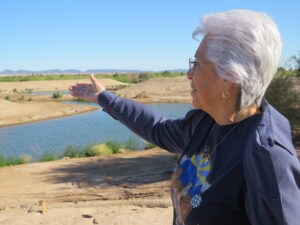
“When we did go on those days to the river, it was like, my God, that excitement just came back into my soul,” Flores said.
She remembered swimming, playing and experiencing the sights and smells of the river.
“That’s what walking to the Colorado River here on the Cocopah homelands reminded me of,” she said.
Those memories underscored the broader purpose of the restoration efforts: protecting the water, restoring the river environment and preserving a connection that has sustained tribal communities for generations.
CRIT looks forward to future meetings with the Cocopah Tribes to exchange ideas and information on water issues and restoration of riparian habitats, issues that both communities have long prioritized.