
Chairwoman Flores says CRIT And Tribal Governments must have a meaningful voice in decisions affecting the Colorado River and future generations
(SCOTTSDALE, Ariz.) Colorado River Indian Tribes leaders carried a message rooted in the Reservation’s past, present and future to the Ten Tribes Partnership meeting Wednesday: CRIT’s water rights must be protected, and tribal governments must have a meaningful voice in decisions shaping the Colorado River.
CRIT Chairwoman Amelia Flores chaired the October 14 meeting, joined on site by Tribal Councilmember Tommy Drennan. CRIT water attorney John Bezdek and other CRIT Tribal Council members participated remotely. CRIT’s presentation outlined the legal protections surrounding CRIT’s water rights and concerns about federal proposals that could threaten them.
With river levels declining and demand continuing to grow, Flores said tribal governments cannot remain on the sidelines as decisions are made about how the Colorado River is managed.
“We need to be included. We have the solutions,” Flores told representatives of the other tribes.
She said tribal leaders have spent years fighting for a meaningful role in Colorado River negotiations—decisions with direct consequences for CRIT lands, resources and future generations.
“I think we got a small corner of the room,” Flores said. “We’re allowed in, but yet we still are not at the table.”
Bezdek’s presentation focused on CRIT’s longstanding water rights, which were recognized by the U.S. Supreme Court in the landmark Arizona v. California decision in 1963 and the subsequent 1964 decree.
Those rights date to the establishment of the Colorado River Indian Reservation in 1865, predating Arizona statehood and the creation of the Bureau of Reclamation.
“Because at CRIT, we are not a contractor, our water rights predate the Bureau of Reclamation,” Bezdek said.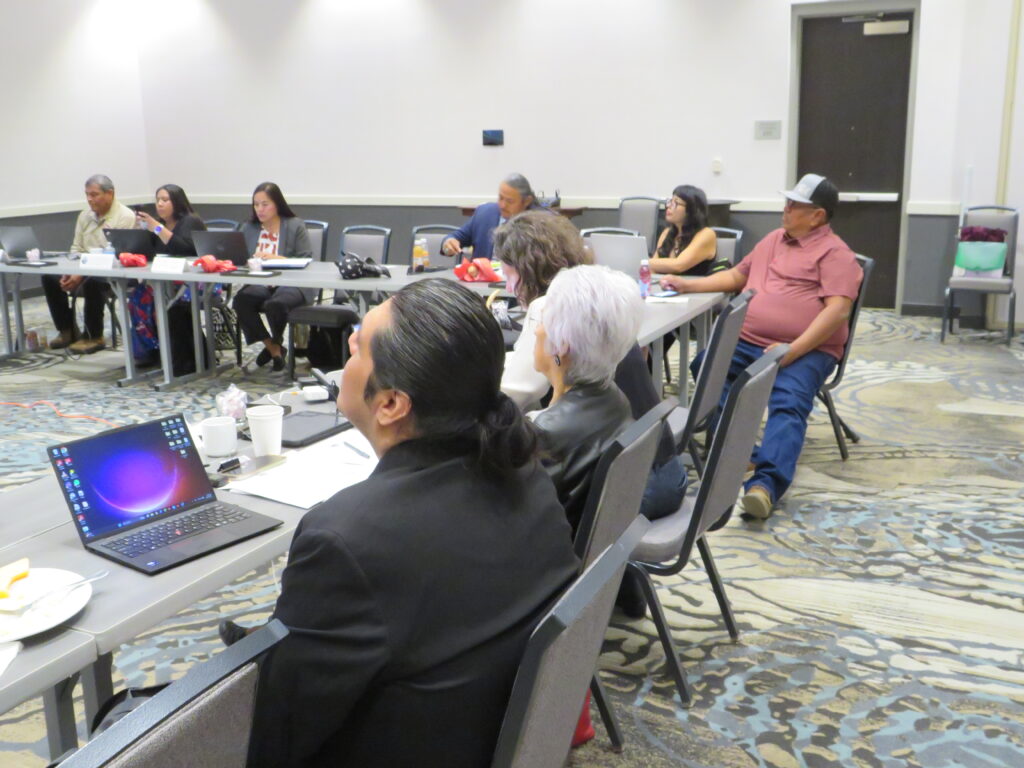
He explained that CRIT’s water rights are not subject to evaporation and transportation losses that can apply to other Colorado River water users.
At the center of CRIT’s concern are Bureau of Reclamation proposals to spread shortages proportionally among water users, regardless of their established rights. Bezdek said those “pro rata” reductions could erode the priority system that protects senior water rights, including CRIT’s.
Bezdek said the Bureau of Reclamation has included the possibility of proportional reductions in two recent environmental reviews, despite objections from CRIT.
He argued that such reductions would violate the Supreme Court decree, undermine the Winters doctrine protecting federally reserved tribal water rights and raise constitutional concerns.
“It would basically just write it out of existence,” Bezdek said of the Winters doctrine, warning against abandoning the priority system during water shortages.
He said CRIT successfully pushed back against the latest proposal, resulting in federal acknowledgment that water shortages would be handled through voluntary agreements or, absent such agreements, the existing priority system.
Still, Bezdek said the repeated appearance of proportional reductions in federal planning documents is reason for concern.
“We continue to remain vigilant because we believe this will come back again,” Bezdek said.
He emphasized that the issue extends well beyond CRIT.
“This is not just a CRIT issue. This is not just a five tribes issue. This is every tribe,” he said.
For CRIT, protecting its water rights is only part of the challenge. The Tribes’ ability to put that water to use on the Reservation also depends on the aging Colorado River Indian Irrigation Project, which serves tribal agricultural lands in Arizona.
Authorized in 1867, it is the oldest Indian irrigation project in the United States. Bezdek said years of inadequate federal funding have left the system in serious disrepair, with irrigation efficiency estimated at approximately 56% to 58%, according to his presentation.
He explained that water lost through the inefficient system eventually returns to the Colorado River, benefiting other water users while limiting CRIT’s ability to fully use its entitlement.
“They were the beneficiaries of the Bureau of Indian Affairs chronically underfunding the project,” Bezdek said, referring to other water users.
CRIT has received a Bureau of Reclamation grant to study what it would take to modernize the irrigation system to 21st-century standards.
A five minute video was shown tracing CRIT’s history, its relationship with the Colorado River and the Tribal Council’s decision to recognize the river’s personhood under tribal law.
Originally produced for World Water Week in Stockholm, Sweden, the video explains the cultural and spiritual importance of the river to CRIT’s four tribes: the Mohave, Chemehuevi, Hopi and Navajo.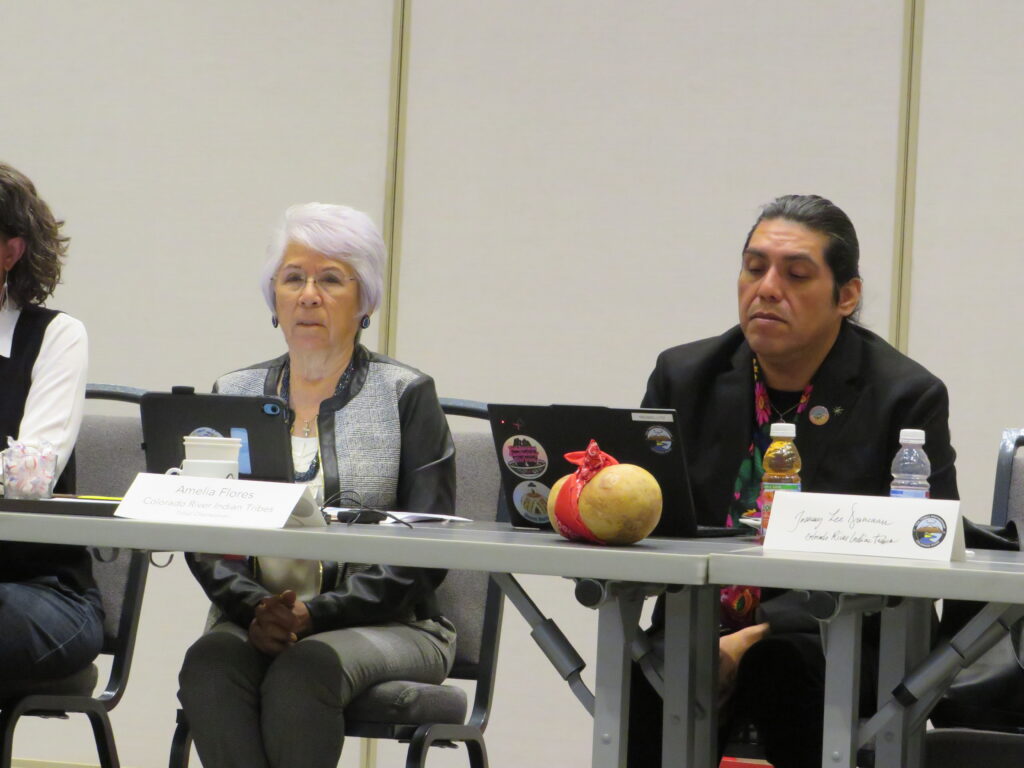
“The river defines us. We don’t define the river,” Flores said in the video.
She explained that recognizing the river’s personhood reflects the Tribes’ belief that the Colorado River is a living entity deserving of protection.
“We at CRIT believe that the river is alive and in every one of us and we want to sustain that for our future generations,” Flores told the gathering following Bezdek’s presentation.
Drennan reinforced the importance of tribal participation in decisions about the river, noting that Native Americans were historically excluded from negotiations and decisions that shaped its development.
“When we look at the history of Indian country, we realize that Indian people were not at any tables in the formation of this waterway during the time that the Colorado River was dammed and diverted,” Drennan said.
He said tribal leaders have made considerable progress in asserting their rights but must continue working together to protect their resources.
“We’ve wrapped American law around the beliefs of indigenous people, that the river is alive,” Drennan said.
He encouraged tribal leaders to remain engaged in water policy discussions and continue advocating for their communities.
“We’re at that stage in the history of the United States that Native Americans need to take the full platform and advocate for its resources and advocate for the rest of the environment and nonetheless advocate for the future of their tribe,” Drennan said.
Flores closed by bringing the discussion home to CRIT: tribal governments share a responsibility to protect the Colorado River and ensure future generations inherit the water, homelands and natural resources that have sustained their people for centuries.