Según BIA Electric, Mochem Housing en el valle no se quedará sin electricidad.


Según BIA Electric, Mochem Housing en el valle no se quedará sin electricidad.
Click the links below to download a form
Direct Deposit Authorization Form
General Welfare Application_09242024
General Welfare Application Minors_09242024
PLEASE READ CAREFULLY
Dear Tribal Member:
Tribal Council has approved a 2024 General Welfare Assistance payment of $2,000.00 for each CRIT Tribal Member. CRIT Tribal members, both minors and adults, who are enrolled with CRIT as of November 1, 2024 are eligible to receive assistance. Tribal Members MUST submit an application to receive a General Assistance Payment for 2024.
Click the links below to download a form
Direct Deposit Authorization Form
General Welfare Application_09242024
General Welfare Application Minors_09242024
This 2024 General Welfare Assistance payment replaces the annual Tribal Distribution Payment. The benefits to the membership are that the General Welfare Assistance payment is NOT income subject to federal taxes and should not impact eligibility for benefits such as SSI and food stamps. You will not be issued a 1099 for this payment. Please review the General Welfare Plan for more information.
Tribal Members will receive their General Welfare Assistance payment by mail or by direct deposit into a bank account after submitting their application. Parents or legal guardians may request direct deposit for their eligible minor tribal member children into an account owned by the parent or the child. YOU DO NOT HAVE TO SUBMIT A NEW DIRECT DEPOSIT FORM WITH YOUR APPLICATION IF YOU INTEND TO RECEIVE YOUR GENERAL WELFARE ASSISTANCE PAYMENT IN SAME BANK ACCOUNT AS YOU RECEIVED YOUR 2023 GENERAL WELFARE ASSISTANCE PAYMENT.
The General Welfare Assistance payment will be mailed or direct deposited as follows:
Application and Forms Due Date Payment Issued
Must be received by Accounting:
October 18, 2024 November 21, 2024
November 22, 2024 December 19, 2024
December 20, 2024 January 16, 2025
After December 20, 2024 Payments issued monthly on a rolling basis
and before December 31, 2025
If you want to receive your General Welfare Assistance payment by direct deposit, you must submit the attached Direct Deposit Authorization Form along with a voided check to CRIT Accounting. If you do not have a direct deposit authorization form on file from last year, or do not submit one for 2024 with your application, your payment will be mailed to the address on your application. The mailing address you provide on the application will be used to update your address with both enrollment and accounting. You may have already received written notification along with an application and a self-addressed stamped envelope for your use to return the forms or the forms can be dropped off in person at Tribal Administration. Additionally, the application and forms can be emailed to GWA@crit-nsn.gov.
Please note that the checks for eligible minor tribal members will be issued in the name of the child and not the parents. Parents or guardians must submit proof of their right to receive the distribution on behalf of their child by submitting an application with a copy of the birth certificate listing the parent(s), and if applicable, a court order establishing legal custody and placement before checks will be mailed or the payment directly deposited.
Checks will not be issued to the parent(s) if they do not have the care and custody of their children. Guardians and custodians of minors who are not the child’s legal parent shall be required to provide a court order indicating their status. Payments for children in the physical care and custody of CRIT Social Services or other state or tribal agencies shall be held in an account established by CRIT Accounting.
Tribal Members must apply for the 2024 General Welfare Assistance Payments no later than December 31, 2025 after which a 2024 payment will not be available.
Please be advised that if you are in default on a debt you owe to the Colorado River Indian Tribes or its enterprises, you may voluntarily agree to apply your General Welfare Assistance to the loan or other outstanding debt in default. If you have any questions about outstanding debts in default please contact Tracey Quillen at (928) 669-1239.
If you have any questions regarding General Welfare Assistance or you have an agency incorrectly treating this payment as income please contact the Office of the Attorney General at (928) 669-1271.
Click the links below to download a form
Direct Deposit Authorization Form
Follow this link for more information including how to apply.
This position is located with the Bureau of Indian Affairs, Superintendent, Colorado River Agency in Poston, Arizona.
As Arizona prepares for reduced Colorado River deliveries, the state is beginning to shift from years of saving water for future shortages to actually using some of those reserves.
KJZZ reported that the Arizona Water Banking Authority will use a one-year policy to fully “firm” water supplies lost by participating cities and utilities because of Colorado River shortages. Firming provides backup water to eligible users when their normal Central Arizona Project supplies are reduced.
The strategy could conserve up to 56,179 acre-feet in 2027 as cities and utilities rely on previously stored water rather than additional Colorado River deliveries.
The Water Banking Authority was created to store unused Colorado River water underground for future shortages. Arizona Water News reported that the agency is now entering a different phase. With less excess CAP water available for storage and shortages becoming more likely, the focus is shifting toward recovering and distributing the long-term storage credits accumulated over previous decades.
The Water Bank also has responsibilities for Tribal firming under the Arizona Water Settlements Act, along with providing backup supplies for certain municipal and industrial CAP users.
Stored water can help Arizona manage near-term shortages, but state officials are also considering how to bring entirely new supplies into Arizona over the longer term.
The Arizona Capitol Times reported that the Water Infrastructure Finance Authority of Arizona is studying five potential water importation projects. Together, the projects could eventually produce hundreds of thousands of acre-feet annually, although none have entered construction.
Among the projects being studied are desalination plants in Mexico and California, reclaimed-water projects involving Mexico, and proposals that could exchange new water supplies for portions of Colorado River allocations.
Two projects approved for further study in early October involve a proposed desalination plant near Mexico’s Gulf of California and a project that would recover and treat reclaimed water in Mexico for use as part of Arizona’s future supply.
Early estimates vary widely. The five projects could potentially produce nearly 1 million acre-feet annually under the highest estimates, while more conservative projections place the combined amount closer to 361,000 acre-feet.
Arizona’s expected Colorado River reduction is about 760,000 acre-feet per year, showing why state officials are considering several different options rather than relying on one project.
Cost remains one of the largest obstacles. Arizona lawmakers have provided WIFA about $386 million for long-term augmentation work, but individual desalination projects could cost billions of dollars.
While the state studies new supplies, some cities are also looking more closely at how much water new developments use.
KTAR reported that Scottsdale is considering a large-water-user ordinance in response to Colorado River reductions. City staff recommended requiring new large users to submit conservation plans, while council members also discussed additional review for projects expected to use more than 500,000 gallons of water per day.
The discussion reflects a broader question facing Arizona: how much water can be saved through conservation compared with how much new water needs to be developed.
ABC15 reported that agriculture accounts for nearly three-quarters of Arizona’s overall water use, significantly more than sectors such as golf courses or data centers. That makes agriculture an important part of statewide water discussions, particularly as officials look for ways to reduce demand while protecting Arizona’s economy and food production.
Conditions upstream show why those conversations continue.
KUNC reported that Blue Mesa Reservoir, historically Colorado’s largest body of water, fell below 20% full this year after a poor snowpack and prolonged drought.
Low water forced the Elk Creek Marina to close in early July, months earlier than usual, and affected recreation, fisheries, and agriculture. Farmers receiving water from the Gunnison River system also had to leave some fields dry or reduce production. (more…)
The new Colorado River water year began Oct. 1 under a different operating framework, but Arizona’s biggest reductions will not take effect until the start of 2027.
KJZZ reported that the new federal rules begin changing how much water is released from Lake Powell to Lake Mead as the 2027 water year gets underway. Arizona’s own reductions, however, are tied to the calendar year and are expected to begin Jan. 1.
Arizona, California, and Nevada are still working to finalize a Lower Basin agreement that would determine how the reductions are divided among water users. KJZZ reported that Arizona’s top water negotiator, Tom Buschatzke, remains optimistic that the three states can complete the agreement before the end of the year.
Under the current framework, Arizona is expected to reduce its Colorado River use by 760,000 acre-feet in 2027, assuming the Lower Basin states finalize their proposed sharing agreement. ABC15 reported that the reduction would equal about 27% of Arizona’s normal Colorado River allocation.
The exact impact on individual cities and water providers is still being worked out. Phoenix officials told ABC15 that the city does not yet have a final number for how much of the statewide reduction will be reflected in its Central Arizona Project supply.
Arizona Water News reported that the Arizona Water Banking Authority is entering a new phase. Created in 1996, the Water Bank stored unused portions of Arizona’s Colorado River entitlement underground and accumulated long-term storage credits that can be recovered during shortages.
Through 2024, the Water Bank had accumulated more than 4.4 million acre-feet of long-term storage credits, including approximately 3.8 million acre-feet for Arizona uses and more than 600,000 acre-feet on behalf of Nevada.
The Water Bank also has responsibilities for firming certain Central Arizona Project municipal and industrial supplies and for helping meet Arizona’s Tribal firming obligations under the Arizona Water Settlements Act.
As Colorado River shortages deepen, those stored supplies are becoming more important. Instead of focusing primarily on putting additional water underground, the Water Bank is increasingly preparing for the recovery and use of water that has already been stored.
Cronkite News reported that some rural residents around Chino Valley are already dealing with wells that have gone dry, forcing them to rely on water-hauling businesses and private storage tanks.
The Prescott Active Management Area has been considered outside of safe yield for more than two decades, meaning groundwater is being removed faster than it is being replaced. Local officials told Cronkite News that continued growth and groundwater pumping have contributed to declining water levels.
The situation is separate from the Colorado River shortage, but the two issues are connected through Arizona’s broader water supply. As Colorado River deliveries decline, groundwater and stored underground supplies are expected to play a larger role for some communities.
KUNR reported on new research showing that wildfire is burning more land in watersheds that provide water to communities across the West. Researchers analyzed more than 17,000 watersheds and found that the average amount of land burned annually nearly doubled in watersheds serving more than 100,000 people.
Wildfire can temporarily increase runoff, but it can also worsen water quality by sending sediment, nutrients, and debris into rivers, reservoirs, and water treatment systems. Those effects can continue for years after a fire. (more…)
As September came to a close, Colorado River discussions shifted from announcing future cuts to a more difficult question: how will communities protect their water supplies as those reductions move closer.
In southwestern Arizona, Yuma officials are preparing for possible legal action on two separate water issues.
Arizona’s Family reported that the Yuma City Council unanimously authorized the city to prepare for legal action involving both Colorado River operating rules and a proposed transfer of Colorado River water from agricultural land in La Paz County to Queen Creek.
The proposed transfer involves water associated with GSC Farm. Yuma is joining Mohave and La Paz counties in challenging the transfer because local leaders are concerned about the precedent of moving water away from rural agricultural communities and toward growing metropolitan areas.
Yuma officials are also considering possible legal action involving the federal government’s new Colorado River operating guidelines. Mayor Doug Nicholls said Yuma wants to participate in addressing the river’s shortage but does not want agriculture to carry the entire burden. Yuma-area farms are an important source of winter produce for the United States.
At the same time, Arizona lawmakers are looking at another way to stretch the Colorado River supply.
KAWC reported on proposed federal legislation that would authorize restoration of the Yuma Desalting Plant, which was originally constructed to treat salty agricultural drainage water from the Wellton-Mohawk Irrigation and Drainage District.
The proposed Colorado River Basin Water Security and Infrastructure Act would authorize $19 billion for water projects throughout the Basin, including $1 billion to restore the Yuma plant. Supporters say treating agricultural drainage water could reduce the amount of Colorado River water needed to meet downstream delivery requirements.
Arizona cities are also investing in their own water systems.
ABC15 reported that Phoenix is constructing a new 20-million-gallon reservoir at the Union Hills Water Treatment Plant. Historically, about 40% of Phoenix’s delivered water has come from the Colorado River, and city officials said the additional storage will give the system more flexibility as supplies become less certain.
Scottsdale, meanwhile, is considering additional review for new developments expected to use large quantities of water. Under the proposal, developments projected to use more than 100,000 gallons per day could face additional city approval requirements. The proposal had not yet been adopted when the story was published.
Private companies are also becoming more involved in Colorado River conservation.
KJZZ reported that Amazon pledged $20 million toward water-saving projects in Arizona and California. One proposed project would improve irrigation efficiency with an unnamed Tribal Nation in northern Arizona.
The investment is part of a larger effort to bring private funding into Colorado River conservation. KJZZ noted, however, that the scale of the river’s shortage is much larger than any single corporate investment. Major conservation programs involving farms, cities and infrastructure can require billions of dollars.
While states, cities and private companies look for ways to conserve or develop additional supplies, Lake Powell continues to show why those efforts are becoming urgent.
A Sept. 29 report said Lake Powell stood at about 3,518 feet in elevation, roughly 28 feet above minimum power pool, the level where Glen Canyon Dam can no longer effectively generate hydropower.
The reservoir had already reached a modern record low earlier in September. If Lake Powell falls below minimum power pool, water could still move through Glen Canyon Dam, but hydropower production would stop and dam operations would become more difficult.
The report also noted that federal efforts to protect Lake Powell can create consequences downstream. Reducing releases from Powell helps preserve its elevation but sends less water toward Lake Mead, demonstrating the difficult tradeoffs involved in managing the two reservoirs together.
Late September also marked the end of an era in Colorado River management. KGNU reported that the 2007 Interim Guidelines, which have governed operations during much of the river’s prolonged drought, were scheduled to expire Oct. 1. Years of negotiations among the seven Basin states had failed to produce a replacement agreement, leaving the federal government’s new management framework to guide the next phase of river operations. (more…)
Colorado is moving forward with a new voluntary conservation program as pressure grows for both the Upper and Lower basins to reduce demands on the Colorado River.
Colorado Newsline reported that the Colorado Water Conservation Board conditionally approved a “near-term contribution program” aimed at conserving 50,000 acre-feet of water during the 2027 water year. The program would use federal funding to compensate participants for conservation measures including temporary fallowing, deficit irrigation, and switching crops.
The program is voluntary and temporary, but farmers and Western Slope water managers have raised concerns about how it could affect agricultural communities. Some questioned whether conserved water can be tracked all the way downstream to Lake Powell and whether Colorado will receive credit for those reductions.
Colorado officials said they want participation from several water-use sectors rather than placing the responsibility primarily on agriculture. Water managers also emphasized that large-scale fallowing is not the only conservation option being considered.
The size of Colorado’s proposed conservation is relatively small compared with reductions facing the Lower Basin. Colorado Newsline reported that the program targets 50,000 acre-feet, while Arizona, California, and Nevada are expected to reduce their combined use by 1.25 million acre-feet in 2027.
At the same time, business groups from across all seven Colorado River Basin states are asking Congress for at least $2 billion in new federal funding for water projects.
KUNC reported that chambers of commerce and other business groups sent a letter to Congress seeking money for projects that could include repairing leaking municipal pipes, protecting watersheds from wildfire, and supporting programs that leave water in major reservoirs. (more…)
As Colorado River supplies remain under pressure, water agencies are investing in infrastructure to secure future deliveries while federal officials consider how declining reservoir levels affect hydropower and the river’s ecosystem.
One of the latest developments involves the Navajo Nation. Smart Water Magazine reported that the Bureau of Reclamation awarded an $81 million contract to Carstensen Contracting for construction of the final major segment of the Navajo-Gallup Water Supply Project in New Mexico.
The project is intended to bring reliable drinking water to nearly 250,000 people on the Navajo Nation and surrounding communities, fulfilling a longstanding water rights settlement. The newly awarded contract covers a pipeline connecting the Frank Chee Willetto Reservoir, east of Shiprock, to the San Juan Lateral Water Treatment Plant.
The San Juan Lateral is now more than 75% complete, with initial deliveries targeted for late 2028 and full completion expected by the end of 2029. Once finished, the broader Navajo-Gallup project will include approximately 300 miles of pipeline, two water treatment plants, and 19 pumping plants, addressing a longstanding infrastructure challenge in communities where many households still rely on hauling water.
In Arizona, cities are also developing additional water supplies ahead of federal Colorado River reductions.
12News reported that Peoria is spending $104 million on a water farm west of Tonopah to strengthen its long-term water supply. The investment is part of the city’s preparation for reduced Colorado River deliveries and reflects how communities are looking beyond their existing allocations to secure water for future needs.
Meanwhile, conditions at the Basin’s two largest reservoirs continue to influence federal water management decisions.
KLAS reported that two-year projections show Lake Mead potentially declining by approximately 40 feet while Lake Powell rises by a similar amount. The projected changes highlight how operations at one reservoir are connected to conditions throughout the Colorado River system.
Circle of Blue also examined how low water levels at Lake Powell are affecting decisions at Glen Canyon Dam. According to the report, the Bureau of Reclamation decided against certain environmental water releases this year because of concerns about hydropower generation.
Those releases would have helped rebuild eroded sandbars in the Grand Canyon and provided colder water to limit the reproduction of invasive smallmouth bass, which threaten native fish such as the humpback chub.
The proposed environmental releases would change the timing or temperature of water passing through Glen Canyon Dam rather than the total amount released over the year. However, using the dam’s bypass tubes would reduce electricity generation.
Reclamation said it is considering other measures to protect native fish, including removing invasive species and studying infrastructure that could regulate downstream water temperatures.
Water quality is also receiving attention elsewhere in Arizona.
KTAR reported that the Upper Verde River is nearing designation as an Outstanding Arizona Water, the state’s highest level of surface water quality protection. The designation would help protect the river from new discharges that permanently degrade its water quality.
The Upper Verde supports drinking water supplies, recreation, and habitat for several threatened and endangered species.
Together, these developments show how water management across the Basin involves more than dividing available supplies. Tribal communities are working toward reliable water deliveries, Arizona cities are developing additional resources, federal officials are balancing hydropower and ecosystem needs, and state agencies are considering stronger protections for rivers.
What does this mean for CRIT?
The Navajo-Gallup pipeline development is especially relevant because it illustrates the difference between holding water rights and having the infrastructure necessary to use them.
The project is fulfilling a longstanding Tribal water rights settlement by creating the physical system needed to deliver water to Navajo communities. It provides another example of how Tribal water management involves legal rights, infrastructure, federal commitments, and long-term planning. (more…)
Two Tribal Nations in Arizona have taken new steps to protect their water resources and culturally significant landscapes as the Colorado River Basin continues to face declining supplies and growing development demands.
KJZZ reported that the Hualapai Tribal Council recently approved a moratorium opposing the development of hyperscale data centers on its nearly one-million-acre reservation. The Tribe shares a 108-mile boundary with the Colorado River and raised concerns about the potential effects of large-scale data centers on water supplies, land, and the environment.
Hyperscale data centers are large facilities that support cloud computing and artificial intelligence. Depending on their design, these facilities can require substantial water for cooling and electricity generation.
Hualapai Chairman Duane Clarke told KJZZ that protecting the Tribe’s air, land, and water remains a priority. The resolution also states that outside entities and private developers cannot use or compromise Tribal resources without the Tribe’s free, prior, and informed consent.
The decision comes as other Colorado River communities consider similar developments. KJZZ reported that residents in Bullhead City have raised concerns about potential data center projects, while a proposed facility near Page has drawn opposition from the Navajo Nation’s LeChee Chapter.
Another development involving the Navajo Nation highlights the cultural significance of the Colorado River.
Grand Canyon Trust reported that the Navajo Nation has formally designated the confluence of the Little Colorado River and Colorado River as a sacred site under Tribal law.
Known as Tooh Ahidiilíní, the confluence is located within the Grand Canyon and holds cultural and spiritual significance for the Navajo people and other Indigenous communities.
The designation follows more than a decade of efforts by Navajo families and the Save the Confluence coalition. Those efforts included opposition to the proposed Grand Canyon Escalade development, which would have constructed a tramway, hotels, and other commercial facilities near the confluence.
The new legislation recognizes the confluence, Little Colorado River Gorge, and surrounding cultural landscape as a sacred site protected under the Navajo Nation Cultural Resources Protection Act.
Meanwhile, uncertainty continues over how the federal government will manage the Colorado River.
ABC15 reported that Nevada’s lawsuit challenging the new federal operating guidelines could potentially delay their implementation. Nevada argues that the plan places too much of the shortage burden on the Lower Basin states without adequately considering economic and public health consequences.
The state is seeking to block the plan before Oct. 1. If a court grants that request, existing operating rules and reductions could remain in place while the lawsuit proceeds.
University of Nevada, Las Vegas professor Tom Romero told ABC15 that litigation could encourage the Basin states to resume negotiations, but a court decision would not resolve the river’s declining water supply.
A Reuters analysis published Sept. 14 helps explain that underlying challenge. The report found that the Colorado River’s average annual natural flow declined from approximately 14.9 million acre-feet during the 20th century to 12.3 million acre-feet between 2000 and 2025.
Reuters also reported that water consumption exceeded the river’s natural supply in 16 of the last 24 years analyzed, with reservoirs making up the difference.
Together, these developments show how Colorado River management involves more than dividing water between states. Tribal governments are exercising their authority to protect resources and culturally significant places, while federal officials and water users continue working through legal disputes and a river system that is producing less water than in previous decades.
What does this mean for CRIT?
The Hualapai and Navajo Nation developments connect directly to CRIT’s ongoing work involving water sovereignty, resource protection, and the cultural significance of the Colorado River.
The Hualapai decision demonstrates how a Tribal government can use its authority to address proposed development and potential impacts on its natural resources. The Navajo Nation’s designation of the Confluence also provides an example of Tribal law being used to formally recognize and protect a culturally significant river landscape. (more…)
CRIT Media was formally invited to tour the Metropolitan Water District (MWD) facility in Parker, Arizona, alongside local business owners from Lake Havasu, Parker Area Chamber of Commerce, representatives, and local law enforcement agencies. The tour provided an inside look at the facility’s operations, including how water is stored and managed along the Colorado River system. Guests were also able to explore historic buildings constructed in the early 1930s, many of which still feature the nostalgic architecture and craftsmanship of that era.
Throughout the visit, MWD staff shared their passion for the work they do and the long history the district has in the Parker area. It is no secret that Colorado River Indian Tribes and MWD have maintained a longstanding relationship due to their close proximity and shared connection to the Colorado River. Employees like Gina Chavez, who was born and raised in Parker and grew up on MWD property, spoke about the importance of community outreach, local involvement, and helping create employment opportunities for residents in the area.
The tour highlighted not only the scale and complexity of water operations in the region, but also the deep local ties and history that continue to connect Parker, the Colorado River, and the people who work to manage one of the Southwest’s most important resources.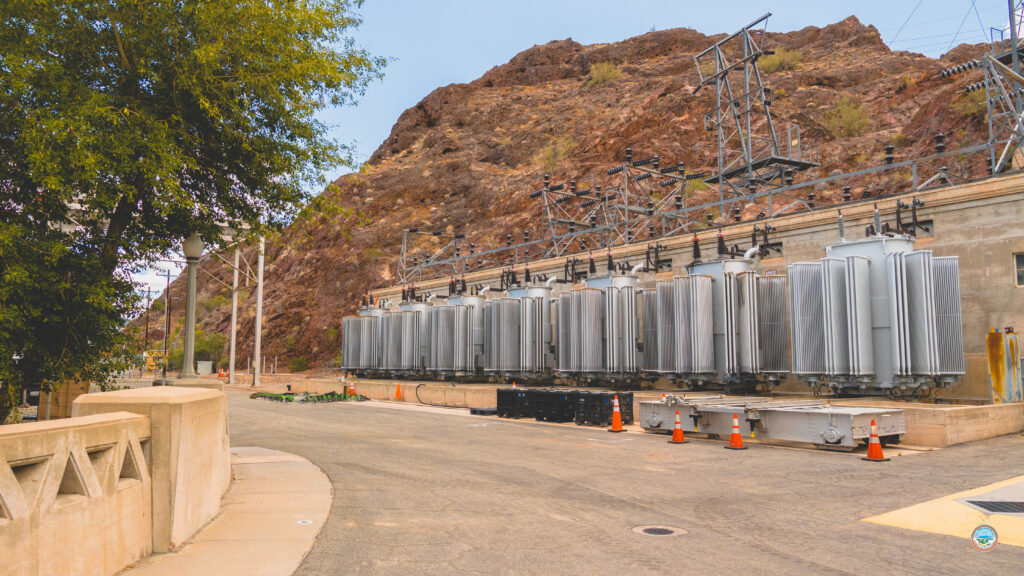
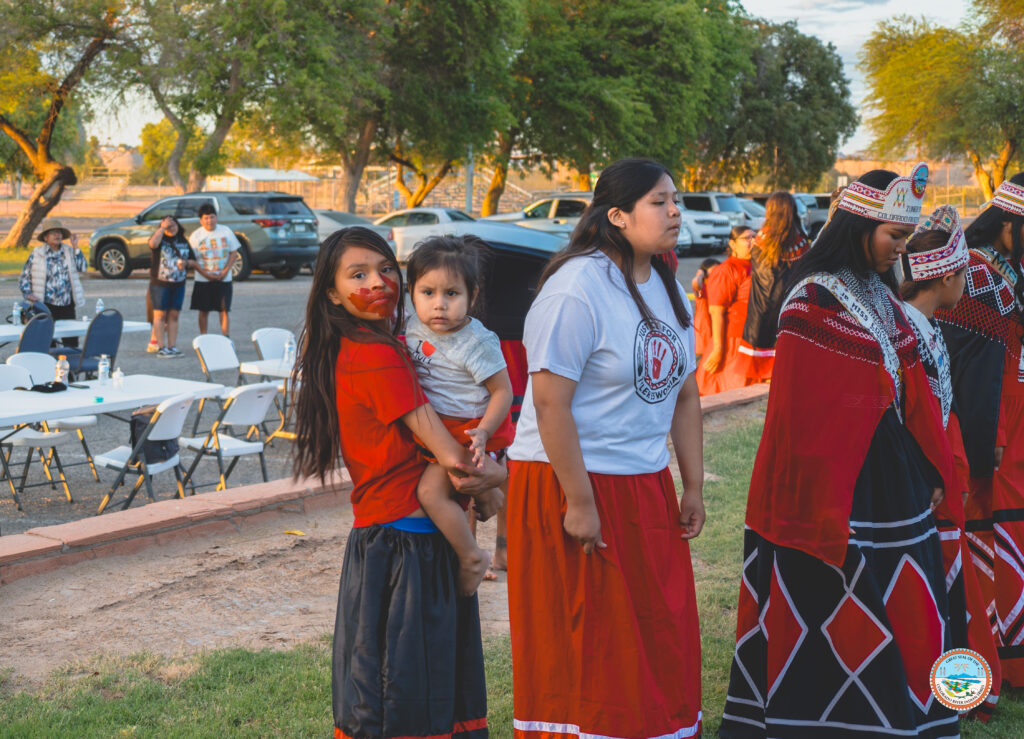
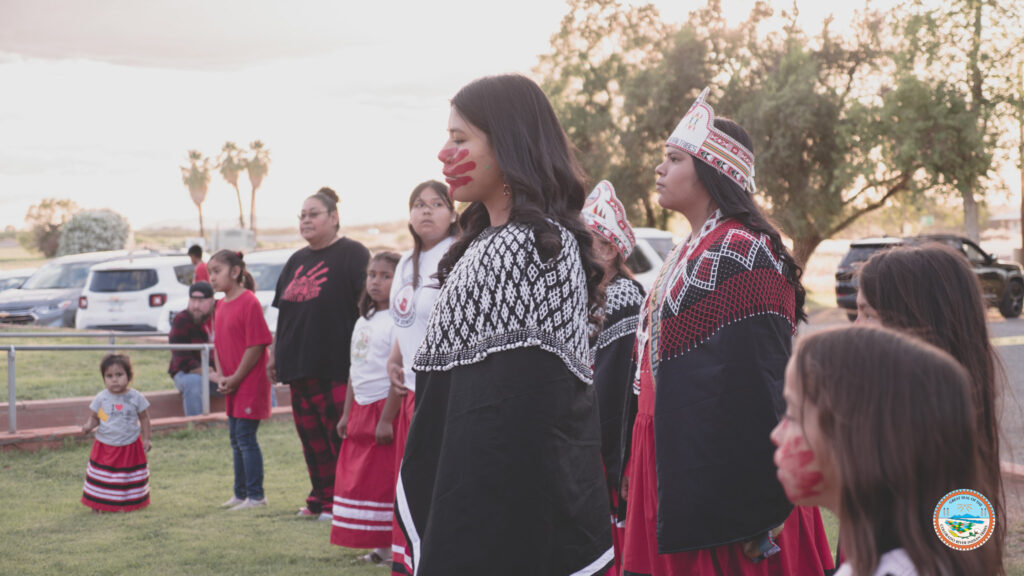
The Missing and Murdered Indigenous Women and People (MMIWP) movement brings awareness to the ongoing crisis of Indigenous people who have gone missing or been murdered across Tribal communities throughout North America. For decades, Indigenous families and advocates have called attention to the lack of media coverage, jurisdictional challenges, and limited resources that have contributed to many of these cases going unsolved or overlooked.
On Tuesday, May 5th, 2026 CRIT hosted an event honoring MMIWP, bringing the community together in remembrance, reflection, and support for affected families.
Several speakers courageously shared the stories of loved ones from the reservation who have gone missing or were tragically murdered and are not forgotten. Young girls spoke about the heartbreaking loss of their father, siblings shared memories of missing sisters, mothers, and grandparents.
A special thank you to Councilman Tommy Drennan for organizing the event with Janice Patch and other organizers of this very important day for CRIT and all of Indian Country.
The Lower Basin States of Arizona, California, and Nevada have advanced a plan to stabilize the Colorado River through 2028, responding to declining reservoir levels, record low inflows to Lake Powell, and increasing risk of reaching critical elevations at both Lake Powell and Lake Mead.
Earlier in the post-2026 process, the Lower Basin took a significant step by proposing 1.25 million acre-feet in annual reductions, with an additional 250,000 acre-feet from Mexico, totaling approximately 1.5 million acre-feet per year.
This proposal builds on that foundation with an expanded system conservation program across the Lower Basin with an estimated contribution of at least 700,000 acre-feet. In total, the plan identifies up to 3.2 million acre-feet of water savings to the system through 2028.
The proposal is an integrated package addressing Lake Powell releases, Upper Initial Unit operations, Lower Basin reductions, additional conservation, use of Intentionally Created Surplus, and system infrastructure improvements. Lower Basin contributions are contingent on these coordinated operations to ensure system stability as well as appropriate funding.
“With this proposal, the Lower Basin is putting forth real action to stabilize water supply along the Colorado River. We’re putting forward additional measurable water contributions for the system. Without that, the system will continue to decline,” said JB Hamby “This proposal is about moving from ideas to implementation,” said John Entsminger. “It pairs real measurable water contributions with sensible dry-condition operations at Lake Powell and across the Upper Initial Units. Now is the time for every water user in the Basin to double down on water conservation as we face historically dry hydrology.”
“This proposal reflects the creativity and commitment of water users across the Lower Basin who continue to step forward with solutions that support the river,” said Tom Buschatzke. “We have shown that collaborative, voluntary efforts and reductions that are certain can produce meaningful water savings.” (more…)